Relic point Vietnam
Việt Nam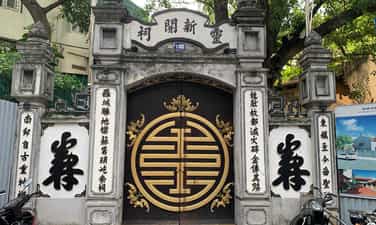
Tan Khai Temple
Tan Khai Temple, also known as Thai Cam Temple, is located at 44 Hang Vai Street, in Hanoi's Old Quarter. According to the stele, the temple was built in the 3rd year of Minh Menh's reign (1822), at the same time as Thai Cam Pagoda. The temple worships three tutelary deities: To Lich, Bach Ma, and Thiet Lam – deities associated with the formation of Thang Long capital and revered by the people as protectors of the capital. To Lich is the representative tutelary deity of the capital; Bach Ma, or Long Do, is associated with Bach Ma Temple; and Thiet Lam is believed to originate from the ancient Vietnamese belief in worshipping natural forces. Over nearly two centuries, Tan Khai Temple has undergone many changes. The front hall no longer exists; the main remains are the rear hall, built in the shape of the Chinese character "Công," along with the temple courtyard and gate shared with Thai Cam Pagoda. Above the gate is a scroll inscribed with four Chinese characters: "Tan Khai Linh Tu." Beyond its architectural value, the communal house also preserves traces of folk beliefs and the history of Thang Long, reflecting the people's reverence for the guardian deities of the capital. Source: Hanoi People Magazine
Hanoi
9 view
Rating : National Monument
Phu Luong Village communal house
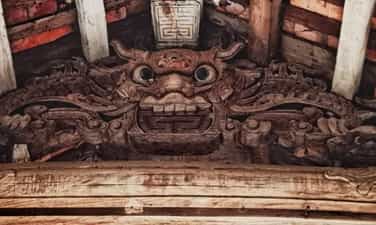
Phu Luong Village Temple, located in Quang Phu Cau Commune, Ung Hoa District (now Thuong Phuc Commune, Hanoi), is a National Historical and Cultural Monument, classified as such in 1993. The temple serves as a center for religious and cultural activities for the local community and is associated with many unique historical and artistic values. It is dedicated to General Bach Loi, a renowned general during the reign of the 18th Hung King. According to legend, he, along with Tan Vien Son Thanh, Cao Son, and Quy Minh, contributed to fighting the Shu invaders and protecting the borders. During his military campaign, Bach Loi chose Phu Luong as his encampment and passed away there. To commemorate his contributions, the people built the temple and honored him as the village's tutelary deity. The site still preserves a genealogical record from the 3rd year of the Hong Phuc era (1674) and seven royal decrees. Architecturally, the temple is built in the shape of the Chinese character "Đinh," consisting of five main halls and three rear halls. Particularly noteworthy are the exquisite wood carvings depicting the four mythical creatures, the four auspicious symbols, and "dragons and fish playing in the water," showcasing the vibrant beauty of traditional village communal house architecture. Every year, on the 7th day of the first lunar month, the communal house festival is held with processions of deities and goddesses, along with many folk games such as wrestling, swinging, duck catching, and cockfighting. Source: Hanoi People Magazine
Hanoi
23 view
Rating : National Monument
Phu Dien Temple (Dai Thanh)
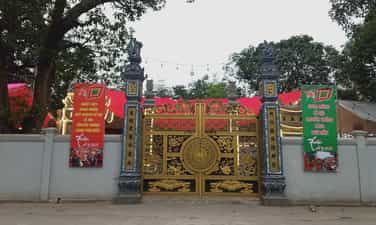
Phu Dien Temple is located in Huu Hoa commune, Thanh Tri district (now Dai Thanh commune, Hanoi). It is a historical and architectural monument associated with important landmarks of the local area. The temple is dedicated to two village tutelary deities: King Le Dai Hành and General Tran Thong, both natives of Phu Dien. According to legend, King Le Dai Hành stopped to hunt in this area while marching north to fight invaders. To commemorate this event, the village was named "Dai Hành" (meaning "Great Hành"). The temple still preserves the "Phu Dien Le Emperor's Genealogy," compiled by Nguyen Binh in 1572 and copied in 1710, recording the life and career of King Le Dai Hành. Although not large in scale, the temple boasts many distinctive architectural and artistic features. The main hall consists of five bays, with a two-bay sanctuary behind it. The wooden components are carved with dragons, leaves, cloud patterns, and various motifs of the four mythical creatures and four auspicious symbols. Within the grounds are also pillars, stone lions, and stone tigers, adding to the ancient and sacred atmosphere of the site. The temple currently preserves many valuable artifacts such as stone animal statues, wooden cranes, palanquins, dragon thrones, altars, incense burners, eight treasures, 10 royal decrees, genealogical records, and ancient steles. Every year, the festival takes place from the 7th to the 9th of March in the lunar calendar, featuring many folk activities such as dragon dance, wrestling, boat racing, Ca Tru singing, water puppetry, and traditional games. Source: Hanoi Famous Landmarks and Historical Sites
Hanoi
22 view
Rating : National Monument
Phu Dien Village Temple
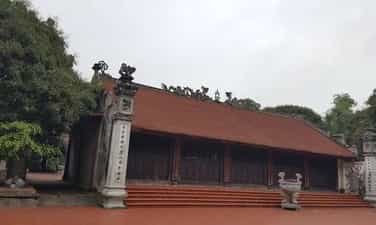
Located in Phu Dien village, Tu Liem ward, Hanoi city, Phu Dien communal house is a typical architectural and artistic relic, closely associated with the history and cultural traditions of the ancient Phu Dien region. This is also a region famous for its tradition of scholarship, having produced two Doctors of Philosophy and many other successful scholars throughout various dynasties. The communal house is dedicated to Bach Hac Tam Giang, also known as General Dao Truong, a legendary figure associated with the Hung King era, who commanded the navy to fight invaders and protect the country. Over time, the image of this tutelary deity has become a symbol of community cohesion and is revered and worshipped by the people of Phu Dien. Architecturally, the communal house is built in the shape of the Chinese character "Công" (meaning "work" or "achievement"), consisting of a main hall, a connecting corridor, and a rear sanctuary. The main hall has five bays, and the rear sanctuary has three bays. The wooden components are elaborately carved with familiar themes of traditional art such as the four mythical creatures, the four seasons, dragons, flowers, and scenes of folk life. The intricate carvings not only enhance the beauty of the structure but also reflect the aesthetic sensibilities and spiritual life of the inhabitants of the Northern Delta region. The communal house still preserves many valuable artifacts such as royal decrees, genealogical records, stone steles, dragon thrones, palanquins, cranes, incense altars, horizontal plaques, couplets, and ornate archways. Every year, the communal house festival is held on the 14th and 15th of the third lunar month, featuring a palanquin procession, water fetching from the ancient well, and many traditional cultural activities. With its harmonious blend of historical value, religious beliefs, and architectural art, Phu Dien communal house is not only a place to commemorate the village's tutelary deity but also a space preserving the memories, traditions, and cultural identity of Phu Dien village within the historical flow of Thang Long – Hanoi. Source: Hanoi Newspaper and Radio & Television.
Hanoi
22 view
Rating : National Monument
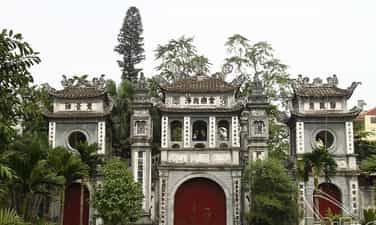
Bat Thap Pagoda
Bat Thap Pagoda – An Ancient Charm in the Heart of Hanoi. Located at 209 Doi Can Street, Ba Dinh Ward, Hanoi, Bat Thap Pagoda, also known as Van Bao Pagoda, is a Buddhist architectural relic with a long history, closely associated with the ancient Thang Long region. The name Bat Thap (Eight Towers) is believed to originate from the unique shape of the pagoda's base, which resembles a bowl. The pagoda is situated on high ground, offering a spacious and airy environment. Highlights include the two-story, eight-roofed gate, the seven-bay front hall, and the three-bay rear hall. The intricately carved wooden components depict dragons, tigers, and plants, creating a structure that is both robust and graceful. The pagoda still preserves a system of Buddha and Mother Goddess statues dating from the late Le Dynasty to the Nguyen Dynasty, most notably the Three Buddhas statues. In addition, there are many precious artifacts such as a pair of bronze cranes, incense burners, and especially the bronze bell "Bat Thap Pagoda Bell," cast in the second year of Gia Long's reign, which is 1803. With its historical, architectural, and artistic value, Bat Thap Pagoda is an important landmark that reflects the cultural landscape of ancient Thang Long, and is also a destination for tourists to explore the beauty of Buddhist architecture in the heart of Hanoi. Source: National Museum of History
Hanoi
55 view
Rating : National Monument
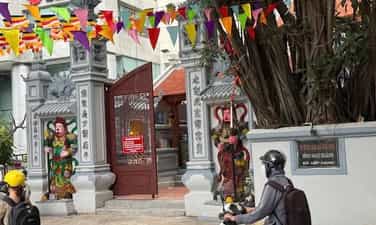
Ngoc Khanh Temple
Located beside Ngoc Khanh Lake in Ngoc Khanh Ward, Ba Dinh District, Hanoi, Ngoc Khanh Temple is a valuable architectural and artistic relic, built around the 18th century and classified as a historical monument by the Hanoi City government in 2006. The temple is dedicated to the Three Supreme Deities: Ha Hai Thai Giam Hoang Phuc Trung, Linh Lang Dai Vuong, and Thanh Hoang Uy Linh. These deities are associated with the protection of the country, the development of the western region of the capital, and the establishment of the ancient "Thirteen Villages" system. Beyond its historical value, Ngoc Khanh Temple also preserves many precious Han Nom artifacts and documents such as palanquins, dragon thrones, ornate doors, horizontal plaques, couplets, bells, bronze gongs, bronze incense burners, and censers. Notably, the temple also preserves four royal decrees, the earliest of which is the decree dated the 2nd year of the Minh Menh reign (1821). Despite numerous renovations, Ngoc Khanh Temple today retains its solemn appearance, serving as a place of religious worship for the people and a destination for tourists to learn about the history and culture of the Ba Dinh area. Source: Hanoi Famous Landmarks and Historical Sites
Hanoi
55 view
Rating : National Monument
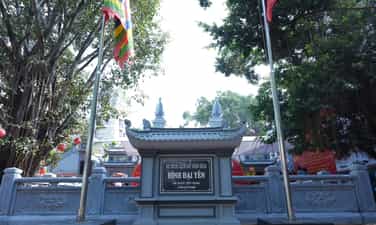
Dai Yen communal house
Dai Yen communal house in Ngoc Ha ward, Ba Dinh district, Hanoi, is a relic associated with the "Thirteen camps" area west of Thang Long citadel from the Ly dynasty. The communal house worships Princess Ngoc Hoa, who is said to have been a 9-year-old girl who made achievements in the war against the Champa army in 1104. Disguising herself as a man and following her father into battle, Ngoc Hoa disguised herself as a betel and areca seller and pipe tobacco seller to infiltrate the enemy camp, collect information and make signals to help our troops defeat the enemy. After her triumph, she returned to Dai Yen and transformed into the place where the communal house is built today. The communal house was greatly overhauled in 1886, including the communal house gate, left and right vu, front altar, grand altar and back palace. In the harem, there are still altars, statues, dragon thrones, tablets and ordinations through dynasties. Every year, the Dai Yen village festival is held on the 14th day of the third lunar month, with many rituals and especially the "Flower Offering" dance to commemorate Princess Ngoc Hoa. With historical, cultural and architectural and artistic values, Dai Yen Communal House was ranked a historical, architectural and artistic relic in 1990. Source: Hanoi Landscapes and Monuments
Hanoi
173 view
Rating : National monument
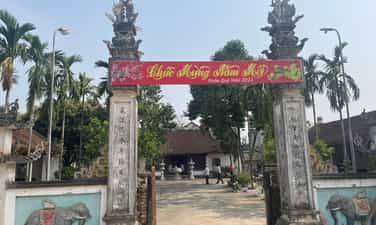
Phu Da Communal House
Phu Da communal house is an ancient communal house in Binh Phu commune, Hanoi city, ranked as an architectural and artistic relic by the Ministry of Culture and Information in 1993. This is also a place associated with the famous water puppetry tradition of Gia village, the Nom name of Phu Da village, which used to regularly perform water puppetry at Thay pagoda. The communal house has the architecture of a horizontal building consisting of 5 compartments, 2 wings, four curved roofs and a system of 7 trusses in the style of upper and lower beams. The wooden structures in the communal house still preserve many traces of ancient architecture. In particular, the carvings of dragons, figures riding horses, and young women singing demonstrate a sophisticated artistic level, typical of 18th century fine art. The dragon image with bulging eyes, large nose, bat ears, lanceolate mane, and vividly curved body bears the artistic style of the Later Le period. Phu Da communal house worships Dao Khang, a general of the Trung sisters. According to legend, he was instrumental in helping Hai Ba Trung fight the To Dinh invaders, at the same time establishing a farm in the Phu Da area, teaching people to farm, open ditches, dig streams, contribute to building the lives of local residents and was revered as a god. Besides historical and architectural value, the communal house also preserves many worship objects with artistic value from the Le and Nguyen dynasties, especially a set of ancient water puppet statues used in performances. The altar to the ancestors of the singing and dancing profession, customarily called the Saint Nha Tro, is also a testament to the village's long-standing folk art tradition. Every year, the village festival is held on the 3rd day of the 4th lunar month, with ceremonies commemorating Dao Khang and stick dancing and water puppetry activities at the pond in front of the communal house. Source: Hanoi Landscapes and Monuments
Hanoi
252 view
Rating : National monument
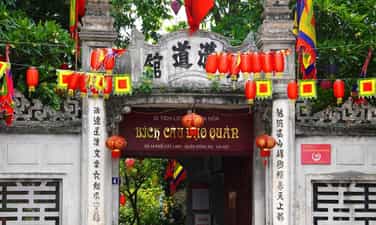
Bich Cau Dao Quan
Bich Cau Dao Quan, located on Cat Linh street, Hanoi, is a cultural - historical relic associated with the legends of Tran Tu Uyen, which is considered a "fairyland" in the middle of the ancient capital Thang Long. According to legend, in the past, Tran Tu Uyen was a scholar who built a reading shop on a high hill at the top of Bich Cau street. While attending a festival, he met a beautiful girl and fell in love. After that, he bought a painting of a girl resembling that girl and took it home. Strangely, from the painting came out a fairy named Giang Kieu. The two of them fell in love, together they took medicine to save people, practiced immortality, studied religion, and did many good deeds. After attaining enlightenment, Tran Tu Uyen was posthumously awarded the title of "An Quoc True Person" by King Le Thanh Tong. From the late 15th and early 16th centuries, this place was developed into a Taoist temple with strong Taoist imprints. Bich Cau Dao Quan used to be a place where Taoists practiced, and at the same time was also a place where guests, mandarins and scholars came to enjoy the scenery and recite poetry. Through many upheavals, the relics were degraded and destroyed, but were later restored by people many times. Today, Bich Cau Dao Quan has an architecture including Nghi gate, front altar, harem, Mother's house and guest house, and also holds many worship statues, stone steles and valuable artifacts. Source: Dan Viet Newspaper
Hanoi
243 view
Rating : National monument

Dong Nuoc Temple
Dong Nuoc Temple belongs to Ngoc Ha village, now Ngoc Ha ward, Hanoi. According to legend, in the past, this land often had springs of water gushing out from the ground into piles of water, so the people called it Dong Nuoc. Ngoc genealogy says that this place worships Princess Ngoc Nuong - who is said to be the daughter of the Dragon King, who once appeared to help King Tran Anh Tong fight the enemy. After winning the battle, the king repaired the temple and conferred divine title on her. The current temple bears many architectural marks of the Nguyen Dynasty, including three gates, garden, left moat, right moc, main temple and harem. Inside, the altars, hammock doors, and incense burners are exquisitely carved; especially the space to worship the Holy Mother of God and the gods in folk beliefs. Not only has architectural and religious value, Dong Nuoc Temple is also a place for community cultural activities for residents of Ngoc Ha village and neighboring villages. Every year, the temple festival is held on the 21st day of the third lunar month with incense offering ceremonies, palanquin processions and traditional cultural activities. With typical values of history, architecture and folk culture, Dong Nuoc Temple was ranked a national relic in 1993. This is one of the relics that contributes to preserving the mark of ancient villages west of the ancient capital of Thang Long. According to: Hanoi Landscapes and Monuments
Hanoi
327 view
Rating : National monument