Relic point Vietnam
Việt Nam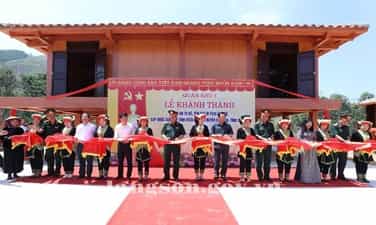
The location marking the crimes of the French colonialists in Lan Ang
The site marking the crimes of the French colonialists at Lan Ang, Hung Vu commune, Bac Son district, Lang Son province is a revolutionary historical relic associated with the years of arduous struggle of the army and people of Bac Son. Lan Ang used to be a safe revolutionary zone, a place to hide and protect revolutionary cadres and agencies, and a military training location for guerrilla forces. In particular, on February 9, 1945, the French colonialists and their henchmen ambushed and murdered comrade Hoang Van Han - Commander of the Bac Son Guerrilla Team in 1940. Comrade Hoang Van Han's sacrifice aroused hatred for the enemy and strengthened the local people's determination to fight. Lan Ang was also associated with the development process of the Bac Son revolutionary force, from the Bac Son Guerrilla Team to the National Salvation Army I, contributing to creating an important premise for the August Revolution of 1945. Today, at the monument there is a stele marking the historical event in 1945. With typical historical values, this location was ranked a National Historical Monument in 2020 by the Ministry of Culture, Sports and Tourism. Source: Department of Cultural Heritage
Lang Son
73 view
Rating : National monument
Ghost Gate Quan (Ghost Face Mountain)
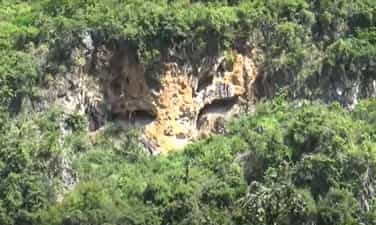
Devil's Face Mountain is a relic site in the Chi Lang Special National Monument Area, in Chi Lang commune, Lang Son province, with many historical, cultural and landscape values, attracting tourists to learn about the land that once marked many victories in the nation's history. The mountain impresses with a natural cliff shaped like a devil's face, with stone cavities forming quite clear eyes and noses. According to folk legend, Devil's Face Mountain is not a symbol of evil but is considered a god who protects the people and the country, associated with victories against foreign invaders in the land of Chi Lang. Here, there is also a story about Lieu Thang, general of the Ming Dynasty, who after being beheaded at Ma Yen Mountain, ran north, but when he reached the foot of Devil's Face Mountain, he was frightened, fell off his horse and died in battle. These folk tales contribute to the mystery and appeal of this place. Source: Vietnam Law Electronic Newspaper
Lang Son
159 view
Rating : Special national monument
Phia Diem cave site
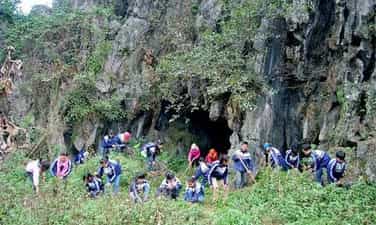
Phia Diem cave site - Remains of ancient Vietnamese residence. Phia Diem cave site located in Na Soong village, Yen Trach commune, Lang Son province, is a valuable archaeological relic, ranked as a national historical relic in 2003. Phia Diem Cave belongs to the Mai Pha cultural space, dating back to about 5,000–3,500 years ago, belonging to the late Neolithic - early Metal period. Through surveys, archaeologists have discovered many artifacts such as stone axes, flakes, bowls, ceramic bowls, and thousands of mollusk shells and animal bones and teeth. These vestiges show that ancient residents lived, worked and made a living here thousands of years ago. Not only has archaeological value, Phia Diem cave also possesses a quite unique natural landscape with stalactites and rocky mountains with interesting shapes. This is a suitable destination for those who love exploring history and nature. Today, preserving the Phia Diem site is important in preserving evidence of the residence and development of ancient residents in Lang Son land. Source: Vietnam Historical and Cultural Relics information page
Lang Son
186 view
Rating : National monument
Lang Nac Cave
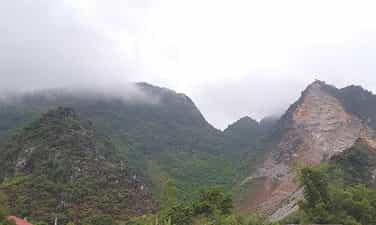
Archaeological relics of Lang Nac Cave - Lang Son. Lang Nac Cave, also known as Tiger's Mouth Cave or Pac Gac Cave, is an archaeological relic of special value in Lang Son province. The relic is currently located in Mai Sao village, Nhan Ly commune, Lang Son province. The cave is located in a limestone mountain range, about 100 meters above the valley floor, the cave entrance is about 18 meters wide and 16 meters high. In 1968, the relic was discovered by local people and reported to the cultural agency. Through many surveys, archaeologists have found thousands of relics, including prehistoric tools, pottery pieces and scraps dating back to earlier than the Bac Son culture. The discoveries at Lang Nac Cave are important in studying the history of prehistoric people's residence, showing that the land of Chi Lang was inhabited very early by humans. With outstanding archaeological values, Lang Nac Cave was ranked as a national archaeological relic in 2004. Today, the relic is still a valuable address in researching, preserving and introducing the long history of Lang Son land. Source: Dan Viet Electronic Newspaper
Lang Son
275 view
Rating : National monument
Wind Cave – Lang Son
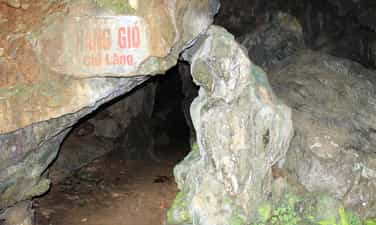
Lang Son Wind Cave (also known as Thong Gio Cave, the literal name is Mai Sao Phong Dong or Thuy Van Dong) is a national-level archaeological and scenic relic complex, famous for the wild and magical beauty of natural stalactites. The cave is located in Sao Thuong B village, Nhan Ly commune, Lang Son province. The cave has a total length of about 700 meters, 50 to 70 meters wide, including two main floors and a basement. The cave entrance is located halfway up the mountain, where cool winds blow all year round. Inside the cave is an interesting world of stalactites with many shapes such as lotus flowers, stone curtains, inclined waterfalls, stone bells, stalagmites and stone columns. Groundwater dripping down over time creates iridescent stalactites, along with clear, cool "wells of fairy water", making the space here even more magical. With unique natural beauty, Gio Cave is an attractive destination for those who love exploring caves and learning about the wonders that nature has created in Lang Son land. Source: Lang Son Newspaper and Radio and Television
Lang Son
269 view
Rating : National monument

Tham Khuyen Cave – Tham Hai
Tham Khuyen Cave – Tham Hai (Lang Son). Tham Khuyen - Tham Hai Cave is located in Tan Van commune, Binh Gia district, Lang Son province, in the Bac Son limestone massif and is one of Vietnam's typical archaeological sites. This is a place of special value in the study of human evolutionary history and is considered one of the cradles of prehistoric humans in Southeast Asia. Through archaeological excavations, scientists determined that about 500,000 years ago, the cave was inhabited by prehistoric people. Many precious fossils were discovered here, including teeth of Homo erectus, along with bones and teeth of many ancient animals such as Stegodon elephants, rhinoceroses, wild boars, dwarf orangutans and especially the giant ape Gigantopithecus. The highlight of the site is the discovery of remains of Homo erectus and Gigantopithecus coexisting in the same site. This is very rare scientific evidence, contributing to clarifying the evolution and migration of prehistoric humans and affirming the important role of the Lang Son area in the history of human development. Today, Tham Khuyen - Tham Hai Cave is not only an archaeological relic of national value but also a research, study and sightseeing site, helping visitors better understand human life hundreds of thousands of years ago and the traces still preserved in the heart of Bac Son limestone mountain. Source: Lang Son Province Investment, Trade and Tourism Promotion Center
Lang Son
567 view
Rating : National monument
Relics of house number 8
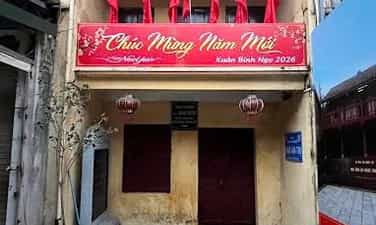
Relics of House No. 8 Chinh Cai Street, Ky Lua Street, Hoang Van Thu Ward, Lang Son City is where Comrade Hoang Van Thu stayed to study and participate in revolutionary activities from 1923 - 1927. Comrade Hoang Van Thu is a Tay ethnic person, born on November 4, 1909 in Phac Lan village, Nhan Ly district, Van Uyen district (now Nhan Hoa village, Hoang Van Thu commune, Van Lang district, Lang Son province). Comrade was born into a family with a tradition of patriotism, hard work and studiousness. As a patriotic young man with ambition, he participated in revolutionary activities from a very early age and devoted his entire life to the revolution. He is also a shining example of patriotism and the will to overcome all circumstances to realize the noble goals of the Party and the nation. To remember the merits of comrade Hoang Van Thu, all levels and sectors in the province have paid attention and focused on the construction and repair of revolutionary relics and cultural works related to him, including the relic of House No. 8 Chinh Cai Street, Hoang Van Thu Ward, Lang Son City. This is where comrade Hoang Van Thu stayed during his time studying at the French-Vietnamese school (from 1923 to 1927). Here, in addition to studying, he drafted a number of leaflets and slogans with the content of mobilizing the masses to fight for food, clothing, freedom and democracy and fight against colonial and feudal oppression. The original 2-storey boarding house has been restored, including the main house and yard area with an area of nearly 200 m2. After many renovations and embellishments, the house still retains many artifacts associated with the daily life of comrade Hoang Van Thu and remains intact in terms of architecture and layout. Currently, this place has become a "small museum" displaying the period of comrade Hoang Van Thu's revolutionary activities with more than 50 images, documents and artifacts, typically: a bed, copper pot, copper pot, bicycle frame, indigo clothes used by Comrade Hoang Van Thu during his revolutionary activities... According to: Lang Son Provincial Youth Union
Lang Son
772 view
Rating : National monument

Ta Phu Temple
Ta Phu Temple is located in the center of Ky Lua market street, now in Hoang Van Thu ward, Lang Son city. Ta Phu Temple was built in the 4th year of Chinh Hoa (1683) to worship the mandarin of the Later Le Dynasty named Than Cong Tai, the Left Admiral of the Han Dynasty, who was instrumental in building and expanding Ky Lua market street. The main door of the temple faces west, located on high ground, creating a majestic and sacred look. The temple's architecture is in the Cong style, consisting of two buildings: the Dai Bai and the Hau Palace, connected together in a bamboo tube style. The column and truss structures are all made of wood, the walls are made of bricks, the roof is covered with yin and yang tiles, and are not decorated with elaborate patterns or motifs. The most valuable artifact in the temple is a stone stele erected in the year of the Pig, the 4th Chinh Hoa era (1683). The stele's title is: Respecting the Left Admiral Than Cong Tai as a teacher and father; On the side is written the words: Guests of the two countries. The content of the stele talks about the people of the two countries remembering the merits of Han Cong Than Cong Tai with Lang Son, with the merchants of Vietnam and China and the expansion of the trading market at Ky Lua market street. The stone stele is placed in the stele house inside the temple, the stele is crafted in a cubic shape, the stele body is square cylindrical, 2.1m high; The base of the stele has two floors, the upper layer is carved in the style of a collapsed mahogany leg supporting the stele's body, the lower layer is carved with lotus petals overlapping three layers running around. The top of the stele is gradually tapered upward, with a stylized two-petalled lotus flower hugging the top; Currently, only three sides of the stele can be read, one side is faded. It can be said that this is a well-balanced, artistically beautiful stone stele; There is historical value about the Han character Than Cong Tai worshiped at the temple and his merits. In 1993, Ta Phu Temple was ranked as a National Monument by the Ministry of Culture, Sports and Tourism. The temple festival is held from January 22 to 27 every year, attracting a large number of visitors and was recognized as a National Intangible Cultural Heritage in 2015. Source: Lang Son Provincial Museum Electronic News Page
Lang Son
8046 view
Rating : National monument

Tien Pagoda Relics
Tien Pagoda - Tien Well is located in the heart of Dai Tuong Mountain, a large elephant-shaped mountain south of the city. Inside the mountain is a large cave where the famous Tien Pagoda is located, built during the reign of King Le Thanh Tong. The pagoda is often called Song Tien pagoda, located on Hoang Hoa Tham street, Chi Lang ward, Lang Son city, Lang Son province. The pagoda belongs to the Northern sect. According to legend, the ancestors descended from heaven to earth, so it is called Tien pagoda. They stepped on Dai Tuong mountain to create the Fairy Well to save the people from the drought. Then, because he was engrossed in the chessboard and forgot to return to heaven, he turned to stone here. Since then, the local people, wanting to remember his gratitude for saving sentient beings, honored him as the God of Agriculture in the region. Every year, a large festival is held to commemorate and bless the village. Unlike other caves located at the foot of the mountain, Chua Tien cave is located right at the back of the mountain. To get to the pagoda, you must pass 65 stone steps along the way with stalactites of various shapes such as fairies, lion heads, and bats. ,.. gives birth to an unusually sacred and mysterious feeling. The pagoda was formerly a temple located next to the Fairy Well founded by Phai Luong people, then because of deterioration, the pagoda was moved to Song Tien cave. The pagoda has a system of god statues, Buddha statues,... 13 Ma Nhai stele relics left by talented writers. In particular, the autograph of Ngo Thi Si wrote on the stone stele "Tran Doanh Bat Canh" eight beautiful scenes of Lang and this place is one of them. In the middle of the pagoda are Buddhas and Bodhisattvas. The right palace worships the hero Tran Hung Dao, the left palace worships the Holy Mother. Associated with the story of the Fairy God descending to earth to give the people of Phai Luong a precious water source when the drought was lasting. Because to repay the buffalo herding children in the village, they gave him a small handful of rice when he pretended to be a poor old beggar. So the fairy stepped on his heel and turned it into a Fairy Well carrying cool water. The small well is made entirely of stone and the water is always clear all year round. People tell each other to drink three sips of fairy water in the cave to pray for good fortune. The annual Tien Pagoda Festival is on the 18th day of the first month (lunar calendar). The pagoda was recognized by the Ministry of Culture and Information as a national historical and cultural relic in 1992. Source: Lang Son Tourism
Lang Son
8237 view
Rating : National monument
Ky Cung Temple
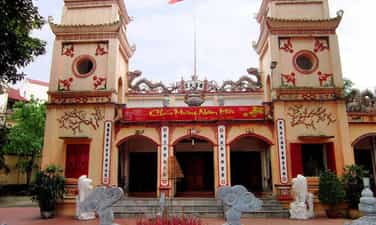
Located in Vinh Trai ward, on the north bank of Ky Cung river. Ky Cung Temple is considered a sacred place, originally a place to worship Giao Long (river god) with the task of keeping good weather and wind all year round. But later, Ky Cung temple worshiped Mr. Tuan Tranh. Legend has it that Mr. Tuan Tranh was a mandarin during the Tran Dynasty, sent to Lang Son to fight the enemy and protect the border. The history of the Temple is also associated with the story of the great mandarin Tuan Tranh, who was sent by the Tran court to defend Lang Son. During his stay in Lang Son, he commanded the enemy but lost, and many soldiers died. He was falsely accused of adultery, so he jumped into the Ky Cung river and committed suicide to prove his innocence. Due to his pure heart, he was divinely transformed into a pair of snakes (Mr. Coc - Mr. Dai) to become river gods residing at Ky Cung temple. Later, his injustice was proven and resolved by a Le Dynasty general, Ta Admiral Han, Than Cong Tai district (worshiped at Ta Phu temple). That's why there is a custom that on the festival day of Ky Cung temple (also from the 22nd to 27th day of the first lunar month like Ta Phu temple), there must be a procession of grand man Tuan Tranh's palanquin to Ta Phu temple to give thanks and worship. Than Cong Tai story. This explains the close connection of the two temple festivals Ky Cung - Ta Phu. In the temple, there is Ky Cung stone wharf, one of the eight beautiful scenes of Lang Son recorded in the ancient "Eight Scenes Town Camp" by Ngo Thi Sy called Ky Cung Thach Do. The reason for this is because according to historical records, in the past, any march or journey of envoys back and forth to China had to pass through this place. Boats and boats are close together, both river banks are always crowded with people or military officers converging. In this section of the Ky Cung river, there are many rocks blocking the middle of the river, rocks heaving on the water surface, waves crashing against the rocks according to the river level, sometimes rising and falling, creating layers of white foamy waves, flowing all over the area. The river strip looks very spectacular. Legend has it that every time Vietnamese envoys went to China, they stopped at the stone wharf, prepared offerings and burned incense at Ky Cung temple, praying for peace and success on the trip. Today Ky Cung Bridge is built right next to the stone wharf, connecting the North and South banks of Ky Cung River, dividing Lang Son City into two areas, the North bank is the living, business and trading place of the City's people. , on the south bank is the area where the province's administrative agencies are concentrated. Ky Cung Temple has been ranked as a national historical and cultural relic, and is currently a place that attracts a large number of people from all over to visit and worship. Source: Lang Son Tourism
Lang Son
8032 view
Rating : National monument