Relic point Vietnam
Việt Nam
Thien Quy Pagoda
Thien Quy Pagoda, also known as Kenh Pagoda, is a distinctive architectural masterpiece in Dong Hung District, Hung Yen Province. Built during the late Ly Dynasty and early Tran Dynasty, the pagoda has undergone numerous renovations and still retains many traces of its ancient architecture. The complex includes a triple gate, the main sanctuary, the ancestral hall, the Mother Goddess shrine, the guardian hall, a bell tower, and a system of ancient pagodas, creating a grand traditional Buddhist space. The architecture is particularly notable for the intricate carvings on the rafters, brackets, and reliefs, along with many Buddha statues, guardian deity statues, and valuable religious artifacts. The pagoda also preserves many stone steles, bronze bells, stone chimes, and ancient artifacts, including a bell cast during the Tay Son Dynasty. Notably, Thien Quy Pagoda is renowned for its system of ancient pagodas and architectural relics of significant historical and artistic value. Beyond being a place of religious worship, the pagoda is also closely linked to the community's cultural life through the Thien Quy Pagoda Festival, held annually with Buddhist rituals, processions, artistic performances, and many folk games. With its historical, architectural, and cultural values, Thien Quy Pagoda is a destination rich in the history of Dong Hung, contributing to the preservation of the traditional beauty of Vietnamese folk culture and beliefs. Source: Buddhist World
Hung Yen
87 view
Rating : National Monument
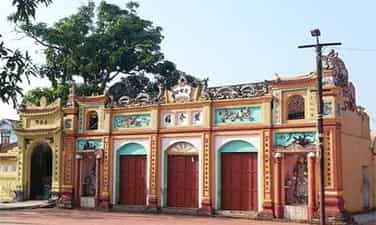
Bong Dien Temple
Bong Dien Temple - Place to worship female general Que Hoa. Bong Dien Temple is located in Tan De commune, Vu Thu district, Thai Binh province, now Hung Yen province. This is the place to worship female general Do Thi Que Hoa, a talented general who participated in the Hai Ba Trung uprising against the Eastern Han army in the early years of the Common Era. According to local genealogy, Ms. Que Hoa was a person of martial arts and literature, recruited insurgents, and generals like Bat Nan and Le Chan to fight to protect the country. She heroically sacrificed her life in the resistance war in 1943, and the people built a temple to commemorate her merits. Bong Dien Temple belongs to the Bong Dien communal house - temple - pagoda complex, built in 1848 under the reign of King Tu Duc and ranked as a National Historical-Cultural Monument in 1989. Every year, the temple festival takes place in the third lunar month with palanquin procession rituals and many traditional cultural activities, attracting a large number of people and tourists from all over. Source: People's Army Newspaper
Hung Yen
572 view
Rating : National monument
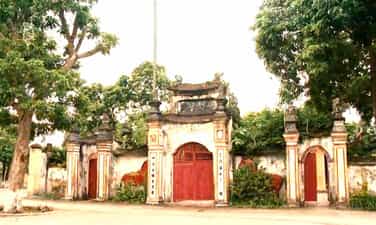
Ngoc Que Temple
Ngoc Que Temple is located in Ngoc Que village, Quynh Hoa commune, Hung Yen province (formerly in Quynh Hoa commune, Quynh Phu district, Thai Binh province), close to the foot of the Luoc river dike and about 500m from the river. With a convenient location by both road and waterway, the temple has long become an important religious place for local people. The relic is a place to worship Saint Do Huyen - a general who helped the 18th Hung King fight foreign invaders, protect the territory and reclaim Ngoc Que land, establish villages, and develop production. People remember his merits and worship him as the village's tutelary god. In addition, the temple also worships King Tran Thai Tong and National Cong Tiet Tran Hung Dao, associated with the event of recruiting troops and preparing food and provisions for three times of resistance against the Yuan and Mongols. Ngoc Que Temple has the architectural style of the Nguyen Dynasty with items such as the temple gate, altar, shrine and harem. The relic also preserves many artifacts of historical and artistic value such as horizontal lacquered boards, parallel sentences, gilded lacquered grand letters, wooden altar swords, bronze bells, worship statues and many sacrificial objects dating from the Le and Mac dynasties. Every year, on the 8th day of the 8th lunar month, the Ngoc Que Temple festival is held with traditional sacrificial rituals and many folk cultural activities, attracting a large number of people and tourists from all over to offer incense, commemorate and pray for peace. Source: Vietnamese historical and cultural relics
Hung Yen
555 view
Rating : National monument
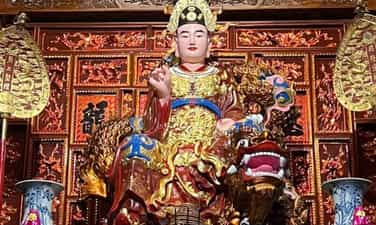
Hung Long Temple – National Intangible Cultural Heritage Festival
Hung Long Temple - Spiritual destination associated with the National Intangible Cultural Heritage festival. Hung Long Temple (Hung Long Linh Tu) located in Dong Tien Hai commune, Hung Yen province, is a historical - cultural and religious relic associated with the custom of worshiping Quan Hoang Bo - a saint in the Four Palaces belief revered by people in coastal and river areas. According to legend, Quan Hoang Bo once appeared to help people fight natural disasters, protect dykes and bring about a peaceful life, so people built a temple to commemorate and worship him. Over the centuries, the temple has become an important religious place for local residents. The temple was built according to the traditional architecture of the Northern Delta with items such as pre-sacrificing, middle-class, main temple and forbidden palace. Not only has architectural and historical value, the temple also preserves many artifacts, worship objects and unique cultural values, contributing to reflecting the spiritual life of residents of the estuary area. Associated with the relic is the Hung Long Temple Festival, held annually from the 10th to 15th of the 6th lunar month. The festival stands out with the water procession ceremony (water supply ceremony to pray for fish), traditional sacrificial rituals and many folk cultural activities such as lion dance, dragon dance, tug of war, wrestling and tom whore's nest, expressing the desire for favorable weather, a peaceful country and a prosperous life of river residents. In July 2025, Hung Long Temple Festival was registered by the Ministry of Culture, Sports and Tourism on the National Intangible Cultural Heritage List, contributing to affirming the typical cultural value of the monument. According to: Dong Tien Hai commune's electronic information portal
Hung Yen
307 view
Rating : National monument

Memorial House of Mrs. Hoang Thi Loan (Uncle Ho's Mother)
Ms. Hoang Thi Loan - President Ho Chi Minh's mother was born in a land rich in revolutionary tradition and studiousness; The Hoang family's original hometown is in Van Noi village, Hong Tien commune, Khoai Chau district. In her, she brings together the noble qualities of a traditional Vietnamese woman: responsible, kind, compassionate, hard-working, and devoted to her husband and children. To pay tribute and honor her great contributions, in 2003, the People's Committee of Hung Yen province decided to start construction of a church (now the Memorial House) on the land of Van Noi village, Hong Tien commune. This is a project with bold traditional architecture, in harmony with the space and landscape of the Northern Delta village, in the old campus of Van Noi communal house. Inaugurated in 2005, this is one of the important works of the province, a place for people from all walks of life inside and outside the province to offer incense, visit, and commemorate the woman who sacrificed her life for her husband, children, and family. dedicating to the Vietnamese people a great son - the much beloved President Ho Chi Minh. On July 26, 2023, the Chairman of Hung Yen Provincial People's Committee signed a decision to classify Mrs. Hoang Thi Loan Memorial House as a Provincial Historical Relic under No. 1555/Decision - Chairman of the People's Committee. After 20 years since construction, some items of the project have deteriorated. With the attention of provincial leaders and departments, branches, in early 2024, Khoai Chau District People's Committee implemented the Project to restore and embellish Mrs. Hoang Thi Loan Memorial House and auxiliary works, including Items: Restoration and embellishment of Memorial House relic items; renovating and upgrading the road to the Memorial House and a number of other items... After 6 months of construction, up to now, the work of restoring and embellishing items and auxiliary works of Mrs. Hoang Thi Loan Memorial House has been completed. complete. Relics of the Memorial House of Mrs. Hoang Thi Loan, making this place a red address, an attraction for visitors to learn about history... Source: Department of Culture, Sports and Tourism.
Hung Yen
6105 view
Rating : Provincial level relics

Communal house - Temple in Mao Xuyen village
Based on the preserved legends and ordinations, Mao Xuyen Village Communal House was built to worship the Village God, Mr. Hoang Van Lang, also known as Duc Hoang Hai, the second son of female general Ngoc Chi during the Hai Ba Dynasty. Trung were the people who had the merit of expelling the Southern Han army in the years 40 - 43 AD. The communal house has a "first, last, last" architecture. Currently, the communal house still retains two ordinations and precious artifacts such as stone stele, great paintings, parallel sentences, hammock doors and a system of worship statues. Behind the communal house is the pagoda, a place to worship Shakyamuni Buddha, with Dinh script architecture with many ancient features still preserved such as Tam Quan, front hall and upper palace. During the resistance war against the invaders, Mao Xuyen Communal House - Pagoda was also a place for revolutionary activities of local pre-uprising comrades. With that historical meaning and value, at the ceremony, authorized by the Chairman of the Provincial People's Committee, comrade Mai Xuan Gioi, Deputy Secretary of the District Party Committee - Chairman of the District People's Committee, awarded the provincial-level relic ranking certificate Dinh- Mao Xuyen Village Pagoda for officials and people of Nguyen Trai commune. Source Electronic information portal of An Thi district, Hung Yen province.
Hung Yen
6105 view
Rating : Provincial level relics

Banyan tree and La Tien Temple
Historical relics Banyan Tree and La Tien Temple are located in Nguyen Hoa commune (Phu Cu, Hung Yen). This is a place to commemorate the heroic souls of 1,145 heroic martyrs, revolutionary soldiers and our compatriots who were killed by the French colonialists during their occupation here (from 1949 - 1954), including 121 officers and soldiers. People of Nguyen Hoa commune (Phu Cu, Hung Yen). During the resistance war against the French colonialists, La Tien was an area with an important strategic military position, blocking the south of Hung Yen, the north of Thai Binh and the west of Hai Duong, so the enemy took this as an occupation position. , set up posts and blockades to prevent the reinforcement of human resources, material resources, weapons, guns, ammunition, food, etc. from neighboring areas and suppress the revolutionary movement of Hung Yen's army and people. Right from the beginning of the occupation, the enemy terrorized the country in an attempt to establish an extremely brutal "white belt". They captured thousands of people and guerrillas in the area and took them to La Tien post to brutally torture and kill them in barbaric ways. In just nearly 5 years of occupation in La Tien (1949 - 1954), the enemy killed 1,145 revolutionary soldiers and patriots. But the enemy's brutality not only failed to suppress the revolutionary movement, but also fanned the flames of hatred and the stubborn will to fight for independence and freedom of our army and people. The attack to destroy La Tien post conducted by our army and people at the end of January 1954 contributed to the resounding victories of the army and people of Hung Yen province in the resistance war against the French colonialists; of great significance on the battlefield across the country, contributing to weakening the enemy, creating conditions for our army and people to win Dien Bien Phu. With special historical values, the Banyan Tree and La Tien Temple have been recognized as National Historical Sites according to Decision No. 4007/Decision - Ministry of Culture, Information and Tourism dated November 18, 2015 of the Ministry. Culture, Sports and Tourism. Today, this relic has become a symbol of the resilient, indomitable and rebellious spirit of the people of Phu Cu in particular, the people of Hung Yen and the whole country in general. This place is not only a place to set up hate stele and engrave the crimes of the enemy, but also a place to pay tribute to the soldiers and compatriots in the province and neighboring provinces who sacrificed heroically to protect every inch of land. , the hometown river. This place has also become a red address to educate the young generation about revolutionary traditions, patriotism, heroism, and resilience of our officers, soldiers, and compatriots. Electronic information portal of Phu Cu district, Hung Yen province.
Hung Yen
6371 view
Rating : National monument.

Tong Tran Temple
Tong Tran Temple is located in a prime location, on high and open land in the south of An Cau village, Tong Tran commune, Phu Cu district, Hung Yen province. Tong Tran Temple has the original name "Tien Can Linh Tu", the common name is Thuong Temple, Quan Trang Temple, people often call it Tong Tran Temple. Legend has it that the temple was built on the foundation of Tong Tran's old house from the Ly dynasty. The temple is located separately from the residential area on a campus of about 5 acres in the North. In 1950, the temple was destroyed. After many restorations, in 1998, Tong Tran temple was renovated beautifully. Tong Tran Temple has a two-story, eight-roof architectural gate. The ancient part of the match is inscribed with the Chinese characters "Luong Quoc Trang Nguyen tu mon" (the gate of Luong Quoc Trang Nguyen temple). In the middle of the yard is a scroll-shaped stone gate carved and crafted meticulously and delicately, with content praising the beauty of the temple in Chinese characters. With the principle of "When air meets wind, it spreads, when it meets water, it stops" in feng shui, the "dragon eye pond" in front of the relic's yard has clear blue water all year round, meaning it is a water gathering point, bringing prosperity. prosperity for all people in the village. The relic has a Nhi-shaped architecture, following the ancient architectural style, including two sacrificial buildings and a harem. The front altar consists of 3 rooms and 2 wings made in the style of a gable wall. In the middle of the roof line is a tiger head with the word Tho in its mouth and a pair of moon faces, with two dragons flanking the moon on both sides. The three front altars have carved flower and leaf images and written Chinese characters on the three front altars. In the Pre-Saint space, the floor at the 2 gable ends is 45cm higher than the base of the 3 middle spaces. The column base system is a ball-shaped platform. Supporting the roof are sets of trusses structured in the style of gong racks. The components are smoothed and sharpened, creating a strong and stable appearance for the temple. In the middle is the Council altar, above the altar are 3 gilded lacquered hammock doors, above the hammock door is the Chinese character "Luong Quoc Trang Nguyen". The room on the right hangs a scroll, the room on the left is a brooch written in Chinese characters, with elegant, sharp handwriting, inscribed with 8 verses praising the beauty of the land as well as the bright, airy space of the temple area. . The harem has a gable wall architecture, consisting of 3 rooms and 2 wings. The structure is two sets because the middle has a gong stand-style architecture. In the middle of the star anise is a tiger head with the word Tho and surrounded by flower strings. The remaining ends all touch a stylized dragon's head with an upside-down sword and spear. This way of creating has both a load-bearing and decorative effect, somewhat reducing the roughness of architectural structures. The middle space of the harem is where the coffin and statue worshiping Trang Nguyen Tong Tran are placed, the two side rooms are the thrones worshiping Duong Tam Kha and Doan Thuong. In the relic grounds, in addition to the main worship area, there is also the Mother Temple, which is a place to worship Mrs. Cuc Hoa, Tong Tran's gentle wife. She was also the one who took care of his mother for 10 years when Tong Tran was on a mission. The new Model House was rebuilt in recent years on the old foundation with simple architecture. The building has a Dinh-shaped architecture consisting of two altars and a harem. The altar consists of three rooms and two left, with a simple truss-style architecture. The components are smoothly planed and sharpened without engraved patterns. The middle space is where the statue of Mrs. Cuc Hoa is placed. To commemorate the merits of talented people, every year the Tong Tran temple festival is held from the 10th to the 17th of the 4th lunar month, of which the 13th and 14th are the main festival days. With historical, cultural, architectural and artistic values, Tong Tran Temple has been recognized by the State as a national historical relic according to Decision No. 2387/Decision dated December 30, 1991. Source Electronic information portal of Phu Cu district, Hung Yen province
Hung Yen
6737 view
Rating : National monument.

Temple and mausoleum of General Doan No
The temple worshiping General Doan No is located on a campus of more than 1,000 m2 in Phuong Trung village, Phuong Chieu commune (Hung Yen city). The land here is good, the trees are green in all four seasons. Senior General Doan No was the founder of the country during the Later Le Dynasty. He was a talented general of Le Loi, who had great contributions in the Lam Son uprising against the Ming army in the 15th century. He originated from a fairly ancient clan in Ke Nua village (now in Trieu Son district, Thanh Hoa province). He was born in 1393, the second child of Mr. Doan Quyet - who passed the third exam to become a palace doctor during the Tran dynasty. In the year of At Mui (1415), the Ming enemy massacred the Nong Cong area, killing more than 3,000 people. In Ke Nua alone, only 18 people escaped, including his two brothers. In 1416, Doan No returned to Le Loi, participating in the Lung Nhai oath ceremony and the Lam Son uprising. He was one of Le Loi's first generals. In 1425, Le Loi sent general Doan No along with military officer Tran Nguyen Han to persuade the people, bringing 1,000 troops to attack the South, liberating Tan Binh and Thuan Hoa citadels (belonging to the provinces from Quang Binh to Thua Thien). Hue today) to expand the area, forcing the Ming army to retreat into the citadel. From then on, the Lam Son insurgent army had a solid rear base and advanced to counterattack to the North to liberate Thang Long. After the successful resistance war against the Ming army, when considering his merits and rewards, he was appointed by King Le Thai To as a Lieutenant General, a General of the Left, with the title Dai Tri Tu. Afterwards, he was awarded the title of Tru Quoc Cong Thuong General in charge of Son Nam. He was given a village in Huong Chieu village, now Phuong Chieu commune. He brought his whole family from the capital to Huong Chieu, forming the Doan family in Hung Yen. The temple of General Doan No was built right after his death (1439). In the past, the temple and mausoleum of Senior General Doan No was just a small temple with Dinh script architecture. Over time, the temple was restored and embellished to become larger and more beautiful. Currently, the temple has a Tam-shaped architectural structure including the Pre-Temple, Central Tu and Rear Palace. The altar consists of 5 rooms made of ironwood, built in the ancient style, with four pillars filled with lotus-filled boats and carved flowers and leaves. In the center of the altar room is the great pagoda "Tran Gia Vu Liet" below which there is an incense altar and a 19th century sculpture. On both sides are parallel sentences (Le dynasty, Thai To discovered Nam Son Loi Dai Hien - Founding the country's god Doan outstanding general and hero). For the Trung Tu court, a shrine was placed to worship Doan No's father, Mr. Doan Quyet, and his mother, whose family name was Nguyen. In the most solemn position of the Harem Palace, there is a statue worshiping Senior General Doan No. The items are relatively solid, meeting the spiritual belief needs of Doan family descendants and local people who come to worship and show gratitude and respect to their ancestors. 500m from the temple is the tomb of Senior General Doan No. The mausoleum was built on the land "Figure of a dragon drinking water" (shaped like a dragon drinking water) with the position of Thanh Long on the left and White Tiger on the right. His tomb is located on a high mound, surrounded by fields. The mausoleum has an area of 16 m2 and is built with 2 floors and 8 roofs. The front of the mausoleum embossed the words "Doan No Cong Than". Next to the mausoleum is a post-commission stele recording the life and career of General Doan in the national language so that future generations can pay their respects and commemorate a typical famous general of the Le Dynasty who was worshiped by the whole country. Through many changes in history, up to now, the temple of General Doan No still preserves many valuable artifacts, typically the genealogy book of the Doan family in Phuong Chieu, the genealogy book of the Doan family, a genealogy book of the Doan family. Ordination of the Le Dynasty, great paintings, couplets and statues of Senior General Doan No... Although the number of artifacts is not large, they have made an important contribution to the study of the country's history, the history of famous people and the history of the village. commune and family blood relationships. Besides, some artifacts and worship objects also enrich the traditional art of the nation. Every year, at the beginning of spring, local people and the Doan family hold a festival in mid-January to commemorate General Doan No. With typical and unique values, the temple and the mausoleum of General Doan No were ranked as national historical relics on April 20, 1995. Source: Department of Culture, Sports and Tourism
Hung Yen
5848 view
Rating : National monument.

Nguyen Thien Thuat memorial area
Nguyen Thien Thuat (1844 - 1926), pseudonym Manh Hieu, from Xuan Duc village, Bach Sam district, Duong Hao district (now Xuan Dao village, Xuan Duc commune, My Hao town). Born in a poor Confucian family, in 1870, Nguyen Thien Thuat passed the baccalaureate. In 1874, he was instrumental in suppressing the enemy in Kinh Mon prefecture (Hai Duong) and was appointed as the state regent. In 1876, he passed his bachelor's degree and held the position of governor of the Tu Son government. He worked as an honest, fair, civil and martial mandarin. In the year of the Cat (1879), he held the position of Tan Tuong Quan, and in 1881, he held the position of Huong Hoa Son, Chief Minister of the Office, and Tan Tuong Quan, Deputy Commander of Son Tay province. Therefore, at that time he was called Tan Thuat or Tan Dong (because he was from Eastern province). When the French colonialists invaded Tonkin, Nguyen Thien Thuat twice resisted royal orders, determined to fight the French. The first time, he retreated to Dong Trieu, often contacting Dinh Gia Que - leader of the Bai Say insurgent army, recruiting and developing insurgent forces in the delta. On November 12, 1883, Nguyen Thien Thuat's insurgent army attacked Hai Duong province to surround the enemy, but the force was still weak, so he had to retreat. The second time at the end of 1883, after signing the Harmand treaty, the court continued to make concessions to the French colonialists, dismissed troops in Tonkin and required mandarins to return to the capital to wait for instructions. Nguyen Thien Thuat brought The army went to Hung Hoa (Tuyen Quang) with Nguyen Quang Bich to defend the citadel. In March 1884, Hung Hoa citadel fell, he and a number of generals determined to stay and fight against the French. After Lang Son citadel fell (March 1885), Nguyen Thien Thuat fled to Long Chau (China) to prepare forces to continue fighting. In July 1885, King Ham Nghi issued Can Vuong decree, Nguyen Thien Thuat returned to the country to establish Bai Say base, led the uprising against the French, continuing the career of the Dinh family (at this time Dinh Gia Que had passed away). ). King Ham Nghi conferred on him the title "Bac Ky Hiep Thong Military Mandarin Gia Chan Lieutenant General", the people also called him Mandarin Hiep Thong, and many talented generals followed him. Bai Say was a particularly strategically important area in the Red River Delta at that time. With such a prime location, right from the time the French army invaded the Tonkin provinces (1883), Bai Say was built into a base against the French colonialists of the Dinh Gia Que insurgent army. Since 1885, based on the base area that the Dinh family had previously built, with the strategic vision of a military man, Nguyen Thien Thuat continued to expand the Bai Say base area to almost every government and district. of Hung Yen and Hai Duong provinces, including Khoai Chau, Van Lam, Van Giang, My Hao, Yen My,... With the wise leadership of Nguyen Thien Thuat, the Can Vuong movement on Bai Say land quickly broadcast developed in all aspects, becoming one of the largest anti-French centers at the end of the 19th century in Tonkin. In 1888, Hoang Cao Khai sent troops to suppress the movement, using Dong Khanh's name to bribe and persuade Nguyen Thien Thuat to surrender and promise to restore his title. Nguyen Thien Thuat wrote in this document the four words "Bat khang thu chi" (Refuses to accept instructions). Afterwards, he handed over power to his younger brother, Nguyen Thien Ke, to continue maintaining the uprising, going to China with the policy of asking for aid to strengthen anti-French forces. During the rest of his life in China, Nguyen Thien Thuat often contacted Ton That Thuyet and a number of comrades, including Nguyen Chi Thuong, his second son. Later, Thuong was captured and sent to Con Dao. He, together with Foreign Marquis Cuong De and Phan Boi Chau, went to Dong Kinh to establish the "Vietnam Duy Tan Phuc National Assembly" with the purpose of finding ways to liberate the nation, expand people's knowledge, and create conditions to bring Vietnamese students abroad. studying abroad,... Nguyen Thien Thuat died on May 25, 1926. His grave is located on a hill in Quan Kieu village, on the outskirts of Nanning city, Guangxi province (China). The tombstone is engraved with the words "Vietnam revolution. Late General Nguyen Cong Thien Thuat - Tomb. On January 30, 2005, his remains were moved to be buried in Xuan Duc commune, My Hao district, Hung Yen province. General Nguyen Thien Thuat's memorial area is located on Xuan Nhan land - where the forward guard post of the old Bai Say insurgent army was located, with a total area of 1621.9m2, including many items: gate, memorial house, house. stele, grave of General Nguyen Thien Thuat and relief wall. The Bai Say Uprising (1885 - 1892) was the largest, longest-lasting and most resonant uprising in the Northern Delta region during the "Can Vuong" movement against the French colonialists at the end of the 19th century. The uprising lasted a decade, going through three stages, associated with the names of three leaders: Dinh Gia Que, Nguyen Thien Thuat and Nguyen Thien Ke. But it can be affirmed that Nguyen Thien Thuat is the most typical leader, the soul of the Bai Say uprising. With the above values, Nguyen Thien Thuat Memorial Area, Xuan Duc commune, My Hao town, Hung Yen province has been ranked a national historical relic by the Minister of Culture, Sports and Tourism in Decision No. 3077/Decision - Ministry of Culture, Sports and Tourism dated October 27, 2020./. Source Department of Cultural Heritage.
Hung Yen
6044 view
Rating : National monument.