Relic point Vietnam
Việt Nam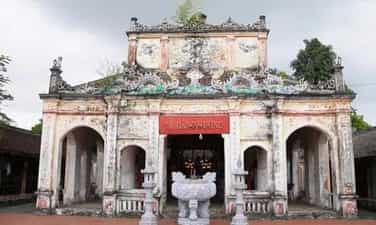
Gray Temple
Located in Lac Dao village, Hong Quang commune, Nam Dinh ward, Ninh Binh province, Xam Temple, also known as Dinh Xam or Dinh Hat, is a place of worship dedicated to General Tran Minh Cong, whose real name was Tran Lam – a figure who helped Dinh Bo Linh quell the rebellion of the 12 warlords and contribute to the unification of the country. Xam Temple has a long history, with architecture and art developed and refined over many periods, from the Mac Dynasty, the Later Le Dynasty to the Nguyen Dynasty. The complex includes the main temple, the front hall, the middle hall, the main sanctuary, and two side halls. Particularly noteworthy is the exquisite wood carving system featuring dragons, phoenixes, mythical creatures, tigers, and various animals and flowers, clearly showcasing the characteristics of traditional wooden architecture from the 16th-17th centuries. Beyond its architectural value, Xam Temple also preserves unique folk cultural features. Every year, a festival is held from the 17th to the 19th of August in the lunar calendar, featuring folk singing, dancing, and boat racing competitions. Notably, the locality still preserves 10 ancient folk songs and 10 traditional <i>ca trù</i> songs, along with many traditional dances. These cultural activities are what gave the site its name, "Singing Temple." Source: Nhan Dan Newspaper
Ninh Binh
21 view
Rating : Special national monument
Ma Yen Mountain
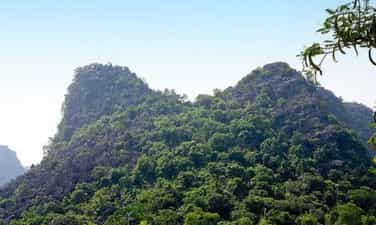
Ma Yen Mountain - the resting place of two kings of the Dinh and Early Le dynasties. Ma Yen Mountain is a limestone mountain located in the Hoa Lu Ancient Capital Special National Monument, Ninh Binh province, shaped like a saddle, about 80–200m high. The mountain is associated with the history of the Dinh - Early Le dynasty, the dynasty played a particularly important role in the nation's history in the 10th century. This is also where the tombs of King Dinh Tien Hoang and King Le Dai Hanh are located. On top of Ma Yen mountain is the mausoleum of King Dinh Tien Hoang. To reach the mausoleum, visitors must pass more than 200 stone steps along the mountainside. From above, you can see a panoramic view of the ancient capital of Hoa Lu with rolling limestone mountains, fields and peaceful villages. The elevated position also creates a space that is both spacious and sacred for the resting place of the king who had the merit of suppressing the rebellion of 12 warlords, unifying the country and establishing the state of Dai Co Viet in 968. At the foot of Ma Yen mountain is the mausoleum of King Le Dai Hanh, located in a large campus, leaning against the mountain and facing the field ahead. If King Dinh's mausoleum is located on the top of the mountain, then King Le's mausoleum is at the foot of the mountain, creating a special feature for the relic complex. Le Dai Hanh was the successor of the Dinh dynasty, and had great contributions in leading Dai Co Viet's army and people to defeat the invading Song army in 981, protecting the country's independence. Today, Ma Yen Mountain and the two kings' tombs are not only famous attractions of the ancient capital of Hoa Lu but also a place for tourists to learn about a turbulent but significant period in the nation's process of building and defending the country. Source: Dan Viet Electronic Newspaper
Ninh Binh
283 view
Rating : Special national monument
Cat Tuong memorial area
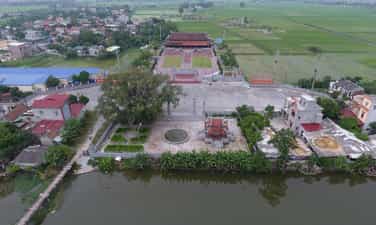
Cat Tuong Memorial Area - a place to preserve memories of Uncle Ho. Cat Tuong Memorial Area, Binh My commune, Ninh Binh province, was built on the exact spot where Uncle Ho visited and encouraged the people to fight drought on January 14, 1958. Here, Uncle Ho praised the people's working spirit and encouraged them to speed up the process of building dams and bringing water to save thousands of acres of rice that are suffering from drought. Following Uncle Ho's instructions, local people completed the Cat Tuong dam in less than 5 days. Today, the memorial area has a stele house, a temple to Uncle Ho and an area displaying many precious pictures and documents about his visit in 1958. In particular, the banyan tree planted by people where Uncle Ho once stood and talked is still green, becoming a sacred mark of the relic site. In 2018, Cat Tuong Memorial Area was recognized by the Ministry of Culture, Sports and Tourism as a national historical and cultural relic. This is not only a place to commemorate and remember Uncle Ho's feelings for the people, but also a "red address" for traditional education, attracting many union members and children to visit, offer incense and learn about the history of their homeland. Source: Nhan Dan Newspaper
Ninh Binh
533 view
Rating : National monument
Cinnamon Tree Temple
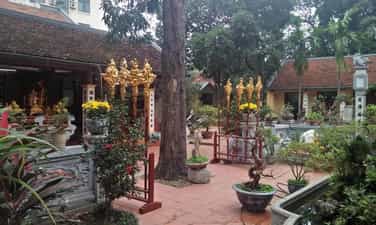
Cay Que Temple is located in My Tan commune, Ninh Binh province (formerly in My Tan commune, My Loc district, Nam Dinh province), on the banks of the Dao River, near the confluence of the Red and Dao rivers. This is an ancient temple worshiping the Holy Spirit Lang Dai Vuong - the deity who helped the Ly dynasty fight the enemy and protect the country, and is also worshiped by the people as the water god protecting the lives of river residents. According to legend, Linh Lang Dai Vuong is Prince Hoang Lang, son of King Ly Thai Tong. From a young age, he had unusual qualities. When the country was invaded by foreign invaders, Hoang Lang asked the king for an elephant and a flag to go into battle and achieve many glorious victories. After quelling the enemy, he returned to the aquarium and was ordained by the royal court as Linh Lang Dai Vuong, Supreme Phuc Than, allowing many localities to set up temples to worship. Cay Que Temple was built in the style of Tam, including front hall, middle hall and forbidden palace. Even though it has been restored many times, the monument still preserves many architectural and artistic values and a system of precious artifacts such as great characters, parallel sentences, stone stele, bronze bells and carvings in the artistic style of the Nguyen Dynasty. In addition to worshiping Linh Lang Dai Vuong, the temple also worships Bo Cai Dai Vuong Phung Hung and a number of water and mountain gods. Every year, the Cay Que Temple festival is held on the 22nd day of the eighth lunar month with many traditional rituals, notably the ritual of carrying water from the confluence of the Red River - Dao River to the temple to offer offerings, praying for peace and prosperity in the country, good weather and good harvests. Source: Vietnam Law Electronic Newspaper
Ninh Binh
572 view
Rating : National monument
Thai Vi Temple
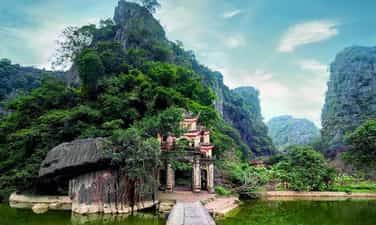
Thai Vi Temple is located in Van Lam village, Ninh Hai commune, Ninh Binh province. The relic is located in the Tam Coc - Bich Dong scenic area, amidst limestone mountains with many caves, rivers and unique natural landscapes. This place still preserves many historical marks associated with the Tran Dynasty and the Vu Lam base area in the 13th century. Thai Vi Temple is a place to worship Tran Dynasty kings including Tran Thai Tong, Tran Thanh Tong, Queen Mother Hien Tu and co-worshipping kings Tran Nhan Tong and Tran Anh Tong. According to historical records, the Vu Lam region was once an important base for Dai Viet's army and people in the resistance war against the Yuan-Mongol army. After the country was at peace, the Tran kings encouraged people to reclaim wasteland, expand fields, establish villages, and contribute to the development of this land. Thai Vi Temple was built to commemorate the great contributions of the Tran Dynasty kings to the country in general and the Vu Lam region in particular. Thai Vi Temple is an architectural work in the style of the Nguyen Dynasty. The main building consists of a three-arched building with 28 stone columns about 3.2 meters high, including 22 square stone columns. The round stone pillars in the third palace are carved with images of four sacred animals and rolling water dragons with delicate and skillful lines. The system of beams, rafters, and rafters are all made of ironwood. In the relic grounds, there is also a bell tower built during the reign of King Duy Tan, with a two-story, eight-roofed structure with 32 ironwood columns. The system of columns, beams, traps and roof support structures are all made of ironwood. The relic still preserves many valuable historical, cultural and artistic artifacts. Thai Vi Temple was not only the resistance base of Dai Viet's army and people during the resistance war against the Yuan - Mongol army in the 13th century but also a base for serving the revolution during the resistance war against the French colonialists. Today, the relic is a place for spiritual and cultural activities of local people, as well as a place for annual traditional festivals, contributing to preserving and promoting national cultural identity. Source: Website of Department of Tourism of Ninh Binh province
Ninh Binh
627 view
Rating : National monument
Lang Temple
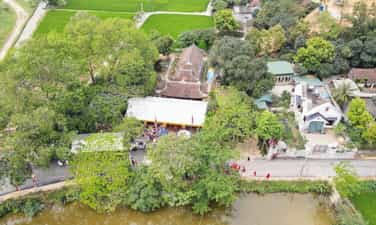
Lang Temple - Sacred historical site in Ninh Binh Located in Liem Ha commune, Ninh Binh province, Lang Temple (also known as Ninh Thai temple) is a national historical-cultural relic, associated with the merits of King Dinh Tien Hoang and King Le Dai Hanh. This is a spiritual destination, as well as a place that preserves many historical values and traditional architecture. According to legend, the land of Liem Ha was once the place where Dinh Bo Linh and Le Hoan gathered and trained their armies. The current temple is the remaining temple in the complex of three ancient temples, Upper, Middle, and Lower. The project was restored under the Nguyen Dynasty but still preserves many ancient architectural features and precious artifacts such as altar thrones, altar collapses and many valuable worship objects. Every year, from the 6th to the 8th day of the third lunar month, the Lang Temple festival is held with incense offering ceremonies, sacrifices and folk cultural activities, attracting a large number of people and tourists to offer incense and commemorate the merits of ancestors. Source: Ninh Binh Tourism Promotion Information Center
Ninh Binh
796 view
Rating : National monument
Lam Ha anti-aircraft artillery battle
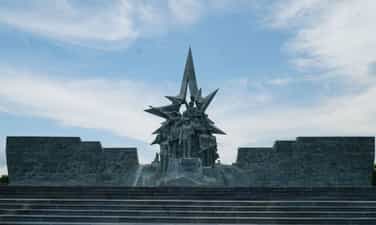
The historical relic of Lam Ha Anti-Aircraft Artillery Field - Red Address marks the epic poem of 10 female militiamen. Located in Phu Ly ward, Ninh Binh province (formerly in Lam Ha ward, Phu Ly city, Ha Nam province), Lam Ha anti-aircraft artillery battlefield historical site is one of the typical red addresses, marking the heroic fighting spirit of Ha Nam's army and people in the resistance war against the US to save the country. This place is associated with the noble sacrifice of 10 Lam Ha female militiamen - outstanding children who wrote an immortal epic with patriotism and strong will. During the years 1965 - 1972, Lam Ha was an area with an important strategic position with many vital traffic routes such as National Highway 1A, North - South railway, Phu Ly bridge and Chau river. These were the targets that were fiercely attacked by the US air force to cut off the support line from the Northern rear to the Southern battlefield. To protect transportation routes and coordinate with the main air defense force, the Lam Ha Air Defense Militia Company was established with many young soldiers, including very young female militiamen. In the fierce battles that took place in October 1966 and July 1967, 10 Lam Ha female militiamen heroically fought and died right on the artillery battlefield while on duty to protect their homeland. Their sacrifices have become a shining symbol of revolutionary heroism, contributing to the glorious tradition of the Vietnamese militia and self-defense force. To pay tribute to the fallen, Ha Nam province built the Temple of 10 Lam Ha female militiamen, a memorial monument and a relic campus right on the old battlefield. Today's relic space is solemnly planned, a place where people and tourists come to offer incense, learn about history and educate patriotic traditions for the younger generation. Source: According to the Electronic Information Portal of Ha Nam province (Ninh Binh)
Ninh Binh
596 view
Rating : National monument

Long Doi Pagoda (Doi Son)
Doi Son pagoda relic complex, Doi Son commune, Duy Tien district, Ha Nam province, ancient Son Nam town. The pagoda was built on top of Doi mountain, within 2 hectares of forest garden. According to written historical records and related legends, Doi Son Pagoda was originally a small temple that existed from the 10th to 11th centuries. During this period, the pagoda was associated with the name of the monk Dam Cuu Chi, who was the master of the temple. Replace the bamboo and thatch architecture of the past to build pagodas with bricks and tiles, a more sustainable material. In the 12th century, King Ly Nhan Tong, on his way through here, saw that the scenery was still there but the pagoda was in ruins, so he rebuilt the pagoda and erected the Sung Thien Dien Linh tower. Construction began in 1118 and was completed in 1121. From then on, Doi Son Pagoda became a great landscape and palace, one of the important Buddhist centers of the Ly Dynasty with the meaning of guarding the south of Thang Long citadel. Doi Son Pagoda has stood firm for more than 300 years. In the early 15th century, when the Ming invaders invaded our country, the pagoda and tower were completely destroyed. During the late Le, Mac, and Nguyen dynasties, Doi Son pagoda was continuously built and renovated, gradually restored with 125 compartments, built in the foreign internal style, including a hall of worship and heavenly incense. and the upper palace, two rows of corridors on both sides worshiping the Eighteen Arhats. During the resistance war against the French, this ancient pagoda was once again destroyed. After peace was restored in the North, the government and local people actively restored the temple. A major repair in 1958 completed the main works here. Through many ups and downs of history, the pagoda still retains its ancient and sacred features, imbued with the architectural and artistic style of the Ly Dynasty. This is a temple with a long history, reflecting a flourishing period of Buddhism in the nation's history and is the pride of the people here. One of the artifacts with outstanding historical and cultural value kept at Doi Son Pagoda today is the Sung Thien Dien Linh stele. The stele with unique carving art contains a lot of rare information for studying the history and culture of the Ly Dynasty. In particular, the Sung Thien Dien Linh stele is also the only stele that provides rare information about the Quang Chieu Light Festival in Thang Long citadel, the art of water puppetry, Buddhist rituals, and the repair of Dien Huu pagoda. (One Pillar Pagoda), the construction process of Sung Thien Dien Linh tower. Doi Son Pagoda is also one of the few pagodas today that still preserves many valuable Ly Dynasty art artifacts such as: Statue of Da Bao Tathagata, Vajra statue, statue of a human head and bird body (kinari) - works The product demonstrates the cultural interference between the two artistic architectures of Champa and Dai Viet during the Ly dynasty. Along with architectural items and a system of artifacts and worship objects, Doi Son Pagoda also preserves a rich, diverse and very valuable treasure of Han Nom heritage. This is a valuable source of material that has summarized the cultural quintessence of many dynasties, from folk knowledge to scholarly knowledge, and is a very unique asset with priceless value that few places can find. With a long history and many events, the pagoda also has strong archaeological value. In the excavation pit located between the pagoda's harem and the back house, the foundation, architectural materials and many Ly Dynasty artifacts such as decorative specimens, ceramics, crockery, and metal were found. The historical relic of Doi Son pagoda demonstrates the creativity in construction science, construction material production as well as exploitation techniques and taking advantage of natural conditions of generations of ancestors in feudal dynasties. with skillful construction techniques of wood, stone, and brick materials, creating architectural works of high artistic value. With the above typical historical and cultural values, on December 23, 2017, Doi Son Pagoda relic, Duy Tien district, Ha Nam province was signed by the Prime Minister and ranked as a special national monument. special. Source: Ha Nam Electronic Newspaper
Ninh Binh
7908 view
Rating : Special national monument
Pho Minh Tower Pagoda
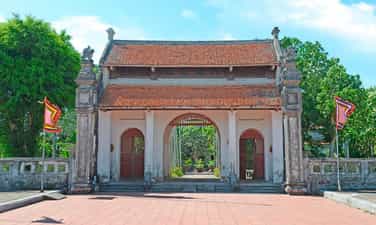
Pho Minh Pagoda, whose name is Pho Minh Tu, is a pagoda located in Tuc Mac village, Loc Vuong ward, Nam Dinh city. Based on the ordination stele as well as ancient bibliographies, the pagoda was built during the Ly dynasty, and in 1262 the Tran dynasty expanded to a more grand scale. In 2012, Pho Minh Pagoda was ranked by the Prime Minister as a special National Monument. Because in front of Pho Minh Pagoda there is a tower, the pagoda is also known as Chua Thap, the Tower is also known as Pho Minh Tower. Pho Minh Tower is a unique architectural work. This is the largest, oldest and most intact tower in Vietnam. The book Nam Dinh Province Geography by author Khieu Nang Tinh records about the pagoda as follows: "During the Tran Dynasty, King Nhan Tong restored his residence as a monk. When the king died, Anh Tong built a 14-storey tower, 53 meters high, with 10 meters on each side to house the relics. During the Tay Son period, the governor of this region broke the top of the bronze gourd tower. When we reached the 13th floor where the stone was, we saw an object shaped like a red ribbon flying into the sky, so we stopped destroying it..." In addition, among the people, there is also a saying of Buddha Emperor Tran Nhan Tong: “No matter who competes for the throne I would like to send back this handful of temple bones." Therefore, researchers believe that this is a tomb tower. Currently in the country there are only three towers built during the Tran Dynasty: Pho Minh tower (Nam Dinh), Hue Quang tower (Yen Tu, Quang Ninh) and Binh Son tower (Lap Thach, Vinh Phuc), but Pho Tower Minh is still the more majestic tower, with the most elaborate, artistic, and technical construction. The tower was built right in front of the worshiping house on the North - South axis. The tower has a total height of 19.51m including 1 palanquin and 13 floors. The tower is built on a small square yard, each side is 8.6m and located 0.45m lower than the ground. The palanquin is the base of the tower designed entirely of green stone, each side is 5.20m long. At the foot of the tower there is a lotus flower with large petals and small petals, gradually tilting towards the corner of the tower from the middle, symbolizing a lotus platform holding a palanquin. The lower part of the stone pedestal is shaped to curve up on both sides, making people mistakenly think it is due to the rock sinking, but in fact, the construction was intended to create momentum for the more than a dozen floors above to have the same curvature. Looking at the entire tower, people will think of a Lotus flower rising and blooming in the middle of a lake. From the palanquin and above, there are 13-storey towers built of red bricks with 4 gates: East, West, South, North. Previously, all the floors had exposed Dragon motifs and beautifully decorated flowers and leaves. The higher the tower floors went, the smaller the height and width of the tower's face became. At the top of the tower was a cube with the shape of an unbloomed lotus flower made of old terracotta. Unfortunately, in the early years of the twentieth century, when repairing the tower, people placed a coat of cement material on the outside of the tower, causing the patterns on the bricks to be lost. In 1987, because some of the upper tower floors were cracked by tree roots, the cultural sector repaired and restored them. During the renovation process, people discovered that on the 11th and 12th floors of the tower, there was a stone sarcophagus surrounding a bronze box, which according to people's legend, could be the box containing the relics of Buddha Emperor Tran Nhan Tong. . Pho Minh Tower has existed for 7 centuries. Despite experiencing many storms and natural disasters, the tower is still preserved almost intact, becoming a rare wonder that makes it unique not only for the city. Pho Minh Pagoda but also Nam Dinh province in general. Source: Management Board of Historical-Cultural Relics Tran Temple and Thap Pagoda
Ninh Binh
8415 view
Rating : Special national monument
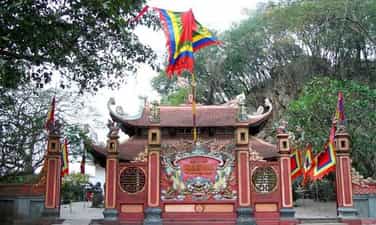
Temple of Truong Han Sieu
Truong Han Sieu Temple is located in the southwest of Duc Thuy Mountain, one side leans against the mountain, below is the lyrical Day River lazily flowing, winding from right to left, embracing the Temple area, creating a lyrical scene. , peaceful yet majestic. Truong Han Sieu (year of birth unknown) is from Yen Ninh district, Truong Yen district, now Ninh Binh city, Ninh Binh province. He was talented in literature and martial arts, rich in patriotism, and was respected by the kings of the Tran dynasty. Together with Nguyen Trung Ngan, he composed the Code of Laws "The Thuong Thu" and the book "Royal Trieu Dien", laying the foundation for the Vietnamese feudal regime to operate according to the law. When he died, he was posthumously awarded the title of Deputy Thai Viceroy and worshiped at the Temple of Literature - Quoc Tu Giam. When he died, a temple was built in the Southeast near his grave. But over time due to war, Truong Han Sieu temple was leveled. In early 1993, during the construction of houses in Van Giang ward, city residents discovered stone tablets and stone steles, column bases, and stone steps of the temple buried deep in the ground. On April 24, 1998, the construction of Truong Han Sieu temple officially started in the southwest area of Duc Thuy mountain. Truong Han Sieu Temple has a nail-style architecture, including 3 Bai Duong compartments and 2 Harem compartments, two floors of roofs covered with taro tiles, and the corners have curved knife heads. Looking at the edge of the roof, it rolls up at both ends like the image of a spectacular dragon boat. On the roof of the temple are two dragons flanking the moon. The front of the temple has a large inscription in Chinese characters "Truong Thang Phu Tu". Inside the altar is a bronze statue of Truong Han Sieu with a 1:1 ratio, sitting on a pedestal in Tran Dynasty costumes. The altar has a hammock door, an incense burner and two shelves with precious bowls on both sides. The last room of the harem has an incense burner to hold Truong Han Sieu's tablet. Every spring, Truong Han Sieu Temple is also a place where a large number of people in the province come to burn incense, sincerely ask for the New Year's blessing, with wishes for good things and luck in the new year. Truong Han Sieu Temple is located right next to Non Nuoc Mountain, one of the most famous tourist destinations in Ninh Binh. The temple worships Truong Han Sieu - a cultural celebrity and also a son of Ninh Binh. He was a man of "literature and martial arts", and together with scholar Nguyen Trung Ngan, composed the "Hinshu" law code. The Temple of Truong Han Sieu will always be living documents for generations to come. If you visit the ancient capital, don't forget to visit Truong Han Sieu temple to learn more about the roots of Vietnamese history. Future generations need to preserve cultural relics of historical significance because this is not simply preserving ancient architecture but is also related to the cultural history of an entire nation. Source: Electronic information page of Ninh Binh Department of Tourism Information Center
Ninh Binh
6917 view
Rating : National monument