Relic point Vietnam
Việt Nam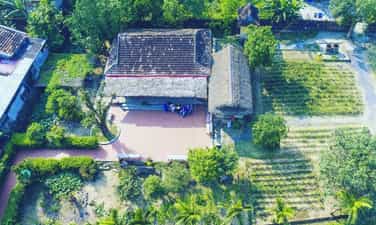
General Vo Nguyen Giap Memorial House
The General Vo Nguyen Giap Memorial House is located in An Xa village, An Lac hamlet, Le Thuy commune, Quang Tri province, along the Kien Giang river. This is where General Vo Nguyen Giap was born and spent his childhood years with his family and hometown. The current house was rebuilt on the old site after it was destroyed by the French colonialists in 1947. It has a traditional three-bay, two-wing architecture, built with various types of wood from his hometown of Le Thuy. A large, lush garden surrounds the house. Inside, the central bay houses the ancestral altar and a portrait of the General's parents; the other bays preserve familiar family items such as tables, beds, wardrobes, chests, plows, harrows, hoes, and shovels, along with many images depicting the General's life and career. Notably, within the grounds is a starfruit tree over 100 years old, associated with the General's childhood memories of studying and playing. Many other types of trees were also planted by the General and the people and soldiers from all over the country during his visits back to his hometown. More than just a place preserving everyday memories, the Memorial House also reflects the General's deep affection for his homeland and the respect and love the people have for him. Today, it has become a significant historical and cultural site, attracting numerous visitors who come to offer incense, tour, and learn about the childhood of this beloved General. Source: People's Army Newspaper
Quang Tri
13 view
Rating : National Monument

An Xa Pagoda
An Xa Pagoda, now located in An Xa village, Le Thuy commune, Quang Tri province, is situated near the birthplace of General Vo Nguyen Giap. It is not only an ancient pagoda but also a historical, cultural, and revolutionary relic, associated with many important events of the homeland during the years of the struggle for independence. The pagoda was built around the beginning of the 20th century, following Mahayana Buddhism. During the resistance wars against the French and the Americans, the pagoda was repeatedly damaged by war and subsequently restored by the people. Notably, on July 2nd, 1945, a conference of delegates from Party committees throughout Quang Binh province was held here to discuss and unify preparations for the August 1945 General Uprising to seize power. Architecturally, An Xa Pagoda features the distinctive characteristics of ancient Vietnamese pagodas, highlighted by a screen depicting a dragon's face, a pair of cranes standing on the backs of turtles, and motifs of the four mythical creatures: dragon, lion, turtle, and phoenix. These details reflect the artistic and traditional religious values of the Vietnamese people. The pagoda was classified as a National Historical and Cultural Monument by the State in 1992. Notably, in 1999, General Vo Nguyen Giap personally planted a banyan tree in the pagoda grounds. This banyan tree has become a symbol of the General's affection for his homeland. Source: Sacred Places – Directory of Spiritual Sites in Vietnam
Quang Tri
11 view
Rating : National Monument
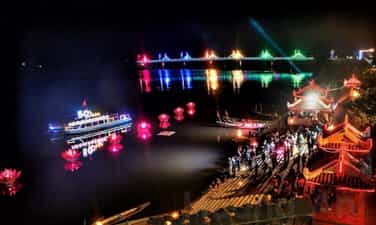
Thach Han River Memorial Temple - Lantern release station
Thach Han River - The legendary river of the fiery red summer Thach Han River is the largest river in Quang Tri province, originating from the Truong Son range and flowing through the center of Quang Tri town before flowing into Cua Viet sea. Not only does it carry the gentle beauty of the Central region, the river is also a sacred historical symbol, associated with the fight to protect Quang Tri Citadel during the 81 days and nights of the red summer of 1972. During that historic campaign, Thach Han River was the lifeline that brought soldiers, weapons and food through the storm of bombs and bullets to defend the Citadel. Thousands of soldiers fought heroically and remained forever in the riverbed, making Thach Han a river of memories, gratitude and desire for peace. Up to now, the flower floating wharf by the river is where many gratitude activities take place, especially on the occasion of the War Invalids and Martyrs' Day commemoration of July 27, when thousands of flower lanterns are floated down the water to commemorate those who sacrificed for national independence. Today, coming to Thach Han River, visitors not only can admire the peaceful scenery of a historic river but also have the opportunity to connect the journey to visit Quang Tri Citadel, Thach Han River Memorial Temple - Flower Lantern Dropping Station, Truong Son National Martyrs Cemetery and many other famous "red addresses". This is a destination rich in historical value, contributing to spreading the message of peace, patriotism and gratitude to the generations of ancestors who sacrificed for the Fatherland. Source: According to Phong Nha Discovery
Quang Tri
302 view
Rating : Special national monument
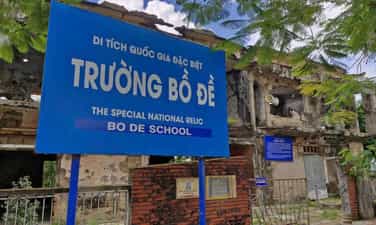
Bo De School
Bo De School - Historical evidence of 81 days and nights protecting Quang Tri Citadel Bo De School is located on Tran Hung Dao Street, Quang Tri Ward, Quang Tri Province, about 1 km southwest of Quang Tri Citadel. Initially an educational facility, but during the fight to protect Quang Tri Citadel in 1972, the school became an important key point for our army and people during 81 days and nights of fierce fighting. War bombs caused severe damage to the structure. Walls filled with bullet holes, broken concrete beams and traces of damage are still retained as true evidence of the fierceness of the Quang Tri battlefield. Along with Quang Tri Citadel, Thach Han River Flower Wharf, Long Hung Church and Tri Buu Church, Bo De School is a typical place in the system of memorial monuments for the 81 days and nights event in 1972. Currently, the relic is preserved according to the principle of preserving the original state as much as possible. A steel frame system was installed to reinforce the structure of the building, ensuring safety for visitors while still preserving the vestiges of war. At the same time, this place is oriented to become a traditional educational space, helping today's generations better understand the resilient fighting spirit and sacrifice of Quang Tri's army and people. Today, Bo De School is a meaningful stop on the journey back to its origins in Quang Tri, contributing to spreading historical values, educating patriotic traditions and paying tribute to those who sacrificed for national independence. According to: National Museum of History
Quang Tri
857 view
Rating : Special national monument
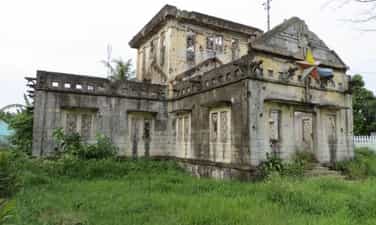
Long Hung Church
Long Hung Church is located in Hai Phu commune, Quang Tri province (formerly in Hai Lang district), right on National Highway 1A. Built in the period 1955–1956, the church has solid reinforced concrete architecture and was once a place for religious activities of local parishioners. During the war to protect Quang Tri Citadel in 1972, the church became a fierce fighting point for our army and people. After many rounds of bombs and bullets, the building was heavily damaged, but the architectural frame still exists as a living testament to the fierceness of war and the resilient fighting spirit of Quang Tri's army and people during the 81 days and nights of protecting the Ancient Citadel. Today, the ruined walls, bell tower and remaining vestiges of the church are still preserved, becoming a red address for educating revolutionary traditions and a tourist attraction when coming to Quang Tri. This place not only helps visitors learn about the history of the nation's struggle but is also a space to commemorate those who heroically sacrificed for the independence and freedom of the Fatherland. With special historical value, Long Hung Church has been ranked as a special national relic in the cluster of relics associated with the 81 day and night event of protecting Quang Tri Ancient Citadel. This is a meaningful destination for those who want to learn about history and pay tribute to the generations of ancestors who have fallen for peace today. Source: Ministry of Culture, Sports and Tourism.
Quang Tri
873 view
Rating : National monument
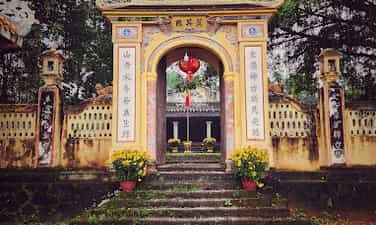
Ha Thuong ancient village communal house
Ha Thuong village communal house is located to the east of Ha Thuong village, Gio Linh town, Gio Linh district, Quang Tri province; Less than 1 km east of Highway 1A and about 800m north of Highway 75B. The communal house has an area of 8,450 square meters, located in a prime location, leaning against the village, facing a large lake and rich fields. Far away in front of the communal house is a strip of land as high as a screen. This location is suitable for Vietnamese feng shui. According to archival documents, Ha Thuong communal house was built in the 11th year of Chinh Hoa (1690). By the 15th year of Thanh Thai (1903), the communal house was greatly restored and a number of other structures were built such as gates and city walls. The method of using brick walls and cement columns was applied. The system of columns and porch columns was replaced by mortared and decorated brick pillars. A wall system has also been built around the two vestibules... The entire campus includes a great communal house and 4 temples worshiping 4 gods: Temple worshiping the Tutelary God, two temples worshiping two pioneers named Le and them. Nguyen, a temple worshiping Mr. Le Hieu. The structure of the load-bearing wooden frame is made according to the model of a 3-compartment, 2-wing house, distributed in 6 rows of columns. On tiled roofs, straight roofs, moderate slope; The edge of the roof, the edge of the sword, and the tip of the knife are decorated with decorative panels of dragons flanking the moon, delivering words, and delivering leaves using the art of plastering and assembling pieces of porcelain. The inside of the communal house is divided into two parts. The front hall includes the space of the front wing and two outer spaces used as a place for cultural activities, meetings, and dining. The back office includes the space of the back wing and an inner room used as a place of worship and sacrifice. The gate system and walls in front of the communal house are built of bricks and cement; The foundation is quite high and is built of basalt. The temples within the communal house of Ha Thuong village all have closed gates and walls. Structured in the style of a ruong house with one compartment and two wings, the temples all have a mezzanine shape based on four main columns of a wooden frame, functioning as altars. With this construction style, Ha Thuong communal house is considered the only remaining typical product representing the communal house architecture of the Central region in the 17th century. This is the communal house that, according to historical and fine arts researchers, is the oldest remaining in the village communal house relic system in Quang Tri with the most unique architecture in the Central region; This is also the place where the first Communist Party cell of Do Linh district - Cho Cau Party cell was established. With historical and architectural values, Ha Thuong ancient village communal house was recognized as a national monument in 1991. Source: Electronic information portal of Gio Linh district, Quang Tri province
Quang Tri
5882 view
Rating : National monument.

Tung Luat Wharf Relic (Wharf B)
Tung Luat wharf is one of the particularly famous historical relics, making an important contribution to our people's fight against the French. On January 6, 1950, right at the wharf, Regiment 95 and Company 354 crossed the river and defeated the French at Cua Tung station. Thereby affirming the strength, stubborn fighting will and fighting spirit for national liberation of our army and people. Under the leadership of the Party, the army and people of the eastern communes of Vinh Linh and Gio Linh joined forces to destroy the raids of the French enemy, eliminating hundreds of French soldiers and puppets from combat, destroying many military vehicles. their modernity. Tung Luat wharf has completed its historic mission, serving as a bridge between the North and South banks, contributing together with the people of the country to defeat the invasion plot of the French colonialists. On July 21, 1954, the Geneva Agreement was signed, it seemed that the country would enjoy peace and independence, however, Tung Luat wharf had to enter pages of history filled with blood and tears. The anti-American and puppet history of Tung Luat wharf began with night ferry trips, secretly bringing soldiers and military intelligence officers to the South to operate in the years 1956-1965. On those boats, there was a special guest secretly welcomed across the river, First Secretary Le Duan. Having suffered bitter defeats by the Saigon puppet government against the revolutionary movement in the South, American troops directly participated in the war. Tung Luat wharf once again became the focus of the battle between justice and brutality. With the code name "B ferry", Tung Luat ferry is a bridge connecting the north and south banks of Hien Luong river, one of the starting points of the Ho Chi Minh road on the sea, the starting point of the only traffic route. connecting the mainland with the heroic Con Co island. Tung Luat Village Militia Company was established with 110 soldiers, with the task of protecting the wharf, transporting soldiers, militiamen, firemen, and food, weapons, and ammunition. Ferry station B transports fire brigades of communes: Vinh Long, Vinh Tan, Vinh Trung, Vinh Tu, Vinh Thanh, Vinh Hoa... across the river to the South to serve the attack on hill bases 31, 28 , Quan Ngang, Cua Viet. Also during this fierce war, B Tung Luat Ferry Station was assigned the additional task of transporting and evacuating people in the southern area of Ben Hai River to the North. B Tung Luat ferry station can transport nearly 1.4 million soldiers, militiamen, and civilians across the fire line. This same wharf was the starting point of Company 22, a suicide unit transporting weapons, ammunition, medicine, and food to Con Co Island, which was blockaded by the US Navy and the Saigon government. Every night, when there are storms and rough seas, each boat carries a squad of militiamen who are remembered alive before boarding the boat to the island. The militiamen, who were originally gentle fishermen, suddenly became soldiers, ready to let "The waves call our souls back to the small island". With wooden boats and bamboo boats sailing and rowing through the night at times of rough seas, from 1965 to 1972, Company 22 transported thousands of tons of ammunition, weapons, food, and supplies to Con Co Island, contributing to maintaining the Fatherland's outpost in the East Sea. Ferry station B was the most impermanent point of life and death in the country during the war against America and national salvation. Countless children of Tung Luat land and many other rural areas of the country have stayed here with blood and bones mixed with Hien Luong River water and sand and mud of this river bottom. Thanks to the great contributions in the two wars against the French and the Americans to save the country, in 1996, the Tung Luat wharf historical relic was recognized and ranked by our state as a national historical relic. To engrave the achievements of the army and people who fought and sacrificed heroically, at this wharf the monument of wharf B was built. The monument was built on an area of about 100m2. However, according to historical witnesses and researchers, the scale of the monument's structure and soul are not really commensurate with the great feats of our army and people, especially the sacrifices of so many people. soldiers on this land. Therefore, the officers and people of Tung Luat village, the people of Vinh Giang, Vinh Linh and soldiers from many parts of the country who fought here, those who have children, and children who have stayed here, very much wish and recommend. Recommend local authorities and authorities of Quang Tri province to soon research, renovate and upgrade the historical relic of B Tung Luat wharf to match the heroic historical achievements of this place. Source: Quang Tri province electronic information portal
Quang Tri
6056 view
Rating : National monument.

Memorial area of the 1948 My Thuy massacre
My Thuy is a village located south of Hai An commune, Hai Lang district, Quang Tri province, about 15 km east of Hai Lang district town and National Highway 1A along Provincial Highway 8. Location in the north of the road Provincial Road 8, at the beginning of My Thuy village is the center where the My Thuy village massacre took place in 1948, which has been ranked as a national monument by the Ministry of Culture and Information according to Decision No. 38-2001/Quyet Dinh -Culture and Sports July 12, 2001. My Thuy is a coastal village located on the eastern slope of Dai Truong Sa sand dunes, formed relatively late after the 17th century. Like many other coastal villages in Quang Tri, My Thuy people have long linked their lives to the sea by struggling with waves and the worries and hardships of making a living. It was in that situation that My Thuy's person was forged the qualities of tolerance, hard work, kindness, tolerance, and a determined, persevering heart, regardless of enemies to follow the revolution. During the years 1930-1945, the revolutionary movement in My Thuy under the direction of the Trieu Lang cell had positive activities, contributing together with the whole Hai Lang region to the victory of the general uprising in August 1945. 1945. After the victory of the August Revolution, My Thuy was a village of Hai Chau commune. Since the French colonialists returned to pacify Quang Tri (January 1947), due to many strategic advantages, My Thuy was both a border area and a free area) to control and master the area but Still unable to establish a meeting. The revolutionary movement still maintains and develops. Based on the convenient location of waterway traffic and far from the political center of My Thuy, the main force and resistance officers chose this as a place to stop, consolidate forces, and conduct guerrilla warfare. The people of My Thuy wholeheartedly follow the Party and the resistance. In particular, after 1947, the Tri Thien battlefield faced many difficulties: hungry people, officers and soldiers lacked food, medicine, ammunition... Military Region IV organized campaigns in Thanh Hoa and Nghe An provinces. An and Ha Tinh provided support to help Tri Thien continue the resistance. Because there are no road transport conditions, goods must be transported by sea and gathered in coastal areas, far from the control and control of the French government and its henchmen. In My Thuy, Binh Tri Thien's communication and supply lines have many times gathered and dispersed goods and weapons smoothly. This made the French army extremely bitter and frantic in trying to destroy the revolutionary movement in My Thuy, continuously organizing raids, arson and committing barbaric crimes. Since advancing to pacify Quang Tri (January 1947 - April 8, 1948), French troops have carried out three raids and burned My Thuy village. On March 5, 1947 (February 2, Dinh Hoi year), French troops invaded My Thuy village, burned most of the houses, killing 3 people. On March 17, 18 and 19, 1948, the French colonialists mobilized forces to simultaneously sweep into villages in the Hai Lang delta with a campaign called "Hai Lang Week". During this large-scale raid, they killed more than 1,300 people, burned thousands of houses, and robbed a lot of property, including My Thuy village. On March 19, 1948, after only 1 hour of committing a crime and then withdrawing, the French army and its henchmen killed 74 innocent My Thuy people; Most of them are middle-aged men, breadwinners. Hundreds of meters of nets, fishing gear and more than 20 fishing boats were completely destroyed. This was both a massacre and an attack on the pink economy, crushing the spirit and will to resist of the My Thuy people. Less than 20 days after the massacre, when the grass on the graves of those killed on March 19 had not yet grown, on April 8, 1948, the French colonialists carried out another massacre and wild arson. more savage, more brutal in the true sense of "three cleans" on the villagers of My Thuy. After more than 3 hours of burning, raping and looting, the French army withdrew, leaving behind a desolate, mourning village of My Thuy; White sand stained with human blood, piles of flesh and bones littering burning houses. The whole village had only a few children left and less than 20 people. 452 innocent people were murdered and all the houses and fishing gear of My Thuy villagers were completely destroyed. This was a brutal massacre and had the highest number of deaths that the French colonialists inflicted on the people of Quang Tri. The My Thuy massacre in 1948 is eloquent evidence of the brutal murder of the French colonialists against the My Thuy people in particular and the people of Quang Tri in general; is the pain of loss, but also represents a tradition of heroic and resilient struggle of those who sacrificed for national independence. Source: Quang Tri province electronic information portal.
Quang Tri
5557 view
Rating : National monument.

Victory at Khe Sanh - Lang Vay
In early 1968, Khe Sanh - Huong Hoa suddenly attracted the attention and attention of the whole world when the Politburo and Central Military Commission decided to open the Route 9 - Khe Sanh Campaign. Not only the US military advisory team in Saigon but also America's leading military experts were "disoriented" when they thought there would be "another Dien Bien Phu" at Khe Sanh. US President B. Johnson directed the establishment of a "Special Situation Room", created a Khe Sanh table in Washington, and requested General Westmoreland - Commander of the US Military Advisory Command in South Vietnam to sign a pledge. We promise not to lose Khe Sanh at any cost because it is America's honor. Khe Sanh Valley is located in the remote mountainous area in the west of Quang Tri, identified as one of the strategic areas in the area bordering the route. In 1966, in the area south of the 17th parallel to Route 9 - Khe Sanh, the US built an invisible defense line, named the McNamara electronic fence. In the "anchor" position of the border junction area, Khe Sanh is positioned as one of the three magic eyes of the McNamara electronic fence, where the US focuses on building a group of strong bases including the Huong Giang Military Region. Hoa, Lang Vay stronghold cluster and Ta Con airport, were fully equipped with the most modern and advanced weapons at that time with many dense fortification systems supported by B52 aircraft, along with elite army to cut off the support line on the Ho Chi Minh Trail, prevent our troops from entering from the North and from Laos and create a screen to shield their defense area east of Route 9. At the beginning of 1968 , there are many reasons why Americans believe that the liberation army will carry out the decisive strategic battle at Khe Sanh. First, from the similarities in topographic factors and strategic roles between the Dien Bien Phu and Khe Sanh basins. Next, America believes that by "abandoning" our traditional rural areas, the mountains and forests will be a springboard for us to attack the plains and urban areas. From the commander to the US ambassador, everyone judged that the liberation army did not have enough strength to attack cities and urban areas and that it was just a "diversionary attack"; The main battlefield will definitely take place at Khe Sanh. The Central Bureau of the South also intentionally dropped documents that made the US believe even more that Khe Sanh was the place where a decisive strategic battle took place. On our side, after the victories won in the dry season of 1965 - 1966, 1966 - 1967, the Politburo Conference in December 1967 commented: We have defeated the enemy in both strategy and tactics, and military force. and our politics in the South have grown stronger than at any time, we are taking the initiative across the battlefield. "The basic development of the situation is that we are in a winning position, proactive and favorable position, the enemy is in a losing position, passive and difficult position." On that basis, the Politburo advocates opening: "the attack of the main force in the direction of especially important strategic coordination, Route 9 - Khe Sanh, to attract and detain the enemy's strategic forces... ” Implementing the above strategic policy, according to the proposal of the General Staff, the Politburo decided to launch the Offensive Campaign on Route 9 - Khe Sanh in the spring and summer of 1968. The General Command mobilized a force for the campaign. strong, including 4 monks regiments (304, 320, 324 and 325), Regiment 270 and 2 local army battalions of Quang Tri province, 1 battalion and 5 special forces companies, 5 artillery regiments (45th, 84th, 164th, 204th and 675), 3 anti-aircraft artillery regiments (128, 282, 241), 1 tank battalion (4 companies), 1 battalion information battalion, 1 reconnaissance battalion, 1 chemical defense battalion, 1 regiment and 2 engineer battalions, 1 flamethrower company, 6 transport battalions and local armed forces of Gio Linh district, Cam Lo, Huong Hoa. The entire above force is under the unified command of the Campaign Command, led by Major General Tran Quy Hai - Deputy Chief of General Staff as Commander, Major General Le Quang Dao - Deputy Director of the General Political Department as Political Commissar. At the time we launched the campaign, the enemy force defending Road 9 - Khe Sanh had about 45,000 troops, including 28,000 American troops (10 battalions of the 3rd Marine Division, 9 artillery battalions, 3 battalions of group and 1 mechanized company; arranged in front line in the east: from base 31, Doc Mieu, Con Tien, Quan Ngang to Bai Son temple; Dong Ha, Cam Lo, Ai Tu and Quang Tri town; the middle line is the bases of Tan Lam, Ca Lu, 241 (west of Quang Tri town); the western area includes the bases of Huong Hoa, Lang Vai, Huoi San and the Ta Con stronghold cluster (including Dong Tri, 832, 845...). With the determination to "Turn Khe Sanh into a living hell for the American army", on On January 20, 1968, we launched the Route 9 - Khe Sanh campaign. After 170 days and nights of continuous attacks and sieges, our troops eliminated 17,000 enemies from combat, shot down and destroyed 480 aircraft and 120 soldiers. military vehicles, 65 large-caliber cannons and mortars, 55 gasoline and ammunition depots, confiscating thousands of guns of all kinds, successfully ending the Route 9 - Khe Sanh Campaign Historically, Huong Hoa district was completely liberated with more than 10,000 people. The victory of the Route 9 - Khe Sanh campaign proved our Party's correctness and creativity in fighting the enemy, not only with the US Military Command but also with the planners. "tough" strategy in the White House. The Khe Sanh victory is the result of the correct and creative leadership of our Party, headed by President Ho Chi Minh. Source Electronic information portal of Huong Hoa district, Quang Tri province.
Quang Tri
6171 view
Rating : National monument.
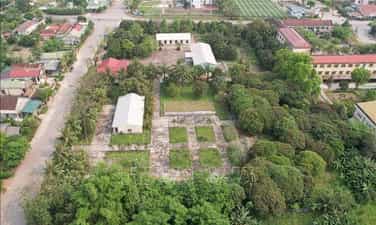
Headquarters of the Provisional Revolutionary Government of the Republic of South Vietnam (June 1973 - May 1975).
The location of the headquarters of the Provisional Revolutionary Government of the Republic of South Vietnam (from June 1973 to May 1975) is located in Tan Hoa village, Cam Lo town, Cam Lo district; More than 200m north of Highway 9, 12km west of Dong Ha town. The relic has been ranked nationally by the Ministry of Culture and Sports according to Decision No. 154/Decision - Culture dated January 25, 1991. Located in Cam Lo town, 150 meters north of Cam Lo district People's Committee, construction started on May 6, 1973, and was completed on May 30, 1973. Although it was built urgently in a short time, it still has a majestic, spacious appearance and is full of essential living amenities. Here, on June 6, 1973, the Provisional Revolutionary Government of the Republic of South Vietnam held a ceremony to introduce itself to the people in a solemn meeting, in the presence of a large number of domestic and foreign press reporters. abroad. Delegates from 19 brotherly countries from all 5 continents attended and enthusiastically cheered the arduous struggle and sacrifice of the Southern people, such as comrade Phiden Castro - Chairman of the Communist Party of Cuba, and comrade George - Marxist - Secretary of the French Communist Party, ... Since its inception, the Provisional Revolutionary Government Zone has gathered democratic forces fighting for democracy and national independence, representing the people of the South to speak out, and is the place where foreign relations are established. communicate with all brothers and friends near and far around the world. The Provisional Revolutionary Government, with its sharp and wise strategies and tactics, led the people of the South to fight from one victory to another. Bringing the holy resistance war against American imperialism to complete victory. Currently, the headquarters was built by the Quang Tri Museum with a commemorative monument in May 1993 and restored the National Archives of the Trinh House. Source: Electronic information portal of Cam Lo district, Quang Tri province.
Quang Tri
5139 view
Rating : National monument.