Relic point Vietnam
Việt Nam
XA TEMPLE
Xa Temple is located on the south bank of Cau River, near Xa junction, which is the confluence of two ancient rivers Ca Lo and Cau River (also known as Nhu Nguyet River) flowing into Luc Dau River (Hai Duong province). Xa Temple, Xa Doai village, Tam Giang commune (Yen Phong district, Bac Ninh) worships two generals Truong Hong and Truong Hat. The two were siblings and talented generals of Trieu Quang Phuc in the resistance war against the invaders of the Luong Dynasty. Nearly a thousand years ago, in the 11th century, Lieutenant Ly Thuong Kiet built the Nhu Nguyet river defense line here during the second resistance war against the Song Dynasty, leading to a famous victory over the Song invaders in October 1077. Talking about the history of the temple, Mr. Vu Cong Tuong (82 years old, from Xa Doai village, head of Xa Temple) said: Xa Temple worships Saint Tam Giang - the brothers Truong Hong and Truong Hat, who are famous generals of the temple. Trieu Quang Phuc was credited with fighting the Liang invaders in the 6th century. The sacred temple also dates from the 6th century, after their death. The legend of Saint Tam Giang says that, in the past, in Van Mau village (Kinh Bac region) there was a girl named Phung Tu Nhan. At the age of 18, Tu Nhan dreamed that the Dragon god descended from the sky and entwined herself on the Luc Dau River. After that, she was 14 months pregnant and gave birth to a bundle of 5 children: 4 boys and 1 girl. Because she was a child given by heaven, she took the Jade Emperor's surname Truong and gave it to her four sons, Truong Hong, Truong Hat, Truong Lung, Truong Lay, and her daughter, Truong Dam Nuong. Some time later, Heaven sent La Tien Ong to earth to teach literature and martial arts to Tu Nhan's five children at Trang Hoc beach near Co Trach's house. The five brothers, all skilled in literature and martial arts, grew up responding to Trieu Viet Vuong's call to become generals to fight the Luong invaders in Da Trach lagoon and win a great victory. Truong Hong and Truong Hat were appointed talented generals of Trieu Quang Phuc. When Trieu Quang Phuc ascended the throne (other names are Trieu Viet Vuong, Da Trach Vuong), Ly Phat Tu led his army to fight back but could not win, so he used the trick of marrying his son, causing Trieu Viet Vuong to fall for the trick and be defeated. When Ly Phat Tu won the throne, knowing that Truong Hong and Truong Hat were talented generals, he invited them to become mandarins. But with your loyalty, you decided not to worship two kings. Knowing that he could not be subdued, Ly Phat Tu ordered them to be arrested everywhere. They knew they couldn't escape so they committed suicide in the Cau River to maintain their loyalty to the king. Also according to legend, the Jade Emperor felt compassion and ordained Truong Hong and Truong Hat as River Gods. Since then, the people of 372 villages along the Cau River, Thuong River, Ca Lo River and the places where the two men were stationed to fight the enemy all mourned and built temples to worship them as Gods. The Ngo, Dinh, Le, and Ly dynasties were later blessed by Yin to keep their territories in peace, so they all honored the Truong cousins as Saint Tam Giang - great kings and superior gods. According to history books, Xa Temple and Saint Tam Giang are also associated with the birth of the poem "Nam Quoc Son Ha" by Ly Thuong Kiet - our country's first declaration of independence. Talking about the legend of the story of the poem Than, Mr. Vu Cong Tuong said: According to the elders of Xa Doai village, one night in October 1077, at the sacred temple on the Cau River battlefield against the Tong and Ly Thuong invaders. Kiet went to the temple to pray for yin and yang to support the resistance war against foreign invaders. After the ceremony, the sky suddenly lit up like daytime, two clouds appeared in the air, one white, one red. Above were two brave soldiers, one riding a white horse, the other riding a pink horse, riding the clouds among the four armies cheering their horses. hi. Legend has it that he was Mr. Truong Hong and Truong Hat who appeared to bless our army and people in fighting the Song invaders. Tu Vu Cong Tuong was moved and respectfully said: "You are "born as a form, death as a spirit"; That means living as a general, transforming into a god, and still carrying out the noble mission of serving the country." At the same time, in the air or in Ly Thuong Kiet's mind, the poem "Nam Quoc Son Ha" suddenly echoed: Nam Quoc Son Ha Nam Emperor's residence/ Absolutely destined to be in the book of heaven/ Like a rebellious river invading/ Nhu "The king of the South lives in the rivers and mountains of the country. The fate is clear in the book of heaven. Why do the invaders invade? They will be beaten to a pulp." This is the reason why the poem is called Divine poetry. When the poem was read by Ly Thuong Kiet, it resounded loudly in the area, causing the Song invaders to panic and run away, trampling each other to death. Together with the strategic ingenuity of our army and people, the resistance war against the Song Dynasty was completely victorious, destroying 300,000 Song troops, corpses piled up into mountains, blood flowed into rivers. After nearly 1,000 years since that divine victory, currently in Tam Giang commune there are still places such as Bai Xac, Bo Xac, and Dong Xa which are traces of the disastrous defeat of the enemy in the past. Every year, Xa Temple has two major festivals on the 5th of the first lunar month and the 9th and 10th of the fourth month of the lunar calendar. The Xa Temple Festival is the largest in the region. In addition to the solemn rituals of palanquin procession and water procession, there is also the custom of swimming competitions. Legend has it that the swimming custom of Xa Temple is associated with Ly Thuong Kiet mobilizing local militia to participate in fighting the Tong invaders on Nhu Nguyet River. Xa Temple today is located on a mound of land nearly 10 hectares wide, less than a kilometer from Xa junction - the confluence of two ancient rivers. The temple is currently being restored but its architecture still retains its ancient features that have existed for thousands of years. In front of the yard there is still an ancient stone stele engraved with the divine poem "Nam Quoc Son Ha" on both sides in Chinese and national language, outside is a four-pillar gate with a time-tinged relief. In addition to the system of precious antiques still kept as worship statues, in the harem of Xa temple there is also a Tao Quan altar with statues of "two men and one woman". In early spring, tourists and people who come to the Xa Temple ceremony to pray for the country of Thai Dan An do not forget to light incense at the Tao Quan altar with the wish to pray for the family to always be warm, hoping for happiness and peace for their family and for everyone. home. With a history of nearly 1,500 years, in 1988, Xa Temple was ranked by the Ministry of Culture as a National Historical Site. Source: Electronic newspaper of the Central Vietnam Farmers' Union
Bac Ninh
3978 view
Rating : National Monument

NGO GIA TU TEMPLE
Located in Tam Son neighborhood, Tam Son ward, Tu Son city, Comrade Ngo Gia Tu Memorial House is the place of birth, upbringing and revolutionary activities of Comrade Ngo Gia Tu - the senior leader. of the Party, an outstanding son of his hometown Bac Ninh. Today, Comrade Ngo Gia Tu's Memorial House has become a red address for educating revolutionary traditions for the young generation and people of all walks of life. The entire house was built by Comrade Ngo Gia Tu's father, Mr. Ngo. Gia Du built it in the first year of Khai Dinh (ie 1916) including the following projects: main house, electric house, horizontal house, school house, farming equipment house and lush green garden all year round. The entrance to the Memorial House still retains the original architectural style. On both sides of the gate, there are a couple of parallel sentences written by comrade Ngo Gia Tu himself in the national language: "The independent gate is free to open and close/The house is free to come in and out", expressing the comrade's independent and free will. Ngo Gia Tu, but it also means that this is a gathering place for like-minded people with ambitions to fight for a free and independent country. On the roof of the gate, the words "The door is like a market" are embossed, expressing the great ambition of the youth of Comrade Ngo Gia Tu's generation. The 3-room classroom was formerly the family's guest house. In 1926, comrade Ngo Gia Tu moved Truong Buoi back to his hometown, using the guest house as a place to teach classes and spread the revolution. The statue of comrade Ngo Gia Tu is solemnly placed in the middle room. The main house is the residence of comrade Ngo Gia Tu's family. The middle space worships his father and comrade Ngo Gia Tu. Above is a horizontal painting left by comrade Ngo Gia Tu's father, which includes the four words "Di Khuyen Yen Duc" with the meaning of reminding future generations to always look towards their ancestral roots and help the country wisely. , help at home. To the left of the main house is the 3-compartment Palace, which is the family's place to worship Saint Tran, but here on September 29, 1928, the Northern Vietnam Revolutionary Youth Association held a conference and proposed the theme "Proletarianization" campaign, contributing to bringing the Vietnamese revolution to a new level. In the Palace, many portraits of senior leaders of the Party and artifacts are preserved. Opposite the Dien house is the horizontal house, which is the living area and contains the family's belongings. During her leisure days, comrade Ngo Gia Tu's mother often worked hard at this loom to weave cloth to contribute to raising her children's education. In particular, this house was used by comrades to print secret documents for revolutionary activities. To the right of Hoc's house is a row of farming tools, consisting of 5 rooms. This is where the daily farming tools of comrade Ngo Gia Tu's family are stored. The stele commemorating the place where comrade Ngo Gia Tu lived during his youth and participated in revolutionary activities in the years 1926 - 1928 is located in the relic grounds. The Memorial House of Comrade Ngo Gia Tu has been recognized by the State as a National Historical - Cultural Relic according to Decision No. 100-VH/QH dated January 21, 1989. SOURCE: BAC NINH ELECTRONIC INFORMATION PORTAL
Bac Ninh
4269 view
Rating : National Monument
ADHESIVE Pagoda
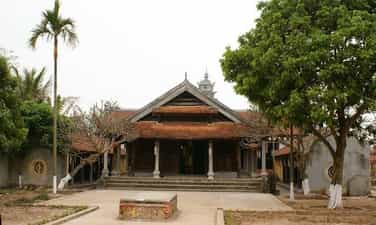
Located about 20km east of Hanoi city center, Keo Pagoda has a history of nearly 1,000 years and is located on an area of nearly 10,000 square meters, in Kim Son commune, Gia Lam district. The pagoda also has another name "Bao An Trung Nghiem pagoda" and is a place to worship Mrs. Keo - one of the Four Great Buddha Dharmas of ancient times. Introducing Keo Pagoda, Mr. Hoang Dinh Phong - the caretaker and incense burner at the pagoda - explained: According to legend, the name Keo means that the two villages Giao Tu and Giao Tat are tightly bonded together like paint glue. There are two traditional professions here: cooking glue from buffalo skin and making scallops for gilding. Legend has it that in the past, the people here carved four statues of Phap Van, Phap Vu, Phap Loi, and Phap Dien. After finishing, there was a piece of wood left over to carve a smaller statue of Phap Van. The statues were brought to pagodas in Luy Lau area and named after the village: Ba Dau, Ba Dau, Ba Tuong, Ba Dan. The smallest statue of Phap Van was taken by Keo village to worship at Keo Pagoda, then called the statue of Ba Keo. Over nearly 1,000 years of history, Keo Pagoda currently retains a total of 47 Buddha statues, including the statue of Ba Keo. Glue is a unique work of art. The pagoda still retains 6 stone steles, 1 ancient bell cast during the Canh Thinh period (1794), 1 bronze, 8 ordinations, many worship objects and some antiques in the style of the Le Dynasty. The pagoda has been restored many times so it has many mixed styles. The three gates were built of bricks in the style of Nguyen Dynasty's ritual gates, and the upper palace is a 4-roof house. The harem and the Three Jewels Tower are in the style of the Nguyen Dynasty. Notably, the statue of Avalokiteshvara with three hands and three eyes is a product of the 17th century. One of the typical cultural features associated with Keo Pagoda for generations is the Keo Village Traditional Festival. Talking about his hometown's festivals, Mr. Hoang Dinh Phong repeated the folk song: "The 6th is the Keo festival, the 7th is the Kham festival, the 8th is the Dau festival, the 9th returns to the Giong festival." According to Mr. Hoang Dinh Phong, Keo village traditional festival takes place on the 6th day of the 4th lunar month every year. In particular, at the Keo Village Festival, in addition to ritual activities according to religious rituals, there is also a procession of President Ho Chi Minh's image and a procession of Buddha with many ancient rituals, customs and practices imbued with the colors of the soul. spirit, attracting a large number of local people and tourists from all over to participate. With its long-standing cultural and historical values, Keo Pagoda has been recognized as a national historical architectural and artistic relic since 1993. Mr. Bui Trong The, Head of the Management Board of Keo Pagoda Relics said: "The people of Keo village in particular and Kim Son commune in general are very proud of the history and culture of Keo Pagoda. During the resistance war against the French, the pagoda was severely damaged and then majorly restored in 1995. Through Over time, the temple has many degraded items. We have sent requests to leaders at all levels to rebuild the altar, bell tower and repair the upper hall and Buddha statue corridor The above proposals will soon be approved to contribute to preserving and promoting this nearly thousand-year-old historical relic." SOURCE: PEOPLE'S ARMY
Bac Ninh
4210 view
Rating : National Monument

VONG NGUYET TEMPLE
Vong Nguyet Temple is located at the end of Vong Nguyet village (Tam Giang commune, Yen Phong district), near Cau River dyke. The temple was built a long time ago with many buildings, however due to the request of the resistance war in 1948, the Ha temple and Trung temple were destroyed. Currently, only the Upper Temple remains, which was restored in 2004. The temple is located in the east of the village, with a spacious landscape. The current architectural work of Vong Nguyet Temple is in the artistic style of the Nguyen Dynasty. The temple's architectural plan is in the style of First, First, Dinh, and is a combination of two Pre-Temple buildings with 3 compartments and 2 wings and 1-room Hau Palace. Both the Temple's Pre-Temple and the Rear Palace are structured in the style of 4 roofs, 4 curved blades, the roof edge and strip edge are decorated with lemon flowers, evoking gentle serenity. On the roof are embossed a pair of dragons flanking the moon... The temple frame is made of ironwood and is linked by the branches according to the pattern of "the higher the husband, the higher the gong, the lower the price". On some of the statues, the ends and money lines are carved with patterns of dragons, clouds, and string flowers. According to recorded documents, Vong Nguyet temple worships Princess Ly Nguyet Sinh (King Ly's daughter) and Pho Ma Do Uy. They sacrificed heroically for the country, and the people here built an incense temple to worship them. At the temple, there are still many valuable typical artifacts such as: the ordinations given by the Le and Nguyen kings to the two gods; The 1642 miraculous stele, altar throne, tablets, horizontal scrolls, scrolls, couplets, and sentences date back to the Nguyen Dynasty; The altar crane, the altar palanquin, the bowl-shaped super knife set dating back to the 20th century... These ancient documents are both evidence of the temple in history and a valuable cultural heritage of the homeland. In addition, Vong Nguyet Temple also has a stele house to worship heroic martyrs and honor local talents. The main festival at Vong Nguyet village temple is held on February 9 (lunar calendar) every year. There are also other special days such as: The 4th day of the 4th lunar month (Ky Phuc festival); June 8 (Mrs. Ly Nguyet Sinh's day of observance); September 12 (the death anniversary of Saint Tam Giang)… Vong Nguyet Temple was ranked as a historical relic by the Ministry of Culture and Sports according to Decision No. 28-VH/QD dated January 18, 1988. SOURCE: BAC NINH ELECTRONIC INFORMATION PORTAL
Bac Ninh
4362 view
Rating : National Monument

BA Chua Kho Temple
(BNP) – Ba Chua Kho Temple is located halfway up Kho Mountain, in Co Me area, Vu Ninh ward (Bac Ninh city). The temple was established during the Ly dynasty. It was initially a small temple. During the Le dynasty, it was restored and expanded into a large temple area. Up to now, Ba Chua Kho Temple has been ranked by the State as a National Historical - Cultural relic and recognized by Bac Ninh province as one of the province's 14 tourist destinations. Ba Chua Kho Temple is the center of cultural and religious activities of the Northern people. The temple is the place to organize traditional festivals of local people on January 12 - 15, with many rituals and folk games imbued with national cultural identity. If given the opportunity, Bac Ninh people often invite friends and tourists from everywhere to visit and make a pilgrimage to Ba Chua Kho Temple once. SOURCE: BAC NINH ELECTRONIC INFORMATION PORTAL
Bac Ninh
4494 view
Rating : National Monument
KIM DAI Pagoda
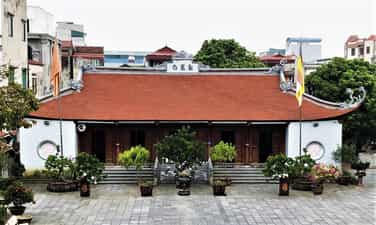
Kim Dai Pagoda, also known as Quynh Lam Pagoda, Xuan Dai Quarter, Dinh Bang Ward, Tu Son City was built by Zen Master Dinh Khong in the 13th century. Having undergone many restorations and embellishments, the pagoda still retains its ancient architecture and is a place of religious activities for local people and a tourist destination for tourists from all over when returning to the Ly Dynasty's homeland. Kim Dai Pagoda is a place to worship Buddha, Patriarch, Mother Goddess and jointly worship two patriarchs, Zen Master Dinh Khong and Zen Master Ly Khanh Van. The pagoda was built on a campus of nearly 3,800 square meters, with Dinh-shaped architecture, including items: Three gates, Three jewels, To house, Mother house, Ni house, Quan Am floor... The pagoda gate (Three Entrances) was built on a massive scale, including the main gate and 2 side gates on both sides, above the domed roof in the style of "2 floors and 8 curved blade roofs". The Three Jewels include Tien Duong and Thuong Dien linked together to form a Dinh-shaped architectural plan. The front hall consists of 5 compartments, 2 left, with the architecture of "4 curved blade roofs". On the roof of the Tien Duong building are embossed three Chinese characters "Kim Dai Tu". The upper palace consists of 3 compartments, structured in the style of "upper is stacked with beams, lower is stacked with beams and seven porches". The Patriarch's House and the Mother's House have 4 rooms, with the architecture of "the head of the vase covering the arms of the throne". The Buddha statue system is placed in the hallway of 2 rows of 7-room houses. The pagoda still retains a system of worship statues, horizontal panels, parallel sentences and many valuable ancient artifacts of the Nguyen Dynasty. The path leading to the pagoda is lined with green trees and ornamental plants of all kinds... During the years before the uprising, Kim Dai pagoda was also a place where revolutionary cadres and local guerrillas operated secretly. The pagoda festival is held on the 9th day of the first lunar month every year to commemorate the contributions of ancestors to the Ly dynasty. Kim Dai Pagoda is ranked by the state as a provincial-level relic according to Decision No. 61/QD-UBND dated January 5, 2009. Source: Bac Ninh province electronic information portal
Bac Ninh
3967 view
Rating : National Monument

DONG HO PAINTING VILLAGE
About 33km east of Hanoi and located close to the southern bank of the Duong River dike, Ho village or Dong Ho is a traditional craft village, whose Nom name is Mai village, now in Song Ho commune, Thuan Thanh district, Bac Ninh province. This is the cradle of a unique line of folk wood carvings known to many people both at home and abroad, with paintings that have long entered the spiritual life of many Vietnamese people. From Hanoi, if you want to go to Dong Ho, tourists go along Highway 5 (the road to Hai Phong) about 15km to Phu Thuy station, then turn left, continue about 18 km to reach Ho street, the district capital of Thuan Thanh district. From here, turn left and go about 2km further to reach Ho village. Visitors can also go all the way to Ho Street and then up the dike, turn left to the second dike guard post, there will be a sign pointing the way to Dong Ho. Dong Ho is a small village with more than 220 households, making a living from making paintings and votive goods more than farming, where the oldest way of making paintings in Kinh Bac land is preserved. Vietnamese folk songs have vivid depictions of Dong Ho painting village with the image of a simple village nestled on the gentle Duong River, outstanding with moral standards that have been advocated and preserved for many years. life, has created a unique way of behaving for the people of Mai village: respect for honor, integrity, elegant speech, clear communication from above and below, and rarely in the village do people curse loudly at each other... “Hey lady with the green sack belt If you come back to Mai village with me, then come back Mai Village has a calendar with margins There is a cool bathing pond and a profession of making paintings." Appearing around the 16th century, Dong Ho paintings are created by manual methods, the crystallization of ingenuity and patience, plus delicate aesthetic art... These are not painted paintings. inspired but reprinted through engravings, and to have engravings that reach a level of sophistication, requires the modeler as well as the engraver to have a love of art and a high technical level. Dong Ho paintings have up to 180 types divided into 5 main categories including worship paintings, historical paintings, congratulatory paintings, daily life paintings and comics. It can be said that the period from the second half of the 19th century to 1944 was the heyday of the painting village, with 17 families in the village participating in making paintings. During the years of resistance against the French, due to the fierce destruction of the war, the painting profession was temporarily interrupted. Only when peace is restored in the North, especially when the country is unified, will the painting village be restored. Unfortunately, after decades of innovation under the market economy and with the impact of Western art trends, social awareness and trends have also changed, forcing the Dong Ho painting line to face decline. one's own survival (!). Every year, from March to July, the whole village makes votive products, and from August to December, the Tet painting season is busy, the whole village is filled with colorful paper messages. In particular, Ho village has a festival on the full moon day of the third lunar month. During the village festival, there are traditional rituals such as sacrifices to gods, horse competitions, and very fun painting competitions... Among the known Vietnamese folk paintings such as Hang Trong (Hanoi), Kim Hoang (Hanoi - former Ha Tay), Dong Ho (Bac Ninh), Sinh village (Hue)..., Dong Ho paintings stand out. Thanks to being closely associated with the countryside, with the simple life of rural people, very close to the Vietnamese community... Dong Ho paintings are printed on Do paper, a type of paper handmade from the Do tree that grows in the forest like eucalyptus bark. Bring the Do tree home, put it in a mortar and pound it, sift it into fine powder, then use this powder to process it into Do paper. Because the paper base is often painted with a layer of paste or resin mixed with powder from crushed Scallop shells to create a sparkling color, it is also called Diep paper. The people of Ho village know how to use and refine natural materials to create traditional colors that are both fresh and durable, such as blue extracted from copper rust; Indigo is extracted from the leaves of the Cham tree in Lang Son; crimson color from the bark of the Vang tree; Vermillion red from gravel quarried in the mountains; yellow color from Hoe flowers or sticky rice straw; Black color from Xoan ash or Bamboo leaf ash; The shiny ivory white color of scallops is due to scallops made from snail shells or clamshells from Quang Ninh waters... These are basic colors, unmixed and each color corresponds to a wood engraving, so they are often painted. Dong Ho is limited to only four colors. Particularly, the topic is taken from life itself, production activities or comes from the philosophy of prosperity. Although simple, it is also very close to everyday life. From characters in legends or stories, beautiful scenes of the country's mountains and rivers, to paintings with meanings of wishes, and everyday activities such as "Vinh Hoa Phu Quy", "Coconut Picking", " Jealousy", "The Shepherd Plays the Flute", "The Mouse Wedding"..., all contain profound humanist philosophies. Not applying the principles of light or the near-far law of contemporary paintings with strict anatomical composition, artists create folk paintings using only a single line drawing style, creating the Eastern painting line. The lake has many conventional features in both description and composition, bringing viewers of the painting into the world of naive, simple but also very interesting drawings. Especially on each painting, the artist always writes a few Chinese or Nom characters (in the past) or romantic and love poems (nowadays), making the painting even more meaningful... Dong Ho paintings are quite close to rural life in the Red River Delta and northern provinces and cities. Its images have entered poetry, literature and even in school curricula. In the poem "Across the Duong River" Fortunately, thanks to the few people who are still passionate about making paintings, the paintings their family produces are sold, and occasionally foreign tourists come to buy paintings. Their income is also temporarily stable, giving them more motivation to continue preserving and developing their traditional profession. The good news is that after a period of following the trend of "trendy" paintings, many people were able to recognize the hidden beauty in the simplicity of folk paintings and returned to the hobby of playing and hanging Dong Ho paintings. especially during Tet days. Hopefully, together with Bac Ninh province, we will build a national candidate dossier for Dong Ho painting to submit to the United Nations Educational, Scientific and Cultural Organization (UNESCO) for recognition as a world cultural heritage. Luckily, Dong Ho painting village will smile again so that Dong Ho paintings will forever retain their fresh and bright features on Diep paper... Source: Dong Ho folk paintings
Bac Ninh
4850 view
Rating : National Monument

TAM PHU TEMPLE
Tam Phu Temple (also known as Three Kings Temple), located in Cao Duc commune, Gia Binh district, is a place to worship three supreme deities: Thien Phu, Dia Phu, Thuy Phu - Kings of the three natural realms (Heaven - Earth). - Water) created all living things. According to local documents, the temple was built a long time ago on a high mound in the middle of Nguyet Ban beach - a large alluvial ground, surrounded by a vast river. The relic is associated with the historical event where the kings and mandarins of the Tran Dynasty convened the Binh Than Conference (military conference) to discuss plans to defeat the Yuan-Mongol invaders who invaded our country in the 13th century (1282). Nguyet Ban - Tam Phu Temple holds a ceremony to pray for heaven and earth, praying for victory over the enemy and keeping the land peaceful. Through historical periods, today Tam Phu Temple relics still preserve ancient relics dating back to the Le - Nguyen dynasties and have been restored and embellished spaciously. In front is the "Three Kings" temple consisting of 3 buildings: Upper temple, Middle temple and Lower temple; Behind the temple grounds there are also a number of buildings such as: a Buddhist temple and a shrine to Mother Goddess Lieu Hanh. Among them, the most outstanding historical and architectural value is the temple worshiping the "Three Kings" consisting of 3 buildings: front altar, middle temple and harem. The altar building is built according to the architecture of 3 compartments and 2 left, curved roof, frame built entirely of ironwood with many sophisticated carved lines of dragons, phoenixes, plants, flowers... There is an altar here to worship Saint Tran (Hung Dao Vuong - Tran Quoc Tuan) - the person who had meritorious service in fighting the Mongol invaders in the Dai Than gate area, was built a temple by the people here and bestowed the title by the kings. The central temple is built according to the architecture of 3 compartments and 2 left, curved roof, with the same architecture as the front altar, where the altar to worship the Five Immortals, Lord and Lady of Luc Dau Giang is located. In particular, on the altar there is hung an ancient horizontal panel in Chinese "Tam Phu Linh Tu" (sacred temple of the Three Palaces), on both sides of the pillars are hung parallel sentences: "The eternally magnificent Tam Phu Dien/Sudden autumn Luc Luc". first river". Tam Phu Temple relic and Bai Nguyet Ban site were ranked historical and cultural relics by the Provincial People's Committee in 2007. Source: Bac Ninh province electronic information portal.
Bac Ninh
4508 view
Rating : National Monument
DINH DINH BAN
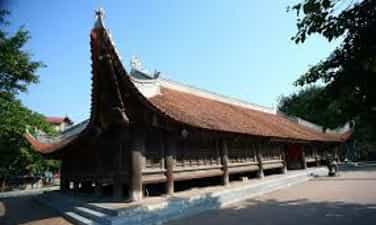
For a long time, in the subconscious of every Vietnamese person, whenever talking about villages, no one forgets to mention the village communal house, because it is the crystallization of intelligence, effort, prosperity of the village, and pride. of the village, where large and small activities of the whole village are witnessed and taken place... is where boys and girls confide and express their feelings. "Go to the communal house and take off your hat to see how much the communal house loves you." 20km north of Hanoi, Dinh Bang village communal house (Dinh Bang communal house) belongs to Tu Son town, Bac Ninh (formerly Huong Co Phap). This sacred land is the hometown of Ly Cong Uan (also known as Ly Thai To), who founded the Ly dynasty and founded the capital Thang Long (in 1010). Dinh Bang has a cluster of cultural relics, especially relics of the Ly Dynasty, forming a unique memorial area, with historical resonance, of national significance, with all: Communal house, Temple, Pagoda, Mausoleum, Tam .... characteristic of Vietnamese village culture. Dinh Bang village communal house is the most famous ancient communal house in Kinh Bac, built in 1700 and completed in 1736, thanks to the efforts of mandarin Nguyen Thac Luong, a Dinh Bang native, and his capable wife Nguyen. Thi Nguyen, from Thanh Hoa, bought ironwood for the villagers to build, and the communal house was able to last forever (now the ancient house of Mr. Nguyen Thac Luong, which was built on a trial basis before building Dinh Bang Communal House, still exists and is preserved). . Dinh Bang Communal House is a place of cultural and religious convergence. In front of the communal house, there were 3 natural gods: Cao Son Dai Vuong (God of Earth), Thuy Ba Dai Vuong (God of Water) and Bach Le Dai Vuong (God of Cultivation). The gods are worshiped by agricultural residents, praying for good weather and good crops. Every year in the 12th lunar month, people hold festivals to pray for a good harvest year. Also at the village communal house, people also worship the Six Patriarchs (six people who were instrumental in reestablishing the village in the 15th century. Later, when Ly Bat De temple was destroyed by the French colonialists in 1948, the people received the tablets of eight kings of the dynasty. Ly returned to worship at Dinh Bang communal house. Dinh Bang communal house is a unique image of national architecture, preserving the integrity of the ethnic stilt house style applied to village communal house architecture. Looking back at the history from the beginning of the nation's founding, the image of a stilt house is still printed on Dong Son bronze drums - a creation of our ancestors in the field of residential architecture. It is impossible to compare the massive communal house after several decades with the stilt houses on Dong Son bronze drums, but it must be recognized that both of these models have a unified style, inheriting and developing architectural traditions. established from the beginning of the nation's founding. Dinh Bang Communal House is a large-scale architectural work, originally there were three gates, the middle door was built with two tall lantern-style brick pillars, on both sides there were rolling archways with fake roofs, behind was a large yard, on both sides were two ranges left vu and right vu. Like all other communal houses, the most important work of Dinh Bang Communal House in terms of artistic architecture is the Bai Duong (Dai Dinh) building. The communal house's Bai Duong is rectangular, 20m long, 14m wide, divided into seven compartments, two wings located on a high platform of green stone with two steps. The massive appearance of the communal house is shown through the wide roof that accounts for 2/3 of the overall height and 6 rows of about 60 large and small iron columns with diameters from 0.55 - 0.65 meters placed on square green rocks. Vac. When entering the communal house, you are welcomed and fascinated by all the quintessence of 18th century carving art. The first attraction for all visitors is the large Hammock door in the middle palace of the outer hall. The Hammock painting covers a large area, extending from Thuong Luong to Lower beam and opens across an entire room. The Hammock Door is carved with sophisticated embossments on all 7 layers and 9 panels of the four sacred and precious themes.... Above the Hammock door is a wooden ceiling covering the roof of the nave with a decorative image of a The Phoenix bird spread its wings to the surrounding clouds. Decorative patterns on other architectural structures are very diverse, intricately carved, elaborate, and harmonious. The structure of the communal house's frame is quite solid, tied together with all kinds of mortises in the "Upper third, lower fourth" way. Each carving in the communal house is a unique and famous work. The more you admire, the more fascinated you become: The painting "Eight Horses Flying" shows the liveliness, the freedom and tranquility of this land through the image and posture of each horse. The two-piece statue stands in adoration, male and female, each with its own look. The exquisite dragon carvings: Dragon Cloud Congress, Five Dragons Painting Pearls, Six Dragons on Heaven... each painting, each depicting many things. For more than 200 years since its inception, up to now Dinh Bang communal house has entered the emotional life and is the pride of the Northern people as well as the people of the country: "The first is Dong Khang communal house Second is Dinh Bang Communal House, glorious Diem Communal House" Dong Khang Communal House today no longer exists, what we can still admire today is Dinh Bang Village Communal House. With the beauty of architectural scale, carving art, decorative art and the more precious Dinh Bang communal house, it gives visitors a complete view of the village communal house architecture built in the first half of the 18th century. while other communal houses can no longer maintain their intact appearance. SOURCE: BAC NINH DEPARTMENT OF CULTURE, SPORTS AND TOURISM
Bac Ninh
4168 view
Rating : National Monument
PHA LAI Pagoda
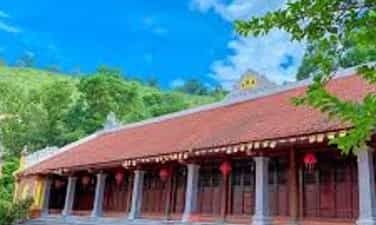
Pha Lai Pagoda is currently located on top of Pha Lai mountain in Duc Long commune, Que Vo town, Bac Ninh province. This is a cultural, religious and belief project that was built a long time ago and has been associated throughout the history of formation and development of the locality. Pha Lai Pagoda was built a long time ago. According to ancient documents, around the Thai Ninh era (1075 - 1075) during the reign of King Ly Nhan Tong, Pha Lai pagoda was built by Zen monks Giac Hai (from Gia Vinh, Thanh Hoa) and Duong Khong Lo. built on a large scale. During this period, the pagoda had a scale of hundreds of compartments, including works: Buddha Pagoda, Ho Pagoda, Am Pagoda, Tam Quan Inner Gate, Tam Quan Outer Gate, Kinh Thien Palace, Bell Tower, Drum Tower, Monk Room... During the Tran Dynasty, the king came here many times to admire the scenery, write poetry and allowed the pagoda to undergo major renovations. The scale includes: Kinh Thien Palace, Four large towers, Bell Tower, Drum Tower, Three Jewels, Temple of Saints Duong Khong Lo and Khong Minh Khong, on both sides are two corridors. At the foot of the mountain, in front of Kinh Thien Palace is the Lower Temple and Dragon Pond, on the east side of the mountain is Co Am Pagoda. Also during this time, the pagoda was renamed "Chuc Thanh Pagoda", the pagoda was recorded in history books as follows: "Since 1407, when our country had the Ming invaders, Chuc Thanh Pagoda was destroyed by the Ming invaders. , they took all the bronze bells, bronze tops... to make weapons, guns and bullets. They also took other gas objects." When Le Loi raised the flag of rebellion and defeated the Ming invaders, a number of other Buddhist objects were also returned to the pagoda. During the reign of Le Trung Hung, Pha Lai pagoda continued to be renovated and embellished. The people, the pagoda, the princes and noblemen donated money and hired green stone carvers to rebuild the Kinh Thien, Tam Bao, Temple, and Am palaces. , Tower... At the same time, a brick and tile kiln was opened on the north side of the hill of the pagoda to provide bricks and tiles for construction projects and a bronze kiln was opened to cast necessary offerings. After each temple repair, the pagoda sets up merit stele and posthumous stele to save for future generations. Over the years from the Le Dynasty to the Nguyen Dynasty, Pha Lai Pagoda continued to repair and offer Buddhist objects such as: Amulets, thrones, incense burners, dragon tablets, fruits, tablets, bells... In 1884, the French colonialists occupied Pha Lai mountain. They destroyed most of the land and tried to set up a post here but failed and had to move to Phao Son to set up a post. After that, people renovated the pagoda to include: 8 compartments worshiping Khong Minh Khong and Duong Khong Lo, 3 compartments for worshiping, 5 compartments in the front called Co Am pagoda worshiping Buddha, 3 compartments Nghe worshiping the Tutelary God and two wooden towers. stone. In 1947, the French invaded Pha Lai again, occupied and destroyed the above works, leaving only a few worship objects. In 1957, Pha Lai people continued to restore and rebuild the works including: 3 Pre-Teacher spaces, 2 Rear Palace spaces, 3 pagoda spaces. Many relics were gathered and returned to their locations, such as the collapsed stone of Kinh Thien Palace, the Adoring Dragon, crocodiles, saint statues, stone stele... In 1985, people continued to repair and embellish the pagoda. In 2014, the doors were replaced with ironwood. In 2018, the entire monument was restored. Currently, Tam Bao Pagoda Pha Lai has a Dinh-shaped architectural plan including: The front hall has 3 compartments, 2 wings and 2 shelves, the architecture is in the style of 4 curved roofs. The frame is made of reinforced concrete, the structure of the roof is "stack of beams and gongs", the middle compartment is of the "cob" style, and the side compartments are of "stack of beams". The upper hall has 2 compartments, the structure is like "The upper house is stacked with beams and gongs, the lower side is stacked with beams and seven porches". In the relic space, there is also the temple of Saint Khong Minh Khong, consisting of 3 architectural buildings: Front temple with 4 compartments, Middle temple with 4 compartments, Rear temple with 2 compartments. In addition, in the relic space there is also a 3-compartment building, the middle of which holds the altar to worship the God Emperor. Through historical changes, Pha Lai Pagoda still preserves a system of extremely precious documents and antiques, with unique artistic value and containing a lot of information about the nation's history, typically: Stele "Pha Lai tu bi" Le Dynasty; the miraculous miracle of 1938; 3 leaders conferred the reigns Dong Khanh 2 (1887), Duy Tan 3 (1909), Khai Dinh 9 (1924); Artifacts of the Nguyen Dynasty include: dragon communal house; octagon set; Statues of the Father's body, the Holy Mother's body of Minh Khong, the statue of the Three Worlds, and the statue of Avalokiteśvara. Pha Lai Pagoda is a place to worship Buddha, Mother Goddess... This place also worships Zen Master Khong Minh Khong and his father and mother. Zen Master Nguyen Minh Khong (1073 - 1141), from Dam Xa village, Gia Vien district, Ninh Binh province. He was a talented Zen master, with many contributions to the political life and cultural ideology of Dai Viet during the Ly dynasty. He was appointed National Teacher by the king, the highest position in the Ly dynasty monk system. . In folk consciousness, Nguyen Minh Khong is a man with extraordinary strength, able to move clouds and wind, move mountains, fill seas... and is one of the very few historical figures who have been canonized as saints by the people. In addition, he is also considered the founder of the medical and pharmaceutical industry and the founder of Vietnamese bronze casting. From ancient times until now, Pha Lai pagoda has always been a place to preserve and maintain the spiritual and cultural activities and beliefs of the village community. Every year, the relic has main event days such as: On March 10, a spring festival takes place to commemorate the day Duong Khong Lo returned to fish and practice at Co Am pagoda; The temple festival takes place from August 12 to 15 (lunar calendar). Especially during the festival, there is a ritual of carrying water from Vuc Chuong to the temple - legend has it that the temple bell of the Ly dynasty sank there. Activities during the special days attracted a large number of people and visitors from all over to attend the festival, contributing to tightening the solidarity of village communities and enriching the country's cultural traditions. Pha Lai Pagoda, Duc Long commune, Que Vo town has been ranked as a national relic by the State, Decision No. 100 VH/QD dated January 21, 1989. SOURCE: QUE VO TOWN ELECTRONIC INFORMATION PORTAL
Bac Ninh
4194 view
Rating : National Monument