Relic point Vietnam
Việt Nam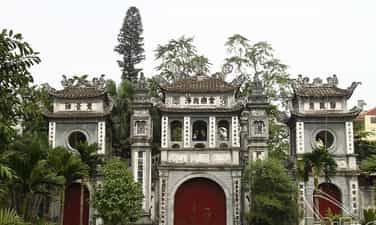
Bat Thap Pagoda
Bat Thap Pagoda – An Ancient Charm in the Heart of Hanoi. Located at 209 Doi Can Street, Ba Dinh Ward, Hanoi, Bat Thap Pagoda, also known as Van Bao Pagoda, is a Buddhist architectural relic with a long history, closely associated with the ancient Thang Long region. The name Bat Thap (Eight Towers) is believed to originate from the unique shape of the pagoda's base, which resembles a bowl. The pagoda is situated on high ground, offering a spacious and airy environment. Highlights include the two-story, eight-roofed gate, the seven-bay front hall, and the three-bay rear hall. The intricately carved wooden components depict dragons, tigers, and plants, creating a structure that is both robust and graceful. The pagoda still preserves a system of Buddha and Mother Goddess statues dating from the late Le Dynasty to the Nguyen Dynasty, most notably the Three Buddhas statues. In addition, there are many precious artifacts such as a pair of bronze cranes, incense burners, and especially the bronze bell "Bat Thap Pagoda Bell," cast in the second year of Gia Long's reign, which is 1803. With its historical, architectural, and artistic value, Bat Thap Pagoda is an important landmark that reflects the cultural landscape of ancient Thang Long, and is also a destination for tourists to explore the beauty of Buddhist architecture in the heart of Hanoi. Source: National Museum of History
Hanoi
52 view
Rating : National Monument
Ngoc Khanh Temple
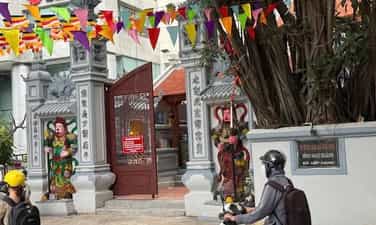
Located beside Ngoc Khanh Lake in Ngoc Khanh Ward, Ba Dinh District, Hanoi, Ngoc Khanh Temple is a valuable architectural and artistic relic, built around the 18th century and classified as a historical monument by the Hanoi City government in 2006. The temple is dedicated to the Three Supreme Deities: Ha Hai Thai Giam Hoang Phuc Trung, Linh Lang Dai Vuong, and Thanh Hoang Uy Linh. These deities are associated with the protection of the country, the development of the western region of the capital, and the establishment of the ancient "Thirteen Villages" system. Beyond its historical value, Ngoc Khanh Temple also preserves many precious Han Nom artifacts and documents such as palanquins, dragon thrones, ornate doors, horizontal plaques, couplets, bells, bronze gongs, bronze incense burners, and censers. Notably, the temple also preserves four royal decrees, the earliest of which is the decree dated the 2nd year of the Minh Menh reign (1821). Despite numerous renovations, Ngoc Khanh Temple today retains its solemn appearance, serving as a place of religious worship for the people and a destination for tourists to learn about the history and culture of the Ba Dinh area. Source: Hanoi Famous Landmarks and Historical Sites
Hanoi
51 view
Rating : National Monument
Tran Khat Chan Temple
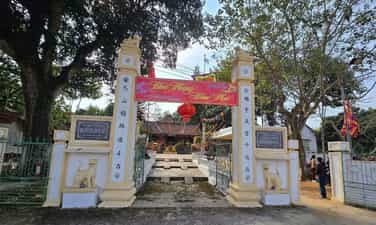
The Tran Khat Chan Temple is located at the foot of Don Son Mountain, in Vinh Loc town, Thanh Hoa province, more than 2 km from Ho Dynasty Citadel. The Tran Khat Chan Temple is a national historical monument, associated with the life and career of General Tran Khat Chan – a famous general of the late Tran Dynasty. In 1390, during the war against the Champa army, Tran Khat Chan commanded the Dai Viet army to defeat Che Bong Nga's army at Hai Trieu, contributing to the defense of the borders. However, when the Tran Dynasty weakened, he participated in the resistance against Ho Quy Ly. The plot failed, and in 1399, Tran Khat Chan and many others were executed at Don Son. In remembrance of this talented and loyal general, the local people erected a temple in his honor around the late 15th – early 16th century and revered him as the tutelary deity. The temple features traditional architecture with main components such as the entrance gate, front hall, middle hall, and rear hall; it still preserves many valuable artifacts, including imperial decrees from the Nguyen Dynasty. Every year, the Trần Khát Chân Commemoration Ceremony is held on the 23rd and 24th of April in the lunar calendar, providing an opportunity for locals and tourists to remember the contributions of this renowned general, while also learning about and preserving the historical and cultural values of the Vĩnh Lộc region. Source: Thanh Hóa Newspaper and Radio & Television
Thanh Hoa
45 view
Rating : National Monument
Tran Phu Memorial Site
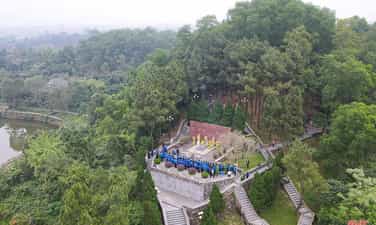
The Tran Phu Memorial Site is located in Duc Tho commune, Ha Tinh province, the hometown of Comrade Tran Phu – the first General Secretary of the Party. This is a historically significant site, preserving the imprints of the life and revolutionary career of this steadfast communist fighter. Comrade Tran Phu was born on May 1, 1904, into a patriotic scholarly family. In October 1930, he was elected the first General Secretary of the Party and directly drafted the 1930 Political Thesis. In April 1931, he was arrested by the French colonialists and died on September 6, 1931, at Cho Quan Hospital in Saigon, at the age of 27. Before his death, he left behind the famous admonition: "Maintain your fighting spirit." In 1999, his remains were brought back to his hometown for burial. The tomb is located on Quan Hoi Mountain, facing Tam Soa Wharf – the confluence of the Ngan Sau, Ngan Pho, and La rivers. Within the grounds are a memorial stele and the tombs of the comrade's parents and younger brother. About 1km from the tomb is the Tran family ancestral temple and the Tran Phu Memorial Exhibition House, which houses many documents, images, and artifacts related to the comrade's revolutionary life. Today, the Tran Phu Memorial Site has become a destination for generations to come, offering incense, learning about history, and commemorating the first General Secretary of the Party – an exemplary figure of patriotism, unwavering will, and indomitable spirit in the face of the enemy. Source: News and Ethnic Minorities Newspaper
Ha Tinh
55 view
Rating : National Monument
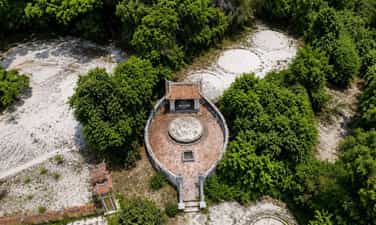
Tomb of Nguyen Lo Trach
The tomb of Nguyen Lo Trach, also known as Ha Nhan and Ky Am, is located in the Don Cat area, Ke Mon village, Phong Phu ward, Phong Dien town, Hue city. Born on February 15, 1853, he was a progressive thinker during the reign of Emperor Tu Duc, notable for his ideas on national reform amidst the turbulent times in Vietnamese society. Nguyen Lo Trach left behind valuable ideas in three famous works: "Thoi Vu Sach Thuong," "Thoi Vu Sach Ha," and "Thien Ha Dai The Luan," reflecting his vision and proposals for national renewal and consolidation. He died in 1895 and was initially buried in Binh Dinh. In 1957, his descendants reinterred his remains in his hometown of Ke Mon. The tomb is circular, with a simple structure, approximately 3 meters in diameter, and walls 40 cm high and 20 cm thick. With historical values associated with the life and reformist ideas of Nguyen Lo Trach, his tomb was recognized as a National Historical Monument on December 28, 2001. Source: Phu Ho Commune website – hue.gov.vn
Hue
47 view
Rating : National Monument

Thien Quy Pagoda
Thien Quy Pagoda, also known as Kenh Pagoda, is a distinctive architectural masterpiece in Dong Hung District, Hung Yen Province. Built during the late Ly Dynasty and early Tran Dynasty, the pagoda has undergone numerous renovations and still retains many traces of its ancient architecture. The complex includes a triple gate, the main sanctuary, the ancestral hall, the Mother Goddess shrine, the guardian hall, a bell tower, and a system of ancient pagodas, creating a grand traditional Buddhist space. The architecture is particularly notable for the intricate carvings on the rafters, brackets, and reliefs, along with many Buddha statues, guardian deity statues, and valuable religious artifacts. The pagoda also preserves many stone steles, bronze bells, stone chimes, and ancient artifacts, including a bell cast during the Tay Son Dynasty. Notably, Thien Quy Pagoda is renowned for its system of ancient pagodas and architectural relics of significant historical and artistic value. Beyond being a place of religious worship, the pagoda is also closely linked to the community's cultural life through the Thien Quy Pagoda Festival, held annually with Buddhist rituals, processions, artistic performances, and many folk games. With its historical, architectural, and cultural values, Thien Quy Pagoda is a destination rich in the history of Dong Hung, contributing to the preservation of the traditional beauty of Vietnamese folk culture and beliefs. Source: Buddhist World
Hung Yen
80 view
Rating : National Monument
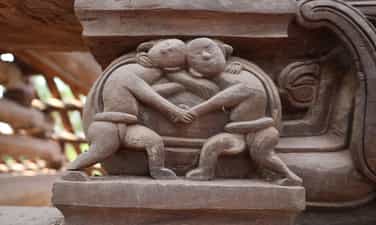
The Tien Luc complex of communal houses, temples, and pagodas.
Located in Tien Luc commune, Lang Giang district, Bac Giang province (now Bac Ninh), the Tien Luc complex of temples and pagodas is a unique cultural and religious space, comprising Phuc Quang Pagoda, Tien Luc Temple, Thuan Hoa communal house, Vien Son communal house, and a thousand-year-old wild cinnamon tree. The structures within the complex were built long ago and were restored and renovated during the Le Trung Hung period. To this day, many structures still retain relatively intact ancient architecture along with exquisite carvings such as dragons, animals, fairies riding dragons, and scenes of folk life. The highlight of the complex is the thousand-year-old wild cinnamon tree, closely associated with the beliefs and cultural life of the local people. Legend says that the tree was once bestowed the title "National Lord of the Great Wild Cinnamon Tree" by King Le Canh Hung, becoming a sacred symbol of the Tien Luc region. The complex also preserves many valuable Buddha statues, religious artifacts, and antiques, notably nearly 100 statues at Phuc Quang Pagoda and many artifacts dating from the Le and Nguyen dynasties. In particular, the Tien Luc festival, with its water procession, palanquin procession, word-arranging custom, and unique folk games, has been inscribed on the National List of Intangible Cultural Heritage. Source: Bac Ninh TV Newspaper
Bac Ninh
64 view
Rating : Special national monument

Phu Huu Temple
Phu Huu Temple is a national-level architectural and artistic relic, currently located in Phu Hoa hamlet, Phu Huu commune, Dong Thap province. The temple was built in the early 19th century, initiated by Mr. Thieu Quang Loc, who mobilized local people to build it to worship the tutelary deity. In 1852, during the reign of Emperor Tu Duc, the temple was granted the title "Tutelary Deity of the Locality". In 1903, due to erosion by swirling water, the temple was relocated and restored to its current location. Phu Huu Temple impresses with its airy space, surrounded by ancient trees, with the Sa Dec River in front and the Cai Tau Ha River to the side. The complex includes a screen wall, lotus platform, ceremonial gate, the Five Elements Shrine, the Tiger Shrine, the God of Agriculture Shrine, the Lady of the Land Shrine, and the temple dedicated to the tutelary deity. Every year, the temple holds three main ceremonies: the Lower Field Ceremony on the 17th of June, the Upper Field Ceremony on the 17th of September, and the Ancestral Temple Ceremony on the 17th of December (lunar calendar). This is not only a place of religious worship for the community but also preserves the distinctive cultural and architectural values of the Southern region of Vietnam. With its outstanding historical, cultural, and artistic values, on December 18, 2009, Phu Huu communal house was classified as a National Architectural and Artistic Monument by the Ministry of Culture, Sports and Tourism. Source: Wikipedia
Dong Thap
83 view
Rating : National Monument

Southern Vietnam Radio and Telecommunications Agency
The Southern Vietnam Radio and Telecommunications Agency – A Heroic Legacy in the Heart of Dong Thap. The Southern Vietnam Radio and Telecommunications Agency historical site is located at the Go Muoi Tai base in the Dong Thap Muoi region, now Phu Cuong commune, Tam Nong district, Dong Thap province. Established and operating secretly from 1945 to 1954, it was one of the first cradles of revolutionary communications in Southern Vietnam. Through the passage of time and the vicissitudes of history, it has been rebuilt and restored into a solemn historical site. The grounds are highlighted by the majestic Monument to the Southern Vietnam Radio and Telecommunications Agency, along with memorial structures commemorating the contributions of previous generations. This space not only preserves the memory of the rudimentary machinery repair workshop and the former telegraph operator training school, but also marks the glorious milestones during the nine years of service in the resistance war against the French, maintaining the uninterrupted flow of information between the Southern battlefield and the Central Government. Not only is it historically significant for the postal service, but the site is also a brilliant symbol of the patriotic spirit of the Southern region. Overcoming bombing raids and harsh conditions, it served as a safe transit point, ensuring the transportation of weapons, documents, and transporting tens of thousands of cadres to and from the battlefield. With its immense historical significance, the Southern Vietnam Radio and Telecommunications Post Office site today is not only a symbol of gratitude to our forefathers, but also a destination rich in cultural values, contributing to the education of revolutionary traditions for future generations. Source: Dong Thap Provincial Museum Information Portal
Dong Thap
71 view
Rating : National Monument
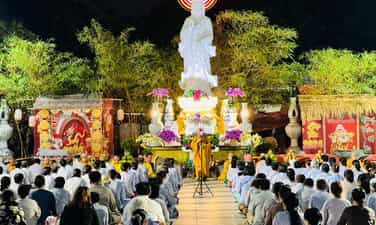
Long Thien Pagoda
Long Thien Pagoda – A Long-Standing Buddhist Landmark in Dong Nai Province. Located on the right bank of the Dong Nai River, in Buu Hoa Ward, Bien Hoa City, Long Thien Pagoda was built in 1664 by Patriarch Thanh Nhac. It is one of the oldest pagodas in Dong Nai and is considered the cradle of Southern Vietnamese Buddhism. In 1991, the pagoda was classified as a National Historical Monument. Despite numerous renovations, particularly in 1748, 1842, and 1952, the pagoda retains its ancient and solemn appearance. The grounds feature many ancient trees, old stupas, and the stupa of Patriarch Thanh Nhac. The main hall is notable for its collection of Buddha statues, horizontal plaques, couplets, and exquisite carvings depicting traditional themes such as the four mythical creatures, flowers and birds, and fish transforming into dragons. Beyond its architectural and religious value, Long Thien Pagoda is also deeply connected to the history of Dong Nai province. During the resistance war, the pagoda served as a gathering place for monks, nuns, and Buddhist followers to participate in patriotic activities and contribute to the national liberation struggle. With a history of over 360 years, Long Thien Pagoda today is not only a place of religious worship but also a destination rich in historical and cultural value, contributing to preserving the imprint of the formation and development of Dong Nai province. Source: Dong Nai Buddhist Affairs TV
Dong Nai
82 view
Rating : National Monument