Relic point Vietnam
Việt Nam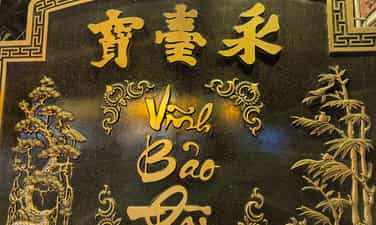
King Ba Temple
King Ba Temple, also known as Vinh Bao Dai Temple, is located next to Lang Pagoda, in a cool green space with many ancient trees such as Muom, Dai and pine. The temple has a traditional architecture consisting of three compartments, facing south, inside is a harem where a throne is placed to worship the nursemaid of King Ly Than Tong in his childhood. Therefore, local people have long known this place as King Ba Temple. According to folk beliefs, after her death on December 3, the royal court granted her the title "Tu Phuc Hoa, Ly Mau Cung Than". In addition to the main worshiped figures, the temple also worships the Three Holy Mother Goddesses, Thap Nhi Son Trang and a number of figures and altars according to folk beliefs. King Ba Temple has a close connection with the cultural space and festival of Lang Pagoda. Every year, on the 7th day of the third lunar month, when the Thanh Lang palanquin passes by, the procession stops to hold a worshiping ceremony. On the first and full moon days, people and tourists coming to Lang pagoda often visit King Ba temple as a ceremony site, contributing to preserving the traditional religious beauty of Lang land. With its historical, religious value and connection to traditional festivals, King Ba Temple is a destination that contributes to enriching the cultural relic system of the Lang area, Hanoi. Source: Hanoi People Magazine
Hanoi
442 view
Rating : National monument
Dinh Tuong Phieu
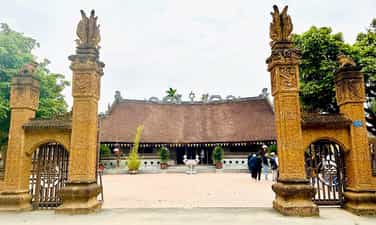
Dinh Tuong Phieu, also known as Dinh Ca, is located in Tich Giang commune, Hanoi city. This is a long-standing religious building, worshiping four tutelary gods, including three saints Tan Vien and Quan Son tutelary god. The communal house was built in the southwest direction, towards Ba Vi mountain - a place associated with the legend and belief of worshiping Saint Tan. The building has a "Nhat" shaped architecture, consisting of three compartments and two wings, outstanding with a curved roof system, soft knife heads and many delicate carvings. The themes of dragons, phoenixes, unicorns, deer, water clouds and flowers are vividly expressed, bearing the mark of the art of the Le Trung period and later renovation periods. The communal house still preserves many precious relics such as procession palanquins, altar thrones, ordinations, ancient incense bowls and worship objects dating from the 17th century to the early 20th century. Every year, the communal house festival is held on the full moon day of the first lunar month, an opportunity for people to commemorate the merits of the Tutelary Gods and preserve traditional cultural values. With outstanding values in history, architecture and art, in 2018, Tuong Phieu communal house was ranked a special national monument by the Prime Minister. Source: Department of Cultural Heritage
Hanoi
426 view
Rating : Special national monument
Uncle Ho's banyan tree planted in Tien Hoi
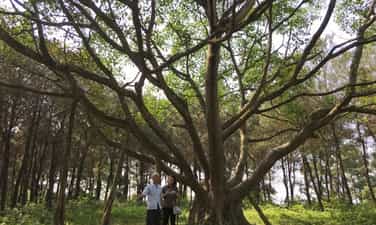
The location of Uncle Ho's banyan tree planted in Tien Hoi, now in Tien Hoi village, Dong Anh commune, Hanoi city, is the place that marks the event of President Ho Chi Minh's visit and participation in the local people's Tree Planting Festival. On January 31, 1965, at Dong Nhan mound, Tien Hoi village, Uncle Ho directly planted a souvenir banyan tree. He advised people when planting trees to take care of them so that they live well, and to actively plant more trees, contributing to creating shade and protecting the environment. After the event, the banyan tree was cared for and preserved by the local government and people. The place where Uncle Ho planted trees became a memorial for an event associated with the Tet tree planting movement initiated by him, while also carrying traditional educational meaning and remembering Uncle Ho's feelings and advice for the people of Dong Anh. Today, Uncle Ho's banyan tree planted in Tien Hoi is still preserved by the locality as a historical vestige, contributing to enriching the system of relics associated with President Ho Chi Minh in Hanoi. Source: Dong Anh 360 website
Hanoi
279 view
Rating : National monument
An Hoa communal house relic
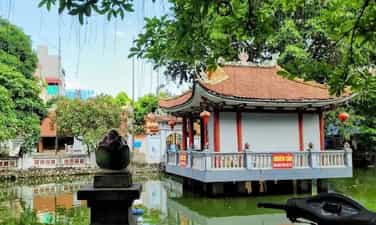
An Hoa Communal House is located in An Hoa village, Yen Hoa ward, is a historical relic, typical architectural art, associated with the long-standing cultural and patriotic traditions of this land. The communal house worships Bach Hac Tam Giang and King Ly Than Tong, who are respected and worshiped by the people as Tutelary Gods. In particular, Ly Than Tong had a deep connection with the land of An Hoa, because he was the son of Sung Hien Marquis and was said to be born here. The communal house still preserves many valuable relics such as Chinese characters, 14 ordinations from the Canh Hung to Khai Dinh period, along with dragon palanquins, tribute bowl palanquins and carved dragon tablets. These artifacts not only have historical value but also demonstrate the sophisticated carving art of our ancestors. Every year, the communal house organizes a festival with a palanquin procession and many folk cultural activities, contributing to preserving the traditional beauty of An Hoa village. Source: Hanoi Landscapes and Monuments
Hanoi
399 view
Rating : National monument
Dam Temple
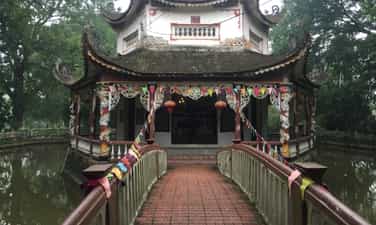
Dam Temple - Sacred Mother Goddess temple in Hanoi. Dam Temple (or Xam Duong Temple) is located in Xam Duong village, Ninh So commune, former Thuong Tin district, Hanoi city. This is one of the typical temples worshiping Mau Thoai (Holy Mother Aquarium) in Vietnamese people's belief in Mother Goddess worship. According to legend, Mau Thoai is the daughter of the Dragon King, who appeared to help King Tran Nhan Tong defeat the Yuan-Mongol army. After the victory, the king built a temple to commemorate her achievements. Over many dynasties, the temple was bestowed with many ordinations and became a famous spiritual relic of the Thuong Tin region. Dam Temple has an ancient space with a lake, many ancient trees and items such as the Mother Goddess main hall, Tran Trieu palace, Son Trang cave, Co pavilion and Cau pavilion. Every year, the temple festival takes place in the second lunar month with incense offering ceremonies, water processions and many unique folk cultural activities, attracting a large number of tourists and people from all over. Source: Focus Asia Travel
Hanoi
603 view
Rating : National monument
Dai Lo Temple
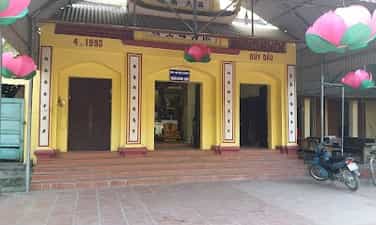
Dai Lo Temple (also known as Mother Dai Lo Temple, Lo Temple) is located in Ninh So commune, Thuong Tin district, Hanoi city. The monument was built around the 17th century, initially worshiping the Four Holy Mothers of the Song Dynasty, but through the process of formation and development, it has become one of the typical Mother Goddess temples of the Northern Delta region. The temple has a fairly complete architectural scale with items such as the ritual gate, the temple to worship Saint Tran, the front altar, the communal house, the central palace, the harem, the bell tower, the left - right corridor, the Co floor and the Cau floor. Among them, the two-story, eight-roofed communal house is the most prominent item with its sophisticated carving art, imbued with the architectural style of the Nguyen Dynasty. The relic also preserves many valuable artifacts such as ordinations, great letters, parallel sentences, dragon thrones, tablets and a system of worship statues. The temple's worship space fully reflects the traditional beliefs of worshiping the Mother Goddesses of the Three Palaces and Four Palaces of the Vietnamese people. In addition to the Four Holy Mothers, the temple also worships Saint Tran and many saints in the folk belief system, and is the place where special rituals and religious activities of the community take place. Source: Department of Cultural Heritage
Hanoi
621 view
Rating : National monument
Communal house - Mai Phuc Pagoda
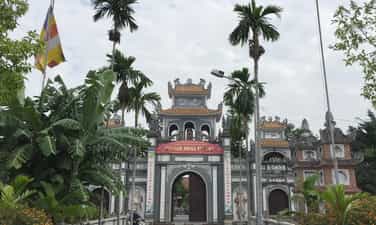
Communal house - Mai Phuc Pagoda (Long Bien, Hanoi) Communal House - Mai Phuc Pagoda is located in Long Bien ward, Hanoi city, built in the 17th century during the Le Dynasty. This is a valuable historical, architectural and artistic relic, worshiping the two blessed gods Xuan Vinh Dai Vuong and Princess Luan Nuong and famous generals who were instrumental in suppressing the rebellion of 12 warlords. According to fairy tales, Xuan Vinh and his younger sister Luan Nuong were two brothers who were talented in literature and martial arts, recruited insurgents, and contributed to Dinh Tien Hoang's unification of the country. After achieving many victories, Xuan Vinh was granted the title Xuan Vinh Dai Vuong, and Luan Nuong was granted the title Luan Nuong Princess. When the two brothers passed away, people built a temple to commemorate their contributions and honored them as local tutelary gods. Mai Phuc communal house still preserves many precious artifacts, notably 28 ordinations from feudal dynasties, of which the earliest ordination is dated 1674. In particular, the communal house also preserves a pair of Mac dynasty candlesticks with the name Dien Thanh 7 (1583) donated by Bat Trang people. These artifacts show that the communal house was built around the 16th century. Through many historical events and wars, the communal house was damaged but has been restored many times. Currently, the communal house faces south and is still a place for religious activities, preserving traditional cultural values of local people. Source: Hanoi Landscapes and Monuments
Hanoi
436 view
Rating : National monument
Tu Tong ferry station
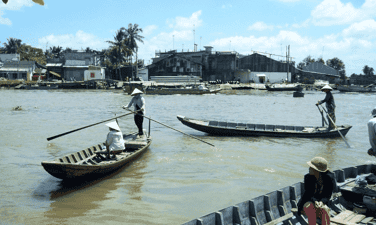
Located peacefully on the red alluvial Red River, Tu Tong wharf (now in Tu Lien, Tay Ho ward, Hanoi) is a historical witness, marking the heroic history of the Capital during the resistance war against the French colonialists. Before the August Revolution, the ancient land of the Four Generals was one of the centers of the revolutionary movement in Hanoi, where many cadres were hidden and protected. When the guns of the National Resistance broke out, Tu Tong wharf quickly became a strategic traffic artery connecting the inner city with the safe base area of Dong Anh. The pinnacle of the victory here took place on the night of January 15, 1947, when the self-defense forces and people of Tu Tong bravely rowed boats carrying officers, soldiers and weapons across the Red River safely under a hail of enemy bullets. The silent sacrifice and the spirit of "death for the Fatherland" of the people here made an important contribution to protecting the core forces of the revolution in the arduous early days. Now that the war has receded, the old wharf has been labeled by the State as a historical relic of the revolutionary resistance. This place has become a sacred "red address", reminding today's young generation of the patriotism and resilient revolutionary tradition of their ancestors. According to: Hanoi New Newspaper
Hanoi
619 view
Rating : Provincial level relics
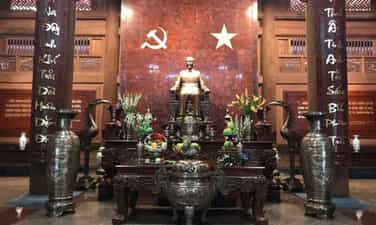
K9 Da Chong Relic Area
K9 Da Chong Relic Area - A red address marking the years of history Located at the foot of Ba Vi Mountain, about 70 km from the center of Hanoi, K9 Da Chong Relic Area is one of the special historical relics associated with President Ho Chi Minh and the resistance war against the US to save the country. In 1957, during a business trip to Ba Vi, Uncle Ho stopped at Da Chong area and realized that this place had an important strategic position. In 1958, he decided to choose K9 as the working base of the Party Central Committee. From 1960 to 1969, K9 was the place where President Ho Chi Minh and the Politburo met to discuss many important decisions of the country, and also welcomed many international delegations. After Uncle Ho passed away in 1969, K9 continued to undertake the special task of preserving and preserving his body during the war years, before being brought to Ho Chi Minh's Mausoleum in 1975. Up to now, K9 Da Chong Relic Area still preserves many valuable works and artifacts such as a two-story stilt house, office room, service house, area to preserve President Ho Chi Minh's body and pristine mountain and forest landscape. Not only is it a testament to a special historical period of the nation, this place is also a traditional educational address, contributing to helping today's generations better understand the life, thoughts and simple lifestyle of President Ho Chi Minh. According to: Tourist Information Center
Hanoi
814 view
Rating : Special national monument
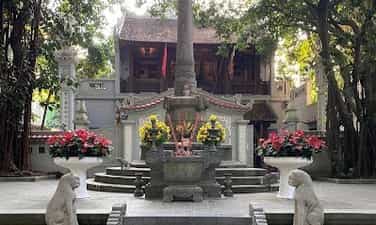
Statue of King Le Thai To next to Sword Lake
Statue of King Le Thai To next to Sword Lake The statue of King Le Thai To is located in the temple worshiping King Le Thai To located at 16 Le Thai To Street, Hang Trong Ward, Hoan Kiem District, Hanoi, in the green space on the banks of Hoan Kiem Lake. This is a historical relic associated with national hero Le Loi and the legend of returning the magic sword, a typical symbol of Thang Long - Hanoi. According to history books and legends, after leading the Lam Son uprising to defeat the Ming army, establishing the Later Le Dynasty, King Le Thai To returned the Thuan Thien sword to the Golden Turtle at Hoan Kiem Lake. From then on, the lake was named Hoan Kiem Lake (or Sword Lake), becoming a symbol of the desire for peace and national independence. The bronze statue of King Le Thai To was built in 1896, about 1.2 meters high, showing the king in a majestic posture, his right hand holding a sword, his left hand on his hip. The entire relic includes gate, garden, Phuong communal house and monument, in harmony with the landscape of Hoan Kiem Lake. In 2000, the project was restored and renovated on the occasion of the 990th anniversary of Thang Long - Hanoi. According to: Hanoi Landscapes and Monuments
Hanoi
427 view
Rating : National monument