Relic point Vietnam
Việt Nam
Khuon Manh forest relic
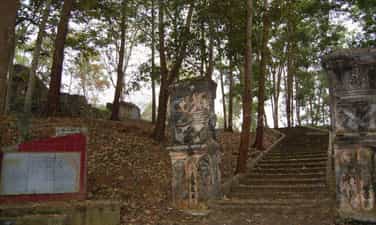
Khuan Manh forest relic Khuan Manh forest is a forest in Trang Xa commune, Vo Nhai district, 50 km northeast of Thai Nguyen city. This is the birthplace of the Party Central Committee to preserve and continue to strengthen its forces. On September 15, 1941, on behalf of the Party Central Committee's standing committee, Mr. Hoang Quoc Viet came to the base to witness the establishment and handover ceremony. Mission for National Salvation Army II, Mr. Chu Van Tan is the commander, Mr. Nguyen Van Phan is the deputy commander. At first the platoon had 36 people, including 3 women, but later increased to 46 people, equipped with rudimentary weapons, only pistols and spears. After the founding ceremony, the platoon began building a political base among the people, promoting guerrilla activities in Trang Xa and Dinh Ca, causing many losses to the enemy. In November 1944, many fierce battles between the National Salvation Army II (with the participation of local people) and the French army at Dong Thu bridge, Khe pass, La Han banyan tree, Da Do mountain, Mo Ga cave... these places mark the glorious victories of the Vo Nhai army and people at that time. SOURCE: World Travel
Thai Nguyen
3828 view
Rating : Provincial level relics
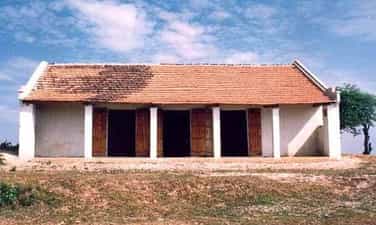
Dong Cao Pagoda
Dong Cao Pagoda or Doi Cao Pagoda, built during the Ly Dynasty, is located on a hill in Phuc Duyen village, Tan Huong commune. During the resistance war against the French colonialists, the pagoda was destroyed. In 1999, Tan Huong commune organized the restoration of the pagoda and the construction of a bell tower. In 2002, people in the commune and benefactors mobilized to donate more than 120 million VND to renovate the pagoda. Currently, the pagoda has been invested in a spacious, clean and beautiful construction, with a Tam Bao house, Mother Goddess church, Uncle Ho church, and in front is a 3-story bell tower. Dong Cao Pagoda was recognized as a provincial historical-cultural relic in 2004. Every year, on January 14 and 15, people in the commune and tourists from all over come to the pagoda to pray for a peaceful new year, for trees to sprout and everything to be prosperous. The festival also takes place cultural and artistic exchange activities (photo) and folk games that attract a large number of people to participate such as wrestling, Chinese chess, cockfighting... The pagoda is often called Dong Cao Pagoda or Cao Pagoda, located on a hill in Tan Huong commune, Pho Yen district, Thai Nguyen province. From Hanoi to Thai Nguyen province, go another 16km to the temple. The pagoda belongs to the Northern sect. The pagoda was built in the Later Le Dynasty. Today's temple was built by Master Thich Dam Hinh on May 17, 1992, completed on July 21, 1992. The pagoda still retains the towers, steles, and stone pillars of the Later Le period, such as the ancient stele engraved with the 18th year of Chinh Hoa (1697). SOURCE: Viet Architect Group
Thai Nguyen
3607 view
Rating : Provincial level relics
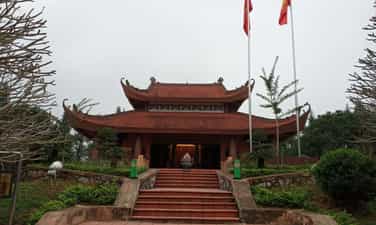
Dinh Minh Ly
On the morning of January 6, the Party Committee, government and people of Minh Lap commune held a ceremony to receive the provincial-level cultural and historical relic certificate for Minh Ly communal house. Minh Ly communal house in Minh Ly hamlet, Minh Lap commune is a place for cultural and religious activities of the people in the commune. The communal house worships national hero Duong Tu Minh, who made great contributions to maintaining and strengthening the great unity of ethnic groups to expel foreign invaders. He was respected by the people and established a temple to worship the village's Tutelary God. The communal house has existed for a long time, but due to historical changes and natural disasters, Minh Ly Communal House was seriously degraded. In 2007, the people of 4 hamlets Ao Son, Doan Ket, Lang Chu and Theo Cay worked together to rebuild the communal house on the old foundation. The communal house includes an altar and a harem, the total construction land area is 1,903 m2. Every year at the communal house there are two main holidays on January 9 and November 20 of the lunar calendar, in addition to other holidays such as lower field and upper field ceremonies. Offerings to the village tutelary god are mainly local agricultural products with the purpose of praying for good weather, lush vegetation, good harvests, and prosperity and happiness for the people of all ethnic groups in the area. With historical and cultural values, the People's Committee of Thai Nguyen province decided to recognize Minh Ly communal house as a provincial-level historical and cultural relic. This is the joy of the Party Committee, government and people of Minh Lap commune in particular and Dong Hy district in general. Being recognized as a historical relic contributes to preserving and promoting the value of national cultural heritage, educating patriotic traditions, and meeting the spiritual needs of the people in the area./. SOURCE DONG HY DISTRICT ELECTRONIC INFORMATION PAGE
Thai Nguyen
3580 view
Rating : Provincial level relics
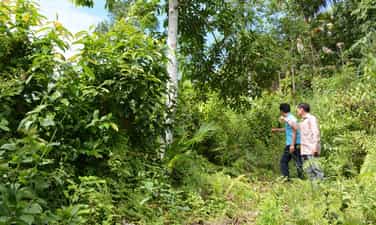
Location of the Department of Communications
During the resistance war against the French colonialists, many agencies were established, stationed and worked at ATK Dinh Hoa. Among these is the Department of Information, Ministry of National Defense. On July 31, 1949, the Minister of National Defense issued Decree No. 123/ND establishing the Information Department under the General Command of the National Army and the Vietnam Militia and Self-Defense Force. The agency was established on the basis of the Military Communications Department with comrade Hoang Dao Thuy as Head of the Department. According to the Decree, the Information Department is the agency that advises the High Command on communications; Organize and maintain communication from the General Staff to the battlefields and professional guidance units; Equip technical material for communication units under the Ministry of National Defense and the Commander-in-Chief; Unify all communications forces at the Ministry of Defense and the Vietnam Radio Service and put them in the Department of Information formation. During the period 1952-1953, the Information Department lived and worked in Khuoi Tat village, Quy Ky commune (Dinh Hoa). This location has been surveyed and determined, but a monument has been built. Mr. Hoang Van Chuc, born in 1942, in Khuoi Tat hamlet, Quy Ky commune confirmed: The area where the Information Department works is located halfway up the hill, the leveling is relatively large. After moving, this place still hid a lot of machines and telephones, but now they are gone and almost lost. In May 1953, the Information Department moved its location to Khuan Giang hamlet, Trung Hoi commune (from 1953 to present, Trung Luong commune, Dinh Hoa). Although there are still many difficulties and shortages, the unit's staff has determined to complete the following tasks within 6 months: Forming agencies and units under the Department; open training classes for staff officers, communications officers and technical staff to repair radios, telephones, and generators; draft submitted to the Ministry of National Defense and the Commander-in-Chief for approval and promulgation of a plan to organize the communication system throughout the army; Purchasing and repairing communication equipment to quickly equip units, and quickly compiling the document "Brief communications" for training throughout the army. Also in Khuan Giang, Chief of General Staff Hoang Van Thai spent a lot of time working and talking with officers and soldiers of the Information Department. He emphasized: "Communications need to firmly grasp the most essential tasks, of which the top priority is building a team of officers and soldiers who are qualified to undertake tasks, ensuring command of the troops in the right conditions." operational combat events on a larger scale. The direction of self-reliance is correct, but the Department of Information needs to strengthen material and technical means for the campaign and tactical levels to be able to complete the task...". During the resistance war against the French, the Information Department successfully completed its assigned tasks, ensuring communication for leaders and commanders at all levels to coordinate between battlefields; contributing to building major regiments, ensuring combat command of the three armies, political and diplomatic struggles...effectively serving the armed forces to fight for victory in campaigns, especially the strategic Dong Xuan offensive (1953-1954) culminating in the historic Dien Bien Phu Campaign in 1954. With such important historical significance, the location of the Department of Information (1953-1954) in Khuan Giang, Trung Luong commune, was recognized by the Provincial People's Committee as a provincial historical relic in August 2017. SOURCE: Thai Nguyen Newspaper
Thai Nguyen
3855 view
Rating : Provincial level relics
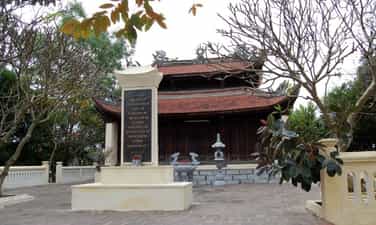
Burial location of patriot Luong Ngoc Quyen
On August 25, at Thong Nhat 3 hamlet, Vo Tranh commune (Phu Luong), Phu Luong district solemnly held a ceremony to receive and break ground for a project marking the burial site of provincial-level patriot Luong Ngoc Quyen. . Patriot Luong Ngoc Quyen was born in 1885, and at the age of 19 participated in the cause of national liberation; At the age of 29, he was arrested by the French colonialists and sentenced to life in prison. On July 25, 1916, they transferred him to prison in Thai Nguyen Prison. Here, he enlightened his patriotism and the will to fight for fellow prisoners and green loincloth soldiers, including Trinh Van Can (aka Doi Can). The Thai Nguyen uprising broke out on the night of August 30, 1917. On September 4, 1917, he was hit by enemy artillery and died. The insurgents buried him in the southeast of Go Mu hill, Thong Nhat 3 hamlet, Vo Tranh commune (Phu Luong). On December 23, 2001, with the help of local authorities and professional agencies, his descendants took his remains and brought them back to his hometown, Nhi Khe commune, Thuong Tin district (Ha Tay) to mourn and repose. burial. The place where he rested (1917-2001) was ranked as a provincial-level historical relic by Thai Nguyen province (Decision No. 2386/QD-UBND, dated August 10, 2017). The land area zoned for relic protection is 1,281 square meters, of which the burial area is 335 square meters; The adjacent landscape area and surrounding area is 946 m2 wide. On the same day, delegates participated in the groundbreaking ceremony of the project; Vo Tranh Commune People's Committee also announced the decision to establish a Relics Management Board, consisting of 11 people. SOURCE: Thai Nguyen Newspaper
Thai Nguyen
3922 view
Rating : Provincial level relics
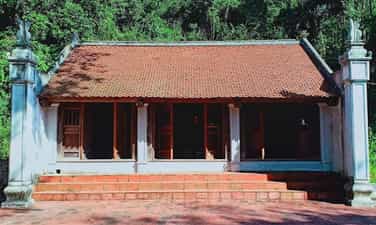
Dinh Van Han
Van Han communal house belongs to Van Han hamlet, Van Han commune; The communal house has existed since ancient times, located on a hillock with an area of over 1 hectare, belonging to the type of Artistic Architecture, a historical relic of the resistance war. The communal house worships the Great Saint Cao Son Quy Minh Dai Vuong - a famous general who fought against the Song invaders during the Ly Dynasty and his daughter. In 1951, at Dinh Van Han, there was a Preparatory Conference of the Agricultural Tax Policy Committee chaired by comrade Truong Chinh. The communal house was previously built in the style of a stilt house, consisting of one room, two left, facing southwest; The communal house's roof is covered with flaked tiles, the communal house has many large columns with diameters from 50 60 cm; Through time and historical events, the communal house has been rebuilt 5 times, the last reconstruction was in 2015, including 3 rooms with red tile roofs. Currently, the communal house still retains many ancient artifacts such as: 1 set of palanquins, carved with dragon images; 1 The altar is embossed with images of cranes and dragons; 1 bowl of ancient bronze incense, carved with dragon and phoenix shapes; 1 Statue of Mr. Cao Son Quy Minh, the two corners below the statue are carved with two faces of Ngoc Rong and Doan Trinh, his two daughters; 3 titles were given by the kings: Tu Duc, Duy Tan and Khai Dinh. On February 28, 2012, Thai Nguyen Provincial People's Committee issued Decision No. 596/QD-UBND classifying Van Han Communal House as a provincial-level relic. Source Electronic information portal of Dong Hy district, Thai Nguyen province.
Thai Nguyen
4073 view
Rating : Provincial level relics
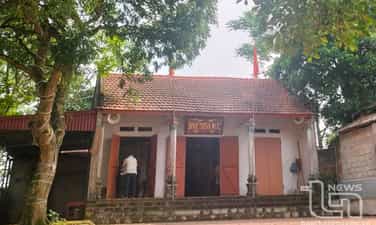
Dinh Thinh Duc
Thinh Duc communal house is located in Thinh Duc hamlet, Van Han commune, and is a place for cultural and religious activities of the people. The communal house was built a long time ago, no one remembers the exact year. Previously, the communal house consisted of five compartments, wooden pillars, a thatched roof, and lower floors on both sides to serve as seats for officials and guests visiting the communal house. Before 1945, Thinh Duc Communal House was also called Lang Dau Communal House, built on Na Lang mound belonging to Thinh Duc's communal house land, the communal house land was flat, with cool air; The communal house faces southwest down to the village's fields; In front of the communal house's door, there are two large banyan trees, providing shade to the communal house's yard. Regarding customs and annual festivals of Dinh, villagers worship 5 times a year on January 7, March 23, March 10, August 15 and January 23 (lunar calendar); On the day of the festival, the village organizes many games such as lion dance, con tossing, singing, and wrestling. Nowadays, villagers still maintain incense sticks and smoke on the above days, but the festivals are no longer maintained. During our nation's resistance war against the French colonialists (1946-1954) at Dinh Thinh Duc, many secret meetings of the Viet Bac inter-region took place. Most notably, in 1953, the Party and State implemented the land reform movement and reduced rents. Dinh Thinh Duc was chosen as the meeting place to discuss the land reform movement and rent reduction of the Party and the state. During the meeting, comrade Nong Quoc Chan, representing the Viet Bac inter-regional committee, attended. The communal house still retains many precious artifacts such as: 1 council judge, 1 gilded throne, 1 ancient incense bowl, 4 buntings, 1 bronze gong, 1 bronze gong, 2 sets of doors, 2 wooden ladders , 2 wooden Nghe birds, 4 wooden candlesticks, 2 wooden incense tubes, 3 royal decrees (shared with Van Han communal house), 1 wooden communal house pillar. On July 21, 2014, Thai Nguyen Provincial People's Committee issued Decision No. 1574/QD-UBND classifying Thinh Duc Communal House as a provincial-level historical relic. Source Electronic information portal of Dong Hy district, Thai Nguyen province.
Thai Nguyen
4148 view
Rating : Provincial level relics
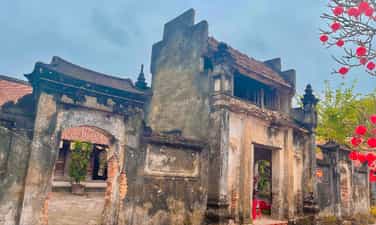
Communal House - Ho Lenh Pagoda
Phu Binh is the locality with the largest number of communal relics, temples, pagodas and festivals in Thai Nguyen province. In the early spring, spiritual tourist destinations in the district such as: Communal House - Temple - Salt Bridge Pagoda relic complex; Phuong Do communal house; Khanh Long Pagoda; Mai Son pagoda... attracts quite a large number of tourists inside and outside the province to visit and worship. Among them, it is impossible not to mention the relic complex of Ho Lenh Communal House - Pagoda located in Trung hamlet, Diem Thuy commune, Phu Binh district. Ho Lenh Pagoda's literal name is "Linh Quang Tu", built around the 17th century. The pagoda is located on a high terrain, facing Southeast. Initially, the pagoda had a layout including: Three gates, front hall, harem, ancestral house... Over time the pagoda has been degraded. However, with the attention of leaders at all levels and the support and donations of Buddhist monks, nuns and people in the village, the pagoda was restored and embellished on the basis of maintaining its current status and expanding the teaching area. roads, churches... to serve Buddhists from all over and organize great holidays. Ho Lenh Pagoda was ranked a provincial architectural and artistic relic by the Provincial People's Committee in 2010. Ho Lenh Communal House was built in the Le Dynasty, the 4th year of Vinh Huu (1738). Ho Lenh communal house worships the village's tutelary gods including: Cao Son, Quy Minh and Tam Giang, who were generals who supported King Hung to fight the enemy and protect the country, and Duong Tu Minh, a talented general during the Ly dynasty. The communal house consists of 3 compartments, 2 wings, 21m long, 9m wide, structured by 48 ironwood columns. The trusses are all decorated with the theme "four sacred animals". Dinh Ho Lenh Communal House was recognized as a National Historical and Cultural Monument in 2001. Every year, the Dinh - Ho Lenh Pagoda festival is held on January 4, attracting thousands of visitors from all over to visit and worship. Over time, the Ho Lenh Communal House - Pagoda relic complex still preserves its ancient majestic architectural appearance, is a place for religious activities of local people, and is a spiritual tourist destination that attracts a large number of tourists. People from all over come to visit and pray for good luck. Source Electronic information portal of Phu Binh district, Thai Nguyen province.
Thai Nguyen
4438 view
Rating : National monument
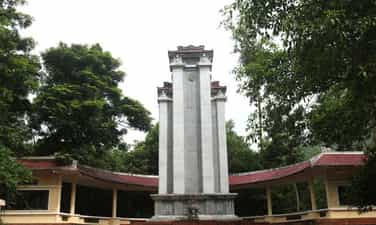
Khuon Manh Forest Relic
Khuon Manh Forest is located in Trang Xa commune, Vo Nhai district, has rugged terrain, and was once the place of operation of revolutionary cadres and guerrillas during the secret period. On September 15, 1941, the founding ceremony of the National Salvation Army II took place here, which was a milestone marking a period in the history of the resilient revolutionary struggle of our Party and people in the cause of national liberation. clan. History records: At Bac Son - Vo Nhai base, the French colonialists' terrorist repression of the revolution took place fiercely, the National Salvation Army I had to withdraw from the base to preserve its forces and many Party facilities. broken, the revolutionary movement encountered difficulties. At that time, Comrade Hoang Quoc Viet, member of the Party Central Committee, and the Bac Son-Vo Nhai base leadership advocated the restoration of the National Salvation Army I to maintain the sound of Bac Son armed guns and encourage the revolutionary movement. network. On the morning of September 15, 1941, at Khuon Manh forest, comrade Hoang Quoc Viet, on behalf of the Party Central Committee, announced the establishment of the Second National Salvation Army, assigned the flag and tasks to the Team to fight against terrorist enemies, eliminate fraud, and destroy enemies. reactionary oligarchs, protect the revolutionary base, protect the bases, strengthen and develop self-defense teams, maintain the guns of armed struggle to encourage the revolutionary movement of the whole country. The command board of the assigned Team consists of three comrades: Chu Van Tan - Commander; Nguyen Cao Dam - Directing political officer; Tran Van Phan - Deputy Commander. The initial team had 36 officers and soldiers (3 female), a few days later the number increased to 46 people, organized into 5 squads, equipped with rudimentary weapons: flintlock guns, bayonets, spears... Between After the siege of the French colonialists and the ruling apparatus of the feudal henchmen, the National Salvation Army II was established, this was a predecessor force of the Vietnam People's Army. Khuon Manh Forest, the location where the National Salvation Army II was established on September 15, 1941, was ranked as a national historical relic by the (former) Ministry of Culture and Information, and Trang Xa commune was honored as Hero of the Force. armed forces in the resistance war against the French. Currently, the list of the National Salvation Army II is solemnly engraved on a marble stele, carved into the great Khuon Manh forest, an important historical event in the struggle for national liberation of the Vietnamese people. Source: Thai Nguyen Electronic Newspaper
Thai Nguyen
4484 view
Rating : National monument
Cho Chu prison historical site
Cho Chu Prison Relics is located in Vuon Rau hamlet, Cho Chu Town, Dinh Hoa district, Thai Nguyen province. In 1889, Cho Chu was occupied by the French colonialists. In 1894, they established a representative agency to rule this area. By 1916, they started building a prison. Initially, the prison was made of simple bamboo and wood to imprison common criminals. Later, they imprisoned patriotic soldiers participating in the Thai Nguyen Uprising (1917) and Yen Bai Uprising (1930). In 1940, the Bac Son Uprising broke out, they arrested many officers participating in the uprising and brought them here to detain. In 1942, the French colonialists built a solid prison made of bricks, tiles, and cement that could hold 200 people at a time, including a number of political prisoners transferred from Cang Ba Van, Son La prison. In August 1943, 100 political prisoners from Son La Prison were detained here, including many comrades who were members of the Communist Party. From there, a Communist Party cell in prison was formed. Because they were able to install people in the ranks of enemy soldiers, Cho Chu Prison Cell was often directed by the Northern Region Party Committee. In prison, Communist soldiers turned the prison into a school, studying Mac-Lenin theory, learning how to organize and lead the revolution, and practice political courage. Here, Communist soldiers in Cho Chu Prison published the newspaper "Thong Ngan" and created plays with patriotic content, national pride, and revolutionary songs to encourage communist soldiers. , patriots persistently struggled, waiting for a favorable opportunity to escape from prison and go out to work. On October 2, 1944, we organized 12 comrades to successfully escape from prison, contributing to building important bases in Dinh Hoa, Dai Tu and Nguyen Hue War Zone. These are comrades Song Hao, Le Hien Mai, Ta Xuan Thu, Hoang Ba Son, Le Trung Dinh, Vu Phong, Nhi Quy, Tran Tung, Chu Nhu, Nguyen Cao and Pham Ngoc Bong... Cho Chu Prison Relics is a place that marks the barbaric crimes of the French colonialists and is also a vivid symbol of revolutionary soldiers who devoted their lives, fighting and sacrificing for the independence and freedom of the Fatherland. . Many comrades have held up a shining example of the spirit of learning and growth through the practice of indomitable struggle, making worthy contributions to the cause of national liberation. Cho Chu Prison was ranked a National Historical and Cultural Relic by the Ministry of Culture and Information on February 25, 1998. Source: Dinh Hoa District Electronic Information Page, Thai Nguyen Province
Thai Nguyen
4968 view
Rating : National monument