Relic point Vietnam
Việt Nam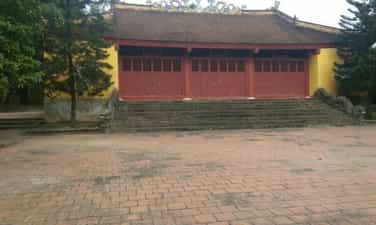
Dinh Vong
When talking about Song Van, we must mention the Vong communal house relic area with the typical traditional folk festival of Tan Yen land. Vong communal house relic area includes a complex of ancient relics with all types, such as Vong communal house, Vong pagoda, Vong temple, Vong Nghe, Vong fountain and Rainbow bridge. On January 15, the Dinh Vong Festival takes place again. The following is an introduction to this relic and the annual traditional festival. Song Van is an ancient land that has left a resounding mark in the history of the nation's struggle. Ancient Vong communal house belonged to Van Cau commune, Van Cau district, Yen The district. Today, this relic is located on the land of Ngo village, Song Van commune, Tan Yen district. According to documents still recorded in the locality, the ancient Rainbow Bridge was classified as a beautiful bridge, a two-span bridge curved like a rainbow, the whole thing was made of ironwood, the architecture was in the style of "The Upper House, the Lower House" above. has a roof and is painted all red. The bridge was built during the Mac Dynasty in the 16th century but it was destroyed, leaving only 2 bridge abutments and the ancient people went down in history with the proverb "Yen The Rainbow Boy". It is like a common symbol for the whole Yen The Ha region, famous for its bravery and martial arts. The ancient Vong Communal House had a large scale, sophisticated sculptural architecture, and was located on a high, open area of land near the Vong River and the Rainbow Bridge. The communal house consists of 5 compartments built entirely of ironwood with two rows of tall columns. The wooden structures such as stripes, beams and more are all carved and carved with many rich floral themes. On the edge of the communal house's roof are a pair of dragons flanking the moon, the four corners are covered with four carved dragons, and at the end of the corner are four curved blades, making the structure both superficial and less rough. The communal house turns to face the South, behind is the Rainbow forest with many ancient trees. Previously this area was a primeval forest. In front of the communal house is a meandering Rainbow River, with water flowing all year round. According to feng shui laws, the communal house is located on a beautiful land, where the spiritual energy of heaven and earth, rivers and mountains converge. Vong Pagoda was built in the same direction as Vong Communal House, with a public-style architecture including a front hall with 5 compartments, 2 wings, and 4 curved roofs. Burning incense in 4 compartments connected to the Buddha hall, 3 compartments, 2 wings and 4 curved roofs. Vong Pagoda is built behind Vong communal house, creating the layout "First God, then Buddha". The pagoda was built during the Le Dynasty and was built itself during the Nguyen Dynasty. In front of Vong Pagoda, there are stone incense trees and ancient trees that are as old as the time when Vong Pagoda was established, creating a solemn and ancient scene. Vong Temple also overlooks the Vong stream and the Rainbow Bridge consists of 1 compartment, 2 wings and 4 curved roofs. Inside the temple there is an altar, a throne, tablets and other offerings. Nghe Vong today only has a small harem with 2 rooms adjacent to Ngo and Rainbow bridge. The profession was set up by the people to worship 18 dukes of the Duong family - those who had many contributions to the people and the country were worshiped at Vong communal house. Vong communal house festival is a festival with a long tradition. This place also preserves many unique folk cultural features. The center of the ancient festival was held at the Vong communal house relic area on a large scale, the main forces being the 4 communes of Song Van, Viet Ngoc, Ngoc Van, Lam Cot. In the past, Vong communal house festival was held on the 15th of the first lunar month and the 9th, 10th, and 11th days of the 9th lunar month. During the festival, people organize sacrifices, procession of books, competitions, and folk games. The procession in the Vong communal house took place with solemn ceremony. On the 15th, a procession of 17 religious rituals is organized from the funeral home in Van Cau village to the communal house. At the head of the procession is a person playing a general. This person must be carefully selected each year. When the procession arrives at the communal house, a solemn ceremony is held. In the old Vong communal house, there was a very solemn horse sacrifice custom, many games, many folk sports competitions rich in martial arts such as: Martial arts dancing, wrestling, horse racing, archery, crossbow shooting, shooting and many more. folk games of cockfighting, kite flying competition, rice blowing competition, word running... The Vong communal house festival is held solemnly and happily for three or four days and nights. At the Vong communal house, in addition to performing tricks, there are also singing competitions between regional troupes and other places that come to perform, making the festival atmosphere even more attractive. Vong Communal House Festival also contributes significantly to educating today's descendants to preserve the noble principle of "drinking water, remember the source" left by our ancestors. SOURCE: TAN YEN DISTRICT ELECTRONIC INFORMATION PORTAL
Bac Ninh
6707 view
Rating : National monument

Memorial area of famous person Hoang Hoa Tham
Trung village, located in Ngoc Chau commune, Tan Yen district, is an ancient village associated with many memories of the hero Hoang Hoa Tham from childhood to adulthood. This place, in the past, used to be the place where Hoang Hoa Tham fought and played hide and seek, now it is a place to worship and commemorate him - a person who has made great contributions to his hometown of Bac Giang and the country of Vietnam. Whenever talking about Trung village, people often mention the memorial relic of famous person Hoang Hoa Tham. The relic site is about 20km northwest of Bac Giang city. This is a relic complex that includes works such as: communal houses, temples, pagodas, inns, residences and tombs of Hoang Hoa Tham's relatives. According to oral tradition of local elders: Dinh Trung was originally built by Mr. Hoang Hoa Tham in Tan Chau (Trung Ngoai). After that, Mr. Thong Luan moved the communal house to Trung Trong, adjacent to the front of Trung Pagoda. The ancient communal house consisted of a three-room vestibule connected to a one-room harem, forming a nail-shaped layout (J). In the past, Dinh Trung had two religious sects conferred on the village's Tutelary Gods by the Nguyen kings, Cao Son and Quy Minh Dai Vuong. After Hoang Hoa Tham passed away, to show respect and respect for the national hero, local people worshiped him in the communal house along with the village Tutelary God. Through time and war, Trung Communal House was seriously degraded and damaged. Now only the foundation in front of Trung Pagoda remains. After Hoang Hoa Tham was murdered, to show gratitude and respect to the talented general, the people of Trung village built a temple as a memorial place, near the relics of communal houses and pagodas of Trung village. . Since its construction until now, the temple has been regularly cared for by people, repaired, purchased worship objects, sculpted statues of De Tham... to pass down to posterity. Hoang Hoa Tham Temple is currently in front of the communal house relic area, Trung Pagoda, looking to the Southeast. Hoang Hoa Tham Temple consists of three compartments in a rectangular layout. Inside the central space is a 150cm high bronze statue of Hoang Hoa Tham, and on the left wall hangs a picture of Mr. De Tham's family and his children at Phon Xuong station. According to historical sources: Hoang Hoa Tham is also known as De Tham. His father is Truong Van Than, originally from Di Che village, Di Che commune, Tien Lu district, Hung Yen province. He was born into a Confucian family with a martial and patriotic tradition. Both father and mother participated in the uprising against the Nguyen dynasty and were murdered by the Nguyen dynasty. At this time, he changed his family name to Doan and Nghia and was raised by his uncle to escape the court's pursuit and changed his name to Thien. Hanging around in the Son Tay area, afraid that he wouldn't be able to escape, he carried his nephew and ran to Trung village, Ngoc Chau commune, Yen The district. Once again, he changed his family name to Hoang and named himself Quat, and his grandchild's name was Tham. Since then, Trung villagers still think they are father and son, but no one knows they are uncle and nephew. Because his family was poor, Mr. Quat had to let him be adopted by Mr. Ly's family in the village, while he worked as an embroiderer to make a living. However, from his youth until adulthood, Hoang Hoa Tham was closely associated with memories of Trung village and Yen The region. Born in a context where the country was invaded by foreign invaders, living in a locality where many leaders rose up to fight against the invaders and guarded dangerous places, they greatly influenced Hoang Hoa Tham's life. That's why people in the Yen The area still remember and tell quite clearly every story about Hoang Hoa Tham's childhood and adulthood. SOURCE: ELECTRONIC INFORMATION PORTAL DEPARTMENT OF CULTURE - SPORTS - TOURISM OF BAC GIANG PROVINCE
Bac Ninh
6006 view
Rating : National monument
Goc Khe Temple
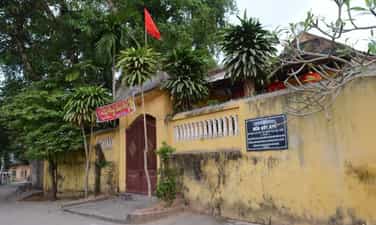
In the system of special national relics of Tan Yen district, Goc Khe Temple is one of the typical relics. The relic is located near Nha Nam intersection, behind is Phu Doi, which is closely related to the Yen The uprising. This relic appeared late, around the early years of the twentieth century. When it was first built, the temple had a moderate scale, including 3 pre-worship spaces and 2 back palace spaces, and the architectural structures were made of strong Tetra wood. Over time, due to the devastation of natural disasters and wars, the temple degraded and was repaired and embellished many times. Goc Khe Temple has a nail-shaped architectural plan including a 3-compartment pre-sacrificial building and 1 back-room, with a wooden roof structure, roofed with tiles, trussed columns, and hitch guarding the wall. In the temple, a number of worship objects are still preserved such as: Incense bowl, tray, lamp, wooden betel box. The system of worship statues in the temple are ancient wooden statues with typical Nguyen Dynasty statues. Because it is located right next to Nam Thien pagoda and in the Phu Doi area, during the Yen The peasant uprising, this temple preserved many historical events in the upper land of ancient Yen The and present-day Tan Yen. During the period 1892-1894, Goc Khe temple was the place to organize many meetings between Hoang Hoa Tham's generals such as: De Cong (Ta Van Cong), De Nguyen (Ta Van Nguyen), De Can (Ta Van Can), Thong Ngo (Ta Van Khau), Quan Khoi (Giap Van Khoi). Through these meetings, an agreement was reached to propose important and decisive strategies and strategies to achieve the single goal of expelling the French colonialists. Every year, on January 15 and 16, Nha Nam people organize a festival to honor the Holy Mother, and remember the merits of Tran Dynasty King Tran Quoc Tuan. At the same time, the festival is also an activity to pay tribute to the generals of the Yen The uprising who heroically sacrificed themselves to protect the peace of the people. During the festival, there are sacrifices, book processions, unique folk games and various forms of folk arts activities, attracting people from all over the region to eagerly attend the festival. Goc Khe Temple, a very popular name. The scale is not large but contains many interesting things and is an important evidence in a period of Nha Nam's history. SOURCE TAN YEN DISTRICT ELECTRONIC INFORMATION PORTAL
Bac Ninh
6134 view
Rating : Special national monument
French cemetery
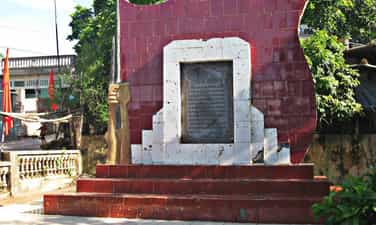
From 1885 onwards, the Yen The Uprising movement developed strongly, so the French colonialists established a system of posts to fight the uprising movement led by Luong Van Tam, then Hoang Hoa Tham. They established Nha Nam, Bi Noi, Cao Thuong, Bo Ha stations... from which they organized sweeping operations to suppress the French insurgents who clashed with the Yen The insurgents in many villages and communes. base areas such as the battle of Mac village (1885), the battle of Sat village (1889), the battle of Cao Thuong (1890), the battle of Ho Chuoi (1890- 1891), the battles along the banks of the Soi River in the areas: Don Hom, Kham Nghe, De Trung, De Truat, Thong Phuc, De Lam (1892), Phon Xuong, Don Den, Rung Phe (1909), Ngan Van (1911)... In those battles, they suffered many defeats. Many enemies were destroyed but the movement still could not be suppressed. The names of French and Vietnamese officers and soldiers who died in campaigns due to the fighting methods of the insurgents were brought back and buried in cemeteries in Voi (Lang Giang), Bo Ha (Yen The), Nha Nam (Tan Yen)... The French cemetery in Nha Nam is one of the cemeteries formed like that. The current French cemetery is located in Nha Nam commune, Tan Yen district, about 23km northwest of Bac Giang city. From 1885 onwards, the Yen The Uprising movement developed strongly, so the French colonialists established a system of posts to fight the uprising movement led by Luong Van Tam and then Hoang Hoa Tham. They established Nha Nam, Bi Noi, Cao Thuong, Bo Ha stations... from which they organized sweeping operations to suppress the French insurgents who clashed with the Yen The insurgents in many villages and communes. base areas such as the battle of Mac village (1885), the battle of Sat village (1889), the battle of Cao Thuong (1890), the battle of Ho Chuoi (1890- 1891), the battles along the banks of the Soi River in the areas: Don Hom, Kham Nghe, De Trung, De Truat, Thong Phuc, De Lam (1892), Phon Xuong, Don Den, Rung Phe (1909), Ngan Van (1911)... In those battles, they suffered many defeats. Many enemies were destroyed but the movement still could not be suppressed. The names of French and Vietnamese officers and soldiers who died in campaigns due to the fighting methods of the insurgents were brought back and buried in cemeteries in Voi (Lang Giang), Bo Ha (Yen The), Nha Nam (Tan Yen)... The French cemetery in Nha Nam is one of the cemeteries formed like that. The current French cemetery is located in Nha Nam commune, Tan Yen district, about 23 km northwest of Bac Giang city. The French cemetery is located on a small hillside that used to belong to La village in Nha Nam. This village was completely destroyed by the Black Flag army. There are many graves in the cemetery grounds and are divided into two types: The first type is tombs built of square and rectangular stones. This is a type of grave for officers. The second type is a soldier's grave covered in soil with a stone stele. Among the French officers' graves, there are two graves lined with square blue stone slabs and rectangular stone slabs with French characters engraved on them. All the graves in this cemetery have now been leveled with no trace of their graves left. Only large, heavy stones remained scattered in the hillside village. At the Bac Giang Museum, a stele was collected clearly stating that the person buried here was Nguyen Van To who died in Ho Chuoi (1890-1891). This small stele said that it was a Vietnamese soldier buried in a dirt grave. The green stone blocks covering the tombs are very large and come in many sizes. There are two square blocks of stone on which two circles have been carved on both sides, symbolizing olive branches wrapped with a silk ribbon. It is the French symbol for those who died for France. The front side is engraved with many words recording the names and reasons of those who died in battle in Yen The. The French cemetery and Phu Hill have become places marking events that cannot be ignored in the history of Yen The - Tan Yen today. It is a piece of evidence that contributes to helping people of all walks of life understand more about the Yen The uprising movement led by Hoang Hoa Tham and about the August Revolution in 1945. Here the local government built the stele marking the August Revolution of 1945 on Phu Hill to educate patriotic traditions for future generations. SOURCE TAN YEN DISTRICT ELECTRONIC INFORMATION PORTAL
Bac Ninh
6567 view
Rating : National monument

Chuong village communal house
Chuong village communal house is a large center of cultural and religious activities of the ancient Chuong village, now Tien Phan village, Nha Nam town. According to documents and artifacts left in the relic, researchers have identified Chuong village communal house as an ancient communal house built during the Le Trung Hung period (18th century). The communal house is located on a large, open plot of land in the center of Chuong village. The site layout of the relic is made in a nail-shaped architectural style with 7 vestibules and two back rooms, facing south. The communal house worships Saint Cao Son, King Quy Minh and Tran Giang Do Thong. In addition, the communal house also worships Nang Gia Dai Than - a female general of the Trung sisters. Later, during the Nguyen Dynasty, the communal house also worshiped a blessed God who was a son of Nha Nam's hometown, Mr. Nguyen Duc Hien, who had donated money to repair the communal house. In the early years of the Yen The uprising, Hoang Hoa Tham held many important meetings, discussing the organization of major battles against the invading French colonialists and their henchmen at Chuong communal house. Bell Village is also the birthplace of Duong Van Truat, also known as De Hau - one of the talented generals, playing a key role in the Yen The uprising movement. He had the talent of shooting an archery with 10 shots and 10 hits, causing the Black Flag invaders led by Ngo Con and later the French colonialists and their henchmen to be horrified and terrified at the mention of his name. When Luong Van Tam (De Tam) - a resident of Ha village raised the flag of an uprising against the French colonialists, Duong Van Truat joined the insurgent army, becoming one of the good generals who helped De Tam and later De Tham organize many battles, causing the French colonialists many losses. Chuong village communal house has just been restored and inaugurated on October 26, 2023. The layout is shaped like a nail, with a front and rear structure, a 5-room main altar, a 3-room harem and other auxiliary items. SOURCE: TAN YEN DISTRICT ELECTRONIC INFORMATION PORTAL
Bac Ninh
6392 view
Rating : National monument

Dinh Duong Lam
Duong Lam communal house was built on a beautiful dry land of Duong Lam village, An Duong commune, Tan Yen district. This is an ancient communal house of the Le Dynasty, formerly located in the Bai Dinh area. Because of the many enemy battles, Hoang Hoa Tham and the Yen The insurgent army discussed with the villagers to move the communal house to the land in the middle of the village as it is now, for ease of care and ease of operation. Duong Lam is also the hometown of Duke Duong Dinh Bot, Duong Dinh Tuan, Duong Dinh Cuc during the Le - Mac, Le Trung Hung and Nguyen dynasties. In which Duong Dinh Cuc raised a flag of insurrection against the Nguyen court, right at his village communal house. He mobilized his army to build an uprising base at Ham Rong mountain in Duc Lan, Phu Binh district (Thai Nguyen) in 1826. The insurgent army operated throughout the districts of Yen The, Huu Lung, Vo Nhai, Phu Binh, Organized many guerrilla attacks, causing hardship to the imperial army. The uprising lasted 20 years. In the spring of 1846, De Cuc and his generals went to attend the Lenh village festival at the foot of Ham Rong Thi mountain and were ambushed by imperial troops. The two sides fought fiercely. Two of Duong Dinh Cuc's generals died. He was injured and ran to the head. Lan Thuong village died. The villagers mourned and buried him to set up a shrine called Duong Dinh Cuc. After Duong Dinh Cuc's uprising, Duong Lam village emerged as Mr. Duong Van Hau (also known as Mr. Cai Hau) who helped Hoang Hoa Tham very effectively from 1885-1895. There are many legends about Mr. Cai Hau in Duong Lam. To ensure the safety of the Yen The generals and insurgents, Mr. Cai Hau had a secret tunnel dug from Duong Lam's rear palace to the pond and then elsewhere. To this day, traces still remain. During the Yen The Peasant Uprising against the French colonialists that lasted 30 years, many boys from Duong Lam village joined the Yen The insurgent army such as: Duong Van Canh, Duong Van Hanh, Duong Van Doi, Duong Van Van... Accomplished many victories at the battles of Trai Cot (Yen The), Yen Phu (Yen Phong), Dong Lo (Hiep Hoa), Ho Chuoi, Don Hom (Yen The)... During those years, Duong Lam communal house was the place to go. of the insurgents. Duong Lam village is still a strong fortress of the Yen The insurgent army right in front of the French palace and its henchmen in Nha Nam. During that time, De Tham sent his eldest son to Duong Lam to study with Cai Hau. This proves the very close relationship between the insurgents and Duong Lam village. Since the communal house moved to the middle of the village, De Tham and old Cai Hau planted the Da Huong tree in front of the communal house's yard as a souvenir. The Da Huong tree later became an ancient tree that shaded the villagers from the sun and sang beautiful songs about the history of Duong Lam village. Unfortunately, it has been discontinued in recent years. Because they could not do anything to the Yen The insurgent army, the French colonialists and their henchmen returned to Duong Lam to interrogate Mr. Cai Hau. But he was the bravest person in the village and wholeheartedly devoted to the Yen The insurgent army, but they could not subdue the personality of Mr. Cai Hau. During the second period of peace with the French colonialists (1897-1909), Mr. De Tham often visited Duong Lam and Duong Lam communal house with a special affection. Duong Lam Communal House contains cultural and historical values that are worthy of respect and is a beautiful symbol of Duong Lam and is a place to commemorate the heroic spirits who built and fought for this land. SOURCE: TAN YEN DISTRICT ELECTRONIC INFORMATION PORTAL
Bac Ninh
6606 view
Rating : National monument

Nam Thien Pagoda
On the occasion of Dinh Pho Festival, Nha Nam town, Tan Yen district (Bac Giang) recently held a ceremony to receive the Certificate recognizing Nam Thien Pagoda as a special national historical and cultural relic. This is a relic in the system of relics of the Yen The uprising. Nam Thien Pagoda (also known as Pho Pagoda) was built in 1882 (now in Nha Nam town). Ancient pagoda belonged to Cau village. When Cau village was destroyed by the Black Flag invaders at the end of the 19th century, the pagoda was managed by Chuong village. Since 1885, the French colonialists established Nha Nam station and set up their capital here, then the pagoda moved to the city. Pho Pagoda - Nam Thien Pagoda is located next to Phu Doi, witnessing important events related to the Yen The uprising movement. In January 1989, Pho Pagoda - Nam Thien Tu relic was recognized by the Ministry of Culture and Information as a cultural and historical relic. On May 10, 2012, the Prime Minister decided to recognize the Pho - Nam Thien Pagoda Relics as a special national historical and cultural relic. Within the framework of the festival, many cultural and sports activities also take place such as: rice cooking competition, badminton competition, folk games, tree planting festival... attracting a large number of officials and people to participate./ . SOURCE: INET
Bac Ninh
6477 view
Rating : National monument

Dinh Noi
Noi communal house belongs to Viet Lap commune. The monument is ranked at national level. The communal house was built during the reign of Le Du Tong, in the reign of Vinh Thinh (1705-1719) on a raised mound in the central field of the village. The communal house was built by the people of 3 borders: Tay, My, and Trong of Noi Village, so the people called it Dinh Noi. Currently, Dinh Noi belongs to Noi Hac village, Viet Lap commune. The communal house was built during the reign of Le Du Tong, in the reign of Vinh Thinh (1705-1719) on a raised mound in the central field of the village. The communal house was built by the people of 3 borders: Tay, My, and Trong of Noi Village, so the people called it Dinh Noi. Noi Communal House was built on a high mound on the land bordering Trong between Ly village and Noi village today. The communal house was built by the people of three borders: Tay, My, and Trong of Noi village, so the people also called it Noi communal house. When the communal house was finished, the people named it "Tien Dinh" and those two words were written in Chinese characters and then a sign was built on the roof and engraved so that everyone could see. Usually in places, when a communal house is finished, people will engrave a stele recording the construction of the communal house to let future generations know what the ancestors did. However, in the ancient Noi village, the elders did not do that, but based on who contributed, they let the carpenters immediately carve into that wood - immutable - So the Noi communal house has a clear history down to every detail. No family can have it. Noi communal house was built to worship Saint Cao Son - Quy Minh, around the 19th century in the area where the Black Flag enemy - Black Flag troops came to harass and massacre many villages and communes in Yen The. Noi village was attacked by them. The villagers could not resist, but they were able to defeat many Chinese generals right next to the communal house. The villagers were taken away, disappeared...the village was completely devastated. The communal house was not destroyed but witnessed those massacres. That situation lasted until the end of the 19th century, the villagers did not understand and thought that because of the direction of the communal house, the village was disunited. When Hoang Hoa Tham stood up to lead the army against the French, and had a close relationship with Noi village, the insurgents often came back here to meet and discuss with Mr. Doc Tuan (Ly village), Chanh Hach (Noi village), Tong Lo (Noi village). Temple of Literature)...knowing about the direction of the communal house, De Tham with his prestige stood up to change the direction of the communal house for Noi village. Dinh Noi is one of the largest communal houses in the district, still retaining its ancient appearance and architecture. SOURCE TAN YEN DISTRICT ELECTRONIC INFORMATION PORTAL
Bac Ninh
6274 view
Rating : National monument

Dinh Dong Truoc
Dong Truoc communal house located in Dong Truoc village, Mai Dinh commune, Hiep Hoa district (Bac Giang) has many unique features and was recognized as a National Architectural and Artistic Monument in 2014. Dong Truoc communal house is a religious building of the people of Dong Truoc village, Mai Dinh commune, Hiep Hoa district. Dong Truoc communal house dates back to the Le Trung Hung dynasty (18th century) and was restored in the Nguyen dynasty (19th century). This is a typical religious building of the local people, built as a place to worship the Tutelary Gods of Cao Son village, Quy Minh Dai Vuong and Bach Tuong. Cao Son and Quy Minh were generals during the reign of the 18th Hung King and had the merit of helping King Hung Due Vuong (3rd century BC) defeat the invading Thuc Phan invaders. Bach Tuong was instrumental in helping Dinh Bo Linh suppress the rebellion of 12 warlords (10th century) and unify the country. Dong Truoc Communal House has a "first, first, second" layout, including a vestibule, a grand communal house, a strip of bamboo and a harem. The relic is a work of high architectural and artistic value, bearing the characteristics of two architectural arts of the Le Trung Hung and Nguyen dynasties. In the relic, there are still many precious documents and artifacts such as: 5 stone steles of the Le Trung Hung and Nguyen dynasties (the earliest Hau Than stele was established at the communal house in 1722, the 3rd Bao Thai era, the latest in 1916, Khai Dinh era); altar palanquins, texts, 4 altar thrones of the Nguyen dynasty, halberds, altars, floating trays, incense burners, bronze gongs, incense bowls... Among them, 5 stone steles of the Le Trung Hung and Nguyen dynasties engraved with Chinese characters with content recording the establishment of Hau Than, the meritorious work of repairing communal houses... has a positive significance in learning and researching the history of relics and a past period of the people in the region in particular and of the nation in general. Dong Truoc Communal House is the place to worship the saints Cao Son, Quy Minh Dai Vuong, and Bach Tuong as the village's Thanh Hoang. Cao Son and Quy Minh were generals during the reign of the 18th King Hung Vuong. They were instrumental in helping Hung Due Vuong (3rd century BC) defeat the invading Thuc Phan invaders, bringing peace to the country. Their merits were recorded by ancient historians in national histories, jade genealogies, myths, and decrees for people in many places to set up communal houses and temples to worship, including Dong Truoc communal house, Mai Dinh commune, Hiep Hoa district. Bach Tuong was originally from Hoan Chau (present-day Nghe An province). In the 10th century, when Dinh Bo Linh raised troops in Hoa Lu, he brought troops to help put down the rebellion of 12 warlords, unifying the country. When he was old, he brought his troops to Dong Phi and died there. Because of his merits to the people and the country, he was worshiped in village communal houses. Dong Truoc Communal House is an ancient architectural work created during the Le Trung Hung dynasty (18th century) and major restoration during the Nguyen dynasty (19th century). Over more than 200 years, many carvings and sculptures typical of the architectural art of the Le Trung Hung and Nguyen dynasties are still preserved at the monument. The government and local people are always interested and conscious in preserving, repairing and embellishing the communal house to make it more spacious and beautiful while still maintaining its ancient and majestic appearance. In the current relic, there are still many valuable documents and artifacts: 5 stone steles of the Le Trung Hung and Nguyen dynasties, altar thrones, writing tablets, ordinations, halberds, palanquins, incense bowls, incense burner... Over the centuries, the communal house is still the center of cultural and religious activities, where traditional festivals of the people of Dong Truoc village are held. During the festival, many traditional folk games imbued with national cultural identity are organized: Cockfighting, swinging, tug of war... Besides, on the full moon days, the first lunar month and when important events take place in the village. Most of the time, people come to the village communal house to burn incense and sincerely offer it to the village's Thanh Hoang, praying for good things, good health, and peace. SOURCE: Hiep Hoa District People's Committee
Bac Ninh
6383 view
Rating : National monument

Nguyen village communal house
Nguyen village communal house: created during the Le dynasty. The communal house looks south, worshiping Saint Tam Giang and Duke Nguyen Dinh Chinh. The location of the communal house and the pagoda is close to each other, following the style of the communal house in front of the pagoda after "First Saint, second Buddha". The communal house has a Dinh (T)-shaped layout with 3 front worship rooms, 2 wings, 3 back rooms - the upper part of the husband's house fighting a gong stand and the lower part of the husband's house. The pillars, porch lines, and extra capitals on the columns are exquisitely carved. In the communal house, there are worshiping objects: palanquins with tribute bowls, parallel palanquins, parasols, halberds, precious bowls, gongs, gongs, dragon thrones, tablets, jade genealogies, stone stele... October 31, 2013, Ministry of Culture - Sports and Tourism issued Decision No. 3825/QD-BVHTTDL classifying Nguyen communal house as a historical-cultural relic. SOURCE: TRAVEL NEWS
Bac Ninh
6264 view
Rating : National monument