Relic point Vietnam
Việt Nam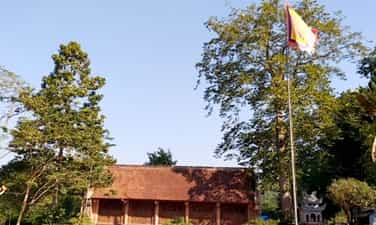
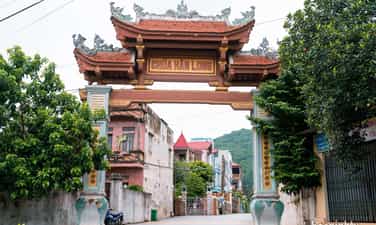
Chu Hung Temple
Chu Hung Temple Festival in Am Ha commune, Ha Hoa district is closely associated with the formation and development of the Chu Hung Temple national historical site. This is the place to worship Con Nhac Dai Vuong - the person who had the merit of fighting the enemy to protect the country and region of Chu Hung during the period of the 18th Hung King - Hung Due Vuong. The people of Chu Hung expressed their respect for Con Nhac Dai Vuong, so they submitted a request to King Gia Long to build a temple to worship him with incense smoke forever. In July 1806, King Gia Long officially approved the people of Chu Hung to start construction of the temple, located in the terrain of a sacred land, on the top of Quy Son mountain, far away from the temple gate is Kim mountain peak. Turtle - Golden Turtle. Since then, every Tet holiday, Am Ha people in particular and Ha Hoa people in general organize incense burning ceremonies to pay homage to the deity and open the village festival on January 7 every year. . SOURCE: PHU THO NEWSPAPER
Phu Tho
4012 view
Rating : National monument
Mao Pho temple
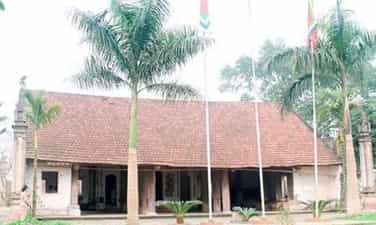
Mao Pho village communal house still preserves many precious and valuable artifacts such as 6 ordinations, altars, palanquins, wooden dragon and phoenix carvings dating from the late Le and early Nguyen... Every year, on 4 occasions During the festival, the villagers organize the festival with sacrifices, palanquin processions and special folk games. Mao Pho Temple was recognized as a national historical, cultural and architectural relic in 1993. Mao Pho communal house relic area was built in the Later Le period with an architectural scale divided into 2 parts: communal house and temple. The communal house and temple are located on a large, flat area of land with beautiful natural landscape, facing east overlooking the beach on the banks of Thao River. Currently, the old communal house has been repaired by the people of Mao Pho village, raising the entire communal house architecture to make it more dignified, spacious, and more worthy of the stature of the gods. here. Lady Mao Pho Temple is a place to worship Saint Mother Duyen Hoa, previously established in a separate place. During the construction of the dike road passing through the village, the old temple was moved to a new place in the same campus as the communal house and village temple. In the temple, there is still a statue of the sacred and majestic Holy Mother. Not only were the temples and shrines rebuilt by Mao Pho people to make them more dignified, but on this occasion, thanks to a rare fate, the content of the previously lost Mao Pho village genealogy was brought back to the correct place of worship. its. With the omen of the Phoenix bird holding a jade pen, it flew to the sound of thunder when the Great Kings of Pen Loi Mao were born, allowing contact with the Phoenix family to follow Tien Au Co's mother up the mountain, creating bronze drums that echoed like the sound of the sound. Thunder, on which is engraved the image of a person wearing fur, is the name of the nation that has existed since the time of Hung King. SOURCE: Bach Viet overlaps nine
Phu Tho
4167 view
Rating : National monument
Phuc An Pagoda
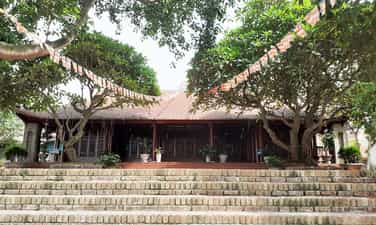
Phuc An Pagoda was built in the post-Le Dynasty (18th century), majorly restored in 1972. Currently, the Three Jewels of Phuc An Pagoda still retains its ancient architectural appearance with a Khau-style architectural plan including : The front hall, the left and right corridors and the main hall. The Tien Duong Court has 5 compartments and 2 compartments, 6 rows of pillars with a total of 40 columns, 4 sets of trusses in the middle of the structure in the style of stacking and matching columns, and two pig-shaped trusses, two trusses of stacked structure, and gong stands. The wooden frame is linked with strong beams and beams, with smooth planing, the column bases rest on boulders, and the roof is tiled in the Le period. The unique feature of the Tien Duong building is to create a wider awning to block the sun, wind and rain. There are only 2 curved ends of the front roof, the match neck part is used to carry planks, the wall system is bricked but the two-column columns run long. The corridor connecting the upper temple creates a grandeur for the temple when standing in all directions. The two rows of left and right corridors running parallel connecting Tien Duong and Thuong Dien actually have 3 compartments on each side, but seen from the back there are 6 long, clear compartments. Each row has 3 rows of pillars, the total row is 18 wooden pillars. The architecture here shows the precise and skillful calculations of ancient artisans: With 3 rows of pillars standing on the ground and a row of pillars mounted on crossbeams to form two symmetrical roofs without the usable area being narrow. , the heart of the house is expanded thanks to successive transmissions, which is a traditional Vietnamese technique. The Main Hall is parallel to the Front Hall, arranged higher through a stepped structure. The upper palace consists of 3 compartments, 5 rows of pillars with 18 wooden columns, a unique roof system in the style of "First three, second rear", gable walls, the match neck of the front roof is made of bars to facilitate ventilation. , 4 trusses in the style of "Gongs are high, gongs are high, beams are low - ironwood paneled ceilings represent the tradition of Vietnamese ancient houses. Phuc An Pagoda currently has 22 worshiping statues arranged on both sides of the Front Hall and layers of statues on the Upper Palace level in the Main Hall. Among them, a typical set of Tam The statues has the artistic style of creating round statues in the 18th century. Phuc An Pagoda currently reserves a system of valuable relics and antiques, typically: "Phuc An Tu Trung" bronze bell ", height 0.90m, diameter 0.50m; Khanh dong is 1.05m long and 0.90m wide. The bell and the bell were cast in the thirty-third year of Minh Menh - 1832. The handle of the bell and the bell were made into geometric patterns, and the bell was shaped like a giant leaf. On the body of the bell and the inscription are engraved in Chinese characters the names of those who made meritorious deeds in repairing Phuc An Pagoda. SOURCE: LAM THAO DISTRICT ELECTRONIC INFORMATION PORTAL
Phu Tho
3275 view
Rating : National monument
Ha Bi Trung Communal House
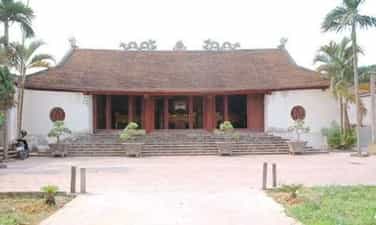
Ha Bi Trung Communal House is located in the system of historical relics worshiping the holy Duc Tan Vien Son, Cao Son, Quy Minh in the Da River and Northern midland region. The communal house was made of thatch, bamboo, and cork leaves right after the villagers moved from the right bank to the left bank of the Da River at the end of the 18th century. By the year of Dinh Hoi, 1827, the communal house was built with nails, ironwood, and masonry walls. , roofing tiles on flat land, looking Southeast. Besides the Tan Vien Son three-position, Ha Bi Trung Communal House also worships the village's Tutelary God who has publicly established a hamlet and Ha Bi site; Also worshiping together are Ban Tho Long Cung, Princess Tien Dung, and Nam Giao Patriarch Si Nhiep - the person who was instrumental in spreading Chinese characters to Vietnam. After a long period of ups and downs and historical events, many construction items of the communal house were damaged. The remaining traditional features are the sesame dui system, diaphragm, set of first verses, 8 pillars, altar to worship three Tan Vien Son saints, incense bowl, two wax candles, flower tubes... and sacrificial rituals. The ceremony is still performed according to traditional rituals. In 2007, with permission from the provincial People's Committee, the people of the village contributed over 500 million VND to repair and restore a number of construction items in the monument. On March 13, people in Xuan Loc commune (Thanh Thuy) and tourists from all over happily received the certificate of national historical relic recognition for Ha Bi Trung communal house. SOURCE: PHU THO NEWSPAPER
Phu Tho
3222 view
Rating : National monument
Historical and cultural relic of Hoang Long Pagoda
Cultural and historical relic Hoang Long Pagoda, An Dao commune - Phu Ninh district is an ancient pagoda dating back more than 300 years, is one of the typical cultural and historical relics, a convergence of historical values, outstanding culture, art, and spirituality, ranked as a relic by the state National level cultural history according to the decision dated January 19, 2001, has been given many policies of attention by the authorities at all levels from the province, district, and temple, creating a mechanism for the Provincial Buddhist Executive Committee to nominate monks. The teacher directly manages and invests in many investment policies to renovate, restore, embellish, and build many new construction items. SOURCE: PHU THO PROVINCE
Phu Tho
3666 view
Rating : National monument

Dinh Dam Xuyen
Dam Xuyen communal house is located in Tien Chau commune, Phuc Yen town, Vinh Phuc province. The communal house worships 3 gods: Cao Bi Hung Thanh Dai Vuong; Duong Uy Phan Vu Dai Vuong and Princess Thuy Tinh Than. The communal house is located on a land area of about 1,000m², with a construction area of 220m², facing southwest. The communal house consists of three main parts: the main communal house, the harem and the rear altar, forming the shape of the letter "Cong", a typical architectural style common in ancient temples and pagodas of Vietnam. The communal house is built of ancient square bricks, with a tiled roof with a funny nose and a sword head shaped like a rolled dragon, expressing majesty and tradition. The door system has convenient bars, helping the space inside the house to always be airy. The great communal house (front altar) has 5 compartments, where important ceremonies take place; The posthumous court has 3 rooms, and the harem has 2 rooms, which is the main place of worship. All columns and trusses in the communal house are made of ironwood, a type of wood famous for its high durability, bringing stability to the building. The communal house's wood carving art is very elaborate and sophisticated, taking the theme from the four sacred animals: Dragon, Lan, Quy, Phuong, symbols of prosperity and power. In particular, the carvings on the 4 "ports" in a "loose" style with a rolling dragon image are done in a soft, flexible way, clearly showing the charisma of the dragon rolling up and flying, creating an image lively and strong. In addition, some other carved details on the front and rafter panels such as the scene of "lion playing bridge" and "tung loc and apricot bird" bring vividness and excitement, demonstrating the talent of the artisans. . These details are not only aesthetic highlights but also reflect traditional cultural and artistic values, making an important contribution to preserving and promoting the architectural heritage of Vietnamese village communal houses. The existence of Dam Xuyen communal house is a testament to the creativity and enthusiasm of the ancients, while affirming the importance of preserving and developing national cultural values. Currently, Dam Xuyen village communal house still preserves three altar thrones, including one grandmother's throne and two grandfather's thrones, all of which are exquisitely painted and gilded. In the royal court, three ancient couplets dating back hundreds of years are still preserved. The communal house also has two palanquins, one of which belongs to the Le Dynasty and one belongs to the Minh Mang Dynasty. Notably, the remaining stone artifact is a stele established in the year Tu Duc 1870, recording the stories of the three gods worshiped at the communal house. In addition, the communal house also preserves eight ordinations, most from the Nguyen Dynasty (1810-1924). These artifacts not only have historical value but also reflect the culture and beliefs of the community over the centuries. The artifacts at Dam Xuyen communal house are not only symbols of tradition and respect but also evidence of the continuity of local culture in the flow of history.
Phu Tho
6317 view
Rating : National level relic
Bien Son Pagoda - Yen Lac
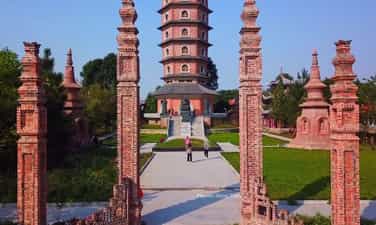
Bien Son is a beautiful pagoda of Yen Lac district, Vinh Phuc, ranked as a national historical relic since 1996, located on a high mound of about 1.5 hectares. In the past, the pagoda was called Doc Nhi, local people often called it Bien Mountain with a very strange shape. History books also record that in the 16th year of Thanh Thai's reign, the pagoda was built with Mon-style architecture. Due to changes in time, the pagoda no longer retains its original ancient architectural structure but was restored and embellished in the Dinh style, an architectural style bearing the Nguyen Dynasty's style including 2 worship halls and the main hall. Around the pagoda, the scenery is peaceful and charming, under many years old trees covered with a majestic green color. Coming from Provincial Road 303, visitors will be able to admire the first beauty of the pagoda, which is Tam Quan. The three-entrance gate is designed in the style of a three-storey, 12-roofed dome and is decorated very elaborately and sophisticatedly. From Tam Quan, there is the most straight path consisting of stone steps built along a gentle slope. The pagoda was built according to the internal and external principles. In the temple grounds, there are two long corridors connecting the front house in the front with the back house in the back, forming a rectangular area surrounding the incense burning house. Compared to other temples in the region, Bien Son Pagoda still preserves a system of more than 40 dharma statues and also preserves many valuable treasures and antiques. The statues here are beautifully crafted, gorgeously painted and gilded, meticulously crafted, imbued with the style of the Le Dynasty. A highlight of the Buddhist architecture at Bien Son Pagoda is the 12-ton monolithic bronze stupa, one of the largest stupas in the country, storing many Buddha relics, especially statues. Buddha Emperor Tran Nhan Tong is made of monolithic green jade... In addition, in the pagoda there are other houses such as the ancestral house, which is a place to worship the monks who once lived at the pagoda and have now passed away, and the monk's house, where the monks live. . Located right behind the upper palace, we can admire another extremely unique architecture, which is the rotating tower, also known as the mortar. Today, Bien Son Pagoda has become a stop, sightseeing, and research destination for many tourists on their journey to return to their national roots, and is the place where the Loan River - Bien Mountain festival imbued with national identity takes place. , attracting a large number of local people, tourists, and Buddhists from near and far to worship and enjoy. Source: visitvinhphuc
Phu Tho
6829 view
Rating : National level relic
Holy Mother Temple
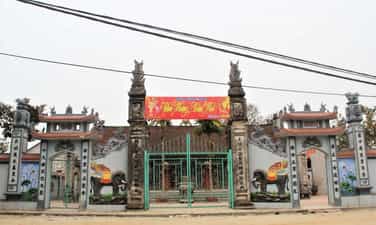
The historical relic of Thanh Mau Temple is located in Minh Luong residential group, Thanh Lang town, Binh Xuyen district, Vinh Phuc province. Thanh Mau Temple has a total area of 6,705 m2, of which the worship area is 3,114 m2, built a long time ago, and the current architecture still bears bold features of ancient architectural art. The temple has Dinh-style architecture with 5 compartments and 2 compartments and a 3-compartment harem. The overall layout of the relic includes: Nghinh Mon gate, fence system, front house, harem house, left vu house, right vu house, golden house, internal garden system. – Nghinh Mon Gate: includes the main passage and 02 side passages. The main walkway is formed by 02 large bronze pillars, bronze pillars, the base of which is covered with buddha vases, the top of the pillar is covered with fruit and wind wings made of four phoenixes, the body is covered with embossed thread and written with grapes on 03 sides of the pillar. The side walkway includes two symmetrical paths. The walkway is formed by small bronze pillars and a fence system, the side path is covered with 02 floors of small-sized roofs. – The altar house: built in the shape of a rectangle, with the architecture of a boat with a leaf roof, a husband's head, and a gong stand. The whole house is made of wood, has a door system, and a tiled roof. The building has very beautiful cultural and artistic value. – The harem house: built in the shape of a nail, in the style of a boat with a leaf roof, covering the harem part, inside with wooden structures like husband and wife, and a gong stand. – Historical stele: built in 1992, on it is written the preliminary history of the Holy Mother's behavior and the history of the temple. The stele is 1.8m high, the stele is engraved with yellow letters on one front side. The base of the stele sits on top of the turtle's back. The stele's base is made of square stone. – Left house and right house: the project was built quite a long time ago, the building is built in the most typical style. Thanh Mau Temple is the place to worship Saint Mother Trieu Thi Khoan Hoa. Holy Mother Trieu Thi Khoan Hoa belongs to the Trieu family. The genealogy records that "She belongs to the lineage of the 18th King Hung Vuong" and was once the concubine of King Ve Duong Vuong. Since the Trieu family lost their country, she had to hide from the Han army, lived in exile and then came to live at Quang Huu pagoda, An Lang commune, Chu Dien district; Now it is Thanh Lang commune, Binh Xuyen district. She was originally a beautiful and talented girl. She had 5 sons, all 5 of them had heroic talent, more courage than ordinary people, were skilled in martial arts, good at literature, and had a will as wide as the ocean. Legend has it that her 5 children were born in the same bundle due to a dream of love with the Duck god in this country, hatching from 5 eggs. Because of that, she named all 5 children with the word "ap Lang", meaning Duck. Later, the Holy Mother transformed into Minh Luong mound on the 10th day of the 11th lunar month and was buried by the people in Minh Luong area (Minh Luong residential group). When Hai Ba Trung raised the uprising flag, Thanh Mau's five children had grown up, and the five brothers all came to join Ba Trung at the mouth of the Hat River, bringing with them more than 1,000 indigenous people. Assigned by Hai Ba Trung to lead the navy and army to attack Luy Lau citadel, the five Ap Langs commanded the army to destroy a fierce battle, the Crown Prince To Dinh lost greatly and had to run back to the country. Because they accomplished many glorious victories, all 5 of them were rewarded and given titles by Hai Ba Trung, became 5 Great Kings, and named the mother of the 5 brothers "Queen of the country, Princess". Thanks to the help of the five Duck brothers and many other talented generals. In just a short time, the Hai Ba conquered 64 strongholds. Mrs. Trung Trac proclaimed herself king. The uprising of the Trung Sisters and their generals, with the help of the people of the whole country, won brilliantly, and the country returned to peace. Mrs. Trung Trac ascended the throne, her title was Trung Nu Vuong, and all the generals and soldiers were awarded. When the Han enemy returned to rob our country again, under the command of Hai Ba Trung, the five Ap Langs and their generals fought very bravely, but the enemy was so strong that our army could not resist. Hai Ba was defeated at Cam Khe, 5 generals from the enemy's siege brought their bodies and buried them in Hi Son (He village, Phuc Thang ward, Phuc Yen town), the year Ap Lang returned. Hamlet sacrifices his life to preserve the atmosphere. Remembering the merits of the five Ap Langs and the holy mother Trieu Thi Khoan Hoa, An Lang people built temples and shrines to worship. During the reign of King Le Thanh Tong, in the 12th year of Hong Duc's reign (1460-1497), the Holy Mother and 5 deities were worshiped: An Lang commune was divided into Xuan Lang commune, Hop Le commune, Minh Luong hamlet to serve the Holy Mother and 5 Gods. Later, all the dynasties granted beautiful letters and approved four communes (Yen Lan, Xuan Lang, Minh Luong, Hop Le) to serve them. Although Mrs. Trieu Thi Khoan Hoa did not directly stand under the banner of the Trung Sisters, with her upbringing, her five sons became talented and dutiful generals who helped the Trung Sisters gain independence. Later, she was honored by the people and a temple was established to worship her when she passed away. Her title of Mother Goddess is revered among the goddesses worshiped in some villages in Vinh Phuc. Through the dynasties, she was posthumously promoted to the position of Holy Mother in the 9th year of Khai Dinh (1924) and later as the "Higher God of Fortune" worshiped and commemorated by all people with reverence. Currently, in Thanh Lang town, the relics worshiping the Holy Mother Trieu Thi Khoan Hoa and the 5 Apangs are: Thanh Mau Temple (nationally ranked) worshiping the Queen Mother Princess Trieu Thi Khoan Hoa, Xuan Lang Temple (ranked nationally) national rank) worshiping King O Me, Hop Le communal house (provincial ranking) worshiping Quy Minh king and Yen Lang temple (provincial ranking) worshiping Trinh Ap Lang Nga royal king, Supervisor of royal affairs , Cuong guess the great king's avenue. With a respectful heart and remembering the gratitude of our ancestors, on May 11, 2017, the Management Board of Thanh Mau Temple Historical Relics, Thanh Lang town held a groundbreaking ceremony to build a memorial stele to commemorate the Five Great Kings. Vuong at the termite mound where five generals were martyred. Thereby not only contributing to enhancing the beauty of space and landscape for the relic, but also contributing to preserving and educating the tradition of "Drinking water, remember the source", helping today and future generations to always cherish gratitude. the contributions of our ancestors and forefathers to building and defending the country. Source: Vinh Phuc Department of Culture, Sports and Tourism.
Phu Tho
6857 view
Rating : National monument

Dao Xa Temple
Dao Xa communal house is located in Dao Xa commune, Thanh Thuy district; worship Hung Hai Cong (19th son of Lac Long Quan). Dao Xa communal house was built during the reign of King Le Gia Tong - Duc Nguyen era (1674-1675), Nhat-style architecture, a building with 3 rooms and 2 compartments, facing south. The communal house was built over 300 years ago but still retains almost its entire value as a relic. In terms of architecture, it is mainly made of wood and the ancient art of wood carving on a system of lines (12 lines carved on both sides) with the themes: "Dragon Horse Serves", "Four Spirits", "Dragon Roll". Thuy", "Banh Trung", "Banh Giay Lang Lieu"; Classic stories: "Vuong Van Dieu Diep", "Cao Bien Tam Dia", "Dragon Ham Burial", "Mother Dragon Huan Tu", "Gao De Enters the Mandarin", "Ly Ngu Vong Nguyet"... With these values With sophisticated and precious architecture and wood carving art, Dao Xa Communal House was ranked as a national historical relic by the Ministry of Culture, Sports and Tourism on March 13, 1974. Dao Xa Temple (also known as Tam Cong Temple) is about 400m northeast of Dao Xa Communal House. According to the temple's genealogy, this place once marked the water management work of Duc Hung Hai Vuong and was the place where Ly Thuong Kiet trained his navy against the Song invaders and was the place where Ly Thuong's famous divine poem originated. Kiet. Dao Xa Temple has Tam-style architecture. The temple consists of three buildings: front altar, middle altar and back palace, arranged in harmony and balance, creating an elegant and majestic appearance, airy and bright but still quiet and secluded. Dao Xa Festival was recognized by the Ministry of Culture, Sports and Tourism as a national intangible cultural heritage on November 21, 2016. The Dao Xa Festival is a Vietnamese belief inseparable between communal house and temple, and is associated with the legend of worshiping Duc Hung Hai Cong (Lac Long Quan's 19th child) and his wife, Mrs. Trang Hoa, and the three great kings. Son of Hung Hai Cong. Dao Xa Communal House and Temple also worship Mrs. Que Hoa, a princess of the Tran family who was instrumental in entertaining Mrs. Trang Hoa with dancing and singing before giving birth to the three Concubines. Dao Xa communal house and temple festivals are held on lunar days of the year: On the 3rd of the first lunar month, the "Xuan Nguu" dance festival (called buffalo dance), is a religious folk dance, simulating Mrs. Que Hoa's entertainment (humorous) for Mrs. Hung Hai; January 27, 28, 29 is the Elephant Procession Festival; In March, a celebration day is held to commemorate the Holy Father's transformation and a marriage ceremony with Dau Duong village; In April, there is a ceremony to pray for peace; May 5 commemorates the birth of the Holy Father. In particular, Dao Xa has a July prayer festival held from the 9th to the 15th called: "Dedicating to King Ly to fight the Song invaders", with a swimming festival at midnight reenacting the scene of the Ly army. Thuong Kiet welcomes the gods' army ships into the temple to hold a special god-praying ceremony of the midland region, bearing the mark of the Hung King period. On December 10, the village holds a spring festival, a ceremony at the temple of Mrs. Que Hoa, and is also a ceremony to end the only rice crop in Dao Xa village. Dao Xa Festival is a sustainable environment to nurture and preserve good traditional cultural values; to satisfy the religious, spiritual and entertainment needs of generations of Dao Xa people and communities near and far. Community attachment based on traditional cultural values is always sustainable, a source of solidarity strength that has been proven through the history of building and defending the country of the Vietnamese people. Source: Phu Tho Tourism
Phu Tho
4803 view
Rating : National monument

Lac Long Quan National Ancestor Temple
To commemorate the merits of our ancestors who publicly founded the country and to bring together the spiritual and cultural values of the era of the Hung Kings and to commemorate the merits of our ancestors and predecessors who have contributed to building the country and Defending the country, Lac Long Quan's Father Temple is a new cultural institution located in the historical relic complex of Hung Temple, which was started construction on March 26, 2007 at Sim hill, Chu Hoa commune (Viet Tri) and Khanh Hoa province. It was completed on March 29, 2009, right on the occasion of Hung King's death anniversary in the year of the Ox. According to the book Dai Viet Complete History: "Lac Long Quan's full name was Sung Lam, he married De Lai's daughter, Au Co, gave birth to a sac of a hundred eggs, which later hatched into 100 sons, who were the ancestors of Bach Viet. One day, Lac Long Quan told Au Co that I am like a dragon, she is like a fairy, water and fire are incompatible, it is difficult to get along, so they said goodbye and divided 50 children to follow their father to the sea, 49 to follow their mother to the mountains, honoring her. The eldest son became the next king, Hung Vuong. Hung Vuong ascended the throne, named the country Van Lang, established the capital in Phong Chau, and divided the country into 15 parts. The king's residence is Van Lang, the king's son is called Quan Lang, the king's daughter is called My Nuong, the general is called Lac Hau, the military general is called Lac general, the mandarins are called Bo Chinh, passed down from father to son. connection is called Tutoring. Legend has it that 18 generations of people have been called Hung Vuong. The Temple of the Father of the Nation, Lac Long Quan, was invested in a new construction with synchronous architectural items. The decorative motifs are modeled after the patterns on Dong Son bronze drums, stylized as: Image of a person pounding rice, images of peanut birds... are shown in unique vividness, bringing the temple's unique architectural features without losing its majestic antiquity. The architecture of Lac Long Quan temple includes: Main temple, gate, symbolic pillars, symbolic gate, communal house, left vu, right vu, golden pavilion, auxiliary works and technical infrastructure with a total land area of 13.79 hectares. Main temple: Construction area of 210m2, nail-shaped architecture, made of wood in the traditional ancient architectural style. The front hall has 3 compartments, 2 left, 4 rows of legs. The harem has 3 rooms, 4 rows of legs, the wall is built at the back, and the door is a table. In front of the front hall is the altar with 1 compartment, 2 left, 2 rows of legs. Temple gate (ritual gate): Built in traditional architectural style, the gate has 4 columns, the main gate is 4.2m wide, the side gate is 2.05m wide. Symbolic gate: Located in front of the communal house, reinforced concrete column structure covered with stone and chiseled carved patterns. Phuong Dinh: Located behind the ceremonial gate, at courtyard level II. The structure is made of wood, the roof is stacked with matches, the floor is tiled with Bat Trang tiles. Left vu, right vu: Located at yard level III, built in traditional ancient architectural style, house with 5 compartments, 2 rows, construction area of 54m2. Symbolic pillars: Two pillars located symmetrically on both sides of the main axis, 9.2m high. Structure made of reinforced concrete, covered with green stone carved with stylized bird patterns. Golden Tower: Located on both sides behind the main temple. The structure of the building is built of stone blocks, cement mortar, reinforced concrete pillars, and an antique tiled roof. Altar objects similar to Lac Long Quan temple include: Hammock doors, incense burners, gong stands, precious bowls, horizontal panels, parallel sentences... made of wooden pillars, carved with patterns, painted with gold lacquer. Especially worth mentioning is the worship statue of Lac Long Quan. The statue of the Father of the Nation Lac Long Quan is cast in bronze, weighs 1.5 tons, is 1.98m high in a sitting position on a throne, placed on a stone pedestal made of block stone with carved patterns following literary motifs. Dong Son transformation. On both sides are 2 statues of generals (Lac Hau, Lac Tuong) with a height of 1.80m in standing position, each weighing 0.5 tons. Coming to Hung Temple today, visitors will not only burn incense to pay tribute to the merits of the Hung Kings but also visit the temple of Lac Long Quan and the temple of Au Co's Patriarch - a gathering of spiritual and cultural values. full of meaning, expressing the consciousness and filial piety of the Vietnamese people. Source: Phu Tho Newspaper
Phu Tho
4348 view
Rating : National monument