Relic point Vietnam
Việt Nam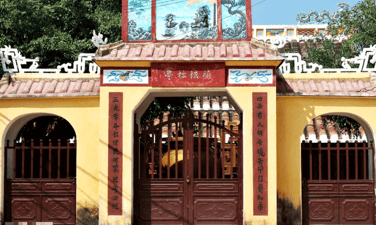
Dinh Chien Dan
Chien Dan is one of the most ancient communal architectural works in Quang Nam. Currently, the communal house is located in Dan Trung village, Tam Dan commune, Phu Ninh district, less than 1km from National Highway 1A. According to historical documents, the old fried land of Ha Dong district, sublimated. In order to commemorate the merits of the ancestors, the gentle, Hau Hien has publicly painted the jelly to set up the flock; People in the village, in the commune at that time, together built the flock of the flock with a superficial scale and named the "communal house" in a high, flat area. The main communal house is built in the most shaped shape, the face turned to the southeast, the roof of the yin and yang tile roof, the two ends of the roof decorated with sophisticated patterns with the image of "Mesopotamia", the porch covered with two unicorns . The entire campus of the communal house is 1,500m², the main house is 500m² wide, with enough room for over 100 people. The communal house consists of 5 spaces, 2 wings with 30 jackfruit wood columns bigger than an adult bracelet, 3 compartments between used as a place of worship. The main face is a row of 6 columns separated from the temple according to the layout of the three chims. The beams above the top of the three spaces (through the upper hip connecting the two sets of trusses). In the communal house, the lawsuit was exquisitely carved and flexible by the artisans of Moc Van Ha village, Tam Thanh commune, Phu Ninh district. A wooden column is restored. Since construction up to now, the communal house has undergone many remodeling, most recently in 1996 and 2006 but the original elements of the communal house have been preserved intact of an ancient architectural work. According to the legend and the narrative of the elderly people living near the Chien Dan communal house, when King Le Thanh Tong went to conquer, the Southern Binh Dinh, the king used the flock to rest and make suitable decisions To win. Chien Chien Dan is ranked as a national architectural and artistic monument (Decision No. 39/2002/Decision -The Culture and Culture of December 30, 2002 of the Ministry of Culture and Information). Calendar, people open the communal house to commemorate their father's gratitude. Source of Quang Nam Electronic Information Portal.
Da Nang
5662 view
Rating : National relics.

Historical relics "The struggle of Ha Lam - Market"
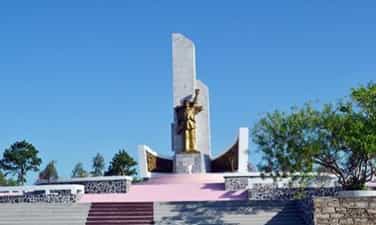
The monument is about 300m from the market and opposite to Binh Trieu commune health station. Ha Lam - Market struggle takes place from September 4 to September 7, 1954 - is a political struggle to show the spirit of love and justice of the people of Thang Binh in particular, Quang Nam In general, against the American-Diem, brutally, the plot violates the Geneva Agreement to long-term division of our country. The beginning of the struggle took place at Bau Bang Bridge with only a few dozen participants but then quickly pushed up to the climax with thousands of people participating in the struggle at the market. This struggle killed 43 people and 23 injured. However, the struggle has shown the noble patriotism, the will, not afraid of the people's sacrifice, resolutely struggling to demand that the enemy must comply with the implementation of the Geneva Agreement; determination to protect the independence, freedom and democracy of the country ...; Forcing the enemy to falter, to accept the people's claims. In order to record the crimes of the US-Diem and commemorate those who have fallen, the memorial has an area of 8,988m2, with a fence of the gate gate, which is quite solid, located in Village 3, Binh Trieu Commune, District, Thang Binh, Quang Nam province. The monument is built about 5m high, showing three people standing back together, including: an old man holding a stick in his hand, a girl holding a conical hat and a young man who is holding a child. The baby is motionless in hand. Behind the monument are two reliefs with embossed cement, describing the struggle process of the people of Ha Lam - the market in the struggle on September 4, 1954. Between two reliefs is the altar, the side In the altar there are the words "Fatherland record". Historical relics "The struggle for Ha Lam - Market" was recognized by the People's Committee of Quang Nam province under Decision No. 4267/Decision of the People's Committee, on November 21, 2005. In 2014, the Ministry of Culture and Tourism officially ranked national historical monuments. Source of electronic portal of Thang Binh district, Quang Nam province.
Da Nang
5155 view
Rating : National relics.
Location of Bodhi victory.
Bodhi base located in the mountains of Dat Son, in Dien Tien commune, Dien Ban district is a low hill area of about 215 hectares, with a height of 55 meters. Dat Son mountain has 5 high points: Sung Cong, Giong Ngang, Giong Lac, Bo and Land Ky. This is a strategic area, controlling an entire area from Tay Dien Ban to Hoa Vang and part of the east of Dai Loc district. Therefore, after bringing troops back to occupy our country, the French brought a company to occupy Bo Bo and turn this place into a firm base in the remote defense system to protect Da Nang base. In the winter -spring war 1953-1954, before the attacking attacks, the military politics of the army and the people of Quang Nam - Da Nang, the enemy completely fell into isolation. Many enemy posts are only a few dozen kilometers from Da Nang to the south to supply by plane, the puppet apparatus disintegrated in many places. In order to save the situation, the French expeditionary command in the Central region mobilized a mobile force from the Central Highlands battlefield back to Da Nang. They concentrated four military companies, three motorcycle companies, three attacking companies with more than 800 names, 110 mechanical vehicles, 10 shifts and many important parts opened the "leopard" operation to destroy the region Dien Ban guerrilla, recapturing Bo Bo base to clear and supply enemy troops in Ai Nghia, Phong tried on Road 100, consolidating the defense line of the South and the North of Cam Le River, protecting Da Nang. Earlier, on June 9, 1954, the local army units of Dien Ban opened the first raid in the base of the Bo Bodhi, destroying all the enemies here to collect a 57-mm cannon. Based on the actual situation on the battlefield, Quang Nam - Da Nang Provincial Party Committee decided to take advantage of the unexpected factor, using the tactic of ambushing the enemy as soon as they arrived at Bo Bo to kill an important part of birth The enemy force, breaking their operations, protecting the facilities, property and life of the people. Obeying that policy of preparation is urgently conducted. The people of Dien Hong, Dien Tien, Dien An and Dien Hoa communes participated in the roads, enthusiastically went to the people to serve the front line. The slogan of action now is "all for victory", we have mobilized 500 people to fire the route, 650 people collected the booty. In addition, some other people are also arranged from the 1,500 meters away from the battlefield ready for the battlefield. At 0:30 on July 19, 1954, we started to fire the enemy's high points at Bodhi base. The firepower had just stopped, the attacks of our attacks simultaneously rushed to occupy the positions, dividing the enemy squad. At first, the enemy was chaotic but after that, they stabilized the squad, fighting frantically. The battle was fierce. The enemy cannon from Giong Hang and Sung Cong hill blocked the road. But, our soldiers persisted in the battlefield, brave to capture the airport, flooding into the central area. The person before falling, the next step. The tenacious soldiers followed the battlefield, taking advantage of the terrain of the object to occupy the airport, killing 4 enemy vehicles. In the horizontal Giong, we kill 3 more cars. When we spilled into the center, the enemy uses tanks and guns to fiercely resist. I shot the chain, jumped in the car and used a grenade to hit the destroyer turret. The other nose volunteers overflow to occupy the battlefield. Out of bullets, many comrades stabbed the enemy with the enemy with his tongue. Before our tenacious fighting spirit, the enemy had to run away. The people and Dien Ban guerrillas were tightly surrounded, not allowing the name to escape. As a result, we killed 159 enemies, captured 293 names, collected 142 guns from Tieu Lien to Dai Lien. This is the battle we captured the most Au Phi prisoners on the battlefield of Quang Nam - Da Nang. The enemy's operations to recapture the Bodhi base have completely failed. The victory of Bo Bo on the morning of July 19, 1954 showed the right and timely leadership of the Provincial Party Committee and the Provincial Military Command, and at the same time showed the spirit of continuous attack to destroy the enemy. Bodhi victory contributed to the whole country to end the resistance against the French colonialists, forcing them to sign the Geneva Agreement on the end of the war and restoring peace in Indochina on July 20 -1954. Bodhi victory forever went into history as a "Dien Bien Phu" on the Quang Nam battlefield in the anti -French resistance war. Remembering the heroes, revolutionary soldiers, comrades, compatriots fell in the battle of Bo Bo, right at 19h on July 19, 2024, at the monument of victory over Bo Bo, Dien Tien commune, Thi, Party Committee - People's Council - People's Committee - Secret Committee Committee of Vietnam Fatherland Battle of Dien Ban Town solemnly celebrated the 70th anniversary of the victory of Bo Bo (July 19, 1954 - July 19, 2024) And welcome by national historical relics relics venue to win Bo Bo. Source of electronic portal of Dien Ban district, Quang Nam province.
Da Nang
5770 view
Rating : National relics.
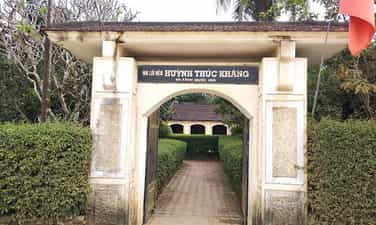
The souvenir house Huynh Thuc Khang
As a national historical and cultural relic, in village 1, Tien Canh commune, Tien Phuoc district, Quang Nam province, about 35 km west of Tam Ky city. Huynh Thuc Antibiotics in 1876, the hometown of Thanh Binh - Tien Phuoc village, is a smart person who is good at studying, a patriotic will. Bades in 1904, in 1908, Mr. Huynh topped the Duy Tan movement in the Central region, exiled by France to Con Dao. In 1927, after being released from prison, Huynh Duong established a civilian newspaper to propagate the patriotic struggle. After the August Revolution in 1945 was successful, Mr. Huynh was invited by Uncle Ho to be the Minister of the Interior and then had time to hold the position of President of the State. In 1947, Mr. Huynh died in Quang Ngai when he went to the central period. The souvenir house Huynh Thuc Khang is an old house located in a large garden with an area of nearly 4,000m2 built by Huynh Thuc Khang's body in 1869, in a very popular architectural style under the Nguyen Dynasty. The house consists of 3 spaces, tile roofs, wooden frames with sophisticated carvings. The overall architecture inside has a strong architecture of the Nguyen Dynasty with the curved trailers, on the tribute, there are the results on the head of the unicorn head. A kitchen is built adjacent to the upper house and is connected by a side door. The left and right of the house are prevented in front. On the right is the common dining room of the whole family. The left side has a convex room compartment where Huynh Thuc Khang works. In the middle of the ancestral altar, around the altar, there was a stylized carved pattern of a bat -shaped bat and a pair of jackfruit wood dragon. In the middle of the altar set the subject (the name of the grandparents and relatives of Mr. Huynh passed away). The front is the lower item, currently worshiping Huynh Thuc Khang. Currently in the house still preserving the old workspace of Mr. Huynh and the items of Mr. Huynh's life, including the elderly shirt of Huynh Mac when joining the Government in 1946 .... Huynh Thuc Khang has been restored and embellished many times, this is not only a national monument, but also a "red address" for the younger generation to find traditional identification, follow -up of his father. . Source of portal port of Tam Ky city, Quang Nam province.
Da Nang
5389 view
Rating : National relics.

Celebrity of Do Dang Recruitment
On March 12, 2024, the Ministry of Culture, Sports and Tourism issued Decision No. 608/Decision -Culture and Sports Culture and Tourism on the ranking of national historical monuments to Mo Chi Si Si Dang Recruitment, Dai Cuong commune, Dai Loc district. Chi Dang Nhuyen (1856-1911) was born and raised in O Gia village, Dai Cuong commune, Dai Loc district. He held a small official in the Nguyen Dynasty. When the French colonialists invaded our country, Mr. Tu Quan returned to his hometown. In 1885, King Ham Nghi launched the Can Vuong movement and Do Dang recruited to join the Quang Nam Association- a movement to respond to Can Vuong in Quang Nam. He was assigned to be the same as military service in charge of food and money mobilization for the activities of Nghia Hoi. In 1904, he was one of 5 members participating in Duy Tan Hoi founding. In 1910, he was detained by the French minions and the French colonial authorities and took them to the Prison's Prison (Quang Tri). Here, he has astonished more than a week and sacrificed on May 2, 1911. On April 27, 2021, Dai Loc District Party Committee held a scientific conference "The life and career of Chi Si Dang recruited" on the occasion of the 165th anniversary of the birth day (May 14, 1856 - May 14, 2021 ) and 110 years of death (May 2, 1911 - May 2, 2021). Source of electronic portal of Dai Loc district, Quang Nam province.
Da Nang
5900 view
Rating : National relics.
Second house well
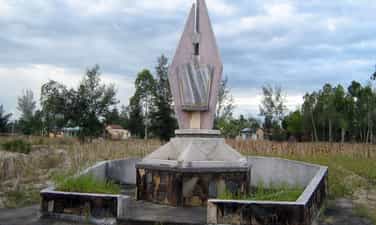
The second well belongs to Village 5, Dien Ngoc Commune, Dien Ban District, 15km north of Hoi An city along Hoi An Street - Da Nang, 5 km from Da Nang city to the south. In the Dong Khoi movement with Dien Ban, the Special Forces team of the province, assigned the task of organizing deep thrust on Dien Nam - Dien Ngoc sandy areas to attract the enemy, creating favorable conditions for communes A and B The rebel broke the enemy's grip, gaining the right to own. The team has 7 people, led by comrade Hien, Vo Nhu Hung- Deputy Head and members including Dang True, Nguyen Ax, Nguyen Sy, Tran Tho, Tran Dai Nghia and 3 officials of Dien Ban district, Vo Tien (ie Thu) -The case of the District Party Committee, Le Tuu and Dang Bao Chi. The battle took place in a great difference in force. We only have 10 soldiers, equipped with 8 submachine, 2 pistols, 2kg of TNT explosives, and each soldier is equipped with 150 bullets and a little grenade. The enemy discovered and Article 1 of the commandos, 10 platoon Bao An, people (about 500 soldiers) were fully equipped with weapons and communications. But with the spirit of "Death for the Fatherland to make birth", "Take the enemy weapon to fight the enemy", "Each bullet an enemy" our soldiers flipped the enemy throughout the length of the land of Dien Nam and Power. Ngoc, in the end, the enemy surrounded the force, the team had to stay at the shallow well in Mrs. Nhi's house (Dien Ngoc), more than 4 hours of the team repelled dozens of attacks, destroying nearly hundreds of enemies. I lost 4 comrades to sacrifice, 1 injured. After this glorious battle, comrade Le Tan Hien (Vien) was sent to report achievements in the Military Region. The great victory of the working team was awarded the title of Seven Dien Ngoc and rewarded the First Liberation Medal. The way the National Historical Site of Nha Nha is the monument of the Dien Ngoc brave artists built with a majestic scale symbolizing the revolutionary atmosphere, the tenacious fighting of the Dien Ngoc Dung. Source of electronic portal of Dien Ban district, Quang Nam province.
Da Nang
5633 view
Rating : National relics.

Mo Chi Si Tran Quy Cap
Tran Quy Cap (1870 - 1908), Tu Hang Hang, Thich Phu, Hieu is Thai Xuyen. He was born and raised in a poor farmer's family in Thai La village, Nhi Nhi village, Dien Ban district, Quang Nam province. Tran Quy Cap is one of the three outstanding characters of the Duy Tan movement. He is not only a prominent revolutionary leader but also a talented poet. His poetry carries the breath of the times, the sincere voice of a passionate heart, showing the emotional thought of the scholar class progressing in the early years of the twentieth century. He participated in the Duy Tan movement against the French, then arrested in 1908, although he did not find evidence, the French colonialists still treated the back but the people called it the Mac Tu Huu sentence. Currently, there is still a temple in Dien Khanh town, Dien Khanh district, Khanh Hoa. The family brought Di Chi Si Tran Quy Cap burial in his home town at Go Nhao Cemetery, Nhi Nhi village, Dien Phuoc commune, Dien Ban district in 1925. In 1938, the people raised to rebuild the tomb of the mausoleum The tomb is quite spacious. Experiencing two resistance wars against France and the United States, although the devastating war caused severe damage, descendants and family still took care of the tomb. In 1994, the tomb of the tomb of Tran Quy Cap was rebuilt by Dien Ban district and the family and family of Tran Van village to rebuild according to the old tomb architecture in Khanh Hoa. In 2000, Mo Chi Si Mo Tran Quy Cap was recognized as a national historical and cultural relic. Source of electronic portal of Dien Ban district, Quang Nam province.
Da Nang
5406 view
Rating : National relics.

The tomb of the tomb of Hoang Dieu.
The tomb of General Director Hoang Dieu is located in Xuan Dai village, Dien Quang commune, Dien Ban district. Recognized by the Ministry of Culture and Culture as a national historical monument in 1994. Chi Hoang Dieu (1829-1882) came from a Confucian family in Xuan Dai village - Dien Quang commune - Dien Ban district (now Dien Ban town). He was a famous general who learned wide and talented (19 years old passing a bachelor's degree, 24 years old passed the deputy) and was Thanh Liem, righteous and loved the people. On April 25, 1882, the French colonialists attacked Hanoi, in an unequal match, he still committed suicide, but refused to hand over. At that time, he was holding the position of Governor Ha - Ninh. His glorious death was a miraculous example of heroic hero, cheering for all classes and people of the whole country to stand up to fight for independence. His tomb was buried back to his homeland and was restored and embellished twice in 1982 and in 1998. The spacious and airy campus was cared for by his descendants. Source of electronic portal of Dien Ban district, Quang Nam province.
Da Nang
5507 view
Rating : National relics.

Than - Hon Mang - Hon Pinen
The mountain strip of Than, Hon Mang island, Hon Pin is the metamorphic stone site of Kham Duc complex - Mang mountain. The geology here is up to 400 million years old, pushed up from the sea surface through a geological tectonic phase. The dark black stones, shaped like special works of art. In addition, Than - Hon Mang - Hon Pinen also has long, blue, pristine beaches and Thuan An land with many unique cultural features of the coast. Tam Hai area in general, Ban Than - Hon Mang - Hon Dam in particular is the destination with many potential tourism of Nui Thanh. The spectacular, beautiful scenery created by nature is really attractive for those who come to this landscape. In 2017, Ban Than - Hon Mang - Hon Dua was ranked by the provincial People's Committee. Recently, the government and people have paid much attention to protect and effectively exploit the heritage. Earlier, in 2003, Tam Hai commune coordinated with the Center for marine biological conservation to mobilize the people to learn about the value of coral reefs and clean the sea; observing the law in fishing and fishing. At the same time, implementing the project of preserving and sustainable use of Tam Hai coral reef ecosystem; Deploying many activities to promote the landscape of Than - Hon Mang - Hon Pin. On February 24, 2023, the Ministry of Culture, Sports and Tourism issued Decision No. 393 to recognize Than - Hon Mang - Hon Pin is a national monument. Source of the Ministry of Culture, Sports and Tourism.
Da Nang
5308 view
Rating : National relics.

Central historical site of Central Vietnam -OA
OA is a place located at the foot of Hon Ba Mountain, in the territory of Tra Tan commune, Tra My district (now Bac Tra My district). This is a dense mountainous area; In the front, the two rivers and the Nuoc Nuoc rivers create a long crooked beach beach and links the valleys of large and small, high and low inner, creating favor gas, troops, troops and moving, exploiting food, food and medicine on the spot to survive in a strict time, so this place has been selected by the 5th Party Committee of the Revolutionary Base in the years. Resistance against the US to save the country. It was in this base area, the Party Committee and the Military Region 5 Command together outlined the specific strategic way to direct the army and people of Zone 5 to fight the US. This place has held important conferences and congresses, which is a training place for regimental officials, divisions and provinces in the whole area to study the Party's resolutions ... The Southern Revolution won the signing of the Paris Agreement in 1973, proceeding to liberate the South. With these historical values, on August 4, 1992, the Ministry of Culture and Information (now the Ministry of Culture, Sports and Tourism) recognized the OA Water Monument as a national monument. Source of Quang Nam Electronic Information Portal.
Da Nang
5054 view
Rating : National relics.