Relic point Vietnam
Việt Nam
Communal houses, temples, and shrines in Ha, Phu Tho province
The cluster of relics of Ha communal houses, temples, and shrines (often called Dinh as Ha communal house, called Ha temple as Ong temple and Ha temple as Ba temple) was built in a flat, airy location in Huong Nha commune, Tam Nong district. , Phu Tho province. The cluster of relics worships the female general Xuan Nuong and the Ten Ministry of Gods who helped Hai Ba Trung defeat To Dinh and win victory. Currently, the relic complex still preserves a jade genealogy compiled by Nguyen Binh Phung in 1572, recording the behavior of the Gods in the relic. 1. Ha Communal House: Built on a large area of land, facing East-South, in front of the communal house is a pond and fields. The communal house has Dinh architecture, the Dai Bai consists of 5 rooms, 2 left (currently only 5 rooms remain) and the Harem has 2 rooms, is structured with 4 rows of wooden pillars, currently there are only 16 columns, including 8 main columns and 8 columns of troops. 2. Ha Temple (Ong Temple): Built on a high mound, facing East - South, in front and to the right of the temple is a pond (called a semi-circular lake), Nhat-style architecture, including 5 worship spaces Vertical, the door opens at the gable end, built in the style of a gate with 3 arched doors and two copper pillars shaped like gardenia. The great inscription in front of the communal house's door reads three words: "Toi Linh Tu". 3. Ha Temple (Ba Temple): Built on the same land of Don Ha, facing East - South, in front and behind are ponds and lakes, the architecture is 3 vertical altars, 5.10m long, 4.0m wide. 80m, including 16 wooden columns (8 main columns, 8 sub-pillars). The Ha communal house, temple, and shrine relic cluster is a complex of relics with historical and artistic value. In particular, the relic complex still preserves many valuable artifacts such as: ordination, jade genealogy, 3 ancient thrones, 2 palanquins, a collection of bowls, bowls, water hyacinths, porcelain trays and many sacred objects. value. The traditional festival is preserved and maintained at the relic complex on the 10th day of the first lunar month with many folk performances and games, especially the buffalo bridge festival. The cluster of relics of Ha communal houses, temples and shrines was recognized by the Minister of Culture and Information as a national historical, architectural and artistic relic on December 28, 2001. Source: Department of Cultural Heritage
Phu Tho
3803 view
Rating : National monument

Au Co Mother Goddess Temple
Located on the sacred land of outstanding people (Hien Luong commune, Ha Hoa district, Phu Tho province), Au Co Temple is a special historical and cultural work, a symbol of patriotism and great tradition. national unity. The image of mother Au Co giving birth to Lac and the Red son of Vietnam in a bag of hundreds of eggs has become an immortal image that lives forever in the thoughts, feelings and minds of generations of Vietnamese people. When Lady Ngoc Nuong gave birth to Au Co, she saw auspicious clouds protecting her, and fragrance spread everywhere, a sign of "Fairy coming to earth". Growing up, Miss Au Co was very beautiful, "Compared to flowers, she could speak, compared to pearls, fragrant pearls", diligent in reading, good at playing the flute, and proficient in phonics. After getting married, Lac Long Quan took Au Co from Lang Suong cave to Nghia Linh mountain. Au Co went into labor and gave birth to a sac of a hundred eggs that hatched into a hundred children. When the children grew up, Lac Long Quan told Mrs. Au Co, "I am a Dragon, she is a Fairy, water and fire are difficult to get along with... so 50 children followed their mother up the mountain, 50 children followed their father down to the sea. In order for it to be passed down for a long time, all of you will later become gods. Of the 50 children who followed their mother, the first son succeeded to the throne, took the title of the first Hung King, named the country Van Lang, established the capital in Phong Chau, and passed down 18 generations of Hung kings to rule the country for 2,621 years (From Nham Tuat year 2879 to 258 BC). Wherever Ms. Au Co and her children went, they won people's hearts and minds, teaching people to grow rice, plant mulberries, raise silkworms and weave cloth. On that mile-long road, one day he arrived at Hien Luong site, Ha Hoa district, Son Tay town. Seeing beautiful natural scenery, with high mountains and wide fields, long rivers, and vast blue lakes, Lush grass, flowers, and abundant fish and animals. He reclaimed land and established hamlets, taught people to grow rice, plant mulberries, and raise silkworms to weave cloth. Loan well, Phuong well, Thi mound, Cay Dau mound... are names from ancient times that still remain in the memories of the people here. When the farm was stable, he and his children set out for new lands. When the country had recovered and the frontier had expanded, he returned to Hien Luong, where he had chosen to spend his life. Legend has it that on the 25th day of the twelfth month of the year Nham Than, Mrs. Au Co and her flock of fairies flew back to heaven, leaving a silk bib under the banyan tree, where the people built a temple to worship, eternal incense and smoke. To express gratitude for the merits of Mother Goddess Au Co and educate the nation's traditions, more than 500 years ago, in the 15th century in the post-Le era, King Le Thanh Tong conferred deity and built the Temple of Mother Goddess Au Co in Hien Luong commune. - Ha Hoa district; Au Co Mau Temple was recognized as a national historical and cultural relic in 1991. The main holiday of Au Co Temple is the "Fairy's Day" on the seventh day of the first month. In addition, there are other holidays during the year such as February 10 and 11, March 12, August 13... Source: Electronic Information Portal of Ha Hoa District - Phu Tho Province
Phu Tho
3990 view
Rating : National monument
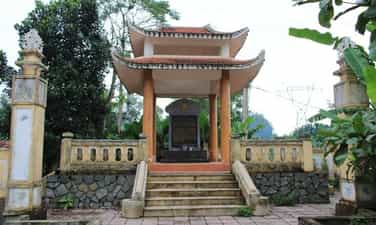
Tu Ly revolutionary base area, Hien Luong
Here, during the pre-uprising period in August 1945, along with Hien Luong commune, Tu Ly and Hien Luong revolutionary base areas were formed, one of the province's four revolutionary base areas located in the Hoa and Hien war zone system. Ninh, Thanh (Quang Trung War Zone). At this base, the province's first military training class was held. From here, the revolutionary movement spread to surrounding areas. Going back in history, in February 1945, the Party Central Committee decided to establish the Hoa - Ninh - Thanh war zone. According to the Directive of the Party Central Committee, the establishment of base areas to quickly prepare for the uprising and welcome the Southern liberation army advancing through Hoa Binh by way of Phu Tho into the Tu Ly - Hien Luong area is one of the opportunities. Important conditions and conditions for the formation and development of the Hien Luong - Tu Ly revolutionary base area. Under the direct direction of the Northern Party Committee, the Provincial Party Committee decided to establish the Tu Ly - Hien Luong revolutionary base area. On February 10, 1945 (the 28th day of the Lunar New Year, Year of the Rooster), led by Mr. Dinh Cong Hau, comrade Vu Tho went to meet Mr. Dinh Cong Sac in Tinh Trang hamlet - Tu Ly commune to find connections to build a revolutionary base. . From here, Mr. Dinh Cong Sac's family became a place to contact, meet, discuss plans to build the Tu Ly - Hien Luong base area and open the first military training class for the province's armed forces. On the basis of the well-developed movement and having enough conditions to establish a base area, the Provincial Party Committee decided to open the first military training class at Mr. Xa Van Binh's house, Dong Lam village, Giang Seo village with 20 teams. National self-defense member of Hoa Binh town and Mai Da district. Under the protection and concealment of the people of Hien Luong - Tu Ly, the students who completed the course quickly returned to establish and develop self-defense teams to save the country, preparing for an uprising to seize power. The successful military class brought the prestige of the Viet Minh to a high level, spreading widely throughout all classes. The leaders were subdued, the people were excited and believed in the revolution. The revolutionary force in the base area grew stronger, making an important contribution to the victory of the uprising to seize power in August 1945 in the provincial capital, Cho Bo district, Suoi Rut, Vang street (Hoa Binh) and Moc Chau (Son La). In 1946, the forces of the Tu Ly - Hien Luong revolutionary base coordinated closely with other revolutionary forces of the province to completely destroy the Dai Viet Duy Dan Party that had come to occupy Muong Diem as its headquarters and plot to overthrow it. revolutionary government in Hoa Binh. To mark historical evidence, in Ma hamlet - Tu Ly commune and Rong hamlet - Hien Luong commune, memorial stele houses were built at the Tu Ly - Hien Luong revolutionary historical relic site. These are works of historical and cultural significance, a place to educate revolutionary traditions for generations of Tu Ly - Hien Luong regions to follow in their father's footsteps in protecting the achievements of the revolution, building, renovate the homeland. The relic site has been ranked as a national revolutionary historical relic. Source: Hoa Binh Electronic Newspaper
Phu Tho
6070 view
Rating : National monument
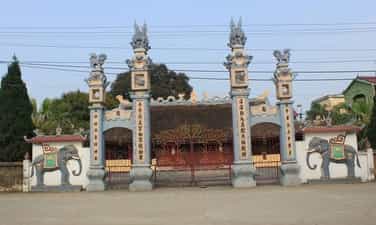
Dinh Kha Do
Kha Do communal house is located in Viem Nam Viem ward, Phuc Yen city, built in the Later Le dynasty (Le Canh Hung - 1741) to worship Tam Giang Dai Vuong - Famous general who helped Trieu Viet Vuong defeat the Luong invaders; Queen Minh Phi - Holy Mother who gave birth to Duc Tam Giang; Assistant Assistant Nuong Tu - Duc Tam Giang's younger sister, was instrumental in being in charge of military provisions. Legend has it that Saint Tam Giang was appointed General of the Army by King Trieu Viet to fight against the Luong invaders (6th century). He and his three younger brothers used guerrilla tactics to defeat the Luong invaders led by Tran Ba Tien. King Trieu Viet ascended the throne for a while, but due to not listening to his advice, he lost his throne by Ly Phat Tu. Ly Phat Tu sent someone to summon his brothers to become mandarins, but he did not accept them, saying: "I am loyal and do not worship two lords" and then he and his entire family perished on the Nhu Nguyet River. Remembering his merits as well as his example of loyalty, along the three rivers Thien Duc, Nhat Duc, and Nguyet Duc, there are 298 villages and communes worshiping and honoring him as village tutelary god. Kha Do communal house is an ancient, massive architectural work built in the architectural style of the Later Le Dynasty. The communal house's carvings are concentrated in the middle space, the area with the harem, the holy place, the place where military and theocratic power gathers, and mainly depict dragons and cosmic animals, along with the ceiling and worship relics. , the decorations make Kha Do communal house extremely solemn, expressing the authority of royal culture, concentrated and promoting its full strength. With ingenious art and tight layout, cosmic animals such as dragons, lyches, turtles, and phoenixes express the aspirations of human life here more than 200 years ago. This is the outstanding success of the art of carving wooden ceilings at Kha Do communal house of our people during the Le Trung Hung period. Currently, Dinh Kha Temple still has many valuable worship relics of ancient folk art, arranged in the middle of the communal house and on the harem, from the bottom up and according to the material. Wooden items include: altar palanquins, altar altars, altar thrones, altar horses, floating trays... Paper items include: Jade family tree, ordaining... Porcelain items include: incense bowls, water vases, wine bottles. Bronze objects include cranes, candles, and pedestals. Fabric items include pipe fans, ashes, clothes, etc. Nowadays, Kha Do communal house has main holidays during the year such as: 1st and 15th full moon days of every month; January fifteenth and August 2nd are the main parties; May 2 and October 15 are side parties; April 10 is the death anniversary of the village's tutelary god. Kha Do village communal house has a very unique custom: The custom of "Buying Quan Vien", today called "Buying Tu Van" of the young men in the village. In feudal times, the way to buy was to have chicken sticky rice, betel and areca nuts, and incense sticks waiting for the occasion to be placed on a tray and brought to the temple to celebrate the tutelary god and present to the village to buy officials. Nowadays, it's a bunch of bananas, betel and areca nuts, and incense cards to buy documents. Every young man in the village wants to be bought because they feel proud that they have a seat in the village communal house, so they have to live ethically - the family style lest the villagers laugh at them for being ordinary. Currently, the book for monitoring documents continues to follow the old book for officials, very closely and fairly. Those who buy first will be seated first in order (called Table), regardless of age and dignitary. The first two tables, called the Nhat table, sit in the middle of the pavilion, each table seats 3 people. The next two tables called the Second table also sit next to the First table in the middle of the pavilion, each table seats 4 people. After the First and Second tables come the tables of village and commune dignitaries, each with 4 people sitting in the middle of the communal house. Next, there are 4 people sitting at the tables of the officials (Tu Van) on both left and right sides of the pavilion. All tables are covered with mats and the meals are arranged the same according to the instructions of the organizers. Officials (Tu Van) can only change seats or tables to the next or upper table when the person sitting in front is dead or absent. Just like that, seat rotation is not a priority, no matter who it is. Thanks to the strict and fair order, there is no disunity or competition for each other's seats. This is a beautiful local custom still preserved to this day. Source: Information Portal - Electronic Communication of Phuc Yen City
Phu Tho
6386 view
Rating : National monument
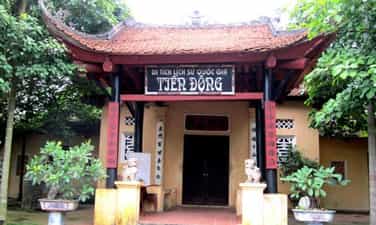
Tien Dong Base Ngo Quang Bich Temple
Tien Dong Base National Historical Relic Area is located in Tien Luong commune, Cam Khe district, Phu Tho province. Tien Dong in the past (when General Ngo Quang Bich chose it as a resistance base) was a swampy, sunken field, surrounded by rugged mountainous terrain. From Tien Dong base, when advancing, you can use boats to follow the Gianh river to the Red River to Thanh Ba, down to Cam Khe district town, or up to Ha Hoa. When you quit, you can go to Yen Lap, go to Nghia Lo to the Northwest. Famous person - General Ngo Quang Bich was born on May 7, 1832 in Trinh Pho village, Truc Dinh district, Kien Xuong district, Nam Dinh province (now Trinh Nhat village, An Ninh commune, Tien Hai district, Thai Binh province) . According to official history, his original family name was Ngo, a descendant of King Ngo Quyen, but because his grandfather changed his maternal family name to Nguyen, so history books also called him Nguyen Quang Bich. In 1858, he passed the baccalaureate exam; In 1861, he passed the bachelor's exam and was appointed as a mandarin by the Nguyen court, but he submitted a petition asking that he temporarily not take office to continue his studies and open a teaching school. In 1869, during Tu Duc's reign, he passed the Second Giap Doctoral Examination of Dinh Nguyen (ie Hoang Giap). After that, he was successively appointed to the positions of Tri Phu Lam Thao (present-day Phu Tho); Dien Khanh Tri Phu (present-day Khanh Hoa); Murder in Son Tay province; Teu Quoc Tu Giam (Hue); Murder case in Binh Dinh province; Chief envoy of the mountain room and patrol of Hung Hoa province (including present-day Phu Tho province). When the French colonialists sent troops to attack Hung Hoa, Mr. Ngo Quang Bich, as "Chief of mountain defense and patrol of Hung Hoa province" led the army and people to fight against the French, winning many important victories. However, with the superior strength of the French army, on April 12, 1884, Hung Hoa citadel fell. Ngo Quang Bich withdrew his troops to Tien Dong, Tien Luong commune, Cam Khe district, established a base, raised an uprising flag, and responded to King Ham Nghi's Can Vuong Edict against the French. The flag of the insurgent army was embroidered with the four words "Binh Tay Bao Quoc" and the oath "Vietnamese nation will never change, Lac Hong immortal restores its integrity" affirming national sovereignty. King Ham Nghi issued an edict appointing him the position of General of Tonkin as a military minister, with the title of Thuan Trung Marquis, in charge of organizing the resistance in Tonkin (literature from Counselor, martial arts from De Doc were given the right to use the official documents). Since then, with his prestige, General Ngo Quang Bich not only directly commanded the Tien Dong uprising, but also sought to contact and coordinate with other resistance leaders such as Phan Dinh Phung in Thanh-Nghe; Deo Van Tri, Nong Van Quang, Cam Van Hoan, Cam Van Thanh were scholars and chiefs of the Kinh, Thai, Muong, and Mong ethnic groups in the region who participated in the fighting or supported the resistance. While the resistance war was going smoothly, on January 5, 1891, General Ngo Quang Bich suddenly became seriously ill and passed away at the age of 58. His body was buried by soldiers at Ton Son mountain, Yen Lap district. Not only was Ngo Quang Bich a patriotic scholar and resistance leader, he was also a poet and cultural activist. He left behind the work "Ngu Phong Thi Tap" (Ngu Phong Poetry Collection), including 112 poems in Chinese, most of which were composed during the years he led the insurgent army against the French in Tien Dong. In addition, he also wrote poems and couplets to pay tribute to his fallen comrades. Especially the "Letter in reply to the French army" with its clear words and determination to sacrifice for national independence. (When the French sent him a letter urging him to surrender, promising to grant him a title and high benefits, he firmly replied: "If I win, if I live, I will be a court soldier. If I lose unfortunately, if I die, I will also act as a demon and kill the enemy. I would rather be guilty of a temporary offense than a sin of the world!") In 1884, after Hung Hoa citadel fell and withdrew his troops to station at Tien Dong, General Ngo Quang Bich built this place into a continuous fortress system, ensuring reasonable defense and attack. became a solid base for the resistance war against the French in the Northern Midlands and Mountains. The base's headquarters is located on a high mound that people now call Quan Dai mound. This is a hill about 150m high above the level of the area, bordering Tong Hai mountain. The top of the hill is quite flat and has a convex mirror surface with 3 peaks. The middle peak is Tuong Quan hill, where the headquarters of the insurgent army is located (and also where the Ngo Quang Bich temple is built today). On the right is Ho Gia peak, blocking the road through Tong Hai mountain to Yen Lap (he later withdrew his troops to Yen Lap via this road). On the left is the Cong Don mound (this is the guard post protecting the headquarters). Each hillock is about 300m apart. Near the foot of the current hill, there are traces of a well and a place where the insurgents' horses were tied in the past. In the Tien Dong base area, there are also famous landmarks such as: Tuong Quan hill, Flag Pillar hill, Mai mound, Don hill, Muc mound, Co Rac hill... which are places associated with the names of famous people and generals. Ngo Quang Bich army with Can Vuong martyrs and the anti-French uprising movement at the end of the 19th century. On February 12, 1999, Tien Dong base was ranked as a national historical and cultural relic by the Ministry of Culture, Sports and Tourism. In the temple, there is a statue worshiping General Ngo Quang Bich, and epitaphs record the will and courage of him and the Can Vuong martyrs. On the stele on the road leading up to the temple, there are lines of poetry written by the Regent Ton That Thuyet, praising the will and patriotism of the General: Artifacts on display in the gallery include: 1 set of teapots, 1 eel-skin colored porcelain rice bowl, 1 Hoa Mai gun and some bullets and shells of the insurgents. Regarding the tea set and porcelain rice bowl, these are utensils that served General Ngo Quang Bich in daily activities, found in 1979 by Ms. Tuan Hue's family in Tien Dong while digging in the garden ( When finding the artifact, through information from the family, researchers confirmed that in the past, her grandfather was a bodyguard of Mr. Ngo Quang Bich, and still used this Phung to brew rice for him). Tien Dong is the resistance base of the entire northern midland and mountainous region, led and operated directly by the North's military minister Ngo Quang Bich, so it is also a gathering place for many literati and intellectuals. Famous patriots throughout the country such as Tong Duy Tan, Ton That Thuyet, Nguyen Thien Thuat, Ngo Quang Huy, Nguyen Cao... came here to discuss the restoration of the country. Therefore, this is a historical relic marking the history of the glorious resistance against the French of the Can Vuong movement. Source: Cam Khe District Electronic Information Portal
Phu Tho
3702 view
Rating : National monument
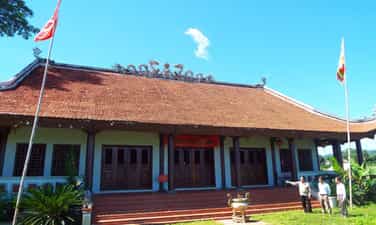
Cao Phong - Thach Yen revolutionary base area
Cao Phong - Thach Yen revolutionary base area belongs to Cao Phong district, Hoa Binh province. Because the activities of the base took place in the two communes Cao Phong - Thach Yen (old), the base was called Cao Phong - Thach Yen (now the relics belong to the communes Yen Lap - Yen Thuong - Cao Phong district). Ranked as a national monument in 1996. From mid-1944 onwards, after the Directive of the Party Central Committee on building guerrilla warfare bases in Hoa Binh province, especially after the Directive of the Standing Committee of the Party Central Committee (January 1945). ) on the construction of the Hoa - Ninh - Thanh war zone to proactively provide good areas for Vietnam's propaganda and liberation troops to advance through; At the same time as preparing militarily for the uprising to seize power, the revolutionary movement in Hoa Binh province developed quickly and strongly. The construction of the Viet Minh base progressed at a faster pace, until the end of 1944 and early 1945, in addition to Hoa Binh town, the Viet Minh base also spread to surrounding communes such as Quynh Lam and began to spread to Cao Phong region. Cao Phong - Thach Yen base area is located in a rugged mountainous area, although the base's operating area is very wide, including historical locations such as: 1. Khanh Pagoda Hill in Khanh hamlet, Yen Thuong commune. This is the training ground for the armed unit - the first team of officers of the base. After completing training here, the unit spread out to the hamlets to build self-defense teams. Comrades in this unit became squad leaders of self-defense teams of the hamlets. 2. Mr. Bui Van Y's family, Dai hamlet, Yen Thuong commune. It is a trusted base for comrades Vu Tho and Truong Dinh Dan... to travel and rest during the time participating in activities. His family contributed a lot of food and money to support the revolution. 3. Mr. Bui Van Hoanh's family lives in Trang hamlet, Tan Phong commune. It is a reliable base for comrades Vu Tho and Truong Dinh Dan... to go, return, eat, rest, during their time of operation at the Cao Phong - Thach Yen base area. 4. Trang village pagoda, Tan Phong commune. This is the location where the Party Committee of Hoa Binh province met in April 1945. During this meeting, the Staff decided to establish base areas. After the successful resistance war against the French, due to many reasons, the pagoda was damaged. 5. Mr. Pho Vien's family (aka Dang Chi Vien). He was instrumental in helping comrade Vu Tho to enlighten the tribes of the Cao Phong - Thach Yen region. During his time working at the base, his family became a trusted place for comrades participating in activities at the Cao Phong - Thach Yen revolutionary base. Mr. Pho Vien's family was also the location where the Provincial Party Committee convened the Provincial Conference of Representatives of the Viet Minh Front in July 1945 to implement the Directive of the Viet Minh General Headquarters on urgently preparing for an uprising to seize power. in Hoa Binh province. Cao Phong - Thach Yen war zone is one of the points to build the revolutionary base of the Party Committee of Hoa Binh province. The Cao Phong - Thach Yen base area is truly a solid base of the Hoa Binh province revolution and the Hoa - Ninh - Thanh war zone system, contributing a significant part to the overall victory of the Hoa Binh province revolutionary movement. . Source: Hoa Binh province electronic information portal
Phu Tho
6698 view
Rating : National monument
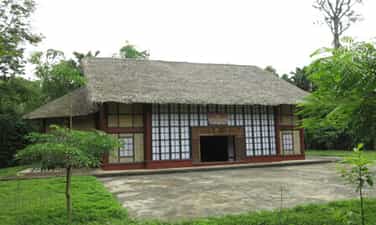
Relics of the Preparatory Congress of the Second Congress of the Lao People's Revolutionary Party
The site of the Preparatory Congress of the 2nd Congress of the Lao People's Revolutionary Party is a national revolutionary historical relic located in the Democratic Ward of Hoa Binh City. This is a relic of special significance demonstrating the friendship between Vietnam and Laos. Vietnam and Laos are two close neighbors, with a long-standing, traditional relationship. That relationship has been diligently cultivated, forged in practice, forged by the efforts and blood of countless heroic martyrs, by the sacrifices and struggles of many generations of Vietnamese people and Vietnamese people. Friend country Laos. The relationship between the two countries has become an invaluable asset for the two peoples. During the years of fighting against common enemies to gain independence and freedom, the two peoples shared sweets, sacrificed blood and relied on each other to survive and develop. That attachment has created a special and extremely valuable relationship built on the principle of respect for each other's independence and autonomy. The good relationship between the two peoples of Vietnam and Laos is most clearly demonstrated through the history of the two peoples' struggle for independence. One of the countless proofs is that the Communist Party of Vietnam helped the Lao People's Party successfully organize the Preparatory Congress of the two Lao People's Parties and successfully organize political training classes for the Lao People's Party. Lao party member in Hoa Binh. During the establishment of the Lao People's Revolutionary Party and during the resistance war, many places demonstrating traditional relationships and special solidarity were present in many places in Vietnam. Hoa Binh province was the place where the Preparatory Congress of the 2nd Lao People's Party Congress took place and where training courses on Party work and political work of the Lao Revolution took place during the period from early 1971 to the beginning. in 1972, once again proving and affirming the great contribution of Hoa Binh and the people of Hoa Binh ethnic groups to the traditional relationship, special solidarity and comprehensive cooperation between Hoa Binh province and Hoa Binh. The Party, State and people of Laos in particular, demonstrate the close bond between the two peoples of Vietnam and Laos that will last forever. Today, the project to restore and embellish revolutionary historical relics, political training venues and the Preparatory Congress for the 2nd Congress of the Lao People's Party, now the Lao People's Revolutionary Party, is being implemented. has now become a familiar destination for tourist groups from Laos when coming to work, study, and visit Vietnam. Source: Hoa Binh Electronic Newspaper
Phu Tho
6002 view
Rating : National monument
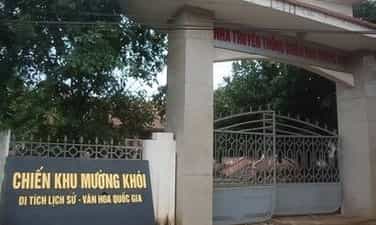
Muong Khoi Revolutionary War Zone relic site
Muong Khoi War Zone is a revolutionary historical relic, a revolutionary base area during the general uprising to seize power in August 1945, belonging to the war zone system (Hoa - Ninh - Thanh) directly controlled by the Northern Party Committee. building and directing activities, here the Northern Party Committee opened a centralized military training class (Truong Son guerrilla anti-Japanese class). About 70km from Hoa Binh city center, about 15km from Vu Ban town, Lac Son district along road 12. Ranked as a national monument in 1993. Muong Khoi includes the land of 3 communes Hoai An, Hieu Nghia and Tan My (now An Nghia commune, Yen Nghiep commune and Tan My commune), located in the southeast of Lac Son district, with rugged mountainous terrain. Smoke has a very important strategic location, with road 12A running through it, connecting Ninh Binh province, Thanh Hoa province, connecting with road number 6, the gateway of the Northwest region. The operational area of the Muong Khoi war zone extends from Road 12A to the foot of the Truong Son mountain range, connecting with the war zones of Quynh Luu (Ninh Binh), Ngoc Trao (Thanh Hoa) and from Muong Khoi to Vu Ban town, Muong Vang (Cong Hoa - Lac Son region). Main relic sites of Muong Khoi revolutionary base: Area of three ancient banyan trees: Is the contact location to welcome officials of the Party committee of Hoa Binh province on revolutionary activities. On August 20, 1945, the armed forces and revolutionary masses of Muong Khoi gathered here to stand up to seize power in Lac Son province. This is where for the first time the red flag with yellow star of the revolutionary movement in Lac Son continent flew on top of the ancient banyan tree. Mr. Quach Hy's home area: Mr. Quach Hy and his son Quach Duong were the first national salvation members of Muong Khoi. Mr. Quach Hy's house is a place to welcome cadres, and is a contact point for Hoa Binh province's party committee and officials of the Northern Party Committee on activities to build revolutionary bases in the Muong Khoi war zone. Mr. Bui Van Khuynh's family area: Previously, his family resided in Lot hamlet, which was the location for organizing centralized revolutionary military classes of the Northern Party Committee (School of Guerrilla Anti-Japanese Learning). At the Muong Khoi war zone, the self-defense platoon for national salvation, the first armed force of the Lac Son revolutionary movement, was established here (March 1945). In July 1945, the Party Committee of Tonkin opened a centralized military training class (Truong Son guerilla anti-Japanese class) to train military officers to lead uprisings in localities in Tonkin. Muong Khoi War Zone was also the revolutionary area of comrades Bach Thanh Phong (standing member of the Northern Party Committee), Vuong Thua Vu (official of the Northern Party Committee), Le Quang Hoa (Secretary of the Party Committee). Party Committee of Son Tay province) and many core cadres of the revolutionary movement in Hoa Binh province and other provinces in Tonkin. Muong Khoi war zone is one of the cradles of the revolutionary movement in Hoa Binh province. During the uprising movement to seize power in August 1945, Muong Khoi was the place where revolutionary forces and the masses of Lac Son district conducted the first successful uprising to seize power in Hoa Binh province. Source: Hoa Binh province electronic information portal
Phu Tho
7016 view
Rating : National monument
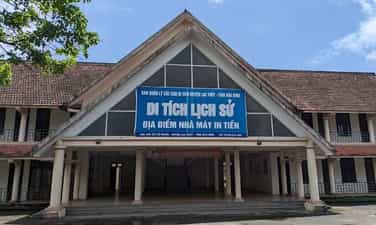
Relics of Money Printing Factory at Chi Ne Plantation
The first money printing factory of the Vietnamese revolutionary government was located at Chi Ne plantation (period 1946 - 1947), now Co Nghia commune, Lac Thuy district, Hoa Binh province. Here, the first "Financial Notes - Uncle Ho's Notes" carrying a great historical mission in the early days of independence of the revolutionary government were born. The relic was ranked at the National level by the Ministry of Culture, Sports and Tourism in 2007. After the August Revolution of 1945 succeeded, our country faced extremely harsh challenges. One of the emerging issues is finance, but importantly the issuance of currency by the Government of the Democratic Republic of Vietnam. While the Provisional Government is facing difficulties and confusion with the facility to print and issue Vietnamese banknotes so that it can be financially proactive and fight economically with the enemy, Mr. Do Dinh Thien, a bourgeois Patriotic people voluntarily spent money to buy back the entire French To-Panh (Taupin) printing factory in Hanoi and donated it to the Government to set up a money printing factory. Thanks to that, the revolutionary government had its own money printing house, meeting part of its spending needs in a situation where the treasury was almost empty. In March 1946, facing the risk of the money printing at Topanh Printing House being exposed, President Ho Chi Minh, the Government and the Ministry of Finance decided to find a new location to move the entire printing house out of Hanoi. . Once again, it was Mr. Do Dinh Thien who proactively proposed that the Ministry of Finance move the printing factory to his family's plantation in Chi Ne (Hoa Binh). It was here that the 100 dong Vietnamese banknote, also known as the "green buffalo" banknote, was born. Uncle Ho's Finance Note was born with an extremely important historical mission: to contribute to the monetary struggle with the enemy to protect national independence and become a weapon of struggle on the economic and financial front. - currency, removing the Indochina currency of the French colonialists from our country, making a decisive contribution to providing material needs and circulating goods in our people's long resistance war against the French. The money printing factory at Chi Ne plantation was twice honored to welcome Uncle Ho to visit. This is where the first historical marks of the Ministry of Finance in particular, the national Finance in general and a glorious revolutionary period are kept. In 2007, the historical site of the Money Printing Factory at Chi Ne Plantation (1946-1947) was ranked by the State as a national historical site. The money printing factory at Chi Ne plantation has a total area of 15.64 hectares, including items such as: Money printing factory; Uncle Ho's family came to visit and work; Silver storage; Hall house; Reception house; reliefs at the printing workshop area; garden planted with trees; transportation system throughout the region; flower garden park; Reception areas and cultural and entertainment facilities; resorts, hotels, restaurants... The relic site is truly a meaningful project, a place to preserve historical marks of the Ministry of Finance in particular, of the national finance in general and a period of glorious revolutionary history of the Vietnamese people. . Source: Ministry of Finance electronic information portal
Phu Tho
6392 view
Rating : National monument
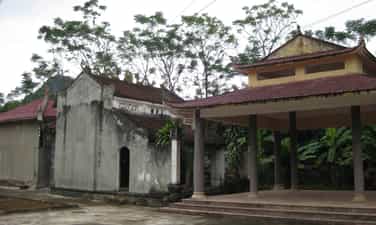
Trung Bao temple and shrine
Trung Bao Temple and Temple, formerly known as Beo Temple (named after the village because behind the village there is a mountain range called Tiger Mountain). The relic is located in Trung Bao village, Thanh Cao commune, Luong Son district, Hoa Binh province. The temple consists of two architectural items: Trung Bao Temple and Trung Bao Temple. Trung Bao temple and shrine were recognized as national historical-cultural relics in 1997. - Trung Bao Temple: Worshiping three gods is the Three Great Kings Tan Vien Son Thanh; National Mother Hoang Ba and Tutelary God of Trung Bao village. Located on a spacious area of land next to the edge of the village, is a spacious and majestic temple. On both sides of the temple are the village's bamboo piles that provide shade, in front of the temple are rice fields, and behind is the Dragon stream flowing through. The temple has a rectangular structure, the temple face faces Northeast, consists of three compartments, the roof is covered with Huong Canh tiles, and the two gables are built with bricks. In front of the temple, there is a great pagoda embossed with three Chinese characters: Thuong Hieu Than (supreme god). - Trung Bao Temple: Worshiping the Three Great Kings Tan Vien Son Thanh; National Mother Hoang Ba and Village Tutelary God. The temple was built on a high ground in the northwest of the village, about 300m from the temple. The landscape here is quite beautiful. In the eyes of feng shui experts, the Temple is located on the land of Turtle's shell (the Metal Turtle God appears). Behind the temple are the Hufu and Longling mountains. The remaining three sides have a winding stream with tall tall trees providing shade. The ancient temple was made of wood and thatched, with three compartments and a domed roof (tortoise shell shape). Over time, the tropical monsoon climate with lots of rain and sunshine, combined with historical changes, the temple with wooden architecture and thatched roof did not last long. During the reign of King Khai Dinh the 2nd (1917), the commune's people contributed efforts and funds to rebuild the temple, with a rectangular-shaped architecture, in front of which there was a great letter with 4 embossed Chinese characters. : Bao Son Duc Tu (Treasure Mountain that molds goodness). Currently, Trung Bao Temple still retains three original decrees conferred by the dynasties of the Feudal State of Vietnam on the gods worshiped at the temple. - Trung Bao temple and shrine festival is held annually once a year on the 11th and 12th day of the 11th lunar month every year. During the festival, folk games take place such as cockfighting, shuttlecock throwing, swinging... Trung Bao temple and shrine festival is closely associated with cultural identity, showing scenes of fun and celebration of villagers after a good harvest. Through the festival, we will understand the traditional rituals of the people at the border of the "Viet - Muong" cultural area in Hoa Binh. At the same time, we also understand the desires, aspirations and identities of the people here through the rituals and ceremonies of the festival. Source: Hoa Binh province electronic information portal
Phu Tho
7482 view
Rating : National monument