Relic point Vietnam
Việt Nam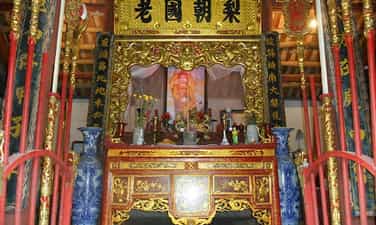
Born in Viep District, Duke Hoang Ngu Phuc
Souvenir relic of Duke Hoang Ngu Phuc in Tan Phuong village, Tan My commune, Yen Dung district, Bac Giang province (now in Bac Giang city) includes the birthplace and grave of Duke Hoang Ngu Phuc. This is one of the typical relics with important historical significance, a place to worship and commemorate a famous general who has been remembered by history and people for generations. Celebrity Hoang Ngu Phuc, also known as Hoang Dinh Viep, was born into a farmer family with a tradition of studious and martial arts in Phung Cong village, My Cau canton, Yen Dung district, Lang Giang prefecture, Kinh Bac town, now is Tan Phuong village, Tan My commune, Yen Dung district, Bac Giang province. He was born in 1713, served as an official serving two generations of Lord Trinh Doanh (1740-1767) and Lord Trinh Sam (1769-1782). He was ranked by historian Phan Huy Chu as one of the 19 talented generals of Le Trung Hung's reign. Relics The birthplace and grave of Duke Viep Hoang Ngu Phuc is a historical and cultural relic built in 1762. Previously it was a residence, and after Duke Viep's death, it became a place of worship and a souvenir relic of the country's General. Viep district Duke Hoang Ngu Phuc. Grave The basic grave still retains its original state, located in the middle of a lush, fertile field, on a hillock called Bai Lang. The land area is about 390m2. Hoang Ngu Phuc's tomb was not built, it was built into a high mound. On the stone stele, it is written: "The tomb of the general of the Le Dynasty was awarded Tinh Trung... reigning Duong Vu Dai Vuong". In front of the tomb, about 10 meters away, there is a stone stele placed in the lower field, carved in the shape of a tablet, inside the stele there are Chinese characters: "Tomb of the Le Dynasty." April 18, 1713 - January 16, 1776”. Born from Born in Viep, Duke Hoang Ngu Phuc is located southeast of Tan Phuong village. The landscape and space of the monument are spacious and airy, located next to the village road, convenient for transportation. The overall area of the birthing area is majestic and majestic with the outer gate consisting of two rooms with 4 green stone steps, the lower step is 19cm from the upper step, the area of the outer gate is 3.50m2. The beer house has an area of 3m2. Thong Nghi Mon's interior consists of three rooms with an area of 33.30m2, with 3 green stone steps, the architectural frame is made of ironwood, and the roof is tiled. The temple consists of 5 compartments with an area of 166m2, the architectural structure is made of ironwood, the roofs are made in the style of front, back, and seven, the temple roof is covered with funny-shaped tiles, and surrounded by brick walls. The cluster of relics and tombs of Viep Cong Hoang Ngu Phuc district is one of the proud historical relics that is respectfully preserved by the local people and the province. With great historical value, the relics of Viep's birthplace and tomb of Hoang Ngu Phuc district have been recognized by the state as a national historical and cultural relic since 1991. SOURCE Explore Vietnam's natural & cultural heritage
Bac Ninh
3603 view
Rating : National monument
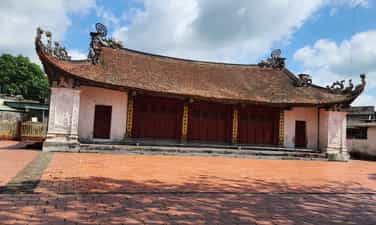
Ve village communal house
Ve Communal House (literally called Nam Xuong communal house) - An architectural and artistic relic, villagers call it Ca communal house, because in addition to the big communal house, there are also communal houses of the neighbors; Hau's communal house borders the North; Kem communal house of the West border; Diec communal house of Nam border. The communal house is located in the center of the village, in a high and wide position, facing south. The communal house was built during the reign of Le Trung Hung in the 18th century. The architecture of the communal house is in the style of Dinh lettering, including 3 compartments, 2 compartments and 3 back rooms. On the roof, there are two dragons flanking the moon, on the edge of the bridge there is Nghe Chao, and pliers running into the corner of a curved blade. Inside the harem are placed altars, statues of saints and splendid gold-plated dragon thrones. Sitting on the altar is a statue of Saint Quy Minh, larger than life, with a high hat and a long dress holding a pearl in his hand. This is a reality that we rarely see in communal houses in the region. On the right side of the communal house is where the back stele and the back altar are placed. On the left side are 4 sets of palanquins and altar items. In addition, the communal house also preserves 10 dynasties' ordinations and jade genealogies to worship the village's gods. Ve Pagoda (literally named Huyen Khue Tu) - Artistic relic, located east of Ca communal house, facing south. In the past, Ve Pagoda was a common pagoda of both Thanh (Dong Nham) and Ve (Nam Xuong) villages, now in Tho Xuong ward. But during the Nguyen Dynasty, the village elders established the village's own pagoda. Based on the small hut of a retired Le Dynasty mandarin who donated to the village (Van Tu Am), Ve Pagoda was taken care of by Ve villagers and worshiped Buddha. In the pagoda, there is also a complete and beautiful system of Buddha statues, a large bell cast from the Le Canh Hung period, beautiful and clear, 1.5m high, 66cm wide and 66cm in diameter, and many other precious worship objects. Ve communal house and pagoda still retain their original ancient architecture and have been ranked by the State. The Ministry of Culture and Information granted the certificate of National Historical and Cultural Relic on February 12, 1994. Ha Vi communal house and pagoda were all destroyed by the French colonialists during their occupation of Bac Giang town from 1949-1954. In the 90s of the 20th century and in 2002, with their own efforts and money, the people of Ha Vi built a new, spacious and sturdy communal house and pagoda on the hill west of the village. The communal house and pagoda all face west, overlooking the Thuong River. On the old foundation of Ha Vi pagoda (now in Tran Nguyen Han ward) in 1994, local people built a new, beautiful, strong, durable pagoda and named it Hong Phuc pagoda. Currently, Hong Phuc Pagoda is the headquarters of the Buddhist Association of Bac Giang province. The ancient Hoa Yen communal house and pagoda are located in the main direction, on the left bank of the Thuong River, a sacred place, at the location of drainage pumping station 420 of Ha Bac Fertilizer and Chemical Company. Hoa Yen Pagoda was destroyed by the French colonialists in 1952. In 1960, due to the request to build Fertilizer Plant projects, Hoa Yen Pagoda was moved to be built in the Do Do Do General General temple area as it is today. . Hoa Yen Pagoda is an ancient pagoda, built in the Le Dynasty, with beautiful sculptural architecture. Temple of the Generals of the Ten family (Historic site), in Tho Xuong ward. Formerly a temple and pagoda in Hoa Yen village, located at gate 420 of the Ha Bac Fertilizer and Chemical factory. After that, the war and the expansion of the factory built so people moved materials to build at the current location in Moi hamlet, Hoa Yen village; Now it is the New Quarter residential group. The temple of Hoa Yen village was recently rebuilt by the people, but the architectural structure still retains the basic components of the Nguyen Dynasty. The temple consists of 3 compartments, 2 compartments, small scale, made of solid ironwood, without elaborate carvings. The main column is 3.83m high; The military column is 2.86m high, from base to roof is 4.5m high, house area is 76.80m2. The truss structure is simple, the upper part has a spike, the lower part has a horizontal line. In the middle of the temple, there is a 1 meter high arched brick altar, above the statue of General Tent and other worship objects. The Temple and Tomb of Admiral General Van Minh Tent are ranked by the State. The Ministry of Culture and Information granted the certificate of national historical and cultural relic on June 28, 1996. Dinh Dun, Huong Pagoda. Before the August Revolution of 1945, Cung Nhuong commune of Tho Xuong canton had two villages: Dun and Huong. The geographical location of residence between the two villages is far apart. Therefore, the communal house was built in Dun village (Dun communal house), the pagoda was built in Huong village (Huong pagoda). During the resistance war against the French colonialists from 1949 to 1954, Dun communal house was destroyed by the French colonialists; Huong Pagoda is still intact but is small in scale. After 1954, the homeland was liberated, Huong village was separated from Cung Nhuong as a unit. In the 90s of the twentieth century, Cung Nhuong and Huong villages both rebuilt communal houses and pagodas on the grounds of the old communal houses and pagodas. Cung Nhuong communal house and Huong communal house both worship general Leu Van Minh. SOURCE ELECTRONIC INFORMATION PORTAL THO XUONG WARD - CITY. BAC GIANG - BAC GIANG PROVINCE
Bac Ninh
3735 view
Rating : National monument

Dong Nham village communal house
Dong Nham village communal house or Thanh village worships two gods: Cao Son Dai Vuong Thuong and Quy Minh Dai Vuong Thuong. The two were generals of Hung Vuong who had merit in protecting the country, protecting the people, fighting the Thuc Phan enemy and bringing a peaceful life to the people. Thanh village communal house, the literal name is Dong Nham communal house, is located in front of the village facing south to west. The communal house was built on a high position overlooking Doc Dinh, located adjacent to National Highway 1A, Hanoi - Lang Son railway and Xuong Giang citadel. The communal house was built during the Le Dynasty and still retains its original architecture. The communal house consists of 3 rooms, 2 of which are arranged in a monogram style. The trusses are structured in the style of the upper and lower gongs, the lower and lower are skillfully and exquisitely carved. In addition to serving beliefs, the village communal house is also a meeting place to discuss and decide on important village affairs. The communal house was restored and repaired many times. During the resistance war against the French colonialists, the communal house was destroyed on both sides of the council house and the surrounding walls. In the 60s of the 20th century, the communal house was used as a granary warehouse for the Cooperative. The Saint was brought to worship. At the temple, in 1996 the harem was repaired and the Saint was brought back to be worshiped at the communal house. On the left side of the pavilion worships the mandarin of the Le Dynasty Nguyen Tuong Cong, nicknamed Trung Chinh, a man from Dong Nham village who went to Bac Su twice, achieved great achievements and was awarded the title of Duke Thai Bao by the King, the god of Phu Quan. He had no children. donated all land and land to Dong Nham village and Am Linh Tu, Thanh Pagoda today. Chung Communal House: is the communal house of two villages Dong Nham and Nam Xuong (or Thanh village and Ve village), the communal house was built during the Le Dynasty in 1629, and is now about 390 years old on the land between the two villages; The East borders Dong Nham village, the West borders Nam Xuong village. The communal house worships God Cao Son, a good general of the Hung King dynasty. The festival is organized by the two villages together with the villages' associations. The communal house was repaired and restored many times. In the 60s of the twentieth century, the communal house was used as the Commune Cultural Headquarters and Tho Xuong Commune Trading Cooperative Headquarters. Up to now, it has been repaired and is only used to worship God. Nghe Mieu: built in the 17th century around 1660, Nghe Mieu was built on the land of Mount Mieu overlooking the southwest, which is the boundary of Dong Nham and Nam Xuong villages. Worshiping the generals of the Tran Dynasty, a good general named Duong Hien was awarded the title of Duong Quoc Cong Dai Vuong, the mighty Demi-God, commanding the soldiers against the Nguyen invaders. Live peacefully for the People. Diem: built around 1929 on the land of Non hamlet in the middle of the village, leaning against the mountain overlooking Dam Con to the North. The shrine has an incense bowl for general worship of Hoang Lang deities. In addition, the shrine also holds worshiping objects and processions. In 1988 it collapsed, and in 1994 it was renovated. Thanh village communal house is an ancient architectural work, over several hundred years old, bearing the cultural imprint of a rural village. Therefore, having been ranked by the State, the Ministry of Culture and Information, now the Ministry of Culture, Information, Sports and Tourism, granted the certificate of cultural historical relic on February 5, 1994. SOURCE ELECTRONIC INFORMATION PORTAL XUONG GIANG WARD - CITY. BAC GIANG - BAC GIANG PROVINCE
Bac Ninh
3430 view
Rating : National monument

Vinh Ninh Communal House
Vinh Ninh communal house is located in Vinh Ninh village, Hoang Van Thu ward, Bac Giang city (before the August Revolution of 1945, it was in Dinh Ke commune, Dinh Ke district, Phuong Nhon district, Bac Giang province). Vinh Ninh communal house relic is located in the Northeast of Bac Giang city and at the beginning of National Highway 31, so the road is very convenient for visitors. Vinh Ninh communal house along with other cultural and religious works of Dinh Ke commune (nhe Ca and Ke Pagoda) form a very valuable continuous relic complex. The place where the communal house is built is the local "spiritual land", it is said that the ancient Vinh Ninh village was located on land shaped like a turtle (Turtle) and the village communal house was built on the head of the devil, facing the West. It is a beautiful and sacred land. Legend has it that in the past, anyone who passed through the communal house had to take off their hats, and mandarins passing by had to "lower their horses", otherwise they would be punished by the Saints. Anyone who did anything unethical would be inflicted with unexpected disaster by the Saints... The ancient Vinh Ninh communal house has a large and massive architectural scale, is an ancient architectural work, was built during the reign of King Le about more than 300 years ago, and was renovated and expanded during the reign of King Le in the 19th year of Vinh Khanh. 3 (1731) follows the traditional structure, including 3 main works: the front altar, the middle court and the harem. From a distance, people can easily recognize this large-scale architectural work because the communal house's buildings are located on high ground, with walls separating them from the outside on four sides. Each building follows another, creating a feeling of a truly solemn and intimate place of worship thanks to its gentle and elegant shapes and lines. The front court: Adjacent to the roof and on the same bank as the central court and the front court, this building consists of three compartments and two doors, ironwood frame, with curved roofs, soft and elegant, carved and painted. Artistic, sophisticated, with a table door in front. The altar is the place where local people gather and prepare offerings for offerings. Middle court: About 1.50m from the harem, this building consists of five compartments and two compartments, ironwood frame, tiled roof, and no swords on both sides of the pavilion. This court is the place of worship for the people, so the worshiping objects are arranged simply and neatly, including the altar, the altar, the "seven things" set, and is also the place to place the people's offerings on every occasion. weekly rules. The middle space of the central court (also known as the well space, in some places it is called the crowd space) is lower than the two side rooms. That is the place of worship - on both sides are the dining and seating areas for all the people according to the traditional order of the village: "The royal court values titles, the village party values slags" (In the royal court, titles are valued, in the countryside, people are respected). tooth loss in old age). The central court is also where gongs and drums are placed; On the roofs of the rooms hang horizontal panels and parallel sentences, brightly painted and gilded. The harem court: Consists of a room with two wings, an ironwood frame and a tiled roof, with 4 elegant swords, the top of the roof is covered with two Dragons flanking the moon. The harem is the center of worshiping Saint Cao Son-Quy Minh. In the harem, the altar is solemnly decorated in the middle, inside the altar is the throne and altar of the Saint. On both sides of the altar are two worshiping horses (two angelic horses), in front is an incense altar, on top is a bronze set of seven things, on the two sides are a set of super swords, eight symbols, on top is a horizontal panel of the Most Highest Spirit, two Next to the column hangs parallel sentences. In the harem, there is also a palanquin (a set of altars and incense pots to worship the Saint whenever the whole commune holds a festival at communal communal houses and Nghe An). All worship objects at the communal house are made of wood, carved and decorated exquisitely down to every small detail, and painted with brilliant gilded vermilion, demonstrating the ingenuity of ancient folk artists. . All are unique ancient art products that few places have preserved to this day. The harem, with a table-top door, separated from the outside, is a dark place where no one is allowed to enter, except the guard. In addition to the main works, Vinh Ninh communal house also has dance courts on both sides of the communal house yard and the front door of the altar. Each building has 3 ironwood rooms, tiled roof, and brick walls. The eastern court has a wooden floor to place feasts and offerings, the western court has no floor, and is often used as a place for pork and village affairs. Vinh Ninh Communal House is the only typical cultural belief building of the villagers, a place to worship two saints Cao Son and Quy Minh (two generals during the reign of Hung Due Vuong). The legend of the two Saints has been passed down through many generations by local people. The story goes: Cao Son and Quy Minh are twin brothers from the reign of the 18th Hung King, in a family of ritualistic, well-educated, and talented martial artists that no one can match. When both men were 2 years old, both of their parents passed away. At that time, King Hung Due Vuong issued an order to the provinces, districts, and religions to select talented and virtuous people to lead soldiers to defeat foreign invaders. Seeing that, the two of them asked to go back to court to apply for the position. The king saw that the two men had more martial arts talent than others, so he immediately recruited and ordered them to hold the position of military commander. Although they were grateful to the king, they did not forget their parents - their funerals and worship were very thoughtful and sincere. Again: King Hung gave birth to four children (two sons and two daughters). But then the two sons died prematurely, and when the two daughters reached adulthood, Hung Due Vuong married one to Chu Dong Tu, the other to a Nguyen general named Tung and passed on the throne to him. At the same time, in Ai Lao land, there was a person with the surname Thuc named Phan, who was a descendant of the Hung family. After branching out, he came to rule this land and changed his family name. Hearing that King Hung Due passed the throne to his son-in-law, Thuc Phan decided to Feeling jealous, he sent troops to invade. Hung Due Vuong was worried, immediately summoned Son Thanh to attend, Cao Son-Quy Minh came to receive his orders and was appointed left-right general, pioneering the journey to defeat the Thuc invaders in the Northeast. Mr. Cao Son and Quy Minh obeyed their orders and set out, with drums and flags flying in the sky. When they reached the Northeast, Bac Giang Highway, it was already dark, so the two men camped here. Seeing that this land had many advantages for military operations, the two men ordered the army and people to establish strongholds to fight the enemy. SOURCE ELECTRONIC INFORMATION PORTAL DEPARTMENT OF CULTURE - SPORTS - TOURISM OF BAC GIANG PROVINCE
Bac Ninh
3752 view
Rating : National monument

Dong Nghiem Pagoda
Dong Nghiem Pagoda, also known as Ke Pagoda, was built a long time ago (before the Le Dynasty). The pagoda was built right next to Nghe Ke in Dinh Ke ward. Dong Nghiem Pagoda is a branch of Vinh Nghiem Pagoda, a resting place for monks before returning to the place where Vinh Nghiem's ancestors sit down. Dong Nghiem Pagoda plays the role of Chief Administrator of Vinh Nghiem ancestral temple. Therefore, it is very likely that Dong Nghiem Pagoda was built during the Tran Dynasty and was a busy place because of the missionary activities of the Truc Lam Zen sect in its ancestral home of Vinh Nghiem. During the resistance war against the Ming Dynasty invasion, Dong Nghiem Pagoda was destroyed and ruined. In the 17th and 18th centuries, it was renovated and expanded, becoming a quite busy center of Buddhist activities of the people. The ancient architectural works of the pagoda are quite large-scale, including many buildings: the Upper Palace, the Three Jewels, the Nine Items Court, the bell tower, the grand entrance, the ancestral house, the three-entrance gate, and the garden. It is very unfortunate that due to the war, many works of Dong Nghiem Pagoda no longer exist. Dong Nghiem Pagoda still maintains a fairly complete system of worship statues concentrated in the upper palace. Most of the statues are carved from wood and gorgeously painted, among which the statues of Tam The, Amitabha, Samantabhadra Bodhisattva, and Bodhisattva Bodhisattva are beautiful statues. There are also many other precious worship objects. In particular, the pagoda still has 3 valuable stone steles left. Dong Nghiem Pagoda has been ranked by the Ministry of Culture and Information as a national architectural and artistic relic according to Decision No. 226/VH-QD, dated February 5, 1994. SOURCE CENTER FOR CULTURE, INFORMATION AND SPORTS OF BAC GIANG CITY
Bac Ninh
3305 view
Rating : National monument
Nghe Dinh Ke
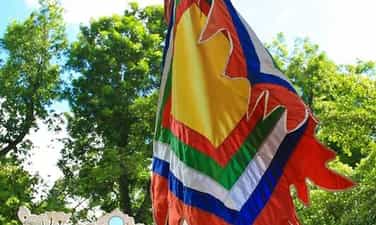
Dinh Ke is a commune located in the east of Bac Giang city, bordering the communes of Tan Tien, Huong Gian (Yen Dung), Dinh Tri, Tan Dinh (Lang Giang), Tho Xuong ward, Xuong Giang commune and two Le streets. Loi and Ngo Quyen belong to the inner city. Located right next to Highway 31, the road connecting Bac Giang city with the Northeast region of the country. This small, humble architectural work is located in the middle of high ground and luxuriant fruit trees, looking truly ancient and dignified, in the middle of a market street. The roads here are bustling with people and vehicles, bustling with trading and exchange scenes, and the economic activities are quite diverse, vibrant and bustling, proving that Dinh Ke has long been a place of urban gathering, farming, and farming. Rice, vegetable growing, mulberry growing and silkworm raising are the main livelihoods. However, handicraft activities, especially rice paper making, existed very early and became famous near and far, making the lives of Dinh Ke people increasingly improved - Ke market, a trading center, became busier. Since the Le Dynasty, it has been proven that commercial activities in Dinh Ke appeared quite early and have developed continuously to this day. It is thanks to the rich and diverse economic activities that make Dinh Ke countryside always vibrant, people's relationships are open, villages are not confined, framed in bamboo fences. Dinh Ke is a gathering place for residents in many places and is also a place for dynamic economic and cultural exchanges with other regions in the country. Those are the factors and the social and historical environment that make Dinh Ke rich in cultural tradition. The tradition of community solidarity is expressed quite centrally in the worship of Cao Son - Quy Minh. These are two generals of the Hung King period, with many merits in supporting the king and the country. The people of many Vietnamese villages and communes have built communal houses and temples to worship. The feudal kings of Vietnam conferred titles on two generals as superior gods. Nghe Dinh Ke is a small-scale architectural work with 1 room, 2 left, 2 doors as a worship center (local people often call it the harem court) and 5 worship rooms in front. Like many other countryside in Bac Giang province, Dinh Ke village is the center of worship, ceremonies and meetings of the people of the entire commune. Every year, on the full moon day of the third lunar month, a day of great blessings for the entire people, villages carry palanquins to place the saint's tablet on the altar, hold ceremonies, and express everyone's respect for the saint. . The convention was organized thoughtfully and solemnly. In order to conduct the festival thoughtfully, in the past, the whole commune also built a communal communal house (called communal communal house or Vinh Ninh communal house). This is a large ironwood communal house with a curved roof, wooden floors, and barred doors. This is the meeting place and festival organization of the people of the entire commune. In addition to procession of books, ceremonies, and sacrifices, Ke festival also has many interesting fun games such as Chinese chess; cockfighting; Swinging and other traditional games... In particular, in the Ke festival there are also games of human chess and word drawing: Boys and girls in the village are chosen to be chess pieces or word scissors and must practice months in advance. About 3-4 days before the opening day, these people gather together for a rehearsal. Participants in the word-pulling game are allowed to wear nice clothes, a folding hat or a pineapple top hat, nine-shaped shoes, a red tie, carry a five-colored flag, and follow the empty command of the Flagmaster until the game is arranged. into the shape of the word: "Peace in the world - Trinh mandarin congress". The Ke Festival in March is a religious and cultural activity of the people of the entire commune, attractive and attracts visitors from all over, becoming a major festival of human life in the civilized countryside, entering into natural life like breath: “Rumor has it that the Ke March meeting If you don't go to the festival, you will lose your life." On July 20, the Thuong Dien ceremony of the entire commune also takes place. On this day, the 7 villages of the villages bring offerings to worship at the commune's communal house, demonstrating their reverence for heaven and earth, the gods who have helped the crops to be lush and the people to be prosperous. The worship of saints by the people of Dinh Ke has been very respectful and respectful since ancient times and was conferred and recognized by the feudal state of Vietnam. Currently, Nghe Ca still preserves the 10 religious orders of the Nguyen Dynasty kings given to the people in the commune to worship according to old rules. Nghe is also the place to worship the academic sages of Bao Loc and Phuong Nhon districts, including the great academicians of Dinh Ke, Giap Hai, Giap Phong, and Nguyen Duy Nang. Worshiping objects, documents, antiques, especially tablets, saints, ordinations of kings, steles recording academics... are sources of ancient documents with high historical value. On the other hand, Dinh Ke relic is currently promoting the positive effects of a historical and cultural relic: a place of worship for saints Cao Son - Quy Minh and academic sages, a central place for organizing events. meetings and festivals of the entire people with spiritual and cultural activities rich in humanity and imbued with national identity. SOURCE ELECTRONIC INFORMATION PORTAL DEPARTMENT OF CULTURE - SPORTS - TOURISM OF BAC GIANG PROVINCE
Bac Ninh
3608 view
Rating : National monument

Thanh village pagoda
By the beginning of Tu Duc's reign in 1883, the population of the two villages had grown large, Ve Pagoda became cramped. Thanh villagers decided to expand the Am into a pagoda (the Am of the old mandarin from Dong Nham village, Nguyen Tuong Cong of the Le Dynasty, was dedicated to the village). Therefore, Thanh village pagoda's name is Am Linh Tu, Thanh Pagoda worships Bodhisattva Avalokiteśvara, the pagoda was built on high land in front of the village gate facing South to West. In front is Doc Dinh area, behind is a high mound area. In terms of feng shui, the pagoda is located on a post-prehistoric era. Although Thanh Pagoda is not large in architectural scale, it is neatly and closely arranged, harmonizing the exterior architectural landscape with the sculpted interior decoration. exquisitely engraved. Every year, the pagoda is regularly renovated; Especially from 2005 to 2009, with the support of the State and the generous contributions of the People, the pagoda was restored and expanded. Up to now, Thanh Pagoda is one of the beautiful and spacious pagodas in the region. Thanh Pagoda is located near National Highway 1A and the railway from Lang Son to Hanoi, so it is very convenient for tourists from all over to come to the festival and visit. Thanh Pagoda is an ancient architectural work over several hundred years old that was classified by the state and awarded by the Ministry of Culture, Information, Sports and Tourism as a cultural and historical relic on February 5, 1994. SOURCE ELECTRONIC INFORMATION PORTAL XUONG GIANG WARD - CITY. BAC GIANG - BAC GIANG PROVINCE
Bac Ninh
3400 view
Rating : National monument
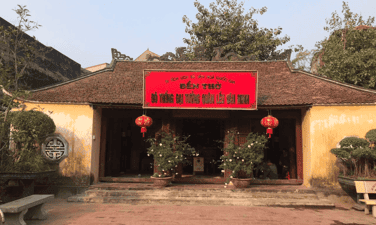
Van Minh Tent temple and tomb
The temple and mausoleum of Nam Binh General Van Minh Tent are religious works of local people to respect, admire and remember a famous general of the Ly Dynasty, Van Minh Tent - who had the merit of fighting the war. foreign invaders, defended the Dai Viet nation and heroically sacrificed their lives. On the stone stele at the Tomb of the General's Tent, it is clearly written: "All those who have meritorious service to the people and the country are recorded for later generations to remember. Now I see that the Great King's Tent, for the sake of life, has forgotten his own loyalty, because Eliminating harm to the people is merit. Loyalty to the country, meritorious service to the people is a righteous god." On June 28, 1996, the Ministry of Culture and Information granted a national recognition "Temple Historical Monument". and Tent's grave Van Minh”. Currently, General Van Minh Tent is worshiped by the people of Hoa Yen, Huong, and Cung Nhuong 1. Among them, Hoa Yen Temple is the place that preserves the most antiques and is considered the Great Temple. The Temple of General Van Minh's Tent was implemented as the second historical relics lookup point project implemented by the ward union standing committee in the ward (previously, a historical relics lookup point project at the ward level was implemented). national communal house, pagoda, village drawing). In the coming time, the ward union will continue to have many creative activities, applying digital transformation in education and propagating history, national traditions, and homeland to the young generation of the ward today; From then on, you will love and be more proud of your homeland and country, try your best to practice virtue and talent to contribute to building your homeland and the country to become more and more rich, beautiful, and civilized. SOURCE YOUTH ELECTRONIC INFORMATION PAGE OF BAC GIANG CITY
Bac Ninh
3860 view
Rating : National monument
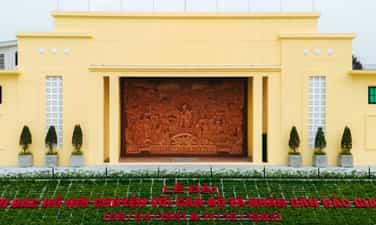
Stand B (old A) of Bac Giang Stadium
National relic stand B (formerly stand A) of Bac Giang stadium in Ngo Quyen ward (Bac Giang CITY) is a place to mark historical events and preserve profound memories of Uncle Ho. Ho to the Party Committee and people of Bac Giang province. In order to promote the historical value of the monument, the Party Committee, provincial government and Bac Giang CITY pay a lot of attention to repair and embellishment work. Honor and pride After the Democratic Republic of Vietnam was born, from 1946 to 1963, despite being busy with many things, Uncle Ho visited and worked in Bac Giang province 5 times. During those visits, Bac Giang CITY was honored to welcome Uncle Ho four times. Including 2 times, Uncle Ho met and talked with officials and people of Bac Giang province at Stand A, Bac Giang Stadium. This is a great pride and honor that not every locality can have. Going back in time, on April 6, 1961, Uncle Ho visited and talked to more than 3.5 thousand officials and people of Bac Giang province at Bac Giang stadium. On Stand A, the leader of the Party, the Father of the Nation, is simply dressed in familiar brown clothes. He cordially asked his compatriots and officials; comrades of the army, police, militia, self-defense, and workers; old people, young people, teenagers, children and expatriates who have just returned to the country. He praised the achievements achieved during the years of resistance; the efforts and progress of the people and officials of Bac Giang province since the day peace was restored. At the same time, Uncle Ho emphasized important tasks, pointed out specific shortcomings that localities need to repair and overcome; Reminding the tasks of unions, each person at this time needs to focus their energy on developing production and fighting for national reunification. More than 2 years later, on October 17, 1963, Uncle Ho visited Bac Giang town. This is an important historical moment for the people of all ethnic groups in the province, since the two provinces of Bac Giang - Bac Ninh were merged into Ha Bac province. That was the first Hebei Provincial Party Congress. This time, also at Stand A of Bac Giang Stadium, Uncle Ho spoke to officials and people of all ethnic groups in the province. He advised his compatriots, officers and soldiers to unite, develop agricultural production, handicrafts, plant forests, improve cooperative management, improve techniques and practice thrift. , contributing to the struggle for national unification. It is Uncle Ho's concern and direction that has empowered him and become a source of great spiritual motivation to help officials, party members, and people overcome difficulties and strive to successfully complete assigned tasks. The Party and Uncle Ho assigned. With that great significance, on June 21, 1993, the Ministry of Culture and Information (now the Ministry of Culture, Sports and Tourism) decided to classify Stand B (former Stand A) as a historical relic. ), Bac Giang Stadium is a national monument. Worthy of its historical significance and value Stand A of Bac Giang Stadium was built between 1958 and 1960, over 10m high, iron frame and corrugated iron roof with two up and down stairs, two chicken wings on both sides, area of 350m2 in the East. stadium, facing National Highway 1A (now Provincial Highway 295B). This place was once chosen to hold many major events of the province such as: Celebrating the 110th anniversary of the founding of Bac Giang province (1895-2005); many sports conferences in Ha Bac and Bac Giang provinces; Provincial and national sports tournaments... Over time, the building deteriorated. In 2008, the People's Committee of Bac Giang City repaired and embellished the small-scale monument with a cost of 800 million VND, the total area of the entire grandstand area is about 1.4 thousand m2. However, up to now, some items of the relic site have deteriorated and are a place for practicing martial arts of the Center for Culture, Information and Sports of Bac Giang CITY. Through assessments of the government and functional agencies, in recent times, the management and promotion of the value of the grandstand relic site has been limited; There has been no interest in investing in large-scale, synchronous and worthy renovations and renovations. Setting landmarks, demarcating land protection, and erecting steles to mark historical events have not been done. The main documents and artifacts about the relic are images of Uncle Ho visiting and talking with the people of Bac Giang, currently displayed at the Provincial Museum. It is known that currently across the country there are very few works associated with his visits and working times in the provinces that are preserved intact like the stand B of Bac Giang Stadium, which is deeply imprinted in the heart. many generations of officials and people of Bac Giang ethnic groups. SOURCE ELECTRONIC INFORMATION PORTAL OF BAC GIANG PROVINCE
Bac Ninh
3276 view
Rating : National monument

Tu Vu, Bui Ben village
Tu Vu is located on Bai Mo field (formerly) in Bui Ben village, Yen Lu commune, Yen Dung district, Bac Giang province, built by local people to remember the gratitude of the general Nguyen with the title Ngan Trung Hau. many achievements during the Le dynasty in the 18th century. The relic complex is divided into three parts: The first part is the exterior landscape including a lake, a festival yard... closely related to the interior and separated by 4 walls protecting the interior. The second part is the outdoor architectural cluster including architectural complexes and relics arranged as follows: Tu Vu gate with arched style, laterite walls. Through the Tu Vu gate along the Shinto path, there is a cylindrical stele carved in the 31st year of Canh Hung (1770). The stele has a unique shape, the conical roof is 1.42m high, the circumference is 2.12m, like a "big bell", the body is divided into 4 cells, engraved with Chinese - Nom characters. This unique stele is of interest to many researchers because of its strange design and content recording the merits of an official. On both left and right sides of the pillar stele are stone warrior statues standing as servants. The statue is carved in a serious stance, wearing a helmet, armor, and holding a weapon, facing each side. Behind the two rows of martial artists, there are two steles made of chicken liver stone dating back to the Nguyen Dynasty (19th century), recording the names of people who contributed to the field and money to repair and build the local martial arts temple. The worship architectural block includes a three-compartment front hall connected to the back hall by a strip of morning glory pipes. The newly renovated altar building is built with bricks in the style of a rectangular vase, with a floor paved with large, thick, square tiles. In the middle of the Shinto path is a stone incense burner. On opposite sides, there are two identical stone tables used to place offerings. In front of the stone table are two large stone incense burners and two oval green stone trays. The rear of the hall still has its original architectural appearance relatively intact: walls built of laterite, dome inside, and outside roof covered with 60cm thick bricks. “Our people are very proud, because this is a land of outstanding spiritual people with a complex of unique cultural relics, our generation always preserves, honors, and propagates and educates future generations. "I am proud of the great contributions of the Nguyen general in fighting foreign invaders to preserve the nation's land and rivers" - Mr. Linh shared. The back of the road is paved with square tiles, in the middle is a large blue stone stele engraved with Chinese and Nom characters on all four sides. This is a beautiful stele with historical and artistic value, the head of the stele is shaped like a dragon, embossed with tiger motifs and stylized leaves. The stele's border is embossed with stylized floral motifs. The delicate, engraved features have typical values of stone carving art of the 18th century Le Dynasty.
Bac Ninh
3968 view
Rating : National monument