Relic point Vietnam
Việt Nam
Uncle Ho's memorial site
(BGO) - The Ministry of Culture, Sports and Tourism (VHTTDL) has just ranked the historical relic site of Uncle Ho's visit to Cam Xuyen village, Xuan Cam commune, Hiep Hoa district (Bac Giang) as a national monument. family. In February 1955, the Land Reform Committee of the three provinces of Bac Giang - Bac Ninh - Thai Nguyen held a conference to summarize the second phase of land reform in Cam Xuyen village. More than 2 thousand reform officials came here to participate in training, and many high-ranking Party officials attended. It was an honor for Xuan Cam commune and Hiep Hoa district that on February 8, 1955, President Ho Chi Minh attended the conference, visited and encouraged the local people. This is a historical milestone, marking a great transformation of the Vietnamese revolution: Completing the national revolution, people's democracy, realizing the plowman has the field and the biggest goals set by the revolution. . In 2001, the souvenir relic of Uncle Ho's visit to Cam Xuyen village was ranked as a provincial historical and cultural relic. In 2019, Hiep Hoa district spent more than 3 billion VND to build and renovate the relic, such as: Reception area, yard, gate, entrance road, lighting system, drainage... The ranked relic contributes to creating a highlight in the journey back to the source, educating historical traditions for the young generation of Hiep Hoa district in particular, Bac Giang province in general, and at the same time associated with tourism development. SOURCE Bac Giang Newspaper
Bac Ninh
3344 view
Rating : National monument
Am village temple
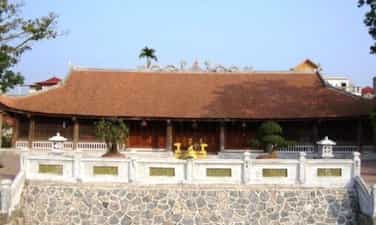
Am communal house, located in the middle of Am village, Xuan Huong commune - Lang Giang district - Bac Giang province, is located on a campus with an area of 1,460m2. Based on the tablets still preserved at the communal house, it shows that Am communal house is a religious building of local people built to worship Princess Ngoc Khanh (Princess Thieu Duong - the 8th daughter of King Le Thanh Tong) has made many contributions to the nation. The communal house was built on a large scale, with the characteristics of an ancient Northern communal house, including: 3 rooms and 2 wings for the main house and 1 room and 2 wings for the harem, creating a Nhi-shaped architectural plan. Wooden architectural structures are carved with a variety of themes: Dragons are carved on the heads of the dragons with eye rolls and blunt lancet-shaped antennae; The porch line system is embossed with the theme of the four sacred animals (Dragon, lychee, tortoise, phoenix), especially interspersed with four sacred animals such as crabs, fish, deer, snails, and fire trays, which are characteristic of the artistic style. engravings during the Le Trung Hung period in the 18th century; On the 4 pillars, the 4 corners of the great communal house are mounted with 4 unique carved statues: a fairy riding a carp, a turtle in a lotus pond, a shepherd playing a flute sitting on the back of a phoenix, and a mandarin wearing a parasol sitting on his back. unicorn...soft, delicate carvings in the style of the Le Trung Hung period (18th century). The engravings on the hammock door of the great communal house and harem with the images of dragons and tigers, tiger faces... are embossed into large, fat blocks in many positions, with a rich and vivid appearance that is unique. Carving art of the Nguyen Dynasty in the 19th century. In the communal house, there are still many exquisitely carved and splendidly painted artifacts of high historical and artistic value such as: altars, tablets, hammock doors, parallel styles, ceramic incense bowls... dated from the 18th to 19th centuries. Through the Han Nom heritage currently preserved in the communal house and ancient documents in the locality, especially the Chinese characters on the first sentence of the grand communal house: "Canh Thinh eight years, five years Canh Than, seven moons, first eight days, "Hour of the Horse, the 8th day of the 7th month of the year Canh Than, the reign of the 8th King Canh Thinh (1800) was built in the Thuong Luong" (Ngo hour, the 8th day of the 7th month of the year Canh Than, the reign of King Canh Thinh the 8th (1800) was built in Thuong Luong) meaning that Am communal house was renovated and embellished in 1800. (8th Canh Thinh), late Tay Son dynasty - early Nguyen dynasty. Am Communal House was ranked a national architectural and artistic relic by the Ministry of Culture in 2014. SOURCE Explore Vietnam's natural & cultural heritage
Bac Ninh
3482 view
Rating : National monument

My Loc Communal House
My Loc communal house is located in Ngoai village - My Ha Commune - Lang Giang District - Bac Giang Province. Built in the early 19th century. The communal house is located on a beautiful, large, open plot of land next to My Loc village next to the gentle, poetic Thuong river. The communal house consists of 5 compartments, 2 left, facing Southeast. The communal house is large-scale, majestic, and has ancient architecture imbued with ancient Vietnamese architectural style. My Loc Communal House worships two Thanh Hoangs, Cao Son and Quy Minh. These are two generals who have made great contributions to the people and the country during King Hung's reign. Old history records: During the reign of King Hung Due, Cao Son and Quy Minh were two talented generals named left and right generals who assisted the king and helped him crush the Thuc invaders. When the Thuc invaders were finally appeased, the two men asked the king to return to the place where they were stationed and set up their fortifications (which is the area of My Loc Village today). Since the two men were stationed here, the villagers have been able to do business in peace and have become more and more prosperous. The people on this land asked: First to make it a garrison, then please build a temple to commemorate the merits of the two men. . When the two men died, the king ordered the people in the village to build a temple to worship and organize sacrifices and ordained the two men. Gao Son was conferred with the title: Great King Thong Minh, bestowed the posthumous title of protecting the nation and protecting the people of the Phu Van Duong Vu Thanh Thanh with glorious scenes, honoring the original spirit, conferring the title of Linh Don Tinh, Heroic Strategy, Trac Vi, predicting the renaissance of the highest level. . The conferment for Quy Minh is: Hien respond to the king, bestow the title of brave and courageous father to protect the country and people, grant the king's honor to the king, honor the saint lang high magic dech sand, and bestow the good fortune of the Trung Hung Bao. Preparing the people in the Bac Kinh area to worship them forever after. From then on, the people of the village worshiped the two men with deep respect and infinite gratitude. To this day, the descendants of My Loc village always remember and remember the gratitude of the two Thanh Hoangs. Every year, every year when spring comes, people in the village eagerly prepare to organize the My Loc village communal house festival. The festival is held on the 14th and 15th of the first lunar month with many solemn rituals showing respect and gratitude to the two Gods. According to folk beliefs, the festival is an opportunity for people in the village to report on the results of the old year's labor, thank the two village tutelary gods for their kindness and protection in the past year, and pray for a new year. Peace and luck for the whole family. With such significance, My Loc village communal house festival not only attracts the attention of village members but also tourists from everywhere. In addition to the profound historical and humanistic values mentioned above, My Loc communal house is also known as an ancient architectural work full of art. In the communal house, from the roof to the pillars, there are intricately carved and sculpted motifs. According to research, these are sculptural motifs from the Le Dynasty. Through many ups and downs and historical events, My Loc communal house has changed due to the devastation of the war, but has since been restored and embellished by the people of the village and tourists from all over. Up to now, My Loc communal house still retains its original appearance, preserving its ancient dignity and long-standing architectural artistic values. In the communal house today, there are still many relics, ancient objects, and especially 15 ordinations from the Le and Nguyen dynasties for saints Cao Son and Quy Minh. My Loc village communal house is considered a museum of local history and culture. In 1995, My Loc communal house was recognized by the Ministry of Culture as a national historical relic. SOURCE Explore Vietnam's natural & cultural heritage
Bac Ninh
3416 view
Rating : National monument

Dang The Cong Temple
In 1527, Mac Dang Dung usurped the Le dynasty. The civil war between the forces of King Le - Lord Trinh and the Mac dynasty lasted, making people's lives miserable. When the Le Dynasty's soldiers and soldiers pursued the Mac Dynasty through the Kep - Can Tram area, they encountered dangerous mountains that made it difficult to advance. They were repeatedly counterattacked by the Mac Dynasty, causing significant wear and tear on the Le Dynasty's generals. When times were tough and weak, the Le Dynasty issued an edict to recruit militiamen "to help the Le destroy the Mac". Thanks to their understanding of the terrain and their willingness to be brave and clever, the two brothers Dang The Cong and Dang The Loc responded and joined the army. Made many great contributions to help the Le Dynasty defeat the Mac Dynasty. In the Year of the Horse, 1566, the court rewarded soldiers, rewarded generals, and treated people with meritorious services. Due to their great contributions in helping Le destroy Mac, King Le ordained two men, Dang The Cong, with the title: "Duong Vu is a mighty and brave man." , Thai treasure tea in Cong district, whose national name is Trinh Van An"; Dang The Loc - Conferred the title "Duong Vu Mighty Courageous Cong of the Left Admiral, Duke of Su Chew District, with national identity as Trinh Van Loc". In particular, Dang The Loc not only made great achievements in expelling the Mac Dynasty, but also knew how to rally and calm the people, bringing honor to the family, thanks to which his descendants later set an example and were all highly respected in the dynasties. King Le. The Royal Court also conferred on the father of the two men, Mr. Dang Chan Tinh - the title of "Admiral of the Than Vu, Military Quarter Guard, Lieutenant Marquis", Mr. Dang Chan Tinh died on January 14, 1547, his grave The burial was in Ni forest (in Tan residential group today). Remembering the contributions of Mr. Dang The Cong and Dang The Loc, local people built a temple to commemorate them in their homeland. The temple was built in the 16th century and consists of 7 tiled compartments, with two compartments on the left and right sides, a lobby, a back lobby, a warehouse for military provisions, and a weapons workshop. In the 80s of the 19th century, the Black Flag invaders invaded, burned villages and destroyed temples; In 1931, local people restored the temple on the land where their ancestor Dang Chan Tinh was buried in Ni forest hill. The current temple has a typical architectural plan consisting of 5 compartments built with bricks and tiled roofs. The middle compartment has a solemn incense burner and two stone tablets engraved with Chinese characters. On the incense burner, there are statues worshiping Dang Chan Tinh and Mr. two sons are Dang The Cong and Dang The Loc. Dang The Cong Temple preserves many heritages of historical value such as the title of Long Duc 2 (1630), Chinh Hoa 4 (1683), two stone tablets, and porcelain incense bowls of the Le Dynasty (18th century). , worship statues, incense burners... The temple is a center of cultural and religious activities, a place of worship and commemoration of military mandarins Dang The Cong and Dang The Loc who have made many contributions to the people and the country. Every year on January 14, local people hold a Festival to remember and pay tribute to their ancestors and those who have contributed to the people and the country. For many generations, Dang The Cong temple has been the center of cultural and religious activities of the community in the region. The Party Committee, government and people of Kep town always respect, take pride in and create all conditions for the Festival to take place solemnly, joyfully, safely and economically, truly becoming a place of rich cultural activities. national cultural identity, is the place to go home to many people and friends from all over the country. SOURCE OF BUSINESS AND BRAND ELECTRONIC MAGAZINE
Bac Ninh
3446 view
Rating : National monument

Tomb of Pham Van Lieu
The person listed 89th in that golden book is Le Lieu (also known as Pham Van Lieu, documents say Pham Dinh Lieu), a famous general who from a young age followed his father to join the Lam Son insurgent army, participating in many battles. fought fiercely on the battlefields in the mountainous areas of Thanh Hoa, Nghe An, Tot Dong, Truc Dong... and especially had the first contribution in the siege of Xuong Giang citadel and destroyed the Ming dynasty's great reinforcements on the battlefield of Xuong Giang in the history of Xuong Giang. history. Pham Van Lieu is the son of Pham Van Thanh, and was once awarded the rank of Admiral of the same rank. Originally located in Nguyen Xa village, Lam Son village, Thuy Nguyen district, Thanh Hoa province. He followed Le Loi and the Lam Son insurgent army to build a resistance movement against the Ming army from the early days at the Lung Nhai oath festival. During the arduous resistance war against the Ming invaders, he made many great achievements on the battlefields of Nghe An and Thanh Hoa. During the great war to destroy the Ming Dynasty's reinforcements on the Xuong Giang battlefield, Pham Van Lieu was the general who commanded a secret army along the banks of the Thuong River (present-day Xuan Huong, My Thai, Lang Giang district). attacked, destroyed and captured more than 70,000 Ming reinforcements at the end of 1427. After destroying the invading reinforcements, Pham Van Lieu was appointed by Le Loi to stay in Kinh Bac to guard the northern region of Dong Do citadel. In 1428, the resistance war against the Ming invaders ended, he was promoted to the title of Ngan Thanh Vinh Loc Dai Phuc, Ta Xa Cav General with the title Khang Vu Marquis, and later promoted to the title Khang Quoc Cung. Due to his merits in the resistance war against the Ming, when considering awards, he was included in the "national founding meritorious" (a subject who has contributed to opening the country), was given national status (Le Van Lieu) and was awarded many titles in the country. Kinh Bac origin and settled in Chua hamlet, Xuan Huong commune, Lang Giang district today. In the year of the Rat (1456), Pham Van Lieu died in Kinh Bac. The grave is located in Forbidden Forest, Chua village, Xuan Man commune, Bao Loc district, Lang Giang district (now Chua village, Xuan Huong commune, Lang Giang district, Bac Giang province). 3. Pham Van Lieu has two children, a boy and a girl. The girl recruited into the palace was later appointed Minh Phi. In the book Dai Viet, historian Le Quy Don wrote about her as follows: "Pham Minh Phi (wife of King Le Thanh Tong) Minh Phi, surnamed Pham, was the niece of a mandarin who was awarded the rank of Admiral and co-trier, her name was Thanh, and she was the daughter of The mandarin was awarded General Tri Khang Vu, Pham Van Lieu. She was elected to the palace on the 7th month of Mau Ngo, the 2nd year of Quang Thuan (1461). In the 6th year of Quang Thuan (1465), he was promoted to Tu Vien. On Quy Suu in the 6th month of Hong Duc's 2nd year (1471), he was promoted to Chieu Vien in November 1477 and promoted to Minh Phi in Thuy Duc palace In 1497, King Thanh Tong died. In the first year of Canh Thong (1498), she was a concubine of the previous dynasty, so she served in Thien An palace not long before she fell ill on Giap Ngo day in September, at the age of 50 The consolation money was 270,000 and the mandarin ordered the deceased to be buried in Linh Hoa field in Lang Giang district. Pham Van Lieu's second son, Pham Duc Hoa, was honored with the title of Special Patriarch of Thuong Quoc, Tu Do reviewed, the title of Hoa Phong Uncle (later given the title Hoa Phong Marquis) was chosen to be his son-in-law. Pham Duc Hoa married the 8th daughter of King Thanh Tong Thuan Emperor, Thieu Duong, Princess Le Thi Ngoc Khanh. Thus, Pham Duc Hoa was originally the younger brother-in-law, then was chosen to be the son-in-law (son-in-law) of King Le Thanh Tong. His father, Pham Dinh Lieu, is both the father-in-law and in-laws of this wise king. When settling down on the assigned land, the Pham family became an influential family in Kinh Bac. 4. With the royal benefits and benefits of the 2,370 acres of assigned fields, the Pham family, especially Princess Thieu Duong Pham Thi Ngoc Khanh, donated merit to many localities in the country. Kinh Bac built and expanded welfare projects, so it was worshiped by many localities. According to the declaration of the local Chief Ly from 1942, in Bac Giang province there are 15 communal houses worshiping Pham Van Lieu and his son and Princess Thieu Duong as Phuc Than/Tutelary God. Particularly, Tri Le district, ancient Bao Loc district (now belonging to 4 communes: Duong Duc, Xuan Huong, Tri Le, Tan Thanh of Lang Giang district) has 8 villages/communes worshiping and still preserving the ordination and tablets worshiping three These are the communes: Chuyen My, Chi My, Dai Man, Xuan Man, Huong Man... Pham Van Lieu became the ancestor of the Pham family in Chua village, Xuan Huong commune, Lang Giang district. Currently in Chua village, there are still remains of graves and a family church, a place to worship and commemorate the famous historical general Pham Van Lieu. The relic has been decided by the Ministry of Culture and Sports to be ranked as a national historical and cultural relic. SOURCE ELECTRONIC INFORMATION PORTAL DEPARTMENT OF CULTURE - SPORTS - TOURISM OF BAC GIANG PROVINCE
Bac Ninh
3380 view
Rating : National monument

Phuc Quang Pagoda
Located 20km northeast of Bac Giang city center, Tien Luc commune, Lang Giang district is famous for its clusters of historical and cultural relics. This is an ancient temple, established in 1723 under the reign of King Le Canh Hung, facing south, built by a monk whose hometown was Tien Luc, Lang Giang - he is the Patriarch sitting on the Three Jewels. . The pagoda has 35 compartments, designed in the "domestic and foreign" architectural style. The entire front hall, two corridors and bell tower are connected to form the letter Quoc, the remaining part is the incense burner connected to the upper palace to form the letter Cong. In the pagoda, the system of Buddha statues is arranged in order from the upper hall to the two corridors and below the large bell tower, in total there are about 90 precious ancient statues. If you stand in the middle of the pagoda to observe and admire the ancient statues, you will not be surprised and admired by the extremely skillful and sophisticated sculpting art of the ancestors. With these precious values, in 1989, Phuc Quang Pagoda was ranked by the Ministry of Culture and Information (now the Ministry of Culture, Sports and Tourism) as a National Historical and Cultural Monument. However, the people of Tien Luc commune still constantly wonder why the pagoda has such beautiful, majestic architecture and peaceful landscape without an owner, with the doors closed front and back. Mr. Nguyen Dinh Thuan, the long-time caretaker of the pagoda, said that there is a monk Thich Hue Cuu, whose birth name is Nguyen Thanh Chung (from Ninh Thuan), who has stayed for no more than three years at the longest (abbot since 2010). to 2013). Even though they cannot explain it, people believe in the sacredness of the temple. The evidence is that during the war years, although the surrounding area was bombarded to the point of ruin, Phuc Quang pagoda and Tien Luc commune were still safely protected. They believe that the more than 300-year-old pagoda has guarded this land, helping people settle down. At the end of 2014, the project to renovate and embellish Phuc Quang Pagoda relics was officially started, including 04 main items. On the morning of July 29, 2016, 02 completed items were handed over as planned, including the Main Pagoda (Three Jewels, Bell Tower, two Corridors), area of 884.5 m2 and Thao Xa House, area of 278.3 m2. The total settlement value from the national target funding source and local budget is estimated to be about 23.5 billion VND. SOURCE PROPAGANDA COMMITTEE OF BAC GIANG PROVINCIAL COMMITTEE
Bac Ninh
3414 view
Rating : National monument

Dinh San
San Communal House worships saints Cao Son - Quy Minh and Minh Giang Do Thong, both generals of King Hung, who had meritorious achievements in fighting the enemy, defending the country, eliminating disasters and were bestowed with titles by the Le - Nguyen feudal dynasties. god. Currently, in the two coffins of San Communal House, many religious ordinations with era titles such as: Tu Duc Luc Nien; Tu Duc decade; Tu Duc thirty-three years; Khai Dinh is nine years old; Duy Tan's third year... Passing through the communal house gate, on the right is San Pagoda, going straight in is the Great Temple with 3 compartments, 2 compartments, 2 majestic, majestic wings with 4 curved blades. The roof's edge is covered with "Luong, dragon flanking the moon", both ends have pincers, the strip edge is covered with Nghe chau, dancing phoenix, extremely lively. All the roofs and banks are decorated with lemon flowers, running throughout, adding to the majesty, grand, and outstanding beauty, yet still gentle and elegant thanks to the sophisticated, harmonious combination of horizontal lines. Straight lines with soft, lively curves. The Communal House is made in the shape of the letter Cong (I) and includes three morning glory rooms connected to three harem rooms and the three harem rooms also have very beautiful cornered swords, making this entire massive communal house superior to other temples. Another family in Luc Nam. With the structure: Upper is the husband's head, gong price, lower is the husband's head, the long is strong and beautiful. In particular, this is a Le Dynasty communal house that is still quite intact, but the main pillar frame is much higher and the military column is completely lower, creating a high, wide and very airy interior of the communal house. With this "four rows of legs" structure of the column frame system, the communal house's roof has a large water slope and a wide roof, making the communal house both durable, strong, sturdy, massive, and tall and spacious inside. Spacious but still gentle and elegant. The "nine insects" hammock door is the most outstanding symbol of the art of carving, lacquer and gilding during the Nguyen Dynasty. With 4 monograms "Long live the Holy Palace". The middle space and the entire roof in front of the communal house are covered with ceilings, the well's well is painted with embossed "Four Spirits", "Four Quarters", "Long Ma", "Lac Thu" and a period pattern extending through the morning glory strip. to the harem. The shrine in the harem is bright and brilliant with 2 golden-painted dragon pavilions, 2 altar thrones, inside there are two splendid statues of gods, lacquered tablets of the Le Dynasty, palanquins and many other worship objects... In 1994, San communal house was recognized by the State as a national historical-cultural, architectural and artistic relic. SOURCE BAC GIANG DEPARTMENT OF CULTURE, SPORTS AND TOURISM CENTER FOR INFORMATION - TOURISM PROMOTION
Bac Ninh
3240 view
Rating : National monument

Bao An Pagoda
Bao An Pagoda (Minh Kinh Tu), located in Cuong Son commune, Luc Nam district (Bac Giang). Because it is located in the Western Yen Tu relic system, located near Luc Nam river wharf, next to road 293, the pagoda is an ideal stop for tourists on their travel journey to the land of Yen Tu Buddha. Bao An Pagoda was built during the Le Dynasty and was repaired in 1710. Over more than three hundred years, the building has been repaired and renovated many times. And now it basically has the architectural features of the 19th century Nguyen Dynasty, some Buddha statues and worship objects have the style of the 18th century Le Dynasty. As one of the ancient pagodas belonging to the Truc Lam Yen Tu sect, Bao An pagoda worships the Three Patriarchs of Truc Lam: Tran Nhan Tong, Phap Loa and Huyen Quang. History books say that, after leaving the throne, King Tran Nhan Tong founded the Truc Lam Zen sect. At that time, Tran Nhan Tong advocated converting Buddhism closer to the people, with the concept "Buddha is the Mind - The Mind is Buddha". In addition to the summer seasons, King Tran Nhan Tong also returned to many places to preach and travel around the zodiac. Along with affirming the position and role of the Truc Lam Zen sect, during the Tran dynasty and later periods, many ancient pagodas appeared on the high peaks of Bac Giang province such as: Am Vai, Binh Long, Ho Bac. , Ma Yen... Although Bao An Pagoda appeared later (Le Dynasty), it is a continuous continuation of the prosperity and development of the Truc Lam Zen sect in Bac Giang. This is an ancient pagoda with beautiful scenery. In front of the pagoda, two ancient brick towers, the resting place of the master, are shaded by the foliage of two ancient trees. The temple garden is covered with green leaves and the scent of flowers and grass spreads throughout the four seasons. Many ancient trees in the temple grounds are proof of the long existence and development of this ancient temple. Bao An Pagoda currently has the following construction items: Tam Bao Court, Patriarch House, Mother House, Guest House and 2 ancient brick towers, all located on a 10,700 square meter campus, surrounded by moss stone walls. ancient style. The Tien Duong and Buddha Hall have a continuous structure in the style of a nail. The 5-compartment frontage is built with a brick structure, the architectural structure is ironwood roof, linked in the style of upper and lower husband, lower and lower, and the carved floral and leaf-shaped structures are in the style of the Nguyen Dynasty in the 19th century. The Upper Palace has 3 compartments, the wooden frame has discolored over time, and is fully decorated with a system of Buddha statues. The Patriarch's house is behind the Tam Bao building, this is where the statue of the Tam To Truc Lam is arranged. All three statues are beautifully crafted according to standards, the statue of Tran Nhan Tong is meditating on a wooden pedestal in the middle, his knees wide open, and the statue is painted with pink powder. The statue of Phap Loa sits as an assistant on the left, the statue of Huyen Quang sits on the right. In addition to the system of beautiful Buddha statues and ancient architecture, Bao An Pagoda also preserves a number of worship objects and Sino-Nom heritage that have existed for hundreds of years such as: Incense burners, "Minh Kinh Tu Chung" bronze bells, stele. stone "Epic of the Late Buddha", ancient tower... Every year, pagoda festivals are held on the 18th, 19th, 20th of the third lunar month with many rituals and folk games imbued with national cultural identity. Along with many other relics on the slopes of West Yen Tu in Bac Giang, Bao An Pagoda will be an attractive destination for tourists from near and far. SOURCE: INFORMATION CENTER, OFFICE OF THE PEOPLE'S COMMITTEE OF BAC GIANG PROVINCE
Bac Ninh
3201 view
Rating : National monument
Dinh Than
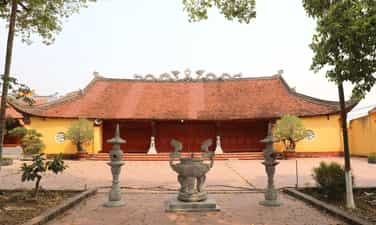
Than Communal House is a place of worship for famous gods who have made great contributions in the fight against foreign invaders and protecting the homeland; In the early days, this place worshiped the Thanh Hoang Thanh Cao Son and Quy Minh Dai Vuong, talented generals of the Hung King period, beautiful symbols of patriotism and the nation's spirit of fighting against foreign invaders. Through the content of documents still preserved here, such as: stories, ordinations, couplets, sacrificial writings... it has been confirmed that this place worships generals of the Hung Due Vuong period and princesses of the Ly Dynasty. Arranged in chronological order, the following gods are worshiped at Dinh Than: * During the reign of Hung Due Vuong, there were: - Cao Son Dai Vuong is a supreme God - Quy Minh Great Vuong is a supreme God - Phuong Dung - Goddess of Yin Phu * During the Ly period there were: - Binh Duong Princess - Princess Thien Thanh - Princess Thien Cuc In the modern historical period since the French colonial invasion, Than communal house has been the base of our army and people, the base of operations of revolutionary and resistance organizations. This place was the base for the activities of revolutionary soldiers in the pre-uprising period and later in the years of resistance against Japan and France. It was also here that in March 1943, the Communist Party in Luc Nam sent comrade Kien to build the party's base and enlighten the elite sons of the homeland who followed the revolution, namely you (Mr. Huyen, Mr. Tai, Mr. Tuy, Mr. Vuong, Mr. Thang, Mr. Moc, Mr. Man, Mr. Cam, Mr. Luu...). At the same time, it was also here that on July 25, 1945, the guerrilla team met to discuss and organize the people to overthrow the Japanese to build a Provisional Revolutionary Committee. During the anti-American period, Dinh Than was the gathering place to send off generations of hometown children who went to fight the enemy to save the country. On September 2, 1969, when President Ho Chi Minh passed away, the District Party Committee - People's Committee of Luc Nam district took this place as the place to hold a very solemn and solemn memorial ceremony for Uncle Ho. A large number of officials and people from all ethnic groups in the district came here to attend Uncle Ho's memorial service. In the period after 1975, when the South was liberated to unify the country, Dinh Than village, in addition to serving the religious culture and community activities of Than village, was also the place where the Party Committee and village authorities discussed and unified production methods. Intensive farming to increase crops, especially during the renovation period. The communal house is where the Board of Directors of Thanh Xuan Cooperative discusses and makes decisions on intensive farming to increase crops and improve efficiency in agricultural production; During the period 1986-1992, Thanh Xuan cooperative was the leading flag in good production and business of 04 mountainous districts of Ha Bac Province. For that achievement, the President awarded the Third Class Labor Medal in 1991. Through many ups and downs of history, the communal house still retains its ancient and unique majesty; With the above mentioned cultural and artistic values, Dinh Than has been ranked as a National Historical - Cultural Relic according to Decision No. 502-QD/BT, dated April 28, 1994 of the Ministry of Culture and Information. news (now the Ministry of Culture, Sports and Tourism). Developing national traditions, government committees and people of the village are now Than Binh, Than Phu, Thanh Tan residential groups, and businesses; Local children who are studying and working in all parts of the country every year make contributions and embellish the relic site to make it more spacious and beautiful. This place is also an annual place of traditional education for generations of young people and teenagers in the area. 2. Architecture Lang Than Communal House is also an ancient cultural and artistic architectural work of the Le Dynasty (17th-18th centuries) with unique and typical artistic value. Currently, the communal house has a Dinh-shaped layout including a Vestibule with 3 compartments and 2 left and a 2-room Harem building. The value of artistic architecture is mainly shown in the Vestibule with its massive architectural scale, unique long lines that give the communal house a steep slope, and sophisticated carvings on all ends. The top is embossed, embossed with leaf-shaped themes, vivid and harmonious animal shapes, carved lines, elegant and sophisticated altarpieces bold with the artistic architecture of the Le Dynasty. The history of building the Than Communal House on the first sentence of the communal house is still clearly inscribed with the inscription that reads: "The roof will be topped off in the first quarter of the year, two moons, two decades, and five days". That means the communal house was built on February 25, Quy Ty year (1713) under the reign of Le Du Tong, the 8th year of Vinh Thinh. The communal house has a unique ancient architecture, typical of art that has been over 300 years old. age, especially the carved lines shown at the ends of the muzzle depicting the four sacred animals (Dragon, Ly, Quy, Phuong) with twisted shapes and rich rolling clouds make the throne unique. The communal house is more sacred and artistic. SOURCE ELECTRONIC INFORMATION PORTAL OF DOI NGO TOWN - LUC NAM DISTRICT
Bac Ninh
3439 view
Rating : National monument
Communal house - Pagoda in Thuong Lam village
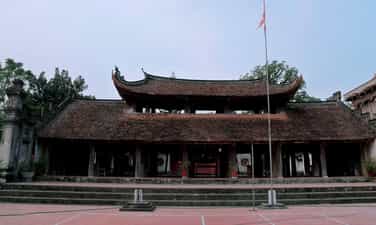
Historical-cultural relic area of Thuong Lam communal house and pagoda, located in Thuong Lam village, Thanh Lam commune, Luc Nam district, Bac Giang province, 20km northeast of Bac Giang city. The cultural and historical relic area of communal houses and pagodas in Thuong Lam village was built from the end of the Le dynasty to the beginning of the Nguyen dynasty, during the reign of King Le Hien Tong in the 42nd year of Canh Hung in 1781 as a place of worship and commemoration of the hero who had work with the people and the country. Because in the years 1516-1522, the insurgent army led by Tran Cao and Tran Cung, father and son, occupied a large area from north of Song Cau upwards. In addition to historical significance, this relic also has architectural and artistic significance - helping to educate all generations today and in the future about the tradition of building and defending the country of our ancestors. . The Thuong Lam Village Communal House - Pagoda historical relic site received the first deity ordination to worship the emperor, who contributed to helping the country. Over many dynasties, the relic complex has received many ordinations from kings. Lords of the Nguyen Dynasty, that shows the respect and worship of the local people for the heroic heroes who have made contributions to the country and the people. In the tablets that have been preserved until now, it is written (Chinh Minh, An Quoc, Thai Hoang, Duong Huong, Great Ceremony, Chi Than, Tien) along with the bronze bell, the inauguration of the dragon cot pagoda, the dragon palanquin, the god's hat, the god's hat, are still kept in the village communal house to this day. Precious relics that have been preserved over the centuries still retain their splendor and solemnity. The relic area includes: 1) Communal house: facing south, designed in 2 parts - The altar house is made of ironwood, roofed with funny-nosed tiles, made in the style of stacking beds, with five compartments, 6.87 m wide and 13 m long. - The rear palace consists of 1 room and 2 doors with long stripes, beams, materials made of ironwood, tiled roofs and brick walls, 8.35m long, 6.10m wide. 2) Thuong Lam Pagoda (Long cot pagoda) facing south includes: The old location of the pagoda was built on Long Cot Tu mountain, facing the North. In 1940, the pagoda was moved to its current location. For reason: to protect the temple. The old location now has only 3 towers remaining. - The altar house has a stacked-bed structure, 12.22m long, 7.65m wide. - The cathedral is structured in the style of a gong stand, ironwood, funny-nosed tiles, and square tiled floor. It is 7.5m long and 5.91m wide. In this relic, many rare documents and artifacts are still preserved, which have direct scientific research and traditional educational significance for many present and future generations. These are great paintings, parallel sentences, bells, inscriptions, incense burners, worshiping objects, a system of statues (including 21 Buddha statues), original artifacts of the Le and Nguyen dynasties that have economic value as well as both as art and as documents and artifacts serving scientific research and traditional education. These are rare collections of worship objects that represent a variety of types, ages, and construction materials. Thuong Lam communal house - temple - pagoda relic area is a typical cultural center of Thanh Lam commune in particular and Bac Giang province in general. It is meant to be a very important document that deeply reflects our people's tradition of love for homeland and country and deep hatred of the enemy. At the same time, it is a place of worship and commemoration of Tran Cao - Tran Cung, two leaders of the peasant uprising in the early 16th century against the oppression, exploitation, repression, and harshness of the Vietnamese feudal court in the later period. Pear. What is precious and respectful is that the restorations and repairs are all created by the skillful hands of local carpenters and bricklayers. It is also a reflection of the traditional handicraft tradition here that has existed for a long time and is constantly developing to beautify the village and make Thanh Lam commune prosperous. 7. Related cultural activities and rituals The traditional festival of the local people is held on January 13. During the festival, in addition to the sacrificial ceremony to the village deity and tutelary god, there are also many traditional folk games held such as Chinese chess, wrestling, cockfighting, pot beating, Quan ho singing under the boat... In addition, other rituals Other ceremonies are also held at the relic such as Village Work Day on April 11, Ceremony Day (August 10), Temple of the Soul Worship Day on November 15... Each ceremony has different regulations. SOURCE LUC NAM DISTRICT ELECTRONIC INFORMATION PORTAL
Bac Ninh
3496 view
Rating : National monument