Relic point Vietnam
Việt Nam
Tra Co communal house
Tra Co communal house is located in Nam Tho area, Tra Co ward, Mong Cai city, Quang Ninh province, Vietnam. This is considered a rather massive communal house in the top part of the country and completely bears the mark of Vietnamese culture. According to the scientific ranking profile of the relic, the Communal House was built in the Later Le Dynasty (1461), the formation and existence of Tra Co communal house is closely linked to the history of formation and development of Tra Co land. Nowadays. According to legend, in the Later Le Dynasty (1461), people working as fishermen from Do Son land (belonging to Hai Phong city today) often went as a family to earn a living in many remote sea areas, all over the region. estuary (Belonging to the current Tra Co - Mong Cai sea area). During a big storm, twelve families drifted onto a deserted peninsula with only tiger parrots and reeds. Unable to bear the hardship, six families found a way to return to their hometown. The remaining six families are determined to cling to the land and build a new countryside. Then, every day they explored new land together, fishing and reclaiming land. Initially there were only 6 simple houses and gradually became a prosperous village. And like many other villages in Vietnam, Tra Co communal house was built with contributions from the people. After building the communal house, local people returned to their old hometown to ask for the feet of the village tutelary gods to worship at the communal house (Khong Lo, Giac Hai, Nhan Minh, Huyen Quoc, Quang Trach). In addition, this is also the place of worship for the six pioneers who made public declarations and established the ancient Tra Co land. Experiencing the effects of time, up to now Tra Co communal house has undergone many major restorations. The most recent restoration was in 2012. The current communal house, built on a plot of land with a total area of more than 1000 m2, facing south, has a nail-shaped architecture, including 05 rooms and 02 walls. worship hall and 03 harem rooms with traditional wooden architectural structure. The entire structure is constructed using a wooden frame and linked together by mortise dowels. The communal house is a majestic ancient structure, with a tiled roof and four curved corners like a boat moving through the waves, creating an elegant appearance. In particular, the truss panels show strong, sophisticated and vivid carvings. Rich themes include engravings of dragons swirling in water and phoenixes flying, tigers stalking prey among flowers and leaves... Each engraving is a unique work of art with a contemporary imprint. This is considered one of the communal houses with massive scale and unique architecture in the Northern Delta region. Currently, at Tra Co communal house, many valuable artifacts are still preserved such as: 03 bronze incense burners, 2 cranes riding turtle heads made of wood lacquered with gold, 8 wooden thrones of the Nguyen Dynasty, 12 ordinations. paper material… Every year, from May 30 to June 3 of the lunar calendar, many traditional festival activities take place at Tra Co communal house. This is a large-scale festival, typical of the type of folk festival in Mong Cai city in particular and the country in general. The unique features of Tra Co communal house festival are the procession of gods on the sea and the "Mr. Elephant" contest (A contest between 12 pigs that are cared for and raised by 12 men). Source Quang Ninh province electronic information portal.
Quang Ninh
3420 view
Rating : Special national monument
Van Don commercial port relic
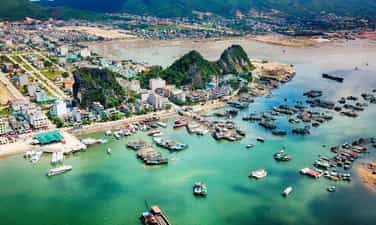
Established in 1149, Van Don became the first trading port of Dai Viet. Trang Van Don becomes the last administrative unit in the local administrative system. To protect national security, the royal court stipulated that foreign ships, whether far or near, entering the port must anchor in Van Don and not proceed further inland. Foreigners are only allowed to trade in certain locations and are subject to state control. The Ly Dynasty (1009-1225) introduced many policies to encourage foreign trade, so trade in Van Don developed. Goods exported by foreign ships are mainly agarwood, pearls, ivory, cinnamon bark, rhino horn, gold, silver, copper, saltpeter, sea seafood... Imported foreign goods are brocade. Only the state is responsible for foreign trade activities, private individuals are not involved. During the Tran Dynasty (1225-1400), the world spice market was vibrant, and the invention of the maritime route across the sea from China to Egypt pushed the pace of international trade to grow stronger. Trade at Van Don commercial port is bustling, expanding with many countries such as Japan, Mongolia, the Philippines and Europe. The protection and management of foreign trade in the Van Don region was assigned by King Tran to princes and high-ranking mandarins. Prominent among them is King Nhan Hue Tran Khanh Du. At this time, Van Don was closely guarded. Wooden fences were erected around key shopping areas and beaches of the island. Tran Khanh Du also prevented Chinese troops from blending in by having Van Don military equipment wear Ma Loi hats, a type of hat made from Ma Loi incense, Hong Lo (now Hai Duong) to easily recognize Dai Viet troops. . Because most Van Don people work as traders, their way of dressing is similar to that of Northerners. Complete History of Dai Viet records: "Many merchant ships that previously entered Tha and Vien estuaries in Chau Dien, now mostly gather in Van Don." Not only expanding in administrative boundaries, Van Don was raised from a village to a town, established in the reign of Tran Du Tong (1345), on Hai Dong road, later changed to An Bang road. The Tran Dynasty placed the mandarin in charge of Van Don as a major town, including the Tran mandarin (martial general), the Lo mandarin (literary mandarin) and the sea envoy (sea surface control officer), placing an army here. specifically called Binh Hai military, has the task of patrolling and protecting the Northeast coast, controlling the security of foreign trade activities. In addition to trading, the Tran kings also built many large-scale pagodas and towers such as Lam pagoda, Trong pagoda, Cat pagoda, Bao Thap... in Thang Loi commune to meet the religious needs of residents and foreign traders. besides worshiping Buddhism. The early Le Dynasty (1428-1527) after gaining independence implemented many strict policies on foreign trade. The court very clearly regulated activities at Van Don trading port in the National Trieu Penal Code (often called Hong Duc Law). Accordingly, the officials who went to Van Don without permission were either treated as criminals or exiled; The person who reports the matter is entitled to privacy (Article 612). Article 615 of Hong Duc Law clearly states: "A person at Van Don site who transports goods to the capital to sell and upon returning without a permit from the An Phu company and a survey certificate from the De Bac company will be subject to sarcasm and fined 100 francs." money; reward the accuser with one-third of the fine. If you arbitrarily bring goods to sell in villages outside the capital, you will be prosecuted and fined 200 francs. If An Phu company and De Bac company did not know it, they would be satirized in private; If you intentionally tolerate it, you'll be satirized and dismissed." Foreign boats that want to come to Van Don site to do business and stay for a long time must submit a document to the An Phu company. If the site owner does not present it and arbitrarily allows them to stay, they will be fined 200 francs. Due to strict control, commercial activities in Van Don declined compared to the Ly and Tran dynasties but still occupied an important position under the Le dynasties. During the Mac Dynasty (1527-1677), with the open trade policy, foreign trade activities at Van Don trading port flourished again. The Mac Dynasty also built a pagoda in Vung district, Thang Loi commune, and built citadels in Cam Pha and Hoanh Bo to defend the country. During the Renaissance of the Le Dynasty (1533-1789), trading activities in Van Don were still developed. In addition to trading, the Le Dynasty also paid attention to building village communal houses to serve as a place for spiritual and cultural activities for island residents such as Cai Lang communal house, Cong Cai communal house, Quan Lan commune. At the end of the 17th century, Ke Cho (Thang Long), Pho Hien (Hung Yen), Hoi An (Quang Nam) opened their doors for Chinese, Japanese, Dutch, British... merchant ships to go deep inland to trade. Van Don trading port completely lost its role as a commercial center. Foreign trade activities still take place, but are no longer busy. Entering the early 19th century under the Nguyen Dynasty, Van Don trading port was no longer active. Residents on some ancient wharves moved to other places, and wharf warehouses were gradually damaged. Commercial boat wharves were converted into wharfs to serve the needs of local people for fishing and exchanging forest and seafood products to other places in the country. Over time and the sedimentation of the sea, the bustling appearance of the old Van Don commercial port no longer exists. Currently, in the ground on the banks of ancient wharves, there are still millions of broken or intact pieces of porcelain, house floors, communal house floors, pagoda floors, and ancient bronze coins spanning 7 centuries. Van Don is the first commercial port of Dai Viet country, not only operating on a single line with only one port but also a system of interconnected yards and docks. The center of the commercial port is 200km2 in area, in Bai Tu Long Bay, in Thang Loi, Quan Lan, Minh Chau, Ngoc Vung communes, Van Don district. Cong Dong - Cong Tay area (Thang Loi island commune, Van Don district) was once the center of Van Don trading port. For nearly 7 centuries, Van Don commercial port was crowded with merchant ships from China, Japan, Mongolia, the Philippines and Europe. Goods exported by foreign ships are mainly agarwood, pearls, ivory, cinnamon bark, rhino horn, gold, silver, copper, saltpeter, seafood... Imported foreign goods are brocade. . Over time and the sedimentation of the sea, the bustling appearance of the old Van Don trading port no longer exists. Currently, underground and on the banks of ancient boat wharves, there are still millions of pieces of porcelain, house floors, communal house floors, pagoda floors, and ancient bronze coins. With historical values, Van Don commercial port was granted a historical relic status by the Ministry of Culture and Information (now the Ministry of Culture, Sports and Tourism) on October 29, 2003. On October 24, 2023, the Prime Minister issued Decision No. 1225/QD-TTg on the classification of the Van Don Commercial Port Complex Historical Monument as a special National Monument. Source Quang Ninh province electronic information portal.
Quang Ninh
3742 view
Rating : Special national monument

Dong Co Temple
Dong Co Temple is one of the historical and cultural relics of Yen Dinh district that is ranked at the National level (2001), far from City. Thanh Hoa 40 km to the Northwest. Along with the relics: Lam Kinh, Ho Dynasty Citadel, Dong Son, Do Mountain, Nua Mountain..., Dong Co Temple is a spiritual and origin tourist destination, forming a famous historical and cultural relic complex of Vietnam. Thanh has a long tradition. Tourists from the city. Thanh Hoa, go up Pine Forest, cross Van Ha bridge (Chu river), go to Quan Lao town, go about 12 kilometers to Yen Tho commune to reach Dong Co temple in Dan Ne village, Yen Tho commune, where there has just been a temple. Charming scenery, as well as legends associated with many periods in the country's history. There is rarely a relic in Thanh Hoa with a long history associated with legends and many historical periods of the country like Dong Co Temple. In the past, with a prime location on the right bank of the Ma River, Dong Co Temple became a stopping point for many visitors on the Thien Ly road. Today, the temple's reputation still resonates like the eternal spring of the nation, attracting tourists from near and far to return to their roots. 40km northwest of Thanh Hoa city along Highway 47 to Yen Tho commune (Yen Dinh), visitors will come to the legendary and charming Dong Co Temple; Together with Lam Kinh relics, Ho Dynasty citadel, Dong Son,... have formed a complex of historical and cultural relics with a long tradition of Thanh. Legend has it that a king, when going to fight the enemy, stayed one night on Truong Chau wharf on the right bank of the Ma River (now in Yen Tho commune). In a dream, the king was told by a god who called himself the god of Dong Co mountain that at the foot of the mountain there was an ancient bronze drum. He dug it up and used the sound of the drum as a spiritual weapon to chase away the enemy. When the king woke up, he could still hear the sound of bronze bells echoing from the temple at the foot of three mountains. The king followed what the mountain god here predicted in his dream. The enemy soldiers heard the sound of the drums and were frightened and fled. From then on, the place where three rocky mountains pressed together, creating a solidarity like a three-legged stool, became sacred. The history of the temple in Thuong Dien recorded: "Dong Co Temple was built during the reign of Hung King (2569 - BC), in the Ly dynasty (1020) the temple was renovated, and in the Le - Trinh dynasty (1630), The temple was built spaciously, bigger and more beautiful... The temple worships the very spiritual Dong Co mountain god, the god who helped dynasties defeat foreign invaders and eliminate rebellions: Helped King Hung defeat Ho Ton's invaders; Helped King Ly defeat the Champa invaders and eliminate the rebellion; Helped King Le - Lord Trinh defeat the Mac rebels; The worship of the Dinh, Ly, Tran, and Le dynasties all came true, helping to preserve the country...". Originally the place where ceremonies of our country's dynasties took place, the temple still preserves many relics and ordinations of the dynasties. The Tran, Le, Trinh - Nguyen dynasties still maintain national ceremonies at Dong Co temple in Yen Dinh (Thanh Hoa) and Buoi ward (Hanoi). According to the elders in Dan Ne village, Dong Co temple used to have 38 compartments, its grandeur leaning against Tam Thai Son (also known as Dong mountain range), surrounding the temple is dense primeval forest, many large trees. , there are many birds and animals. Through many ups and downs, there are now only rocky mountains with regenerating trees in the lower layers. The temple has a 3-storey Nghi Mon, 8 roofs, 15th century architectural style (Le Dynasty), assembled with square stone blocks, rolled into arches. Following the stone steps up to the ancient temple on Xuan Mountain, visitors can take in the scenery of the Ma River between the banks of vast green corn fields, far away on the other side of the river is the ancient Ho Dynasty Citadel. , lasting with time. In front of the temple, Crescent Lake is like a mirror reflecting the clouds and sky and mountains. During the resistance war against the French, Ich Minh cave in the heart of Tam Thai Son mountain was the weapons factory of our army. The cave also contained bomb shells and homemade weapons. When the French discovered it, they sent bombers to destroy Dong Co Temple. The temple only has the foundation, two steles, a small shrine halfway up Xuan mountain, and the Nghi Mon gate located to the west of the temple. During the resistance war against the Americans to save the country, a power plant was also evacuated here, producing electricity to serve the resistance right in the heart of Noi cave on the mountain to the left of the temple. In 2010, with its historical significance and profound spiritual value, Dong Co Temple Relics in Dan Ne village, Yen Tho commune (Yen Dinh, Thanh Hoa) was labeled a commemorative work by the Hanoi People's Committee. 1000 years of Thang Long - Hanoi. This is truly a historical and cultural relic of special value to the Vietnamese people. It clearly demonstrates the spirituality of good and the consciousness of the origin, the admiration for the loyalty and patriotism of the Vietnamese people, and the development promote the values that continue the martial tradition of our nation. This is also a place to visit, enjoy and burn incense to pray for domestic and foreign tourists every spring. Source Thanh Hoa province electronic information portal.
Thanh Hoa
6185 view
Rating : National monument

Nguyen Phuc Temple
Nghe My Loc is the name that people often call instead of the name of the state management of Nguyen Phuc Temple - to identify the spirituality and beliefs of the people of their village. According to the ancient convention of My Loc village, Dinh Tien commune was bound with nearly 20 pages in Chinese characters, established on February 24, the year Thieu Tri 7, i.e. 1847 (under the Nguyen dynasty) 176 years ago, then My Loc village worshiped Dong Hai Linh responds to Hue Trach Hoang Hiep Quang Loon (ie Dong Hai Dai Vuong Nguyen Phuc). Accordingly, My Loc villagers took incense sticks from the Dong Hai Dai Vuong Nguyen Phuc church in Quang Truong commune, Quang Xuong district (now in Quang Chau ward, Sam Son city) to worship the village God. In the book "History of Dinh Tien Commune Party Committee" (Information Publishing House), it is specifically recorded that at that time, in Lo Thon (now My Loc village), there was Mr. Mai Van Y who was a mandarin under the reign of King Le Y Tong. During the reign of Vinh Huu, he was ordained: General Chanh Luc, then General Minh Vu, please welcome the feet of Tham Hoa Nguyen Phuc - Dong Hai color - superior god to establish the village's tutelary god. Nguyen Phuc is from Gia Loc district, Hai Duong province. He passed the Royal Doctorate exam in the Thai Hoa year (1443-1453) during the reign of King Le Nhan Tong. He held the position of General of the Academy and held the position of teacher and teacher for the Kings and Princes in the court. In 1467, he was appointed chief minister of Qinghua. He made great contributions in expelling the Champa invaders and calming the seaport. One time, when King Le Thanh Tong led his army to defeat Champa, Nguyen Phuc held the position of Commander in Chief of the transport of military supplies. One time, when he went to supply military food, the food transport boat encountered a big storm at Lach Trao estuary. He decided to wait for the storm to pass before departing, so the food was delayed for a few days. Military law charged him with "Disobeying military orders", beheaded on October 20, Canh Dan year (1470) and buried in Guangzhou ward, Sam Son city today. After his death, considering his contributions to the country, King Le Thanh Tong posthumously conferred the title and built many temples to worship him. The following dynasties, such as those of Le Hien Tong and Le Du Tong, all ordained Nguyen Phuc to the rank of Supreme Phuc Than. An academic person, a person who dares to accept the guilt of his actions, and at the same time a person who loves the people and the army... that heart makes people everywhere admire him, including the villagers of My Loc. Taking him to worship is also due to the desire to educate children and grandchildren to maintain virtue and talent, to build better villages and communes. That is the reason why Nguyen Phuc temple is present on My Loc land. Nguyen Phuc Temple was recognized as a provincial relic by the Department of Culture, Sports and Tourism in 1999. Nguyen Phuc Temple is a part of the spiritual and religious life of the people of My Loc village (Dinh Tien). Source Thanh Hoa province electronic information portal.
Thanh Hoa
5843 view
Rating : Provincial level relics

Hoang Minh Tu Temple (Third Temple)
Hoang Minh Tu Sam Son Temple is located in Truong Son ward, Sam Son town, Thanh Hoa province. The history of the temple has a common name like "Hoang Minh Tu", this name is named after the character, also named after the geographical location, it is also called Ha Temple or Third Temple (The reason it is called The name Ha Temple is because the temple is located at the foot of Truong Le Mountain). At the foot of the mountain there is Trung Temple (worshiping To Hien Thanh) and at the top of the mountain there is Thuong Temple, also known as Doc Cuoc Temple. Regarding the character Hoang Minh Tu, his family name Hoang Lieutenant is a Bach Viet person from the South Yellow River (China) who came to Vietnam and then stayed in a commune in Hau Loc district, Thanh Hoa. Around the year Long Khanh of the Tran Dynasty (1373 - 1377), Champa invaders invaded. The King of the Tran Dynasty personally went to fight the enemy. He stood in the middle of the road to welcome him and asked to follow him to fight. The king then sent him to be the commander of military provisions. He completed his mission well and was awarded the title "Minh Tu" by King Tran. That's why people used to call him "Hoang Minh Tu". When he died, the court ordered people to build a temple in Thanh Hoa. According to the book's statistics, there were (06) places of worship: Uy Ho commune, Dong Lac village, Xuan Loi village (now Xuan Ky - Loc Tan - Hau Loc commune; ) Truong Le village, Du Vinh commune; Mountain village in Quang Xuong district, the great name of Son village is Hoang Minh Tu temple that we have been worshiping for more than 700 years - It is the main place of worship (The main mountain village is Truong Son ward, currently). "Hoang Minh Tu" Temple has mallet-style architecture. There are three main components: front hall, middle hall, and back palace. This is the earliest type of temple architecture in our country. There are not many ancient temple artifacts left in the temple. Only a few artifacts remain such as incense burners, dragon thrones, and grand pagodas (a grand pagoda painted in red and gold inscribed with the Chinese character "Toi Linh Tu" meaning the temple is very sacred). There are four ordination ceremonies, a palanquin, and a set of adoration robes. These artifacts are well preserved (being kept and preserved at Doc Cuoc temple waiting for the day of procession to Ha temple. Based on the words written on the commercial and front hall, the most recent restoration was in the third year of Bao Dai, 1928 until now (80 years old). The entire structure of columns, longitudinal beams and trusses of the temple are made of made of reinforced cement material, made in a square to rectangular style. Parts such as stripes, lines, and puzzles are all decorated with leaf-shaped patterns. Two statues of Martial Officers made of honey lime (Inspected and statistics by the cultural project design and consulting company of the Ministry of Culture - Information, October 2002). The god "Hoang Minh Tu" is the god that researchers said Thanh Hoa has 6 places to worship. However, our Truong Son ward is proud to have Hoang Minh Tu temple as the main temple, the god "Hoang Minh Tu" is the perfect symbol of community solidarity, creative hard work, and resistance to evil forces. Far away, for the peaceful life of the people, etc., our future generations must study. God Hoang Minh Tu is a noble image, without fame or profit, for the peaceful life of the people, etc., that each of us, everyone needs to learn to follow. Please light a stick of incense and offer it in silence. Gods and ancestors said to themselves: Let's get rid of all the evil and hidden things and do many good deeds, do many good deeds that will contribute to building and beautifying this life, the present life. better present and future. Source Thanh Hoa province electronic information portal.
Thanh Hoa
6020 view
Rating : Provincial level relics

Sung Nghiem Dien Thanh Pagoda
Sung Nghiem Dien Thanh Pagoda is an ancient pagoda that dates back to before the Ly Dynasty and is classified as a national monument; The pagoda is located in Duy Tinh village, Van Loc commune, Hau Loc district, Thanh Hoa province. The pagoda is also a place to worship General Tran Hung Dao. Van Loc commune, Hau Loc district was formerly the headquarters of Cuu Chan district for nearly 400 years (during the Ly and Tran dynasties). Lieutenant Ly Thuong Kiet has been here for 19 years. The dictionary of Vietnamese cultural relics, Science & Society Publishing House (page 582) records about the pagoda as follows: "The pagoda existed a long time ago, before the Ly dynasty. King Ly Nhan Tong patrolled the south, far away from the temple, stopping at took charge of Ai province (Thanh Hoa) and then returned... to repay the king's gratitude and wish the nation's fortunes everlasting, Thong Cong Chu (who was appointed by the Ly king to guard and govern Thanh Hoa) handed over to the district command. Le Chieu rebuilt the ruined ancient pagoda. The district's villagers contributed their salaries, contributed their efforts, leveled the mounds, filled the valleys, carpenters and masons worked hard for 2 years to build the pagoda at the end of the year of the dog (Dai Khanh Tuong Association). 9) (1118). Large architectural scale, elaborately carved construction... Through the following dynasties, the pagoda was a famous Zen temple in Ai Chau. Due to historical fluctuations, the pagoda was ruined In 1952, the front hall was destroyed by a French bomb; the Ly Dynasty stele was damaged... After that, the pagoda was repaired on a small scale by monks and people around the area, and the area of the pagoda was reduced Today, Sung Nghiem Dien Thanh Pagoda was included in the list of Vietnamese National Monuments by the Ministry of Culture on March 13, 1990. The pagoda has been heavily renovated since 1997: the bell tower, middle hall, front hall completed in 2001 have beautiful architecture including eight roofs, with columns, beams, doors... all made of ironwood, the ancestral house has also been renovated. in 2005, stone bridge in 2007... The Ministry of Culture and Information has agreed to let the People's Committee of Thanh Hoa province approve the overall project to renovate the main pagoda and pagoda grounds. To date (2010), the basic renovation has been completed. In addition, with the contributions of Buddhists everywhere, the pagoda also renovated the lotus pond in front of the pagoda and built an arch bridge across the lotus pond leading into the pagoda, creating the inherent ancient beauty of ancient pagodas. . Currently, the pagoda still has many precious artifacts of the Ly Dynasty that other relics of the same period do not have. Specifically: the rows of large dragons carved on the stone are the remaining parts of a large tower, and the very large ceramic heads of dragons and phoenixes represent cosmic animals. On the Three Jewels, there are also 3 lotus stone pedestals similar to the stone pedestals at Thay Pagoda in Hanoi, but these stone pedestals have been made more carefully in the waves at the foot. In the pagoda there are many very precious wooden statues, especially 3 wooden statues of Guan Yin carved around the mid-17th century. Worship objects in the pagoda such as tables, thrones, altars, and chairs were there throughout the 17th century. 18, 19. The temple bell was cast in the 11th year of Gia Long (1812). Immediately after crossing the stone bridge leading into the temple, visitors will see two majestic statues of Dharma Protectors right in front of the temple gate. Step through the gate to reach the main campus of the Temple. On the right is a side entrance hall for homeowners to hold ceremonies. On the left is a row of houses for monks and nuns in the temple. The main hall in the middle is quite large and most of the ritual activities take place here. Stepping through the door step, visitors will see right in front of them many large and majestic statues stretching deep inside. Right on the left side of the hall is a shelf to worship deceased relatives of Buddhists sent to the temple. Visitors can go deep inside to explore the talents of artisans or witness scenes of requiem ceremonies. The pagoda holds an annual festival from February 8-10 of the lunar calendar, attracting not only Buddhists from many places but also representatives of the province and district as well as visitors from all over. On the first day of the Lunar New Year, people in the district go to mass in large numbers. Source: Thanh Hoa Province Electronic Information Portal.
Thanh Hoa
5518 view
Rating : National monument

Khai Nam Pagoda
Before 1945, Khai Nam Pagoda was located in Ca Lap Village, Luong Niem Commune, Tong Giac Thuong (in the early 19th century, changed to Cung Thuong Commune), Phu Tinh Gia, Tran Thanh Hoa. Now it is Quang Tien commune, Sam Son town, Thanh Hoa province. Khai Nam Pagoda has many different names. Previously, the pagoda was called Pass Pagoda or Giac Pagoda. The name Chua Ai is derived from an incorrect pronunciation of the word Khai and the Chinese word, while the name Chua Giac is the name of the administrative location. By the end of the 19th century, Khai Nam Pagoda had its official name in Chinese characters. The name Khai Nam Pagoda in common sense means: Expanding compassion, accepting and saving the suffering of all sentient beings in the Nam Country. Partly expressed the Buddhist ideology of the Tran Dynasty. Khai Nam Pagoda was built in the architectural style of the Le Dynasty. In front of the Tam Quan gate is the Pagoda Market with many tall, bustling old trees. The pagoda's three-entrance gate with its steeple is like a lotus flower rising in the middle of a sea of green rice, fertilized by alluvium from the Ma River. This is an artistic architectural work imbued with the architecture of the 17th century. With many reliefs and delicate, harmonious patterns. The Buddha statues in the pagoda all have very high artistic value, the way they represent the goddess and the sculpture when forming, is in accordance with Vietnamese tradition and Buddhist tradition. The statues are all carefully carved and soft and elaborate. The statue's face has a kind, friendly look, its eyes look down in inner illumination and smile to save. Demonstrates very high humanity. Currently, Thanh Hoa Provincial General Museum still preserves a number of beautiful wooden reliefs of Khai Nam Pagoda. During the years of war against America to save the country, ancient trees, Tam Quan, Ta Vu House, and fences were dismantled to serve the resistance. In the year of Dinh Ty (1977), there was a misunderstanding between national cultural traditions and superstition. Khai Nam Pagoda was dismantled and damaged, fortunately there are still many precious ancient worship objects such as incense bowls, incense burners, bronze cranes... that are still preserved and kept by local people and Buddhists. On the foundation of the old Pagoda, now the Primary School, there is an old Sanh tree nearly 300 years old with a very beautiful and unique shape. According to assessments of domestic ornamental biology experts, the sycamore tree is worth nearly One Billion Dong. This is an antique belonging to the entire people, so it is being carefully cared for and preserved by the locality. At the end of the 80s, the 2nd millennium. According to the wishes of the people and Buddhists. The Elders of Ca Lap Village have called on the people, Buddhists in the Village and from all over to make meritorious efforts to build a temporary house of nearly 20m2 right next to the Temple of Ca Lap Village (National Cultural Heritage Site) to worship Buddha. . In the year of Giap Tuat (1994), due to the need for spiritual cultural activities, the people of Ca Lap Village contributed to repairing and expanding the temple, adding more Buddha statues like today. Source Thanh Hoa province electronic information portal.
Thanh Hoa
5898 view
Rating : National monument

An Duong Vuong Temple
An Duong Vuong Temple is located in Binh Hoa village, Quang Chau commune, located in a favorable geographical location for land and water transportation, with National Highway 47 running through it, along with the Do River, a tributary originating from the Lach River. Truong Le runs past the village to the south, the Truong Le mountain range is like a screen. In the past, Binh Hoa village belonged to Binh An commune, Cung Thuong district, Quang Xuong district, Tinh Gia district, Thanh Hoa province. Today, Binh Hoa is divided into 4 villages: Chau Binh, Chau An, Chau Thanh, Chau Chinh. According to legend, after An Duong Vuong slashed My Chau and jumped into the sea to commit suicide, he dropped a golden belt into the field in front of the temple now. To commemorate An Duong Vuong's contributions to building the country, Binh Hoa village established a temple to worship An Duong Vuong and Princess My Chau. Later, due to objective and subjective reasons, the temple no longer existed. In 1993, the Party Committee, authorities and local people restored the temple with the following items: Upper Palace, Central Palace, Front Hall, My Chau Princess Temple, Mother Goddess Temple, Uncle Ho Temple... with a total area of nearly 4000m2. In 1997, the temple of An Duong Vuong and Princess My Chau was recognized as a national historical and cultural relic. Source Thanh Hoa province electronic information portal.
Thanh Hoa
5951 view
Rating : National monument
Ca Lap Temple
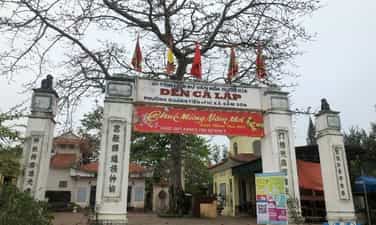
In addition to its folk name, Ca Lap temple (located in the ancient Ca Lap village) is also known by names such as: Tay Phuong Thanh Hoang temple of Quang Tien commune; Nghe An in Trap village, or the literal name is "Linh Tu General" - the temple worshiping the sacred general. However, although the names may be different, the relic is the place to worship the talented general whom Sam Son people have often called "Great General Tay Phuong" for many generations. Legend has it that his military career was closely linked to the resistance war against the Mongol invaders of the Tran dynasty and the ancient Dai Viet people. The relics of Ca Lap temple, after more than 700 years of construction and many restorations, are still preserved and protected by the people in the area, becoming a spiritual religious site that shows the admiration of the people of Sam Son coastal area for famous general. With its legend and existing value, in 1999 the Ca Lap temple relic was recognized by the Ministry of Culture and Sports as a National Monument. Source Department of Culture, Sports and Tourism of Thanh Hoa province.
Thanh Hoa
5844 view
Rating : National monument

Kenh Pagoda (Hung Phuc Pagoda)
Located in Hung Phuc Pagoda, also known as Kenh Pagoda (Quang Hung commune, Sam Son city), it was built in the late winter of the year Giap Ty, the reign of Khai Thai Nguyen (1324) during the reign of King Tran Minh Tong (1314-1329). ), the stele is the only original document recording a "fragrance" fighting under the Tran dynasty who united to defeat the invading Yuan-Mongol army led by Toa Do. The pagoda was built in Yen Duyen village to worship Buddha and worship Senior General Le An, who had great contributions in the first resistance war against the Yuan-Mongol army (in 1258), and was also promoted to general by King Tran Thai Tong. and marry the princess. As a general close to King Tran Quoc Tuan of Hung Dao, when he died, General Le An was awarded the royal title "Do Nguyen's Great Governor, Great Minister of the Country, Great General" - a very great title during the Tran Dynasty. . Stemming from a heart of compassion and filial piety, Le Bang - the second son of Lieutenant General Le An, started construction of the pagoda in 1264. The work was not completed when Le Bang died, and his second son, Le Manh, continued. Continue the work and rebuild the temple larger and more beautiful. In 1326, the pagoda was completed, consisting of 11 tiled buildings and two spacious courtyards, sitting on beautiful land that is both solemn and elegant. The pagoda was completely destroyed by the invading Ming army in the 15th century, leaving only the stele recording the victories of the Dai Viet army and people led by General Le Manh. Specifically, in 1285, Le Manh commanded the local militia to ambush the Toa Do army from the south, take a shortcut through Co Khe, enter Thanh Hoa, and win a major victory in the Co But region. That victory is engraved on a stele built in the pagoda, a precious relic of Ly - Tran culture. The stele is 1.5 m high, 0.6 m wide, 0.25 m thick, built on the back of a turtle with its legs stretched out and its neck stretched to the east. The stele's forehead is carved with two dragons flanking the sun, winding and strong. The dragon's body is plain and simple, typical of dragons of the Ly - Tran dynasties. The four words Hung Phuc Tu Trai are written in the style of a seal on the stele's forehead. The two sides are two button-shaped borders and the bottom is a highly stylized water wave. The stele was engraved in the year of the pagoda's inauguration, the 3rd year of Khai Thai (1326), by General Tran Quoc Chinh. This is one of only more than ten steles of the Tran Dynasty remaining in Vietnam. The epitaph has two parts: the upper part recounts the construction of the pagoda and recounts the achievements of Le Manh, the lower part is a 24-sentence poem praising the merits of the Le family. With the multifaceted historical, cultural, artistic and ideological value of the ancient stele, on September 4, 1995, the Ministry of Culture and Information (now the Ministry of Culture, Sports and Tourism) ranked National level Kenh Pagoda stele relic. Source Thanh Hoa province electronic information portal.
Thanh Hoa
5786 view
Rating : National monument