Relic point Vietnam
Việt Nam
Historical Relics Base Area Bung 6 Commune
The area surrounding 6 communes of Thu Duc district is a land on the outskirts of Saigon City, with an important waterway and road transportation system, connecting Saigon City with Thu Duc and surrounding areas. This place has an important strategic military position. Building a revolutionary base in the coastal area will connect with the bases of the suburban districts of Saigon City, from these places our forces can attack. suddenly attacked the headquarters of the colonial and imperial armies. In October 1946, the Gia Dinh Provincial Party Committee directed the establishment of the provisional district party committee of Thu Duc district with comrade Duong Van Suu as Secretary. Implementing the direction of the Provincial Party Committee, the District Party Committee proposed the tasks and direction of the district's activities to promote eliminating fraud, eliminating evil, expanding activities to the coastal areas, building authorities and union fronts in communes. pelvic area. Focusing on the key task of building a base in Area B and a base in Area C of the district in the area, establishing the Viet Minh Front and the authorities of Long Phuoc, Phu Huu, Tam Da, Phuoc Truong communes. Base area B is Long Phuoc village, established in 1947. Base area C (predecessor of Base Vung Bung 6 communes was established in late 1947 and early 1948. When first established, there were only 3 communes: Tam Da, Phuoc Truong, Ich Thanh, was later expanded to Phu Huu commune and when completed, it included 8 communes: Tam Da, Phuoc Truong, Ich Thanh, Phu Huu, Phuoc Long, Tang Nhon Phu, Binh Trung, An Phu. Later, 3 communes Tam Da, Phuoc Truong, Ich Thanh merged into Long Truong commune, so the remaining 6 communes: Long Truong, Phu Huu, Phuoc Long, Tang Nhon Phu, Binh Trung, An Phu were called the Base. Bung region has 6 communes. The 6-commune base is an extremely important strategic maneuver area for the armed forces from communes, districts to provinces, military zones and regions to intimidate and attack enemy headquarters in the most daring way. , the most unexpected, in the fastest time, with the shortest distance (only 5 km from the city center as the crow flies), especially the starting point of the armed forces attacking Saigon City during the war. General offensive and uprising in the spring of Mau Than 1968 and great victory in the spring of 1975. Under the leadership of the District Party Committee, the armed forces and people of the 6 communes have united as one, overcoming all hardships and sacrifices, tenaciously sticking to building the base, protecting the safety of the base and fight until complete victory. With the typical historical values mentioned above, on October 10, 2008, the People's Committee of Ho Chi Minh City recognized the Vung Bung 6 Commune base as a historical relic. Currently, the traditional house at the base of Vung Bung 6 communes displays images, artifacts and documents to introduce the revolutionary fighting tradition of the soldiers and people of Vung Bung 6 communes during the two resistance wars against the French colonialists and the French colonialists. American empire. In operation since August 2011, it has attracted thousands of visitors to visit and study each year. Traditional house of historical and cultural relics based on Vung Bung 6 communes is located on La Xuan Oai street, Phuoc Hiep quarter, Long Truong ward, Thu Duc city, Ho Chi Minh City). Source: Thu Duc City Cultural Center
Ho Chi Minh City
6204 view
Rating : City-level relics

Hong Anh Thu Quan Relic
Ca Mau, the southernmost land of the country, has a very valuable revolutionary historical relic, the Hong Anh Thu Quan, located at 43, Pham Van Ky Street, Ward 2, Ca Mau City. After a long period of fierce war, the relic still retains the original architecture of the original house, restored, embellished, and preserved in its original value. In January 1929, the Vietnam Association of Revolutionary Youth in Ca Mau town was established, with the important task of propagating Marxism-Leninism and educating revolutionary consciousness among farmers, workers, and students. , intellectuals and mass leaders fighting for people's rights and democracy. During that struggle movement, the Association opened the bookstore "Hong Anh Thu Quan" selling contemporary progressive books and newspapers published in Saigon. In fact, this is a front for the democratic movement, a meeting place for many patriots, and a place of operation for the Vietnam Revolutionary Youth Comrades Association of Ca Mau Town - a political organization with the mission of enlightenment. Enlighten patriotic youth, propagate and educate Marxist-Leninist ideology... The house with a construction area of 74m² (3.7m wide, 20m long) facing Northeast, adjacent to Ca Mau market, on the bank of Xang canal, is a street house in a 2-storey street block built by the French colonialists. Around 1900, it was called Asia's sleeping house (also known as Ong Son street). After a period of active operation, Hong Anh Thu Quan exerted a profound ideological influence on people from all walks of life, creating a political premise for the later birth of Communist Party establishments. With the meaning of being a pioneering flag in the revolutionary movement in Ca Mau, Hong Anh Thu Quan was ranked as a national historical relic on August 4, 1992. On the basis of inheriting traditional elements, the ground floor of the relic was restored to Tam Dong coffee shop in the form of socialization, decorated with many antiques and artifacts. Becoming an ideal Ca Mau tourist destination for tourists passionate about learning about the culture and history of Ca Mau land and a "red address" to educate revolutionary traditions for the young generation. Source: Ca Mau Tourism
Ca Mau
6371 view
Rating : National monument
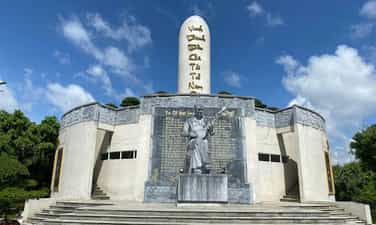
Memorial area for musician Cao Van Lau
Located in Ward 2, Bac Lieu City, the Southern Don Ca Tai Tu art memorial area and musician Cao Van Lau were recognized by the People's Committee of Bac Lieu province as a provincial-level historical and cultural relic in 1997. 2014, the Ministry of Culture, Sports and Tourism ranked it as a national historical-cultural relic. With an area of nearly 12,500 square meters with a total investment of over 70 billion VND, this is the resting place of the family of the late famous musician Cao Van Lau. In addition, the relic site also has construction items such as the Southern Don Ca Tai Tu and Cai Luong art gallery, the Cao Van Lau musician exhibition hall and Hoai Lang Da Co version, the Don Ca performance hall. Southern amateurs, Musical Instrument Garden, Semi-moon Lotus Lake... Going through the main gate, visitors will see the "Yue Cam Dai Dai" standing tall in the middle of the campus. The staircase going up to the Dai Dai with 32 steps symbolizes the development of Da Co Hoai Lang village from beat 2 to Vong Co hamlet with beats 4, 8, 16, 32, 64. Above the highest Dai is the symbol of the Pliers. stylization - the symbol of Southern amateur music associated with the image of musician Cao Van Lau. The pliers are stylized from bamboo sticks, the pliers part is hollowed out to create mystery and sacredness, evoking nostalgia and remembrance of the deceased. On the Nguyet Cam Platform, there are 21 ornamental pots representing 21 provinces and cities where amateur music is strongly developed. Right behind the Nguyet Cam Station is a statue of musician Cao Van Lau sitting holding a Pliers instrument, behind him is Da Co Hoai Lang - this is his immortal work, known as the "King's song" of opera theater. Southern salary so far. Next to it is the Musical Instrument Garden with 12 types of traditional musical instruments carved in green stone. Going straight through the Musical Instrument Garden is the Art Gallery of "Don Ca Amateurs and Southern Cai Luong Theater". Visitors will be able to see and learn about many precious documents, images and artifacts related to the formation and development of the art of Don Ca Tai Tu and Southern Cai Luong theater. The most popular place for tourists is the Exhibition House of musician Cao Van Lau. This place stores many artifacts such as books, newspapers, documents, and images about the life and career of musician Cao Van Lau. In particular, here visitors will admire the wax statue of the late musician made of silicon, very similar to the real person. In addition to the above-mentioned projects, the memorial area for the late musician cannot help but mention, which is the grave of the late musician's family, in addition to a stage house for performing traditional folk music, The souvenir shop... has really attracted tourists when they set foot in this land. The memorial area of musician Cao Van Lau is truly the most attractive attraction in Bac Lieu. If you have the opportunity to visit Bac Lieu province, don't forget to visit the souvenir area. Source: electronic information portal of the Union of Friendship Organizations of Bac Lieu province
Ca Mau
9138 view
Rating : National monument
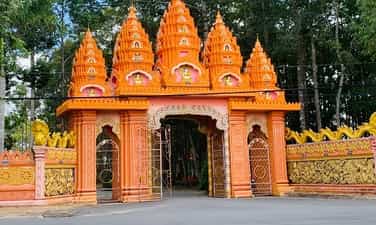
Chroi Tum Cha Pagoda (old Tra Tim Pagoda)
One of the oldest Khmer pagodas in Soc Trang, built around the 15th-16th centuries, is Tra Tim Pagoda. Currently, in Soc Trang city there are 3 pagodas with the same name Tra Tim that people often call Old Tra Tim, New Tra Tim and Middle Tra Tim. Based on its history, the old Tra Tim Pagoda is the oldest and most majestic. This is not only an ancient pagoda but also a revolutionary relic marking the victories of monks and Khmer people of Soc Trang town (now Soc Trang city) in the struggle against America to save the country. Tra Tim Pagoda was started construction nearly 500 years ago, on a high, dry land of 38,600 square meters located in Tam Trung hamlet, Dai Tam commune, My Xuyen district, Soc Trang, now in Tam Trung cluster, ward 10. , Soc Trang city. The pagoda has a unique location because it is adjacent to two large roads of Soc Trang city: Tran Hung Dao street and National Highway 1A. Initially, the pagoda only built a few monk houses for the senior monk and monks in the temple to temporarily rest. Next, the senior monk chose a suitable location for the ceremony to build the main temple, then the meeting house (sala), and the tower. Ash storage, crematorium... all buildings are made of wood or sand, roofed with leaves. Around the pagoda, there are hundreds of ancient oil trees and star trees over 100 years old, which not only create a cool, mysterious and sacred space but also serve to collect wood to repair the pagoda or build houses, boats, and Ngo boats when the trees have grown. old. The temple's architecture has traditional characteristics of the Khmer people, including the main hall, sala, school teaching Pali language for children in the area, crematorium, Ngo boat house of the pagoda, tower for ashes.... Currently, the pagoda still preserves a number of artifacts such as 40 statues of Sakyamuni Buddha made of wood, stone, bronze, glass, cement, 2 dragon lion statues (dragon head and lion body) made of lacquered wood. gold (also known as a deer - tea - masonry), a deer statue made of wood lacquered and gilded, used for monks to sit and preach; 9 main inauguration stele slabs.... Tra Tim Pagoda is not only an artistic architectural work of the Khmer people of Soc Trang province, but also a place marking the victories of monks and Khmer people of Soc Trang town in the direct struggle against the plot to relocate the Khmer people. The temple went elsewhere to expand the US-Diem Soc Trang airport in 1962. Since the airport was established next to the pagoda, it has affected and destroyed the pure, sacred space where the monks practice by the sound of airplane engines operating day and night. This airport location was formerly a horse racetrack for French officers and officials. In 1940, Japan occupied Indochina and in 1941 took prisoners of war and the people of Soc Trang destroyed the racetrack to build Soc Trang airport to serve as a rear base to support the Japanese air force on the Pacific front. It can be said that although the struggle of the people and monks of Tra Tim Pagoda took place within a small town and did not cause any harm, this event became a trigger for the movements. The direct struggle of monks and Khmer people everywhere in Soc Trang province, against the enemy oppressing monks, against the enemy forcing their children who are practicing monks to become soldiers. After the liberation in 1975, until now, Soc Trang airport has been used as a military school of Military Region 9, Tra Tim pagoda is still peaceful, free and is increasingly renovated more spaciously and prominently than before. With those victories, the pagoda has been classified as a revolutionary historical relic since May 12, 2004, according to the decision of the People's Committee of Soc Trang province. The pagoda is also a pioneer in mobilizing and contributing many resources to build rural transportation, great solidarity houses, build a new cultural life, eliminate illiteracy for poor children... with the intention of a good and beautiful life. religion. Source: Soc Trang Tourism
Can Tho
7366 view
Rating : Provincial level relics

Historical relic of Hoa Tien base
The historical relic of Can Tho Provincial Party Committee Base (1965 - 1698) is located in Hoa Tien commune, Vi Thanh city, Hau Giang province. During the resistance war against the American imperialist invasion, Can Tho Provincial Party Committee closed Provincial Party Committee offices in many places such as: Kinh Ngang, Hiep Hung commune, Thanh Hoa, Phung Hiep district, Xa Phien; Vinh Vien, Long My district, but there are two Provincial Party Committee bases standing in to direct the revolutionary movement that created a historical turning point in the province. That was the base of the Ba Bai Provincial Party Committee, Phuong Binh commune, from 1972 to 1975, where from 1972 to 1975, he directed the pacification attack in 1973 and the general offensive and spring uprising in 1975, which won complete victory in the resistance war against Vietnam. America saved the country. This place is often called the Ke Khom base (in Chinese: Key means to eat, Key means to come here to eat Pineapple). After the failure of the "special war" strategy, in November 1965, the US imperialists escalated the war, carried out the "Local War", sent expeditionary troops, vassal troops, and increased current weapons. modern (B52, napalm bomb, chemical agent); At the same time, use the highest firepower of the air force, navy, and artillery to support the puppet army in sweeping and pacifying; carry out a two-pronged plan: "pacify and destroy", pacify the countryside to wipe out the revolutionary base from the people; destroy the main force to break the backbone of the Viet Cong, expanding the war to the North with the air force and navy. For Can Tho, which was the enemy's key pacification center in the Mekong Delta, they sent American advisors and officers to reinforce the operations and pacification agency. The enemy launched many large-scale raids, using direct attack. helicopters, bombardment lights, bombers killed compatriots and destroyed gardens in the liberated base areas of Phung Hiep and Long My Vi Thanh. Faced with that situation, the Regional Party Committee instructed Can Tho province to choose an area to build a base to lead and direct the three-pronged movement in the province to defeat the enemy's pacification plot. Comrade Nguyen Van Nhan (Ba Mai) was assigned the task of Head of the Construction Committee along with a number of officers and soldiers to take advantage of trees and leaves in the available area to build houses for the Provincial Party Committee and service departments. Provincial Party Committee such as: Provincial Party Committee Office, Cipher Team, Code Detective Team, Radio Information Department, Domestic Communications Station, Public Communication Station, Base Department, Security Team, Defense Team. Thus, from February 1965, the Can Tho Provincial Party Committee from Kinh Ngang, Hiep Hung commune, Phung Hiep district moved to the base in Thanh Thang hamlet, Hoa Luu commune, Long My district. From this base, in 1965, 1966, and 1967, under the direction of the Southwest Regional Party Committee, the Provincial Party Committee led the Party, army and people of Can Tho with "two legs and three noses" to break the grip and destroy hamlets. Tan Sinh", besieged and destroyed, forced out many enemy posts, brought people back to their old fields and gardens, the liberated area was expanded to close to towns and townships, creating favorable conditions for us to penetrate deeply to fight the enemy and provide support. for the mass uprising movement to reach the enemy's lair, killing many American-puppet soldiers and causing heavy damage to the enemy. Combined with the activities of the armed forces in the inner city, the Tay Do battalion raided and destroyed the "black tiger" Ranger battalion and severely damaged two Ranger battalions 42 and 44 in Truong Long commune, O Mon. ; The Tay Do battalion attacked the rear of the 21st puppet division in Tra Bet, Giai Xuan commune, close to Can Tho city. To preserve and promote revolutionary traditions, to educate current and future generations; The People's Committee of Can Tho province has recognized the Can Tho Provincial Party Committee base in Thanh Thang hamlet, Hoa Tien commune, Vi Thanh town, Can Tho province (now Hoa Tien commune, Vi Thanh city, Hau Giang province) as a historical relic. provincial level. Source: Hau Giang Province Electronic Information Portal
Can Tho
6055 view
Rating : Provincial level relics
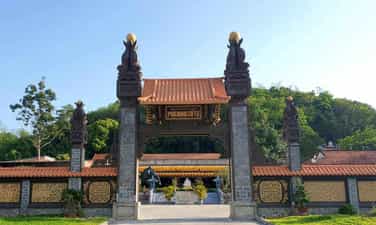
Phu Dung ancient word
Phu Dung Pagoda also has another name, Phu Cu Pagoda, located at the foot of Binh San Mountain, Binh San Ward, Ha Tien City, Kien Giang. As one of the ancient landscapes of the peaceful and poetic land of Ha Tien, Phu Dung Pagoda not only adorns the borderland with the quiet majesty of a temple but also captivates visitors by its discovery. tells the beautiful love story of the Governor and "Miss Ai in the upside-down pot". Phu Dung Pagoda is associated with the story of the person lying in the ancient tomb, Ms. Phu Dung, who later people also gave another name, Ms. Di Tu, the first nun to live at the pagoda. Actually, the above anecdote is told by folk based on the historical novel Ai Co in an upside-down pot by Mrs. Mong Tuyet. The story is summarized as follows: Cong Mac Linh, General of the Army, Grand Admiral Mac Thien Tich, has a second wife named Aunt Tu, who is "beautiful and fragrant and has good writing". Mac Linh Cong, because of his love for beauty and poetic talent, turned from favor to natural love. As a result, Mrs. Nguyen became jealous and plotted to harm the second wife. One day, while Cong Mac Linh was busy reviewing troops, at home, Lady Nguyen locked her concubine in a pot and covered it until she suffocated and died. Suddenly, it started to rain heavily and Cong Mac Linh just arrived. Seeing that it was raining but the big pot was not tilted up to catch the water, he ordered the pot to be opened and discovered that Aunt Tu was barely alive, but luckily she was still able to save her. Although she escaped death, Aunt Tu became bored with the situation and asked Duke Mac Linh for permission to become a monk. Faced with that unruly situation, the General had no other choice but to comply and build a temple for his "Ai Co" to practice. Next to the temple, he dug a pond and planted white lotus flowers to commemorate his old love. When she passed away, Cong Mac Linh built a solid tomb, structured in the shape of a pot, to pay tribute to the beautiful woman who had to endure injustice and hardship because of him... That tomb later became Phu Dung Tu. Although there are different opinions, there is even an opinion that the love story of Mac Doge and Ai Co Phu Cu is just a fiction of writers, but most Ha Tien people know it by heart and believe that it is a beautiful, true love story, associated with the work of opening up Ha Tien land. The historical love story soaked in literature and tears between Governor Mac and Ai Co Phu Cu has since then been the inspiration for many works of stories, operas and poems. In 1959, Kien Giang writer and poet Ha Huy Ha wrote the opera "Wedding dress in front of the temple gate" based on the work "Miss Ai Co in an upside-down pot" by female artist Mong Tuyet. The opera attracted countless hearts of audiences at that time. In front of the pagoda yard is a high platform with a statue of Avalokiteshvara about 4 meters high made of cement and painted white. Next is the solemnly decorated main hall: in the middle is the statue of Sakyamuni, on both sides are the two great disciples Anan and Ca Lett. There are also 4 large reliefs (each 1.3 m high, 2.3 m wide) illustrating 4 scenes of Buddha's birth, renunciation, sermon and nirvana. Behind the main hall, through a small yard, visitors will see a two-story high attic called "Ngoc Hoang Buu Dien", which worships the Jade Emperor and the two kings Nam Tao and Bac Dau. To the left of Phu Dung Pagoda, there is a small path along the mountainside. Walk about 20 meters and you will see an ancient tomb leaning against a cliff in the middle of a forest of towering, cool, secluded trees. On the tombstone there are many lines of Chinese characters. Next to the grave, there is a stone stele engraved with Vietnamese writing: Mausoleum of Mrs. Phu Dung - Tu Thanh Thuc Nhon - Nguyen Thi Xuan (1720-1761) - passed away on the full moon day of the second lunar month - Phu Cu brand. Source: Kien Giang Tourism
An Giang
6405 view
Rating : Provincial level relics

Go Thap An Loi
The national archaeological relic of An Loi tower mound (Chau Lang commune, Tri Ton district, An Giang province) is a religious and religious architectural work of the post-Oc Eo culture period, dating from the 8th - 9th centuries. on a large scale and still quite intact. The relic contributes to revealing many scientific data about the origin, content, and nature of Oc Eo ancient culture. Oc Eo culture is one of three ancient cultures in Vietnam, including: Dong Son, Sa Huynh and Oc Eo. According to experts, the relics, ruins and values of Oc Eo culture belong to the ancient Funan Kingdom. Typically, there is the architectural relic of An Loi tower mound (the relic is located on a high mound foundation, so people here often call it "tower mound"). In 1999, the An Loi tower mound relic was discovered by the Provincial Museum during a survey in the mountains in Tri Ton district. In 2002, the Provincial Museum coordinated with the Center for Archaeological Research under the Institute of Social Sciences of the Southern Region to re-survey the archaeological site of An Loi tower mound. The An Loi tower mound archaeological site has a rectangular shape and an area of over 300 square meters. The top of the mound is flat, 2.5m high above the surrounding surface. The surface of the mound reveals many bricks, many brick seams running in a straight line in an east-west direction along with a few stone blocks and architectural stone slabs lying exposed in the middle of the mound or next to tree stumps. There is a circular "stone table" placed on top of whole and broken bricks in the middle of the mound. The slopes of the mound on the south and north sides are brick walls that are still vertical. On the east and west sides, due to being dug up to get bricks, bricks and jagged rocks were left on the slopes of the mound... That is a sign that this architecture was built with mixed bricks and stones in the traditional style of ancient Oc Eo - Phu Nam culture residents. The results show that, despite being excavated, the architectural foundation is still quite intact with the height of the tower walls ranging from 1.5 - 2.5m. Excavation results show that the An Loi tower mound relic has a rectangular architectural plan built of quite large bricks and stones, angled many times with a length of 19.2m in the east-west direction, a width of 11.6m in the east-west direction. north-south, 2.5m high from the base of the false column edge or 3.6m from the base of the last brick foundation - close to the foundation stone layer up to the top. The architectural layout consists of 2 parts: The lobby in the east is connected to the up and down steps, and the back lobby is in the west. Inside the architecture of the back hall, there is a square well-shaped worship pit, the sides are 1.2m wide in the east-west direction and 1.1m in the north-south direction. The hole was dug quite deep, containing many raw bricks, rocks and gray sand. In addition, in the pit, a large ceramic jar was discovered broken into many pieces. The jar had a not high mouth, a wide bulging body, a flat bottom, and a very shiny dark brown enamel layer on the outside. The relics collected are mainly stone objects of various types, such as: Stone Linga fragments, Somasutra sacred water troughs, stone tables; Stone slabs of many shapes, such as: Semi-circular stones, fan-shaped stones, rectangular stones and a few pieces of ancient pottery and vase spouts in insignificant quantities. Through research, the An Loi tower mound belongs to the heavy architectural type built of mixed brick and stone of the post-Oc Eo period. The discovery of many Linga and Somasutra suggests that the An Loi tower mound architecture is a temple belonging to the Siva belief where blessing rituals of ancient communities in the post-Oc Eo period were performed. The estimated date of the architecture is around the 8th - 9th centuries AD. An Loi Tower Mound has high value in terms of scientific research, the historical origin of the land and national culture is more than 1,000 years old. With important historical and cultural significance and high scientific value, An Loi tower mound was ranked a national historical, cultural and archaeological relic by the Ministry of Culture, Sports and Tourism on February 26, 2019. 2008. Source: An Giang Online Newspaper
An Giang
6279 view
Rating : National monument
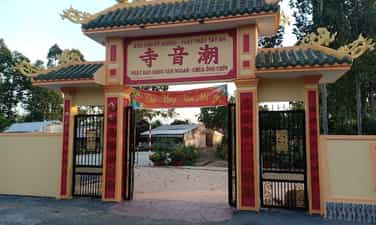
Trieu Am Pagoda (Thanh Dao)
Trieu Am Tu (Ong Chin Pagoda) is located in Hoa Dan hamlet, Nhi My commune, Cao Lanh district, Dong Thap province. It is a pagoda following the Buu Son Ky Huong religion of Buddha Master Tay An - Doan Minh Huyen. The pagoda was first founded by Mr. Dang Van Ngoan (also known as Mr. Dao Ngoan) in the year Giap Dan (1854) during the 7th year of King Tu Duc's reign at Tra Bong canal, Nhi My village, Kien Phong district, Dinh province. Tuong (now Hoa Dan hamlet, Nhi My commune, Cao Lanh district, Dong Thap province). Mr. Dao Ngoan is a great disciple of the "twelve sages" of Buddha Master Tay An. He was born in the year of Canh Thin (the year of Minh Mang, 1820) in a virtuous family in Nhi My village, near Tra Bong canal. When he was over 20 years old, after diligently cultivating land to establish a field and garden so that his family could make a living, he asked his mother to let him leisurely find a quiet place to cultivate his mind and nurture his nature. With his mother's approval, he chose a plot of land in Ong Buong canal to build a thatched hermitage to meditate. Mr. Dao Ngoan studied Buddhism with Buddha and spread Buddha's Buu Son Ky Huong religion, guiding people to set up fields, reclaim land on the outskirts of Dong Thap Muoi and cure people's diseases. He directed his followers to recite Buddha's name and cultivate the Buddha's name, exploiting more than 500 square meters of land. Not long after that, the pagoda caught fire and burned down, followed by several Southern provinces being invaded by the French invaders. During the mutiny, Mr. Dao Ngoan and his followers had to leave the temple to seek refuge. In 1867, Mr. Ngoan returned to Tra Bong to gather followers to rebuild the old pagoda, continue to take medicine to treat people's illnesses and gathered a large number of followers to preach the teachings of the Four Graces, in which the grace of the country comes first. The country's situation is suffering from foreign invasion. Tra Bong Pagoda became a place where patriots gathered to discuss fighting the enemy. On the 19th day of the second lunar month, the year of the Tiger (1890), Mr. Dao Ngoan passed away at the age of 70. His mournful followers gathered together to bury him in accordance with Buddha's teachings. After Mr. Dao Ngoan passed away, the pagoda continued to be cared for by Nguyen Thi Hue (his third wife) and the pagoda. Mr. Dang Cong Hua (Chin Hua's son) was also taught the Dharma and healing methods by Mr. Ngoan and Mrs. Hue, so Tra Bong Pagoda still gathers a large number of followers. When Mr. Chin Hua replaced the abbot of the pagoda, he gave the pagoda a new name, Trieu Am Tu. In addition to the name Trieu Am pagoda that few people know, people still call this "Ong Chin Pagoda" because Mr. Chin's virtue and talent are no less than Mr. Dao Ngoan's. During the resistance war against America In 1965 - 1966, a secret cellar was built at the temple to house provincial and district officials. Every time there was an enemy raid, when they withdrew, the pagoda sounded three loud beeps to signal the cadres to take shelter in the cellar. This secret bunker was used very effectively until the day of liberation on April 30, 1975. From 1973 to April 30, 1975, Cao Lanh Town Party Committee returned to Tra Bong canal near the pagoda, the monks in The pagoda has just served as inter-commune liaison at Nhi My and protected commune officials. Trieu Am Tu (Ong Chin Pagoda) is a place to record traces of revolutionary events, a place to worship the title of Thanh Hoang Bon Canh and Dai Can of the Nam Hai Nation along with the 6-card box of Nhi My communal house which is descended from Mr. Chin's work preserves and maintains incense despite many historical events. The pagoda is also a place to educate patriotic traditions, virtues of compassion, preach and encourage people and believers to follow the teachings of "Four Graces". On December 23, 2019, the People's Committee of Dong Thap province ranked Trieu Am Tu is a Provincial-level historical and cultural relic. Source: Cao Lanh district website, Dong Thap province
Dong Thap
5866 view
Rating : Provincial level relics

Statue of Generals Le Can and Nguyen Giao
The Le Can - Nguyen Giao monument was built in 2004 at An Nhon intersection, Vung Liem town, with a height of 7.5m, made of bronze, and weighs 21.5 tons. The statue was built to commemorate two national heroes, General Le Can and Nguyen Giao, in the early history of the struggle against the French colonialists. On June 20, 1867, France invaded Vinh Long for the second time. Together with the people of the whole country, the people of Vinh Long rose up to organize many uprisings against foreign invaders. First, there was the Dang Cuu group (a group of court officials who united to raise troops), then Phan Thanh Gian's two children, Phan Ton and Phan Liem, raised the flag of resistance, but failed one after another...Faced with the repression of the invaders. , the hearts of patriotic people became even more angry and angry. Around 1872, the uprising in Vung Liem arose, the leaders of this anti-French movement were Le Can and Nguyen Giao. Le Can and Nguyen Giao were both farmers, but were more or less educated and had passionate patriotism, so when they stood up to call on the people to resist the French, they received a warm response from the farmers. people and scholars around the area. On one night of the year Nham Than (1872), implementing the strategy of Le Can - Nguyen Giao, Pho Mai led a militia group of about thirty people to raid the market of Vung Liem district, killing the district owner named Thuc and 6 soldiers. After this resounding victory, the French army carried out fierce repression and they sent governor Ton Tho Tuong to take over Vung Liem to replace the district owner who was killed by insurgents, in addition to the famous lawyer Alix Salicetti. sinister, but the resistance force did not flinch, temporarily withdrew, hid and waited for the opportunity to counterattack. To destroy Salicetti, Le Can came up with a plan to surrender and lure the enemy into an ambush by the insurgents at Cau Vong. On February 15, 1872, Salicetti led his entourage to Vung Liem to meet the insurgents. When arriving at Cau Vong, General Le Can, as soon as he saw Salicetti sitting on horseback near the end of the bridge, immediately jumped over with a ladder, hugged Salicetti and threw him to the ground. At that time, the war drums sounded loudly, Nguyen Giao led the insurgents to block the French soldiers' retreat and killed over 10 people. Meanwhile, Commander Le Can and Salicetti hugged each other and fell into the river and both died in the water. Nguyen Giao took Salicetti's head and together with the people and troops buried General Le Can on the edge of the forest. After that, the governor Tran Ba Loc brought troops to capture and kill all the people in the hamlet. Bodies filled "Vung Linh" (now the camp is read as Vung Liem), people's houses were also burned. Nguyen Giao continued to resist the French, but the great event was unsuccessful. He was shot down by the enemy in the Co Chien River and the young soldier's body was lost. Although the two heroes and martyrs sacrificed their lives, the names of General Le Can - Nguyen Giao still live forever in history books, remembered by today's generations. Source: Vinh Long Tourism
Vinh Long
7286 view
Rating : National monument
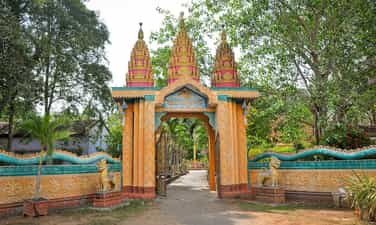
Relics of BODHICULÀMANI Pagoda (Ap Soc Pagoda)
Bodhicumàmani Pagoda relic, also known as Ap Soc Pagoda or At Pagoda, is located about 30km from Tra Vinh city, in Soc hamlet, Huyen Hoi commune, Cang Long district, Tra Vinh province. The temple was built in the year 2085 of the Buddhist calendar, or 1541 solar calendar, and has gone through over 400 years with 15 generations of monks, monks and abbots. From 1945 - 1949, during the resistance war against the French colonialists, Elder Thach Kim participated in the revolution and raised cadres at this temple. From then on, Bolhicumànani Pagoda became the base of the Party and revolution, protected by Buddhists and monks during the resistance. Through generations of pagoda leaders such as Elder Thach Kim, Elder Thach Yen, Elder Thach Nien... there have been many revolutionary cadres from the province to the grassroots who have been raised at the temple such as former comrade Nguyen Dang (Nam Trung). Secretary of the Cuu Long Provincial Party Committee; Comrade Ho Nam (Nam Dat), former Secretary of the Cuu Long Provincial Party Committee; Mr. Maha Son - Thong, former Chairman of the 7th National Assembly Ethnic Council; Comrade Pham Hong Phuoc (Chin Phuong); Comrade Pham Thanh Thuong (Tu Hong); Comrade Pham Van Xuyen, former Member of the Provincial Party Committee... With the spirit of "All for resistance, all for victory", the monks and Buddhists of Bolhicumànani Pagoda vowed to wholeheartedly follow the Party, in the same way. network. The pagoda is the place where many Khmer and Kinh intellectuals were trained. Many monks, after returning from secular life, joined the revolution and became steadfast revolutionary cadres. Some comrades heroically sacrificed their lives. for the cause of national liberation and national unification. In addition, dignitaries in the pagoda also actively mobilized Buddhists to contribute a lot of rice and money to support the resistance army. In addition, the senior monks together with Buddhists participated in many struggles for civil rights, democracy, freedom of religion, freedom of belief... The temple alone donated dozens of oil trees for burial. fallen soldiers and officers and many bronze tools for the construction site of making weapons to fight the enemy... With the above contributions, Ap Soc Pagoda was awarded a Certificate of Merit by the Vietnam Fatherland Front Committee of Tra Vinh province for its achievements through two periods of resistance and good social work. Particularly, Venerable Thach Yen was awarded the Resistance Medal, Class II, by the President. On March 3, 2009, Bodhiculanhani Pagoda (Ap Soc Pagoda) was honored to be recognized by the Ministry of Culture, Sports and Tourism as a National Historical Site. Source: Tra Vinh Tourism Information Center
Vinh Long
6023 view
Rating : National monument