Relic point Vietnam
Việt Nam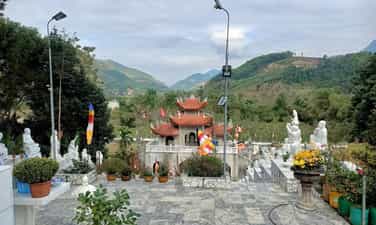
Black Y Tower Pagoda
Hac Y Tower Pagoda is a typical historical and cultural relic located in Tan Linh commune, Lao Cai province, associated with the Hac Y relic complex and historical and religious vestiges dating back to the Ly - Tran dynasties. The most prominent highlight at the relic site is the Black Y Tower, a work in the architectural style of the Tran Dynasty with a unique curved roof, tower base and floors decorated with patterns of lotus flowers, water waves, papaya leaves, phoenixes, chrysanthemums... The motifs are crafted on sophisticated terracotta, demonstrating the artistic level and cultural interference of the ancients. The Hac Y area still preserves many vestiges such as Ben Lan communal house, Than Ao Den mountain and Dai Cai temple. Among them, Dai Cai Temple is located on the Chay River, a religious space associated with folk legends about the black-clothed god who helped the Hung Kings fight against enemies. Legendary stories and archaeological traces have created a mysterious and sacred look for the whole area. Not only has architectural and religious value, Hac Y also preserves traces of military works, citadels and places associated with the activities of ancient residents. This is a valuable source of information that contributes to understanding the history of the Northwest region. Source: Buddhist News Newspaper
Lao Cai
409 view
Rating : National monument

Chieng Khoi Lake
Chieng Khoi Lake - beauty among the Northwest mountains and forests. The lake has an area of about 40 hectares, located in the middle of a valley surrounded by mountains and green hills. The lake surface is clear and peaceful all year round, winding between mountains and forests, creating a poetic and peaceful space. Especially during the ban flower season, the white color covering the mountain slopes makes the scenery here even more attractive. According to Thai legend, in the past, Chieng Khoi was a dry land lacking water. The Khoi boy, with extraordinary health, moved mountains and released water from many directions here, creating a lake to help people have water for daily life and production. That story contributes to creating the legendary color of the landscape. Besides its landscape value, Chieng Khoi Lake also has a rich ecosystem with mountain forests, birds, fish and many types of forest trees. The lake space is fresh and quiet, suitable for sightseeing, resting and exploring nature. Coming to Ho Chieng Khoi, visitors also have the opportunity to learn about the traditional culture of the Thai people with Xoe dances, flute sounds, brocade weaving, pieu scarf embroidery and many unique ethnic dishes. The harmony between the blue lake surface, rolling mountains and forests and Thai cultural identity has created a unique appeal for Chieng Khoi Lake. Source: Vietnam Historical and Cultural Relics information page
Son La
404 view
Rating : National monument
Dong Son archaeological site
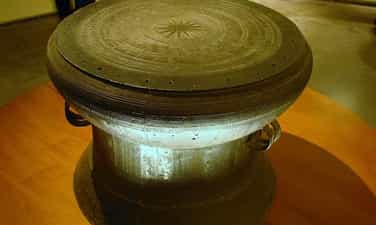
Dong Son archaeological site - a place where the quintessence of ancient Vietnamese culture is deposited. Located on the Ma River, in Ham Rong ward, Thanh Hoa province, Dong Son archaeological site is one of the most important sites of Dong Son culture, dating back more than 2,000 years ago. The site was discovered in 1924 when people accidentally found bronze artifacts on the banks of the Ma River. Through many surveys and excavations, a series of precious artifacts have been discovered such as production tools, weapons, ceramics, jewelry and especially bronze drums. These artifacts show that Dong Son residents have achieved high levels of metallurgy, agricultural production, handicrafts and spiritual life. In particular, Dong Son bronze drums are considered one of the typical symbols of ancient Vietnamese civilization, demonstrating sophisticated bronze casting techniques and the religious and festive life of ancient residents. Not only has archaeological value, Dong Son relics also contribute to clarifying the formation and development process of ancient Vietnamese culture in the Ma River basin, while affirming the position of Dong Son culture in the history of Southeast Asia. According to: Thanh Hoa Newspaper and Radio and Television
Thanh Hoa
387 view
Rating : National monument
Thien Long Uyen
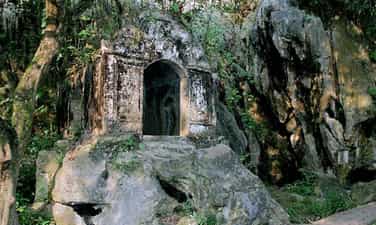
Thien Long Uyen - mysterious vestiges next to Silver Stone River. Located in Duc Son area, Hoang Que ward, Quang Ninh province, Thien Long Uyen is a land with many unique historical and cultural vestiges, associated with the space of Bach Dang victory in 1288. Under the Tran dynasty, this place was called Thien Lieu mountain, belonging to Ma Lieu site. Highlights are the ancient ghost steles carved directly on the cliffs, typically the Tam Bao Dia stele dated 1348 and the Thien Long Uyen stele. These documents contribute to reflecting the history and religious life of the land many centuries ago. Thien Long Uyen also owns a system of limestone mountains, caves and high points with wide views of Da Bac and Bach Dang rivers. Through archaeological surveys, researchers have discovered many wooden stakes, ceramic fragments and ancient traces along the river, opening up new research directions on the history of human residence and activities here. In particular, the location and topography of Thien Long Uyen has raised the hypothesis about the role of this area in the Bach Dang battle in 1288. Although further research is still needed, the existing vestiges have created a unique appeal for the land. Currently, the relic is being documented by Quang Ninh province to be directly integrated into the Bach Dang Special National Monument Complex. According to: Quang Ninh newspapers, radio and television
Quang Ninh
419 view
Rating : Provincial level relics
Dong Dau archaeological site
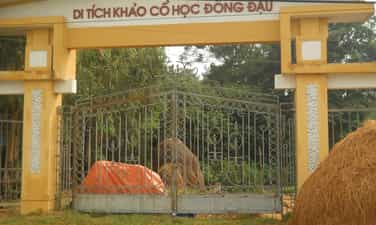
Dong Dau archaeological site is located on Go Dau, Yen Lac commune, Phu Tho province. This is one of the typical archaeological sites that helps clarify the development process of ancient Vietnamese residents in the pre-Dong Son period. Discovered in 1962, the relic has undergone six excavations, discovering thousands of artifacts including production tools, weapons, jewelry, pottery, bronze, stoneware, horn bones and many terracotta animal statues. In particular, traces of bronze casting furnaces, casting molds, burnt rice grains, animal bones and tree seeds show that the residents here knew how to metallurgy, grow wet rice, raise livestock and garden very early. Through studying the cultural layers, archaeologists determined the continuous development from Phung Nguyen - Dong Dau - Go Mun culture, reflecting the long-term development process of ancient Vietnamese residents before entering the Dong Son era. The age of Dong Dau culture is determined to be about 3,500 - 3,000 years ago. The discoveries at Dong Dau have made an important contribution to restoring the lives, production activities and culture of residents during the Hung King period, while also providing valuable documents on the origin and formation process of ancient Vietnamese civilization in the Red River basin. With those special values, Dong Dau is considered an important pre-Dong Son relic of Vietnamese archeology. Source: National Museum of History
Phu Tho
130 view
Rating : National monument
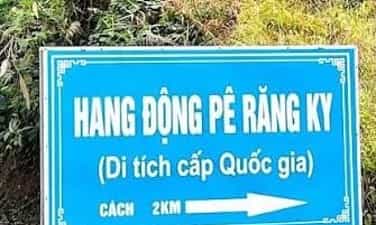
Pe Rang Ky Cave
Pe Rang Ky Cave - a gem in the middle of the Tua Chua plateau. Located at the foot of Pin Pang mountain, in Pe Rang Ky village, Huoi So commune, Dien Bien province, Pe Rang Ky cave is a typical landscape amidst the majestic limestone mountains of the Tua Chua highland. In front of the cave is a lush natural forest, creating a wild and attractive landscape. The cave goes deep into the mountain about 800m, including three chambers with a system of stalactites, stalagmites, stone columns and stone bells with unique shapes. The first compartment stands out with large stone columns and winding stalactite bands. Moving to the second compartment, the space is larger, the stalactites shaped like mushrooms, pine trees, corals, Buddha statues or natural chandeliers create a shimmering, magical look. The third chamber impresses with its towering stone columns, amazing stalactite forest and a small clear lake in the middle of the cave. Not only attractive by its geological beauty, Pe Rang Ky is also located in the unique ecological space of the Da River lakebed, giving visitors an experience combining cave exploration and the Northwest mountain and forest landscape. With outstanding geological, landscape and ecological values, Pe Rang Ky cave is ranked a national scenic relic by the Ministry of Culture, Sports and Tourism. This is considered a "natural art museum", where visitors can admire magical sculptures created over millions of years. Source: Vietnam National Tourism Administration
Dien Bien
433 view
Rating : National monument
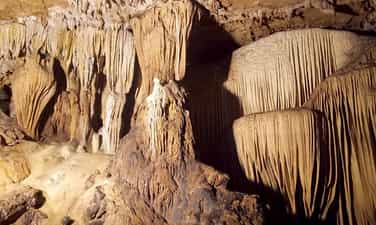
Tham Khen Cave
Tham Khen Cave - a wonder in the heart of Dien Bien limestone mountain. Located at an altitude of about 800m above sea level, Tham Khen Cave in Na village, Muong Dun commune, Dien Bien province, is an outstanding landscape with an interesting cave system in the middle of limestone mountains. In Thai, "Tham" means cave, "Khen" is the name of a bitter, sweet vegetable that grows in abundance at the entrance of caves. Tham Khen complex consists of two caves located not far from each other. The first cave is about 160m long, divided into three compartments, featuring stone columns, stalagmites and a system of stalactites in the shapes of elephants, dragons, phoenixes, turtles and many species of birds. In particular, in the last compartment there is a natural "skylight", bringing light down from the top of the mountain, creating a shimmering, magical space. The second cave is about 280m deep, including two chambers with many small niches. The stalactites here create images like silk strips, rivers, streams, ponds, terraced fields and successive layers of rocks. Some cliffs also emit different sounds when knocked on, creating a unique feature of the cave. Not only has landscape value, Tham Khen is also a limestone mountain and cave ecosystem with potential to serve scientific research, nature conservation and tourism development. With outstanding values, Tham Khen Cave is ranked as a national scenic spot by the Ministry of Culture, Sports and Tourism. Source: Department of Cultural Heritage
Dien Bien
450 view
Rating : National monument
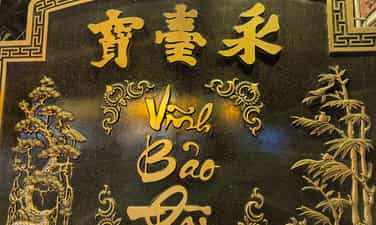
King Ba Temple
King Ba Temple, also known as Vinh Bao Dai Temple, is located next to Lang Pagoda, in a cool green space with many ancient trees such as Muom, Dai and pine. The temple has a traditional architecture consisting of three compartments, facing south, inside is a harem where a throne is placed to worship the nursemaid of King Ly Than Tong in his childhood. Therefore, local people have long known this place as King Ba Temple. According to folk beliefs, after her death on December 3, the royal court granted her the title "Tu Phuc Hoa, Ly Mau Cung Than". In addition to the main worshiped figures, the temple also worships the Three Holy Mother Goddesses, Thap Nhi Son Trang and a number of figures and altars according to folk beliefs. King Ba Temple has a close connection with the cultural space and festival of Lang Pagoda. Every year, on the 7th day of the third lunar month, when the Thanh Lang palanquin passes by, the procession stops to hold a worshiping ceremony. On the first and full moon days, people and tourists coming to Lang pagoda often visit King Ba temple as a ceremony site, contributing to preserving the traditional religious beauty of Lang land. With its historical, religious value and connection to traditional festivals, King Ba Temple is a destination that contributes to enriching the cultural relic system of the Lang area, Hanoi. Source: Hanoi People Magazine
Hanoi
467 view
Rating : National monument
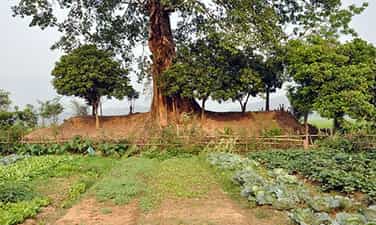
Thanh Sam Mun
Sam Mun citadel, also known as Tam Van citadel, is located in Pom Lot village, Thanh An commune, Dien Bien province. This is a historical relic associated with the formation process and historical fluctuations of the Muong Thanh region. According to historical documents and local legends, the citadel was built many centuries ago, used to be an important base of the Lu lords and then became a place of dispute and struggle for many forces in the Northwest region. In particular, in the mid-18th century, Sam Mun citadel was the base of Pha Chau Tin Toong forces. In 1754, Hoang Cong Chat's insurgent army coordinated with Thai leaders to surround and capture the citadel. After the victory, Hoang Cong Chat chose Muong Thanh as his base, gradually building up his forces and expanding his area of operation. Today, the remaining vestiges of Sam Mun citadel are mainly a section of the citadel wall about 3km long in the Pom Lot hill area, at the same location as Pu Chom Chanh - which was once used as an observation point overlooking the Muong Thanh valley. With outstanding historical and cultural values, Sam Mun citadel was ranked a national historical relic by the Ministry of Culture, Sports and Tourism in 2009. The relic is an important vestige that contributes to understanding the history of the Muong Thanh region and the fighting traditions of the Northwest ethnic communities. Source: Wikipedia
Dien Bien
445 view
Rating : National monument
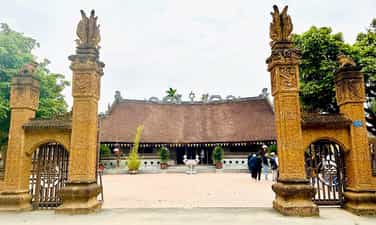
Dinh Tuong Phieu
Dinh Tuong Phieu, also known as Dinh Ca, is located in Tich Giang commune, Hanoi city. This is a long-standing religious building, worshiping four tutelary gods, including three saints Tan Vien and Quan Son tutelary god. The communal house was built in the southwest direction, towards Ba Vi mountain - a place associated with the legend and belief of worshiping Saint Tan. The building has a "Nhat" shaped architecture, consisting of three compartments and two wings, outstanding with a curved roof system, soft knife heads and many delicate carvings. The themes of dragons, phoenixes, unicorns, deer, water clouds and flowers are vividly expressed, bearing the mark of the art of the Le Trung period and later renovation periods. The communal house still preserves many precious relics such as procession palanquins, altar thrones, ordinations, ancient incense bowls and worship objects dating from the 17th century to the early 20th century. Every year, the communal house festival is held on the full moon day of the first lunar month, an opportunity for people to commemorate the merits of the Tutelary Gods and preserve traditional cultural values. With outstanding values in history, architecture and art, in 2018, Tuong Phieu communal house was ranked a special national monument by the Prime Minister. Source: Department of Cultural Heritage
Hanoi
449 view
Rating : Special national monument