Relic point Vietnam
Việt Nam
Headquarters of the first Resistance Administrative Committee of Yen Bai province
Mr. Tran Dinh Khanh's House Relic - Headquarters of the first Resistance Administrative Committee of Yen Bai province is located in Van village, Viet Hong commune, Tran Yen district. This is one of four relics located in the Van War Zone National Historical Relics Group recognized by the Ministry of Culture and Information as a National Revolutionary Historical Relic on September 4, 1995. In daily life, his house was as simple as other houses in the Tay village, but during the years of resistance, it was "boiling" and "enthusiastic" like the people of this revolutionary land. In 1995, this place, along with Bat Cave, Chung communal house, and Dong Yen palm mound, was recognized as a national historical relic, becoming a red address for educating the tradition of fighting against the French colonial invasion of the father. grandfather. Mr. Tran Dinh Khanh is a Chief of Luong Ca, Tran Yen district working under the French government. He was a man with progressive ideas, patriotic and people-loving, and dissatisfied with the exploitative regime of the French colonialists. Enlightened by the Viet Minh cadres of the revolution, with his influence, he mobilized people in the area to join the Au Co Guerrilla Team, donating food, gold coins, and weapons to support the cause. Resistance. His family himself supported the revolution with dozens of tons of rice, along with a lot of cattle and money, and used his house as a base of operations for the Viet Minh, becoming a place to receive donations and support from the Viet Minh. people for the resistance war, was the place where many important meetings of the Au Co Guerrilla Team and the revolutionary base were held. The stilt house has wooden column architecture, 5 compartments, 2 wings, 4 rows of legs, designed in the style of stacking tanks, traditional lines, and a hallway in front. The main house is connected to the kitchen and has a palm roof. The back leans against the mountain, the front faces a rice field. Here, many events and meetings took place to make important decisions of the Van - Hien Luong war zone, and at the same time it was a gathering place for the masses to participate in the revolution and fight for power. during the resistance war against the French colonialists. During the resistance war, Viet Hong - the cradle of the Yen Bai revolution, the people had a patriotic spirit and a tradition of courageous struggle that refused to submit to the oppression of the semi-feudal colonial regime. Since the light of the revolution shined, the struggle movement has developed strongly, attracting a large number of people to participate. Under the direction of the Viet Minh Front, the Van - Hien Luong war zone was established with the task of welcoming revolutionary soldiers who escaped from Son La prison and from Nghia Lo gaol; Organize training for local armed forces to fight; Propagating and educating the Party's revolutionary guidelines and policies of the Viet Minh front. An important event during this period was on June 14, 1945, the Au Co guerrilla team was established in Hien Luong, marking the strong development of the revolutionary armed forces. The next morning, under the direction of comrade Ngo Minh Loan, the guerrillas marched into Dong Yen (Van Hoi) and Van village. Before entering Van village, Viet Minh cadres were sent to enlighten the people in the area about the revolution. Thanks to extensive propaganda policies, they received help from the people, and at the same time sent their children to join the guerrilla team, so only in In a short time, the force increased to hundreds of people. In 1946, Mr. Tran Dinh Khanh was honored to be elected as a Delegate to the 1st National Assembly of the Democratic Republic of Vietnam. Mr. Tran Dinh Khanh's House Relic is one of four relics in the cluster of National Historical Relics of the Van War Zone, recognized by the Ministry of Culture, Sports and Tourism as a National Revolutionary Historical Relic on April 4. September 1995. Source: Center for Relic Management and Tourism Development of Yen Bai
Lao Cai
4380 view
Rating : National monument

HISTORICAL RELIC OF THE 1968 MONUMENT OF MAU THAN
Mau Than 1968 Monument is located at Hoa Binh Junction (km 5), Tan Hoa ward, Buon Ma Thuot city, modeled after the image of Hero of the People's Armed Forces Huynh Thi Huong (second mother). , one of the typical role models for more than 10,000 mothers and sisters participating in the protest group entering the gate of Buon Ma Thuot town in Mau Than in 1968. During the 1968 Tet Offensive and uprising, we captured and took control of a number of important enemy positions in the town, closely coordinating military, political and military operations, promptly using force. The internal forces destroyed the enemy, destroyed many war vehicles, brought tens of thousands of people to the streets with fierce spirit,... Remembering the courageous and resilient struggle against the enemy, the great sacrifices and losses of mothers, sisters and fellow ethnic minorities in Dak Lak province during the 1968 Tet Offensive and Uprising, after the 1968 Tet Offensive. After liberation, Dak Lak province began building a mass grave at km 7, Tan Hoa ward, Buon Ma Thuot city, where loyal revolutionary soldiers and ethnic minorities in the province participated. The protest attack was heroically sacrificed. At the same time, construction of the Mau Than 1968 Monument is underway at km 5 (Hoa Binh Junction) in Tan Hoa ward, Buon Ma Thuot city. The 1968 Mau Than Monument therefore contains great values, not only of historical significance but also of profound educational value for the times, a symbol praising the heroic and noble sacrifice for the sake of humanity. the cause of national liberation of the people of all ethnic groups in Dak Lak province. The 1968 Mau Than Monument was ranked as a Provincial Historical Monument by the People's Committee of Dak Lak Province on June 24, 2014. Source: Dak Lak Provincial Museum
Dak Lak
5416 view
Rating : Provincial level relics

Dien Co Temple
Dien Co Temple is located on a land area of more than 2,500 square meters in Dong Chu village, Nghi Truong commune, Nghi Loc district, Nghe An province. Dien Co Temple was established to worship the god Cao Son Cao Cac and his descendants. According to legend, the god Cao Son was originally from China, had the surname Cao, the name was Hien, passed the Ming Dynasty doctorate, and was sent to our country to be an observation envoy. He was a righteous man, defeated the Man invaders, maintained peace and filial piety between the two countries, helped the people do business and develop production, so after his death, a temple was built. When there is a natural disaster such as a drought, praying to him is very effective. Therefore, all dynasties have ordained gods and are listed internationally. Than Cao Cac is a native of Cao Xa village, Tho Xuan district, Thanh Do prefecture, born on January 6, 938. From a young age, he was intelligent and had extraordinary health. God was born in a time of chaos caused by 12 warlords. He followed Dinh Bo Linh and was instrumental in founding the Dinh Dynasty. In 968, Dinh Bo Linh pulled troops to Hoa Lu to build the capital and ascended the throne as Emperor, establishing the Dinh Dynasty, naming the country Dai Co Viet. King Dinh gave him the land of An Ninh district. He saw that this was a place with charming scenery and peaceful people, so he set up a military base and practiced martial arts with his soldiers. He was a kind-hearted person, often guiding people in growing crops, raising livestock and helping people cure diseases... Then, when the King of Champa, Sa Dau, brought troops to threaten our country, King Dinh gave him a sword seal and 50,000 soldiers. Go fight. With his strategic talent, he commanded bravely, killed many enemies, achieved success in defeating the Champa army in Nghe An, Thanh Hoa, and drove the enemy out of the territory. King Dinh wanted to keep him here to take care of government affairs, but he insisted on retiring to the An Ninh area to live with the people of his homeland. After his death, the Dinh Dynasty built a temple. People in many places set up temples to worship the gods. When there are big floods, fields are soaked in water for a long time, giving rise to armyworms, causing crop failures. The villagers offered prayers to the god for blessings, and sure enough, the armyworms died, and from then on, the people believed even more in the blessings of the god. Up to now, no documents have been found that specifically record the date of construction of Dien Co temple, but according to the chronology of the ordinations kept here and according to the elders in the area, the temple was built before the 5th century. XVIII, including 3 buildings: upper palace, middle palace and lower palace. The temple is famous for its sacredness; was once conferred ordained by kings. Through many events, ups and downs of history, the temple was demolished to perform other functions, leaving only vestiges of the temple foundation and some religious orders (recognition of the 44th King Canh Hung (1783), sect conferred in the 9th year of King Khai Dinh's reign (1924). With a sense of returning to the roots, to meet spiritual needs and contribute to traditional education for the young generation, according to the wishes of the people, Nghi Truong Commune People's Committee organized the restoration and renovation of Dien Temple. Flag on the old temple foundation with socialized funds. After more than a year of urgent construction, the three upper palaces, middle palaces and lower palaces, and the ritual gate of Dien Co temple have been embellished and restored on a large scale, more beautiful and spacious than before, and the palaces have been decorated. The altar decorations are solemn and splendidly painted and gilded. According to traditional customs, every 2 years, local people jubilantly organize festivals on the 20th and 21st days of the first lunar month. On those days, people from villages in the area made offerings to worship at the Temple. In the feast, two traditional cakes are indispensable: day cake and aunt cake. Dien Co Temple Festival carries cultural and spiritual values in the minds of Nghi Truong residents, attracting the participation of a large number of local people and people in the region. The festival begins on the afternoon of the 20th and ends on the evening of the 21st of the first lunar month (lunar calendar), including 2 parts: The ceremony and the festival. The ceremony includes: announcement ceremony, sacrifice ceremony, procession ceremony and thanksgiving ceremony. The festival has many exciting cultural and sports activities, human chess competitions, folk games such as cockfighting, tug of war, bamboo fighting, swinging, tickling, lion dancing, and opera singing ( play Trung Trac Trung Nhi).... Source: World Heritage
Nghe An
5952 view
Rating : National monument
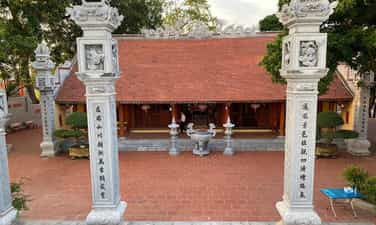
Pottery Temple
Gom Temple worships Deputy General Nhan Hue Vuong Tran Khanh Du in Linh Giang village, Co Thanh commune, Chi Linh town, Hai Duong province. Local people still sing familiar folk songs about Gom Temple: “Temple of heroic Nhan Hue Van Don resounded with the Yuan enemy falling apart. According to the book: "Trial calendar, charter chapter, will" by Phan Huy Chu: Tran Khanh Du is from Chi Linh town, Hai Duong province. He was a member of the Tran dynasty, so he was given the title Nhan Hue Vuong Tran Khanh Du. Tran Khanh Du's father was Lieutenant General Tran Pho Duyet. Inheriting the royal family tradition, from a young age, Tran Khanh Du was very passionate about books and good at military books. He was the one who made many great contributions in the resistance wars against the Mongols in the 13th century. In 1258, the first Mongol resistance broke out, in the decisive strategic battle in Dong Bo Dau, young general Tran Khanh Du With creative ingenuity, a surprise attack on the enemy camp resulted in a great victory. After this battle, the Yuan Mongol army was knocked out of the Imperial City and had to withdraw their troops back to the country. In the early spring of the year Mau Ngo (1258), at the early spring court ceremony to celebrate the rewards given to generals, Tran Khanh Du was praised by the king as a wise man and awarded the title of Thien Nghia Nam. Some time later, because he committed a crime, he was dismissed by the court and returned to his hometown to work as a boatman selling coal. In November 1282, preparing for the second resistance war against the Mongols, King Tran held a conference in Binh Than to get opinions from the princes and mandarins to discuss how to attack and defend against the enemy. On this occasion, King Tran happened to meet Tran Khanh Du rowing a boat carrying coal through Nhan Loan wharf in a scene of "conical hats and loose clothes". The king invited Tran Khanh Du to come and restore his old positions to discuss plans to preserve the country. At the Binh Than conference, Tran Khanh Du proved to be a strategic man, offering many profound combat plans in accordance with the king's will. Tran Thai Tong again promoted him to the position of Deputy General of the Army. After defeating the enemy, he was awarded the title of Marquis. In 1288, during the third resistance war against the Mongols, Tran Khanh Du was assigned by Tran Hung Dao to fight at sea. Here, Tran Khanh Du won the battle of Van Don, destroying more than 500 warships of Truong Van Ho. The Van Don victory failed from the beginning of the Mongol army's logistics plan, making an important contribution to the early and successful end of the third resistance war against the Mongols. Tran Khanh Du was not only talented in leading troops into battle, but he also had special abilities in training soldiers and thoroughly understanding Tran Hung Dao's military techniques. When Tran Hung Dao wrote the book: "The Esoteric Book of Van Kiep Tong" to train soldiers, it was Tran Khanh Du who wrote the foreword about the use of military techniques, demonstrating his strategic talent: "Every use of soldiers If you're good at it, you don't need to fight, but if you're good at planning, you don't need to fight, if you're good at fighting, you won't lose, if you don't lose, you won't die. With great contributions during the three resistance wars against the Mongols, Tran Khanh Du was a talented general; He was awarded the title Nhan Hue Vuong by King Tran. At the end of his life, Tran Khanh Du retired to Thai Ap near Tran Xa village (Chi Linh, Hai Duong) - a place where waterway traffic developed and local people traded and produced ceramics. He often encouraged local people to actively produce, so the local economy was very prosperous. Therefore, the name Linh Giang village is also called Gom village. On August 15, Ky Mao year, Nhan Hue Vuong Tran Khanh Du passed away. Recognizing his merits, local people built a temple at the beginning of Gom village on the banks of Kinh Thay river named "Nhan Hue Vuong tu". Over the years of history, the ceramic temple relic has been restored many times. The temple was built in the 14th century. In the 17th and 18th centuries during the Le Dynasty, the temple was restored. The architecture is in the Dinh style with 3 layers of houses including 5 main worship rooms, 5 middle rooms, and 3 harem rooms. At the end of the 19th century, the French colonialists attacked the Pha Lai and Chi Linh areas, and the ceramic temple relics were also burned down. In 1933, people from everywhere invested in restoring the entire temple. The architectural structure remains the same, consisting of 3 layers of houses. Particularly, the 5-room front worship house has been expanded to include two gable rooms to serve as a shrine. Every year, every autumn, from the 13th to the 21st of the 8th lunar month, local people organize the Gom Temple festival to commemorate the famous man Tran Khanh Du. The Pottery Temple Festival takes place continuously for 7 days and nights. Most of the guests attending were fishermen along the coast of Quang Ninh and Hai Phong... According to popular beliefs, Tran Khanh Du was a naval general who defeated the Mongol army in many battles on rivers and seas, so he often performed There are some folk tales such as: carrying water, swimming, etc. praying for people going to sea to be safe and get lots of fish, shrimp, produce, and luckily not to be hit by storms... This is a beautiful cultural feature. Traditional culture of Northeast residents needs to be preserved. Source: Chi Linh Relics Management Board
Hai Phong
4421 view
Rating : National monument
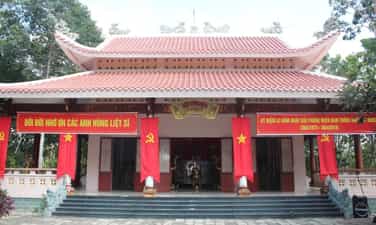
Gia Lai Provincial Party Committee Historical Relic Area (Zone 10)
Revolutionary base Zone 10 (now Krong commune, Kbang district) converges all the elements of "favorable weather, favorable terrain, and harmonious people", and was chosen by the province as a "Safety Zone" during the 20 years of the war. resistance war against America to save the country (1955-1975). Although the enemy mobilized many means and forces and used every means to attack, the Revolutionary Base Zone 10 always stood firm, ensuring the safety of the headquarters of Gia Lai province. The construction site of the Revolutionary Base Zone 10 was originally a continuous base of 3 Northeast Gia Lai districts during the resistance war against the French. This complex base includes 3 communes: Lopa (Plei Kon district), Hon Nong (Nam Kon Plong district), Bonam and part of Nam commune (An Khe district). The terrain is high mountains, dense forests, divided rivers and streams; The three sides East, West and North rely on the mountain position; The southern side is adjacent to the An Khe depression, advancing can fight the enemy, retreating can stand still and calmly raise and train troops. This place has a cool, humid tropical climate. Most of the residents are Bahnar people with a tolerant, hard-working, hard-working nature, and live faithfully following the Party and Uncle Ho. During the resistance war against the French colonialists, the people here did not cooperate with the enemy, many villages before 1945 were still outside of the enemy's control. This area became a communication corridor, a supply corridor, and the advance of armed propaganda teams, and armed teams from the delta advanced to the North Pleiku and Northwest Route 14 areas, expanding their base. In the years 1950-1954, this place was the base of main army units to attack the enemy in the An Khe and South-North Route 19 campaigns. At first, the Provincial Party Committee had only 8-10 people. After that, the movement developed, especially when the National Liberation Front of the South was born (1960), then when the Provisional Revolutionary Government of the Republic of South Vietnam was established, the departments and branches of the province also formed. In addition to key agencies such as: Provincial Party Committee, Liberation Government, Front, Military Committee, there are also specialized departments: Economy-Finance, Culture, Education, Health... In difficult times Despite hardships and dealing with the enemy's destructive war measures, the agency's officers united with the army and people to survive, both producing and fighting against the enemy, maintaining the base. Not only is it the province's revolutionary base, Area 10 is also a shelter for a number of agencies of Inter-Zone 5 and neighboring provinces during enemy raids and raids in the delta. In particular, Area 10 is also the location of intersection stations - an important link of the North-South Central corridor and the East-West corridor parallel to National Highway 19. Even though it suffered under the rain of bombs and storms of bullets from the enemy, under the protection and protection of the mountains and forests and people here, the Revolutionary Base Zone 10 always stood firm, ensuring the safety of the units. The province's headquarters operated and led the successful resistance war against the US, liberating the province on March 17, 1975, contributing to liberating the South and reunifying the country. With the principle "When drinking water, remember its source", on March 17, 2017, the Provincial Party Standing Committee decided to start construction of the province's revolutionary historical relic site in Krong commune. The relic area is designed to simulate works during the resistance war against the US to save the country, including: Secretary's shack, Deputy Secretary's shack, Cipher's shack, Office shack, A-shaped cellar, dining room, Royal kitchen. Cam, memorial house, stele house recording events; At the same time, restore the forest and protect the ecological landscape in the relic area. On May 19, 2018, the Revolutionary Base Area 10 was inaugurated. This is a "red address" to educate patriotism and revolutionary traditions for officials, party members and people of all walks of life in the province, especially the current young generation who always remember their merits, dedication, the selfless sacrifice of his father's generation in the struggle for independence and freedom of the nation. Source: Gia Lai Electronic Newspaper
Gia Lai
5661 view
Rating : Provincial level relics

Martyrs' Tomb Memorial Temple
The historical relic of Martyr's Tomb Memorial Temple is located on Nguyen Viet Xuan street in residential group 11 (now residential group 3), Hoi Phu ward, Pleiku city, Gia Lai province. The historical relic of the Martyrs' Tomb Memorial Temple in Hoi Phu is the resting place of more than 200 martyrs who heroically fought and died during the 1968 Tet Offensive and Uprising in Pleiku town - Gia Lai. The 1968 Tet Offensive and Uprising took place in Pleiku town, starting from the night of the 30th to the morning of the first day of the 1968 Tet Offensive and lasting until the 3rd day of the Lunar New Year, with nearly a dozen units from the company arriving. The battalion and civil service officers attacked Pleiku town and attacked many enemy headquarters. In particular, the force of Zone 9 (Pleiku town - now Pleiku city) includes special forces company C 90 and special forces company C21; Summary of the 1968 Tet Offensive and Uprising campaign in Pleiku town: The army and people of our province (mainly the Pleiku town front) killed nearly 3,500 enemies, destroyed 500 military vehicles, 35 artillery pieces. and a number of aircraft of all types, burning nearly millions of liters of enemy gasoline. In coordination with the military attack, 11,000 people took to the streets to protest for political struggle. Revolutionary governments in a number of hamlets and communes in districts (Zones) 3, 4, 5, 6 were established. More than 14,000 compatriots destroyed strategic hamlets and returned to their old villages, and 11 villages on the outskirts of town were liberated. After the General Offensive and Massive Uprising of the Mau Than Tet, General - Vo Nguyen Giap, on behalf of the Standing Committee of the Central Military Commission, sent a telegram "warmly praising the recent achievements of the army and people of Buon Ma Thuot town, Kon Tum, Pleiku and Tan Canh town". On February 6, 1968, our State commended and awarded the "Fatherland Merit Medal" to the soldiers and civilians of Pleiku town, and at the same time, the security forces of Pleiku town (Area 9) were also awarded the Meritorious Service Medal, class 1. 3. In 2020, the C90 special forces company was honored to receive the title of Hero of the People's Armed Forces. The 1968 Tet Offensive and Uprising had great significance for Pleiku town: Immediately after liberation, Pleiku town authorities always paid attention and took care of the common graves of martyrs. To commemorate the merits of the martyrs, the Party Committee and Pleiku town government did not move the remains of the martyrs to the cemetery but kept the same position. In 1993, Pleiku town rebuilt the mass grave on the spot with "The Fatherland Recognizes Merit" station and each side has a stele recording the units participating in the campaign and the number of soldiers and officers who died in the 1968 Tet Offensive and Uprising in Pleiku. From 2004 to 2005, the Party Committee and Pleiku city government renovated and rebuilt the common grave with solid reinforced concrete and spacious granite tiles at the old location. Newly built memorial temple, guest house, stele, and ornamental garden. In 2020, the bell tower was built and the guest house was renovated. With the value, meaning and importance of the monument to the historical development of Pleiku - Gia Lai, it is also the wish of the relatives of heroic martyrs from all parts of the country whose children died in the war. 1968 Tet Offensive campaign in Pleiku town. On March 5, 2007, the People's Committee of Gia Lai Province decided to classify the historical site of the Martyrs' Tombs Memorial Temple, group 11, Hoi Phu ward, Pleiku city, Gia Lai province, as a provincial-level historical relic. Every year, the Party Committee and People of Pleiku city organize a visitation ceremony, offering flowers and incense at the relic site, especially on the occasion of Lunar New Year, March 17, April 30, July 27, September 2 and other political events of the city. Source: Gia Lai Provincial Museum
Gia Lai
5797 view
Rating : Provincial level relics

Pleime victory site
The Plei Me victory was the first campaign against the Americans by our army and people on the southern battlefield. The victory of Plei Me strengthened the belief in the ability to defeat the Americans and the determination to defeat the Americans of the Southern people. The Plei Me victory historical relic stele is located in Ia Ga commune (Chu Prong district, Gia Lai province). On July 20, 1965, when American troops massively landed in the South to implement the "Local War" strategy, President Ho Chi Minh called on the people to fight against America and save the country: "Unite and persevere." determined to fight; Even if we have to fight for 5 years, 10 years, 20 years or longer, we will resolutely fight until complete victory. At the end of July 1965, the Party Central Committee and the Central Military Commission appointed Major General Chu Huy Man - Member of the Party Central Committee, Deputy Secretary of the Party Committee of Region V, Political Commissar of Military Region 5 as Commander and Political Commissar of the Central Highlands Front. In early October 1965, the Central Military Commission approved the determination and plan of Plei Me Campaign. In mid-October 1965, the Central Highlands Front Command gathered forces to launch the Plei Me Campaign. The intention of our campaign is: “Besiege the point to attack the reinforcements. First destroy the puppet, then destroy the Americans. Pull American troops away from the base, send them into the mountains and forests to destroy them." Plei Me is a commando training center located in Zone 5 (Chu Prong district today), about 30 km southwest of Pleiku. This is an important link in the western defense strip, southwest of Pleiku town and southwest of the enemy's 2nd Corps base. According to our plan, the scope of the campaign is not only the Plei Me commando training center but takes place in a large area in the quadrilateral: Plei Me - Bau Can - Duc Co - I a Do Den Trong The space is about 1,200 square kilometers. The decisive battle area with American troops was identified by the Central Highlands Front Command as the I a Do Den valley at the foot of Chu Prong peak. On the night of October 19, 1965, Operation Plei Me opened. Local army units coordinated with the main force to perform a diversionary mission to trick the enemy into opening fire to threaten Duc Co base and attack Tan Lac post. During more than 1 month of fighting, proactively and continuously attacking with the tactic of "surrounding the posts to attack reinforcements", our main force with the support of local forces and militia and guerrillas destroyed almost all of them and defeated them. Severely damaged 2 US airborne cavalry battalions, destroyed a mixed mechanized infantry task force of the Saigon army, shot down and damaged 59 helicopters, destroyed 89 military vehicles... The US side admitted that in the I a Do Den valley, 824 American air cavalry soldiers died and were wounded, including more than 300 soldiers who died in battle. The Plei Me victory proved that our troops could destroy a battalion of American soldiers; destroy mobile tactics with helicopters, defeating America's elite units with the most modern equipment in the "Local War" in the South. The Plei Me victory further strengthened the belief in the ability of the Southern compatriots to defeat the Americans and their determination to defeat the Americans. The Plei Me victory shocked America and the world. The Plei Me victory was not only meaningful to the Central Highlands battlefield but also opened the phase of preemptive destruction in the US's "Local War" strategic plan. Source: Gia Lai Electronic Newspaper
Gia Lai
5143 view
Rating : National monument
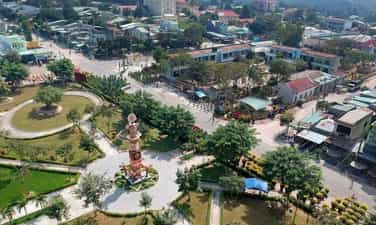
Victory location Route 7 - Song Bo
The legendary victory on Route 7 - Song Bo in March 1975 is always the pride of the Party Committee and every person living in Ayun Pa town and neighboring districts of Phu Thien, Ia Pa, Krong Pa, Gia province. Lai. This is where the largest pursuit of the enemy in the history of the Indochina war took place, led by our 320th Division in coordination with the local troops of Gia Lai and Dak Lak to crush the withdrawal of troops from the Central Highlands. of the puppet 2nd Army Corps, causing the enemy to fall into disastrous defeat; Marked the end of the Central Highlands Campaign in the spring of 1975 - the opening campaign for the General Offensive to completely liberate the South and unify the country. On March 4, 1975, the Central Highlands campaign opened, with a solid battlefield formation. In the following days, the entire Central Highlands was jubilant in the atmosphere of our soldiers liberating Buon Ma Thuot. With this victory, the Central Highlands campaign ended, the US-Puppet strategic position in South Vietnam was broken in a crucial area; The coastal areas of the Central region, the Southeast, and Saigon are threatened. With the victory in the Central Highlands, the revolutionary war of our army and people entered a new period: from an offensive of strategic significance, developing into a general offensive of strategic significance throughout the South, causing resulting in a historic victory in the spring of 1975. And, with the victory of Route 7 - Bo River, according to our records (and the enemy's recognition) - this was the decisive blow that made the strategic retreat plan of Major General, Commander of the 2nd Puppet Corps - Pham Van Phu was completely bankrupt. Bo River Bridge and Cay Sung Bridge became the enemy's terror. Also here appeared the heroic fighting example of Hero of the People's Armed Forces Nguyen Vi Hoi, who single-handedly shot down 6 enemy tanks, destroyed 21 enemies, contributing to writing the epic poem Route 7. After the country's liberation, Road 7 was renamed National Highway 25, becoming a vital traffic route connecting the Central Highlands and Central Highlands provinces. The historical relic of Victory on Road 7 - Song Bo is located on Highway 25, which is the contiguous area between Song Bo ward and Ia Sao commune (Ayun Pa town). On December 28, 2001, this location, along with the 7 River Bo Road Victory, was recognized by the Ministry of Culture and Information as a national historical relic. According to the minutes regulating the protection area of the Victory Road 7 - Bo River relic made by the Provincial Museum on August 11, 1998, the relic area has an area of 15,396 m2, located southeast of the Bo River bridge. , the East borders Hoang village (Ia Sao commune), the West borders National Highway 25, the South borders National Highway 25, the North borders Bo River. This is considered a red address for historical and traditional education for future generations. Source: Gia Lai Electronic Newspaper
Gia Lai
5187 view
Rating : National monument
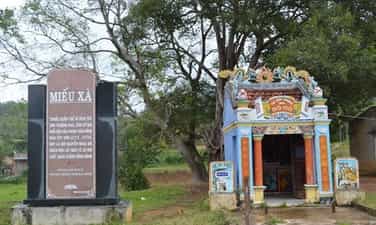
Xa Temple
Xa Temple (Thuong An 2 village, Song An commune, An Khe town) belongs to Tay Son Thuong Dao Special National Monument Complex. Through many historical changes, the temple with many thrilling legends is still preserved by the people. Every year, on holidays and Tet, people in the area hold offerings to pray for gods to bless them with a peaceful, prosperous, and happy life. In the middle of a large plot of land, the Snake Temple is nestled under a row of ancient trees. On the left of the temple, there is a stele inscribed: Xa Temple belongs to the Tay Son Thuong Dao relic complex, the early base of the Tay Son peasant movement (1771-1773); This is where Nguyen Nhac cut a snake to take blood to sacrifice to the flag when sending his troops to the plain. Over the past 250 years, people in the Tay Son Thuong region have still passed down many thrilling stories related to Mieu Xa, the snake god. Legend has it that after a period of preparing strong soldiers and generals in Tay Son Thuong, in the year of the Snake (1773), the three Tay Son brothers (Nguyen Nhac, Nguyen Hue, Nguyen Lu) marched down to the plain. The army reached the beginning of Mang Pass (An Khe Pass), when a very large snake jumped from a tree to block the road. Among the generals, there were people who thought this was a bad omen and suggested withdrawing troops. Nguyen Nhac determined not to retreat but to move forward, draw his sword, cut off the snake's head, and use his blood to sacrifice to the flag. Down in the plain, the insurgents surrounded and defeated Quy Nhon citadel. After this victory, Nguyen Nhac had his soldiers build a temple to worship the snake god at the top of Mang pass. Contrary to the snake-slaying anecdote, folklore also holds that in 1773, Nguyen Hue commanded an army from the Upper Path to the Lower Path. At the beginning of An Khe pass, I saw a pair of ebony snakes lying in the middle of the road. Seeing that, Nguyen Hue immediately got off his horse and clasped his hands in prayer. As soon as his prayer ended, two snakes raised their heads and slithered forward. After walking a while, a snake crawled into the bushes along the road. When it came back, it held a dragon sword in its mouth and gave it to Nguyen Hue. Whenever going into battle, King Quang Trung-Nguyen Hue often used dragon swords to fight the enemy, winning many famous victories such as Rach Gam-Xoai Mut, Ngoc Hoi-Dong Da. To commemorate the snake god's gratitude, the king ordered people to build a temple at the top of Mang pass. In the past, the Snake Temple was built of bamboo leaves, surrounded by old forests. In 1957, people held a ceremony to ask the snake god for permission to move the temple to its current location to facilitate care and incense. “During the years of resistance against the French colonialists and American imperialists, many times, Mieu Xa was burned down by the enemy. But later, people immediately rebuilt it to have a place to worship the snake god. On February 20 and August 20 of the lunar calendar, people in the area and the Temple Management Board organize offerings to Quy Spring and Quy Thu according to traditional rituals; Every month, worship on the full moon and the first day of the year to pray for favorable weather, good crops, prosperous people's lives, and the local socio-economic development. Source: Gia Lai Electronic Newspaper
Gia Lai
5305 view
Rating : National monument
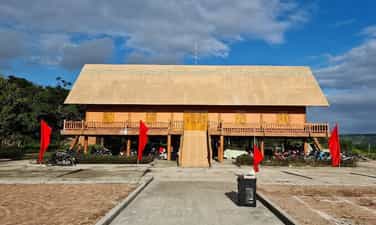
Plei Oi national historical and cultural relic
Plei Oi Historical-Cultural Relic Area is located in Plei Oi village - Ayun Ha commune, recognized as a National Historical-Cultural Relic in 1993. The place preserves many cultural values, including "Ceremony". Yang Potao Apui's rain prayer" was recognized by the Ministry of Culture, Sports and Tourism as a national intangible cultural heritage on June 8, 2015. This place also preserves almost intact artifacts such as: Magic sword, Oi Tu gong set, Chu Tao Yang mountain; Potao APuih tomb area, ancient Jrai people's house area, water wharf area... According to the Jrai people's concept, when humans are born, all things appear, at this time there is a god who gives water particles to bring life. for all things it is the God of rain. The god brings luck and happiness to people. In Jrai legend, there are 14 generations; The fire king "Potao Apui" used his magic sword to pray for rain when he was in the planting season or in the middle of the farming cycle and encountered drought or crop failure. Therefore, every year, Jrai people conduct a rain-praying ceremony to pray for heaven and earth to grant good rain and wind, good crops, a prosperous life for the people, and everyone to be safe and healthy. Here, visitors will experience the sacred and mysterious festival space; witnessed the Potao Apui (Fire King) using magic swords to pray for rain when the harvest season was about to begin or in the middle of the farming cycle but encountered drought and crop failure; In the minds of the Jrai people, if they displease the gods, they will not be given rainwater, causing illness and constant hunger and cold. In addition, special art programs are being urgently practiced by units and people with the desire to offer visitors elaborate, attractive and interesting performances such as: Gong dancing of local Jarai people; Directly participate in dances to invite wine, dance from the Northwest girls, traditional throwing game of the Tay ethnic group... Coming to Ayun Ha Irrigation Lake Ecotourism Area, visitors will admire the largest irrigation project in the Central Highlands, located in Thanh Thuong A village, Ayun Ha commune, at the foot of Chu Se pass, far from Highway 25. 1 kilometer. With an area of nearly 40 km2, the total irrigation water flow is 253 million cubic meters, providing abundant water resources in Phu Thien district and surrounding areas. There, visitors will enjoy the vast, rich space of hills, mountains, young water, charming and intimate, and visit the Ayun Ha Hydroelectric Plant with its green, peaceful campus. In addition, the lake surface is also a place to organize canoe and boat activities to serve visitors. Besides. Quang Son Pagoda is located in Thanh Thuong A village, Ayun Ha commune, 8 km west of the district administrative center, led by nun Thich Nu Nguyen Nhut, Quang Son pagoda is located at the foot of the mountain surrounded by green forests. Along with the Ayun Ha main canal system, it creates a solid fulcrum for charming mountains and water, meeting the religious needs of people from everywhere. Source: People's Committee of Ayun Ha commune - Phu Thien district - Gia Lai province
Gia Lai
6563 view
Rating : National monument