Relic point Vietnam
Việt Nam
Temple of Trang Trinh Nguyen Binh Khiem
The Temple of Trang Trinh Nguyen Binh Khiem is located in Trung Am village, Ly Hoc commune, Vinh Bao district, Hai Phong city, associated with the life and career of Mac Dynasty poinsettia Nguyen Binh Khiem. Trang Trinh Nguyen Binh Khiem (name Van Dat, self name Hanh Phu, nickname Bach Van layperson), was born in the year of Tan Hoi (1491), from Trung Am village, Vinh Lai district, Hai Duong town (now Trung Am village , Ly Hoc commune, Vinh Bao district, Hai Phong city). Taking the exam in the year of At Mui, Mac Dang Doanh's reign (1535), he passed the first doctorate (ie Poinsettia), was awarded the position of Eastern Scholar, and gradually promoted to the rank of Huu Thi Lang and Eastern Scholar. He was listed as the first official, and was given the title Trinh Tuyen Marquis, Minister of Lai, Thai Bao, title Trinh Quoc Cong. In 1542, after submitting a request to behead 18 idolaters who were not approved, he hung up his mandarin hat and returned to his hometown to live in hiding, built Trung Tan restaurant, established Bach Van hermitage as a teaching school, composed poetry, and took the title is a layperson named Bach Van. Am became a talent training center for the country, with many famous names in history books, such as: Phung Khac Khoan, Luong Huu Khanh, Giap Hai... Nguyen Binh Khiem no longer participated in state politics, but the Mac dynasty still respected the country. looked up to him, often asking for his opinion on important matters. He died on November 28, At Dau year (January 17, 1586), at the age of 95. His students worshiped him as Master Tuyet Giang. Trang Trinh Nguyen Binh Khiem was a patriotic Confucian, a talented theorist who was admired by scholars, recorded in history books and passed down in the world for his talent in predicting future destiny (oracle)... He was also a genius. Great poet, left behind over 1,000 poems (620 Chinese poems, 153 Nom poems), typically the poetry collections "Bach Van am thi tap" (in Chinese) and Bach Van quoc ngu thi tap (Nom script). Nguyen Binh Khiem's poetry has high artistic value, profound penmanship, and addresses many issues of life, such as: love for homeland and country, satirical attacks on corrupt people. ... According to some sources, the temple to Nguyen Binh Khiem was built after his death and completed at the end of 1586. According to "Tu Vu bi ky..." founded in the second year of Vinh Huu (1736) is currently preserved at the monument. The temple was built after his death. In 1735, the villagers of Trung Am and Thuong Am contributed to restoring and renovating the temple for worship. In 1928, the temple continued to be restored with architecture the word "nail", imbued with the artistic style of the Nguyen Dynasty. In 1991, on the occasion of the 500th birth anniversary of Nguyen Binh Khiem, the monument was repaired, restored, expanded, a monument was built, a square was established, and a lake was built for sale. moon, with the current scale and landscape. Nguyen Binh Khiem Temple is located in the middle of a large space, facing East, in front is a lake; To the north is the dyke and the Tuyet Giang stream; The East side overlooks the vast ocean; The south is the village; the West with green rice and tobacco fields. Nguyen Binh Khiem Temple has a total area of 91,500.7m2 (area I: 3,137.5m2, area II: 88,327.2m2), including the following items: Nguyen Binh Khiem Temple; Temple to worship Father and Mother Nguyen Binh Khiem; Bach Van Am; Trung Tan restaurant; Kinh Thien Pen Tower; Mr. Nguyen Van Dinh's grave; squares, monuments. With special and typical values, the historical relic Nguyen Binh Khiem Temple (Vinh Bao district, Hai Phong city) was ranked by the Prime Minister as a special national relic on December 23, 2015. Source: Department of Cultural Heritage
Hai Phong
6138 view
Rating : Special national monument
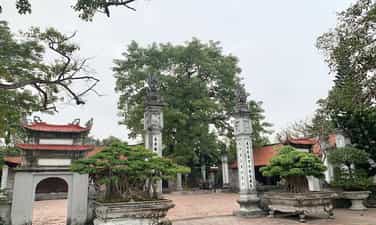
Tu Luong Xam
Tu Luong Xam is one of the "Four sacred words" of the ancient district of An Duong and is now one of the three sacred "words" of Hai An district (Tu Luong Xam, Phu Thuong Doan, Phu Xa Temple). The temple worships King Ngo Quyen - the man who defeated the Southern Han army on the Bach Dang River in 938. Tu Luong Xam is a historical and cultural relic of special significance for Hai Phong, because it contains content related to the first Bach Dang victory of our army and people under the talented leadership of Ngo Quyen. That victory paved the way for us to defeat the Southern Han invaders, bringing our nation to a new era of independence and self-reliance. Luong Xam was formerly the name of a commune in An Duong district, Kinh Mon district, Hai Duong town (now Nam Hai ward, Hai An district, Hai Phong city). Tu Luong Xam is located in the Northeast of Nam Hai commune, the main architecture faces East. According to historical books, Luong Xam was built magnificently in the Later Le period and restored in the Nguyen dynasty. Therefore, all current architecture has the artistic style of the Nguyen Dynasty, only some architecture has the artistic style of the Le Dynasty. Looking at the whole picture, the temple has a closed, continuous "internal and foreign" layout. That is, enter the main door, exit the main door. Located on a large, tall land with many ancient trees, on the base of Ngo Quyen's headquarters and warehouse to fight against the Nam Han invaders in the past. The stationing in the Luong Xam area where Ngo Quyen returned many times to command combat is mentioned in the genealogies of the communal houses and temples worshiping him in this Northeast region. Not only the architecture, the antiques in the word every time you admire them will give visitors a different feeling. In the still preserved words, there are 3 Bach Dang stakes as evidence of the Bach Dang battle in 938. Up to now, Tu Luong Xam still preserves 25 main ordinations and more than 20 copied ordinations dating from 1522 to in 1924. Among those ordinations, many dynasties honored King Ngo Quyen as "The Most Highest Great King", "Ngo Vuong Thien Son" and many beautiful names. With all that value and meaning, On December 12, 1986, Tu Luong Xam was ranked a national historical relic by the Ministry of Culture, Sports and Tourism. Besides the long history and unique architecture, the Tu Luong Xam festival held from January 16 to 18 every year commemorating the Bach Dang victory and the death of King Ngo Quyen) is a collection of customs. society, beliefs, and folk knowledge. This has been done since ancient times. After conducting the national ceremony at Tu Luong Xam, it was the turn of the governors and surrounding villages to organize the ceremony to worship Ngo Vuong; In terms of levels, Ngo Quyen sacrifices are conducted at three levels: by the state (the Ngo, Dinh, Early Le, Ly, Tran dynasties) later by the district level, by the general level and by the local villagers. During the Tu Luong Xam festival, the ceremony of dozens of villages carrying palanquins from their communal houses to worship created a strong spiritual emotion towards their roots. All palanquins are placed in the large area in front of Linh Tu Luong Xam gate for judging. Whichever palanquin is the best will next time have the honor of standing on behalf of the entire palanquin group to pay homage to the Holy King in front of the royal bed. The ritual of worshiping Ngo Vuong in Tu Luong Xam is quite special, the offerings must include a cow, a pig, and a goat, slaughtered alive (Cà thai lao). After the sacrifice, the meat must be eaten as a feast at the temple and distributed to the people. nail; In the years of " Phong Dang Hoa Coc " in Tu Luong Xam, there was also a ritual for district-level ceremonies and general-level ceremonies. During the festival, there are many cultural performances, traditional music and dance performances recreating the Bach Dang victory, folk games: blindfolded pot beating, blindfolded goat catching, spring swing, Chinese chess, human chess, Organize football, volleyball tournaments... With many great historical and cultural values left to posterity, Tu Luong Xam is not only a place of worship to commemorate the merits of King Ngo Quyen, but also the pride of Hai Phong people in particular and the whole country. water in general. Source: Multilingual Foreign Affairs Information Portal of Hai Phong City
Hai Phong
4861 view
Rating : National monument

K20 Revolutionary Base Area
The K20 revolutionary base is considered a symbol of the resilient and indomitable revolutionary spirit of the people of Da Nang in general and of Ngu Hanh Son district in particular during the resistance war against the US to save the country. The name K20 - is the code name to refer to the Da Man revolutionary base, where the District III Party Committee and the Da Nang City Party Committee are stationed to lead the revolutionary movement. In 1965, the situation in Da Man and Bac My An in particular, and Da Nang city in general, was extremely complicated. The US began sending troops into the South, implementing the "Local War" strategy, building many large military bases in the South, including Da Nang. The US goal is to build Da Nang into a military base that combines the Navy, Army, and Air Force in a solid, long-term manner, located in the North; protect the capital of the puppet puppet regime in the South, so the US built more bridges across the Han River, built a helipad in Nuoc Man, expanded and strengthened Da Nang airport and sent 17 orders. The American and Wei Dynasty arrived in Da Nang. For the US, this is a very important place, with facilities concentrated for the war in the Central region. As for us, the K20 revolutionary base is located in Da Man 5 residential area, Khue My ward, Ngu Hanh Son district, about 10 km southeast of Da Nang city; The Northeast borders the sea, the West is the Han River, the South is sunken fields and the Vinh Dien River; At the same time, it is adjacent to Hoa Vang district and Da Nang city, and is a gateway to block and protect the city from the Southeast. After the Geneva Accords, the United States and Ngo Dinh Diem's lackey government built many posts around Da Man Base to form a closed military belt and an evil government apparatus to restrain the people. people and prevent revolutionary forces from entering. That's why Da Man is considered a buffer zone for our soldiers, officers and guerrillas to use as a springboard to attack US and Puppet bases. That shows that K20 has an important strategic position in the resistance war against the US to save the country. The "steel" land to build and develop the revolutionary struggle movement right in the heart of the enemy, the connection point between the local revolution and the surrounding areas of the city and Quang Nam province and an important springboard for Our armed forces raided enemy military bases. Also since 1965, Party cadres, all levels, branches and armed forces who came to the inner city of Da Nang to direct the revolutionary movement all passed through and stayed at Nuoc Man base, operating right in the enemy's heart. to continue building the base, destroy evil, support the people fighting for civil rights and democracy in the city, protect the safety of Nuoc Man base, and take partial control of surrounding areas such as Ma Da, Da Phuoc, My Thi. The question is, right in the heart of the enemy, how can revolutionary cadres keep secrets and fight within the enemy's siege? At this time, relying on the people is considered a vital issue of the revolution and answers that urgent question. An underground battlefield was formed, which was a system of sturdy secret tunnels and trenches dug right in people's houses. In 1968, the District Party Committee of District III led by comrade Dang Hong Van instructed the people on the model of secretly digging tunnels, creating a network of underground tunnels in the village to hide revolutionary cadres. Hundreds of households actively dig tunnels day and night, forming a tight system. Each such cellar housed four to five revolutionary cadres. Although the enemy launched many raids in the village to destroy the core force, they were unable to detect it. Tunnels are dug everywhere in the house, under the bed, in the garden, on the porch... creating a solid fortress. Da Man created a revolutionary battlefield right underground during that time. The cellars were made very elaborately by the people. The tunnel mouth and entrance are very narrow, but the inside is wide enough for revolutionary cadres to do their daily activities. In addition to the main tunnel mouth, there is also a fake tunnel mouth. If there is a henchman to point out, the people will smash the mouth of the tunnel, pretending to be bricks and stones, falling down to cover the mouth of the main tunnel, both deceiving the enemy and signaling the soldiers to escape. The highlight of the secret fortification system built in K20 during this period is its high mobility and large scale. In many families, or between neighboring families, there are connecting branch tunnels that can hide many people at the same time, creating a continuous situation that is very convenient for movement, avoiding the discovery of appeared, swept away the enemy. An underground battlefield was built with a dense system of secret bunkers, sometimes up to 157 bunkers. Currently, there are still a number of secret vaults left in churches such as Mr. Huynh Phien's church, Mrs. Nhieu's church, Huynh clan's church and Mr. Huynh Trung's house. These four locations have been ranked as historical relics in the K20 National Historic Site area. Thanks to this secret tunnel system combined with revolutionary self-awareness and solidarity for the goal of liberating the homeland, the K20 army and people have achieved many glorious victories. Typically, the battle at Nuoc Man airport on October 28, 1965 was carried out by the armed forces of Da Nang City. Successfully organizing the memorial ceremony for President Ho Chi Minh, in the midst of enemy siege, the ceremony was still held very solemnly, solemnly and safely as if it were taking place in a liberated area. In particular, on the morning of March 29, 1975, the K20 people coordinated with the Quang Da armed forces to simultaneously rebel and attack all US and puppet facilities in the area. At 9:00 a.m., the flag of the National Front for the Liberation of South Vietnam was planted at Nuoc Man airport, signaling the complete victory of the army and civilians in the base area, contributing to the excellent completion of the cause of national liberation. with the role and function of a resistance base inside the enemy. Source: Da Nang Electronic Newspaper
Da Nang
4819 view
Rating : National monument
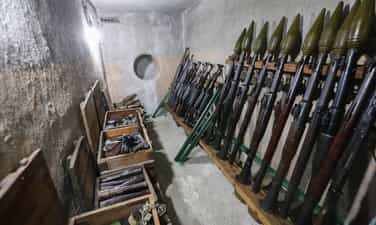
Saigon commando weapons bunker
The weapons bunker used to attack the Independence Palace was one of the bases of the special forces to prepare for the General Offensive and Uprising in the Spring of Mau Than 1968. This is a townhouse located in a row with the same facade structure. iron sliding door. The head of the household is contractor Tran Van Lai (also known as Nam Lai) and uses the house to both park his car and store construction materials. The house is located near the beginning of Tran Qui Cap alley (today Vo Van Tan alley). The apartment was purchased in early 1967 in agreement with the commander of Mr. Nam Lai's unit: Mr. Nguyen Van Tri, political officer of the Bao Bao unit of the Saigon - Gia Dinh Military Region. Mr. Nam Lai is an officer of this unit. After buying the house, Nam Lai started repairing it. Wearing the outer coat is a contractor named Nam U - SOM (Mr. Nam often goes to the US U - SOM agency to bid). While repairing the house, he secretly carried out a plan assigned by the unit: building a secret bunker. Therefore, under the floor, inside the chamber, there are two cellars next to each other. Each tunnel has a large sewer line that can fit people through, leading to the back of the house. The weapons bunker is 2m long, 1.2m wide, 2.5m high; The tunnel walls and floor are thickly cemented for waterproofing. As for the tunnel mouth, Mr. Nam personally installed it himself. Lid with screw latch. Use the latch to lift the lid up so there is enough space for one person to get under. In mid-1967, the tunnel was completed and was notified to the Guarantee unit (with code number J9 T - 700). After inspection, the unit commander ordered to continue implementing the plan. To transport a large quantity and many types of weapons (pistols, guns, AK bullets, B40, explosives... to a secret hidden bunker location. On the 29th of Tet Mau Than, in Loc Thuan commune, Trang Bang district (Tay Ninh province), a team of 5 special forces practiced preparing for the attack. On the morning of the first day of Tet, following the flow of people celebrating Spring, the soldiers of the 5th Special Forces took turns using many vehicles to gather at the house on Hoang Dao Street (now Tran Van Dang), Ward 11, District 3. Head of household is also a special forces soldier named Le Tan Quoc (alias Bay Rau Mong). At this time, the entire team of 5 commandos had 15 soldiers, including a female codename Chin Nghia, commanded by Truong Hoang Thanh. At 10 p.m., as planned, the entire team of 5 special forces moved to Nam Lai's house on Le Tan Quoc's 2 cars. Two cars parked on Tran Qui Cap Street, the soldiers of Team 5 got out and entered Nam Lai's house through the front and back doors. Then, under Ba Thanh's command, several team members went down to the basement to bring weapons, AK guns, grenades and explosives, checked them and put them in a car parked inside the house. At 1:30 a.m. on the 2nd day of Tet, we moved near the Independence Palace on Nguyen Du Street. Enemy guards discovered us and forced us to stop. The convoy kept moving forward, they shouted the alarm. The soldiers in the first vehicle opened fire to kill these guys and used explosives to break open the gate for the vehicle containing explosives to rush in. Unfortunately, the explosives did not explode due to technical problems. However, the breakout team managed to get inside. The enemy opened fire, two soldiers died, the rest had to temporarily retreat, two were injured. The enemy came from all sides inside and sealed the gates. At 4 a.m., another captain, Truong Hoang Thanh, died. Near morning, when there were only 8 people left, the brothers retreated to house number 56 Thu Khoa Huan and organized a defense on the 3rd floor. Hungry and tired amidst the enemy encirclement, 8 tenacious soldiers fought all day January 31, 2019. 1968 is the 2nd day of Tet. The brothers fought to the last bullet, removed their guns, threw them away, and used bricks, stones, and wood to block the enemy. Comrade Le Tan Quoc (Bay Rau Morning Glory) with an AK on duty blocking the stairs heroically sacrificed his life. (Martyr Le Tan Quoc was honored as a hero of the armed forces). After the attack on the Independence Palace by Saigon commandos made the enemy tremble in fear, they confiscated all property, hunted down and placed a reward of 2 million VND on Tran Van Lai's head. His entire family had to withdraw from Saigon, but he himself continued to operate and instructed the remaining bases of the Thanh Rangers to continue strengthening and building their forces. In 1972, he was captured by the enemy and detained in Son Tinh prison (Quang Ngai), but they did not know that they had captured the special forces soldier who had contributed greatly to the battle that directly attacked the enemy's brain in 1968. The house number 287, alley 70, Nguyen Dinh Chieu has been recognized by the Ministry of Culture and Information as a national historical and cultural relic and its former owner became the custodian and conservator. Source: People's Committee of District 3, Ho Chi Minh City
Ho Chi Minh City
4585 view
Rating : National monument
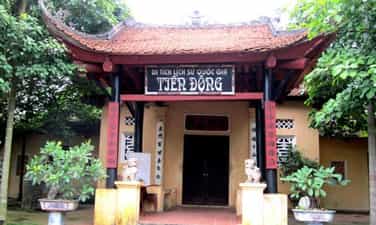
Tien Dong Base Ngo Quang Bich Temple
Tien Dong Base National Historical Relic Area is located in Tien Luong commune, Cam Khe district, Phu Tho province. Tien Dong in the past (when General Ngo Quang Bich chose it as a resistance base) was a swampy, sunken field, surrounded by rugged mountainous terrain. From Tien Dong base, when advancing, you can use boats to follow the Gianh river to the Red River to Thanh Ba, down to Cam Khe district town, or up to Ha Hoa. When you quit, you can go to Yen Lap, go to Nghia Lo to the Northwest. Famous person - General Ngo Quang Bich was born on May 7, 1832 in Trinh Pho village, Truc Dinh district, Kien Xuong district, Nam Dinh province (now Trinh Nhat village, An Ninh commune, Tien Hai district, Thai Binh province) . According to official history, his original family name was Ngo, a descendant of King Ngo Quyen, but because his grandfather changed his maternal family name to Nguyen, so history books also called him Nguyen Quang Bich. In 1858, he passed the baccalaureate exam; In 1861, he passed the bachelor's exam and was appointed as a mandarin by the Nguyen court, but he submitted a petition asking that he temporarily not take office to continue his studies and open a teaching school. In 1869, during Tu Duc's reign, he passed the Second Giap Doctoral Examination of Dinh Nguyen (ie Hoang Giap). After that, he was successively appointed to the positions of Tri Phu Lam Thao (present-day Phu Tho); Dien Khanh Tri Phu (present-day Khanh Hoa); Murder in Son Tay province; Teu Quoc Tu Giam (Hue); Murder case in Binh Dinh province; Chief envoy of the mountain room and patrol of Hung Hoa province (including present-day Phu Tho province). When the French colonialists sent troops to attack Hung Hoa, Mr. Ngo Quang Bich, as "Chief of mountain defense and patrol of Hung Hoa province" led the army and people to fight against the French, winning many important victories. However, with the superior strength of the French army, on April 12, 1884, Hung Hoa citadel fell. Ngo Quang Bich withdrew his troops to Tien Dong, Tien Luong commune, Cam Khe district, established a base, raised an uprising flag, and responded to King Ham Nghi's Can Vuong Edict against the French. The flag of the insurgent army was embroidered with the four words "Binh Tay Bao Quoc" and the oath "Vietnamese nation will never change, Lac Hong immortal restores its integrity" affirming national sovereignty. King Ham Nghi issued an edict appointing him the position of General of Tonkin as a military minister, with the title of Thuan Trung Marquis, in charge of organizing the resistance in Tonkin (literature from Counselor, martial arts from De Doc were given the right to use the official documents). Since then, with his prestige, General Ngo Quang Bich not only directly commanded the Tien Dong uprising, but also sought to contact and coordinate with other resistance leaders such as Phan Dinh Phung in Thanh-Nghe; Deo Van Tri, Nong Van Quang, Cam Van Hoan, Cam Van Thanh were scholars and chiefs of the Kinh, Thai, Muong, and Mong ethnic groups in the region who participated in the fighting or supported the resistance. While the resistance war was going smoothly, on January 5, 1891, General Ngo Quang Bich suddenly became seriously ill and passed away at the age of 58. His body was buried by soldiers at Ton Son mountain, Yen Lap district. Not only was Ngo Quang Bich a patriotic scholar and resistance leader, he was also a poet and cultural activist. He left behind the work "Ngu Phong Thi Tap" (Ngu Phong Poetry Collection), including 112 poems in Chinese, most of which were composed during the years he led the insurgent army against the French in Tien Dong. In addition, he also wrote poems and couplets to pay tribute to his fallen comrades. Especially the "Letter in reply to the French army" with its clear words and determination to sacrifice for national independence. (When the French sent him a letter urging him to surrender, promising to grant him a title and high benefits, he firmly replied: "If I win, if I live, I will be a court soldier. If I lose unfortunately, if I die, I will also act as a demon and kill the enemy. I would rather be guilty of a temporary offense than a sin of the world!") In 1884, after Hung Hoa citadel fell and withdrew his troops to station at Tien Dong, General Ngo Quang Bich built this place into a continuous fortress system, ensuring reasonable defense and attack. became a solid base for the resistance war against the French in the Northern Midlands and Mountains. The base's headquarters is located on a high mound that people now call Quan Dai mound. This is a hill about 150m high above the level of the area, bordering Tong Hai mountain. The top of the hill is quite flat and has a convex mirror surface with 3 peaks. The middle peak is Tuong Quan hill, where the headquarters of the insurgent army is located (and also where the Ngo Quang Bich temple is built today). On the right is Ho Gia peak, blocking the road through Tong Hai mountain to Yen Lap (he later withdrew his troops to Yen Lap via this road). On the left is the Cong Don mound (this is the guard post protecting the headquarters). Each hillock is about 300m apart. Near the foot of the current hill, there are traces of a well and a place where the insurgents' horses were tied in the past. In the Tien Dong base area, there are also famous landmarks such as: Tuong Quan hill, Flag Pillar hill, Mai mound, Don hill, Muc mound, Co Rac hill... which are places associated with the names of famous people and generals. Ngo Quang Bich army with Can Vuong martyrs and the anti-French uprising movement at the end of the 19th century. On February 12, 1999, Tien Dong base was ranked as a national historical and cultural relic by the Ministry of Culture, Sports and Tourism. In the temple, there is a statue worshiping General Ngo Quang Bich, and epitaphs record the will and courage of him and the Can Vuong martyrs. On the stele on the road leading up to the temple, there are lines of poetry written by the Regent Ton That Thuyet, praising the will and patriotism of the General: Artifacts on display in the gallery include: 1 set of teapots, 1 eel-skin colored porcelain rice bowl, 1 Hoa Mai gun and some bullets and shells of the insurgents. Regarding the tea set and porcelain rice bowl, these are utensils that served General Ngo Quang Bich in daily activities, found in 1979 by Ms. Tuan Hue's family in Tien Dong while digging in the garden ( When finding the artifact, through information from the family, researchers confirmed that in the past, her grandfather was a bodyguard of Mr. Ngo Quang Bich, and still used this Phung to brew rice for him). Tien Dong is the resistance base of the entire northern midland and mountainous region, led and operated directly by the North's military minister Ngo Quang Bich, so it is also a gathering place for many literati and intellectuals. Famous patriots throughout the country such as Tong Duy Tan, Ton That Thuyet, Nguyen Thien Thuat, Ngo Quang Huy, Nguyen Cao... came here to discuss the restoration of the country. Therefore, this is a historical relic marking the history of the glorious resistance against the French of the Can Vuong movement. Source: Cam Khe District Electronic Information Portal
Phu Tho
3590 view
Rating : National monument

Luc Giap Temple
Luc Giap Temple, also known as Vat Temple, is located on the left bank of the Cong River, in Dac Son commune, Pho Yen Town, 4 km west of Pho Yen district capital and about 35 km west of Thai Nguyen city center. southern. Every year, the temple opens its main festival on March 15 (lunar calendar) to commemorate famous people Duong Tu Minh, Luu Nhan Chu, and Do Can. In ancient times, the temple was just a small shrine worshiping the gods of the villagers in Son Cot region. In the 12th century (Ly Dynasty) to commemorate and recognize the merits of national hero Duong Tu Minh, the people here built a temple to worship him. In the 15th century (Le dynasty), Do Can from Thong Thuong village, present-day Minh Duc commune, passed his doctorate and was appointed government official of Thanh Hoa (present-day Thanh Hoa). He had skilled workers use good wood to carve and carve a complete house frame in Thanh Hoa and then brought it back to build it here to replace the old small temple. From then on, people in the six neighboring areas of Son Cot village worshiped and Luc Giap temple got its name from there. Luc Giap Temple is also called Mieu Vat, associated with a historical event: in the 15th century (Le Dynasty), a general of Le Loi, Luu Nhan Chu, came to this area to recruit insurgents. While recruiting soldiers here, he organized a wrestling competition (Wrestling Festival) at Luc Giap temple grounds. Later, when the Ming army was defeated, Liu Nhan Chu once returned to visit and write a souvenir at the temple. But unfortunately, due to time and war, currently no trace of Liu Nhan Chu has been found, only the name Mieu Vat is associated with his name and events in this area that still circulate today. The main area of Luc Giap temple is 1,360 m2 wide, including the worship house and the back palace, in front of the temple there is a large yard, in the middle of the yard there is a pedestal to place incense and flowers, the temple is covered with the foliage of a large 6-year-old banyan tree. Up to 7 people can't hug it. Luc Giap Temple is an ancient architectural work of the Le Dynasty. The columns are all made of ironwood and have remained glossy black over the centuries. All pillars, pillars, and planks in front of the harem are delicately and elaborately carved with the images of Dragon, Ly, Quy, and Phuong. In particular, the two main doors to the harem are embossed with two dragons flanking the moon of the Le Dynasty, very beautiful, reaching the level of sophisticated traditional art. The worship objects here such as: pedestals, shrines, statues, offerings... are all painted with gold and gilded, majestic and solemn. Up to now, the temple still retains a number of precious artifacts of the Nguyen Dynasty such as: a bell, two bronze altars, a number of large ancient porcelain worship bowls. The number of artifacts left at the temple today is very small but there are artistic and historical value. With those values, Luc Giap Temple was ranked as a national historical and artistic relic on June 21, 1993. Luc Giap Temple Festival is held on the 15th day of the third lunar month every year, including a ceremony and festival solemnly organized by local people. For many years now, the Luc Giap Temple Festival has been a cultural destination attracting a large number of people in the region and tourists from all over. The ceremony has typical activities related to spiritual beliefs such as: sacrificing to gods, serving bronze, offering incense, procession... The festival recreates folk games such as: traditional objects, singing for love, pulling fighting, cockfighting... Source: Thai Nguyen City Cultural and Media Center
Thai Nguyen
4425 view
Rating : National monument

Hang Sa Khao
Sa Khao Cave is a famous archaeological site located in the northwest limestone mountain range of Na Khao pine, Phu Thuong commune, Vo Nhai district, Thai Nguyen province. Sa Khao Cave is approximately 30km long, passes through 5-6 mountains, located about 2km from the center of Dinh Ca town, Vo Nhai district. Entering Sa Khao cave, visitors will be overwhelmed by the beauty of the multi-shaped stalactites, with traces carved by the flow of time. The cave's dome is high and wide, below is a clear stream gurgling with gurgling water, creating a watercolor painting with thousands of stone fibers clinging to the cave walls hanging down below, the rock patterns curling due to erosion. of water stacked down from the ceiling of the cave. The cave ceiling is about 20m high, below is a vast sand floor. The special thing here is that there are tree-shaped mushrooms and palm mushrooms growing all over the path along with many strange animals. Throughout history, experiencing two fierce wars of resistance against the French and the Americans, Hang Sa Khao was the place where important meetings of revolutionary cadres took place. Comrades Vo Nguyen Giap, Tran Dang Ninh, Hoang Van Thu, Hoang Quoc Viet, Le Duc Ton, Chu Quoc Hung... once sheltered and worked in this place. Sa Khao Cave is also a safe evacuation place for officials and people of Vo Nhai District. From 1965 to 1972, many generations of primary school students in Phu Thuong commune studied at Sa Khao cave. Vo Nhai District agencies evacuated here and set up tents next to the cave entrance to work. Not only that, in Hang Sa Khao there is also a hall for meetings and a stage for musical performances. During the years of the fiercest anti-American resistance war, in this place, the people of Vo Nhai District also enjoyed famous revolutionary songs with the spirit of "Singing over the sound of bombs" by singers Thu Hien and Quoc Huong. .. With majestic beauty and poetic mountains, it is associated with historical events of the revolutionary struggle of revolutionary comrades, as well as of the people of Vo Nhai district through the two resistance wars against the French and the Vietnamese. In the United States, in 2010, the Ministry of Culture, Sports and Tourism ranked Sa Khao cave as a national historical relic, an indispensable discovery point in ecotourism, cave exploration and also is a journey to the source, the place of educating the revolutionary tradition of Thai Nguyen province. Source: Thai Nguyen Tourism
Thai Nguyen
4078 view
Rating : National monument
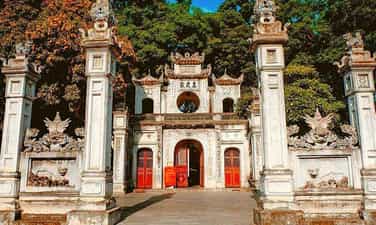
Quan Thanh Temple
Quan Thanh Temple, the literal name is Tran Vu Quan, dates back to the reign of Ly Thai To (1010 - 1028), worshiping Huyen Thien Tran Vu, one of the four gods whose temple was established to guard the four gates of Thang Long city in the past. (Thang Long four towns). Quan Thanh Temple in the north (Bach Ma Temple in the east, Voi Phuc Temple in the west and Kim Lien Temple in the south). Quan Thanh Temple is located in Quan Thanh ward - Ba Dinh - Hanoi. The temple is located at the corner of Thanh Nien Street and Quan Thanh Street, overlooking West Lake. At this temple, the national treasure - the black bronze statue of mandarin Tran Vu, weighing 4 tons, is currently being kept and worshiped. Huyen Thien Tran Vu, a god who many times helped the Vietnamese people fight against foreign invaders, helped An Duong Vuong eliminate ghosts when building Co Loa citadel. To remember his gratitude, the King had the temple built. According to Taoist theory, Huyen Thien is a God who is always worshiped in the North direction. Huyen Thien statue was first made of wood, but in the 2nd year of Vinh Tri during the reign of King Le Hy Tong (1677), it was cast in bronze, 3.96m high, weighing 4 tons, and the pedestal circumference was 8m. The statue sits majestically, with a square face, straight eyes, long beard, no hat on the head, hair flowing down the back, wearing a black Taoist robe and walking on the back of a turtle, the sword has a snake wrapped around it. Snakes and turtles symbolize the power and immortality of God. The massive, majestic, and heroic bronze statue of Huyen Thien worshiped in the North of Thang Long Citadel carries great significance for National self-defense, demonstrating the nation's resilient spirit through the struggles against foreign invaders. invaded many centuries ago. Regarding architecture, Quan Thanh Temple has gone through many renovations and the current architectural style is mostly from the Nguyen Dynasty in the 19th century, including: three gates, worshiping yard, pre-emperor, middle-emperor and harem. On the middle gate of the three gates, there is a statue of the god Rahu in Indian mythology, who swallowed the moon and sun, causing lunar and solar eclipses. This is the integration of Vietnamese beliefs. In addition, the wooden architectural details at the temple are carved very delicately, bearing the artistic style of the Le Dynasty. In the 19th century, King Minh Mang changed its name to Chan Vu Quan (this name was carved in Chinese characters on the roof of the three-entrance gate. The diaphragm in the worship hall still had the old name Tran Vu Quan). With typical historical, cultural and artistic values of the era and national stature. The statue of Tran Vu at Quan Thanh Temple was recognized as a National Treasure by the Prime Minister on December 22, 2016. In 2022, Quan Thanh Temple will be recognized as a special national monument. Every year, Quan Thanh Temple festival takes place on the 3rd day of the third lunar month. Source: Hanoi Department of Tourism
Hanoi
3607 view
Rating : Special national monument

Tran Van Ho ancient house
Tran Van Ho ancient house is located at 18 Bach Dang Street, Phu Cuong Ward, Thu Dau Mot Town, Binh Duong. Mr. Tran Van Ho (Tu Dau) - former Governor of the Palace during the French colonial period. The project was built by Mr. Dau's father, Mr. Tran Van Lan, in the year of the Tiger (1890), and was recognized as a national historical - architectural and artistic relic on April 29, 1993, with a total remaining area of 1,296m2. . The front of the house faces southwest, toward the Saigon River. The house was originally a large house including: main house, annex, horse stables... But after liberation, due to no owner, the state took over and confiscated it. Currently, there is only one main house left, this is the large family house used mainly for worship in the middle space. The front yard is covered with miniature natural landscapes of flower gardens, ornamental plants, and rockery fully decorated with scenes of "Fish - Tieu - Canh - Muc" activities. The house has a slightly low appearance from the outside, with a moss-tiled roof, creating a natural landscape of antiquity and purity, completely separate from the hustle and bustle of the market street outside. Stepping inside is a ostentatious scene, showing the abundance of materials made up of precious wood such as rosewood, rosewood, rosewood, rosewood, honey... used to decorate layer after layer, from the roof to the hammock door and even the steps. quota. From the wooden bars and square lines to the reliefs, all are arranged symmetrically down to every detail, creating a solemn appearance, demonstrating hierarchy, order and royal style. The architecture of the house is in the form of the letter "Ding", the total construction area is 200m2. The house is built in the style of 3 compartments, 02 wings including 36 round columns, 6 rows of round columns from front to back, each row has 6 columns placed entirely on boulders, the floor is tiled. In addition, the left side of the house has 3 single-wing doors leading to the outside, except for the front of the house, the remaining 3 sides are built with brick walls. The yin-yang tile roof is long and gentle... From the solid, somewhat low roof system, inside the inner temple is divided into two U-shaped false walls to create depth. The array between the wall and the altar are paintings of the Royal Concubine painted in golden steel, and mausoleums with parallel sentences decorated with mother-of-pearl attached to the pillars. The middle space above is an altar with a scroll embossed with the image of the four majestic gods. In the middle of the scroll are three rows of letters with the names of the gods being worshiped. On the left is the worship of the Kitchen God with the title "Dong Tru Tu Mang", in the middle is the worship of heaven with the title "Hiep Thien Dai De", on the right is the worship of the blessed god with the title "Phuc Duc Chanh Than", the bottom is to worship the ancestors many lives. With the closed-scale architecture of a traditional Vietnamese house in the 19th century, the house has left Binh Duong an ancient architectural work, contributing a part of the historical value - true traditional art of the nation. precious, proving the existence and strong development of the land and people of Binh Duong, both in the past and present. It is worthy of respect and preservation. On both sides of the middle altar are two main chambers (rooms); Mr. and Mrs.'s room. On the two chamber doors there are two horizontal paintings: Ngu Duoc, Dien Phi (jumping fish, flying kite: Indicating hope of taking the exam or being promoted to a position). This place also has beautiful and elaborately decorated bamboo panels. Symmetrically on both sides of the bedroom are two beautiful mother-of-pearl cabinets... Source: Department of Culture, Sports and Tourism of Binh Duong Province
Ho Chi Minh City
4883 view
Rating : National monument

Chau Thoi mountain and pagoda relic area
Chau Thoi Mountain scenic relic is a famous scenic spot of Binh Duong province ranked by the Ministry of Culture and Information as a national scenic relic on April 21, 1989, with outstanding values in history, culture, natural landscape. Chau Thoi Mountain is located near Highway 1K in Binh An ward, Di An city, Binh Duong province. Chau Thoi Mountain is 85m high, at the top there is a majestic ancient pagoda, with lush greenery all year round. According to research sources, Chau Thoi Pagoda was built around 1612 by Zen Master Khanh Long from a small thatched hermitage, at that time the pagoda was named Hoi Son Tu. However, based on the records kept at the pagoda with the words "Tan Dau year, chief moon, first day of worship", it can be determined that Chau Thoi pagoda was built in 1681 and was the earliest pagoda built. Binh Duong province and belongs to the oldest group in the South. With more than 300 years of history, Chau Thoi Pagoda has experienced 13 generations of abbots; Through historical upheavals, the pagoda has been renovated many times: In 1930, the Ancestral Church and Lecture Hall were restored; In 1971, 220 steps were cemented up the mountain; In 1993, the main hall was restored. After that, other items such as stupas, great roses, Buddha statues, flanking dragons... were also built and completed. Besides historical religious values, Chau Thoi Pagoda also carries revolutionary historical values of Di An land. During the resistance war against the French, relying on the mountain and Chau Thoi pagoda was a refuge and meeting place for revolutionary activists. With a dangerous terrain, there are patriotic monks, so it is very convenient to serve as a meeting point, stopping place, and hiding place; Chau Thoi pagoda was once a place to practice martial arts for members of "Thien Dia Hoi", a stopping place for Dao Tay Son troops and a refuge for revolutionary soldiers. Famous figures at that time such as Huynh Van Nghe and Huynh Tan Phat also came to the temple and worked here. During the two resistance wars, the monks here donated money, rice, fabric, and medicine to the soldiers; In times of need, Chau Thoi Pagoda supported Dai Hong Chung to help the ammunition foundry's soldiers fight the enemy... Chau Thoi Pagoda is listed as one of Vietnam's Ancient Pagodas; Pagodas, mountains, and surrounding landscapes create a charming feng shui landscape, poetic, green scenery... architectural elements blend together, creating a highlight for the natural scenery, exuding cultural values. Outstanding architectural and cultural landscape. Chau Thoi Pagoda still preserves many valuable antiques, including 3 Buddha statues carved more than 300 years ago; system of wooden statues and terracotta statues; In particular, the pagoda also preserves the over 100-year-old jackfruit wooden statue of Avalokiteśvara, crafted by Venerable Thich Thien Hoa. Although the main items of the pagoda are built of concrete and reinforced steel, they are performed by talented craftsmen, so the overall pagoda still exudes an ancient beauty, rich in national colors. The complex of pagodas and temples on Chau Thoi mountain includes: Main hall, Patriarch's house, Thien Thu Thien Nhan temple, Linh Son Thanh Mau temple, Dieu Tri Kim Mau temple... some items are decorated with beautiful ceramic pieces. eye. In 1994, the pagoda mobilized people to contribute to casting 4 bronze statues, each weighing over 1 ton and 2.5m high by a group of veteran workers from Hue. These were the first bronze statues in Binh Duong province. In addition, the pagoda also has a 22.5m high statue of Avalokiteśvara, surrounded by a pair of large dragons that can still be seen from dozens of kilometers away. With its historical, cultural, architectural values, the landscape of Chau Thoi pagoda on top of Chau Thoi mountain was recognized as a national historical and cultural relic and scenic spot in 1989. Source: Department of Culture, Sports and Tourism of Binh Duong Province
Ho Chi Minh City
5508 view
Rating : National monument