Relic point Vietnam
Việt Nam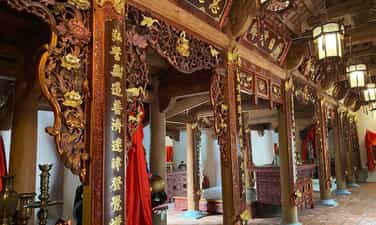
Tu Giap Pagoda
Tan Yen district (also known as the ancient lower Yen The region) is a land with a rich historical and cultural tradition and a spiritual land with outstanding people. Those traditions are still preserved today in customs, in ancient communal houses and pagodas where the names of outstanding children of the historic rainbow homeland are associated with them, such as: Duong's grave site. Thi Gia, a good female general under the Trung Sisters; The communal house worships 18 dukes of the Duong family at Van Cau who helped the Mac dynasty expel the invaders; The cluster of communal house relics and Ha Pagoda worships Luong Van Van Ham, the first leader of the Yen The peasant uprising; Trung Temple worships Hoang Hoa Tham, the second leader in the Yen The peasant uprising; In particular, we must mention Tu Giap Pagoda, where many units were stationed and met during the resistance war against the French and Americans. Tu Giap Pagoda is located in Nha Nam town, a location considered as the northern gateway of Tan Yen district connecting three districts together: Tan Yen, Yen The district (Bac Giang province), Phu Binh district, Thai Nguyen province. Before 1945, this place belonged to Nha Nam canton, Yen The district, now belongs to Nha Nam town, Tan Yen district. Tu Giap Pagoda was built during the Le Dynasty in the style of grand domestic and foreign architecture, including 7 front halls, 5 middle halls, 3 triple treasures, 1 ancestral house, guest house, and nun's house. The system of statues in the pagoda is rich and complete, decorated purely in Vietnamese. The pagoda also has a bell weighing several hundred pounds. However, in 1885, to take revenge on the Yen The insurgents, the French colonialists frantically destroyed villages and pagodas to use wood to build their base. In 1886, the people of the four borders, including Nguon, Upper, Lower, and Bell, rebuilt the pagoda with the name Tu Giap because the four people joined hands to rebuild the pagoda. The new pagoda includes a front hall, a common house, a Buddha hall, an ancestral house, a monks' and nuns' house, a three-entrance gate with a bell tower, and spacious and orderly walls. In 1947, Tu Giap Pagoda was once again destroyed by the French colonialists when they swept through Nha Nam and attacked Yen The. At Tu Giap Pagoda, there was a clash between us and the enemy. The pagoda was severely damaged, leaving only the 7-compartment front hall, with bullet marks still on the pillars. Along with the flow of history, Tu Giap Pagoda and Nguon village of Nha Nam commune have experienced and "witnessed" many important historical events. This place converges essential traffic routes, can move towards the plains of Bac Giang, Bac Ninh and retreat to the mountainous areas of Thai Nguyen and Bac Kan. Therefore, Tu Giap Pagoda was chosen as one of the locations as an important revolutionary base of the Bac Giang Party Committee during the resistance war against the French colonialists. This is also the stationing and working place of the National Salvation Newspaper (March 1945), Bac Giang Postal Company (late 1945), Provincial Post Office and Ha Bac Police Company (now Bac Giang Provincial Police). In particular, Tu Giap Pagoda was the living and working place of the Area 12 Police from the end of 1946 to around April 1948. During the resistance war against the French, although it was attacked many times by the French colonialists, Tu Giap Pagoda was still a safe place for district, provincial and central agencies to choose as a place to open refresher courses, train and discuss plans. implementing the resolution to divide fields for people to increase production... During the resistance war against the US to save the country, Tu Giap Pagoda witnessed many farewell ceremonies for children who were going to join the army to fight on the southern front to contribute to the war. liberating the South and unifying the country. Through the ups and downs of history, Tu Giap Pagoda today is no longer the same, but only the front hall, middle pagoda building, and Tam Bao pagoda are made in the old style. In the pagoda, there are many Buddha statues made of lacquered wood and gilded with gold. Tu Giap Pagoda is not only a place for spiritual beliefs of the people in the area but also a place marked by revolutionary history. In particular, it is where the 6 things Uncle Ho taught the People's Public Security force were discovered. Here, comrade Hoang Mai - Director of Zone VII Police was honored to receive the letter from President Ho Chi Minh dated March 11, 1948, in which he especially kindly advised our police, Mr. peace of the people, serving for the people, knowing how to rely on the people to do everything will be done. In it, Uncle Ho emphasized the six qualities of a "revolutionary police officer", so this place is considered the origin of the Six Things Uncle Ho taught the People's Public Security. TOURISM SOURCE OF BAC GIANG PROVINCE
Bac Ninh
3693 view
Rating : National monument

ICE CREAM Pagoda
Kem Pagoda, also known as Sung Nham Pagoda, located in Kem residential group, Nham Bien town, Yen Dung district (Bac Giang), is not only a center of religious and cultural activities, it was also a base for religious beliefs. revolutionary troops and guerrillas in many periods, including the Yen The insurgent army. Kem Pagoda - a special national historical relic has been carefully preserved, attracting a large number of visitors from all over to visit and worship at the pagoda. The campus of Kem Pagoda is spacious, with many ancient trees providing shade, creating a peaceful and sacred scene. From Truc Lam Phuong Hoang Zen Monastery, we drove the car on a newly renovated road about 1km long, heading straight to Kem Pagoda. On the side of the road are rows of lush green Bodhi trees. Comrade Le Thi Minh Hien, Deputy Director of the Center for Culture - Information and Sports of Yen Dung district said: "The renewed route facilitates the connection of spiritual tours between Vinh Nghiem Pagoda - Zen Monastery. Truc Lam Phuong Hoang - Kem Pagoda. This also opens up an opportunity to introduce and promote the cultural and historical value of Kem Pagoda - a place that has witnessed many ups and downs in the nation's history." In the Kem Pagoda campus, there are many old trees, green all year round. The land enjoys the blessings of nature, in winter there are high mountains blocking the Northeast wind, in summer the cool wind blows from the South, making the pagoda scene even more peaceful and sacred. According to recorded records, Kem Pagoda was built about 400 years ago, during the reign of King Le Anh Tong. The founder who built the pagoda was Ms. Hoang Thi Tue, following the Truc Lam Zen sect founded by Dieu Ngu Giac Hoang Tran Nhan Tong. The entire architectural work of Kem Pagoda was built in a plot of land with a total area of nearly 2,000 m2. The entire pagoda includes: Three-entrance gate, tower garden, front hall, upper palace and ancestral house. It is known that the place where Kem Pagoda is located has a very special terrain, the left, right and back sides all lean against the Nham Bien mountain range, the face overlooks a flat field and a unique road leading to the pagoda. Therefore, this place is not only the center of cultural and religious activities, but also was chosen as the base of insurgents and revolutionary guerrillas during many periods of national liberation wars. In 1884, Nguyen Cao from Cach Bi village (Que Vo district, Bac Ninh province) and his insurgent army returned to Kem Pagoda to build a base to fight against the French colonialists. Visitors listen to an introduction to the unique cultural and historical features of Kem Pagoda. In particular, around 1906 - 1908, Hoang Hoa Tham and the Yen The insurgent army returned to camp right behind the temple garden. De Tham built ramparts, walls, houses, and military training, creating this place as a base to fight against the French. Currently, this place still retains traces of ramparts, mandarin house floors, mandarin wells, guard posts, flagpoles, ice buckets containing water for horses to drink and also a place to sharpen swords to fight the enemy... Behind the pagoda there is also a training ground for the De Tham insurgent army in the past. The land is about a few acres large and is located on a flat terrain, next to which a stream flows. It can be said that this location is very convenient for insurgents to practice. When there is an enemy, it is easy to quickly retreat up the mountain and escape to the romantic Thuong River right at the foot of Nham Bien mountain... Since the August Revolution in 1945, Nham Bien town became a guerrilla resistance area; Kem Pagoda became the local political and military center. Peace was restored, the pagoda was a meeting place, propagating the Party's policies and laws, and the State's laws. Thanks to its cultural, religious and revolutionary historical values, in 2012, Kem Pagoda was recognized by the Prime Minister as one of 23 special national historical sites associated with the Revolution. Yen The uprising. TOURISM SOURCE OF BAC GIANG PROVINCE
Bac Ninh
3387 view
Rating : Special national monument
Doan family mausoleum
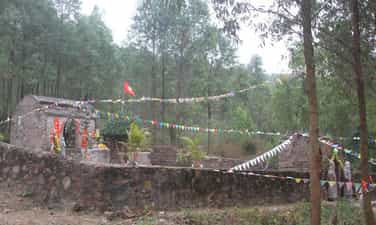
Doan family mausoleum in Van Trung commune is located about 12 km south of Bac Giang city center, from Bac Giang city follow the new National Highway 1A through Dinh Tram industrial park about 10 km, turn left along the road to Van Trung - About 2 km further from Truc Tay, turn left to Bai Xanh village, cross 45 m of hill road to reach Doan family mausoleum. Doan family mausoleum in Van Trung commune The Doan family's mausoleum is located on Hinh Nhan mountain, Bai Xanh mountain of Nham Bien range. Late Le Dynasty (18th century) Doan family mausoleum in Noi An village, Van Coc commune, Hoang Mai canton. From 1965 to present, the Doan family mausoleum is located in Van Trung commune, Viet Yen district, Bac Giang province. The mausoleum was built during the reign of King Le Trung Hung in the 18th century, during the reign of King Le Hien Tong, under the reign of Canh Hung (1740 - 1786). This is the resting place of Doan Cong Bao, also known as Doan Dang Dan, a mandarin during the Le Trung Hung period, who had many merits in serving the king and the country. The mausoleum area looks towards the southwest, in front is Hinh Nhan mountain, in the distance is the winding Cau River, on both left and right sides are the mountains of the majestic Nham Bien range. The mausoleum area was built in the ancient architectural style, along a rectangular vertical axis, the construction items are gradually higher from the inside out according to the slope of the mountainside, including surrounding walls, mausoleum gates, Open-air worship area, stone statues, human and animal statues, Tieu Dao Am. Statues of people and magical beasts at the Mausoleum gate Tieu Dao Am Currently, the project items are still complete, bearing ancient architectural and artistic features. The mausoleum gate is built in a domed architectural style, Tieu Dao Am has two roof floors, both built with ancient bricks from the Le Dynasty (18th century), all of which exude an ancient brown look to the mausoleum. The system of statues of Martial Artists, Servants and Hyenas is arranged in a symmetrical axis from the outside to the inside, creating a majestic and ancient look. Due to the erosion of time and war, the tiled floor of the mausoleum garden no longer exists, part of the corner of the mausoleum gate was damaged by French artillery shells and is cracked. The surrounding wall area currently has only about 10m of ancient laterite wall left, the rest is a rough stone wall. Some broken and cracked stone statues have been restored and mended. On the other hand, the Doan family mausoleum was built on Bai Xanh mountain, far from residential areas, so the care and promotion of the relic's value is limited. The tomb area still has many invasive weeds. The mausoleum was built in the open without a closed gate, and the walls surrounding the mausoleum were low, making it difficult to protect the artifacts and worship items inside the mausoleum. In fact, in 1980, thieves removed part of the laterite wall from the mausoleum, destroyed a number of statues, and took away Doan Dang Dan's portrait. In recent years, with the attention of the family, especially the direction of the local government, the Doan family mausoleum area has been carefully looked after, and the bushes and trees have been cleared cleanly. The broken statues have been mended, and the surrounding wall is built with rough stone. The Doan family is also planning to resurface the traditional brick floor of the inner temple area in the mausoleum grounds, and restore the portrait statue of Doan Dang Dan in Tieu Dao Am to return the landscape to its original value. stone. In order to protect the spiritual cultural work of Doan Family Mausoleum in Van Trung commune, on December 31, 2015, the Chairman of Bac Giang Provincial People's Committee issued Decision No. 2370, classifying Doan Family Mausoleum as a historical-cultural relic. This is a favorable condition for the monument to be protected and promote the cultural heritage values left by our ancestors for today and the future. SOURCE ELECTRONIC INFORMATION PORTAL VIET YEN TOWN, BAC GIANG PROVINCE
Bac Ninh
3502 view
Rating : National monument
Thuong Temple
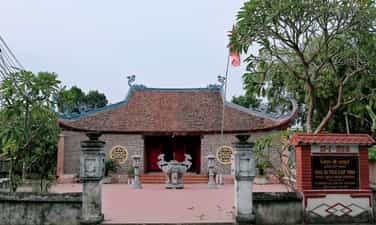
Thuong Temple, also known as Thach Linh Than Tuong Temple. According to historical sources and Sino-Nom documents such as: Legend of Thuong Lat commune, Tien Lat canton, Viet Yen district, Bac Giang province; book Folk Tales of Quan Ho region - Ba Chua Kho; Bac Ninh's book of geographical balance; Bac Giang Geography book. Dictionary; Bac Ninh Province Local Journal through Han Nom documents: Thuong Temple has a long history of construction and was renovated and embellished during the Nguyen Dynasty (XIX-XX centuries) and later periods. The history of the formation of Thuong Temple is associated with the folk legend of Thach Linh Than Tuong. This is a God with special talent and strength, who performed many amazing feats to help King Hung Tao Vuong defeat the Man invaders. After winning the battle, Thach Tuong rode an elephant back to his birthplace in Tien Lat site, climbed Phuong Hoang mountain, the highest peak, then flew straight into the sky and disappeared. To commemorate his merits, the King ordered the local people and mandarins to return to the place of worship (ie the top of Phuong Hoang mountain) to perform the ceremony and then set up a temple to worship him at the top of Phuong Hoang mountain. Initially, the temple was built with a dome-style compartment, the building materials were all stone taken from Phuong Hoang Mountain, and inside the temple was an incense bowl. Over time, with its sacredness and mystery, the temple gradually became famous throughout the region. On the other hand, Thuong temple along with other relics in Bo Da mountain gate such as: Ao Mieu, Bo Da pagoda, Trung temple, Doc Cuoc temple, Ba Chua Kho temple... have formed a continuous complex of relics. , boldly reflects a historical period of struggle to protect national independence. Thuong Temple is located on Phuong Hoang mountain, Bo Da mountain range, Tien Son commune, Viet Yen district, now Viet Yen town. Bo Da Mountain is the common name for the entire mountain range in Tien Son commune. In the Bo Da mountain range, there are three large mountains, each with its own name. The highest is Phuong Hoang, with many rocks and dense pine trees. The second mountain is Ma Yen mountain and the third mountain is Kim Quy mountain. The mountains are undulating and the trees are lush all year round. Surrounding the Thuong Temple, there are many ancient green trees that give shade to the large mountains flanking them; There are six Tien Sa orders such as: White, Pronged, Empty, Tre, and Tra. There are also Con Coc Mountain, Chua Kham Mountain, Truc Lat Mountain, Elephant Mountain, Ban Co Tien Mountain... In front of Thuong Temple are fields and the Cau River surrounding and winding like a strip of silk. This is truly a spiritual place where mountains and waters meet in harmony. According to comments in Nguyen Huy Binh's article on the Legend of Thach Tuong Quan in relation to stone worship: “All combine into a very ideal geographical space. In that humanistic geographical environment, the legend of Thach Tuong Quan has quite clearly the characteristics and localization of the land." SOURCE: BAC GIANG DEPARTMENT OF CULTURE, SPORTS AND TOURISM CENTER FOR INFORMATION - TOURISM PROMOTION
Bac Ninh
3384 view
Rating : National monument

PHUC LAM Pagoda
Phuc Lam Pagoda is an ancient pagoda built on a strip of spiritual land located about 500 meters from the residential area. This place used to be a dense forest with many species of ancient trees and rare herbs. The pagoda was built in the Chinh Hoa era during the reign of King Le Trung Hung (1681 - 1704). Legend has it that: The person who founded the pagoda was Patriarch Thien Phat of the Lam Te lineage, a monk in Bo Da's ancestral place, Tien Son commune, Viet Yen district, Bac Giang province. After the ancestors passed away, after many hundreds of years, the pagoda still had monks sent by Bo Da to take care of Buddhist work. In 1945, following the Party's call to carry out the "Scorched Earth Resistance War", the ancient Phuc Lam Pagoda turned into ash, leaving only a strip of desolate land. In 1954, peace was restored, Buddhists and local people worked together to rebuild the pagoda and several pedestals of Buddha statues to create a place to worship and believe in the Three Jewels. For about 50 years, the pagoda had no abbot, so the pagoda was seriously degraded. Buddhists and local people have repaired it many times, but it was only a temporary method. In 2002, the Elderly Association of Phuc Lam village came to meet monk Thich Thieu Huong, who at that time was the abbot at Hung Dao pagoda, Dao Ngan 1 village, Quang Chau commune, earnestly hoping that he would return to become abbot of Phuc Lam pagoda so that the people could Here, you can be close to the Dharma and teachings of Buddha and achieve peace and liberation right in the present life. After returning to become the abbot of Phuc Lam Pagoda, he saw that the living conditions of the pagoda were poor everywhere, and the road to the pagoda was narrow, so Venerable Thich Thieu Huong, along with the Buddhists and people in the village, asked The spirit of seeking Buddha's way and calming sentient beings that Buddha taught, determined to revive the spiritual area into the Buddhist Center of Viet Yen district. From 2004 - 2016, from the meritorious funds of Buddhists, the pagoda built the Three Jewels, the ancestral house, the guest house, the bell tower, the drum tower, the pagoda fence, the monk's house, the meeting room, and the Tam gate. Mandarins, lakes, statues of Avalokiteśvara Bodhisattva, tower gardens... with a budget of up to tens of billions of dong, all with the purpose of praying for world peace and peaceful people. Phuc Lam Pagoda has truly become the Buddhist Church Center of Viet Yen district. SOURCE: ELECTRONIC INFORMATION PORTAL OF VIET YEN TOWN, BAC GIANG PROVINCE
Bac Ninh
3639 view
Rating : National monument

Temple Pond
Ao Mieu relic is located in the center of Ha Lat village, Tien Son commune, Viet Yen district (Bac Giang). This is one of the relics belonging to the special national relic site system of Bo Da Pagoda (Tien Son commune, Viet Yen district). Many people come to the Ao Mieu relic not only to pray for blessings, virtue, fortune, and fortune, but also to admire with their own eyes a unique artistic architectural work bestowed by nature and embellished through the table. hands of ancient artisans. The shrine worships Thach Linh god on a stone slab behind the great temple (in the Holy pond). Legend has it that God was born from stone According to the elders: There was a wealthy man named Nguyen Hoa and his wife Cao Thi Huyen living on a spacious plot of land. In the plot of land there was a pond, in the middle of the pond was a rock as big as a chessboard; Around the land there are many high rocky mountains, above there are pine trees, stone dragons, stone elephants, stone horses, stone turtles, and stone flags in the direction. Nguyen Hoa is over 60 years old, his wife is also over 50 years old and still doesn't have a child. He feels sad in his heart because he worships the incense burner and doesn't have anyone to worship him morning and night, so he only drinks for fun and often goes to the table. Rock in the middle of the pond to sit and play to relieve sadness. One day, as soon as I reached the stone table, I suddenly saw a flower snake more than 10 meters long, with colorful fins, crawling around on the stone table. When it saw someone, it slid into the water and disappeared. That night, there was heavy rain and strong winds, thunder rumbled, and there seemed to be people talking, laughing, and singing in the pond. Nguyen Hoa hid to watch, saw the stone slab in the pond covered with five-colored clouds, strange floating air, fairies in the sky singing, elegant music melodious... The next morning, January 10, Nguyen Hoa went out to see the clouds covering him. foggy, the sky and the earth are dark. Suddenly there was a thunderclap in the sky, a landslide, then the clouds dispersed on their own, the sky and earth were clear. The stone slab naturally shattered into three pieces, and a man appeared, with a dignified appearance, strong manners, and a large body. Sharp as the newly rising sun, face like a bright star illuminating the night, screams like thunder echoed throughout the heaven and water palace. Nguyen Hoa saw the strange-looking man, so he ran, hugged him, brought him home, raised him, and named him Thach Tuong... By the time he was 7 years old, Thach Tuong was more than 10 truong tall, enough to shake mountains and fill the sea. . At that time, the Man invader emerged, the king was worried, issued an edict inviting a meeting of officials, established a fast, and prayed to heaven and earth to help eliminate the enemy. After 21 days, suddenly dark clouds covered the mandrel, it was dark and gloomy, then wind, rain, thunder and lightning appeared. After a while, the sky cleared, the clouds stopped, the altar became clear, and we saw a white flag on the altar, the flag had the words: In heaven, God told the king Fighting the enemy was like wind and rain Find Bac Ha, Yen Viet origin Zhuan Hung Thach General won't lose! That day was the 10th day of the 8th month, the king ordered a mandarin and 12 human servants holding the Emperor's flag to go to Yen Viet land... Nguyen Hoa went out to see and saw a command flag with the name Thach Tuong entering the house to tell Thach General. Thach Tuong invited the messenger in and said: "Go back, my king, make me a stone elephant 10 meters high and give me the Emperor's flag, then the Man invaders will be at peace." The messenger paid his respects and returned to the court to report to the king... In the middle of August 13, the people set up a royal palace for the king to live in, now still called Ngu communal house... Thach Tuong replied: "The power to act in the musical palace, the title to the throne in heaven." , heaven sent me to help your majesty eliminate the barbarians, since you already have a position in heaven, why bother your majesty's robes..." Having finished speaking, Thach Tuong jumped on the elephant, holding a command flag in his hand, the military authority following behind thundered like flowing water. , the waterfall rang, straight ahead Going to Hung Hoa, Tuyen Quang, Cao Bang... one battle wiped out all the grasshoppers, and the world was once again at peace. After defeating the enemy, Thach Tuong returned to Tien Lat village and then climbed to the top of Phuong Hoang mountain (Bo Da mountain, Tien Son commune) and returned to heaven, that day was September 12. The people performed a performance, and the king sent hundreds of troops to come. At Thach Tuong Hoa's place in Tien Lat, a high rocky mountain area, to perform ceremonies, then ordered to set up a temple right at the place where he transformed for incense and smoke to worship. Ao Mieu, also known as Ha Temple, worships the Stone Gods: Thach Linh Than Tuong (Thach Tuong Quan) and Mau Da. The Ao Mieu relic area currently includes the following construction items: Temple gate, Thach Linh temple, Thach Long pond (Thanh Tri) and Mother House. The temple gate has just been restored and built simply. The yard is paved with square tiles, inside is placed an Elephant carved from green stone, shaped like the fighting elephant described in the Legend of Thach Linh. Surrounding the yard is a closed wall. In front there is a communal lake - a place where water gathers, creating an ecological landscape and a place where many folk games take place during festivals... The relic grounds are planted with many shady trees. Ha Binh Temple has a Nhat-shaped architectural structure that was newly restored and embellished in 1993. The Pre-Sacrificing Court is made up of 1 room and 2 wings. The roof architecture is in the style of a 2-storey, 8-curved roof, the ridge and the strip are built of bricks covered with mortar. The top of the roof is shaped like two dragons flanking the sun. The two ends of the pliers, the roof edge and the bend are embossed with a water wave pattern. The four heads of the sword are stylized in the shape of a dragon's head. In addition to the aesthetic element, it also creates serenity, bringing the element of yin and yang. On both sides of the gable wall, pillars are built with tetrahedral edges, and the top of the pillar is covered with four phoenixes. The lower part of the ear is shaped like a lantern, embossed with four sacred animals: Dragon, Ly, Turtle, and Phoenix. On both sides of the gable wall are statues of dancers standing guard at the door. SOURCE: ELECTRONIC INFORMATION PORTAL OF VIET YEN BAC GIANG TOWN
Bac Ninh
3526 view
Rating : National monument

PHUC NGHIEM Pagoda
Referring to the Buddhist Center of ancient Vietnam (now in Thuan Thanh district, Bac Ninh), many people often think of places such as But Thap pagoda, Dau pagoda, Kinh Duong Vuong mausoleum, Sy Nhiep temple... , relics bearing the mark of Vietnamese spiritual culture. But there is still a place of meditation whose birth is associated with the "Luy Lau Buddha land", which is the To Pagoda in Man Xa village, Ha Man commune, Thuan Thanh district. Phuc Nghiem Pagoda is popularly known as Chan Pagoda, because the pagoda is located in Chan Lang village, Yen Son commune, Luc Nam district, Bac Giang province. Chan village's name is Khe Khau village, under the Le dynasty it belonged to Lan Son commune, Tri Yen district, Phuong Nhon district, Lang Giang district, Kinh Bac region. Khe Khau village has long been divided into 3 independent village units (Chan Lang, Chan Dong and Trai Cau), so Phuc Nghiem Pagoda has become a Buddhist religious building for all 3 villages. Every year, in February, on the 19th and 20th of the lunar calendar, the people of the 3 villages organize a pagoda festival that attracts a large number of Buddhist disciples and tourists from all over to visit the festival. Through surveying the relics, it is estimated that Phuc Nghiem Pagoda was built around the 14th - 15th centuries, that is, the end of the Tran Dynasty and the beginning of the Early Le Dynasty. Over five or six hundred years of history, the architectural work has gone through many restorations and repairs, so there have been many changes compared to the original style of knowledge. The architectural works that still exist today bear the architectural style of the Nguyen Dynasty with typical construction items such as: Three Jewels Court, Ancestor House, Monk's House, Ancient Tower... Direct survey of people's relics It is possible to predict relatively accurately the layout of the ancient pagoda of the early Le period. At that time (15th century), Phuc Nghiem Pagoda had a complete architectural layout in the style of "foreign domestic work", but because the two corridors and three entrance gates were destroyed by time, the current building still follows its layout. Department of Public Letters. The three-jewel building is built in the style of a "vase-shaped vase" in front with two bronze pillars covered with fruit. The Three Jewels are divided into two adjacent buildings, the Front Hall and the Buddha Hall, arranged in a mallet-shaped layout. The front hall consists of 7 ironwood houses, with 5 rows of pillars, a striped architectural structure, and simple carvings. Connected behind the front hall is the Buddha hall, 3 large spaces with the same architectural style but not carved but carefully smoothed and sharpened. In the front hall, there are a number of carved panels, with decorative motifs on the theme of four precious things, vividly reflecting the rich products of the homeland. On the gable of the Buddha hall, the ancients wrote four Chinese characters in the style of a book, with magical butterfly strokes "Boundless Wind and Moon" to praise the charming beauty of this monument. Everlasting with the three jewels, Phuc Nghiem pagoda also preserves the ancient brick tower system. This is the eternal resting place of the monks who practiced and passed away at the temple. Today, visiting Phuc Nghiem Pagoda, people can still clearly see the traces of two ancient architectural works that were damaged during the resistance war against the French. These are two corridors (where the Arhat statue is placed) and three gates. That vestige has helped today's generation to imagine the majestic scale of this monument. For a long time, Phuc Nghiem Pagoda has become a famous Buddhist center of the Truc Lam Zen sect in the lower Luc Nam district. Currently, the system of ancient statues, architectural works, and worship objects are still carefully preserved by the locality. In the Tam Bao and the ancestral house, there are over thirty ancient wooden statues of the Le - Nguyen dynasties that are very valuable. The stone stele system is lost, but the temple still retains a Tay Son bronze bell. The bell is about 100cm high (including handle), mouth circumference is 160cm. The bell handle is molded into the shape of a pair of dragons living together, the dragon's mouth spits out pearls, looking serious but gentle, not fierce like the dragons of the later Nguyen Dynasty. On the 4 segments of the bell are embossed with 4 Chinese characters, indicating the name of the bell: "Phuc Nghiem Tu Chung" (Phuc Nghiem pagoda bell). At the end of the article, there is a stray line indicating the time of casting this bell: "Eight years of the Canh Thinh dynasty, three moons, the first day of the sand, the first day of the third month of the 8th year of the Canh Thinh era (1800). create a large bell). This article engraves the meaning of bell casting, then goes on to record some of the groups and individuals who contributed to casting this bell. The bell text was composed by the monk who was the abbot of Phuc Nghiem Pagoda at that time. Finally, there is an 18-sentence long poem, written in a 4-word verse form praising the scenery of Phuc Nghiem Zen temple and the kindness and compassion of the compassionate Buddhas to bring peace to the country and people. Phuc Nghiem Pagoda is an ancient pagoda, once a place where many Buddhist scriptures were printed in the 18th and 19th centuries. Along with Chan village communal house and Noi communal house, Phuc Nghiem pagoda relics have contributed to beautifying and enriching the people. relics in the lower Luc Nam district. Furthermore, Phuc Nghiem Pagoda also preserves many ancient relics of the Le - Nguyen dynasties, so they need the attention and research and protection of the government and professional sectors./. SOURCE: BUDDHISM TODAY
Bac Ninh
4057 view
Rating : Provincial level relics

VAN PHUC Pagoda
Van Phuc Pagoda, located in Trung Ban village, Dong Tho commune, Yen Phong district, Bac Ninh province, is a pagoda with a rich history and unique culture. This temple is not only a place of worship and spiritual practice for local people but also an important cultural and religious destination in the region. VAN PHUC Pagoda was a Vietnamese Buddhist center during the Ly Dynasty. The pagoda still retains a number of stone sculptures of the Ly Dynasty. In particular, in the Buddha hall, there is a statue of Buddha meditating on a lotus throne, 1.85m high, including a pedestal of 3m. This is a masterpiece of stone sculpture in our country. The pagoda worships the statue of Zen Master Chuyet Cong (1644). In particular, the pagoda has a 27m high stone statue of Great Buddha, weighing more than 3,000 tons, placed at a height of 108m, carved according to the prototype of the Ly Dynasty Buddha statue at the pagoda, which was unveiled on September 26, 2010. Van Phuc Pagoda was built a long time ago and has undergone many renovations. The temple's architecture is typical of Northern Vietnamese pagodas with curved tiled roofs, intricately carved wooden columns and solemnly decorated Buddha statues. The temple grounds have structures such as three gates, main hall, harem and other worship spaces, creating a solemn and pure space. Van Phuc Pagoda is a place of worship for Buddha, where local people come to pray, burn incense, and participate in Buddhist festivals such as Buddha's Birthday, Vu Lan and other religious holidays. The pagoda is not only a place of practice for monks but also a place to connect the community, helping people preserve and promote cultural values and traditional beliefs. In addition, Van Phuc Pagoda also plays an important role in moral and spiritual education for the young generation, helping to preserve the cultural beauty of the Vietnamese people. With its green landscape and peaceful space, the pagoda is a destination that attracts tourists and Buddhists from all over. Van Phuc Pagoda stands out with its ancient space, rare Buddha statues and many relics of historical value. This pagoda is a testament to the cultural and religious development of the land of Yen Phong, Bac Ninh over many generations. The existence and development of Van Phuc Pagoda makes an important contribution to preserving the cultural and spiritual heritage of Bac Ninh province in particular and Vietnam in general. Van Phuc Pagoda is not only a historical relic but also a symbol of the spirit of harmony between humans and nature, between the spiritual life and daily life of the people here. SOURCE: VIETNAMESE GLOBAL Pagoda
Bac Ninh
4024 view
Rating : Provincial level relics
NAM LUONG FAMILY
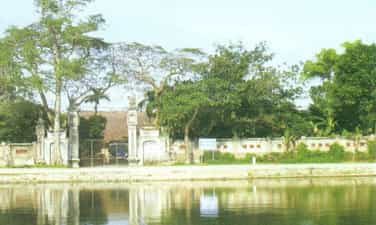
The story of the hundreds of years old communal house in Ngam Luong village, Lang Ngam commune, Gia Binh district, Bac Ninh province that we talk about below is an example to prove that. Ngam Luong village, Lang Ngam commune (formerly named Ngam Dien) is located adjacent to the Thien Thai mountain range, and is the meeting place of many transitional geo-cultural circuits. In the area, there is Duong River hugging the West and Northwest. Along with that is the ancient road route, now the Duong River dyke. That river route and ancient road form an East-West connection between the Thai Binh and Red River basins. Lang Ngam is also located on the western bank of the Luc Dau Giang area, where the high mountains and low hills in the North end; The place where the Thuong River, Cau River, and Luc Dau River converge, opening up the delta and down to the East Sea. Those river routes are important traffic arteries in transporting ancient Vietnamese residents along with the country's economic, historical and cultural elements back to Lang Ngam; And from here - thanks to these special bloodlines - it continues to spread out, integrating with the country in all fields. That has made Ngam Luong - Lang Ngam countryside - since ancient times - a place to both witness and directly contribute to the creation of many unique cultural histories of the homeland and the country. Located at the beginning of the village, looking to the Southeast, Ngam Luong village communal house is in a beautiful feng shui position. In front of the road is a lake with water, the village road curves around, and in the distance is fertile countryside. On both sides are villages and fields. Behind the communal house is a great dike and the Duong river like a strip of noise surrounding it. Perhaps the village and communal house are located by the river, but when the ancients built the communal house, they worshiped the three Water Gods as tutelary gods. The water gods are considered to be figures with a decisive role, directly influencing the thinking, daily life and production of agricultural residents who have grown wet rice since early times. Currently, their records in the locality have been lost for a long time, so it is unclear what their merits were. But in the pavilion, there are still Chinese characters recording their names: First Five Six Shows Improvising Linh Hon Than, Second Trung Thien heroically heroic and strategic Hon Than, and Third Chan Nhi Thong Rui Mat. attain godhood. Ngam Luong village communal house has quite a large scale, containing many unique values of history, cultural beliefs and architecture - art. In particular, in the field of architecture and art, this is one of the last and outstanding representatives of Northern communal house sculpture art during the three golden centuries of folk culture. Because of that, the communal house was ranked as a Historical - Cultural relic by the People's Committee of Bac Ninh province in 2009. According to the chronology still recorded on the first sentence of the communal house in Ngam Luong village, the communal house was restored. created on a beautiful day in early summer in the year of Giap Than - Le Dynasty (around 1764). The overall construction at that time included: The communal house gate and the Tam Quan were built in the style of a 8-roof match stack, on both sides there were 2 dancers, elephants and painted four sacred animals. Inside are two Dance Strips, each side has 4 compartments. Next is the Great Court and the Harem. Over time and war, some works such as Tam Quan and Dai Vu of the relic site were demolished. In 1962, the wooden floor in Dai Dinh was also removed to make tables and chairs. Later, the villagers repaired the outer garden, built walls and gates, and redid the three gates; Gather enough remaining floorboards to fit the floor on one side of the house. Currently, when villages are gathered together, houses are spacious; The communal house, which was originally large and imposing compared to the people's houses in the past, is now somewhat less massive; But the spiritual value and historical and cultural value are multiplied over time. With the Ngam Luong communal house project, the architectural beauty over the centuries still exists through the ancient architectural structure that is still maintained. The great communal house consists of 3 compartments, 2 wings and 4 curved roofs, measuring 21m long and 11m wide, truly an architectural work with all the typical beauty of Northern village communal houses. The architecture of Ngam Luong village communal house has the same style as many Northern village communal houses. The system of ironwood columns, large and small, is solid, structured in the style of stacking beams and gong racks, with 6 rows of columns horizontally and 4 vertical rows. This sturdy column system lifts up the wide, tiled roof of the communal house, protecting the sacred inner space of the communal house, with many carved works of artistic value, imbued with the souls and emotions of the workers - Folk artists build communal houses. The main columns in the front and back horizontal rows of the three main halls all have column ears. That is the worker who sawed the top of the column into a wide frame, then brought the wooden slab down to spread out on both sides of the top of the column, below was the support arm, and on top was a dowel attached to support the upper beam. Thanks to this structure, the column ears are always in a stable position. It is these pillars that the craftsmen have turned into works of art with embossed techniques and rich themes, bringing the bustling breath of life. The rear palace is in the style of a mallet, consisting of 5 architectural compartments in the style of a row, surrounded by bricks, the axis is 11.5m long, 8m wide. Inside the Harem are arranged 3 thrones worshiping the tablets of the tutelary gods. In front are incense bowls, stands, candles, floating trays, altars... all placed on brick pedestals and square tables. Some of these artifacts date back to the Nguyen Dynasty, 19th century. In particular, the ancient communal house was bestowed with many titles by Vietnamese feudal dynasties. Over time, it was lost, and up to now, 7 ordinations are still preserved in the temple. The earliest religion was established in Canh Hung 28 (1767), the latest religion was established in Dong Khanh 2 (1886). Most of them acknowledged the merits of the village tutelary god for helping, eliminating disasters, and dispelling disasters for the people, so that the people could be prosperous and happy. SOURCE: LITERATURE AND ART ASSOCIATION OF BAC NINH PROVINCE
Bac Ninh
3889 view
Rating : Provincial level relics

DAI BI Pagoda
Dai Bi Pagoda is located in hamlet 8, Ninh Giang village, Ninh Hiep commune, Gia Lam district, suburban Hanoi. The pagoda is also called Ninh Giang pagoda or Xom 8 pagoda. Dai Bi Pagoda was built very early. Based on written documents and relics left in the monument, it can be confirmed that the pagoda was built at least 400 years ago. According to the elders in the commune, the pagoda was burned on September 22, Mau Dan year, but soon after, local people joined in making merit with Mr. Ky, a native of the commune, who practiced here. Contribute to rebuilding the pagoda according to its old appearance. Perhaps the most recent was the restoration in 1939, which is still inscribed in Chinese characters on the upper palace: Emperor Bao Dai's reign was fourteen years old The fifth year of Ky Mao, five moons, twenty-six days of great prosperity and great auspiciousness. Translated as: The roof was topped off on the auspicious day of May 26, Ky Mao year, the 14th Bao Dai era (1939). Dai Bi Pagoda is not very large in scale; The entire floor plan is square, each side is 13.4m with an area of about 200m2. The ancient craftsman cleverly built a pagoda that has all the architectural components of a typical pagoda including: Front hall, incense burner, upper hall and surrounding corridors, Patriarch's house, guest house, outbuilding. On the top of the Tien Duong roof, in the middle is a relief of the sun image, on both sides there is a relief of a phoenix and a pincer head is a relief of a dragon, on the two banks of the river is a relief of Nghe. These are reliefs symbolizing the mascots in the Four Sacred Treasures. The head of the knife is stylized in the form of a carp turning into a dragon, and all the tiles are covered with funny-nosed tiles. On the 4 pillars attached to the facade are 2 parallel sentences made of cement. The Upper Palace is the center of worship decoration, has a simple structure and shares the roof with the Tien Duong, which includes 25 round statues painted in red and gold, splendidly decorated with parallel parallelograms and flags. Close to the wall of the Upper Palace, there are 4 stone relief statues of the Hau and a gable wall on the right are typical works of art of the 17th century. Through many ups and downs and changes of time, especially the fire, the relics have suffered a lot of loss. Currently, the pagoda still retains precious relics made of stone and bronze including: 5 relief stone queen statues, 6 small stone stele, 1 heavenly stone pillar (1691), some earthen statues, 1 bronze bell. 75cm high, 50cm diameter, 25cm handle, 4 sides with the words "Dai Bi Tu Chung", the era name "Canh Thinh Royal Dynasty" (1800); 3 horizontal paintings and 7 parallel sentences. Every year the people still maintain the festival at the temple on the 5th, 6th, and 7th days of the second lunar month. Dai Bi Pagoda was ranked an architectural and artistic relic by the Ministry of Culture and Information in 1997./. SOURCE: HANOI PEOPLE ONLINE MAGAZINE - SPEECH AGENCY OF HANOI LITERATURE AND ART ASSOCIATION ASSOCIATION
Bac Ninh
4056 view
Rating : Provincial level relics