Relic point Vietnam
Việt Nam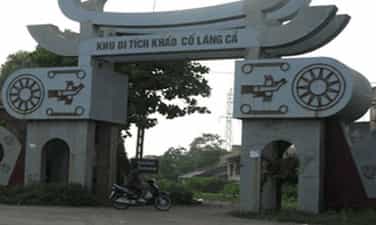
Archaeological site of Lang Ca
Lang Ca archaeological site is located on Nhan Hill, Tho Son ward, Viet Tri city, Phu Tho province. This is one of the most typical archaeological relics of Dong Son culture, associated with the formation and development process of ancient Vietnamese residents in the ancestral land. Through many excavations, archaeologists have discovered 336 burial tombs, including 328 tombs belonging to the Dong Son culture, along with many traces of residence. A series of bronze, stone and ceramic artifacts were found such as axes, spears, daggers, jars, bells, bronze drums, molds and jewelry, showing that this place was once an important economic and cultural center for residents during the country's founding period. Research shows that the Lang Ca residence dates back to around the V–IV centuries BC, equivalent to the Hung King era; The burial site continued to exist for many centuries afterward. The findings here are a valuable source of data for studying the Hung King era and the Van Lang state. With special historical and archaeological value, Lang Ca was ranked as a national archaeological relic in 2006. Source: Phu Tho Newspaper
Phu Tho
54 view
Rating : National monument
Dinh Huong Tram
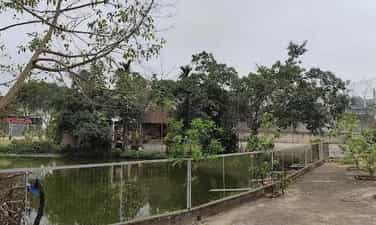
Huong Tram communal house is located in Du Lau ward, Viet Tri city, Phu Tho province, and is one of the ancient communal houses associated with the ancient land of Van Lang. The communal house worships King Quy Minh, Queen Mother Thanh Phi and Princess Can Nuong Bao Hoa - figures who have been worshiped since the time of Hung King. According to the family tree, the communal house was built in 1572, during the Later Le Dynasty. The building has the architecture of the word "Dinh", including a communal house and a harem, featuring a system of wooden columns and carvings bearing the artistic mark of the Le and Nguyen dynasties. Every year, the Huong Tram communal house festival takes place on the 5th and 6th of January, with palanquin procession ceremonies, Xoan singing, silk house singing and many folk games, attracting a large number of people and tourists. With unique historical, cultural and architectural artistic values, Huong Tram Communal House was ranked a National Historical Site in 2004, contributing to enriching the heritage system associated with the Hung King era in Viet Tri land. Source: Phu Tho Newspaper and Radio and Television
Phu Tho
51 view
Rating : National monument
Xom Trai Cave and Lang Vanh Stone Roof
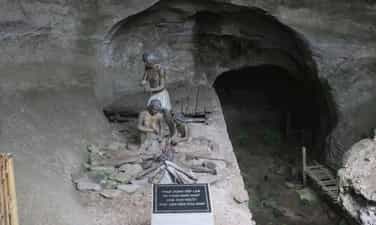
Xom Trai Cave and Lang Vanh Stone Roof are two special archaeological relics typical of Hoa Binh Culture, distributed in Phu Tho province according to the current administrative unit. The two relics have special value in studying the process of residence, living and development of prehistoric people in Vietnam and Southeast Asia. Xom Trai Cave is located on the bank of Lan stream, in the area of Trai Sao hamlet. Here, archaeologists have discovered a thick cultural layer, containing many traces of prehistoric habitation such as fires, burial mounds, stone tools, bone tools, animal bones, snail shells and fruit seeds. In particular, a series of stone tools bearing the characteristics of Hoa Binh Culture shows that this place was once a space for residence, tool making and long-term activities of people from about 21,000 to 2,500 years ago today. The relic is also considered a special repository of primitive fruit seeds, valuable for research on the environment and the lives of prehistoric residents. Not far away, Lang Vanh Stone Roof is a large, open stone roof with a cultural layer about 3.7 meters thick. Excavations have discovered many stoves, stone tools, bone and horn tools, stone tables, animal bones and mollusk shells. These findings vividly reflect the livelihood activities, food processing, tool making and spiritual life of Hoa Binh Culture residents. With a thick cultural layer, rich relic system and important archaeological evidence, Xom Trai Cave and Lang Vanh Stone Roof are considered the original and central locations of Hoa Binh Culture in Vietnam, contributing to clarifying the development history of prehistoric inhabitants in Vietnam and Southeast Asia. According to: Department of Cultural Heritage
Phu Tho
64 view
Rating : Special national monument
Dong Dau archaeological site
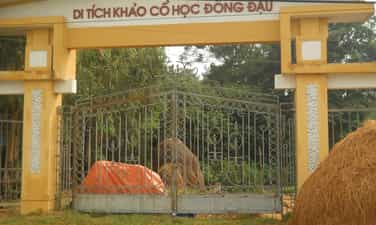
Dong Dau archaeological site is located on Go Dau, Yen Lac commune, Phu Tho province. This is one of the typical archaeological sites that helps clarify the development process of ancient Vietnamese residents in the pre-Dong Son period. Discovered in 1962, the relic has undergone six excavations, discovering thousands of artifacts including production tools, weapons, jewelry, pottery, bronze, stoneware, horn bones and many terracotta animal statues. In particular, traces of bronze casting furnaces, casting molds, burnt rice grains, animal bones and tree seeds show that the residents here knew how to metallurgy, grow wet rice, raise livestock and garden very early. Through studying the cultural layers, archaeologists determined the continuous development from Phung Nguyen - Dong Dau - Go Mun culture, reflecting the long-term development process of ancient Vietnamese residents before entering the Dong Son era. The age of Dong Dau culture is determined to be about 3,500 - 3,000 years ago. The discoveries at Dong Dau have made an important contribution to restoring the lives, production activities and culture of residents during the Hung King period, while also providing valuable documents on the origin and formation process of ancient Vietnamese civilization in the Red River basin. With those special values, Dong Dau is considered an important pre-Dong Son relic of Vietnamese archeology. Source: National Museum of History
Phu Tho
120 view
Rating : National monument

Bao Ngan Pagoda
Bao Ngan Pagoda is located in Song Lo commune, Viet Tri city, Phu Tho province. Bao Ngan Pagoda is an ancient pagoda. Legend has it that it was originally a manor house of King Hung's daughter, and was built by the Patriarchs into a Buddhist temple, a place of spiritual warmth for the Buddhist population of the entire region. vast. Through the ups and downs of time, the temple has become a ruin. From the ancestral home of Huong Pagoda - Ha Tay, and being assigned by Buddha to Bao Ngan Pagoda, Venerable Thich Minh Thuan, step by step, persistently created both the material and spiritual foundations of the pagoda, while also developing a mind of indifference. hesitate to make efforts to contribute to the Dharma propagation industry in Phu Tho. Initially, the Master built temporary shacks, then step by step built a lecture hall, guest house, monk's house, Patriarch's house,... solid and majestic. Truong An retreats, retreats and festivals are still held here. Like bees returning to the hive, Buddhists continue to practice and study in increasing numbers. This place has become a famous Gia Lam place in the region. Bao Ngan Pagoda has architecture and interior design following Chan Tinh style combined with Mat Tinh initiates. In particular, it has a palace worshiping Patriarch Padmasambhava - an important patriarch in Tibetan Tantra. Venerable Minh Thuan, one of the outstanding Dharma disciples of Patriarch Vien Thanh, is known as the person who brought Esoteric Buddhism back to Vietnam in 1992. The architecture of Bao Ngan Pagoda follows the shape of the word "Cong", with offerings overlapping each other to form eight roofs. The harem also has twelve roofs, with a floor area larger than 500 square meters and a height of up to 16.5 meters. The pagoda now stands majestically on the banks of the Lo River, near the historic Viet Tri bridge. SOURCE: PHU THO NEWSPAPER
Phu Tho
4164 view
Rating : National monument

Thuong Temple
Thuong Temple's literal name is Kinh Thien Lanh Dien (Heaven Temple on Nghia Linh Mountain). The Temple is an architectural work of the Hung Temple complex relic site located in Co Tich village, Hy Cuong commune, Viet Tri city, Phu Tho province. Thuong Temple was built on the old foundation of the temple worshiping the mountain god, rice god, Thanh Giong..., where Hung kings often conducted rituals to pray to heaven and earth, hoping for good weather and good crops. for all people to be prosperous and happy. There are documents that suggest that Thuong Temple was built in the 15th century. The temple currently has three compartments and a curved tiled roof. The temple door has a horizontal painting: Nam Viet Trieu To (Eternal Patriarch of Vietnam), inside the temple there is a great painting: Tu Ton Bao Chi (Descendants must preserve it). There are also many couplets praising the merits of the Holy Patriarchs. The altar in the temple has tablets of 18 generations of Hung kings (Eighteenth Hung Tu Thanh Vuong Thanh Thanh) and three mountain gods: Tuot Cao Son (Nghia Linh mountain), Ap Son (Troc mountain), Vien Son (Toc mountain). On both sides in front of the temple door are two stone pillars, said to have been erected by King An Duong, swearing to forever preserve the Hung family's country and brocade. Currently, the temple has a Vuong-style architecture, built on 4 levels: Drum bell house, Great altar, Pre-worship and Harem. In the Thuong Temple, there is a great painting titled "Nam Viet Trieu To", meaning the Founder of Vietnam. The temple is made in the style of Vuong lettering, with 3 levels. In front is the ritual gate, then the grand altar (level 1), the front altar (level 2) and the harem (level 3). In the book "Hung Temple, a special national historical and cultural relic", it is written: The Ritual Gate architecture is in the style of the Nguyen Dynasty, with 4 large pillars forming 3 domed gates. The pillars above are covered in the style of lanterns, the four sides are decorated with four sacred animals, and the top of the pillar is covered with 4 lions. Above the roof of the middle gate is decorated with "two dragons flanking the sun", images of two winding dragons. On both sides there are statues of boxers, above is an image of a phoenix and a briefcase. In the grand pavilion, the front altar and the harem structure are built into 3 interconnected levels. The premises have a structure of 3 compartments and 2 rows of columns. Especially the harem is a solemn place, inside there are 4 altars. At the three front altars, there are dragon thrones and tablets placed in the altar. All are elaborately carved, painted and gilded splendidly. On the left hand side of Thuong Temple, there is a stone oath pillar, which is said to have been erected by Thuc Phan when he was enthroned by the 18th Hung King to swear to protect the country that Hung King handed over. Over time, traces of stone columns were buried. In 1968, researchers found ancient stone pillars deep underground in the Thuong Temple area. Since then, the oath stone pillar was rebuilt on the right side in front of the temple yard. In 2003, the stone column was restored to its original design; In 2009, it was renovated and embellished with semi-precious stones with the current design. SOURCE: PHU THO NEWSPAPER
Phu Tho
4173 view
Rating : National monument

Ha Temple
Ha Temple is an architectural work of the Hung Temple complex relic site located in Co Tich village, Hy Cuong commune, Viet Tri city, Phu Tho province. Legend has it that the place where Au Co's mother went into labor gave birth to a sac of a hundred eggs, which hatched into a hundred children. The origin of the Vietnamese community, the meaning "compatriot" (same bundle) originated from here.. When the children were wise Father Lac Long Quan brought 50 children to the sea to build dikes and expand the territory. Au Co's mother brought her 50 children up to the mountains to plant mulberries, raise silkworms, weave cloth, and build a life. The eldest son stayed to be the King, passed down from father to son for 18 generations, all called Hung Vuong, creating a lineage of Dragons and Fairies. The temple was built around the 17th - 18th centuries and is made of two layers in the style of Nhi; This is the place to worship the Hung Kings. Thien Quang Thien Tu Pagoda: Located to the right of Ha Temple, built in the mid-15th century. The remaining architecture today is the altar, eight-roof bell tower, beams, traps, and beautiful carvings bearing the mark of the Le Dynasty. . Next to it is a cycad tree about 700 years old. Legend has it that when Au Co's mother gave birth to a bundle of hundreds of eggs, a bright cloud shone down from the sky. Later, people built a pagoda there called Thien Quang Thien Tu (where the light from the sky shines down), in addition, the pagoda also has another name: Son Canh Thua Long Tu. The Second-style architecture includes the front hall and the back palace, each building has three compartments, 1.5 m apart. The architecture of the Ha Temple is simple, with a bridge truss throughout, with pillows attached to the end of the truss making the back roof longer than the front roof, hitched with pillars, the roof is covered with nose tiles, locally called pig nose tiles. Doc built a wall adjacent to the harem, with reliefs on both sides, one big side, one horse side. The roof is flat and has no artistic decorations. The small, level 4 temple includes 3 small rooms for worship. In front of the temple is a large stone incense burner for visitors to worship. SOURCE: PHU THO NEWSPAPER
Phu Tho
4043 view
Rating : National monument

Thien Quang Pagoda
Thien Quang Pagoda, also known as Thien Quang Thien Tu, is located in the Hung Temple cultural and historical relic site, northwest of Viet Tri city, in Hy Cuong commune, Lam Thao district, Phu Tho province. . In the Hung Temple Cultural and Historical Relic Area, this place stands near the Ha Temple, along with the Trung Temple (Hung Vuong ancestral temple), the Upper Temple (Kinh Thien Linh Dien, Cuu Trung Tien Dien), and the Well Temple, as well as the mausoleum. King Hung's tomb. The original name of the pagoda was Vien Son Co Tu, but later it was changed to Thien Quang Thien Tu. This pagoda is one of the works of the Northern sect. The construction history of Thien Quang Pagoda is closely associated with the Le Trung Hung period. The pagoda's three entrance gates are designed in the style of three compartments and two wings, simulating a stack of beds, clearly demonstrating the fine art of the Later Le period. In particular, the pagoda has an ancient bell, and in front of the pagoda yard is a three-branched cycad tree, which has existed for more than 700 years. In the pagoda, the Buddha Hall is solemn with the presence of statues of Tam The Buddha, Amitabha Tam Ton, Sakyamuni Tam Ton, Avalokiteśvara, Dharma Protector and many other Buddhas. SOURCE: PHU THO NEWSPAPER
Phu Tho
4347 view
Rating : National monument

San Bao Pagoda
San Bao Pagoda is called San Bao Tu (called by the bell), the name among the people is: Phuong Lau Pagoda (called by the relic site). The pagoda looking towards the East - South direction has an architectural layout in Cong style including 03 buildings: Tien Duong, Thieu Huong (waterpipe) and Thuong Dien with a total area of 167.4m2. The pagoda was built in the Later Le Dynasty - 18th century and was renovated and embellished in 2014 to meet the spiritual needs and Buddhist ceremonies for good deeds of people from all walks of life in the Commune as well as Buddhists everywhere. Every region has a good mind. San Bao Pagoda is the meeting place and establishment of the Chien Thang Commune Cell, which is where the soldiers in the commune are stationed. San Bao pagoda's ceremonies include: Daily chanting of Buddhist sutras, worshiping of Buddha on full moon days and first days of every month, requiem ceremonies for the souls of the dead, and other religious holidays such as: Thuong Thuong ceremony. Nguyen (full moon day in January), Trung Nguyen festival (full moon day in July). The ceremony to pray for peace in the lower fourth month of the lunar calendar, late spring and early summer is also a ceremony to eliminate pests from destroying crops. Buddha's birthday (April 15) is called the festival of Vietnamese Buddhism, with The ritual of changing Buddha's clothes. San Bao Pagoda is the only religious building in Phuong Lau commune that still preserves a system of ancient statues (37 statues) arranged in the prescribed order of statues. Research on science and history of San Bao Pagoda relics is a valuable relic of religious spirituality and has profound spiritual significance in every person. This is a relic that still preserves the inherent values in a land rich in cultural traditions, all expressed through the system of Buddha statues and the architecture of the Temple. In addition to the number of Buddha statues, the pagoda also preserves 3 stone steles (one side is a Buddha statue, the other is a stele) with typical values during the post-Le period. A bronze bell is 0.95 m high and 0.49 m in diameter. SOURCE: PHU THO NEWSPAPER
Phu Tho
4032 view
Rating : National monument

Du Yen Temple
Du Yen Temple is located in Chi Tien commune, Thanh Ba district. Here the trees are green and the rivers and mountains are charming. In front of the temple is the Thao River singing day and night, accumulating alluvium. Behind the land is like a saddle connected to Son Ngoc mound, surrounded by a lotus pond. According to records, in the early years AD in the Thao Giang area, Thanh Ba district, a good farmer family gave birth to a daughter and named her Hanh Nuong. This little girl was well educated, growing up to study both literature and martial arts. She is a smart girl who studies well, has great beauty, and has a gentle personality. When she grew up, many talented men in the village who approached her refused, not wanting to get dusty in order to keep themselves pure. In the year Hai Ba Trung rose uprising, she invited Hanh Nuong to meet her. Seeing that she was perfect in martial arts, Hai Ba Trung appointed her as the leader of the advance army. After defeating To Dinh's army, female general Hanh Nuong returned to her hometown to hold a banquet to welcome the army, reward the villagers, and hold a festival on a mound by the river in the shape of a white tiger drinking water. Later, people built a temple here and named it Du Yen (meaning a place to play and party), the day of the military year falls on the full moon day of the first lunar month. Since then, every January, the villagers hold a prayer festival to remember her merits and pray for good weather and good things for the family. Over time, Du Yen temple has degraded. People in the area have repeatedly restored and preserved the ancient temple and considered it a spiritual cultural activity spot of the whole region. Since 2003, the temple has been restored and renovated, including more than 12 items with an investment of more than 6 billion VND. In 1993, the temple was recognized by the State as a national historical relic site. SOURCE: PHU THO NEWSPAPER
Phu Tho
4014 view
Rating : National monument