Relic point Vietnam
Việt Nam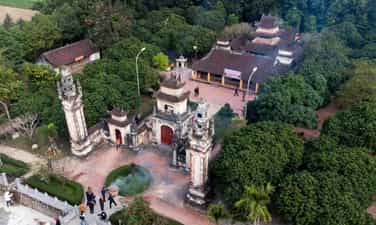
Nguyen Xi's Tomb and Temple
Nguyen Xi's Tomb and Temple is a typical historical and architectural artistic relic of Nghe An, associated with the life and career of Cuong Quoc Cong Nguyen Xi - a famous general and prominent politician during the Later Le Dynasty. Nguyen Xi was born in 1397 in Thuong Xa, now in Dong Loc commune, Nghe An province. He participated in the Lam Son uprising from the early days and together with the insurgent army achieved many great victories such as Bo Dang, Tra Lan, Tot Dong - Chuc Dong, Xuong Giang and Dong Quan. After the country gained independence, he continued to assist during the four dynasties of King Le, making many contributions to building and protecting the Dai Viet nation. Not only his achievements in politics and battle, Nguyen Xi also focused on reclamation, establishing villages, developing transportation, markets and people's lives, especially in the Cua Lo - Cua Hoi area. Those contributions have left a deep mark in the history of formation and development of Nghe An. Nguyen Xi died in 1465, at the age of 69, and was buried in his hometown. Two years later, King Le Thanh Tong built a temple to worship him. Today, the mausoleum and temple are about 300 meters apart, located in the middle of a peaceful village space. The temple has an "internal, foreign" architecture, outstanding with a semicircular lake, ritual gate system, exquisitely carved wooden structures and many traditional themes of four sacred animals, four precious animals and flowers. This is an important cultural and historical address, contributing to educating patriotic traditions, moral loyalty and pride in the homeland of Nghe An. Source: Department of Cultural Heritage
Nghe An
231 view
Rating : Special national monument
Phoenix Trung Do
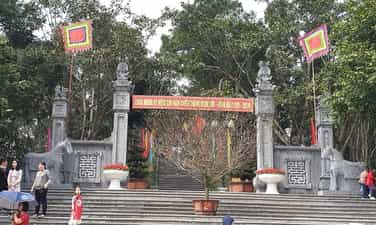
Phuong Hoang Trung Do is the capital chosen by King Quang Trung to build on Dung Quyet mountain, Vinh city, Nghe An province after the victory against the Qing army in 1789. The king wanted to move the capital from Phu Xuan to Nghe An because this was a land with a central location, convenient to manage both North and South, and at the same time a large land rich in military and economic potential. Quang Trung repeatedly assigned La Son Phu Nguyen Thiep to survey, select land and go directly to Nghe An to urge construction. However, while the project was still unfinished, King Quang Trung suddenly died in 1792. After that, the Tay Son dynasty weakened, so the plan to build a new capital was abandoned. Today, the Phuong Hoang Trung Do area and King Quang Trung Temple on Dung Quyet Mountain are typical historical and cultural destinations, associated with the national hero's desire to build a new capital and the strategic vision. Source: National Museum of History
Nghe An
552 view
Rating : National monument
Archaeological relic of Dong Truong Cave
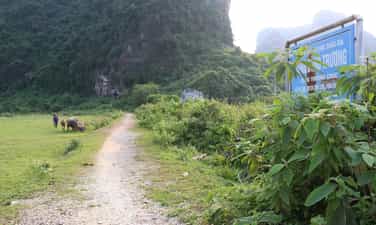
Archaeological relic of Dong Truong Cave. Dong Truong Cave is located in Anh Son commune, Nghe An province, in the Kim Nhan limestone mountain range, near Highway 7. This is one of Vietnam's typical archaeological sites and is considered by scientists to be a rare multicultural relic in Vietnam and Southeast Asia, preserving traces of residents from prehistoric to early historical times. The relic was discovered in 2003 and excavation began in 2004. Through many rounds of research, archaeologists discovered 12 burial tombs dating back about 10,000–12,000 years, along with more than 3,000 precious artifacts. Artifacts include carved stone tools, glass jewelry, spinning plumbs, semi-fossil animal bones and many relics of the Hoa Binh, Pre-Dong Son and Dong Son Cultures. The discoveries at Dong Truong Cave show that this place was once an ideal residence for prehistoric people thanks to its wide cave terrain, flat cave floor, close to water sources and convenient for living. The relic provides many valuable documents about the life, burial practices and development process of ancient residents in the North Central region through many historical periods. Today, the relic is not only important for historical and archaeological research but is also a destination that contributes to introducing the long-standing cultural values of Nghe An. Source: Dan Tri Newspaper
Nghe An
260 view
Rating : National monument
Temple of Sat Hai Dai Vuong Hoang Ta Thon
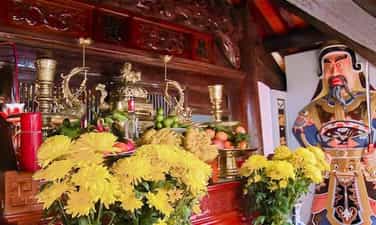
The temple of Sat Hai Dai Vuong Hoang Ta Thon is located in Van Trang hamlet, Hop Minh commune, Nghe An province. This is a typical historical and cultural relic, worshiping Sat Hai Dai Vuong Hoang Ta Thon (1254 - 1339), a famous general of the Tran Dynasty who had many achievements in the resistance war against the Yuan - Mongol army, especially the Bach Dang victory in 1288. After the great victory, he was assigned to command the navy, guard the seaports, protect the coastal area and contribute to maintaining the shores of Dai Viet. The temple was built on land associated with his life and career. Over many centuries, the relic still retains traditional architecture with items such as temple gates, worship halls, upper palaces and many valuable artifacts, worship objects and wood carving systems, reflecting the unique architectural art and beliefs of the land of Nghe An. This is not only a place for people's religious activities but also an educational address for patriotic traditions and the moral "When you drink water, remember its source". Every year, from the 11th to the 16th of the 6th lunar month, the Hoang Ta Thon Temple Festival takes place at the temple with traditional rituals such as opening ceremonies, announcements, palanquin processions, incense offerings and offerings, along with many cultural, artistic and folk sports activities. The festival is an opportunity to commemorate the merits of the famous general, while contributing to preserving and promoting traditional cultural values and attracting a large number of people and tourists from all over to attend. Source: According to Hop Minh Commune Electronic Information Portal, Nghe An
Nghe An
311 view
Rating : National monument
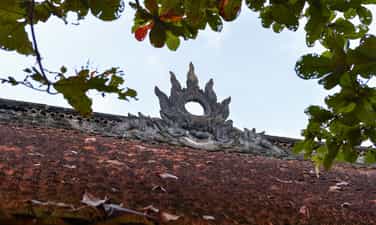
Dinh Hoanh Son
Hoanh Son Communal House - Masterpiece of wooden architecture on the Lam Giang river. Located in Nam Dan commune, Nghe An province (formerly in Khanh Son commune, Nam Dan district), Hoanh Son communal house is one of the typical ancient communal houses of Nghe An, famous for its unique architectural art and wood sculpture. The communal house was built in 1763 under the reign of King Le Hien Tong and completed in 1764. This is the place to worship Uy Minh Vuong Ly Nhat Quang - the eighth son of King Ly Thai To, a famous man with many contributions to the development of Nghe An region. Hoanh Son Communal House was built on a campus of about 2,500 m², on the right bank of the Lam River. The building consists of 7 compartments, 8 floors, with 32 large ironwood columns, structured in the traditional matchmaking style, and the roof is covered with yin and yang tiles. After more than 260 years, the communal house still retains its majestic appearance and durable wooden frame system, demonstrating the talented construction techniques of ancient artisans. The most outstanding feature of Hoanh Son communal house is the art of wood carving that has reached a sophisticated level. Hundreds of carved panels on rafters, columns, beams and dong boards vividly depict the themes of four sacred animals, four precious animals, two dragons flanking the moon, bamboo birds, apricot birds, and many life scenes such as plowing, fishing, boating, festivals and folk tales. The carved panels are represented by techniques of soft carving and filigree, which both have artistic value and reflect the cultural life of the residents of the Lam River area in the 18th century. With outstanding value in history, architecture and sculpture, Hoanh Son communal house is ranked as a special national monument. According to: Nghe An Newspaper and Radio and Television
Nghe An
766 view
Rating : Special national monument
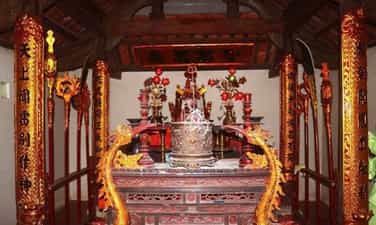
Hao Kiet Temple
Hao Kiet Temple - Historical site associated with famous general Phan Cong Tich Hao Kiet Temple located in Hop Minh commune, Nghe An province, is a valuable historical relic, associated with the cultural and religious life of local people. The temple was built to worship Lieutenant Lai Quoc Cong Phan Cong Tich, a famous general who had many contributions in the cause of the revival of the Le Dynasty. In addition, the temple also worships Duke Phan Cong Ngan, Cao Son Cao Cac and a number of figures revered by the people. According to historical documents and genealogy of the Phan family, Phan Cong Tich (also known as Phan Hoang Tich) was born into a family of many generations of mandarins in the Yen Thanh area. During the period of the Southern and Northern dynasties, he soon responded to the pro-Le movement against the Mac dynasty, contributed to bringing King Le Trang Tong back to the throne, and became one of the pillar generals of the Le Trung Hung dynasty. He directly commanded many important battles in Thanh Hoa and Nghe An and was assigned to visit the Thuan Hoa region to stabilize the border situation. With great contributions, he was awarded the title Lai Quoc Cong, held the position of Thai Lieutenant and was conferred many times by the Le and Nguyen dynasties. After Lieutenant Phan Cong Tich passed away, the court granted land for the people to build a memorial temple. Over the centuries, Hao Kiet Temple has not only been a place to worship heroes who contributed to the country but also a center for cultural and religious activities of the community. In the minds of the people, he is a sacred god who always protects and blesses a peaceful life, favorable harvests and a peaceful country and people. In 2023, Hao Kiet Temple will be ranked as a National Historical Monument by the Ministry of Culture, Sports and Tourism, recognizing the typical historical, cultural and religious values of the monument. Every year, from the 8th to the 12th of the second lunar month, the locality organizes the Hao Kiet Temple Festival to commemorate the merits of Lieutenant Phan Cong Tich. The ceremony took place solemnly with traditional palanquin processions, incense offerings and sacrifices, praying for peace in the country and people, good weather and wind. The festival is exciting with many cultural activities, sports and folk games such as volleyball, tug of war, stick pushing, sack jumping..., contributing to preserving cultural identity and strengthening the spirit of community solidarity. According to: Hop Minh Commune Electronic Information Portal, Nghe An Province.
Nghe An
351 view
Rating : National monument
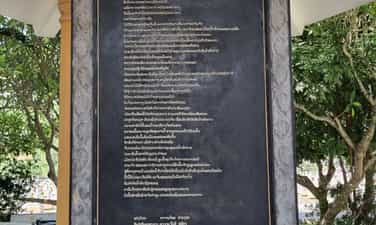
Vietnam - Laos International Martyrs Cemetery
Vietnam - Laos International Martyrs Cemetery Vietnam - Laos International Martyrs Cemetery is located in Anh Son commune, Nghe An province, on National Highway 7 leading to Nam Can border gate. This is the only cemetery in Vietnam bearing the names of two countries, a symbol of the special solidarity and fighting alliance between Vietnam and Laos. The project was built in 1976. In 1982, the Party and State decided to gather the remains of Vietnamese volunteers and military experts who died in Laos to bury here. The cemetery has an area of nearly 7 hectares and is currently the resting place of nearly 11,000 martyrs, including thousands of unidentified graves. The cemetery consists of two areas A and B with solemnly planned rows of graves. The center is a memorial monument, a ceremony house and a stone stele engraved with blessings in both Vietnamese and Lao languages, praising the solidarity and noble sacrifices of the two countries' soldiers and people during the resistance wars. This is not only a place to commemorate the heroic martyrs of Vietnamese volunteer soldiers and military experts who performed international missions in Laos, but also a red address to educate on patriotic traditions, gratitude and special friendship between the two peoples. Every year, the cemetery welcomes thousands of relatives, veterans and tourists to offer incense and pay tribute to fallen heroes. Source: Vietnam - Laos International Martyrs Cemetery Management Board
Nghe An
353 view
Rating : National monument
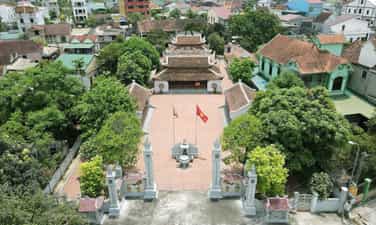
Temple of Mai Hac De
Temple of Mai Hac De Mai Hac De Temple in Nam Thai commune, Nam Dan district (now Van An commune), Nghe An province is a typical historical relic complex associated with the life and career of national hero Mai Thuc Loan. The relic consists of two main areas, the Temple and the Shrine - Tomb, forming a unified complex in a harmonious space of mountains and water. According to the Nghe An Department of Culture, Sports and Tourism, Mai Thuc Loan initiated the Hoan Chau uprising in 713, leading the people against the domination of the Tang Dynasty. After winning many victories, he ascended the throne, took the title Mai Hac De, named the country Van An and built an independent government. In 722, before a large-scale attack by the Tang army, the uprising failed and Emperor Mai Hac died in the Hung Son mountains. To commemorate the merits of the national hero, people built a temple in the ancient land of Van An. The temple was built during the Later Le period and was majorly restored in the 2nd year of Minh Menh (1821). The project is located on high land, facing the Lam River in front, including items such as gate, yard, lower palace, middle palace, upper palace, left vu, right vu, featuring traditional carving art with the themes of four sacred animals and four precious animals. About 200 meters west of the temple is the Temple - Tomb of Mai Hac De. The monument was built according to the layout of "front temple, rear tomb", the mausoleum is made of monolithic green stone, the front overlooks the Lam River, the back leans towards Dun mountain, creating a characteristic "mountain and water view" position. Currently, the relic still preserves many valuable artifacts such as worship statues, horizontal panels, parallel sentences, incense burners and many feudal dynasties for Mai Hac De and Mai Thieu De. Every year, the King Mai Temple festival is held from the 13th to 15th of the first lunar month with traditional rituals such as water procession, foot procession, incense offering and many folk cultural activities, notably the King Plum wrestling festival. Source: Nghe An Department of Culture, Sports and Tourism
Nghe An
1026 view
Rating : Special national monument
Hoa Tien cave relic
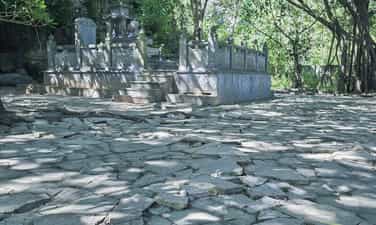
Fire Cave is a national historical site located in Hoang Mai ward, Nghe An province, marking the heroic sacrifice of 33 young volunteers from Group 4, unit C271, Team 27 in the resistance war against the US to save the country. This is a sacred "red address", reminding of the brave spirit and dedication of young people who died for the independence and freedom of the Fatherland. On April 28, 1966, while on duty to quarry, level and protect the North-South railway at Hoang Mai station area, soldiers suddenly encountered a fierce air attack by American aircraft. While taking shelter in a cave, two rockets hit the cave entrance, causing a large amount of rock to collapse, burying the soldiers inside. After many hours of rescue, 33 young volunteers heroically sacrificed their lives, most of them when they were only sixteen, seventeen, or twenty years old. From that tragic event, the cave was called by the people by the emotional name Fire Cave. During the war years, the Hoang Mai area was a strategic transportation gateway to the North with an important road, rail and waterway system serving support for the Southern battlefield. Places such as Hoang Mai station, Hoang Mai bridge, Ri bridge or Hoang Mai quarry often become targets of fierce attacks by the US air force. Despite facing bombs, deprivation and danger, the young volunteers still stubbornly held on with the spirit of "Live by the bridge, stick by the road; die with resilience and courage", determined to maintain the lifeline of traffic. The sacrifice of 33 young volunteers has become a shining symbol of revolutionary heroism and the spirit of dedication of Vietnamese youth. In 2003, they were posthumously awarded the title of Martyrs and awarded the Fatherland Certificate by the State. By 2011, the Rocket Cave and Railway Martyrs Cemetery relics were ranked as national historical relics, becoming a place to pay tribute to fallen heroes and educate patriotic traditions for today's generations. Today, Rocket Cave is a destination with profound historical and humanistic significance. Coming here, visitors will not only learn about a heroic period of the nation but also better feel the value of peace, independence and the great sacrifices of previous generations for the future of the country. According to People's Electronic Newspaper
Nghe An
1489 view
Rating : National monument

Dien Co Temple
Dien Co Temple is located on a land area of more than 2,500 square meters in Dong Chu village, Nghi Truong commune, Nghi Loc district, Nghe An province. Dien Co Temple was established to worship the god Cao Son Cao Cac and his descendants. According to legend, the god Cao Son was originally from China, had the surname Cao, the name was Hien, passed the Ming Dynasty doctorate, and was sent to our country to be an observation envoy. He was a righteous man, defeated the Man invaders, maintained peace and filial piety between the two countries, helped the people do business and develop production, so after his death, a temple was built. When there is a natural disaster such as a drought, praying to him is very effective. Therefore, all dynasties have ordained gods and are listed internationally. Than Cao Cac is a native of Cao Xa village, Tho Xuan district, Thanh Do prefecture, born on January 6, 938. From a young age, he was intelligent and had extraordinary health. God was born in a time of chaos caused by 12 warlords. He followed Dinh Bo Linh and was instrumental in founding the Dinh Dynasty. In 968, Dinh Bo Linh pulled troops to Hoa Lu to build the capital and ascended the throne as Emperor, establishing the Dinh Dynasty, naming the country Dai Co Viet. King Dinh gave him the land of An Ninh district. He saw that this was a place with charming scenery and peaceful people, so he set up a military base and practiced martial arts with his soldiers. He was a kind-hearted person, often guiding people in growing crops, raising livestock and helping people cure diseases... Then, when the King of Champa, Sa Dau, brought troops to threaten our country, King Dinh gave him a sword seal and 50,000 soldiers. Go fight. With his strategic talent, he commanded bravely, killed many enemies, achieved success in defeating the Champa army in Nghe An, Thanh Hoa, and drove the enemy out of the territory. King Dinh wanted to keep him here to take care of government affairs, but he insisted on retiring to the An Ninh area to live with the people of his homeland. After his death, the Dinh Dynasty built a temple. People in many places set up temples to worship the gods. When there are big floods, fields are soaked in water for a long time, giving rise to armyworms, causing crop failures. The villagers offered prayers to the god for blessings, and sure enough, the armyworms died, and from then on, the people believed even more in the blessings of the god. Up to now, no documents have been found that specifically record the date of construction of Dien Co temple, but according to the chronology of the ordinations kept here and according to the elders in the area, the temple was built before the 5th century. XVIII, including 3 buildings: upper palace, middle palace and lower palace. The temple is famous for its sacredness; was once conferred ordained by kings. Through many events, ups and downs of history, the temple was demolished to perform other functions, leaving only vestiges of the temple foundation and some religious orders (recognition of the 44th King Canh Hung (1783), sect conferred in the 9th year of King Khai Dinh's reign (1924). With a sense of returning to the roots, to meet spiritual needs and contribute to traditional education for the young generation, according to the wishes of the people, Nghi Truong Commune People's Committee organized the restoration and renovation of Dien Temple. Flag on the old temple foundation with socialized funds. After more than a year of urgent construction, the three upper palaces, middle palaces and lower palaces, and the ritual gate of Dien Co temple have been embellished and restored on a large scale, more beautiful and spacious than before, and the palaces have been decorated. The altar decorations are solemn and splendidly painted and gilded. According to traditional customs, every 2 years, local people jubilantly organize festivals on the 20th and 21st days of the first lunar month. On those days, people from villages in the area made offerings to worship at the Temple. In the feast, two traditional cakes are indispensable: day cake and aunt cake. Dien Co Temple Festival carries cultural and spiritual values in the minds of Nghi Truong residents, attracting the participation of a large number of local people and people in the region. The festival begins on the afternoon of the 20th and ends on the evening of the 21st of the first lunar month (lunar calendar), including 2 parts: The ceremony and the festival. The ceremony includes: announcement ceremony, sacrifice ceremony, procession ceremony and thanksgiving ceremony. The festival has many exciting cultural and sports activities, human chess competitions, folk games such as cockfighting, tug of war, bamboo fighting, swinging, tickling, lion dancing, and opera singing ( play Trung Trac Trung Nhi).... Source: World Heritage
Nghe An
7015 view
Rating : National monument