Tourist destination

Crescent Lake - Hung Yen
Crescent Lake is still considered the golden heart of Hung Yen. This is a landscape that all Hung Yen people know about. Hung Yen Crescent Lake is located in the center of Hien Street, adjacent to Bach Dang Street, to the East is next to Bai Say, to the Southwest is the Red River dyke. From the city center, it only takes about 1km to get here. Traveling to Hung Yen, visiting Crescent Lake, visitors will be immersed in a quiet and peaceful natural scenery. Coming here, you can breathe in the clear air, it seems like all the fatigue and sadness have disappeared, leaving only moments of true peace. Hung Yen Crescent Lake not only has poetic beauty but is also located right in a sacred land, where there are many communal houses, shrines, temples and pagodas. There are two famous spiritual sites located right on the lakeside that many tourists visit: Tran temple and Mau temple. These are two places with many historical imprints, silhouetted on the quiet surface of Crescent Lake. True to its name, many people can imagine the shape of the surface of Hung Yen Crescent Lake. This place is like an impressive crescent moon. The beauty of the lake is shown to be both rustic and extremely vivid in every song, poem, and work of art. Coming to Crescent Lake, you will enjoy the peaceful, fresh atmosphere and leave many unforgettable emotions in your soul. Crescent Lake contains a slowly flowing stream of water, a quiet and peaceful space, creating a gentle and poetic scene. Initially, the lake was a section of the Red River left after changing its course. People here compare the lake to a falling piece of Hang Nga's mirror. Although the lake is not connected to anywhere, the water in the lake is always full and clear. On one side is the Red River dyke with lush green grass, on the other side is bustling streets. If you are looking for a quiet space, close to green nature in Hung Yen, Crescent Lake is a place that is hard to miss. Surrounding Crescent Lake are many green trees, each tree reaching out to cast a shadow on the calm lake surface. Every time there is a breeze, the swaying trees give people a rustic and peaceful feeling. In the middle of the lake is a 10m high flagpole with a red flag with a yellow star fluttering, this is considered a special highlight in the peaceful lake surface. Visiting Crescent Lake, visitors can rest on the benches, admire the scenery, and enjoy the cool breeze. Walking around the lake, you will hear the gentle sound of water flowing, letting your soul be blown by the wind, the scene is like a lyrical song. In the hustle and bustle of modern life, coming here makes time seem to settle down and the soul feels lighter. Crescent Lake is where many cultural events and annual festivals of Hung Yen city take place. In 1905, Governor Le Hoan organized the Kieu Bay competition at the lake with the participation of Nguyen Khuyen and Chu Manh Trinh. During the French colonial period, the French built a small road from the Mau Temple gate to the temple. guard, divide the lake in two to deploy recreational boating activities. After the success of the August Revolution, this road was demolished to return the lake's pristine beauty.
Hung Yen
9501 view


Nom Village
Nom village is located in Dai Dong commune, Van Lam district, Hung Yen province, about 20km from Hanoi capital. Years have passed, Nom village is still a land cherished and preserved by the people of Hung Yen. In the face of bustling, hustle and bustle life, it is difficult to find a place where people feel so peaceful. The beauty of architecture, culture and people are still intact after more than 20 years of upheaval. Because of that "sustainable" beauty, Nom village tourism in Hung Yen is also of interest to many people. Moving away from the city to a small village, you will find it both familiar and strange. Familiar like being at home, strange because of a new land. In Nom village, the simple traditional beauty such as banyan trees, wells, and communal house roofs are still preserved. Through the mossy village gate, the scene inside the village is typical of ancient Vietnamese villages. The small houses are all tinged with time, the daily activities of the people take place calmly and peacefully. Feeling extremely comfortable and relaxed. Traveling to Hung Yen will not be complete if tourists have not visited Nom village. In addition to enjoying Hung Yen specialties, going to Nom village is also an opportunity for visitors to learn about the culture of the people here. Through interesting architecture and destinations. Stepping through the village gate, Nom market is the place where you can experience the most perfect Vietnamese countryside market. Nom Market was formerly the busiest market in Van Lam area. The market is simple, not reinforced concrete like the city center markets. An attractive place in Nom village is Nom pagoda. The pagoda also has another name, Linh Thong Co Tu. According to many Chinese documents, the pagoda was built on a large pine hill during the Later Le Dynasty. However, through analysis of terracotta statues in the temple, many archaeologists believe that the temple has existed for about a thousand years. Nom Pagoda has bold Asian architecture, typical of ancient Vietnamese pagodas. The pagoda houses more than 100 terracotta statues with exquisite sculptures. The pagoda is very sacred and treasured by the people of Nom village. The houses in Nom village are also places many tourists come to explore. Many houses are 200 years old and have unique architecture. Kinh Bac culture is authentic and alive through every house.
Hung Yen
8951 view


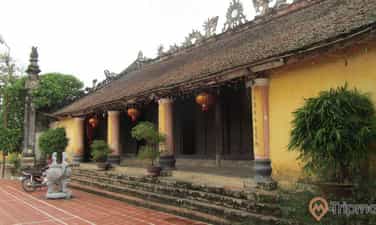
Da Hoa - Da Trach relic cluster
The temple was built on a high, flat, rectangular area of land with an area of 18,720m². The temple's face faces west, looking straight at Tu Nhien beach (Ngu Doi village, Tu Dan commune) - where Princess Tien Dung, daughter of the 18th Hung King, met Chu Dong Tu and the two became husband and wife. The temple is divided into three zones. The outer area has an area of 7,200m², has no walls, the only architecture is a 2-storey stele house, 8 curved roofs, with doors opening in 4 directions. In the stele house, there is a stone stele with content about the time of restoration of Da Hoa temple and the fateful meeting of Chu Dong Tu - Tien Dung. From here, follow the 6m wide paved road with rows of ancient rice trees radiating cool shade on both sides, and you will reach the main gate. Through the main gate you enter the middle area. This area has an area of 3,400m², surrounded by low walls, planted with many green trees and divided into two areas: the right area has a bell tower, inside there is a 1.5m high bronze bell; The left area has a porch, inside there is a stone porch with a width of 1.2m; Separating these two areas is a tiled road leading from the main gate to Ngo Mon with three entrances and exits, above which hangs a large letter with four words painted in red and gilded with "Bong Lai Cung Khuc". Stepping through the Ngo Mon gate is to enter the inner area. With an area of 11,520m², the architecture is in the royal style of the Nguyen Dynasty but has a harmonious combination of Buddhism, Confucianism, and Taoism. The inner area includes: a courtyard, a worship house, an adoration yard, an incense burner, and a palace. second palace, third palace and harem. Connecting the palaces are the hermitage, the tarpaulin, the horse house, the artillery house... In the harem there are 3 shrines: Saint Chu Dong Tu (in the middle), Princess Tien Dung Queen (left), concubine Hong Van – Tay Sa (right). The overall architectural works in this area include 18 houses with curved tile roofs shaped like 18 stylized dragon boats. This is a special architecture to recreate the scene of Princess Tien Dung's boat sailing on the river wharf in the past. In addition to its unique architecture, Da Hoa Temple also preserves many rare relics, typically: 3 wooden altar thrones dating from the late 17th and 18th centuries. These are considered the oldest thrones still found. seen in our country today; pair of ceramic Bach Tho jars (one hundred Tho words, none of which are similar, are engraved on the side of the jar)... Leaving Da Hoa temple, visitors will go to Da Trach temple (Yen Vinh village, Da Trach commune), a place associated with the legend of Da Trach lagoon. Legend has it that at the location of Chu Dong Tu and his two wives, princesses Tien Dung and Hong Van, "transformed" into the sky on the night of the 17th day of the 11th lunar month, they collapsed into a large lagoon, Da Trach lagoon (the lagoon was formed). after just one night). Thinking that it was a divine response, local people built a temple to worship the three gods in the Da Trach lagoon area and named it Da Trach temple, also known as Hoa temple. Da Trach Temple has been restored many times, however, the current architecture is the result of the restoration in 1890 with the character Cong (工), facing east, overlooking a semi-circular lake, the roof is carved with many dragon shapes, The phoenix is very beautiful, consisting of three rooms. Among them, the harem is the most beautifully designed space with a three-step rolling dome, giving visitors the feeling of standing in a boat cabin. From the outside, on the right, first is the altar for worshiping the temple, the statue of military mandarins, then the altar for worshiping the parents of Saint Chu Dong Tu; On the left is the altar of Be Nguoi Quan Quan (a statue of a carp made of wood painted with lacquer and gilded with shiny gold), next is the altar of Trieu Viet Vuong (548 - 571). In the middle of the harem are 3 altars: Thanh Chu Dong Tu (in the middle), Princess Tien Dung Queen (left), concubine Hong Van (right). There are also statues of two horses, one red, one white. Legend has it that those were the two horses that Saint Chu Dong Tu and his two wives rode to heal the people. In addition to the main architecture, in the temple area there is also a bell tower, inside is placed a Da Trach bell (Da Trach temple bell) cast in the 14th year of Thanh Thai (1902), 1.5m long, 0.8m wide; two rows of nine-room houses. Previously, this was the place for nine palanquins; two stone stele standing opposite each other (one stele is broken), built in the 17th year of Gia Long (1819), 1.6m high, 0.8m wide, 0.17m thick; a semicircular lake; Many horizontal panels and parallel sentences record the legend of Chu Dong Tu - Tien Dung - Tay Sa; especially the image of a hat and a stick - two objects that Saint Chu Dong Tu used to save humanity. Da Trach Temple was recognized by the State as a national historical architectural and artistic relic in 1989. To remember the merits of Saint Chu Dong Tu and Princess Tien Dung, every year, local people organize the Chu Dong Tu festival. This is one of the 16 largest festivals in the country with attractive cultural and sports activities. The most unique is the water procession with the participation of 10 boats following each other to the Red River to take water for Holy Mass at Da Hoa and Da Trach temples. This activity is organized according to ancient customs, taking place for two hours. While the boats move, there is also a dragon dance performance on the boat.
Hung Yen
8334 view


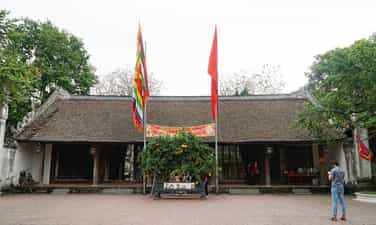
Chu Dong Tu Temple
Referring to Hung Yen is mentioning a land with many places for tourists to visit. Hung Yen tourism is famous for types of tourism such as spiritual cultural tourism, community tourism, eco-tourism, and craft village tourism. Some famous tourist attractions include Nom village, Noi street, chrysanthemum garden, Tran temple, etc. Especially, it is impossible not to mention the famous spiritual place in this land, Chu Dong Tu temple. The temple was built on a rectangular high ground, and has a long history. The temple worships Saint Chu Dong Tu and his two wives, Princess Tien Dung and Princess Tay Sa. This place is associated with the legend of love and at the same time is associated with the famous victories of our nation such as the war of Quang Phuc against the Liang army; Tran Nguyen Han and Nguyen Trai fought against the Ming army; many uprising movements in the resistance war against the French colonialists,... The temple consists of two areas: Da Trach temple and Da Hoa temple. These two temple areas are not too far apart and are both located in Khoai Chau district. The total area of the temple is 18,720 square meters, including 18 rooftops of different sizes. These two temples have both been certified by the state as national cultural relics. The temple attracts tourists not only because of its ancient, mossy appearance, but the statues are also one of the notable highlights at the temple. A typical example is the statue of Saint Chu Dong Tu and his two wives placed in the harem. The statue is cast in bronze, painted, and has very sophisticated eyeliner, and currently there are three such statues placed in the Third Palace. Visitors can choose to come here from 10 to 12 of the second lunar month every year, to not only be able to see the temple but also participate in the Chu Dong Tu festival. This festival is held to commemorate the merits of Saint Chu Dong Tu and Princess Tien Dung for curing diseases and helping people. The festival is very unique with many diverse activities such as palanquin procession, dragon dance, ca tru singing, unique folk games,...
Hung Yen
8885 view


Xich Dang Temple of Literature
Located adjacent to the Red River, which is red and heavy with silt all year round, in Hung Yen city, Xich Dang Temple of Literature, also known as Temple of Literature of Hung Yen, is an important relic in the Pho Hien relic complex. The Temple of Literature was built in 1832, after nearly 400 years of existence and enrolling 161 students who passed the university entrance exam in Upper Son Nam town, the Temple of Literature has become a symbol of the studious tradition of the people of the "Nhat Nhat" land. Kinh period, second Pho Hien". Although located in a residential area, right on Yen Lenh bridge, on Highway 38 connecting Ha Nam with Hung Yen, you can observe Xich Dang literary temple from two hundred-year-old rice trees planted in front of the gate. Located on the entrance path, there are also statues of two large stone pigs carved in the 18th century. Tam Quan, also known as Nghi Mon gate, is one of the works that still retains unique architectural features among the remaining literary temples in Vietnam. Built in a matchlock architectural style, two floors and eight roofs have an attic. On both sides of the Tam Quan there are two loudspeaker platforms, used to announce the names of candidates and announce the regulations in the examinations. Instead of the drum tower like in the Quoc Tu Giam and Mao Dien literature temples, in the Xich Dang literature temple, the drum tower is replaced by a bell tower. The sound of the bell and the bell ringing is the signal that the exam has begun and ended, and it is also a call to express gratitude and gratitude to the wise men during each festival. The two bells and bells of the Temple of Literature are also ancient relics cast and created in the 18th century. Inside the gate there is a large yard, in the middle of the yard is the ten-way street, on both sides of the yard there are a bell tower and a grand building with 2 rows of left and right vu. These two rows are currently used to display images and artifacts related to education in Hung Yen province. The Xich Dang Temple of Literature is structured in the style of Tam: including the Pre-Temple, the Middle Temple and the Rear Palace. The roof system is structured in a "real estate" style, with the main side facing south. The interior of the temple shines with a system of grand pagodas, arches, hammock doors and a system of pillars and rafters completely painted with gold and covered with metal. The most valuable artifacts in the temple of literature that have been preserved to this day are 9 stone stele engraved with the names, hometowns, and positions of 161 people who passed the university entrance exam in the ancient town of Son Nam, including 138 people in Hanoi. Hung Yen and 23 in Thai Binh.
Hung Yen
9136 view


Phu Lang Pottery Village
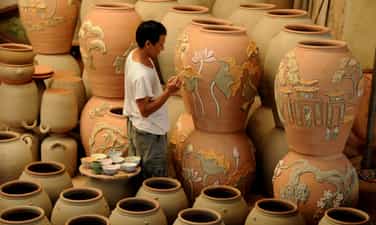
Phu Lang Pottery Village is one of the hundreds of years old craft villages, located in Phu Lang commune, Que Vo town, Bac Ninh province. The pottery village is located next to Luc Dau river, very convenient for production and transportation of goods. Pottery making is considered the main economic activity of the people here. When visiting Phu Lang pottery village, you will see many ceramic products and dry firewood drying along both sides of the road. The products produced by Phu Lang pottery village are also extremely rich in design, style and color. In general, it will include three main product groups: household appliances, worship items and decorative items. Making pottery requires the artist to be meticulous and skillful through many different stages. From choosing and treating soil, shaping, glazing, and firing ceramics, all require a certain level of skill. By visiting Phu Lang pottery village and seeing it with your own eyes, you can fully appreciate the talent of the ceramic artists. Visitors can explore Phu Lang pottery village at any time of the year. The craft village is always open to welcome tourists from all over with many attractive activities. If you are passionate about collecting ceramics, go to Phu Lang pottery village in December. The end of the year is the period when the pottery village improves its productivity, producing many new and beautiful designs to serve the needs of spring joy and Tet. Besides, Bac Ninh also has many attractive festivals such as Lim festival, Dinh Bang festival, Dau Pagoda festival, Ba Chua Kho temple festival, Phat Tich pagoda festival... You can go to Phu Lang pottery village on During the festival months, you can both explore craft villages and experience the festive atmosphere in Bac Ninh province. Phu Lang Pottery Village has the peaceful, rustic beauty of a Northern village. Houses with undulating tile roofs, ceramic kilns, and piles of dry firewood piled high overhead run as far as the eye can see. Jars, jars, ceramic vases, ornamental pots... layered waiting to be completed. Checking in at Phu Lang pottery village promises to bring you beautiful photos of a lifetime. The products of Phu Lang pottery village have a unique beauty, extremely sophisticated and artistic. The characteristic that makes Phu Lang ceramic different is the enamel layer with eel skin color pattern, combined with the embossed method in the style of clamping. This helps make ceramic products durable and beautiful while still retaining the pristine features of earth and fire. Coming to the craft village, you will be able to admire the extremely beautiful ceramic works of Phu Lang artisans. Not only stopping at visiting or buying products as souvenirs, when coming to Phu Lang pottery village you can also transform into artisans. Making a beautiful ceramic product the first time is not easy. However, this will be an extremely interesting experience when having a product made by yourself. You will be guided by the artisans on the basic steps and unleash your creativity. Who knows, you may also become a ceramic master.
Bac Ninh
7149 view


Dong Ho Painting Village
Where is Dong Ho Painting Village or which province Dong Ho Painting Village is in is a question that many tourists are interested in when learning about this famous tourist destination. This folk painting village is located on the banks of Duong River, in Song Ho commune, Thuan Thanh district, Bac Ninh province, about 16km from Bac Ninh city center. Because it is not far from Hanoi, about 35km, this place is also called Dong Ho Hanoi painting village. Visiting here, tourists will be introduced to the history of Dong Ho painting village by artisans. Starting in the 17th century in Dong Ho village, Song Ho commune, Thuan Thanh district, Bac Ninh province, up to now, the painting profession here has been around for more than 400 years. According to historical records, around 1945, Dong Ho village had 17 families, all of these families made paintings. Having gone through the ups and downs of history, Dong Ho village currently has two families practicing painting: the families of artisans Nguyen Dang Che and Nguyen Huu Sam. Ho village paintings are loved because they show familiar themes, associated with the image of the countryside and the simple daily life of Vietnamese people. The people of Ho village know how to filter and apply natural materials to create traditional colors that are both fresh and highly durable: indigo from the Cham tree, crimson from the bark of the Van tree, black from Bamboo leaf ash or Chiffon ash,... Unique paintings are printed on Do paper. This type of paper is handcrafted from the Do tree growing in the forest. The paper background is often coated with a layer of resin or a layer of paste mixed with a little powder from Scallop shells to create a sparkling color. Therefore, Do paper is also called Diep paper. To make vivid paintings, craftsmen need printing boards. There are two types of engraved and printed boards: color printed boards and sharp printed boards. Printed boards are usually made from squid wood or thi wood. Printing board engraving tools are chisels, also known as ticks, made from hard steel. Colored printed boards are made from fatwood because they have a higher ability to retain color. The process of making Dong Ho folk paintings includes the following steps: Step 1 - Prepare Do paper: After picking it from the forest, the worker will pound it, sift it into fine powder and process it into Do paper. Step 2 - Printing the painting: The artist prints colors on the painting to create shapes. Normally, a painting requires 5 engravings, printed in 5 times. Step 3 - Drying the painting: After printing, the painting needs to dry to prevent smudging and color durability. Dong Ho Painting Village is one of the famous tourist destinations near Hanoi. Coming here, visitors will experience many interesting activities, contributing to making the trip to Dong Ho painting village more attractive and memorable.
Bac Ninh
7353 view


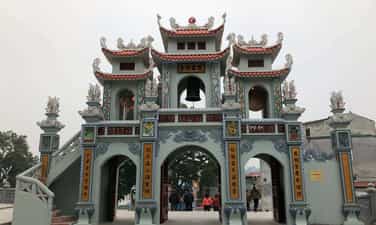
Temple of Lady Kho
Mrs. Kho was born into a poor family in Qua Cam village, Hoa Long commune, Bac Ninh city. After marrying King Ly, she asked the king to let him return to the village to recruit people to set up hamlets and clear the abandoned land. On that occasion, the king assigned her to take care of the food warehouse at Nui Kho (Bac Ninh). In the year of Dinh Ty 1077, she was killed by the enemy while distributing food to help the villagers. To commemorate her gratitude for wholeheartedly taking care of the people's prosperity and clearing wasteland, the people built a temple at the old royal food warehouse at Nui Kho and called her with reverence: Ba Chua Kho, her temple is ordained as "The sacred temple of Ba Chua Kho". In the early twentieth century, the French built a large-scale Indochina paper factory covering almost the entire Kho mountain and intended to demolish the temple but encountered fierce opposition from local people. In 1967, the American invaders bombarded the North. Bac Ninh City was one of the key areas that was bombed and destroyed in many places, but the temple still remains intact to this day. In 1989, Ba Chua Kho Temple was ranked by the State as a national historical and cultural relic and was restored, renovated and expanded by Bac Ninh province on a large scale today. Ba Chua Kho Temple is located halfway up Kho mountain, in Co Me area, Vu Ninh Ward, Bac Ninh City, Bac Ninh Province. Ba Chua Kho Temple today has the architecture of the Nguyen Dynasty in the style of Nhi, including 3 front worship rooms and 3 back palace rooms looking south. The main architectural works of the temple include the three-entrance gate, the temple yard, two dance bands, the front altar, the second gate and the harem. All create a unified, dignified population. Behind the harem of Ba Chua Kho Temple, there is still a tunnel with a dome-shaped structure located deep in the foot of the mountain, dug through the heart of Kho Mountain to the Cau River. Legend has it that this tunnel was built by Ba Chua Kho during the resistance war against the Song army. Currently, the temple still preserves many antiques of high historical value, which are two orders conferring the Khai Dinh era, bronze statues, silver brooches, ancient porcelain water vases,... Every year, on January 14, Ba Chua Kho Temple officially opens. However, right from the first days of the new year, lasting the entire month of January, many people flocked to Ba Chua Kho temple to attend the ceremony. Going to worship Ba Chua Kho has become an annual habit for many people. People pray for peace and fortune for their families, but mostly business people come to "borrow capital" from Ba Chua Kho, hoping for a year of abundant capital and favorable business. Because people believe that Ba Chua Kho is the person in charge of the food warehouse, the one who gives the "source of life" to everyone. The "borrow - repay" ritual is also very clear, people write in the note how much to borrow, what to do, and how long it will take to repay. Some people even promise to borrow 1, pay 3, pay 10, etc. With the concept of "borrow at the beginning of the year, pay back at the end of the year", so whether business is good or not, people still keep their promise at the end of the year. Pay homage at Ba Chua Kho temple, return the "capital" to thank her for her blessing throughout the year. During the festival, visitors will be immersed in the solemn atmosphere of traditional sacrificial rituals and bustling traditional folk games such as cockfighting, tug of war,... attracting the attention of visitors. a lot of tourists.
Bac Ninh
6639 view


But Thap Pagoda
Bac Ninh is famous for its ancient sacred temples. One of them certainly cannot help but mention But Thap Pagoda. The pagoda has an extremely unique architecture and will be an ideal destination if tourists want to find a simple place. The pagoda is located right next to the Duong River, around the pagoda there is a winding river, creating an extremely poetic scene. The pagoda also has another name: Ninh Phuc Tu, located in Dinh To commune, Thuan Thanh district, Bac Ninh province. This is one of the few temples that still retains its original beauty. But Thap Pagoda is an ancient pagoda with extremely unique architecture in Bac Ninh. Ninh Phuc pagoda was built around the 17th century during the Later Le dynasty. The pagoda's construction architecture is in the "Foreign Internal" style. Although it has gone through hundreds of years of history, the pagoda still retains its ancient beauty. This is also one of the National historical sites that tourists should visit. In particular, you will not want to miss the opportunity to participate in the But Thap Pagoda festival. The main architectural structure of the pagoda faces south. According to Buddhism, this is the direction to express wisdom. The pagoda was built according to a strictly symmetrical layout. The central area of the tower is built with 8 folds of houses running parallel to an axis along the Shinto path model. The outermost area of the pen tower is Tam Quan, then the Bell Tower and other worship buildings. On the left side of the pagoda is the place to worship Zhet Tuyet and Bao Nghiem stone tower with 8 sides and 5 floors up to 13m high. Along both sides of Tien Duong building are two stele houses and two corridors built along the length of the temple. If you have the opportunity to attend the But Thap Pagoda festival, visitors should take the time to visit some of the recommended locations. Guaranteed you will have a complete spiritual trip. First is the Avalokiteshvara Buddha Statue. The Buddha statue is one of four national treasures recognized by the State located at the temple. In addition to the Avalokiteshvara Buddha statue, visitors will have the opportunity to admire: The Three World Buddha Statues, along with the Incense Burner and the Nine Product Lotus Palace. One of the places of special interest to many tourists in But Thap Pagoda is is the thousand-armed, thousand-eyed Guan Yin statue. This statue is very old and was confirmed to have been sculpted in 1656. The statue is 2.1m wide, 3.7m high, and 1.15m thick. It is called the thousand-armed-thousand-eyes Buddha statue because the Guan Yin statue has a total of 11 heads with 952 short arms and 42 long arms. This is truly a unique work of art imbued with Buddhist meaning. Second is Bao Nghiem Tower. A place that tourists must definitely visit when visiting But Thap Pagoda is Bao Nghiem Tower. The tower is located right inside the temple grounds. This is the place to worship Venerable Chuyet Chuyet. Bao Nghiem Tower was built in 1647 during the reign of King Le Chan Tong. This is also a project recognized as having a long history. The main door of the tower was also built facing the south with the words "Bao Nghiem Thap" right on the body of the building. The tower has a relatively unique architecture, gradually building from low to high. Viewed from above, Bao Nghiem Tower looks like a giant pen in the blue sky.
Bac Ninh
6494 view


Dau Pagoda
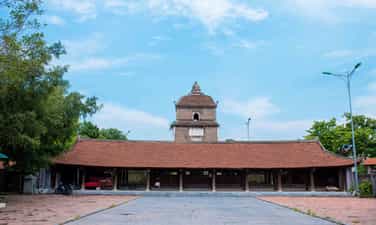
Dau Pagoda is also known as Ca Pagoda, Co Chau Tu, Dien Ung Tu, Phap Van Tu. Dau Pagoda is located in Thanh Khuong commune, Thuan Thanh district. Dau Pagoda is a cultural and religious work with extremely great and profound historical cultural value, including historical cultural value, religious beliefs and artistic architecture. In 2013, Dau Pagoda was recognized as a special National Monument. The process of formation and existence of Dau Pagoda is closely linked to the development history of our country. Together with a number of neighboring pagodas, Dau Pagoda creates the largest Buddhist center in Vietnam and the region. This is a Buddhist center that was formed earlier than the two famous Buddhist centers of China during the Han Dynasty, Pengcheng and Luoyang. Many famous ancient masters practiced and lived at Dau Pagoda such as: Mau Bac in the 2nd century, Khuong Tang Hoi, Chi Cuong Luong in the 3rd century and Buddhist monk Ty Ni Da Luu Chi in the 6th century. Dau Pagoda is also the Ca Pagoda in the system of pagodas worshiping Tu Phap, Dau Pagoda worships the God of Clouds (Phap Van), Thanh Dao Pagoda worships the Rain God (Phap Vu), Phi Tuong Pagoda worships the Thunder God (Phap Loi), and Phuong Quan Pagoda Worshiping the natural forces of the wet rice farming population is also an expression of Mother Goddess worship, a purely Vietnamese indigenous religion. The pagoda also worships "Duc Thanh Quang" - the symbol of the god SiVa in Hinduism. Thus, Dau Pagoda has typically integrated and improved indigenous beliefs and religions with major religions in the region but still retains a strong national identity. The Strawberry Festival is held on the 8th day of the 4th lunar month every year. This is a major festival of the ancient Mulberry district with many unique traditional cultural features still maintained. Over a long history, Dau Pagoda has undergone many restorations and embellishments. Overhauling all construction items, repairing Hoa Phong tower, painting the statue system, restoring the Three Entrances, clearing the ground in front of the pagoda to embank the lake, and building walls to protect the monument. Dau Pagoda includes the following construction items: Front room, Hoa Phong tower, Tien Duong, Ta Vu - Huu Vu houses, Tam Bao, Hau Duong, corridors and auxiliary works. The front house consists of 7 rooms, 2 wings, inside there are a number of tables and chairs for guests to prepare to worship before entering to worship Buddha. The most prominent of the pagoda's buildings is the Hoa Phong tower. According to ancient bibliographies, during the Tran Dynasty, Poinsettia Mac Dinh Chi restored Dau Pagoda and built a 9-storey tower. But the architecture of the tower is still from the Le Trung Hung period. The tower is built of old burnt bricks, with 3 floors, 15m high. Outside the tower there is a statue of a sheep made of stone 1.33 m long and 0.8 m high. In the tower there are 4 statues of Thien Vuong - 4 legendary gods who govern the 4 directions of heaven. In the tower, hang a bronze bell cast in 1793 and a gong cast in 1817. Tien Duong House consists of 7 rooms and 2 wings. In front of the house are three steps running through the 5 middle spaces. In the middle space, there are two stone steps carved with dragons, bearing the artistic style of the Tran Dynasty. At the front hall, there are altars to worship Ho Dharma, Monsignor, Duc Thanh Hien, and Bat Bo Vajra. The statue of Phap Van is worshiped in the Upper Palace. This is one of four statues in the Four Dharma statue system in Dau - Luy Lau region recognized as a National Treasure. The statue of Phap Van is majestic, quiet, bronze-colored, nearly 2 meters high. The statue has a beautiful face with a big mole in the middle of the forehead, reminiscent of Indian dancers and the homeland of Tay Truc. The area connecting the Front Room and the Back Hall is the place to worship the Eighteen Arhats (18 enlightened disciples of Buddha who have cultivated to the Arhat realm). In addition, statues of Bodhisattva, Tam The, Monsignor, and Saint Monk are placed in the back of the hall. Through many changes, ups and downs of history. Dau Pagoda is a destination for Buddhists across the country. Tourists coming to Dau Pagoda return to Buddhism and admire the beauty and values that the pagoda brings. As its simple name suggests, Dau Pagoda is the oldest pagoda in Kinh Bac.
Bac Ninh
6395 view


