Tourist destination
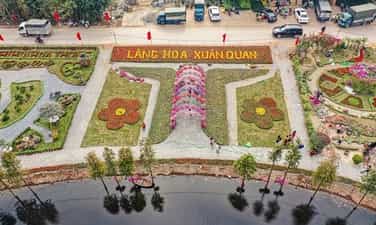
Xuan Quan flower village
Busy life sometimes makes you forget to relax. Travel to find balance and joy. The sidelines on the sidelines of the Red River have helped Xuan Quan Flower Village famous for more than 10 years, no less than large flower growing areas such as Me Linh and Tay Tuu. More than 1 decade ago, Xuan Quan commune, Van Giang district, Hung Yen province, although rural areas mainly cultivated rice and maize. However, thanks to the policy of encouraging new agriculture, Xuan Quan flower village has emerged as a key flower growing point of Hung Yen province and neighboring provinces. Xuan Quan commune with more than 60% of land specializing in growing flowers and ornamental plants, with 900 professional households. These farmers, especially those who are pioneering in high -tech applications, are creating high income from flower growing. Bonsai flower growing not only brings income but also creates prosperous spring for the community. Spring Flower Village is typical with a variety of flowers, from infrared roses, pansy, lanterns, dahlia, glasses, peaches, azaleas, old tea, coins, carnations to poinsettia, sea roads ... Each ... Flowers bring a unique beauty, exalting the unique appearance of this flower village. Spring is different from flower villages in the North because of the style of growing flowers in hanging pots, instead of on the soil as usual. This method is not only high economic efficiency but also creates an attractive beauty, making visitors not only overwhelmed on the occasion of the Lunar New Year but also at all times of the year when the baskets of flowers and bonsai are dangling. spectacular. Many gardeners in Xuan Quan flower village have recently invested in rare roses, with high value such as: pink pink, Sapa neck, pink color, Sa Dec pink, pink, peach pink ... These flowers require large investment and complex techniques, but bring high economic efficiency. When the autumn comes, people in the flower village do not need to go to the market to sell flowers, but small businesses come to the garden to buy large quantities. Many families from growing flowers have impressive income, up to 1.5 to 2 billion per year. At the same time, flower growers also create stable jobs for many workers. When coming to Xuan Quan Flower Village on New Year, visitors will be fascinated by the vibrant and exciting picture. Xuan Quan has become an attractive tourist destination in every Tet holiday, every spring. This place is also very close to Bat Trang pottery village, which helps to facilitate traffic. Visitors can visit Bat Trang to buy pots and vases, then come to spring to choose flowers, creating a Tet atmosphere filled with colors. If you have the opportunity to visit Van Giang and Hung Yen districts, do not forget to visit this spring flower village!
Hung Yen
6315 view


Thu Sy Village
Hung Yen tourism in Hien Street, Nom Pagoda ... Tourists definitely do not miss Thu Sy village. This is an idyllic village, bearing the imprint of time and famous for that knitting profession. Tourists come here to have the opportunity to learn that knitting profession as well as check in beautiful photos of a peaceful village. About 60km from Hanoi capital, there is a village famous for knitting that has a tradition of more than 200 years old, Thu Sy village. Thu Sy village has more than 500 people who specialize in knitting, rumors - these are tools to catch shrimp and fish. In addition to that knitting profession, the people here also make bamboo and rattan tools such as stomping, bamboo, ignorant ... In addition to being famous for that knitting profession, Thu Sy village also impresses visitors in houses with sharp houses The ancient ancient village of the Northern countryside. This will definitely be an ideal tourist destination for tourists in every weekend. The first experience when coming to Thu Sy village, visitors should not miss it is to visit Luong Son Bac's house to learn about that knitting profession. Although Luong Son Bac is more than the age of "eight weeks", the house is still retaining the beauty of that knitting profession. This is a level 4 house that is nearly 200 years old and you will witness how those products are made. In the small house of the old, there are many photos of the places where he has passed to introduce that knitting product. After learning about the knitting process at Luong Son Bac's house, visitors will experience knitting with the people. In Thu Sy village from old to children to 5-6 years old, it can also be knit that beautiful. Therefore, you can also embark on knitting based on the meticulous guidance of the people in the village. Thu Sy Hung Yen village is not only a stop for visitors to find out that knitting profession but also a place for you to enjoy the peaceful space of the village. There are old tile roof houses, village bamboo power ... all create a peaceful countryside scene. Visitors can walk around the village to see images of people sitting there or images of bamboo flowers extremely unique and eye -catching. Coming to Thu Si craft village, visitors can buy products in this village to decorate art or furniture for their families. In addition, these products with traditional beauty, this culture you can also make gifts for friends and relatives very meaningful. In addition, you can visit the famous tourist destinations near Thu Si craft village such as Co Am Pagoda, Chuong Pagoda, Mau Temple. Coming to Thu Sy village, visitors will be immersed in the peaceful and peaceful village space, with simple tile roofs, winding village roads and murmuring green bamboo rows in the wind. Each of the split bamboo, that knitting echoing throughout the village created a rustic and simple symphony. This will definitely be the ideal stop for visitors on the trip to the homeland.
Hung Yen
5999 view


Phuc Lam Pagoda (La Mat)
Phuc Lam Hung Yen Pagoda - a place like Vietnam's "Thai Golden Temple" is an attractive spiritual destination located less than 1 hour from the center of Hanoi. With a unique architecture and bright yellow appearance, this temple conquered not only Buddhist followers but also those who love the purity of this dignity. Phuc Lam Pagoda is an ancient temple more than 100 years old, located about 40km from Hanoi, one of the attractive spiritual destinations. Built in the 17th century and had to undergo many restoration and embellishment, Phuc Lam pagoda from a small Am Temple has become a splendid architectural work today. This temple is also known as "Thai Golden Temple" because of its bright yellow appearance, bearing the Buddhist architecture of the Golden Temple. Phuc Lam pagoda is large on the land of about 4 hectares with spacious campus, countless green landscapes and quiet lake creating a peaceful space. With the outstanding "gold -plated" appearance among the rich fields, Phuc Lam pagoda creates a solemn and pure space for anyone when coming here. Phuc Lam Pagoda is famous for its bright yellow appearance with bold Buddhist architecture of the Golden Temple. The architecture here is very unique and the sophisticated carvings art has made Phuc Lam Pagoda make a strong impression in the heart of anyone who has the opportunity to wear a backpack to come here to worship. Moreover, Phuc Lam Pagoda is also considered as one of the monuments of architectural and religious art, with sophistication and sacred. The structure of Phuc Lam pagoda consists of two main buildings, Tien Duong court and upper palace. These two buildings are built in the typical type, with a height of 15m, 20m wide, completely gold plated. This creates a very brilliant and splendid appearance, making this self -out of the surrounding natural scenery. Not only that, Phuc Lam Pagoda also has four towering towers carved with extremely sophisticated phoenix dragon images. The large lotus wings are also decorated on the second floor railing to create an elegant and elegant beauty. The entire temple roof is carved with extremely vivid dragon -shaped, imbued with Vietnamese art. The soft, flexible winding dragons help the entire temple space are a harmonious and balanced overall. With a unique architecture and sophisticated carved art, Phuc Lam pagoda is not only a sacred spiritual place but also a valuable architectural architecture. The ideal time to visit Phuc Lam Pagoda is in the spring and autumn: Spring: The weather is cool, trees sprout buds, creating a fresh and pure scenery. This is also the time when many festivals take place, you can participate in cultural and religious activities. Autumn: The weather is pleasant, not too hot, suitable for sightseeing and photography. This is also the period of Vu Lan's filial pilgrimage, so the pilgrims come to the temple very crowded. Phuc Lam Pagoda is like a work of gold -plated art, sparkling in the sun. Unique architecture with sophisticated lines, meticulous patterns with Asian style, making visitors admire. Every small detail is meticulously cared for, creating a harmonious and magnificent overall. Not only the main electric architecture, the auxiliary works such as the ancestor church, the guest house, or the Buddha statues are also glossy gold. These details also contribute to creating a temple complex that visitors like a "miniature Thailand" in the heart of Hung Yen. Phuc Lam pagoda campus is large with many trees and lakes, creating a green and fresh space. Visitors can stroll around the temple, admire the scenery and enjoy the fresh air. The pure and peaceful scenery of Hung Yen gold -plated temple is an ideal place for visitors to find a spiritual place, dismissing the troubles of life. The bell of the temple is resounding, the incense smoke blends with the lotus incense to create a quiet space, helping visitors relax the soul. At Phuc Lam Pagoda, visitors can sincerely offer incense, pray for family and friends to be peaceful, happy and lucky. The solemn, respectful atmosphere here will help you send your wishes. In addition, visitors can also participate in the traditional rituals of Buddhism held at the temple such as Ca Festival, Buddha, Vu Lan Bao Hieu, ... On the 1st or full moon, the pagoda also organized many many Activities of chanting and praying to help visitors find peace in the soul. In the afternoon, the ideal time to see Phuc Lam pagoda with the sunlight at the end of the day dyed the temple roof, creating a romantic and fanciful scenery. This is also the time when visitors can take beautiful photos as a souvenir. As the night gradually let go, the shimmering lantern adds the shimmering beauty of the temple. All total harmony creates a fanciful space, attracting visitors to visit. With unique architecture and iridescent yellow, Phuc Lam pagoda is like a "miniature Thailand" in the heart of Hung Yen. This is an ideal place for visitors to check-in virtual and have beautiful photos to show off to friends. Many beautiful angles at the temple will help you have impressive photos, from shimmering portraits to panoramic photos. Phuc Lam Pagoda is not only a spiritual destination but also an attractive tourist destination with unique architecture and pure space. Do not hesitate to visit, explore the temple today!
Hung Yen
5761 view


Cao Thon musk village.
If you are a lover of pure cultural values and the scenery of Thanh Binh Northern countryside, then go to the Cao village Ray village village (Hung Yen) to find peaceful and simple emotions. Huong Cao village village is about 40km from Hanoi in Bao Khe commune, Hung Yen, located close to the dike of the Red River with a fresh and peaceful natural scenery. This is the cradle of the long -standing incense production in the North in general and Vietnam in particular. According to the seniors in the village, this profession was initiated by Dao Thi Khuong and passed down to the villagers. Currently, the profession of making incense in Cao village operates during 4 seasons to create a fixed job for about 600 employees. The incense -making profession does not require high human resources, so it can earn idle workers, most of them, if they are trained, anyone can do it. Experienced old people will pass the job to their descendants, so the profession is always transmitted from generation to generation. It seems that in the heart of every person who works as an incense is not only a job but also a responsibility to preserve the pure beauty of the homeland. Cao Radi village village has over 200 families, of which 170 households still maintain a long -standing fragrance production. The annual output of Cao village is estimated at about 10 million/year. With the increasing demand of the market, people have improved the design and quality to help the product become more and more consumed. Today the incense consumption market has been much more expanded. The incense in the high -rise village of Hung Yen village is always famous for its quality and special fragrance that is enthusiastically received by the market and exported to some countries. The special aroma is not mixed with any region thanks to the secret of traditional production. It is not known what is outstanding that only knows that the flavored powder made from herbs and herbs. When burning incense will radiate a pleasant, refreshing smell to help the human spirit become more comfortable and relaxed. Each household in Cao village has its own secret of herb so the scent has a variety. In every family you can find yourself different scents depending on your needs. Cao Cao Radi village village produces 3 main types: incense, incense and incense. There are also black incense, cinnamon incense, ... Any type of hand is careful, skillful and producing quality products. Thanks to the beautiful form, good quality and pleasant fragrance, the market is increasingly receiving and expanding to many places. Consumer customers not only stop in the village, in the province but also export to some countries from Thailand, India, Cambodia, France, Germany, ... This is also a great achievement for efforts to preserve and protect the traditional incense making profession of Cao Thon villagers. Each incense when burning shows the sacredness, gratitude of the next generation to the late Can, grandparents as well as sincerity offered to temples, pagodas, ... Therefore preserving and developing incense to preserve the long -standing pure cultural values and want to teach their children and grandchildren to know towards their homeland and roots. Looking at the incense sticks, though quite simple, rustic, the stage from preparing powder, se, dip, drying, and island is done in detail and meticulously carrying in which the enthusiasm and pure mind of the people. After carefully selecting herbs, weighing enough to make the taste best guaranteed, it will be grinded into fine powder. Continue mixing with glue to connect the dough. From the incense powder, I want to become a incense toothpick. According to the experience of many experienced workers in the village of Cao Thon Rada, the incense toothpick must be carefully selected from the cork tree. This job will help the incense to be flexible and curved. The length of the toothpick is about 35 - 40cm. To use incense toothpicks, it must be small, soaked, dried and dyed in the legs. The red dye not only makes the incense stick beautiful but also marks the dough used on compression. All of the above stages are made by hand. After the incense will be finished, the mechanic will take it to dry. This stage also needs a lot of effort because the weather is quite important. Often people will bring incense to dry when the sky is dim in the morning to catch up with the sun. If it is sunny, just dry from light to afternoon. On wet weather days, Huong is very easy to get mold, so people will have to be quite hard to dry the fragrance, the completion time will take about 4-5 days. In recent years, Huong Cao village village has become a prominent address in Hung Yen tourism journey. Coming to Cao village, you will be immersed in the bright yellow red of the "bouquets" of the faint scent. That feeling is more peaceful when standing among the rustic and peaceful village scenery. Going to any corner, any village, visitors can see in the yards in front of every family, spread the flavored bundles. In addition, when you come to Hung Yen Cao Rada village, you also experience many attractive things such as learning about the production process, making your own incense sticks and bringing the product. Although the high -rise aroma village of Hung Yen village has experienced many ups and downs, but today still exists intensely contributing to promoting the economy and tourism of the peaceful countryside.
Hung Yen
5394 view


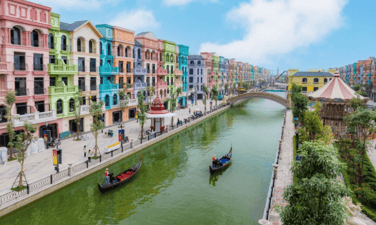
Grand World Hanoi
Grand World is one of the hot tourist destinations near Hanoi recently. Grand World Hanoi is an entertainment, culinary and shopping complex that has been taking the travel-loving community by storm in recent times. This place is built in a unique and impressive architectural style, attracting the attention of tourists. The attraction of this Grand World Hanoi comes from the romantic street corners, recreating the poetic Italian scenery with the gentle Venice river. Besides, entertainment streets with Korean style also make young people "crazy".
Hung Yen
6904 view


Dong Xam silver carving craft village
About 20 km east of Thai Binh City, Dong Xam silver carving village always has a characteristic sound of carving. The result of those sounds are many exquisitely patterned products created by the skillful hands of artisans here. Silver engraving requires perseverance, patience and attention to every detail of the artist. Therefore, the workers are always patient, diligent, and meticulously carve and engrave each decorative pattern from rudimentary tools such as awls, nails, hammers... Each person has a part to do, the one who creates the shape, the one who creates the strokes creates the flowers. With silver carving, carving is the step that requires the most concentration, requiring the artist to be extremely skillful, not allowing himself to make even a small mistake, otherwise, the entire product will be considered abandoned and must be made again from the beginning. A highly demanding job, but in the past many people could not make a living with the job because of limited income. Many generations, although they love their job and want to keep it, still have to leave due to being entangled in food, clothes, and money. As time passes, silver-engraved products become closer to everyday life, from souvenirs such as silver necklaces, bronze paintings... to more sophisticated and valuable products such as incense burners worth up to several hundred million. That richness has expanded the customer base. Gradually, the silver carving profession has helped people here improve their lives. Today, the silver carving profession is still circulating and developing more and more widely. Dong Xam's products today revolve around copper materials, bright silver plating, very good-looking and affordable.
Hung Yen
7063 view


Bach Thuan garden village
Bach Thuan garden village is now more than 100 years old, located next to the Red River carrying heavy alluvium and fertility. This is a typical ancient village in the Northern Delta, also the only garden village in Thai Binh province that still preserves many ancient Vietnamese house practices and has a long-standing profession of growing ornamental plants. The people of Bach Thuan Garden Village said that since ancient times, their ancestors have lived by gardening, so this is a typical traditional profession of the whole village, almost every house owns a garden from 2 hectares to 5 hectares. With fruit trees, mixed with ornamental plants, the trees are meticulously cared for and pruned. Bach Thuan garden village is not like other communes in the province in that the area of field land is larger than the area of garden land, but the area of garden land here is more than the area of rice cultivation. Coming to Bach Thuan, visitors feel like they are lost in a miniature park with all kinds of light and dark colors... Along both sides of the village road are many trees with different colors, the dark green of the magnolia, the red of the magnolia flower. single, five-colored trees... Nature has favored Bach Thuan to develop traditional gardening. In addition, visitors will be overwhelmed with hundreds of types of fruit trees one after another, stretching endlessly such as: apples, guavas, plums, lemons, longans, lychees, sapodillas, oranges, tangerines, kumquats... Very suitable for women's taste buds. Men can sit and fish, chat and enjoy the fish they caught next to a bottle of fragrant sticky rice wine. Besides, visitors also have the opportunity to participate in people's lives such as: Rowing on canals, ponds and lakes, fishing, visiting fruit orchards or traditional craft villages, and enjoying tea mixed with honey. Bees have longan scent. Next to the fruit gardens are ornamental and ornamental tree gardens. Each type of ornamental plant has its own unique shape and different names depending on the pruning of the artisans. In addition to visiting ornamental gardens and fruit trees, visitors can visit ancient houses dating back hundreds of years or come to the peaceful and quiet scene of Tu Van Pagoda and Bach Tinh Pagoda. Bach Thuan garden village also has Thuan Vi market, a rural market but no less crowded and bustling. This is also where traders buy agricultural products from garden villages and then resell them at markets in Thai Binh or Nam Dinh city. Especially in the morning, the market sells many types of attractive cakes such as banh cuon, banh beo, steamed cake, banh gio, sticky rice cake, banh te, banh mat, banh chung, banh giay dou, donut... Banh cuon at Thuan Vi market is a famous delicious cake in the region, easily making diners fascinated. With the unique features of a rich countryside, Bach Thuan Garden Village gradually attracts tourists from near and far to visit the traditional craft village, admire the art of bonsai, learn how to decorate and build garden houses... and enjoy delicious local dishes, fragrant flowers and sweet fruits all year round.
Hung Yen
7885 view


Dong Bang Temple
Dong Dat Temple is located in An Le commune, Quynh Luu district, known as the sacred temple built from the 18th Hung Vuong king. Ultimate spirit. Up to now, the Delta Temple has become the most famous tourist destination in Thai Binh, attracting a lot of tourists to visit and experience. Dong Delta temple when built is the place to worship the king of Father Bat Hai Dong Dinh, who had contributed to helping King Hung to fight against foreign invaders and establish a village to help the people. From the end of the thirteenth century until now, this temple also commemorates Hung Dao Dai Vuong Tran Quoc Tuan and the generals under the Tran dynasty who had the merit of defending the country, three times fighting the Yuan - Mong troops from the border of the country. Because of the history of more than 4,000 years, the Delta temple is associated with many thrilling legends. In particular, the dictionary of the father of Bat Hai's father is the story of the most oral. Legend has it that in the 18th Hung Vuong period, when the foreigner came to invade the water, the court took the strong and strong army, but so the enemy was too strong, so he had to establish a Zhao Linh Son, a bridge The god supports the enemy. This land was at that time of peach blossom page, located near the Vinh River mouth. This is the place where Long Cung Hoang Tu Hoang (i.e. Giao Long - the son of Lac Long Quan and the Ngoc Nu concubine) reincarnated into a fisherman's family living near the estuaries Ceremony, Quynh Phu now) helped the king to fight the enemy. He and his two younger brothers and 10 mighty generals: the great mandarin, the third mandarin, the fourth mandarin, the mandarins (Mr. Hoang Muoi), the monk's native in Nuoi, 28 generals and soldiers, and the same soldiers, and the same soldiers Equal to melt the enemy on 8 estuaries, bringing in Thai Binh to the country. After that victory, he was ordained the Great King. Instead of staying in the court, he asked to go back to his hometown to take care of his parents and reclaim, the people to establish the coastal hamlet, helping the king to keep the border. When Vinh Cong Dai Vuong Quy Tien on August 25 of the lunar calendar, the people here were grateful to him, so he enhanced him as a father and father - Bat Hai Dai Vuong. King Hung also remodeled his family, built a temple to worship for people to remember the smoke. Many stories are said that Vinh Cong Dai Vuong was very sacred, in the thirteenth century when the Nguyen - Mong enemy came to invade our country, Hung Dao Vuong brought the generals to the temple to pray to the sound. After three times chasing the Nguyen - Mong troops, the Tran generals contributed to embellish the temple more spacious. Since then, despite thousands of years with a lot of historical fluctuations, Thai Binh people still smell full smoke, worship Vinh Cong Dai Vuong and Hung Dao Vuong Tran Quoc Tuan and the Tran heroes with merit With the country. The palaces at the Delta temple fully converge the five elements according to the traditional concept of Vietnamese people. Between the palace is an ancient well mouth, according to the ancient stories, this is the place where Vinh Cong used to hide. Therefore, people believe that the water in this well can eliminate bad luck, bring luck. The beauty of this thousand -year -old temple has the old appearance, showing the elite architecture and spiritual culture of the nation. Experiencing ups and downs of history, constant wars, the temple has repeatedly damaged. However, up to the present time, the Delta Temple has been repaired and expanded the campus to serve Huong customers and worship from all over. The historic area of Dong Delta temple now has an area of about 20,520m2, including the temples of the King, Sinh temple, Quan Nhi Temple, Quan Dieu Temple, Quan De Third Temple, Quan De Bat temple. If you are a lover of traditional festivals, do not miss the famous festival of the Delta temple, held on August 20 of the lunar calendar every year. This festival is held with two main parts, the ceremony and the festival. The ceremony will carry out the procession of the temples of Mau Sinh, the first officials, the second, the three, the unemployed, the bowl of the bowl to the temple of the father of the Bat Hai father. After that, people will hold an incense offering ceremony, gong, drum dance to open and procession. The rituals are performed very methodically, scale, attracting thousands of pilgrims to fall. After the ceremony will be the festival will be very bustling, you can experience folk games, participate in playing shrinkage, swimming, chess, wrestling, cockfighting.
Hung Yen
8452 view


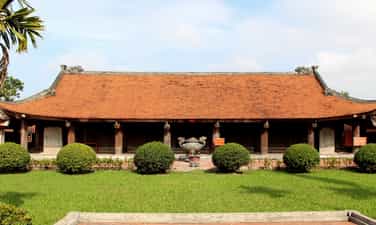
Keo Pagoda
Keo Pagoda, whose literal name is Than Quang Tu, is one of the ancient pagodas in Vietnam whose 400-year-old architecture is preserved almost intact. The pagoda was built in 1632 under the reign of King Le Trung Hung, with the "Foreign Noi Cong" architectural style typical of Vietnamese pagoda architecture. Keo Thai Binh Pagoda is considered the largest-scale project among ancient pagodas in Vietnam. The entire temple campus is more than 41,500 square meters wide, including 16 architectural buildings with 116 construction spaces. The main architectural works are: Three gates, Buddhist pagoda, holy hall, bell tower, corridor, monks' quarters, tower garden... From the dike surface, going down is the outer three gates, in the middle is the inner three gates. Through the three gates is the Buddha worship area including Ong Ho pagoda, incense burner and Buddha hall. In particular, there are three large lakes in the temple grounds, making the scene even more peaceful. The entire temple is made of ironwood, without using rivets but only using wooden mortises joined together. The supporting columns are meticulously designed, showing the sculptural imprint of the Later Le period. The most impressive is the majestic 3-storey bell tower, with a frame made up of nearly 100 overlapping ridges with a total height of more than 11m, linked by wooden mortises, supporting 12 elegant curved tiled roofs. This bell tower has been recognized by the Guinness Book of Vietnam Records as the tallest wooden bell tower in Vietnam. Currently, Keo Pagoda still preserves hundreds of Dharma statues and offerings from the Le Dynasty. Keo Pagoda is considered an art museum of the early 17th century, with many unique masterpieces. Keo Pagoda Festival takes place on January 4 every year, attracting many tourists.
Hung Yen
7360 view


Con Den eco-tourism area
Thai Binh is not a land with strong tourism strengths like neighboring provinces and cities such as Hai Phong and Hai Duong. But in Thai Binh, there are many landscapes, landscapes, historical and cultural relics such as Keo Pagoda, King Tran relics, Bach Thuan garden, Thai Binh cathedral or beaches with rustic and idyllic beauty that attract tourists. Among them, it is impossible not to mention Con Den Beach Resort. Con Den is not a beach with golden sand, running long embracing the clear blue sea. Con Den is just a rustic, simple, pristine beach, but it was recognized by UNESCO as a world biosphere reserve in 2004. Because of the pristine natural scenery on the dune, Con Den beach is considered by many to be the most beautiful dune in the North, with a stretching landscape including fine sand beaches and clam farming areas. Accordingly, in the year Den Den is planned into an eco-tourism area with a beach, resort, entertainment area (sports field, water slide area), general cultural tourism area, shopping center, green tree system,... Coming to Con Den beach resort, visitors will be immersed in cool, clean water; Take a boat trip to explore the immense mangrove forest; Stroll along the pine forest to enjoy the fresh air. Tourists should also not forget to participate in interesting marine activities such as stilt walking, brass band performances, drumming, fishing competitions, etc. Con Den eco-tourism area currently has an Experiential Tourism program for students, families and teambuilding for the business sector. Con Den is also famous for the dream bridge - the longest bamboo bridge in the North, passing through the lush green mangrove forest for visitors to admire. This is also the longest bamboo bridge across the sea in Vietnam.
Hung Yen
7508 view


