Tourist destination

Thanh Chuong tea island
Surrounded by Cau Cau irrigation dam, the tea hills in Thanh An commune (Thanh Chuong district) look like oases, compared to Ha Long Bay on land in Nghe An. Over the years, these tea islands have not only brought high economic value to local people but are becoming a destination that attracts tourists from all over. Seen from above, the blue of the water and the endless green of the Tea hills create a peaceful natural picture. The green terraced tea hills, winding between the vast river, become the ideal check-in point for tourists. Especially those who love majestic mountains, relax, and immerse themselves in nature. The green terraced tea hills, winding between the vast river, become the ideal check-in point for tourists. Especially those who love majestic mountains, relax, and immerse themselves in nature. The tea island is located next to the Ho Chi Minh trail, more than 50km from Vinh city. To get to the tea island, the only way is by motorboat for about 20 minutes. All of these oases are surrounded by the Cau Cau dam system, which is more than 80 hectares wide. Mr. Nguyen Canh Nam - Chairman of Thanh An Commune People's Committee - said that Cau Cau dam was built decades ago. The initial purpose was just to conserve water to ensure the main source of irrigation for more than 700 hectares of wet rice in Thanh An and Thanh Thinh communes. After storing water, the gentle hills become miniature oases in the middle of irrigation dams. About 25 years ago, local people started growing tea in these oases. In recent years, many households living next to Cau Cau dam have also bought motorboats, invested in building motels and food services to serve tourists. When visiting the tea islands, visitors can also rent costumes and experience the feeling of picking tea buds right from the trees. After sightseeing, visitors can also stop to rest at the huts of indigenous people built on the tea hills. Inside, many people also prepare some snacks, local specialties, and especially enjoy a bowl of hot green tea in the quiet space of heaven and earth. Currently, on the tea islands, Thanh Chuong district has piloted the implementation of the model of agriculture combined with eco-tourism. Visitors can stay at homestays on the tea island, participate in tea picking, tea processing with farmers, transform into mountain girls or tea picking workers with baskets on their backs that look very real and strange. This is also a way to help visitors record memories on the tea hills in the most impressive and unique way. Thanh Chuong tea island is a wonderful tourist destination with lush green tea hills, majestic natural scenery and fresh atmosphere. This place promises to bring visitors unforgettable experiences with family and friends. Come to Thanh Chuong tea hill to enjoy relaxing moments, immerse yourself in nature and take sparkling beautiful photos.
Nghe An
6623 view


Hon Ngu Island
Hon Ngu Island, also known as Song Ngu Island, is a small gem located in the middle of the sea in the territory of Nghe An province, about 4km from Cua Lo beach. With a total area of only about 2.5km2, Hon Ngu Island is like a precious gem in the middle of the ocean. Located in the humid tropical monsoon climate, this island benefits from warm sunny weather and cool blue sea, creating an ideal environment for marine tourism activities and tours to explore Cua Lo, Nghe An. An. Therefore, Hon Ngu is not only an attractive place with majestic natural beauty, but also an ideal destination for those who want to enjoy exciting experiences on the beautiful Central Coast. Coming to Cua Lo islands, the experience of swimming is something not to be missed. Soaking in the clear blue sea at Hon Ngu Island will put you in a state of relaxation, with cool water and the wild beauty of nature. The wonderful beach is not only a place for you to enjoy relaxation when soaking, but also an ideal destination for walks, and to take advantage of taking "virtual life" photos. Hon Ngu Island offers a peaceful world where you can enjoy truly relaxing moments. One thing that surprises many tourists when they step foot on Hon Ngu Island is the long gravel beach with a wonderful variety of colors. As the ocean current hugs the shore, its working time creates erosion on the rocks, creating smooth surfaces of all different sizes. Leave vivid moments at the unique pebble beach of Hon Ngu when you visit this interesting place. Nghe An travel itineraries often bring unique experiences. At Hon Ngu Island, visitors will enjoy sitting on basket boats and participating in squid fishing activities. Many tourists have gone through this experience and are especially excited when they succeed in catching fresh squid. The day of being a real fisherman with squid fishing activities on a basket boat will definitely be an unforgettable memory on your trip. The ancient pagoda on Hon Ngu island originated during the Tran Dynasty around the 13th century. with the characteristics of worshiping King Sat Hai Hoang Ta Thon, a famous water general in Nghe An and a place to worship Buddha. The unique thing about this pagoda is the presence of the Jade Well, the only source of fresh water on the island that is always abundant. This well not only provides an important water source but is also the main source of water for making the famous specialty wine, Song Ngu wine in Nghe An. The most unique highlight of the journey to Hon Ngu Island must be the experiences Experience entertainment at the largest tourism and entertainment complex in the North Central region VinWonders Cua Hoi. VinWonders Cua Hoi is located in a prime location on Cua Lo beach and connected to the ecological complex of Song Ngu island by a modern 3.5km long sea-crossing cable car system. The destination promises to bring visitors world-class entertainment experiences throughout the four seasons with an ecosystem of top-notch entertainment products and services. Discovering VinWonders Cua Hoi, you can immerse yourself in the bustling festival atmosphere and experience hundreds of entertainment items at Phu Hoa Fair Park, Light Square... Don't forget to "break the island" ” Cua Hoi water park is called Tropical Paradise with a system of slides and modern water games... Hon Ngu Island possesses wild and majestic natural beauty. This island not only attracts tourists by the novelty of the landscape but also many interesting experiential activities.
Nghe An
6376 view


Pu Mat National Park
Pu Mat National Park is located at 18o46' North latitude and 104o24' East longitude in Nghe An province. Pu Mat National Park is located on the administrative boundaries of 3 districts: Anh Son, Con Cuong, and Tuong Duong, the southern boundary of the National Park (National Park) runs along the Vietnam-Laos border. Pu National Park is located in the tropical monsoon climate zone. The average annual rainfall here is 1,800mm and the average temperature is 23.5oC. Located on the central strip of land, Pu Mat National Park has many advantages in tourism development: large area, high biodiversity with many species of forest animals and plants newly discovered recently: 2,500 plant species belonging to 160 families and nearly 1,000 animal species... In particular, a wild natural landscape as if never touched by human hands: Upstream primeval forest of Khe Thoi, Khe Bu, Khe Choang, Cao Veu... Khe Kem Waterfall, Moc stream, Giang River, odd forests and typical cultural features of the Thai, H'mong, Dan Lai ethnic groups - wildness is a gift of nature to Pu Mat National Park. Unique features To the scientific community, the name Pu Mat is not strange because this is one of the first places to discover a rare animal species: Saola. With a core area of 94,804 hectares and a buffer zone of 86,000 hectares, spread over three districts of Tuong Duong, Con Cuong and Anh Son of Nghe An province, Pu Mat is the home of the Thai people - an ethnic group that has lived here for many generations. The majestic wildness of Pu Mat mountains and forests is mixed with the unique and sophisticated culture of the Thai people. They live in most villages, in wooden stilt houses and cultivate wet rice. In hilly areas, they participate in planting trees or slash-and-burn agriculture, growing crops or other food crops; livestock and poultry farming; making traditional rattan and bamboo products and weaving fabrics. Thai brocade fabric is famous for its uniqueness, colorful colors and durability. Maintaining long-standing traditions, Thai people live concentratedly according to family lines, each community has its own beliefs and customs, and there are festivals associated with bumper seasons and agricultural production. Stall dancing and drinking wine are unmistakable features in the daily activities of Thai people. The minority are the Kinh ethnic group (mainly living in Con Cuong town) and the Dan Lai ethnic group. Dan Lai people live concentrated in 3 villages: Co Phat, Ban Con and Ban Bung in Mon Son commune located in the southeast of Pu Mat National Park. They live and cultivate on sloping land, making a living through hunting and gathering. Priceless gifts of nature In Thai, Pu means mountain peak, Pu Mat is the highest mountain peak in the area (1,841m) and is named for the National Park. Rarely do any tourists conquer this mountain peak, even though they may have previously stood with their arms outstretched on the top of Fansipan. Pu Mat is beautiful in the majesty of the green forest, in the pristine beauty untouched by human hands. Coming to Pu Mat, visitors will admire the wildness of the primeval forest with the highest biodiversity in Vietnam and many outstanding landscapes. Coming to Pu Mat, visitors will admire the pure sangang forest, about 40km from the administrative area of the park, about 100 hectares wide. This is an ancient forest, about 50m high and shady all year round, in Tam Dinh commune, Tuong Duong district. The nature here is magical with green foliage still dripping with dew every morning, and the sound of birds singing through the branches at dawn. Enjoying relaxation in the morning, visitors can immerse themselves in the cool nature of Khe Kem waterfall (also known as Kem waterfall) in the sultry heat typical of the Central region. About 20km south of Con Cuong town, the majestic Kem waterfall is 150m high. Many scientists doing research here have confirmed that Kem Waterfall is the most pristine waterfall in Vietnam. The road to the waterfall is winding, winding and bumpy. Maybe that will discourage tourists, but for those who can overcome the not-so-short journey to see with their own eyes a natural creation for Pu Mat, that person will certainly not feel regretful. Thai people call Kem waterfall Bo Bo, meaning white silk strip. Looking up from the foot of the waterfall, you will have the feeling of the stream flowing endlessly in strips of white foam, like an endless strip of white silk. Blending in that magical white color is a clear, cool stream and the songs of all kinds of birds. On the way to Kem waterfall, the impression that remains in visitors about the beauty of Pu Mat is the sound of flowing water at the Pha Lai dam (flower of heaven), red like a poinciana on the trees on both banks of the Giang River (about 20km from the administrative area of the national park). An almost rare strange thing in Pu Mat is that on small boats sailing on the Giang River, visitors feel like they are returning to true nature, where humans are just a small part of nature. Both sides are densely wooded and wild, with the highlight being the majestic limestone mountains, dotted with the colorful colors of Orchids and cool clear blue water. If tourists bring some fruits, they will surely meet Mr. Ton's descendants without fear coming out to "receive gifts". They will swing on tree branches, creating a scene like the Painted Fruit. From the intersection of Khe Diem bridge on Highway 7, go along the road to Mon Son and Luc Da areas of Con Cuong district for about 3km, visitors will meet Moc stream. Unlike other streams, the water here seems to come up from the ground, clear and flowing, dissipating the scorching heat of summer. In autumn, the stream seems cooler with the air. On the contrary, in winter, nature here gives the stream a miracle: extremely warm water on cold days.
Nghe An
7435 view


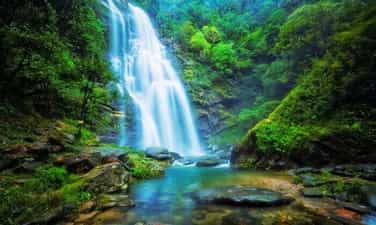
Khe Kem Waterfall
With its wild, poetic beauty, Khe Kem Waterfall is not only a favorite stopover for tourists but also a sightseeing place frequently visited by indigenous people. Khe Kem Waterfall is also known as Kem Waterfall or Bo Bo Waterfall, which according to the Thai people means white silk strip. Because the waterfall falls from a height of more than 500m, a slope of about 80°, through three levels, from afar it looks like a white silk strip floating on the deep green background of the mountains and forests. The road leading to Khe Kem waterfall is winding and winding, green in all four seasons because on both sides of the road are old trees. Visitors can choose to travel by motorbike to experience and immerse themselves in the natural scenery and admire the beautiful scenery on both sides of the road. Upon arriving, Khe Kem waterfall pours water with white foam that will make visitors admire. Above and on both sides of the waterfall is a rich vegetation with lush green grass and hundreds of flowers blooming all year round. Different types of trees bloom in each season, making visitors feel like they are lost in a garden of giant flowers. At the foot of the waterfall is a long stream, with flat stones like large tables as a resting place for visitors. Also at the foot of the waterfall, visitors will also see small lakes with different shallows and depths. The lake water is so clear that you can see the bottom, creating a wonderful natural landscape. In the summer, the temperature at the waterfall area is about 20°C, extremely cool, so Khe Kem waterfall is truly an ideal destination for tourists who want to avoid the hot summer heat and immerse themselves in nature. Nature, enjoy the spacious, cool atmosphere. In addition, visitors can also follow the trail to the top of the waterfall and enjoy the view of the mountains and forests. Or from here, go up Khe Bu valley or hike Pu Loong mountain - a high mountain in Pu Mat National Park (travel time takes about 6-8 hours). During the journey to explore Khe Kem waterfall, visitors will experience the unique cultural identity and cuisine of the Thai people. The specialties of the Thai ethnic people are prepared in a strange and attractive way, such as bamboo-tube rice, purple sticky rice, honey-grilled chicken, Giang river fish, shrimp slit, frog rolls, and frog rolls. forest, stone crab steamed with lemongrass... Khe Kem Waterfall promises to become an attractive eco-cultural tourist destination with majestic mountain and forest scenery, connecting the unique cultural space of ethnic minorities. So that every time visitors come here, they can immerse themselves in the natural scenery of pristine mountains and forests, regain mental relaxation and balance in life.
Nghe An
5967 view


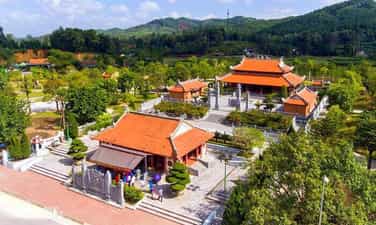
Truong Bon historical relic site
Truong Bon Nghe An is considered the "focal point of the war" with a particularly decisive position in the war to liberate the South. Every year, this place attracts a large number of domestic and foreign tourists to visit when they come to Nghe An. If you have the opportunity to travel to Nghe An, you definitely cannot miss the Truong Bon Nghe An relic site. Here, you will listen to ancient stories about the nation's heroic generation. Let's explore here what Truong Bon is called, how to get to Truong Bon, and the history of Truong Bon. Truong Bon relic site, about 22 hectares wide, is located on strategic route 15A, through My Son commune, Do Luong district, Nghe An province. This place is not only a famous tourist destination of Nghe An and Ha Tinh but also a legendary holy place, containing memories of the heroic fighting period of the Vietnamese army and people. Today, Truong Bon Nghe An has become an important center of education about revolutionary traditions, patriotism and pride of the Vietnamese generation. Truong Bon relic area began construction on October 27, 2010 and was completed at the end of 2014, officially put into operation, becoming a "red site" for revolutionary education. The total construction area is more than 217 thousand m2, including many works such as memorials, traditional houses, bell towers, Truong Bon Nghe An "fire coordinates" electronic board... and the highlight is the Truong Bon Nghe An area. graves of 13 heroic martyrs and young volunteers. The grave site is located deep in the old pine forest - previously a shelter for young volunteers. In front of the grave is the location where the American enemy attacked strongly and is also where 13 heroes died in the bombing on October 31, 1968. In addition, the relic site also recreates images of the life, labor and fighting process of officers, soldiers, and young volunteers through large, intricately carved reliefs. In the memorial area, there are 2 groups of statues and 6 legendary pillars symbolizing the resilient and courageous fighting spirit of the youth volunteer force in the journey to protect the Fatherland. Truong Bon Nghe An witnessed a time of fire and heroism of the nation. From 1964 to 1968, the US military dropped nearly 20,000 diverse bombs and tens of thousands of missiles here. That's why Truong Bon is often called the "bomb crater" of the North. In the early morning of October 31, 1968, American aircraft dropped more than 200 bombs on Company 317. At that time, the Nghe An Youth Volunteer Group was on duty to level bomb craters. Most of them have completed their missions and are about to be discharged. Some people will go to school, some people will get married all day, but the dreams of 13/14 soldiers, at a very young age, disappeared before the fierce rain of bombs. However, with the determination "the heart can stop beating but the road cannot be blocked", "live by the bridge, stick by the road; die resiliently, courageously"... the victory at Truong Bon has helped us maintain our blood vessels. traffic, covering millions of cubic meters of soil and rock, bringing 94,000 motor vehicles back and forth safely and transporting more than 1 million tons of goods. Also here, 1,240 heroes from the police force, army, youth volunteers, and frontline civilians sacrificed their lives and rested in the mother earth forever. To this day, Truong Bon - the immortal epic song has gone down in history as a legend about the sacred land, a mark of the resistance war against the US to save the country and has become the pride of the Vietnamese people. . This place will forever be a "red address" for educating the passionate patriotic tradition and the resilient revolutionary will of previous generations.
Nghe An
6824 view


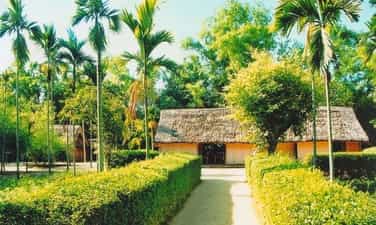
Hoang Tru Village
Hoang Tru village is about 2km from Kim Lien village, in Kim Lien commune (Nam Dan district, Nghe An province), about 15km from Vinh city. There is a 3,500m2 Hoang Tru relic cluster here, including: The house of Mr. Hoang Duong - Uncle Ho's grandfather, the Hoang Xuan family branch church, the house of Mr. Nguyen Sinh Sac and Ms. Hoang Thi Loan - relatives giving birth to Uncle Ho. On the occasion of the Year of the Tiger in 1878, Mr. Hoang Duong, on his way to celebrate the New Year, met a little boy sitting on a buffalo's back, engrossed in reading a book. That boy's name is Nguyen Sinh Sac, he was orphaned when he was 4 years old. Feeling sorry for the situation and appreciating the virtue of studiousness, Mr. Hoang Duong asked the Nguyen Sinh family for permission to take Nguyen Sinh Sac home to raise and educate him. At that time, Nguyen Sinh Sac was 15 years old. Under the guidance of Mr. Hoang Duong, the more Nguyen Sinh Sac studied, the smarter he became, becoming famous throughout the region. When Nguyen Sinh Sac turned 18 years old, the couple chose him to be the son-in-law for their first daughter, Hoang Thi Loan. In 1883, the two got married and lived separately in a newly built small 3-room house. The house is the place to witness student Nguyen Sinh Sac diligently reading, witnessing the diligence and loyalty of his wife and the birth of his children. At the Huong exam in the year of Giap Ngo 1894, Mr. Nguyen Sinh Sac passed his bachelor's degree from Nghe An school. In 1895, he went to Hue capital to study and took his wife and children with him. After giving birth to her fourth child (in 1900), Ms. Hoang Thi Loan died in Hue at the age of 33 (February 1901). Mr. Nguyen Sinh Sac's father and son sadly left the imperial capital to return to Hoang Tru village to live. At the Tan Suu Faculty exam (1901), Mr. Nguyen Sinh Sac went to Hue to take the exam and passed the exam. King Thanh Thai gave him the plaque "An tu ninh gia" (Thanks to the king for his good family). According to tradition, Mr. Nguyen Sinh Sac and his children said goodbye to Hoang Tru village and returned to their paternal hometown - Kim Lien village to honor their ancestors. Hoang Tru relic area with a small three-room house is the place where President Ho Chi Minh was born, where the beautiful and difficult childhood years of him and his grandparents were attached. parents, brothers and sisters. It was also here that he received the love of his relatives and his homeland, and witnessed the devoted teaching of his grandfather and father. Those spiritual values are the source of a great aspiration for young Nguyen Sinh Cung to become the great President Ho Chi Minh, a Hero of national liberation, a cultural celebrity of Vietnam and of Vietnam. mankind.
Nghe An
7399 view


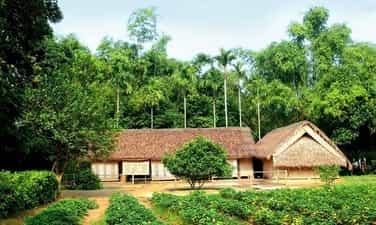
Lotus Village
About 16km from Vinh City, Sen village (Kim Lien) in Kim Lien commune, Nam Dan district, Nghe An province is Uncle Ho's paternal hometown. This is one of the four most important monuments in the country and is also the pride of the people of Nghe An. You can go to Sen village at any time of the year, but the most suitable time is in May. This is the occasion when the lotus ponds bloom, radiating a fragrant scent, bringing a pleasant feeling. dispel the sultry and stuffy heat and harsh wind in the Central region. Moving to Nghe An is very simple, you can easily travel by different means. From Hanoi and Ho Chi Minh City there are direct flights to Vinh city. You can also travel by train to Vinh station or by bus and motorbike. From Vinh city, follow road 49 to kilometer 13, turn onto the red dirt road shaded with eucalyptus and rows of green casuarina trees to reach Sen village. At the beginning of the village there is a large lotus pond, passing through the lotus pond is Coc well. Here, as a child, Uncle Ho often went to fetch water, fish and have fun with friends in the village. Behind the shady green bamboo fence is the simple, simple, five-room thatched-roof house of the family of Deputy Bang Nguyen Sinh Sac, Uncle Ho's father. After passing the Vice Ranking in the exam in the year Tan Suu 1901, Mr. Nguyen Sinh Sac and his children left Chua village (Hoang Tru) to live in Sen village, his paternal hometown. This house was built by the people of Sen village using public funds to celebrate him passing Pho Bang, bringing honor to the whole village. In front of the house there are 2 small yards and a garden surrounded by a hibiscus fence. Next to the house is a horizontal house used as a kitchen. The two outer rooms are where the altar is placed and where guests are received. The third room is the residence of Mrs. Nguyen Thi Thanh - Uncle Ho's eldest sister. The remaining two rooms are the family's resting and living areas. The fifth room has only one counter and is also the resting place of Mr. Nguyen Sinh Khiem and Nguyen Sinh Cung (Uncle Ho). Even though he passed high scores, the items in the house are still very simple like many other rural houses: wooden counters, bamboo beds, clay jars for water, bamboo bowls, etc. Most of these items are made by donated by the villagers, these memorabilia are still kept today. Uncle Ho was attached to this house during his teenage years from late 1901 to mid-1906. The house witnessed Uncle Ho's learning and growth process; is the place where his first feelings of patriotism and his awareness of the times were marked. After 50 years away from his homeland, traveling to find a way to save the nation, making a revolution to free the country from French colonial rule, he returned to Sen village twice in 1957 and 1961. You can visit the houses that were close neighbors to Uncle Ho's family at that time such as the Co Dien smithy, the house of Mr. Vuong Thuc Quy, the house of the Confucian master, the house of Mr. Nguyen Sinh Nham - Uncle's grandfather,...
Nghe An
9721 view


Cua Lo Beach
One of the highlights of this beach is the long sandy coastline and gradually increasing depth, creating favorable conditions for swimming and relaxing on the clean sand beaches stretching along the coast. Cua Lo Nghe An Beach is also a gathering place for many entertainment and relaxation activities such as jet skiing, hot air balloon flying, walking along the beach, stargazing on the beach, squid fishing in a basket boat at night and many other activities. This creates conditions for visitors to enjoy exciting moments of relaxation and entertainment at Cua Lo beach - Nghe An. Summer (from April to August) is the ideal time to visit Cua Lo Nghe An, especially for those who like swimming. At this time, the weather is dry and sunny, visitors can comfortably follow their schedules and capture wonderful moments. One of the new activities added to the tourism program at Cua Lo Nghe An beach is flying a hot air balloon to see the sea. For 200,000 VND per trip, visitors will be taken to a maximum height of 50m to see the beauty of Cua Lo beach. This activity takes place in the time frames from 6:30 a.m. - 9:30 a.m. and 4:30 p.m. - 6:30 p.m. Note that the activity only takes place during one event period, so visitors need to follow the schedule to arrange a reasonable time for their trip. Early morning is the ideal time to swim and watch the sunrise at Cua Lo beach, Nghe An. Fresh air and cool sea water will help visitors relax and enjoy wonderful beautiful moments. In addition, you can also participate in many other activities such as riding a jet ski, kayaking, walking along the beach, and taking photos on the beach.
Nghe An
9468 view


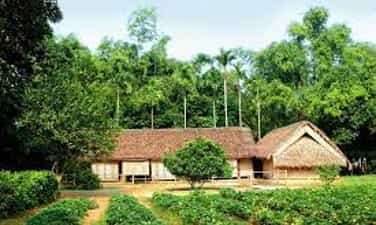
Hoang Tru Village
Hoang Tru village is about 2km from Kim Lien village, in Kim Lien commune (Nam Dan district, Nghe An province), about 15km from Vinh city. There is a 3,500m2 Hoang Tru relic cluster here, including: The house of Mr. Hoang Duong - Uncle Ho's grandfather, the Hoang Xuan family branch church, the house of Mr. Nguyen Sinh Sac and Ms. Hoang Thi Loan - relatives giving birth to Uncle Ho. On the occasion of the Year of the Tiger in 1878, Mr. Hoang Duong, on his way to celebrate the New Year, met a little boy sitting on a buffalo's back, engrossed in reading a book. That boy's name is Nguyen Sinh Sac, he was orphaned when he was 4 years old. Feeling sorry for the situation and appreciating the virtue of studiousness, Mr. Hoang Duong asked the Nguyen Sinh family for permission to take Nguyen Sinh Sac home to raise and educate him. At that time, Nguyen Sinh Sac was 15 years old. Under the guidance of Mr. Hoang Duong, the more Nguyen Sinh Sac studied, the smarter he became, becoming famous throughout the region. When Nguyen Sinh Sac turned 18 years old, the couple chose him to be the son-in-law for their first daughter, Hoang Thi Loan. In 1883, the two got married and lived separately in a newly built small 3-room house. The house is the place to witness student Nguyen Sinh Sac diligently reading, witnessing the diligence and loyalty of his wife and the birth of his children. At the Huong exam in the year of Giap Ngo 1894, Mr. Nguyen Sinh Sac passed his bachelor's degree from Nghe An school. In 1895, he went to Hue capital to study and took his wife and children with him. After giving birth to her fourth child (in 1900), Ms. Hoang Thi Loan died in Hue at the age of 33 (February 1901). Mr. Nguyen Sinh Sac's father and son sadly left the imperial capital to return to Hoang Tru village to live. At the Tan Suu Faculty exam (1901), Mr. Nguyen Sinh Sac went to Hue to take the exam and passed the exam. King Thanh Thai gave him the plaque "An tu ninh gia" (Thanks to the king for his good family). According to tradition, Mr. Nguyen Sinh Sac and his children said goodbye to Hoang Tru village and returned to their paternal hometown - Kim Lien village to honor their ancestors. Hoang Tru relic area with a small three-room house is the place where President Ho Chi Minh was born, where the beautiful and difficult childhood years of him and his grandparents were attached. parents, brothers and sisters. It was also here that he received the love of his relatives and his homeland, and witnessed the devoted teaching of his grandfather and father. Those spiritual values are the source of a great aspiration for young Nguyen Sinh Cung to become the great President Ho Chi Minh, a Hero of national liberation, a cultural celebrity of Vietnam and of Vietnam. mankind.
Nghe An
10014 view


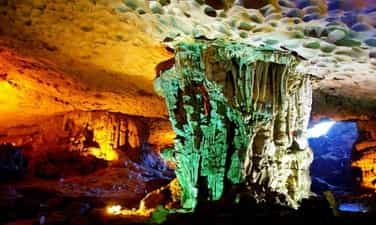
Tham Om Cave
Tham Om Cave is located at an altitude of 15m above sea level, the cave entrance is in the Northeast direction. This place is magnificent with fossils and mysteries that need to be discovered. Tham Om Cave is located in Quy Chau district, Nghe An province, about 7km from Road 48. This place is considered to contain many precious artifacts of ancient Vietnamese people, preserving a long-standing culture. Visiting Tham Om Cave is not only an opportunity to learn about history but also experience ancient culture. The cave is free and operates all day, so take the time to explore the interesting things at this location. In 1975, Tham Om Cave was discovered and excavated. Archaeologists have found many precious artifacts, from bronze, stone, to fossil animal bones and teeth, reflecting the life of ancient Vietnamese people. The Tham Om people are considered the first modern people in Vietnam. Transliterated in Thai, “Tham Om” means big cave. This place often attracts many tourists to visit every year. Tham Om Cave is considered a unique natural masterpiece of Nghe An. Take the time to come to this place to explore, experience and feel for yourself one day soon. When you arrive at Tham Om Cave, Quy Chau, Nghe An, you will immediately feel the wild and majestic beauty of mountain nature. The bustling sound of birds singing and the cool air will make your trip more attractive. Inside the cave is a special phenomenon of weathering due to water erosion on limestone mountains. With every step you take, you will encounter stalactites, large cliffs, along with diverse and unique shapes. All create the feeling of a special gift from the Creator. Coming to this cave, you will enjoy rustic culinary dishes such as banana flowers, yam fruit, green vegetables, bamboo shoots, wild bee pupae, and delicious grasshoppers. Don't forget to bring Nghe An specialty products as gifts for your loved ones after the trip.
Nghe An
10698 view


