Tourist destination

Thanh An Island
Thanh An Island is located in Can Gio district, from the city center. HCM is about 70km east. Thanh An Island, although not a new Saigon tourist destination, is a place for those who love the pristine and rustic beauty. In this place, visitors will be immersed in nature, admire the lives of the hospitable fishing villagers and enjoy the dishes of the beach flavor. The area of Thanh An Island is about 131 km2 with 5,000 people, which is a key gateway of Saigon - Gia Dinh before. Thanh An Island Can Gio is located between 2 rivers and rivers. People in Thanh An island commune mainly work in seafood and salt making. Unlike other bustling and vibrant play spots, Thanh An Island Can Gio brings the beauty of pristine and peaceful. You will feel a very different life, where ordinary people give each other deeply concerned, enthusiastic sharing. If you go to Thanh An Island during the day, try to linger to watch the beautiful sunset on the beach and take photos at the famous embankment. Traveling to Thanh An Island, visitors can explore the simple life of the people here as well as learn about the mangrove ecosystem. Currently, there are quite a lot of other entertainment services on the island such as kayaking, Thanh An island fishing, ... Walking on the long embankments through the island, listening to the murmuring waves, you will feel More clearly pristine, simple, different from the bustle and bustle in the city. All of this will bring you an unforgettable experience when coming to Thanh An Island. Coming to Thanh An Island, you cannot help but enjoy fresh seafood here. Normally, around noon the trains carrying new seafood will arrive at the wharf. You can buy shrimp, crabs, squid, crabs and then ask people to process. The price is only about 80,000 - 150,000 VND/person, very cheap. In addition to seafood, you can also enjoy other Saigon snacks at the center of the island with khot cake, baked rice paper, banana syrup, tea, bread, Saigon squid noodles, oyster porridge ... and Di Di Of course, do not miss the famous gifts as a gift in Thanh An Island, which is dried fish and fish sauce. Dried fish costs about 60,000 - 150,000 VND/kg. Thanh An Island anchovy fish sauce is mixed with garlic, minced chili, used to boiled meat or served with salads is great.
Ho Chi Minh City
6282 view


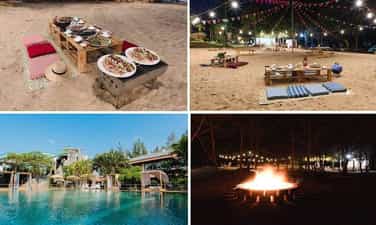
Zenna Pool Camp camping area
Zenna Pool Camp is famous for its spacious and airy camping space. This camping area is located at Group 3, Tan Phuoc hamlet, Phuoc Tinh commune, Long Dien district, Ba Ria Vung Tau province. With close and familiar design, this place is an ideal choice for those who want to experience outdoor life and enjoy the beautiful sea space. In addition to camping, there is a water park with many attractive games. This location is located near big seafood markets such as Long Hai market and Phuoc Tinh market, you can come to enjoy fresh and cheap seafood dishes. Zenna Pool Camp is also close to famous places such as freshwater pass, Ngoc Xuong eco -tourism area, Dinh Co, ... so it is easy to combine to create a diverse and interesting journey. To prepare for the perfect trip, you should bring waterproof items, especially tents. However, if you do not want to bring a lot of snacks, you can rent clothes right in the picnic area. The ideal time to come here is from January to June, avoiding the Lunar New Year, special holidays of the year when there are too many people. Enjoy the outdoor space and great camping experience at Zenna Pool Vung Tau. When coming to Zenna Pool Camp, visitors will have the opportunity to experience exciting overnight camping activities. You can choose to use a camping tent, an indispensable experience when going on a picnic. Zenna tents are equipped with all colors and interspersed on the sand, creating a lovely and attractive space. There are also wooden tables and chairs arranged neatly and beautifully, where you rest, relax and chat with friends or family. Surrounded by cool blue sea and white sand, after a long day of activity and fun, you will enjoy a good night's sleep on a tent. This feeling is really unforgettable and memorable in your travel discovery journey. The spacious grass space at Zenna Pool Camp is also an advantage to perform physical activity, especially when you follow the group and have a large number. In the evening, you can also participate in campfire, sing happily in a bustling and exciting atmosphere for the camping area. This creates a very cozy and cheerful space, where people can enjoy memorable moments and unforgettable memories. The large swimming pool is one of the attractive entertainment spots at Zenna Pool Camp, especially suitable for families with small babies or those who want to participate in swimming activities and water games. Especially, the beach at Zenna Pool Camp is always cleaned and maintained by the staff, bringing a clean and safe swimming environment. Therefore, you should not litter to the beach to preserve the purity of this place as well as respect the natural environment. The beautiful background at Zenna Pool Camp will highlight your virtual life frame. You can take pictures with tents decorated in a vintage style, creating a romantic and unique space. Besides, there is a campus of small cafes with a lazy chair facing the sea is also a special feature for you to show your virtual lifestyle. Offering is an experience not to be missed. The feeling of enjoying the delicious barbecue in the natural space will surely bring memorable moments.
Ho Chi Minh City
6322 view


Chinatown
China Town (or Chinatown - Integrity Writing) is a noun used to refer to an area where the Chinese gathered to live. Therefore, the Chinatown area is also known as the pine street. There are typical features of architecture, culture, beliefs, history, daily life, ... of the Chinese. Chinatown is considered by the Chinese to be his second home in a foreign land. In Saigon, Chinese people live mainly in districts 5, 6 and 11. However, mentioning China Town Ho Chi Minh, everyone thinks of Cho Lon neighborhood in District 5 (5.4km from Ben Thanh market). The Chinese (mainly the Chaozhou, Fujian) lived in China Town in District 5 from around the 18th century to the present. In the 1950s, there were 90% of the Chinese population. Up to now, only about 60% of Chinese continue to settle here. Most Chinese in District 5 speak Vietnamese as good as the original Saigon people. Coming here, visitors will admire the architectural works such as the guild, the temple, ... bold Chinese. In front of each house, every family often hangs red lanterns of Chinese people. As for the traders, the signboard of the shop has 2 unique Vietnamese and flower lines. This is the recognition point if you have entered China Town! Unlike Vinh Nghiem pagoda representing the traditional Vietnamese architecture, Ba Thien Hau Pagoda has a unique architectural feature of the Chinese. The pagoda was built in 1760, despite many years of sunshine and rain, but still retained beauty from centuries ago. This temple is famous for being sacred, busy with visitors with the desire to pray, pray for peace, fortune, ... This is a unique project in China Town Saigon that visitors should not ignore. Ha Chuong restaurant is also known as Chuong Chau restaurant or Ong Hac pagoda, Ba Ha Chuong pagoda. This project has a Chinese temple architecture with wooden sculptures, stone and sophisticated and unique bricks. This place is like a prosperous place with luxurious shops with a Hong Kong appearance similar to the nearby ward moat alley. On big holidays such as Lunar New Year, Nguyen Tieu, Mid -Autumn Festival, ... The two sides of the street will hang colorful lanterns, making the space more jubilant and fanciful. Tam Son Hoi Quan was built in 1839 by the Fujian community under King Minh Mang. The pagoda has a brilliant red tone that is still simple and rustic, bringing a sense of peace and relaxation to visitors. The pagoda is also the place where many infertile couples are prayed, hoping to have children soon. , roasted pigs, people's hotpot, chicken seed tea ... China Town is not only an attractive tourist destination but also a place for visitors to better understand the culture and history of Saigon, about the harmony between Vietnamese -Chinese colors. Come here to explore a different cultural color right in Vietnam land!
Ho Chi Minh City
6343 view


Bao Dai Villa
Bao Dai Villa - Do Son Hai Phong - the famous Palace of the Port City, what makes many curious people want to visit? Bao Dai Villa is located in Vung Hill, 2 Do Son, Van Hung Ward, Do Son District, Hai Phong City. You may not know, Bao Dai - Do Son Villa is the "palace" for the only rest of the Nguyen Dynasty dynasty in the North. This is a villa that the king and his family resort when going to the North to work around 1933 - 1954. However, the project was completely destroyed in the resistance war against France. Until 1999, Do Son Tourism Joint Stock Company restored the villa in accordance with the old prototype to exploit tourism. So if you are a person who wants to learn about history and story related to history, then when traveling to Hai Phong, you can visit Bao Dai - Do Son Hai Phong villa to explore! Bao Dai - Do Son villa has up to 1 basement and 2 floating floors. In particular, the basement is the area designed for kitchen, warehouse, technical room, room of the servants. In addition, the kitchen area is considered an emergency exit for the emperor. At the first floor of Bao Dai - Do Son Hai Phong villa is the living room area, where the common activities of King Bao Dai and Nam Phuong Hoang Hau. The first floor is also the place of the bedroom, the king's office and the Queen's private room. All rooms have cool design, authority and elegance. At the 2nd floor of Bao Dai - Do Son Hai Phong villa is the room area of the Crown Prince and the Princess. There is also the bedroom of Nguyen De, the mandarin party is very close to the king. The entire room on this floor has a sea -looking design, bringing a cool, beautiful space. Inside the king's bedrooms, queens or princesses, the prince are luxuriously designed to bring a new feeling to you when visiting. In addition, because most rooms are facing the sea, so from the 2nd floor of Bao Dai - Do Son Hai Phong villa, you can see the full scenery of Do Son beach, or further away is the Ben Lean , Hon Dau Island. Not only that, the campus of Bao Dai - Do Son Hai Phong villa is also grown a lot of trees, creating a cool and pleasant. So when you come to this place, you will not only be interested by the unique architecture of the mansion but also feel relaxed with nature, the scenery here too. Traveling to Hai Phong and going to Bao Dai - Do Son Hai Phong villa, you can also learn and learn more about historical knowledge, people, how to live, and the lifestyle of the last king under the feudal dynasty . In addition, in the Palace of the Food also retains many photos and memorabilia for you to have a more realistic and more specific look. Bao Dai Villa - Do Son Hai Phong is also the intersection of extremely unique architectural beauty, with modern and classic. This is also the place where you can admire the fancy French architecture but still extremely impressive. Bao Dai - Do Son Hai Phong Villa is the opposite tourist destination with the noise and bustle of the port city, this is also the place to bring you the quiet and fresh of a city. So what are you waiting for without going to Bao Dai - Do Son Hai Phong mansion and learn about the life of this last king?
Hai Phong
4073 view


Vu Yen Island
Vu Yen Island is like a paradise island in the heart of Hai Phong port street. With a prime location, beautiful natural landscape, Vu Yen Island is not only an ideal resort but also an attractive tourist destination, promising to bring visitors unforgettable experiences. Vu Yen Island is located in Thuy Nguyen district and Hai An district (Hai Phong city). The island has an area of about 877 hectares, surrounded by Cam River, Pig and Bach Dang River. This island owns a prime location, near the center of Hai Phong city, convenient to move and connect with surrounding areas. Vu Yen Island is only 1 river from Ngo Quyen district and about 4km from the city center. Vu Yen Island promises to bring visitors countless attractive entertainment experiences. Do not miss the following endless fun places if you are about to have an upcoming self -sufficient Hai Phong trip! Walking Street - Vu Yen Park is an attractive check in Hai Phong for all tourists. The pedestrian street brings the Korean Cultural Park duo and the European Royal Square, and interesting experiences for visitors of all ages. K-Park Park is like a miniature copy of Korea right in Vietnam. When you come here, you will be immersed in Korean cultural space with nostalgic Hanok architecture, Huwon garden ... enjoy food and participate in special traditional activities. The pedestrian street promises to become the most attractive destination in Hai Phong. You will experience the love street with art fountain, children's streets and families who own interesting and funny games. Hai Phong Street & Sea with bold cultural features of Hai Phong with Do Son buffalo fighting monument, unique culinary neighborhood. Especially, when the night falls, River Walk will become shimmering fancifully with modern lighting systems. Connecting with K-Park is a magnificent royal square, where visitors will be immersed in the vibrant European festival atmosphere. With a 45m high solar tower with a monumental music stage, Royal Square Royal Square promises to bring unforgettable experiences for visitors. Vinpearl Horse Academy Vu Yen Academy is a professional horse riding training place with experts and has many sports and entertainment with horses. When you come here, you will admire more than 100 horses of the most rare species in the world, interact, connect with the quintessence through exclusive events. The Academy owns a system of international stables, racing, riding fields, care services ... to meet all the needs of farmers and players. Vinpearl Horse Academy will bring visitors and those who love horse riding a unique and unforgettable experience. Vinwonders Royal Park is located between the Royal Horse Riding Academy and high -class marina. With fairy garden space and countless interesting games such as sliding vessels, electric cars ... Vinwonders Royal Park will bring fun and rewarding experiences for children and families. Vinpearl Golf Golf 36 Golf Golf Course is designed by IMG Worldwide, with 2 separate 18 -holes. Vu Yen Island Golf Course is fully equipped with utilities such as restaurants, dressing rooms, golf shops ... to help you have a complete experience. Vinpearl Golf Hai Phong will be an ideal destination for those who love golf and want to experience a high -class vacation. The marina in the Hoang Gia island city with a scale of about 10 hectares, there are more than 300 stops for yachts of all sizes. This place will bring you the most luxurious and classy experiences. You can pedal the wind, enjoy the relaxing moments of privacy, sublimating emotions. Vu Yen Island is a culinary paradise, ensuring to bring you unforgettable experiences. When you come here, do not forget to enjoy seafood specialties such as: crab hotpot, crab cakes ... You can also enjoy seafood such as shrimp, crab, crab, squid, fish ... Processed in many different ways such as steaming, grilling, frying, stir -frying. Possessing a prime location, beautiful natural landscape and high -class utility system, Vu Yen Island (Hai Phong) is really an ideal destination for all visitors. Vu Yen Island is not only a resort paradise but also a place to experience cultural, entertainment and unique cuisine. Please save the attractive places at Vu Yen Island to be able to experience directly when you have the opportunity!
Hai Phong
4970 view


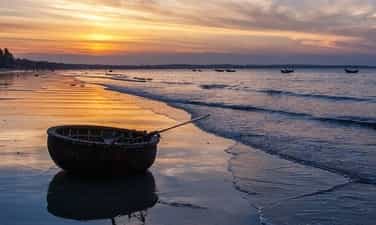
Mo O Beach
Mo O beach is located near the My Thanh River mouth, about 43km from the center of Soc Trang city. The name of Mo O originated from the shape of the beach like a beak facing the East Sea. The Mo O beach area has more than 260 hectares of natural forests, which are home to many birds, reptiles and seafood. Mo O Sea attracts tourists by the pristine and rustic beauty of the Southwest region, with mangrove forests, long beaches and abundant seafood sources. With a location near the city center, Mo O beach is an ideal destination for a one -day Soc Trang tour with family and friends. Especially, in the spring (from 21 to March lunar calendar), you also have the opportunity to participate in the famous Nghinh Ong festival in Tran De district. So it is not suitable for swimming, but because of this, the locals have invented a unique job that is sliding, also known as fish skateboarding. 'Hope' is a thin plank of about 0.3 meters wide and manufactured by people to easily move on the muddy and mudflats to catch aquatic products. The 'sliding' job is a unique profession that has existed for hundreds of years in the coastal provinces of the Southwest. It is not known when it exists and it is not possible to explain why it is called the 'sliding' job, but often says this name may come from the movement of the skateboarder. Visiting Mo O beach, you also have the opportunity to admire the special natural beauty with diverse mangrove ecosystems. From the entrance, you will walk on the bridge across the mangrove forest leading to the mudflats. This is also the favorite check-in point of many people when visiting Mo O beach. In addition to taking photos, you can rent a canoe to visit the mangroves and experience fishing with the locals. After having fun, you also have the opportunity to enjoy the rustic dishes made from famous seafood in Mo O beaches such as cobia, brown fish, bacon, fresh squid, crab, crab, Crab ... In addition, if you have time, you can combine to visit the Ho Buo eco -tourism area and Quan Am Pagoda on the Southern Highway, the Hau River Highway, about 20 minutes from the beach. Not as sparkling as Ha Tien or Phu Quoc beach, Mo O sea still attracts visitors by the gentle natural beauty, rich seafood source and unique culture. This is a destination not to be missed in your Soc Trang travel guide.
Can Tho
6704 view


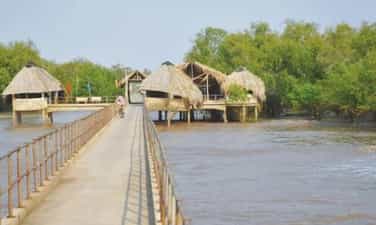
Lake Be Beach
Ho beach is located in Vinh Hai commune, Vinh Chau town, 20km from Vinh Chau town and about 45km from Soc Trang city. Beach Lake has a relatively convenient traffic position because it is located next to the Southern Highway River Hau (Highway 91B), which helps visitors can move easily from Can Tho city, Bac Lieu province or by provincial road 934 , 935 if traveling from Soc Trang city. In addition, in the future, the key transport works of the province such as Chau Doc - Can Tho - Soc Trang and Dai Ngai highway will create conditions to attract inter -regional tourists to the tank lake. The beach of the lake is naturally blessed with pristine, rustic beauty with smooth sand and murmuring waves beside the immense, blue protective forest. The tank lake has been formed due to the invasion of seawater for many years. There is a concave land that looks like a large lake that is slowly accrued along the water up and down to the tide. Along 72km of coastline of Soc Trang province, there is rare place as beautiful as a tank lake because most of the coastline is black sand, mud beach or alluvial mud due to the estuaries of Hau River. Due to the influence of Hau river alluvium, the beach water of the tank also has a relatively clear differentiation. In the rainy season, the Hau River has a large amount of alluvial from the upstream that will cause the sea lake to be slightly tinted with alluvium, whereas in the dry season, the beach will be clearer and green. Coming to Lake, visitors will be immersed in the pristine, rustic natural scenery with smooth long sand, enjoying each cool sea breeze. Visitors can participate such as walking along the beach, participating in sports games, camping ...; In particular, this place is very suitable for organizing outdoor picnics, "team building" activities for agencies, units, businesses and schools. In addition, Beach Beach also has many species of seafood such as crabs, blood cockles, clams, ... visitors can enjoy at the shops right next to the beach at affordable prices. Moreover, Ho Bu beach is quite close to other famous tourist attractions in Vinh Chau town such as Quan Yin Pagoda, the ancient house Wind, coastal protection forests, agricultural areas specializing in purple onion, garlic with clean production technology ... so it is very convenient in promoting tourism development, tour development, tourism routes in town Commune or inter -district routes to diversify tourism products, retain tourists longer to promote accommodation, food and shopping services. In addition, an important factor in tourism exploitation and development is that Vinh Chau town has a long -standing community and cultural interference of the three Kinh, Hoa and Khmer ethnic groups with various types of culture and turmeric. Special techniques. The friendliness and hospitality of the local people is also a highlight in tourism development at the lake in particular and Vinh Chau town in general.
Can Tho
6394 view


Grand Park
Grand Park Park is an entertainment paradise located in Vinhomes Grand Park, Ho Chi Minh City. This is an ideal entertainment place, bearing the impression of famous theme parks such as Vinwonders Phu Quoc and Vinwonders Nha Trang. Grand Park members attract visitors by a variety of fun activities, combined with comedy Mixing between natural landscapes and modern entertainment experience. The park is designed with many attractive theme areas, meeting the needs of playing and relaxing for all ages. With a convenient location in the busy urban area, the play area of District 9 Grand Park will become a destination not to be missed for families and friends. is a special highlight at Grand Park Park. This area is designed with a combination of modern water slides, suitable for all subjects, from young children to thrilling lovers. Coming to this District 9 Water Park, you can experience the feeling of free falling with excitement with the game of super speed falling from a height of 13m or trying with a giant spiral slide that dragon rolls up to 119m long. Couples, groups of friends can experience the dramatic Ocean Monster game on a float of 2 to 4 people from an altitude of more than 20m ... Children will have their own world in the magic island, with cluster 9 Diverse slides spread over an area of 1680m². Older young people can challenge themselves at 4 colorful slides, or have fun with soft to fierce waves in the tsunami. The dreamy garden at Grand Park opened the colorful fairy world, with a highlight of 15 giant light trees up to 20m high, inspired by Gardens by the Bay (Singapore). Not only gives children a modern and attractive play space, this area also opens up opportunities for adults to rediscover sweet childhood memories. Interesting games such as spring cable -stayed ferris wheel, wooden ferris wheel of fairy tale, or experiencing adventure train to see the panoramic view of Grand Park. Adults can conquer thrilling games with a "formidable" challenge level such as: The exciting adventure on the 196m long track; Super -speed rotating disc - Achilles shield or the world reversed ... About many interesting gifts. Bien Ho at Grand Park Park brings a relaxing space full of dreaming, helping visitors temporarily forget the chaos of life. Walking on the fine white sand, under the rows of green coconut, visitors will enjoy the fresh air, feel the rare peace in the heart of the busy Saigon. In addition, visitors can also participate in water sports activities such as kayaking to join family and friends to enjoy the scenery and enjoy happy and relaxed moments. The attraction of the Grand Park Park also comes from the most impressive and impressive series of festivals to mention Fantasy on Ice. The festival brings an interesting skiing experience with a 2 -lane ski, and snow games created by the artificial snow -making technology of the Winter Olympics.
Ho Chi Minh City
6548 view


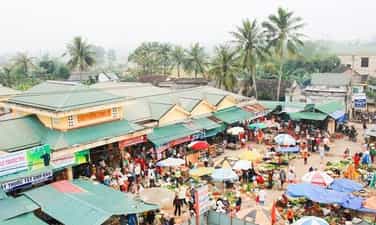
Cam Lo market
Since the 17th century when it was newly built, the Quang Tri Cam Cam fair has been considered as a leading trade and trade center. The famous market of the whole Thuan Hoa area and each session 5 days apart, starting from the 3rd of every month. From all regions flocked. Is the location that foreign traders choose to anchor to exchange busy goods. And in particular, in the 45-50s of the 20th century, this was an important revolutionary activity. Experiencing many ups and downs of history and time, nowadays, Cam Lo Foundation has no images like the old days. But it is always a place to store and promote the unique cultural features of a meaningful fair. : melon, tomato, fish sauce, salt, betel nut, ... of local people. Or the rich agricultural products and items brought from different regions flock to the busy trade. Today's life is much more modern, shopping habits have gradually changed with shops and shopping centers. But for the people of Quang Tri as well as some surrounding areas, Cam Lo's fair has become a culture that is hard to abandon. From the old people to the new children, everyone has a lot of memories with this place. Familiar with the market, the trader is eager to bring the goods from the previous night to keep up. People who go away just hope to have free time to go home quickly to keep up with the fair. Coming to Quang Tri Cam Cam fair with eagerness to live in a simple but special space and leave with smiles always on the lips. Culture is considered as flesh and blood, not only circulated in folk but also in Vietnamese history books. People or tourists come to this fair not only to walk around to visit the landscape of the countryside, with sellers bustling. But also to learn the beauty of folk culture with bold hometown and interact with friends. In the past, people who went to Cam Lo fair often were often busy dresses, but now there are no more images. But the monthly fair or especially at the end of the year, people everywhere are still dressed beautifully to visit the special market with the air like this festival. The session in Cam Lo once witnessed ups and downs in the history of this heroic land. Therefore, whether it is busy or famous as before or not, it still retains special beauty and meaning. Meeting the markets in Cam Lo and going to the market is not only a habit but also as a reminder of the values that his father has worked hard. Of a place that once resounded for a while, the place where the memories were never forgotten by the people here. The fair days in Cam Lo brings joy to everyone, from all roads of goods are brought back busy with the desire to expensive goods. Create jobs for traders, as well as reliable shopping places for people. Possessing a prime location close to the Ho Chi Minh trail. The development of a fair in Cam Lo in the future to become a trade and transit spot of international goods also brings a lot of great benefits to the local people. Cam Lo Fair was developed to help Quang Tri as well as the central provinces to thoroughly exploit the production strengths of the region, creating many trading products with Laos or Thailand. Help improve the life, improve and develop the economy of the whole region. On the other hand, this fair in Quang Tri also contributes to stimulating other service industries to develop. At the same time, promote culture, tourism and history to traders, tourists to visit and buy and sell at the fair.
Quang Tri
5723 view


SunWorld tourist area on Ba Den mountain
Sun World Ba Den Mountain is located right on Ba Den Mountain in Ninh Son Ward, northeast of the center of Tay Ninh city. Featured with spectacular natural scenery, Ba Den Tay Ninh Mountain was chosen as a place to build the Sun World Ba Den Mountain cable car system. With the height of up to 986m, Ba Den Mountain is the highest mountain in the Southeast. In addition to the beautiful natural landscape, many sacred Buddhist spiritual works, the cool temperature on the mountain is also the main factor that attracts a large number of visitors to pilgrimage and scenes. The spiritual pagoda is located in the middle of the mountainside, reaching an altitude of about 350m. This large population includes many unique spiritual works, imbued with regional culture. Including: Linh Son Hoa Pagoda, Quan Am Pagoda, Linh Son Phuoc Trung Pagoda (Trung Pagoda), Linh Son Long Chau Pagoda (Hang Pagoda), Linh Son Tien Thach Temple (Ba Pagoda), cave Kim Quang, Dai Hong Chung, Shakyamuni Buddha statue, ... These buildings have been existed since ancient times, which has been under the impact of the flow of time and the destruction of the war but has been restored. In the process of building Sun World Ba Den Mountain. Not only possessing rare beautiful scenery, this attraction also plays a huge role in the religious life of the people. Every Tet holiday or big holidays, the pagoda she welcomes millions of tourists to come to Van Canh and prayed. Inside the highest bronze Buddha Buddha statue in Vietnam at the top is the display area of Buddhist art works including a series of statues, paintings of gods and Buddha being adapted from the real work of the real work. Famous temples in the country and around the world. Some of the most famous works are: the statue of the Venerable Ton Da Da, Quan Am Tong Tu, Bodhisattva Pho Hien, Bodhisattva Van Man, Buddha Goguryeo, Quan Am Nam Hai Potalaka, Bodhisattva Senju Kannon, Buddha Duoc Master, ... The 4th floor on the top is a solemn and quiet space used to display valuable Buddha relics. Sun World Ba Den Mountain with such a monumental cable car system should be equivalent to it as an extremely massive row of the station. The Sun World Ba Den cable car has a total of 3 stations: Ba Den station, Hang pagoda station and Van Son station. These are extremely attractive check -in places with the "unique" background. The peak of Ba Den mountain reached a height of 986m, so it was extremely ideal for the virtual living assembly to hunt clouds together. You will not need to go to Dalat, Ba Na or Fansipan in the North to see the beautiful cloudy scenery like a fairy. There are also many interesting activities for you to experience such as trekking long distances to conquer mountains, climbing, camping, ... Every New Year's occasion, hundreds of thousands of visitors to Sun World Ba Den mountain to visit and take photos at the colorful flower garden. Thanks to the cool weather on the mountain, the landscape experts have successfully planted many cold -country flowers such as tulips, hydrangea, lavender, ... Walking in the garden and square in the cold weather you will It seems like I am traveling to the West. After visiting the enjoyment of Ba Pagoda and Hang Pagoda, visit the impressive Buddhist exhibition, located at the top of Ba Den Mountain. With a total area of 4410 m2, the area inside the base of the Buddha image will definitely make you attract. This is the place where it is possible to show the unique 3D performance of the dome, briefly telling the concept of Buddhism in the universe, but also admire the 38 Buddha statues with the style of Vietnam Buddhism in the eighteenth century.
Tay Ninh
5071 view


