Tourist destination

Phap Hoa Pagoda
It is a spiritual destination with a long history and peaceful, ancient beauty; Dak Nong Phap Hoa Pagoda is an attractive spiritual tourist destination for tourists from all over. Dak Nong is not only famous for beautiful natural landscapes such as Ta Dung Lake, beautiful waterfalls and vast forests, but this place also has attractive spiritual destinations. The most prominent of the spiritual destinations in this Central Highlands mountain town is Phap Hoa Pagoda in Dak Nong. This beautiful temple is a peaceful place for wandering souls who want to find a spiritual destination to temporarily escape the hustle and bustle of city life. Phap Hoa Pagoda in Dak Nong is located on Hung Vuong Street, Quang Thanh commune, Gia Nghia city. The pagoda belongs to the Northern Buddhism sect. Not only is this a place of religious activities that plays an important role in the spiritual life of the people of the mountain town of Dak Nong, but this place is becoming an attractive check-in point that increasingly attracts young people to come and worship. and visit the temple. Phap Hoa Pagoda Dak Nong was first built in 1959 with the then name of Buddha Recitation Pagoda. However, not long after its construction, in the same year, on the occasion of the Vu Lan festival, the pagoda was severely damaged by the Ngo Dinh Diem government during the persecution of Buddhists who were going to worship at the pagoda, causing this place to be devastated. very heavy. In 1960, Phap Hoa Pagoda was rebuilt by Master Tri Huy with a very primitive architecture, roofed with corrugated iron and still named Quang Duc Buddhist Recitation Hall, which was the name of Quang Duc province at that time. In 1969, Venerable Hoa Nghiem became the abbot at the pagoda and changed its name to Phap Hoa Pagoda until today. After 1975, when Venerable Hoa Nghiem returned to his hometown, the temple did not have an abbot. However, people around the area still often come back to watch, chant and worship. In 2000, the pagoda had a new abbot, Venerable Thich Quang Hien. The new abbot, along with local Buddhists, rebuilt the pagoda to have its present spacious appearance. Phap Hoa Pagoda Dak Nong has the majestic appearance of traditional Vietnamese pagodas with a curved red roof with dragon motifs. The pagoda is located on a high hill, with the main gate facing Southeast, in front of a view of a valley. This pagoda has areas such as the 160m2 main hall, a 5-storey circular tower, and a monk. The temple, the Avalokiteśvara, the three-entrance gate, the Lumbini garden, the large hall... This pagoda in Dak Nong is specifically designed according to the architectural style of Hue garden houses combined with the architecture of stilt houses in the West. Original. That's why the space here creates a nostalgic and peaceful feeling. In the temple grounds, right next to the row of ancient phoenix trees, there is a large statue of Avalokiteśvara Bodhisattva, in addition there are statues of Sakyamuni Buddha, statues of Maitreya Bodhisattva, Chuan De Bodhisattva, Ksitigarbha Bodhisattva, Dharma Protector and Tieu Dien. , miniature landscapes and decorative plants are arranged very harmoniously and beautifully. Traveling to Dak Nong and visiting Phap Hoa Pagoda, besides enjoying the fresh air and feeling of peace and quiet, visitors can also visit the pagoda and take check-in photos. In particular, looking down from the temple grounds, visitors will see a beautiful landscape with undulating hills and green trees, very typical of the nature of the mountain town. Having the opportunity to come to Phap Hoa Pagoda in Dak Nong, visitors will certainly be fascinated by the extremely peaceful space and impressive nostalgic beauty of this place. Don't forget to immediately note this attractive destination in your mountain town travel diary.
Lam Dong
5699 view


Vi Ro Ngheo community tourism village
Vi Ro Ngheo community tourism village (Dak Tang commune, Kon Plong district, Kon Tum province) of the Mo Nam people (a branch of the Xo Dang ethnic group) is located in an area surrounded by primeval forests on all four sides, with many Unique characteristics and unique cultural values... are an impressive destination for domestic and foreign tourists. From Mang Den town, Kon Plong district, go northwest about 40 km along provincial road 676 to Mang But bridge, then turn onto the inter-village road for another 7.5 km to reach Vi Ro Ngheo village, a small village hidden in the shadows. amidst wild mountains and forests and separate from other villages. Vi Ro Ngheo in Xo Dang language means a land with a cold climate, this is also the name of a stream flowing through the village. Vi Ro Theo village currently has 63 households, more than 300 people, 100% of whom are Xo Dang ethnic people. In the middle of the village there is a spacious communal house, about 20 meters high. This is where traditional folk festivals take place, where traditional artifacts are kept: Gongs, gongs, drums, weapons... and is also where welcoming nobles to visit the village. People here see the communal house as a symbol of culture and the soul of the village, demonstrating the connection between the community and between the villagers and the gods. Around the communal house are lovely small wooden houses, along the village and in the fields there are rice warehouses built by people to store rice after each harvest. The special thing that only exists in Vi Ro Theo that other villages do not have is that almost every house grows orchids. The orchids here are mainly brought by people from distant forests and planted in bushes placed around the house, fence or in front of the gate. Up to now, Vi Ro Ngheo villagers have collected, propagated and planted about 1,000 pots of Cymbidium and orchids; Organized to raise and preserve 5 hills of orchids and myrtle flowers, purchased around the village. When the afternoon shadow covers the mountains and hills, the pink and yellow cymbidium flowers give way to the blooming myrtle forest, dyeing the whole forest purple. For many generations, villagers have joined hands to protect every tree, orchid, and myrtle tree on Ngoc Ruong's heavenly gate. Each house, stream, and old forest near the village are preserved, protected, and cared for by the people to add to the village's scenery. Although life is still difficult, people in the village are always conscious of keeping the surrounding environment clean and beautiful. At every fork and intersection in the village, there are trash baskets made from large bamboo trees. People here do not throw trash into the forest, rivers, streams, or roads. Every house has a place to store daily household trash. Vi Ro Theo has a gong and sinus dance team with 32 artisans, 1 set of traditional gongs and 1 set of improved gongs. Artisans have been practicing and passing on their craft to each other for many generations. Like many villages in the Central Highlands, gongs and sinus dances are indispensable in festivals and traditional activities here. The people of Vi Ro Ngheo village still keep many traditional festivals such as: Water trough making ceremony, new rice celebration, buffalo barn building ceremony, new communal house, rice sowing ceremony... The villagers' cuisine is vegetables. forests and self-produced foods such as chickens, goats, pigs, sticky rice, upland rice, noodles, ginseng and self-caught fish, crabs and snails from streams, and self-made wine. The village's traditional occupations are bamboo and rattan weaving and brocade weaving.
Quang Ngai
6730 view


Mang Ri terraced fields
Mang Ri terraced fields is one of the ideal attractions in the journey to explore Kon Tum. This place carries the rich beauty, simple life and labor beauty of the highland people, promising to be a memorable mark on your trip to Kon Tum. Mang Ri terraced fields are located at an altitude of 1,200m to 1,500m above sea level. The terrain here is also very special in the form of a basin, all four sides are surrounded by Ngoc Linh range. Thanks to such unique terrain and topography, the Mang Ri Terraces area is suitable for developing wet rice and rare medicinal herbs, especially Ngoc Linh Ginseng. To fully admire the beauty of the golden season of Mang Ri Terraced Fields, you should come to Kon Tum in late May, early June and October. This is the season of ripe rice, not only that, there is also dew in the early mornings. Thick fog, dreamy beauty captivates many hearts. However, the period from when the rice is ripe to when people finish harvesting is very short, usually only about one to two weeks before the entire field is harvested. Besides, the harvest time is not fixed, depending on the year, it will change depending on the weather and people's planting conditions. Therefore, you should learn carefully about the golden season in Mang Ri Rice Terraces, follow articles about Kon Tum travel experiences, and know when the rice blooms so you can somewhat predict when the rice will be ripe. Plan your trip. In addition, if you do not go to Mang Ri Terraced Fields in the yellow season, the green season is also an ideal choice. After about 30 to 45 days of sowing, the young seedling has developed into a mature rice plant, preparing to flower. At this time, the rice stalks and rice leaves are large enough, creating a lush green color that covers the terraced fields. Unlike the rich beauty of the golden season, at this time the fields will be immersed in beautiful greenness, full of vitality. When the rice blooms, the scent of young rice wafting in the air makes you even more captivated. Since ancient times, people living in Mang Ri in particular and Kon Tum in general have known how to take advantage of underground water sources from within. flowing mountains. From there, they can conveniently farm and grow food. To adapt to the terrain here, people have built terraced fields and grown two crops a year, thanks to which they have had a prosperous life for many centuries. Mang Ri terraced fields have a terrain that gradually slopes along the hillside, so when you stand from above and look down, you will see small paths located symmetrically, forming a very beautiful, completely different leaf vein shape. compared to terraced fields in other places. When the rice season comes, people here will go to the fields together to harvest. Households harvest rice manually, using sickles and drying it with human power. The small bodies on the vast fields, the life of selling one's back to the earth and selling one's face to the sky, drops of sweat pouring down on terraced fields in the sweltering midday sun. Following the people to the village, you will enter simple houses and explore the ancient architecture of the Xo Dang people. Although their lives are still very difficult and lack many things, the people here are always very friendly and enthusiastic with tourist groups. If you are unlucky enough to come to Mang Ri Rice Terraces when people have just finished harvesting, and there is no longer a golden season for you to check-in and admire, there are still many interesting things waiting for you to experience. One of them is the Kon Tum New Rice Celebration Festival of the Xo Dang community. After finishing the harvest, the people in the village will organize a festival together, offering newly harvested rice grains with sincerity and gratitude to heaven, earth, and gods for giving them favorable weather and wind in the village. warm and full. You can immerse yourself in the jubilant festival atmosphere, learn about unique cultural features, listen to soothing folk melodies, watch Xo Dang girls dance the traditional sinus dance, etc. These experiences will certainly be unforgettable memories in your journey to explore the land of Kon Tum. Mang Ri terraced fields attract travel enthusiasts because of their unique, brilliant, and rich beauty. ecstatic people. When you come here during the time when the rice is ripe, you will admire the golden terraced fields glowing in the sunlight, stretching to the horizon. The yellow color of ripe rice stands out against the green background of the mountains and forests, making this land even more poetic.
Quang Ngai
7032 view


Our Lady of Mang Den pilgrimage center
In addition to Pa Sy waterfall, wooden statue garden... when traveling to Mang Den, tourists should not forget to visit the pilgrimage center of Our Lady of Mang Den. Coming here, in addition to admiring the sacred and mysterious statue of the Virgin Mary, visitors can also find peace in their souls and pray for good things. Located in Mang Den, Dak Long, Kon Plong district, Our Lady of Mang Den is currently a famous sacred spiritual tourist destination in Kon Tum province. Besides, the statue of Our Lady of Fatima at Mang Den is located next to Highway 24, about 53km northeast of Kon Tum City and about 100km from Pleiku City, so it is not too difficult for tourists to get here. Also known by another name, Our Lady with One Hand, this is definitely an ideal pilgrimage destination for people and tourists from all over the world when coming to Kon Tum. According to information from the Bishop of Kon Tum and a report by Father Giuse Nguyen Minh Kong, this statue was carved in the image of Our Lady of Fatima and was donated by Father Thomas Le Thanh Anh. Father Kong brought this statue to Mang Den outpost by helicopter (today there are still clear traces of a field airport, about 2 km from the statue's location). The statue was built on a simple pedestal in mid-1971. However, in 1974, due to firepower of the Vietnam War, the Mang Den outpost was destroyed, leading to the statue being partially damaged. and was left deep in the jungle. Having the opportunity to visit this location, visitors certainly cannot miss admiring and learning about the mystery and sacredness of the statue of the Virgin Mary. The mystery about the statue of the Virgin Mary is that after the war, the statue lost its arms. Even though it was rebuilt many times by Catholic dignitaries and sculptors, only a few days later the statue returned to having no arms. According to local people, the armless statue of the Virgin Mary is made from reinforced concrete and is about 1 meter tall. The statue is placed on a pedestal made from cement combined with natural pebbles. The body of the statue resembles the shape of the statue of Our Lady of Fatima, but the head has been restored to resemble the shape of women in the Central Highlands of Vietnam. In particular, the amputated arm of the statue shows extraordinary sacredness that visitors cannot find at any other Marian center. Some parishioners believe that the image of Our Lady with no arms can be associated with the image of Our Lady protecting unfortunate children suffering from diseases such as HIV/AIDS... Our Lady of Mang Den is one of the pilgrimage destinations. of many Catholics when coming to Kon Tum. This is where people come to pray, seek protection, peace, pray for fortune, pray for children... Amidst the vast mountain and forest landscape, there are many flowers planted around and signs saying "Thanks to Our Lady". ” brought by people makes this place more sacred and mysterious. As a familiar cloud hunting location for young people, Virgin Mary Hill will certainly bring beautiful images of clouds to visitors. From the center of Mang Den town, visitors can travel by motorbike, car... to reach Notre Dame Hill with a travel time of only about 5 to 15 minutes. The Mang Den cloud hunting journey will help visitors admire the poetic beauty like a fairyland when the clouds appear very close to the location where you are standing. Enjoying this beautiful scenery will definitely be an unforgettable experience for visitors. Every year on December 8 and 9, the Virgin Mary Black Bamboo Festival takes place, attracting many people and tourists from all over the world to attend. The program of the feast of Our Lady of the Black Crown will take place a number of outstanding activities such as the procession of the Virgin Mary, Mass for those who serve, Solemn Mass... This festival is not only an opportunity for the Catholic community to participate. spiritual rituals but also an opportunity for visitors to pray for peace as well as explore local culture.
Quang Ngai
7107 view


Reu Island
Reu Island in Quang Ninh is considered a wild and mysterious "muse". The island is little known but is a place that promises to bring you many memorable discovery experiences. Reu Island is also known as Monkey Island because this is the place for raising and experimenting monkeys of our country's Ministry of Health. Besides, this is also the convergence of many rare species of birds and animals. Located in Bai Chay ward, Cam Pha city, this island is only about 600m from Bai Chay, which possesses attractive beauty with clear blue water and a series of small surrounding islands. In the past, young people often invited each other to Reu Island to organize teambuilding activities or camp on the beach. Other tourist attractions of this island in Quang Ninh include: beautiful natural landscapes, clear blue beaches and many interesting activities such as: fishing, diving to see coral,... You can also You can enjoy fresh seafood here. If you want to visit this beautiful island, you can visit any time of the year. Each season brings its own charm, but the summer period from May to October is still the most attractive. Because May is a tourism stimulus month, there will be many incentives and discounts, making traveling economical while still enjoying many cool experiences. From June onwards, people often choose to come to avoid the heat and enjoy the cool air. Feel free to play and swim in the cool water. However, there are still some rainy times, you should check the weather forecast in advance to avoid weather interrupting your trip. One of the most fascinating experiences when coming here is seeing and playing with adorable monkeys. Currently, there are more than 1,000 short-tailed, yellow-haired monkeys on the island. They are well cared for so they are very friendly and have very funny gestures and actions. Quang Ninh travel experience remember to take pictures, film, feed the monkeys and save lovely memories on Reu island. Reu Island is famous for its fine white sand beach, blue sea and picturesque natural landscape. A charming destination with wild beauty, rich culture and rustic sea life. The first attraction that you can experience here is admiring the scenery of the sea and sky. The island also has many natural beaches, which are interesting choices for those who want to enjoy the joy of swimming amidst the sun and wind. In addition to experiencing beautiful nature, you can also see the simple life of the people here. In the distance are rustic boats floating on the sea. Not only that, exploring the cuisine here is also very interesting with fresh seafood dishes and unique culinary styles. If you love natural beauty and want to experience the daily life of coastal people, Reu Island in Quang Ninh will not disappoint you. If you are an adventure lover, participating in water sports will give you an unforgettable experience. With rich marine resources, scuba diving is an interesting experience on Reu Island. Visitors can explore the underground beauty of the ocean and admire coral meadows and a variety of marine species. One of the other interesting experiences in Quang Ninh on Reu Island is SUP boating. It is possible to rent a SUP boat and explore the bays and caves inside the island. This is the best way to enjoy the unique landscape and winding through ravines and play spots. There are also many hotels here for you to choose from to rest after exciting activities. You will definitely have a wonderful vacation here! Reu Island has pristine and quiet beaches, making it an ideal place to camp and experience outdoor life. Visitors can fully equip camping equipment and enjoy the quiet, fresh green space. When coming to Reu Island, you cannot miss the opportunity to enjoy fresh seafood. You can enjoy unique specialties such as king crab, lobster and fresh fish dishes,... To have interesting experiences with the sea and green nature, Reu Island in Quang Ninh is always the destination you are looking forward to. Explore this pristine island for more interesting activities when coming to the beautiful land of Mining.
Quang Ninh
4586 view


Dinosaur spine milestone 1305 - Binh Lieu Quang Ninh
Binh Lieu is considered a "paradise of landmarks". Among them, landmark 1305 is one of the destinations tourists should not miss when traveling to Binh Lieu. The road to milestone 1305 is quite winding and has many steps. But in return, you will be overwhelmed by the majestic natural scenery. You will not be proud when conquering the legendary 1305 mark. Milestone 1305 is 1305m high, located on the western border patrol section of Hoanh Mo commune, Binh Lieu district, Quang Ninh. This place is about 270km from Hanoi capital. Milestone 1305 is considered one of the highest landmarks in Quang Ninh province. Visitors can get to milestone 1305 by motorbike or car. From Binh Lieu town to the dinosaur's spine - landmark 1305, visitors can choose between two routes. The first route, you will go from Binh Lieu town on National Highway 18C, about 3 - 4km long, in Luc Hon commune. Next, you turn right into Ngan Chuong village, then turn at marker 68 and travel about 23km to the parking lot. This is the stopping point before continuing the journey to mark 1305. The second route is from Binh Lieu town to Hoanh Mo border gate. After that, visitors will turn left across Hai Nac bridge and continue to turn right, driving about more than 20km to reach the stop before starting the trip to mark 1305. In each season of the year, this road will cover I have a new shirt. When spring comes, the entire winding road becomes brilliant with new vitality, everywhere filled with the green color of budding flowers and grass. When summer comes, visitors will admire a cool green dinosaur spine, with pine forests, cinnamon forests and anise forests planted by local people. Fall is when dinosaur spines and landmark 1305 are most beautiful. The hills and mountains will be covered with the pure white color of reed flowers. This is also the time when landmark 1305 attracts the most tourists. However, for some people, winter is also the ideal time to explore the landmark. Because sometimes, this place will have ice and snow, bringing rare and impressive experiences. On the journey to conquer milestone 1305, visitors will pass through the border patrol road winding like a silk strip, surrounded by rolling mountains. You will be overwhelmed by the green color of the vast forests like a giant majestic natural painting. This road is quite long, steep and has many sharp turns, so you should prepare good health and always be careful while traveling. To get to milestone 1305, you will have to go through a steep, winding road on the top of the mountain. From the foot of the slope, it will take you about 1.5 - 2 hours to reach the top, where the legendary milestone is located. With an altitude of 1305m, more than 2000 steps and many steep sections, this journey will challenge your endurance and flexibility. After passing this path that resembles a dinosaur's spine, you will immediately forget your fatigue because of the majestic natural picture right before your eyes. In the fall, this place will be filled with reeds, covering a large mountainous area with white. At that time, visitors will feel that the recent hardships are completely worth it. Milestone 1305 is sturdy and proud between two mountain slopes, made from granite. On the milestone are engraved the National Emblems of both countries along with the number and year of installation. When you touch the milestone directly, you will feel a surge of great love for the Fatherland. The road to milestone 1305 is also likened to the road leading to heaven. On the way to the top, you will have the opportunity to admire the majestic, green mountain landscape on both sides of the mountain. When you reach mark 1305, you will have a panoramic view of the border region and the winding, fragile road ahead. If you have the opportunity to visit Binh Lieu, you should not miss the opportunity to conquer the dinosaur spine and directly touch milestone 1305. Surely, this will be an impressive and unforgettable experience in your journey of discovery. your.
Quang Ninh
4851 view


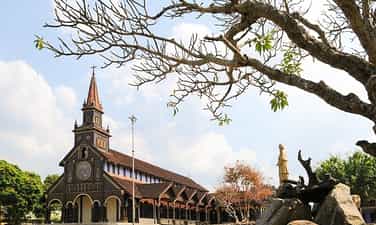
Kon Tum wooden church
On the tourist map of the Central Highlands provinces, there is an address that few tourists miss, which is Kon Tum Cathedral (No. 13 Nguyen Hue Street, Kon Tum City), an ancient church more than 100 years old. made of beautiful wood, worthy of being ranked among the masterpieces of wooden Catholic architectural works in Vietnam and Southeast Asia. Since the mid-19th century, following in the footsteps of Western missionaries, Catholicism began to be present in the Central Highlands, including Kon Tum. In the early days, worship facilities in this country were mostly small-scale, made of wood, thatch, bamboo, leaves... Only later, when the number of parishioners increased, did people consider built large churches, including Kon Tum wooden church. According to historical sources, the Kon Tum wooden church was presided over by Father Joseph Décrouille, in charge of the Kon Tum parish, and started construction in mid-March 1913 and was completed in early 1918. The church's construction process spanned many years. through many hardships, even stagnating at times due to the time World War I broke out. Previously, it took people up to 3 years to prepare, starting with hiring skilled workers to go into the forest to cut wood and then using elephants to pull it back, then sending people back to areas such as Quang Nam, Quang Ngai, and Binh Dinh. ... find good workers to build. The reason it is called a wooden church is because the main material used to build this church is red wood, a precious wood abundant in the mountains and forests of the Central Highlands. All structures from columns, rafters, to floors are made of wood and glued together with tenons without using nails. The ceiling, walls and partitions are plastered with a straw-mixed soil material in the traditional style of Central Vietnamese houses, with absolutely no reinforced concrete or lime mortar. Explaining this, in a report sent to the Paris Missionary Society in 1913, right at the beginning of construction of the church, the Apostolic Vicar Bishop of Dong Dang Trong Grangeon wrote as follows: "Stone cannot be used." Like bricks for construction, only wood can be built with high quality and the architect said that this church in Ba Na has the appearance of a cathedral. Overall, the church is designed in Roman architectural style combined with the stilt house style of the indigenous Ba Na people. This is considered the pinnacle of the combination of Western culture and national identity of the Central Highlands region. Looking from the outside, the building is a tall, majestic building that stands out with the dark and timeless colors of wood and tiles. The front of the church has a 4-storey bell tower 24m high in the middle, creating harmony and balance for the entire building. The two-winged corridor is wide and long, the roofs are high and sloping like the communal roofs of the Ba Na people, firmly supported by round wooden columns. Inside the cathedral seems to be a completely different world with its long, soaring, airy and light-filled dome structure, making viewers truly overwhelmed by its majestic and splendid beauty. The 12m high columns placed firmly on stone bases rise up to support the entire central dome and the ceiling of the two-winged hallway, not only creating the grandeur of the building but also creating a feeling of open space on all sides. . In particular, the arched wooden truss system and the small columns above are delicately and seamlessly connected in a graceful and soft way, making the upper floor of the cathedral even more magnificent and splendid. On both sides, through natural light, stained glass windows designed in the vitraux style with drawings of biblical classics appear shimmering brightly. It can be said that every detail of the church's design, carving, decoration, color combination... is extremely sophisticated, proving the masterful skills of ancient artisans. There is an extremely interesting detail that shows that the artisans at that time were extremely skillful and sophisticated when placing a very large circular stained glass painting in the center of the cathedral, right above the main door. , facing the sanctuary to both let in light and decorate as a symbol of the sun shining directly inside. If you stand outside, it is difficult to imagine what the ancients drew on that glass painting. But inside, through the reflection of light, the painting appears bright and beautiful with images of the lively life of the ancient Central Highlands people with village scenes, communal houses, elephants pulling wood, rivers and streams. , majestic grandeur... Talking about the beauty of this cathedral, Bishop Jeanningros, who inaugurated the Kon Tum wooden church, wrote in a letter to the Paris Missionary Association in 1918: "This is a spacious and valuable building, was built Built with famous carpentry (precious wood - PV)... to replace the old thatched bamboo church that burned down by fire 7 years ago with this beautiful cathedral. After more than 100 years of wind and rain, the house Kon Tum wooden altar remains durable over time and seems to be more and more beautiful because of its rare antiquity and splendor. Today, coming to the mountain town of Kon Tum and visiting Kon Tum wooden church, visitors not only learn more about the history of the cathedral of Kon Tum Diocese, one of 27 Roman Catholic dioceses in Vietnam, and Not only is it the oldest diocese in the Central Highlands, but you can also admire one of the wooden masterpieces of Catholic architecture in Vietnam as well as Southeast Asia.
Quang Ngai
7636 view


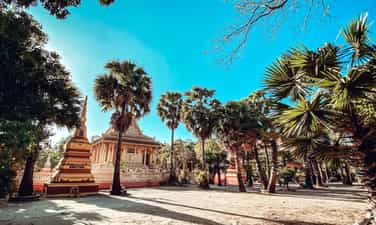
KhLeang Pagoda
Soc Trang, with its unique characteristics of having many ethnic groups living together, has created a diverse culture. Traveling to Soc Trang, you will encounter many ancient and magnificent pagodas and temples, all with their own unique characteristics, including KhLeang Pagoda. KhLeang Pagoda is one of the ancient Khmer pagodas in the Mekong Delta region with a history of nearly 500 years. KhLeang Pagoda bears the mark of very sophisticated and sharp Khmer architecture, but still blends Vietnamese and Chinese styles in its decoration. KhLeang Pagoda is located on Ton Duc Thang Street, Group 5, Ward 6, Soc Trang City in a large campus, shaded by ancient trees, most of which are palm trees, a tree species associated with life and culture. culture of the Khmer ethnic people. Coming here, visitors can enjoy fresh air, learn about ancient Khmer documents, legends about the origin of Soc Trang and admire the unique architecture of the pagoda. The name of KhLeang Pagoda is associated with the legend of the place Soc Trang. If translated from Khmer, it means "land with warehouses", evoking a rich ancient land. According to bibliographies, the pagoda was built in 1533, at first it was just a thatched pagoda, but after many restorations, it was built with bricks and tiles. The current temple architecture such as the main hall and Sala were newly built in 1918. The temple has an architecture similar to Theravada Buddhist temples in Thailand and Cambodia. Khleang Pagoda's architectural complex includes: main hall, sala, monk's house, hall,... arranged harmoniously on high ground. An equally unique point is that most of these works in Khleang Pagoda are built in the traditional stilt house style of the ancient Khmer people of the South, each work is sculpted, carved with patterns and motifs. Sophisticated with bold features of ancient Khmer architecture. The main hall is located in the center and is divided into three steps, each about 1 meter high and surrounded by a brightly colored fence. The outer fence is large and then gradually smaller inside, the distance between the fences is very wide, the temple floor occupies a very large area. The edge of the roof has a winding dragon statue with a fan-shaped head and curved tail. Inside the main hall, there are wooden pillars, very large, smooth black, covered in gold with images about the Buddha's life and Buddhist activities. The ceiling and surroundings are decorated with many drawings of Buddha images, demonstrating the harmony between architecture and painting. The main hall has a 6.8 m high Buddha statue, the 2.7 m high body of the statue was cast in 1916. The statue is placed on a splendid lotus throne with an electric halo that sometimes hides and appears, creating a magical atmosphere. majestic, elegant and magical. Compared to many other Khmer pagodas in the province, Khleang Pagoda still retains the unique features of ancient Khmer architecture, which are very valuable in terms of art and aesthetics. Not only that, in addition to the main features of Khmer architectural patterns, the main hall also intertwines a number of images and decorative patterns of the Kinh people on the hammock door and of the Chinese on the pillars. Carp, dragon and Chinese characters are painted on the pillars. This reflects the cultural interference in the fields of decoration and art between three ethnic groups that have long lived in Soc Trang. What is interesting is the bookcase displayed in the main hall. If we look closely, we will see leaves with ancient Khmer characters on them. These are the contents of Buddhist scriptures written on leaves, carefully preserved by the temple. With symmetrical and harmonious architectural lines, associated with unique and diverse works of art, the main hall of KhLeang Pagoda is truly a work of special artistic value. With great historical and architectural values, on April 27, 1990, Khleang Pagoda was ranked by the Ministry of Culture, Information and Sports (now the Ministry of Culture, Sports and Tourism) as a national historical and cultural relic. , belongs to the type of architectural and artistic monument. This is an interesting Soc Trang tourist destination that you should not miss if you have the opportunity to visit this land. In addition to the function of serving religious needs, Khleang Pagoda is also a place to meet the traditional living needs of the Khmer ethnic people through annual festivals and other cultural activities. Many traditional rituals are solemnly held at the pagoda, including Chol Chnam Thmay (New Year's Ceremony), Sene Dol Ta (Grandparents' Worshiping Ceremony), Ooc - Om - Boc (Moon Worshiping Ceremony),...
Can Tho
5648 view


Peam Buol Thmay Pagoda
Peam Buol Thmay Pagoda is one of the destinations you cannot miss when you have the opportunity to travel to Soc Trang. This pagoda was built with unique architecture, extremely massive and plated with brilliant gold, no different from a magnificent palace. Peam Buol Thmay Pagoda is currently one of the most famous pagodas in Soc Trang province. Compared to other spiritual works of the Khmer people, the pagoda was built quite late, starting in 1964. Therefore, in the name of the new pagoda there is a word Thmay meaning new. In addition to the name Peam Buol Thmay in Khmer, this pagoda also has many other names such as: Nga Tu Pagoda because it is located next to the intersection of Sung Dinh provincial road. Lamp Pillar Pagoda because next to the pagoda there are many telecommunications towers serving the postal industry. Sung Dinh Pagoda is located on the land that was formerly Sung Dinh village (now merged into Soc Trang city). As for the official name, Peam Buol Thmay Pagoda, in Khmer means new intersection. Because Peam Buol Thmay Pagoda belongs to the Khmer people, it will certainly bear the typical architectural culture of this people. In 2016, the Sala section here was repaired to have a more complete appearance. By 2018, it was officially completed with a typical Thai temple style. This newness has caused many young people to come here to visit and take photos. In addition to the Sala, the remaining parts of the temple grounds such as the main hall and the monks' monastery still retain their original architecture with brick walls and simple corrugated iron roofs. The main hall is quite rustic. Compared to other temples in Soc Trang, Peam Buol Thmay is somewhat simpler. Besides, because it is located at a major road intersection, the pagoda's area is also limited, the surrounding campus is not too large and few trees are planted. All the highlights of Peam Buol Thmay Pagoda are in the architecture of Sala. The design uses white as the main color, the lines and decorative motifs are painted with gold emulsion. Sala consists of 2 floors, at the top is a large tower, creating an impression of majesty, magnificence and sacredness. If you have ever been to the Golden Temple country of Thailand, you will realize that this architectural style is extremely familiar. When you come to Peam Buol Thmay Pagoda, you not only feel the sacredness and solemnity but also have countless impressive "virtual living" corners to bring home millions of likes. Compared to traditional Khmer Buddhist architecture, Thai temple style is somewhat softer, gentler, and more elegant. The decorative colors are also quite simple but very prominent and extremely brilliant. Therefore, during the process of renovating Sala, Peam Buol Thmay Pagoda paid attention to every detail and line to create a space of harmonious interference between these two pagoda styles. If you pay close attention, you will see carved dragon motifs running along the hallway and on the roof, they are curving, lively and soft. Inside the Sala is also decorated quite simply, the altar with the Shakyamuni Buddha statue is also carved in Thai Buddhist style. All walls in the Sala are painted white, dotted with diamond-shaped geometric patterns, painted with a shimmering gold layer. It can be said that when you come to the Sala of Peam Buol Thmay Pagoda, you can take beautiful photos from every corner. The atmosphere here does not bring a heavy feeling of sacredness but is more about luxury and brilliance. Therefore, you can freely be creative with impressive camera angles, choose outfits that stand out a bit, and just click the camera to ensure a beautiful photo. In particular, the late afternoon and sunset moments here are extremely beautiful because the rose gold sunlight reflects on the golden emulsion patterns, creating a scene that looks like it came out of a painting. Therefore, you can consider coming here in the late afternoon to take more impressive photos. In addition, Khmer people also have many other traditional festivals often held at Peam Buol Thmay pagoda. So when you come here, you will have the opportunity to understand more about the unique cultural features of this ethnic community.
Can Tho
5605 view


Phia Po peak
Phia Po Lang Son peak is becoming a new destination for young people. If you are too bored with the stuffiness of the city, try packing your backpack and going to this land to feel the endless beauty of nature. Not as famous as Binh Lieu of Quang Ninh or Fansipan of Sa Pa, Phia Po Lang Son peak is still attractive enough to those who love to explore new things. This place contains many interesting things waiting for you to discover. Phia Po is located in a complex of 80 mountains in the Mau Son range, with an altitude of 1,541m above sea level. While Mau Son peak is called Mother Mountain, Phia Po is called Cha Mountain by local people because in the Tay language, Phia means mountain, Po means father. To find Phia Po, you can follow the address of Mau Son commune, Loc Binh district, Lang Son province. Phia Po Lang Son peak is far from the city center. Lang Son is nearly 30km, is a relatively new trekking destination in Lang Son, very suitable for those who love to move and learn new things. Phia Po is more than 180km from Hanoi City, travel time is about 4 hours. Tourists follow the Bac Giang - Lang Son highway, then enter Highway 1A, pass through Lang Son City, then turn right onto Highway 4B, continuing for nearly 30 kilometers to reach the foot of Phia Po mountain. Lang Son has the famous Mau Son peak, known to many tourists. In addition, this place also has the equally majestic Phia Po peak, which still retains its wild beauty and is not known to many people. Phia Po is called by many beautiful names such as "Mount Everest of Lang" or "roof of Lang Son", just hearing this is enough to excite mountain climbing enthusiasts. With an altitude of more than 1,500m, Lang Son tourists should spend 2 days and 1 night to conquer Phia Po peak and recuperate. According to Phia Po trekking experience, you should choose days with nice, sunny, no rain weather to climb the mountain. The ideal departure time is morning, about 7-8 o'clock. The Phia Po trekking journey includes 2 stages. The first stage of climbing the mountain is about 3.5km, from the foot of the mountain to the stopping point, camping, and overnight stay. The next stage moves to the highest peak. The total distance for 2 days of trekking is about 14 km. Visitors climbing Phia Po can also experience many different terrains. First is the old forest and dry stream. The path is narrow, with many tree roots and large rocks. The higher you go, the more beautiful the landscape. A vast steppe is welcoming climbers. It can be said that the beautiful and peaceful scenery is like Switzerland. The special thing is that each time, this grass field changes color. If in the summer, this place wears a blue color, full of vitality, then in the fall, it turns into magical burning grass like in the movies. On the coldest winter days, the withered grass is covered with clouds, making it look even more mysterious. Spring comes, bell flowers bloom, beautifying the nature of this place. Just saying this, you can already look forward to the beautiful landscape at the top of Phia Po Lang Son. Surrounding the steppe are towering mountains that stretch endlessly. A beautiful scene that is difficult to describe in words. In general, Phia Po Lang Son peak has beautiful grass slopes, you will go through maple leaf forest, primary forest, reed grass forest, bamboo forest and even rhododendron forest before reaching the top of the mountain. The spine of the Phia Po dinosaur is about 500m long, 2m wide, rising in the middle, with eye-catching abysses on both sides. Along this spine, there are also large horizontal rocks that look exactly like the vertebrae of a dinosaur. Not only is it a virtual living spot, but it is also a spot for tourists to hunt for the ocean of floating clouds in Lang Son. Not as long and dreamy as the spine of the Binh Lieu dinosaur (Quang Ninh), but the spine of the Phia Po dinosaur is enough to make you feel the vast and majestic beauty of the mother of creation. Standing in front of rolling mountains, people become very small. Before your eyes there is only nature, heaven and earth, white clouds, deep green forests... Passing through the forest, everything seems to light up. That is the peak of Phia Po Lang Son right before your eyes. The highest point of the peak is marked by a milestone erected by previous climbers. At this moment, emotions seemed to burst. Vast scenery appeared, the airy and vast scenery seemed to take away all the fatigue of the previous arduous journey. Don't forget to take out your phone or camera to save these memorable moments. Phia Po peak attracts tourists especially in winter and spring because the weather is stable and not hot at this time. However, depending on your arranged time, you can trek to Phia Po peak at any time. It can be said that Phia Po is one of the mountains with diverse landscapes, very beautiful and relatively easy to climb, suitable even for non-professional climbers. This mountain is truly worthy for you to explore at least once, however I believe that if you go once, you will return to this place a second or third time in different seasons of the year.
Lang Son
6565 view


