Relic point Vietnam
Việt Nam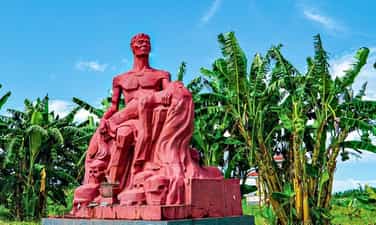
Hai Yen - Binh Hung special area
Hai Yen - Binh Hung special area is located in Thanh Dam hamlet, Tan Hai commune, Ca Mau province, next to Cai Doi canal, about 4 km from Cai Doi Vam town. This is a historical relic marking the painful years of war in the land of Ca Mau. In 1957, the US - Diem government brought Nguyen Lac Hoa and a number of households to migrate to this area, then gradually built up the armed forces and established the Hai Yen - Binh Hung special zone. From here, this area became the place of operation of an anti-revolutionary armed force, causing many terrorist incidents and killings of officials and people. According to data from the Ca Mau Provincial Museum, 1,675 officials and compatriots were murdered in this area. Those losses are evidence of war crimes and remind today's generations of the value of peace and the sacrifices of our ancestors. Today, the Hai Yen - Binh Hung Special Zone Memorial was built at the relic site, as a place to commemorate the victims and educate historical traditions for the young generation. With special historical values, Hai Yen - Binh Hung Special Area was recognized as a National Historical - Cultural Relic on November 24, 2000. Source: Ca Mau Province Electronic Information Portal
Ca Mau
273 view
Rating : National monument
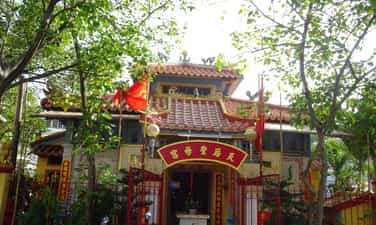
Thien Hau Palace
Thien Hau Palace, also known as Ba Thien Hau Pagoda, located in Bac Lieu ward, Ca Mau province, is a typical religious building, bearing the cultural imprint of the Chinese community in Bac Lieu and Ca Mau. The pagoda was built by Cantonese Chinese people to worship Thien Hau Thanh Mau, the sea goddess revered by seafarers and fishermen, with the wish that she would bless them with peace, smooth sailing, and favorable business. Thien Hau Palace was built spaciously in 1901, following traditional Chinese architecture. Many worship statues, stone pillars, decorations and patterns were crafted in China and then brought to Vietnam. After two renovations in 1970 and 2000, the monument still retains its ancient appearance and typical Chinese architectural features. Not only has architectural and artistic value, Thien Hau Palace also preserves many valuable artifacts and worship objects, notably the exquisitely carved set of "five things", belonging to a group of rare antiques at worship facilities in Vietnam. The grounds behind the pagoda also impress with ancient trees, with interwoven root systems creating a unique shape. Every year, traditional festivals take place here such as the Ky Yen ceremony on the nights of the 15th, 16th, and 17th of the twelfth lunar month and the worshiping ceremony of Ba Thien Hau on the 23rd of the third lunar month, attracting a large number of people and tourists to worship. Source: Ca Mau province relics
Ca Mau
352 view
Rating : National monument
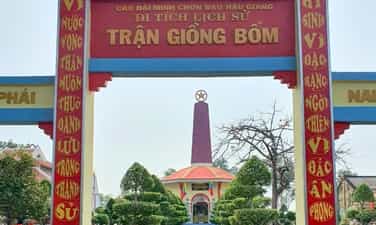
Battle of Giong Bom in 1946
Giong Bom Battle in 1946 - Tragic mark of the Southern resistance war The 1946 Battle of Giong Bom relic is located in the Ngoc Minh Holy See area, Phong Thanh commune, Ca Mau province. After the August Revolution in 1945, responding to the call for Southern resistance, the Cao Dai Minh Chon Dao force organized by Mr. Cao Trieu Phat chose Ngoc Minh Holy See as a base, gathering forces against the French colonialists. On April 6, 1946, the French army began to probe and was ambushed by Giong Bom's forces. In the following days, the enemy continuously used aircraft and infantry to attack. The climax was on April 13, 1946, about 100 French soldiers launched a raid on Giong Bom. With rudimentary weapons but resilient fighting spirit, Giong Bom's forces caused much damage to the enemy. However, due to the large gap in forces and weapons, 137 Giong Bom soldiers heroically sacrificed their lives, and many works at Ngoc Minh Holy See were destroyed. The Battle of Giong Bom was one of the major battles in the Southwest during the early days of the resistance war against the French, demonstrating the patriotism and will to protect the homeland of the Cao Dai Minh Chon Dao people. Every year, the death anniversary of the soldiers who died in the Giong Bom battle is held, becoming an occasion to commemorate and educate patriotic traditions for today's generations. Source: Department of Cultural Heritage
Ca Mau
358 view
Rating : National monument
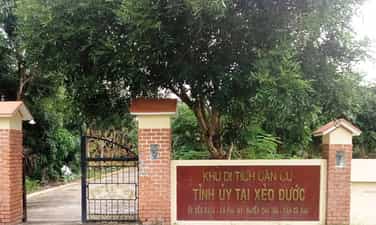
Provincial Party Committee base area at Xeo Duoc
Provincial Party Committee base area at Xeo Duoc The Provincial Party Committee base at Xeo Duoc is a historical relic associated with the resistance war against the US to save the country by the army and people of Ca Mau. Located next to Thi Tuong Dam, the base has a rugged terrain surrounded by rivers, bud forests and nipa palms, becoming a safe place for the Ca Mau Provincial Party Committee during many years of resistance. According to Ca Mau Provincial Electronic Information Portal, from 1960 to 1975, Xeo Duoc was chosen as the base center of the Ca Mau Provincial Party Committee. Here, many important policies and resolutions were issued to lead the revolutionary movement, build the armed forces, and mobilize the masses to resist pacification and destroy strategic hamlets. This is also the workplace of many leaders of the Provincial Party Committee, Central Committee of the Southern Department and Military Region. For 15 years, local people have wholeheartedly protected and protected the safety of Party agencies. Although the enemy raided and raided many times, the base was still maintained, making an important contribution to the victory of the revolutionary movement in Ca Mau and the Southwest region. Currently, the relic has been restored and restored many items such as the hall, Provincial Party Committee office, the Provincial Party Secretary's workplace, cafeteria, secret bunker and auxiliary works, becoming a red address to educate patriotic and revolutionary traditions for the young generation. Source: Ca Mau province electronic information portal
Ca Mau
577 view
Rating : Provincial level relics
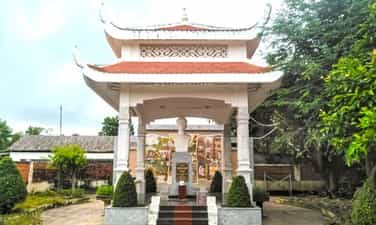
Lung La - Nha The relic site
Lung La - Nha The relic site Lung La - Nha The relic site was an important revolutionary base of the Bac Lieu Provincial Party Committee (now Ca Mau province and Bac Lieu province) during the resistance war against the French colonialists. This is the private residence of comrade Tran Van Thoi, former Secretary of the Bac Lieu Provincial Party Committee, where many meetings and decisions of important significance to the revolutionary movement in the South took place. According to the Electronic Information Portal of Ca Mau province, in the period 1938–1940, Lung La - Nha The was the meeting place of Tan Hung hamlet Party cell, Ca Mau District Party Committee and Bac Lieu Provincial Party Committee. In October 1938, a conference to establish the Provisional Provincial Party Committee of Bac Lieu province took place here. In particular, on November 26, 1940, comrade Tran Van Thoi convened an expanded Provincial Party Committee Conference to implement the uprising plan. The conference decided to choose Hon Khoai as the opening shooting point for the local Cochinchina Uprising, directly commanded by comrade Phan Ngoc Hien. The victory of the Hon Khoai Uprising on December 13, 1940 became a milestone in the history of Ca Mau revolution and was chosen as the Traditional Day of the Party Committee, army and people of Ca Mau province. Currently, the relic has been restored and restored with items such as comrade Tran Van Thoi's house, traditional house, secret meeting place, artifact display area and commemorative stele, contributing to recreating the revolutionary space of the early years of the struggle for independence. Source: Ca Mau province electronic information portal.
Ca Mau
984 view
Rating : Provincial level relics
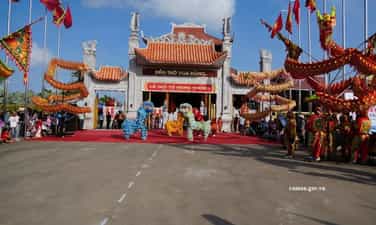
Temple of King Hung
Temple of King Hung King Hung Temple is located along Highway 63, in Giao Khau hamlet, Tri Phai commune, Ca Mau province. The temple was built more than 150 years ago, initially it was just a small temple made of bamboo and leaves, known to local people as Ong Vua Temple. During the two resistance wars against the French colonialists and the American imperialists, the temple was repeatedly destroyed by bombs and bullets and had to be relocated to protect the place of worship as well as maintain the celebration of the Hung King's Anniversary. In 2006, the temple was built solidly with reinforced concrete, facing Highway 63 with a large gate and yard, meeting the religious needs of the people. By 2019, Ca Mau province implemented a project to renovate, embellish and upgrade the entire relic site with 13 items, including the main temple, green campus, guest house, kitchen, warehouse and temple gate. The project will be completed and put into use in 2022, becoming an important cultural and religious activity spot for local people. Every year, on the 10th day of the third lunar month, the Hung King's death anniversary is solemnly held at the temple with the participation of authorities, organizations and a large number of people inside and outside the province. This is not only an opportunity to commemorate the heroic contributions of the Hung Kings to building the country, but also to contribute to educating generations of patriotic traditions and gratitude for their roots. Source: Ca Mau province electronic information portal
Ca Mau
1040 view
Rating : Provincial level relics

Hong Anh Thu Quan Relic
Ca Mau, the southernmost land of the country, has a very valuable revolutionary historical relic, the Hong Anh Thu Quan, located at 43, Pham Van Ky Street, Ward 2, Ca Mau City. After a long period of fierce war, the relic still retains the original architecture of the original house, restored, embellished, and preserved in its original value. In January 1929, the Vietnam Association of Revolutionary Youth in Ca Mau town was established, with the important task of propagating Marxism-Leninism and educating revolutionary consciousness among farmers, workers, and students. , intellectuals and mass leaders fighting for people's rights and democracy. During that struggle movement, the Association opened the bookstore "Hong Anh Thu Quan" selling contemporary progressive books and newspapers published in Saigon. In fact, this is a front for the democratic movement, a meeting place for many patriots, and a place of operation for the Vietnam Revolutionary Youth Comrades Association of Ca Mau Town - a political organization with the mission of enlightenment. Enlighten patriotic youth, propagate and educate Marxist-Leninist ideology... The house with a construction area of 74m² (3.7m wide, 20m long) facing Northeast, adjacent to Ca Mau market, on the bank of Xang canal, is a street house in a 2-storey street block built by the French colonialists. Around 1900, it was called Asia's sleeping house (also known as Ong Son street). After a period of active operation, Hong Anh Thu Quan exerted a profound ideological influence on people from all walks of life, creating a political premise for the later birth of Communist Party establishments. With the meaning of being a pioneering flag in the revolutionary movement in Ca Mau, Hong Anh Thu Quan was ranked as a national historical relic on August 4, 1992. On the basis of inheriting traditional elements, the ground floor of the relic was restored to Tam Dong coffee shop in the form of socialization, decorated with many antiques and artifacts. Becoming an ideal Ca Mau tourist destination for tourists passionate about learning about the culture and history of Ca Mau land and a "red address" to educate revolutionary traditions for the young generation. Source: Ca Mau Tourism
Ca Mau
7147 view
Rating : National monument
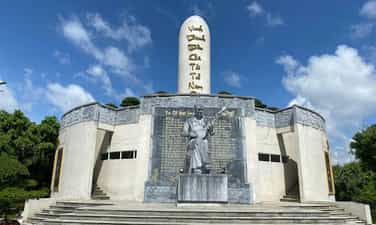
Memorial area for musician Cao Van Lau
Located in Ward 2, Bac Lieu City, the Southern Don Ca Tai Tu art memorial area and musician Cao Van Lau were recognized by the People's Committee of Bac Lieu province as a provincial-level historical and cultural relic in 1997. 2014, the Ministry of Culture, Sports and Tourism ranked it as a national historical-cultural relic. With an area of nearly 12,500 square meters with a total investment of over 70 billion VND, this is the resting place of the family of the late famous musician Cao Van Lau. In addition, the relic site also has construction items such as the Southern Don Ca Tai Tu and Cai Luong art gallery, the Cao Van Lau musician exhibition hall and Hoai Lang Da Co version, the Don Ca performance hall. Southern amateurs, Musical Instrument Garden, Semi-moon Lotus Lake... Going through the main gate, visitors will see the "Yue Cam Dai Dai" standing tall in the middle of the campus. The staircase going up to the Dai Dai with 32 steps symbolizes the development of Da Co Hoai Lang village from beat 2 to Vong Co hamlet with beats 4, 8, 16, 32, 64. Above the highest Dai is the symbol of the Pliers. stylization - the symbol of Southern amateur music associated with the image of musician Cao Van Lau. The pliers are stylized from bamboo sticks, the pliers part is hollowed out to create mystery and sacredness, evoking nostalgia and remembrance of the deceased. On the Nguyet Cam Platform, there are 21 ornamental pots representing 21 provinces and cities where amateur music is strongly developed. Right behind the Nguyet Cam Station is a statue of musician Cao Van Lau sitting holding a Pliers instrument, behind him is Da Co Hoai Lang - this is his immortal work, known as the "King's song" of opera theater. Southern salary so far. Next to it is the Musical Instrument Garden with 12 types of traditional musical instruments carved in green stone. Going straight through the Musical Instrument Garden is the Art Gallery of "Don Ca Amateurs and Southern Cai Luong Theater". Visitors will be able to see and learn about many precious documents, images and artifacts related to the formation and development of the art of Don Ca Tai Tu and Southern Cai Luong theater. The most popular place for tourists is the Exhibition House of musician Cao Van Lau. This place stores many artifacts such as books, newspapers, documents, and images about the life and career of musician Cao Van Lau. In particular, here visitors will admire the wax statue of the late musician made of silicon, very similar to the real person. In addition to the above-mentioned projects, the memorial area for the late musician cannot help but mention, which is the grave of the late musician's family, in addition to a stage house for performing traditional folk music, The souvenir shop... has really attracted tourists when they set foot in this land. The memorial area of musician Cao Van Lau is truly the most attractive attraction in Bac Lieu. If you have the opportunity to visit Bac Lieu province, don't forget to visit the souvenir area. Source: electronic information portal of the Union of Friendship Organizations of Bac Lieu province
Ca Mau
9605 view
Rating : National monument
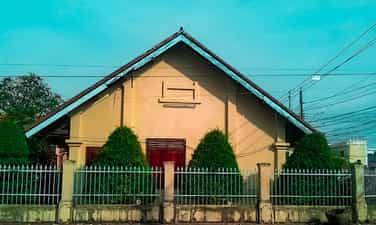
Ca Mau Steel Wire House
The Steel Wire House historical relic is located in the city center, located at the corner of Le Loi - Ly Bon street, cluster 3, ward 2, Ca Mau city. For young people today, the words "wire house" are quite strange. In fact, it is a post office built by the French colonialists around 1910 to perform the communication function to serve the ruling apparatus. and exploit their colonies. Taking advantage of the situation, the Vietnamese revolution turned this place into a communication hub between the Cochinchina Party Committee and the Ca Mau Party Cell in the resistance war against the French invasion. From 1930 to 1939, the Southern Party Committee and the Hau Giang Special Committee chose the Steel Wire House as the contact location. Comrade Le Ton Khuyen (an employee of the Steel Wire House) was assigned to be in charge of the Party's contact point. in Ca Mau area. From this contact point, the Ca Mau Party Committee received important news as well as timely direction to strengthen its forces and mobilize the masses to fight for the revolution and win many victories. The Steel Wire House Relic is not only a historical revolutionary relic of the province, but also a work marking the historical development of the transportation and communication industry in Ca Mau. Over time, the Steel Wire House was severely damaged, so in 1999, Ca Mau province agreed to rebuild it according to the prototype and in 2004, the house was inaugurated and put into use. Due to secret operating conditions, the relics in the relic can no longer be preserved, but currently the Ca Mau Provincial Museum has restored artifacts, documents, and images related to the relic, and at the same time displays them. Completely displayed at the monument, serving well for visitors to Ca Mau to visit and research. At the same time, it becomes a red address for traditional education for future generations to better understand the struggle of the Ca Mau people during the years of resistance against the French. On June 2, 2011, the Ministry of Culture, Sports and Tourism recognized the Steel Wire House in Ca Mau as a National Monument. Source: Ca Mau Tourism
Ca Mau
7343 view
Rating : National monument

Phat To Pagoda (Sac Tu Quan Am Ancient Pagoda)
Phat To Pagoda is located in Ward 4, Ca Mau city. The pagoda was built in 1840, bearing the ancient architecture of the 19th century. This is the earliest place to propagate Buddhism in Ca Mau. The original name of Phat To Pagoda is due to the long-standing respect of the people of Ca Mau region to the monk who built the pagoda: Venerable Thich Tri Tam. Legend has it that around 1840, Ca Mau area was a reed area. Following the flow of people going to reclaim the land, there was a young man, To Quang Xuan, who went to collect firewood in the forest. When the ax hit the trunk of an ancient Bodhi tree, a tree appeared. The Buddhist scriptures were placed at the base of the tree. From then on, the young man built a shrine to worship Avalokiteśvara while cultivating and taking medicine to treat people on the banks of Quan Lo canal. Legend has it that To Quang Xuan recited the Diamond Sutra to transform wild beasts. People who know the language come in large numbers to ask for medicine and learn religion. Among these disciples, even ferocious tigers also came to learn the Dharma. Currently, that tiger's tower still exists, and the disciples in the temple call it Su Cau's tower. Later, thanks to people's contributions, To Quang Xuan built a simple temple made of leaves. Seeing this, Do Van Vien in the area was jealous and accused him of being a dishonest Taoist. He was arrested by superiors and brought to Saigon (now Ho Chi Minh City) under house arrest. But To Quang Xuan's morality made the mandarins admire him. He was brought back to Hue and ordained as a monk at Kim Chuong Pagoda. Seven days after receiving the precepts, he passed away. The king ordained him as a "monk" and at the same time bestowed brocade and sent people to bring his remains back to Ca Mau. Feeling sorry for him, in 1842, King Thieu Tri (Nguyen Dynasty) decreed that To Quang Xuan be ordained as Venerable Thich Tri Tam, repaired his thatched hermitage next to the old forest and decorated the pagoda with the name " "The Four Avalokitesvara Ancient Temple". Venerable Thich Tri Tam is revered by the people in the area as "Buddha Patriarch", so the pagoda is also called "Buddha Patriarch Pagoda". Phat To Pagoda has been renovated many times, the major restoration was in 1937. However, the original state of the ancient pagoda is still basically maintained. Worship artifacts such as wooden statues, wooden trays, single vases, bronze bells, parallel sentences, ordained orders from the king... are still preserved, proving the development of Buddhism during the period when the Vietnamese people began to make strides. important in the work of reclamation and forming a communal society with the three ethnic groups Kinh, Chinese, and Khmer in the southern land. During the resistance war against America, Buddha Pagoda was a place to hide revolutionary soldiers. On November 24, 2000, Phat To Pagoda was recognized by the Ministry of Culture and Information as a national historical and cultural relic. In addition to the main architecture of the ancient temple, on the right from the temple gate, there is also the office of the Executive Board of the Buddhist Association, Ca Mau Buddhist Intermediate School, and the office of the Special Committee for Nuns. On the left of the main architecture, there is also the free Tue Tinh hall for the poor, the Buddhist Family Assembly Hall, the Sangha house... Every week, Buddhist studies and lectures are held here. Every year, on every major Buddhist festival such as the full moon ceremony in January, Buddha's birthday, Vu Lan... Buddha Pagoda becomes a place for festivals, a large number of monks, nuns, and Buddhists gather to attend. Source: Ca Mau Tourism
Ca Mau
8754 view
Rating : National monument