Relic point Vietnam
Việt Nam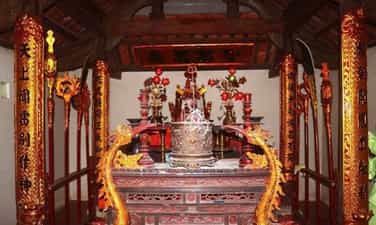
Hao Kiet Temple
Hao Kiet Temple - Historical site associated with famous general Phan Cong Tich Hao Kiet Temple located in Hop Minh commune, Nghe An province, is a valuable historical relic, associated with the cultural and religious life of local people. The temple was built to worship Lieutenant Lai Quoc Cong Phan Cong Tich, a famous general who had many contributions in the cause of the revival of the Le Dynasty. In addition, the temple also worships Duke Phan Cong Ngan, Cao Son Cao Cac and a number of figures revered by the people. According to historical documents and genealogy of the Phan family, Phan Cong Tich (also known as Phan Hoang Tich) was born into a family of many generations of mandarins in the Yen Thanh area. During the period of the Southern and Northern dynasties, he soon responded to the pro-Le movement against the Mac dynasty, contributed to bringing King Le Trang Tong back to the throne, and became one of the pillar generals of the Le Trung Hung dynasty. He directly commanded many important battles in Thanh Hoa and Nghe An and was assigned to visit the Thuan Hoa region to stabilize the border situation. With great contributions, he was awarded the title Lai Quoc Cong, held the position of Thai Lieutenant and was conferred many times by the Le and Nguyen dynasties. After Lieutenant Phan Cong Tich passed away, the court granted land for the people to build a memorial temple. Over the centuries, Hao Kiet Temple has not only been a place to worship heroes who contributed to the country but also a center for cultural and religious activities of the community. In the minds of the people, he is a sacred god who always protects and blesses a peaceful life, favorable harvests and a peaceful country and people. In 2023, Hao Kiet Temple will be ranked as a National Historical Monument by the Ministry of Culture, Sports and Tourism, recognizing the typical historical, cultural and religious values of the monument. Every year, from the 8th to the 12th of the second lunar month, the locality organizes the Hao Kiet Temple Festival to commemorate the merits of Lieutenant Phan Cong Tich. The ceremony took place solemnly with traditional palanquin processions, incense offerings and sacrifices, praying for peace in the country and people, good weather and wind. The festival is exciting with many cultural activities, sports and folk games such as volleyball, tug of war, stick pushing, sack jumping..., contributing to preserving cultural identity and strengthening the spirit of community solidarity. According to: Hop Minh Commune Electronic Information Portal, Nghe An Province.
Nghe An
363 view
Rating : National monument
Bo De School
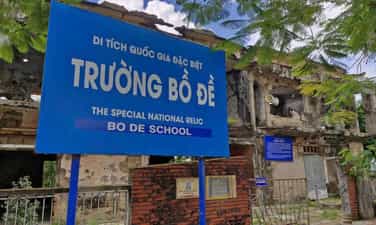
Bo De School - Historical evidence of 81 days and nights protecting Quang Tri Citadel Bo De School is located on Tran Hung Dao Street, Quang Tri Ward, Quang Tri Province, about 1 km southwest of Quang Tri Citadel. Initially an educational facility, but during the fight to protect Quang Tri Citadel in 1972, the school became an important key point for our army and people during 81 days and nights of fierce fighting. War bombs caused severe damage to the structure. Walls filled with bullet holes, broken concrete beams and traces of damage are still retained as true evidence of the fierceness of the Quang Tri battlefield. Along with Quang Tri Citadel, Thach Han River Flower Wharf, Long Hung Church and Tri Buu Church, Bo De School is a typical place in the system of memorial monuments for the 81 days and nights event in 1972. Currently, the relic is preserved according to the principle of preserving the original state as much as possible. A steel frame system was installed to reinforce the structure of the building, ensuring safety for visitors while still preserving the vestiges of war. At the same time, this place is oriented to become a traditional educational space, helping today's generations better understand the resilient fighting spirit and sacrifice of Quang Tri's army and people. Today, Bo De School is a meaningful stop on the journey back to its origins in Quang Tri, contributing to spreading historical values, educating patriotic traditions and paying tribute to those who sacrificed for national independence. According to: National Museum of History
Quang Tri
893 view
Rating : Special national monument
Long Hung Church
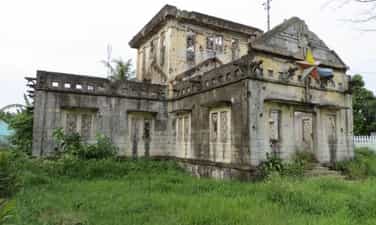
Long Hung Church is located in Hai Phu commune, Quang Tri province (formerly in Hai Lang district), right on National Highway 1A. Built in the period 1955–1956, the church has solid reinforced concrete architecture and was once a place for religious activities of local parishioners. During the war to protect Quang Tri Citadel in 1972, the church became a fierce fighting point for our army and people. After many rounds of bombs and bullets, the building was heavily damaged, but the architectural frame still exists as a living testament to the fierceness of war and the resilient fighting spirit of Quang Tri's army and people during the 81 days and nights of protecting the Ancient Citadel. Today, the ruined walls, bell tower and remaining vestiges of the church are still preserved, becoming a red address for educating revolutionary traditions and a tourist attraction when coming to Quang Tri. This place not only helps visitors learn about the history of the nation's struggle but is also a space to commemorate those who heroically sacrificed for the independence and freedom of the Fatherland. With special historical value, Long Hung Church has been ranked as a special national relic in the cluster of relics associated with the 81 day and night event of protecting Quang Tri Ancient Citadel. This is a meaningful destination for those who want to learn about history and pay tribute to the generations of ancestors who have fallen for peace today. Source: Ministry of Culture, Sports and Tourism.
Quang Tri
907 view
Rating : National monument
Ca Temple
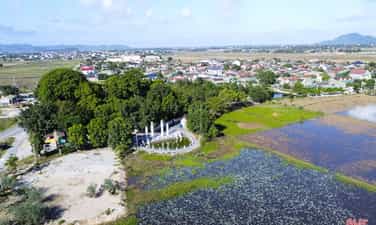
Ca Temple, also known as Lon Temple or Three Toa Dai Vuong Temple, is located in Dong Kinh commune, Ha Tinh province. This is one of the typical historical and cultural relics of the locality, built in the 11th century under the Ly dynasty to worship Prince Ly Nhat Quang and the two princes Ly Dai Thanh and Ly Thai Giai, who were instrumental in recruiting people, establishing hamlets, and developing the ancient land of Hoan Chau. Later, the temple worshiped two more famous generals Tran Quang Khai and Tran Khanh Du, remembering their ancestors' contributions to the country. Over many dynasties, the temple was renovated and expanded, creating an architectural complex including lower palace, middle palace and upper palace. The buildings are mainly made of ironwood with a system of columns, rafters, diaphragms and intricate carvings of dragons, phoenixes and traditional patterns, reflecting the unique architectural art of many historical periods. In addition to its architectural value, Ca Temple also preserves 37 decrees of feudal kings and many precious artifacts. On the nearly 3-hectare campus, there is a population of hundreds of years old trees, many of which are recognized as Vietnamese Heritage Trees. The relic is also the site of secret activities of the Party organization in Ha Can region during the revolutionary movement of the period 1930–1931. With outstanding historical, cultural and architectural values, in 1992, Ca Temple was ranked a national historical and cultural relic by the Ministry of Culture and Information (now the Ministry of Culture, Sports and Tourism). Today, this place is a spiritual and sightseeing destination, contributing to preserving and promoting the traditional cultural values of Ha Tinh. Source: Ha Tinh Newspapers and Radio and Television
Ha Tinh
924 view
Rating : National monument
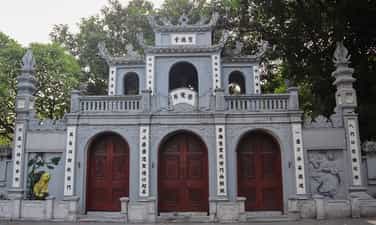
Ha Pagoda
Ha Pagoda - Historical relic, artistic architecture and famous spiritual destination of the Capital. Ha Pagoda, the name Thanh Duc Tu, is located on Chua Ha street, Cau Giay ward, Hanoi city. This is one of the famous ancient temples of the Capital, with historical, architectural and spiritual cultural value, attracting a large number of people and tourists to visit and worship. According to historical documents, the pagoda was built in the Later Le period and has been restored and embellished many times but still retains its traditional architecture. The relic complex includes three gates, front hall, upper palace, Mau house and To house, arranged harmoniously in a cool green space. The pagoda still preserves many precious artifacts such as a bronze bell cast in 1799, a system of Buddha statues, Mother Goddess statues, stone stele of the Nguyen Dynasty and many ancient worship objects of historical and artistic value. Not only is it a place to worship Buddha, Ha Pagoda also has a Mother Goddess shrine, reflecting the harmonious combination of Buddhism and Vietnamese folk beliefs. In particular, the pagoda is also a place marking an important revolutionary event when the Hanoi Party Committee and the Revolutionary Military Committee held meetings here to prepare for the August General Uprising in 1945. With outstanding historical, architectural and cultural values, in 1996 Ha Pagoda was ranked a national historical, architectural and artistic relic by the Ministry of Culture and Information (now the Ministry of Culture, Sports and Tourism). Today, the temple is not only a famous spiritual destination but also an address to help visitors learn about the history and culture of Hanoi. Source: Hanoi Landscapes and Monuments
Hanoi
888 view
Rating : National monument
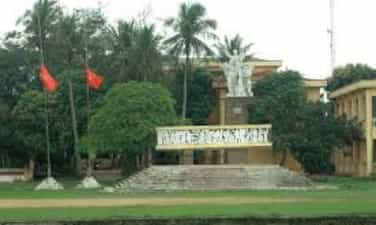
Fire Zone Museum
Fire Zone Museum Khu Chay Museum is located in Dong Tan commune, Ung Hoa district (now Dong Tien commune, Hanoi city), is a place to store and introduce documents and artifacts about the revolutionary struggle movement of the army and people of Khu Chay - a guerrilla base area including 22 communes in the south of Ung Hoa district and west of Phu Xuyen district during the resistance war against the French colonialists. According to historical documents, since the 1930s, Khu Chay soon became the base of revolutionary activities. During the resistance war against the French (1946–1954), this place was an important guerrilla base, despite being surrounded by the enemy and conducting many large-scale raids. The army and people of Khu Chay fought tenaciously, defeating many raids, notably the "Cangguru" raid in 1952, contributing to protecting the base area and supporting the resistance movement in Ha Dong (formerly). After 1975, the Fire Zone Museum was built on the land that was once a fierce battlefield to preserve historical values and educate revolutionary traditions. In 2004, the museum was upgraded with more modern display space. Currently, the museum stores nearly 1,000 documents, images and artifacts, displayed on the themes of Khu Chay's terrain, the patriotic traditions of the local people, the resistance war against the French colonialists and the process of building the homeland after peace. Many precious artifacts are being preserved such as the machete that comrade Do Muoi used during the August Revolution, the choke used by comrade Hoang Quoc Viet during secret activities, a letter of praise from President Ho Chi Minh to the guerrillas of Khu Chay, and many weapons, living utensils, and resistance artifacts. Today, the Fire Zone Museum is a typical red address of Hanoi, contributing to educating today's generations on patriotic traditions, the spirit of revolutionary struggle and the resilient will of the soldiers and people of the Fire Zone. According to: Hanoi Landscapes and Monuments.
Hanoi
954 view
Rating : Provincial level relics
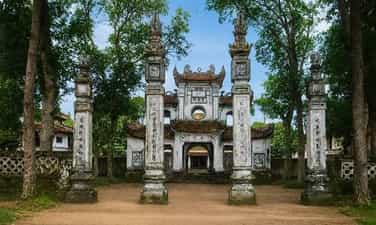
Van Uyen communal house
Van Uyen village communal house is located in Van Uyen village, Nam Phu commune, Hanoi city, and is a typical religious work associated with the cultural life of residents along the Red River. According to local documents, the communal house has a long history, bears many ancient architectural marks and still retains a system of stone steles, carved plaques, horizontal panels, and parallel sentences with historical and artistic value. The communal house worships Saint Nguyen Sieu (Nguyen Huu Cong, 924–967) as the Village's Tutelary God. According to legends and local documents, he was one of the 12 warlords during the 12 warlords' chaos who once controlled the Tay Phu Liet region (now in the southern area of Hanoi). After his death, people set up a temple to commemorate his merits and respected him as the village's protective deity. Van Uyen Communal House is located in a relic complex including Communal House - Thien Ung Temple - Diamond Pagoda - Temple, reflecting the characteristics of Northern village culture, where folk beliefs and Buddhism coexist, attached to community life for many generations. Every year, on the 6th day of the second lunar month, people organize the Van Uyen Village Festival to commemorate Saint Nguyen Sieu. The ceremony took place solemnly with incense offerings, sacrifices and the most special was the water procession on the Red River. Sacred water is taken from the middle of the river, filtered through red cloth and then brought to the communal house for the ceremony, demonstrating the belief in wet rice agriculture and the residents' attachment to the Red River. The festival has many cultural, artistic and traditional exchange activities, attracting a large number of people and tourists. According to: Hanoi People Magazine
Hanoi
896 view
Rating : Provincial level relics
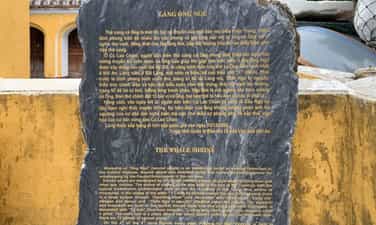
Tomb of Ong Ngu Cu Lao Cham
Tomb of Ong Ngu Cu Lao Cham Ong Ngu's mausoleum is located in Bai Lang village, Tan Hiep island commune (Cu Lao Cham), Da Nang city (formerly in Hoi An city, Quang Nam). The project was built in the late 19th century, located about 10 meters from the coast, with its back leaning against the mountain and facing the sea according to the traditional feng shui concept of coastal residents. According to folk beliefs, Ong fish (whale) is revered by fishermen as the god of the South Sea, always protecting and helping people in distress at sea. When the Ong fish washed ashore, people held a solemn funeral according to traditional rituals, then reburied and put the remains in the mausoleum to worship, showing gratitude to the fishermen's protective god. The mausoleum is built of bricks, lime and coral, with traditional architecture with yin and yang tiled roofs, low domed roofs and a post-mortar that holds the bones of Ong fish. The roof is decorated with motifs of four sacred animals, phoenix birds and tombstones. In front is a screen embossed with the image of "The Fish God plays the moon". Inside, there are three rooms: the main room worships the Ong fish with 13 gilded and lacquered tablets; The two side rooms worship the left, right, and supporting deities. Ong Ngu Mausoleum is not only a place of religious activities of the Cu Lao Cham fishing community but also a typical architectural work of art, reflecting the marine cultural life of local residents. Every year, on the 3rd and 4th day of the 4th lunar month, the Cau Ngu festival is held here with traditional rituals to commemorate the Ong fish, pray for favorable weather, calm seas and safe, bountiful voyages. With outstanding values of history, architecture and cultural beliefs, on December 13, 2006, Ong Ngu Tomb of Cu Lao Cham was ranked a national historical and cultural relic by the Ministry of Culture and Information (now the Ministry of Culture, Sports and Tourism). Source: Cu Lao Cham Marine Protected Area Management Board
Da Nang
1043 view
Rating : National monument
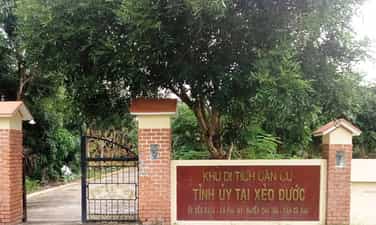
Provincial Party Committee base area at Xeo Duoc
Provincial Party Committee base area at Xeo Duoc The Provincial Party Committee base at Xeo Duoc is a historical relic associated with the resistance war against the US to save the country by the army and people of Ca Mau. Located next to Thi Tuong Dam, the base has a rugged terrain surrounded by rivers, bud forests and nipa palms, becoming a safe place for the Ca Mau Provincial Party Committee during many years of resistance. According to Ca Mau Provincial Electronic Information Portal, from 1960 to 1975, Xeo Duoc was chosen as the base center of the Ca Mau Provincial Party Committee. Here, many important policies and resolutions were issued to lead the revolutionary movement, build the armed forces, and mobilize the masses to resist pacification and destroy strategic hamlets. This is also the workplace of many leaders of the Provincial Party Committee, Central Committee of the Southern Department and Military Region. For 15 years, local people have wholeheartedly protected and protected the safety of Party agencies. Although the enemy raided and raided many times, the base was still maintained, making an important contribution to the victory of the revolutionary movement in Ca Mau and the Southwest region. Currently, the relic has been restored and restored many items such as the hall, Provincial Party Committee office, the Provincial Party Secretary's workplace, cafeteria, secret bunker and auxiliary works, becoming a red address to educate patriotic and revolutionary traditions for the young generation. Source: Ca Mau province electronic information portal
Ca Mau
593 view
Rating : Provincial level relics
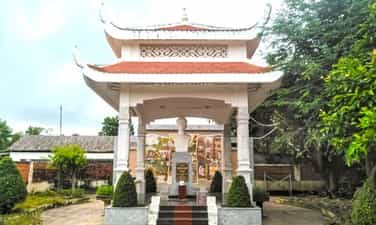
Lung La - Nha The relic site
Lung La - Nha The relic site Lung La - Nha The relic site was an important revolutionary base of the Bac Lieu Provincial Party Committee (now Ca Mau province and Bac Lieu province) during the resistance war against the French colonialists. This is the private residence of comrade Tran Van Thoi, former Secretary of the Bac Lieu Provincial Party Committee, where many meetings and decisions of important significance to the revolutionary movement in the South took place. According to the Electronic Information Portal of Ca Mau province, in the period 1938–1940, Lung La - Nha The was the meeting place of Tan Hung hamlet Party cell, Ca Mau District Party Committee and Bac Lieu Provincial Party Committee. In October 1938, a conference to establish the Provisional Provincial Party Committee of Bac Lieu province took place here. In particular, on November 26, 1940, comrade Tran Van Thoi convened an expanded Provincial Party Committee Conference to implement the uprising plan. The conference decided to choose Hon Khoai as the opening shooting point for the local Cochinchina Uprising, directly commanded by comrade Phan Ngoc Hien. The victory of the Hon Khoai Uprising on December 13, 1940 became a milestone in the history of Ca Mau revolution and was chosen as the Traditional Day of the Party Committee, army and people of Ca Mau province. Currently, the relic has been restored and restored with items such as comrade Tran Van Thoi's house, traditional house, secret meeting place, artifact display area and commemorative stele, contributing to recreating the revolutionary space of the early years of the struggle for independence. Source: Ca Mau province electronic information portal.
Ca Mau
1012 view
Rating : Provincial level relics