Relic point Vietnam
Việt Nam
Memorial area of General Secretary Nguyen Van Cu
General Secretary Nguyen Van Cu Memorial Area - A national monument marking the loyal communist soldier General Secretary Nguyen Van Cu's memorial area is located in Phu Khe ward, Tu Son city, Bac Ninh province. This is where the imprints of the life and revolutionary career of comrade Nguyen Van Cu (1912–1941) are preserved - General Secretary of the Indochina Communist Party and an outstanding son of his hometown Kinh Bac. The memorial area was built on the land of the comrade's family, including many items such as a monument, a house displaying his life and revolutionary career, the original memorial house and auxiliary works. This place also preserves many artifacts, documents and memorabilia associated with the comrade's childhood, family and revolutionary activities, including the work "Self-criticism" - an important theoretical work of the Party. In 1938, at the age of 26, Nguyen Van Cu was elected General Secretary of the Indochina Communist Party. Although only 29 years old, more than 13 years of revolutionary activities and more than 2 years as General Secretary, he has made many important contributions to the Vietnamese revolutionary movement. In 1941, he was executed by the French colonialists at Hoc Mon (Gia Dinh) along with revolutionary soldiers Ha Huy Tap, Nguyen Thi Minh Khai, Vo Van Tan and Phan Dang Luu. With special value in history and education of revolutionary traditions, the Memorial Area of General Secretary Nguyen Van Cu was ranked as a National Historical Site in 1988. Today, this is a red address, contributing to educating patriotic traditions and national pride for generations. Source: Bac Ninh province electronic information portal
Bac Ninh
364 view
Rating : National monument
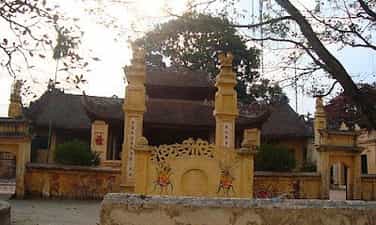
Ba Tia Communal House (Vinh Ninh Communal House)
Ba Tia Communal House - Historical site associated with female general Hai Ba Trung Ba Tia communal house (also known as Vinh Ninh communal house) is located in Vinh Quynh commune, Thanh Tri district, Hanoi city. This is an ancient communal house worshiping Ba Tia (Truong Tu Nuong) - one of the female generals of Hai Ba Trung, who had meritorious service with the insurgents against the Eastern Han army in the years 40-43 AD. According to legend, Ba Tia was a talented martial artist who recruited insurgents to join the Hai Ba Trung uprising. After the Two Ladies committed suicide at Hat Mon, she continued to fight against the enemy until she transformed at Than Phu gate. To commemorate her merits, local people built a temple to worship her and honored her as the Tutelary God. Ba Tia communal house was built according to traditional architecture with items such as Nghi Mon, Phuong communal house, Great communal house and Harem. The relic also preserves many precious artifacts such as 23 ordinations (the earliest in the Canh Hung era in 1753), divine genealogy, gilded palanquin, horizontal scrolls, parallel sentences and agricultural extension copies of the Quang Trung period. During the resistance war against the French colonialists, Ba Tia Communal House was also an active location for revolutionary cadres, associated with the name of General Vuong Thua Vu, contributing to the historical value of the monument. Every year, Ba Tia communal house festival is held from the 8th to the 12th of the second lunar month, with traditional procession and sacrifice rituals to commemorate female general Truong Tu Nuong and educate patriotic traditions for generations. With outstanding historical, cultural and architectural values, Ba Tia Communal House was ranked a national historical and cultural relic by the Ministry of Culture and Information in 1980. Source: Hanoi – Sights and Monuments
Hanoi
494 view
Rating : National monument
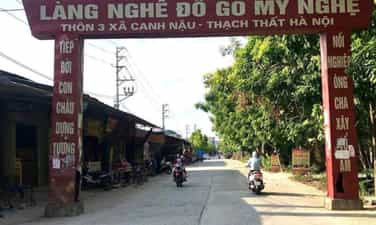
Canh Nau Communal House
Canh Nau Communal House - A mark of Vietnamese village history and architecture Canh Nau communal house is located in Canh Nau commune, Thach That district (formerly), Hanoi city. This is a typical religious work of the Doai region, associated with the history of formation and development of Canh Nau village over many centuries. According to research documents, the communal house was built around the 17th century, then restored in the 18th and 19th centuries. The project has an architectural plan of "early, late" style, outstanding with a system of wood carvings in the artistic style of the Later Le period, especially dragon images and folk patterns with high aesthetic value. The communal house is a place to worship 5 village tutelary gods, including Do Vien - a figure credited with teaching Chinese characters to local residents. Not only is it a religious center, Canh Nau communal house is also a place where traditional festivals take place, contributing to preserving the cultural identity of the community. With typical historical, architectural and artistic values, Canh Nau Communal House was ranked a national architectural and artistic relic by the Ministry of Culture and Information in 1993. Source: Hanoi – Sights and Monuments
Hanoi
881 view
Rating : National monument
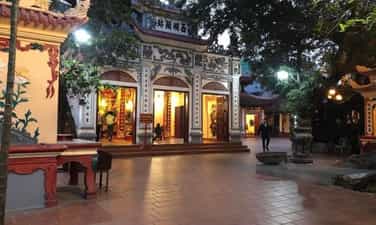
Phu Tay Ho
Phu Tay Ho - Typical historical, cultural and religious relic of Hanoi Located on the peninsula in Quang An ward, Tay Ho district, Hanoi, Phu Tay Ho is one of the famous religious relics associated with Holy Mother Lieu Hanh - one of the Four Immortals of Vietnamese folk beliefs. Located amidst the poetic space of West Lake, the relic has long become an important spiritual destination for the people of the Capital and tourists from everywhere. According to many research documents, Phu Tay Ho is associated with the legend of Poinsettia Phung Khac Khoan meeting Holy Mother Lieu Hanh while traveling to West Lake. However, the exact date of construction of the palace has not yet been determined by historical documents. The existing Sino-Nom documents at the site, such as stone stele, bronze bells, horizontal plates, and parallel sentences, mainly date to the late Nguyen Dynasty. Some epitaphs and artifacts show that this place is related to Bao Khanh temple of ancient Tay Ho village and has undergone many renovations and embellishments. Not only has historical value, Phu Tay Ho is also a center for practicing the typical Mother Goddess worship belief in Hanoi. Every year, especially on the occasion of early spring and the holidays of Saint Mother Lieu Hanh, a large number of people and tourists come to offer incense and pray for peace and fortune. With historical, cultural and religious values, Phu Tay Ho is one of the typical destinations, contributing to preserving and promoting the traditional cultural identity of Thang Long - Hanoi. Source: Hanoi – Sights and Monuments
Hanoi
848 view
Rating : National monument
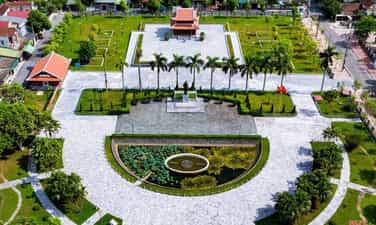
Ha Tinh ancient citadel
Ha Tinh Ancient Citadel - Witness of history in the heart of the city Located in Tan Giang ward, Ha Tinh city, Ha Tinh Ancient Citadel is a national historical-cultural relic, associated with the formation and development of Ha Tinh land. First built with earth in 1804 under the reign of King Gia Long, in 1833, King Minh Mang rebuilt it with laterite according to Vauban military architecture. In 1881, after Ha Tinh province was re-established, the citadel continued to be solidly built with brick and stone. The citadel has a unique hexagonal shape, about 3.2 m high, surrounded by a 20 m wide moat, along with a system of walls, city gates and solid defensive structures. This is one of the typical military works of the Nguyen Dynasty, demonstrating a harmonious combination of traditional Vietnamese architecture and Western citadel construction techniques. Experiencing many historical events, Ha Tinh Ancient Citadel was once an important administrative and military center and a witness of resistance wars to protect the Fatherland. Although many items are no longer intact, the remaining vestiges still hold great value in terms of history, culture and traditional education. Today, Ha Tinh Citadel is not only a symbol of the patriotic spirit and resilient will of the people of Ha Tinh but also an attractive destination, contributing to preserving and spreading historical values for future generations. Source: Ha Tinh Province Tourism Electronic Information Portal
Ha Tinh
1183 view
Rating : National monument
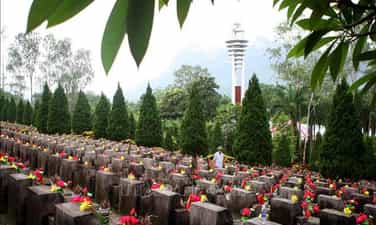
Vi Xuyen Front
Vi Xuyen Front - An immortal epic at the forefront of the Fatherland After the war to protect the northern border in 1979, the Vi Xuyen area continued to be a hot spot with hundreds of fierce battles lasting nearly a decade. From 1984 to 1989, the Vietnamese army and people stubbornly held on to strategic high points such as 468, 685, 772, 1100, 1509, Doi Dai, Co Ich... determined to maintain every inch of the sacred land of the Fatherland. The mountains in Vi Xuyen have suffered millions of artillery shells, many high points were flattened, and the terrain deformed after intense battles. That fierceness caused this place to be called by veterans with the haunting name: "Lime Kiln of the Century". More than 4,000 officers and soldiers have heroically sacrificed their lives, thousands of others were injured or forever lying in the heart of the rocky mountain, whose remains have not yet been found. The blood of the soldiers has mixed with the motherland, writing an immortal epic about patriotism and the will to protect border sovereignty. High score 468 – Symbol of the will to keep the land In the system of relics of the Vi Xuyen Front, High Point 468 is one of the most sacred places. This was once a strategic location, where many fierce battles took place between our troops and the enemy. Today, on top of 468, the Temple of Martyrs of the Vi Xuyen Front and the Memorial House of Gratitude to the Martyrs have been built, becoming a place for comrades, relatives and tourists to offer incense to commemorate those who have fallen. Standing on high point 468, looking out over the rolling mountains, it is hard for anyone to imagine that this place was once the fiercest battlefield of the war to protect the northern border. Each incense stick lit is not only a tribute to those who have sacrificed but also reminds today's generations of the value of peace that is exchanged for blood and bones. Vi Xuyen National Martyrs Cemetery - The resting place of immortal soldiers About 18 km from Ha Giang city, Vi Xuyen National Martyrs Cemetery is the resting place of 1,863 martyrs and a mass grave, including more than 1,600 martyrs who died in the war to protect the Northern border. The cemetery was built in 1990, leaning against the Tay Con Linh range, facing the historic Lo river. Thousands of white tombstones are lined up in neat rows like comrades still standing side by side guarding the border. Every year, on July 12 - the death anniversary of Division 356, the War Invalids and Martyrs Day on July 27, the Vietnam People's Army's Founding Day on December 22 and other major holidays of the country, tens of thousands of veterans, relatives of martyrs and tourists from all over the country return here to offer incense and commemorate those who are forever in their twenties. Source: Tourist Information Center
Tuyen Quang
1207 view
Rating : National monument
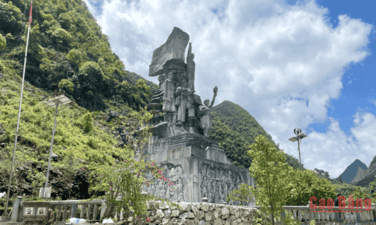
Monument to Youth Volunteers - Happiness Road
Monument to Youth Volunteers - An eternal symbol on the Path to Happiness The Youth Volunteer Monument is located on the Happiness Road, in the Dong Van Stone Plateau area, Tuyen Quang province (formerly in Ha Giang province). This is a memorial to the young volunteers and people of all ethnic groups who devoted their youth, sweat and blood to open the legendary route through the northernmost rocky mountains of the Fatherland. The Road of Happiness was started on September 10, 1959 and completed in 1965, with a length of about 185 km, connecting Ha Giang city with Quan Ba, Yen Minh, Dong Van and Meo Vac. To complete the project, nearly 1,000 local workers and more than 1,000 young volunteers from 16 ethnic groups in 8 provinces worked continuously for more than 5 years in extremely arduous conditions. With only rudimentary tools such as hoes, shovels, crowbars and sledgehammers, they excavated and transported more than 3 million cubic meters of soil and rock, creating the first route connecting the rocky plateau with the lowlands. Particularly when crossing Ma Pi Leng pass, the force paving the way had to hang on a steep cliff for 11 months to drill rocks and open every meter of the road. During the construction process, 14 young volunteers heroically sacrificed their lives, leaving an indelible mark in the history of building the country. In that pioneering epic, there was an important contribution from more than 200 young volunteers in Cao Bang province. They participated in the construction of many important roads such as Pac Sum, Trang Kim, Pho Bang, Lung Cam, Xa Phin and many other roads on the rocky plateau. One of Cao Bang's outstanding children who sacrificed on the construction site was martyr Trieu Van Thoong, contributing to enhancing the tradition of fighting and dedication of the homeland's youth. To remember the contributions of those who paved the way, in 2017, the Youth Volunteer Monument Cluster was built right next to the Happiness Road. The work is made of natural stone, 16 m high including the statue's pedestal. The main cluster of statues includes five images of young volunteers with a proud and strong posture, demonstrating their resilient will and spirit of solidarity to overcome all difficulties. Behind are three bas-reliefs recreating the journey from the first days to the rocky area, the process of breaking the mountain to open the way to the moment the historic route was completed. Today, the Youth Volunteer Monument is not only a stop on the journey to explore the Dong Van Karst Plateau UNESCO Global Geopark but also a "red address" to educate generations about revolutionary traditions. Amidst the majestic scenery of the mountains and forests, the monument reminds each visitor of the noble sacrifices of the young volunteers who turned the seemingly impossible into reality. This is a symbol of patriotism, the will to overcome difficulties and the desire to contribute, contributing to creating the Road to Happiness - the pride of the northernmost region of Vietnam. According to Tuyen Quang electronic newspaper (compilation)
Tuyen Quang
382 view
Rating : National monument
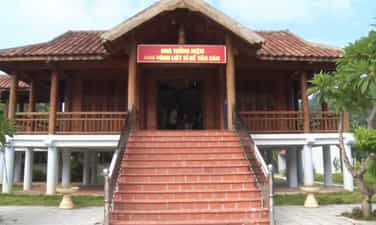
Be Van Dan Heroic Martyrs Memorial House
Be Van Dan Heroic Martyrs Memorial House - Red address in the revolutionary homeland of Cao Bang Be Van Dan Heroic Martyr Memorial House is located in Ban Buong hamlet, Trieu Au commune, Cao Bang province, on the foundation of the house where the hero was born and raised. This is a work of special significance, built to commemorate and pay tribute to Hero of the People's Armed Forces Be Van Dan - an outstanding son of the Tay people, who heroically sacrificed his life in the Dien Bien Phu Campaign. Be Van Dan was born in 1931 in a poor family, joined the army in 1949 and participated in many major campaigns. During the battle at Muong Pon in 1954, when his comrades had no support to use the machine gun, he bravely used his shoulder as a gun stand, encouraging his comrades to continue fighting. That brave action contributed to repelling the enemy's counterattack, before he heroically sacrificed his life. With a particularly outstanding victory, Be Van Dan was posthumously awarded the title of Hero of the People's Armed Forces by the State. The memorial house was built according to the traditional stilt house architecture of the Tay people, in harmony with the landscape of Cao Bang mountains and forests. Inside is a solemn worship space with an altar, portraits and documents and artifacts introducing the life, career and heroic fighting example of Heroic Martyr Be Van Dan. The spacious, green campus creates a solemn space, a place for people and tourists to offer incense and commemorate. Today, the Be Van Dan Martyrs' Memorial House is not only a place to pay tribute to the national hero but also a "red address" that educates patriotic traditions, gratitude and revolutionary spirit for generations. This is a destination with historical significance, contributing to preserving the nation's heroic memories and spreading good values of courage and sacrifice for the independence and freedom of the Fatherland. According to Cao Bang electronic newspaper
Cao Bang
396 view
Rating : Provincial level relics
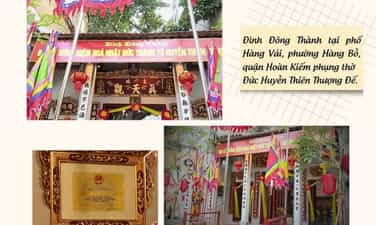
Dong Thanh communal house
Dong Thanh Communal House - Historical and architectural relic in the heart of Hanoi's Old Quarter Dong Thanh communal house, also known as Hang Vai communal house, is located at 7 Hang Vai street, Hoan Kiem district, Hanoi. This is one of the typical ancient communal houses of the old quarter, both a place for religious activities of the residential community and preserving many unique historical, cultural and architectural values of ancient Thang Long. The communal house was built to worship Saint Huyen Thien Tran Vu - a god revered by the people for his merits in guarding the North and protecting the country and people. Previously, the communal house was the common living place of two villages, Dong Thanh and Dong Thanh Thi, later merged into Dong Thanh village under the Nguyen Dynasty. Over the centuries, the communal house has still preserved many precious artifacts such as the bronze statue of Saint Huyen Thien Tran Vu, the system of stone stele of the Nguyen Dynasty recording the process of construction and restoration along with ordinations, horizontal panels, and parallel sentences with historical and artistic value. These are precious documents that contribute to reflecting the cultural and religious life of Hanoi's Old Quarter residents through many periods. Not only has architectural and religious value, Dong Thanh communal house is also associated with important milestones in the nation's history. During the early days of the National Resistance War at the end of 1946, the communal house was used as an ambulance station of Inter-Region I, contributing to the fight to protect the Capital for 60 historic days and nights. This event has increased the historical value of the monument, turning this place into a red address for educating patriotic traditions for generations. In 2014, Dong Thanh communal house was ranked as a city-level historical - architectural and artistic relic. Today, the communal house is not only a place for local people's religious activities but also an attractive attraction on the journey to explore Hanoi's Old Quarter. According to Hanoi New Newspaper
Hanoi
922 view
Rating : Provincial level relics
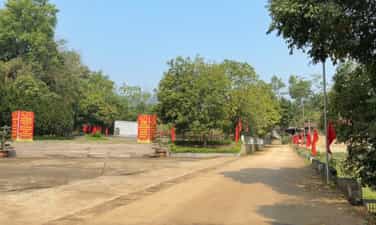
Nam Lin historical relic site
Nam Lin historical relic site, in Hoang Tung commune, Cao Bang province, is one of the typical "red addresses" of the Vietnamese revolution. This is the place that marked the establishment of the first Communist Party cell of Cao Bang province on April 1, 1930, marking an important turning point in the local revolutionary history. With great significance in history and traditional education, Nam Lin has become a destination not to be missed for those who want to learn about the revolutionary roots of Cao Bang. More than 90 years ago, under the leadership of the Communist Party of Vietnam and the direct direction of comrade Hoang Dinh Giong, the first Communist Party cell of Cao Bang province was established in Nam Lin with three party members: Hoang Van Non, Le Doan Chu and Nong Van Do. Comrade Hoang Van Non was elected Party Cell Secretary. From here, the revolutionary movement in Cao Bang was organized and developed strongly, making an important contribution to the cause of national liberation. To recognize the special historical value of this location, on February 13, 1995, the Ministry of Culture and Information recognized Nam Lin as a national historical site. Today, the relic site is preserved and beautifully restored, becoming a place to store documents, images and traces of the birth of the first Party organization in Cao Bang. The space of the monument looks solemn, quiet, and in harmony with the natural landscape of the midland region, creating favorable conditions for sightseeing and historical learning activities. Coming to Nam Lin Historical Relic Area, visitors will not only be introduced to the process of forming the province's first Party Cell but also have the opportunity to better understand the patriotic tradition, spirit of solidarity and resilient will to fight of the people of Cao Bang's ethnic groups. This is where resource-giving activities, incense offerings, thematic activities, admission of party members, union members and traditional educational programs for pupils, students, officials and the armed forces regularly take place. According to Cao Bang electronic newspaper
Cao Bang
1124 view
Rating : National monument