Relic point Vietnam
Việt Nam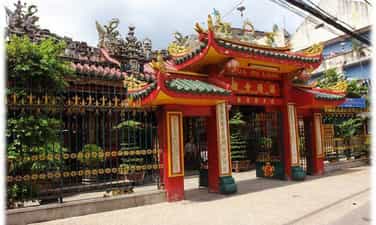
Wen Lang Restaurant (Quan Am Pagoda)
The Wen Lang Association is located at 12 Lao Tzu Street, Ward 11, District 5 Hoi Wen Lang, also known as Quan Am Pagoda. The Wen Lang Restaurant, also known as Quan Am Pagoda, is the headquarters of the Council of the Flower Migrants of the Hoa Nguyen Quan in Tuyen Chau, Phuoc Kien Province (China). The restaurant was built in the second half of the 18th century and was restored in 1828, 1867, 1897, 1993 and 1995. In 1809, the Management Board of the Association built an additional lake to be born in front of the restaurant, to "gather the gas" for the sacred temple. In addition to the Holy Holy Mother, the god worshiped in the main hall, the Wen Lang's Hall also worshiped the Jade Emperor, the Chua Sinh, Phuc Duc Chinh Than (Earth God), Quan De, Bao Cong, Van Xuong De Quan (the God of Phuoc Loc), Ma General, the Imperial Citadel, the Buddha Shakyamuni, the Buddha Di Da, the Holy Earth Mother, Horoscopes, the Holy Great Holy Emperor (the God of Tai). In particular, the Bodhisattva Bodhisattva is located in the yard behind the main hall with the statue of Guan Yin almost two meters high on the lotus, the two sides have Kim Dong, Ngoc Nu followed the servant. The overall ground of the guild consists of a small yard in front, a rectangular block in the middle (including electricity, Thien Tinh, Trung Tinh, main hall) and three perpendicular blocks forming a U -shaped shape covering this block, the distance between the blocks is a quite spacious aisle. The restaurant is built and decorated in the typical style of Phuoc Kien temple with the architectural style "Four -faced" architecture, roof tile roofs, purlin heads under the porch are carved with lotus shaped ... The artistic value of the guild is expressed through the reliefs of two dragon paintings, phoenix birds and models of citadel, humans, animals ... ceramic is decorated on tile roofs; The pair of stone stones flanking on both sides of the door includes the statue of Lan Tu Tu (the mother is teaching the child) and the Ham Chau Lan statue (Lan pearls in the mouth); The sophisticated wooden reliefs are decorated on the facade and on the rafters; The door of the door, the exquisite carvings of the shadow of Mai - Dieu (apricot blossom - sparrows), Truc - Tuoc (Truc - Bird of the title), Ngo Dong - Phuong (Corn tree and Phoenix), 16 pairs of ledics, 23 Hoanh Phi (dating back from 1826 to 1908), bronze bells in the Year of the Rooster (1885) and the statues of the Holy Spirit are truthfully created. Thien Hau Thanh Mau was the god of worship but later on the worship of Quan Am was more serious, so the Quan Am festival was held very solemnly in the 17th of the 17th of the lunar calendar. In addition to sacrifices, the Board of Directors also thrives for people to attend. The Wen Lang Club has been ranked by the Ministry of Culture and Information as the National Architectural Architecture Monument under Decision No. 39/2002/Decision -The Culture and Information Service dated December 30, 2002. Source of electronic portal in District 5, Ho Chi Minh City.
Ho Chi Minh City
4975 view
Rating : National relics.
Temple of Thien Hau - Tue Thanh Association
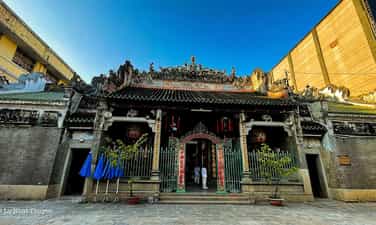
Thien Hau Temple is located at 710 Nguyen Trai Street, Ward 11, District 5, is the Temple of Thien Hau Mau of the Chinese - Guangdong community, originally in Tue Thanh district (China). The temple was built in 1760. Since then, the temple has been restored many times. The temple has a national surface structure, divided into 3 rows: electricity, electricity and post -electricity. The Tue Thanh and School Associations are located on both sides of the temple. The roof of the temple is decorated with patterns of flowers, ceramic shapes produced by the two Buu Nguyen and Dong Hoa kilns in the Year of the Monkey (1908), with the scene of "the ring", "Bai To Vinh Quy", the type of "Mesopotama Long Tranh Chau", with the image of Tien Dong, Tien Nu with the words "Hoa Hop Nhi Tien" ... Two stone unicorns, touching the whole stone block is located in the temple yard. Electricity sets two pages on both sides of the entrance. On the left worshiping the door of the door (the subject of the king), the right to worship Phuc Duc Chanh Than. There is also a stone stele that records the legend of Thien Hau Holy Mother and a large picture of the show of the spirit on the water. The merit beer recorded the restoration of the temple to the generations: The 8th Quang Dao (1828) and the 10th Quang Dao (1830) - Tu Duc first decade (1857); Ham Phong Cuu Nien (1859); Quang Tu - Mau Tuat (1898) ... Trung Dien set the 12th Quang Tu Lu Lu set (1886) is the largest set compared to the other sets in other temples in the city. There is also a large palanquin painted with good wooden lacquered lacquer, taking her on the day of the day. Hoanh Phi Phi "Ham Hoang Quang Dai" hangs here, saying the oldest restoration year of the temple (1800). The post -electricity is the main space to worship Thien Hau Thanh Mau. On the worshiping page, there are 3 large statues: the highest statue used on the occasion of Ba Ba, Cung Nghinh to the yard for Mrs. Ngu Exhibition of the Festival; The middle statue placed on the altar and the bottom statue used to put in the palanquin to march around the neighborhoods on the festival. At the main hall also placed 2 Great Red Gangs: One dating from 1795 Dynasty of the 60th Qianlong King and one was cast in the year of the Dog 1850. In the "Thien Harem", there was a wooden boat in the corner, hanging the flag with 4 words "Prussia of sentient beings", using her to offer her on the day of the year. On both sides of the worshiping page, she also placed the worshiping page of Kim Hue Nuong on the right and Long Mau Nuong on the left ... The extra space also worshiped the Holy Mandarin, the Jizō and the God of Fortune. The large glass cabinet of the main electricity and the general statue of Ariès signed: Prohibiting French soldiers, Y-Pha-Hu destroy the temple-stored in 1860. In addition to precious artifacts, in the temple, there are methods such as: peak bass, bass, sandalwares made of sandstone ... because the Chinese people respectfully worshiped. As the most important temple in the city to worship Thien Hau Hau Mau and some valuable artifacts in the temple, on January 7, 1993, the temple was recognized as an architectural monument under Decision No. 43-Culture/Decision of the Ministry of Culture and Information. Source of electronic portal in District 5, Ho Chi Minh City.
Ho Chi Minh City
5189 view
Rating : National relics.
Second Government (Ong Bon Pagoda)
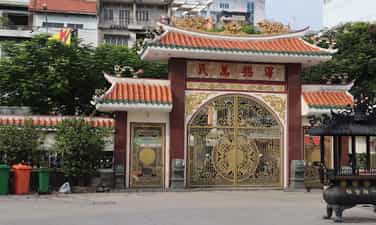
Nhi Phu temple, Nhi Phu Hoi Quan, also known as Ong Bon Pagoda, is located at 264 Hai Thuong Lan Ong Street, Ward 14, District 5, Ho Chi Minh City. Name the Nhi Phu because the temple was established due to the contribution of the Chinese -born Chinese in Tuyen Chau and Chuong Chau, Fujian, China. Later, Tuyen Chau established Wen Lang Quan, Chuong Chau group established Chuong Chau Quan Chau (now Ha Chuong). It is not clear what year the temple is built. Currently in the temple still holds a neck bell. On the bell only cast the words "Nhi Phu Dai Ba Cong An Dau in Thu Cat ..." so it is difficult to determine the date. In "Ancient Gia Dinh landscape", Bai Phu describes the Gia Dinh landscape from 1770 to 1815. On a sentence hanging at the Halge of Ha Chuong Association (established after the Nhi Phu temple), the restoration year is the family of Ky Ty in 1809. So this restaurant was built at the end of the eighteenth century. From the above data, it can be said that "Ất Dau" touches the bell in 1765, which is also the year of establishing a temple. Since its establishment, the temple has passed three major restorations in the years 1875, 1901 and 1990. However, the temple still retains the ancient features through the architectural style and traditional decoration of the Chinese - Fujian. The temple campus is about two thousand and five hundred square meters. The yard accounts for nearly half of the area. The remaining space includes church electricity, the headquarters of the restaurant and Thien Tinh yard. The temple has a wooden house, tile roof, brick wall. The façade wall is made of stone slabs. The wooden frame is painted in red, beautifully decorated with lotuses touching the top of the purlin bars under the awning, the wooden unicorn statues of the beam head or the wooden frills touched the horizontal bar ... The roof of the tile, the roof of the roof is a row of glass tiles. The form of the rafters "husband - gong price" makes the temple a bit curved with the design of the two -layer -shaped roof and the top of the roof, the bending blade head gives the temple shape a dragon boat ... on the roof of decorative fish statues of dragon, apricot, lan, chrysanthemum, bamboo, dragon, phoenix ... with colorful ceramics. At the top of the roof, there is a long -bisexual picture. The dragon body does not stretch as usual but almost straight, the tail spread high. Inside the temple is simple but no less solemn. On each high -painted wooden column, it is prescribed with stone foot touches, with one or two couplets. Many couplets are higher than 3 meters high, curved in the direction of the column. Hoanh Phi is also decorated in many places. There are all 14 couplets and 30 diaphragm, mostly made from 1864 to 1901. The diaphragm and couplets are touched around, inside the floating Chinese characters on the floral dragon pattern, water waves ... In addition to the meaning of praising the divine, there is also the value of the arts calligraphy and wood touching art. The altar of Mr. Bon is the righteousness of the god, the god of protection of land according to the Chinese beliefs placed between the main hall. The two sides worship Quang Trach Ton Vuong and Thai Tue Gia. Along the two sides of the world before the main hall are the two temples of the Emperor and the Lord. Hau Dien worship the Emperor Jade Emperor, Shakyamuni Buddha and Quan Am Bodhisattva. The gods and saints are shown by wooden or plaster statues placed solemnly in worship. The most prominent is the worship of Mr. Bon made in 1894. Wooden worship, gold paint, carved topics of Long Tranh Chau, Ngo Dong - Phuong, Lan Chau ... alternating with Dong Tien, Tho, river animals such as shrimp, crabs, fish ... is a work of wood carvings, a precious artifact of the temple. There are also other valuable artifacts such as neck bells made of casting in the year of the Rooster (1765), cast iron bells made in 1875, stone unicorn statues, blue bags, fonts, diaphragms, couplets ... dating back to the 19th century. Nhi Phu Temple is considered one of the oldest temples of Chinese people in Ho Chi Minh City. As a unique architectural work with the art of touching stone and sophisticated wood, the Nhi Phu temple not only shows the exchange of Chinese -Vietnamese culture but also marks the settlement and development of the Chinese Fujian people, associated with the development of the old Saigon. On August 31, 1998, Nhi Phu temple was recognized by the Ministry of Culture and Information as an architectural and artistic monument under Decision No. 1811/1998/Decision-Culture and Information. Source of electronic portal in District 5, Ho Chi Minh City.
Ho Chi Minh City
4104 view
Rating : National relics.
Silver worker church (Le Chau Hoi Quan)
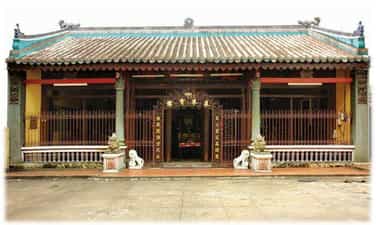
Le Chau Hoi Quan, the Silver Craft Church in Saigon - Ho Chi Minh City, is located on a 805m2 area, at 586 Tran Hung Dao B Street, Ward 14, District 5, Ho Chi Minh City. This is a house that has existed for more than 100 years, the earliest church of silver workers built in Saigon and the Southern region. Author Vuong Hong Sen wrote: "Nguyen Trai Street goes out of the road of the governor of Phuong to meet Le Chau pagoda. This is a" pagoda "to worship the masters of the group of workers and the owner of the kiln kiln. In the late 19th century, Saigon was an important industrial park. Saigon craftsmen are skilled and are organized into "workers" and "workers". Particularly, the profession of silver workers (today's kimming industry) is very developed. Making the State, there are companies: domestic silver workers, Chinese silver workers, Huu Trung silver workers ... and private gathered into silver kilns. Around Cho Lon area, there are more than 30 silver kilns practicing. Dat Dat - Grateful to the Career. A number of reputable gamblers in Cho Lon have mobilized to donate from silver kilns in the region and throughout the eastern provinces, the Southwestern region, the little, many people, they have contributed to buying a square land in the waterway (Rue des Marins, Tran Hung Dao B Street today). The ancestor church was started from 1892 to 1896, completed. The ancestor church has undergone many major restoration in 1920, 1934 and 1946. The last major restoration was in August 1968, the entire meaning and major repair in the main hall due to damage. The main hall is built in the structure of three vertical spaces, there are two rows of columns running from outside to inside, brick walls, and yin -yang tile roofs. The layout in the main hall is simple, there is no statue. The main field of the main hall placed three worshiping exams decorated with dragon, phoenix, flowers, and elaborate ... elaborate. In the middle is a large church in place of worshiping items and tablets with the words "ancestors" written in a beautiful, beautiful way and painted in gold. The two sides are two small worship examinations, the right to worship the two words "Tien Hien", the worship on the left of the word "Hau Hien". From outside to inside the columns, there are 6 couplets and 9 diaphragm with content focusing on the topic of gratitude to the Patriarch, praising the prosperous development of the silver worker. All the diaphragm, couplets, bao lam ... are painted with golden lacquer with high quality of paper with high golden age, so they are glossy and clear, although they all have a long year. In the ancestral church, there are some quite unique artifacts: a large drum with a height of 1.10m, a diameter of 0.60m, the drum is not equal to the wooden pieces but a large round wooden tree. Accompanying the drum is a 1m high bell, a diameter of 0.50m, on the bell for the year of the Goat (1895) by the Hanoi workers and clearly stated the full name of 14 people in the profession of silver worker to pay homage to the ancestor. Especially, 4 stone steles are placed opposite at two walls of the main hall. There are plates dating back 1895, there are plates for 1916 and 1920. On the steles engraved their names, name, local name, the amount contributed to build the ancestral church. Thereby we see a disciple of silver worker throughout the South of the province: Tay Cong, De Ngan, Tra Vinh, Ben Tre, Can Tho ... Chinese and Vietnamese people. Besides the names of Han Nom characters such as Thinh Duc, Kim Phuoc, Duc Phat ... there are also very brand names such as: Nam Suong Huan, Seven except ... According to the legend of this Silver Master Church, built to worship a native of the Tran family (unknown name), from the outside of the area, the original worker in the palace, learned from the silver worker from the two high -ranking people of Vietnam. "First First Patriarch" by King Gia Long Phong in 1810) and "Second Master" Cao Dinh Huong (1773 - 1821, the brand "Second Master" by King Minh Mang Phong in 1821). The death anniversary of the Kim Hoan Hoi Quan was held on February 7 (lunar calendar), which was the death anniversary of the "Second Master" Cao Dinh Huong. The annual worshiping day here gathered a large number of disciples of silver workers from all over the Southern region of the province. The death anniversary is held for three days from 6 to 8 February (lunar calendar). More than a century has passed, the ancestral church has been preserved by the Board of Directors and the disciples of the silver worker. The house is not only a normal place to worship the tradition of "religious religion", "Drinking water to remember the source" of Kim Hoan practitioners but also bold unique cultural features about the history of struggle as well as the development process of the ancient Saigon and Southern regions. For that reason, "Le Chau Hoi Quan" has been ranked by the Ministry of Culture and Information as an architectural and artistic monument under Decision No. 1811/1998/Decision - Ministry of Culture and Information on August 31, 1998. Source of electronic portal in District 5, Ho Chi Minh City.
Ho Chi Minh City
3802 view
Rating : National relics.
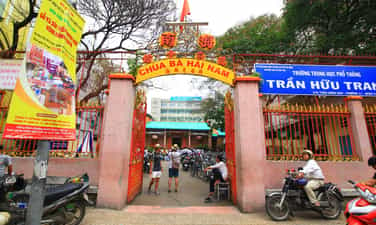
Ba Hai Nam Pagoda or Quynh Phu Festival
Ba Hai Nam Pagoda or Quynh Phu Festival is the name of the Hoa Hai Nam guild living in Cho Lon area, District 5. According to the content stated on the stone stele, the restaurant was built in 1824 in the land of "painted in Thuy Tu" where "busy boats and circulating goods". Through six restoration, the new guild has the size of today. The restaurant is built in the style of "four -faced" houses with four rows of houses perpendicular and towards Thien Tinh yard in the middle. The row of electricity houses is designed in two sides, one side facing the Homeland yard and one side facing Thien Tinh. Next, the electricity is medium and the main electricity. Trung Dien is the workplace and reception of the Board of Directors. The altars are concentrated in the main hall. In addition to the worship of Thien Hau Thanh Mau, there are also the worshiping sentences of Van Xuong De Quan, Phuc Duc Chinh Than, talented White Tinh Quan, Hoa Quang, Ngu Tho Long Than and Pre -Land of Tai Than. In particular, there are gods only worshiping at Quynh Phu Hoi, Thuy Vi Nuong and her mind (two goddesses protecting the seafarers) and 108 Hai Nam traders, after being in the sea, they were very spiritual, ordained by Tu Duc King in 1851 and King Duy Tan ordained in 1922. The 33rd Quang Tu (1907). The incense burner consists of a 0.7m high incense burner, 0.9m wide mouth diameter and two deer statues 1m tall, mouth holding candle price, apricot blossom on the body of the deer and phosphorus head in the strap's hand is lively and sharp. The five -piece set consists of a peak of the bass bass, the "bowl of bowls of the upper bowl" (eight riding on eight precious beasts), Mesopotamia (two dragons of the pearl painting) and two poisonous, two candlesticks are also cast in Long Long Tranh Chau on clouds and fire. Wood carving techniques in the guild also achieved high artistic value, reflected on the bags of worship, door bags, incense, tips, diaphragm ... with the technique of touching, floating, touching or combined with floating touch, the artisans have created reliefs with dozens of characters or blue bags that are meticulously touched, the churches of the body of the dragon, the dragon, the dragon, the rules The object is familiar to the daily life such as the fish, the crabs are bearing the shrimp in the grass, the fruits of the fruit ... The wooden panels taller than 3 meters high, more than 4 inches wide bent in the body of the column are also the works of calligraphy and art, embossed. Notably, a set of six paintings we were made in 1963, summarizing the poem Luc Van Tien by poet Nguyen Dinh Chieu. Each painting is six verses showing the content of the picture. This set of paintings, along with the Black Stone Wind, was donated and ordained by King Tu Duc and ordained by Duy Tan, showing the exchange and integration between the Hai Nam community and the Vietnamese ethnic community. Quynh Phu Hoi Quan - Ba Hai Nam Temple of Ho Chi Minh City has been granted the National Culture Culture and Culture Ministry of "Historical - Cultural" Culture and Culture by the National Level No. 52/2001/Decision/Ministry of Culture and Information issued on December 28, 2001. Source of Ho Chi Minh City websites.
Ho Chi Minh City
3734 view
Rating : National relics.

The establishment of the Southern Party Committee for Propaganda
After the 1954 Geneva Agreement was signed, the Southern Party Committee used the house No. 51/10/14 Cao Thang Street as the basis for the Southern Party Committee Propaganda Committee and a number of units of Saigon - Gia Dinh area during the anti -American resistance war. The house has bricks, tile roofs- the main house 3.6m wide, 15m long and a 3.6m wide kitchen, 6m long. Here, the Southern Commission for Propaganda and Commissioner of the Southern Party Committee set up the recording machine and assigned to Mr. Do Van Ba (ie Do Van Loc), the Party Committee in charge of the grassroots level, collected news from the Hanoi Radio and edited it into documents, printing and issuing to the establishments of the Party Committee to hold the news and implement the Central Directive of the Central Committee for the South. In addition, the Commission for Propaganda Committee held many important meetings with comrades of senior leaders of the city attending such as Mr. Tran Bach Dang, Pham Dan, Tan Duc, Do Van Ba ... Until the Cavalry Propaganda Committee moved to War Zone D in 1957. From 1957 to 1961, the facility of My Tho Town Personnel Committee and the Executive Committee of the Liberation of My Tho Town to use this temporary residence, and the temporary residence of this house, to use this temporary residence, the temporary residence of the house is to use the temporary residence. Meeting to direct the struggle movement of My Tho province. In 1964, Ms. Tran Thi Ngoc Suong mobilized the family of Tu Bon's family to stay close to the side to expand the base for the committee of the Party Committee to use: Here the hero of the armed forces Le Thi Rieng (Ms. Chin), Head of the Auxiliary Committee of the Party Committee and comrades Nguyen Thi Ngoan (Secretary of the Citadel Department), Nguyen Thi Chon, Tran Thi Lan, Ngo Ba Thanh ... used to live and work. Under the direction of Comrade Le Thi Rieng, the Party Committee of the Party Committee wrote, printed and published a number of newspapers such as: "Women", "Saigon up", "Neutral" and organized to bring some women into activities in the movements: "The association for protecting the dignity and the benefits of women", "Women demanding the right to live", "demanding improving the labor regime" ... Also used this place to hide the weapon to prepare for the campaign. Comrade Doan Le Phong and Do Ngoc Trinh (Bay Ha), cities used as a gathering point for the forces to destroy the chess market, organized a chess sewing to hang and write a single spread in the market to call people to fight against the enemy. In 1969, at this house, Ms. Tran Thi Ngoc Suong stored many newspapers and documents to transfer to the Vietnamese delegation to attend the Paris Conference to grasp the news of fighting at the conference. On the last day of the American imperialist resistance war (April 30, 1975), the City Party Committee's Task Force delegation led by Comrade Pham Khai (Ba Ka) came from this house to take over the post office and Saigon capital. With these historical values, the Southern Commission for Propaganda Department was ranked as the National Historical Monument under Decision No. 1288-Culture /Decision on November 16, 1998. Source of the website of District 3, Ho Chi Minh City
Ho Chi Minh City
3779 view
Rating : National relics.
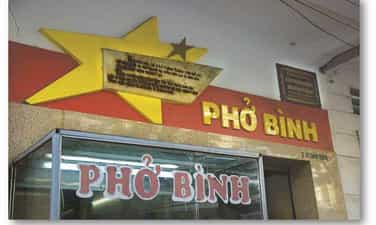
The headquarters of the 6th zone in the 1968 trade campaign
The Military Headquarters - Division 6 (Special Zone of Saigon - Gia Dinh) decided to use a noodle shop to be the headquarters of the soldiers and officials to convey orders in the general offensive and rebellion of the 1968 Xuan Than. The monument is Pho Binh shop, No. 7 Yen Do Street (now Ly Chinh Thang Street), Ward 8, District 3, Ho Chi Minh City. It is a townhouse: 1 ground, 3 floors and 1 terrace. The ground floor has an area: 4m x 19m after, the middle has a stone staircase. The ground floor is used as a noodle shop, according to the design of the kitchen to occupy half of the front corridor. Inside the dining table layout, leaving the path in the middle. Isolate kitchen, toilet, lake with diners with stairs leading to the floor 1,2,3. Each floor is divided into 2 rooms: the front room (with an area of 3m x 3.5m) and the rear room (with an area of 3m x 4m). An iron ladder on the terrace. Each floor has three front rows in size 1.2m x 4m shielding outside with bamboo flute. Pho shop is located in the residential center, spacious, customers eat relatively crowded, so the special unit used as a basis for communication and receiving documents. The three soldiers in the Special Squad were also arranged as a maid at the noodle shop. Since 1967, there have been many officials and soldiers to reside at the business noodle shop or meeting for a few days. About a month before the Tet holiday, Mr. Hai Tri went to the noodle shop to instruct Mr. Ngo Toai to urgently reserve food for about 100 users in 1 month. In compliance with the orders, Mr. Ngo Toai stores some food and food (dry food, box, chicken, raw duck ...) on the night of the thirty Tet Mau Than (in 1968), commanding the specialized units of subdivision 6 gathered at home No. 7 Yen Do Street preparing to accept the task: Mr. Tu Chu (Nguyen Duc Hung) was appointed to hold the position of Deputy Commander and Chief of Staff of Zone 6; Hai Tri (Nguyen Van Tri) - Politician of J9 cluster (A30, a battle guarantee unit); Ba Black (Ngo Thanh Van) - captain A30, captain of the 11th Special Forces in the first phase of the campaign (the unit fighting the American Embassy); Ba Phong (Do Tan Phong) - Commander of the 679 Ranger Cluster (in the first phase of the campaign); ... and officers and soldiers on duty to transport weapons, information - cipher and military medical. On the first day of the Lunar New Year (January 30, 1968), Mr. Ba Thang (Vo Van Thanh) - Political Commissar of Zone 6 to the Headquarters to direct the units. On the night of the first day of the Lunar New Year, on the third floor of the house, officials, soldiers, establishments, the commanding committee of the clusters, the special teams, the service units have gathered enough, waiting for the order to attack. At 23:30, on behalf of the Command of Division 6, Mr. Ba Thang read the signal of the Central Committee of the National Front Liberation of the South, disseminating and issuing commands for the clusters of the task of shocking, attacking the head targets of the American Empire and the minions government in Saigon. On the morning of the two New Year of the Mau Than, realizing that there were signs of the facility that was revealed, Mr. Ba Thang ordered the dispersion of force here, and the legitimate comrades continued to stay. On the morning of the third day of the Lunar New Year, when the commanders left, the Saigon army surrounded the Pho Binh shop, arrested the couple comrade Ngo Toai, daughter, son -in -law and 13 officials and soldiers to stay at the requirements of the mission. Mr. Ngo Toai was very brutally tortured by the enemy for 20 days and still did not confess anything. He was exiled to Con Dao and kept his loyalty to the revolution until he was returned to prisoners after the 1973 Paris Agreement. This secret base relic of the Ranger forces is the place to issue the command to attack for the special units and the inner rebels, recording the important historical milestone of the 1968 general offensive and rebellion in Saigon - Gia Dinh. The monument is also the expression of the patriotism of the inner city and the courage and indomitable spirit of revolutionary officers and soldiers, especially the special forces in building forces and fighting. The monument has been recognized by the Ministry of Culture as a historical monument through Decision No. 1288 - Culture/Decision on November 16, 1988. Source of the website of District 3, Ho Chi Minh City.
Ho Chi Minh City
4133 view
Rating : National relics.
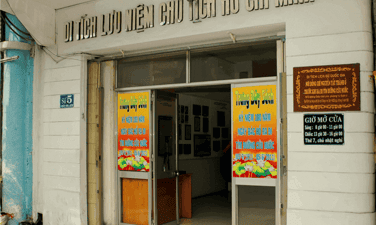
Historical relics where comrade Nguyen Tat Thanh was before leaving to find a way to save the country
In 1910, Nguyen Tat Thanh left Duc Thanh - Phan Thiet school to Saigon (September 19, 1910). The person who was officer of Lien Thanh Thuong Quan was Mr. Truong Gia Mo (close friend of Mr. Nguyen Sinh Huy, President of President Ho Chi Minh) and Mr. Ho Ta Bang brought back to stay at home No. 5 Chau Van Liem Street. This is one of the facilities of Lien Thanh Thuong Quan, a very prestigious revolutionary organization in Saigon to live and prepare for going to find a way to save the country. From this house, Nguyen Tat Thanh has just taught and went to work and apprenticeship at the école des Mécaniciens schoolmaker school, sometimes selling newspapers in the Saigon Port Port area to make a living and learn the life of workers, working people as well as ships in and out of Saigon port. During this time, Nguyen Tat Thanh knew some Vietnamese people working at Nam Sao (five -star shipping lines often running Saigon - Da Nang, Colombo and some French ports) such as Nguyen Van Lobster, Bui Van Vien ... It is known that the company is recruiting "compensation", Nguyen Tat Thanh and some Vietnamese people who have come to work and be collected by the company. On June 4, 1911, Nguyen Tat Thanh, called Van Ba (by Mr. Truong Gia Mo, Ho Ta Bang and Tran Le Chat, and changed his name to Van Ba before coming to Saigon), he left Lien Thanh Thuong campus in the French ship called Amiral Latouche Treville. On June 5, 1911, the ship left Nha Rong - Saigon port to bring Van Ba (Nguyen Tat Thanh) began to leave his homeland to find a way to save the country. After many years of traveling abroad, he came to Marxism -Leninism and has found the way to save the nation. He founded the Communist Party of Vietnam and the leader of the Vietnam People's Revolution in August 1945 successfully, establishing the Democratic Republic of Vietnam. Throughout his life, he was for the country, for the people. The thought and morality of the person who always shining the way for the Vietnamese people to firmly step on the path of struggle for national independence and build socialism - communism. The house No. 5 Chau Van Liem street has historical value - a place that marks a very important phase in the way to find the way to save the country of President Ho Chi Minh. Here, there is a display of images of Lien Thanh and Saigon images in the 1910-1911 period. With that historical significance, this house was ranked by the Ministry of Culture as a national historical monument under Decision No. 1288-Cultivation/Decision on November 16, 1988. Source of Ho Chi Minh City websites.
Ho Chi Minh City
3911 view
Rating : National relics.

Binh Gia battlefield historical relics
In the early 1960s of the 20th century, Binh Gia was an important area for the enemy on military, political and economic. Around Binh Gia, the enemy arranged a powerful military force, equipped with modern weapons, under the direct guidance of American advisers. Facing this situation, to create a new position and force for the Southern Revolution, on December 2, 1964, we decided to open a Binh Gia campaign. The force participating in our Binh Gia campaign includes: 2 infantry regiments (761 and 762), 4 Battalions of Battle Battalions (mortar 81, DKZ 75, Lien Lien 12,7) of the Regional Command; 2 battalions (D800 and D500) of Military Region 7; Company 445 of Ba Ria province; 1 battalion (D186) of Military Region 6 and local force. Weapons equipped for forces are mainly old weapons and enemy weapons in previous battles. Although the forces participated in the thin campaign, equipped with inadequate and rudimentary weapons, under the insight of the Party, the Central Department, the Regional Command and especially the heroic fighting spirit of officials, soldiers and people of all classes, we have won a resounding victory. At the end of the Binh Gia campaign (March 7, 1965), we destroyed the 4th Marines Battalion 4, the 33rd Ranger Battalion and the M113 Mechanical Motor Car Division; Heavy damage to 3 other battalions and many companies; shot down and destroy 56 aircraft, 45 military vehicles; destroying and injuring more than 1,700 enemy troops; Collect more than 1,000 guns of all kinds and nearly 100 information machines. Through the campaign, we broke the ball, destroyed many "strategic hamlets", basically liberating the rural areas of Chau Duc, Long Dat and Xuyen Moc districts and part of Xuan Loc district. As a result, our resistance base is expanded from Chau Pha, Black Translation connected to the D. War War Zone D. The victory of Binh Gia has great historical significance for the Southern Revolution. This victory proved the correctness of the Party's revolutionary way; demonstrate the maturity of our army about tactics, campaigns and art guiding art; Creating a turning point to compare forces on the battlefield is beneficial for us, detrimental to the enemy. Besides, the victory of Binh Gia also has great political significance at home and abroad. It increased the belief of the victory of the entire people and our entire army, from which to continue to overcome all hardships, rise to the final victory in the resistance war against the US on April 30, 1975. In order to mark the resounding feat in the anti -American resistance war on the land of Ba Ria - Vung Tau, the leaders and people of the province have built a monument to the Binh Gia Victory Radio close to Highway 56, Ngai Giao town. The monument campus is 20,000m2 wide, including flower gardens, monumental areas, temples and auxiliary works ... 26m high body body, light gray, placed on a 3m high granite pedestal, creating a strong feeling. With three hands clenched in Doc Le, above are three bayonets to rise to the blue sky symbolizing the three troops and three armor in the victory of Binh Gia. The two sides of the monument are two reliefs (7m long, 3m high) made from thousands of Bat Trang ceramic pieces (Hanoi) showing the combat coordination and victory in the Binh Gia campaign. The monument has been recognized by the Ministry of Culture and Information as a national historical monument under Decision No. 2754-Decision /Minister, October 15, 1994. Source of electronic portal of Chau Duc district, Ba Ria - Vung Tau province.
Ho Chi Minh City
4021 view
Rating : National relics.

Historical relics of Nui Dinh base area
Nui Dinh base area is located in 3 communes: Hoi Bai, Long Huong and Chau Pha in Chau Thanh district, Ba Ria Vung Tau province. In the reign of King Gia Long, Nui Dinh belonging to Phuoc An, Phu Long Phuoc, Bien Hoa town. During the life of Minh Mang, Dinh mountain belonging to Phuoc Tuy Phu, Bien Hoa town., Before 1975, Phuoc Tuy province, then belongs to Dong Nai province. The Dinh mountain range is located northeast of Ba Ria Vung Tau province, an important mountain range in the province with many high mountains: 193m high mountain, 491m high mountain, bao Quan mountain 504m, Da Dau mountain 436m. Dinh Mountain is made of clear granite, fine -colored or black particles are very valuable in construction. The terrain of Nui Dinh has an important strategic location, from here it can cover and project the entire eastern area of Saigon, the north is Bien Hoa city 97 km away from the east, the east is Minh Dam base (Long Dat), the south is the East Sea, the West is 22 km from Vung Tau city, the river and the river and Thi Vai river. With a rugged and convenient terrain, Dinh Mountain was chosen by Ba Ria and Chau Duc district Party Committee BRVT as a revolutionary base in the two anti -French and anti -American periods. From the base, it is possible to observe the gathering force into the center of the brain and threaten the enemy. In contrast, the enemy easily focuses on fighting at any time in our forces on the base. Based on the Revolution of Nui Dinh (National Highway 51, in Ba Ria town and Tan Thanh district), the unique revolutionary historical monument of the province, stretching on a large and complex terrain area in the two resistance wars against France and the United States of the province. The current situation of relics has not changed much. Landscape and forest trees are well protected and developed. The caves of natural stone cliffs, the old terrain used as a base remain intact, no abuse by human factors. The monument includes the locations: Caes of Pumpkin, Cave To, Mai cave, Ong Trong cave, Bung Lung base, Doi Bat cave, Dieu Linh pagoda base. With that great historical value, the Nui Dinh base area was ranked by the Ministry of Culture and Information according to Decision No. 2015 Culture/Decision, December 16, 1993 of the Ministry of Culture and Information. Source of electronic portal in Ba Ria - Vung Tau province.
Ho Chi Minh City
4054 view
Rating : National relics.