Relic point Vietnam
Việt Nam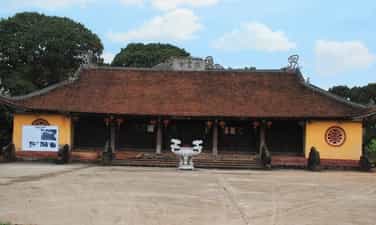
Huong Lang Pagoda
Huong Lang Pagoda, also known as Lang Pagoda or Giac Vien Pagoda, is located in Huong Lang village, Minh Hai commune, Van Lam district, Hung Yen province. In addition to worshiping Buddha, Huong Lang Pagoda also worships Queen Mother Ỷ Lan - a woman who was good at public affairs and housework during the Ly Dynasty. This is a beautiful artistic architectural work with historical, cultural and scientific value. Legend has it that the pagoda was built by Queen Mother Ỷ Lan during the Ly Dynasty, around 1115. The pagoda is large-scale, covering an area of nearly one hectare, including many buildings, with an architectural layout of "foreign internal work". Including a three-entrance gate with three entrances and steps leading up to a flat platform. The pagoda is divided into three levels, from this level to the second level there are also three entrances, the third level is the main area. This is an area including monk's house, council house, and Buddha hall. During the resistance war against the French, the pagoda was destroyed, and it was only restored in 1955. The pagoda faces the main direction to the Lang River. The front hall is arranged on high steps with carved stone steps. The building has a lotus-shaped truss-style architecture with four rows of columns. All columns are placed on stone platforms decorated with lotus petal patterns, in the style of the Ly Dynasty. The trusses are made of ironwood with carved patterns of floral themes. The blocks floating on the statue's surface have almost no rough edges, all are smooth, smooth and elaborate, with no sudden breaks in rhythm. It can be said that this is the most massive statue pedestal of the Ly Dynasty still preserved at the monument. In addition, the pagoda also has ten pairs of stone handrails, carved with phoenix, fox and chrysanthemum; 4 perpendicular stone columns support the stone beams of the building, many of the stone pillars are carved with lotus and chrysanthemum petals very meticulously and sophisticatedly. These are priceless works of the Ly Dynasty that are still preserved. The great worship hall faces the main pagoda overlooking the Lang River, near the village road, restored in 2005, with a scale of 7 rooms. If you want to enter the front hall, you have to go through the steps. Here, the steps are separated into 5 paths by 6 steps carved in the shape of a stone crocodile facing the front. The front hall has a lotus-shaped truss architecture with four rows of column bases, all columns are placed on stone platforms decorated with lotus petal patterns, in the Ly Dynasty style. The rafters are made of ironwood and carved with stylized floral motifs. The harem court is a space away from the front court building. The harem has a frill-style architecture with two floors and eight roofs. In the middle of the harem is the "mascot" of a lion wearing a lotus crown, forming a large stone pedestal. Huong Lang Pagoda still preserves many very special and unique relics of the Ly Dynasty. Also here, people discovered a site named Lang Pagoda Site, including a lion statue also known as Mr. Sam. The pagoda has ten pairs of stone handrails, carved with phoenix and fox, string chrysanthemums, four square stone pillars at four corners supporting the stone beams of the previous building and many stone pillars carved with lotus petals and chrysanthemums. Because of its cultural - historical, artistic, and architectural values, Huong Lang Pagoda was ranked by the Ministry of Culture, Sports and Tourism as a national historical, cultural, architectural and artistic relic on September 11. March 13, 1974. Source: Hung Yen province electronic information portal
Hung Yen
5216 view
Rating : National monument

Dau An Temple
An Xa Temple (also known as Dau An Temple), written name is Thuy Ung Quan, located in An Xa village (also known as An village), An Vien commune, Tien Lu district, Hung Yen province. Based on the documents and artifacts still preserved at the site and the stories of the elders in the village, An Xa temple is the place to worship the Jade Emperor, Ngu Lao Tien Ong (gods of Taoist culture). religion), along with the Heavenly Immortals and Earth Immortals - those who have publicly cleared the wild swamps, eliminated wild animals, taught people to cultivate, established Cha village, and built "Thuy Ung Quan", to pray for rain. Favorable weather, good wind, good harvest. Based on legends, stories of the village elders and valuable ancient relics still preserved at the site, An Xa temple was built quite early, around the 16th century at the latest. – XVII, up to now it has been restored and embellished many times. An Xa Temple was built on high land shaped like a dragon's head in the west outside An Xa village. In front of the temple are luxuriant ancient trees that shine into the clear blue lake, considered the village's "water gathering and blessing" place. Surrounding the outer ring are moats and rich fields. The front of the temple faces south, with an architectural plan in Cong style including: 5 Pre-Teacher rooms, 3 Ong Sang rooms and 3 Hau palace rooms. In addition, located inside and outside the relic grounds, there are still a number of architectural works associated with the formation and stories related to the figures worshiping at the relic: Ha Temple, Ky Niem Temple located on two sides. side of the main temple. Opposite both sides of the temple yard are two rows of Giai Vu houses. On both sides of the Three Entrances are Mother Temple and Thien Quan Temple. Outside the relic grounds to the East are two communal houses Vo and Can communal house. Three gates: built on a square plan, including 3 doors and two roof floors. Around the four corners, there are four large bronze pillars. Tam Quan's roof is covered with funny-nosed tiles. The three gates of An Xa temple have a bronze bell cast in the Later Le Dynasty, the 34th year of Canh Hung, and a drum. The Pre-Saint Court: is a 5-compartment building, made in the style of a gable wall. The structure is in the style of 4 rows of columns. The altar is where the altar to worship the Jade Emperor (middle space) is placed, and the two side rooms are where the altars to worship Thien Tien and Dia Tien are placed, along with horizontal paintings, parallel sentences and valuable worship objects. Sculptures decorating the Tien Te court mainly include three main themes: mascots, flipped leaves and twisted patterns in the artistic style of the 19th and 20th centuries. Morning glory pipe: this item is made entirely of monolithic green stone. The entire system of pillars, parallel sentences, diaphragms, and hammock doors here are made of stone with panels weighing up to tens of tons, carved with dragon shapes by contemporary artists and craftsmen, and carved with dragons on the outside. The couplets in Chinese characters are extremely sophisticated and unique, rarely seen in Vietnamese religious buildings. The harem: consists of 3 rooms, in the style of a gable wall that covers the throne. This is where the altar to worship Tam Thanh Luc Ngu is located. Above the lower roof is the match neck made of stone divided into different cells decorated with images of phoenix, dragon, and lotus, with three Chinese characters "Thuy Ung Quan" engraved in the middle. The roof is covered with traditional tiles, the ridge is left plain without decoration. The front wall is built of monolithic green stone. The middle space is built into a row of pillars to form an altar, the door is carved with motifs: Bats holding money (phu ham tien), cranes standing on the back of turtles to express wishes for happiness, fortune and wishes. Let the villagers of An Xa live long and forever. In the center of the Harem is a terracotta incense altar in the shape of a rectangular box. Other construction items include: Ha Temple: Thien Quan Temple. Mau Temple. Temple of Remembrance. Dinh Vo. Dinh Can. Regarding historical value: An Xa Temple is a typical cultural center, a typical example of the transformation and integration between Taoist temples and temples. An Xa Temple Festival takes place from April 1 to 12 (lunar calendar) every year. With the above special value, the historical cultural, architectural and artistic relic An Xa Temple was ranked a special national monument by the Prime Minister on December 31, 2020. Source: Department of Cultural Heritage
Hung Yen
4992 view
Rating : Special national monument
Da Hoa Temple
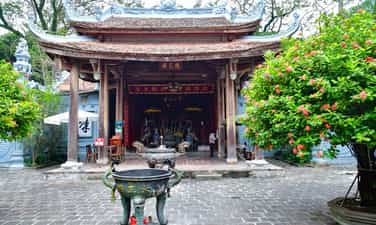
Da Hoa Temple is also called Chinh Da Hoa Temple, located in Da Hoa village, Binh Minh commune, Khoai Chau district, Hung Yen province. Temple of Chu Dong Tu - Tien Dung - Princess Hong Van. The temple overlooks the Red River and Tu Nhien beach, and is said to be the place where the love affair between Chu Dong Tu and Tien Dung formed. Da Hoa Temple was built a long time ago, the current project was built at the end of the 19th century, from 1884 to 1886 by Chu Manh Trinh, a native of Phu Thi village, general of Me So, police officer of Hung Yen province. The project is famous for its massive scale and unique architectural ideas, in harmony with the natural landscape. The temple area includes 18 large and small projects: stele house, bell tower, banh ward, noon gate, altar house, incense burning building, second palace, third palace, harem and hermitage houses, tarpaulin houses, and houses. horses, artillery houses. The temple roofs have a stylized dragon boat shape. If you look down from above, you will see the temple roofs, combined together to look like a group of boats bobbing on the river. Chu Manh Trinh intended to shape the temple area to look like the yacht of eighteen-year-old Tien Dung, daughter of the 18th Hung King, traveling on the river. Da Hoa Temple still retains many precious relics. Statue of Saint Chu Dong Tu and his two wives cast in bronze, life-sized. Three thrones worship Chu Dong Tu and his two wives, made of wood, balanced layout, the top of the throne is carved with a dragon in the facing position. The throne dates back to the late 16th and early 17th centuries, and is considered the oldest of its kind still found in our country. Da Hoa Temple Festival is held from February 10-12 of the lunar calendar. The main day of the festival begins with a procession of tutelary gods from 8 villages of the ancient Me district to the main temple (including Me So, Da Hoa, Bang Nha, Phu Thi, Phu Trach, Thiet Tru, Nhan Thap villages). Each procession has flags, gongs and drums, precious bowls, lo bos, bowls of sounds, palanquins, bowls of tribute, dances of life, dragons, and lions. The procession of 8 villages meets each other with gongs and drums resounding, golden dragons winding from beginning to end of the procession. The next day is the water procession. The procession includes water palanquins and palanquins of 8 ancient Mexican villages taking boats to the middle of the Red River to hold a ceremony to bring water to the temple. The whole river section is filled with the bustling sounds of drums and gongs, and bustling bowl music. Da Hoa Festival organizes dragon dance, wrestling, and human flags. Dragon dance, there are 6-8 dragons. The dragon's dance movements are controlled by the person holding the ball and the sound of the mouth drum. The dragon dances around, winding rhythmically. When the drums beat slowly, the dancing is slow; when the drums beat fast, the dancing is fast and exciting. Dragons dance singly, in pairs, or all dragons in villages dance, demonstrating the skillful movements of their village's dragons. Participating in wrestling are 70-80 year old men, dressed in festival clothes, with scarlet turbans, blue shirts, yellow shirts, red and yellow belts, performing symbolic wrestling movements. This performance reminded everyone of the gratitude of Chu Dong Tu - Tien Dung for saving many people from illness and to prove that they were completely healthy, they took each other to the yard to wrestle and perform tricks for their grandparents to see. . Human flag, held at the temple yard. There are 32 troops divided into 2 factions, one male and one female. The people playing the roles of generals and chess pieces are both unmarried men and unmarried women. The most beautiful are the roles of grandfather and grandmother. Chess players from all over come to compete high and low. In 1962, Da Hoa Temple was ranked by the state as a National Historical Architectural and Artistic Monument. Source: Hung Yen province electronic information portal
Hung Yen
7160 view
Rating : National monument

Xich Dang Temple of Literature
Xich Dang Temple of Literature is located next to the Red River, which is red and heavy with silt all year round, in Lam Son ward, Hung Yen city, Hung Yen province. The reason why the Temple of Literature has such a name is because it was built on the land of Xich Dang village in the 17th century (Late Le Dynasty) on a small initial scale, until the 20th year of Minh Menh (1839), Nguyen Dynasty, was built. It has the current scale on the foundation of Nguyet Duong Pagoda (Xich Dang Pagoda). With more than 400 years of existence, enrolling 161 great scholars, Xich Dang Temple of Literature has demonstrated the studious spirit of people on this land. "First Kinh period, second Pho Hien". In the 17th century, under the reign of King Le Thanh Tong, to revive Confucianism, the court established many schools outside Quoc Tu Giam school in the towns. In Son Nam town (including the provinces of Ha Nam, Nam Dinh, Ninh Binh, Thai Binh and part of Hanoi and Hung Yen) there is Xich Dang literary temple (also known as Son Nam literary temple) built recently. as a place to worship the sages, as well as a place to organize the town's exams. After many changes in the geographical division of the towns under the Later Le, Tay Son, and Nguyen dynasties, Xich Dang literary temple became the literary temple of Upper Son Nam town and later of Hung Yen province. In front of the gate of Xich Dang Temple of Literature are two rice trees that are hundreds of years old, and statues of two large stone pigs carved in the 18th century. The three gates (also known as Nghi Mon gate) of Xich Dang Temple of Literature is one of the works that still retains unique architectural features among the remaining temples in Vietnam. Built in a frilly architecture, two floors with eight roofs and an attic. On both sides of the Tam Quan there are two loudspeaker platforms, used to announce the names of candidates and announce the regulations in the examinations. Instead of the drum tower like in the Quoc Tu Giam and Mao Dien literature temples, in the Xich Dang literature temple, the drum tower is replaced by a bell tower. The sound of the bell and the bell ringing is the signal that the exam has begun and ended, and it is also a call to express gratitude and gratitude to the wise men during each festival. The two bells and bells of the Temple of Literature are also ancient relics cast and created in the 18th century. The inner temple area is structured in the style of Tam: including Tieu Tu, Trung Tu and Hau palace. The roof system is structured in a "real estate" style. The main side faces south. The inside of the inner temple shines with a system of great letters, parallel sentences, hammock doors and a system of pillars and rafters completely painted with gold and covered with metal. The most valuable artifacts in the temple of literature still preserved today are 9 stone steles engraved with the names, hometowns, and positions of 161 people who passed the university entrance exam in the ancient Upper Son Nam town. Of which 138 are in Hung Yen and 23 are in Thai Binh. From the first exams under the Tran Dynasty to the last exams at the end of the Nguyen Dynasty, Hung Yen province had people passing high scores. Every time, there are talented people from Hung Yen who pass the exam to help the country and the people. At Xich Dang Temple of Literature, there are currently two statues of Confucius and Confucian scholars worshiping. Along with that is the statue of the prominent teacher, the first principal of the Quoc Tu Giam Temple of Literature Chu Van An. In 1992, Xich Dang Temple of Literature was ranked as a national historical and cultural relic by the Ministry of Culture, Sports and Tourism. Every year, on the 4th and 5th days of the Lunar New Year, the Temple of Literature holds a festival with activities such as writing the first words of spring, holding ceremonies, offering incense, calligraphy exhibitions, singing ca tru, and gradually restoring old festival again. In addition, during exam season, teenagers and students go to the temple to learn about the studious tradition of their ancestors and burn incense to pray for further development in their studies. Source: Vietnam National Tourism Administration
Hung Yen
5637 view
Rating : National monument