Relic point Vietnam
Việt Nam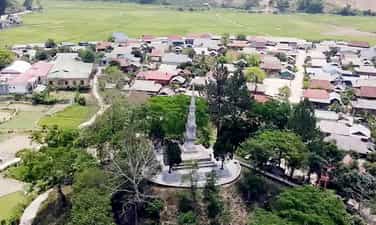
Muong Va Tower
Muong Va Tower is an ancient architectural and artistic work, bearing the cultural and Buddhist imprint of the Lao ethnic community in the Northwest region. The tower is located in Muong Va village, Muong Va commune, Sop Cop district, on an artificial hill between the village space and a large field. According to local legend, the tower was built about 400 years ago, along with a pagoda to serve as a place for religious and community activities. The pagoda no longer exists, but Muong Va Tower is still preserved by people for many generations. The tower is about 13 meters high, shaped like a pen reaching into the sky, consists of 5 floors, built of bricks and linked with lime and sand. The floors are decorated with many typical patterns such as leaves, chrysanthemums, twisted strings and elephant shapes, creating a beauty that is both elegant and majestic. The top of the tower is shaped like a lotus bud, clearly showing the influence of Buddhist culture. Through wars and natural disasters, the tower was damaged and has been restored and preserved many times. Today, the tower is a unique cultural symbol of the Lao people in Sop Cop, and is also a destination associated with traditional festivals such as Xen Muong and Khau Ho, contributing to preserving and promoting community cultural values. Source: Son La province electronic information portal
Son La
350 view
Rating : National monument
White Bridge Relics
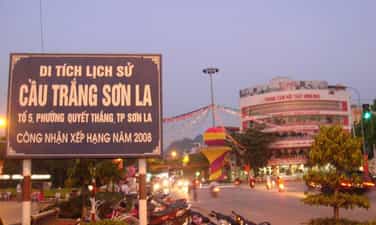
White Bridge Relics - historical evidence in the heart of Son La. The White Bridge relic is located in To Hieu ward, Son La province, across Nam La stream, on route 41, now National Highway 6. With an important location, the bridge once played the role of connecting traffic and providing support for the Northwest battlefield. During the Northwest Campaign in 1952 and the Dien Bien Phu Campaign in 1954, the French colonialists repeatedly bombed the bridge to prevent the transport and support of our army and people to the Dien Bien Phu battlefield. In 1963, Son La Traffic Department rebuilt the White Bridge in the style of an arch bridge, about 45m long, 7m wide, with railings on both sides. During the resistance war against the US, White Bridge continued to become the target of fierce attacks. US aircraft carried out 34 raids, dropping 874 bombs and hundreds of rockets, completely destroying bridges, bridge abutments and paths. After the war, the White Bridge was repaired and rebuilt many times to serve traffic and people's lives. Although its appearance has changed a lot, this place is still a testament to the years of arduous war and the resilient spirit of Son La's army and people in the cause of protecting the strategic traffic route. Source: According to Son La Geography
Son La
322 view
Rating : Provincial level relics

Chieng Khoi Lake
Chieng Khoi Lake - beauty among the Northwest mountains and forests. The lake has an area of about 40 hectares, located in the middle of a valley surrounded by mountains and green hills. The lake surface is clear and peaceful all year round, winding between mountains and forests, creating a poetic and peaceful space. Especially during the ban flower season, the white color covering the mountain slopes makes the scenery here even more attractive. According to Thai legend, in the past, Chieng Khoi was a dry land lacking water. The Khoi boy, with extraordinary health, moved mountains and released water from many directions here, creating a lake to help people have water for daily life and production. That story contributes to creating the legendary color of the landscape. Besides its landscape value, Chieng Khoi Lake also has a rich ecosystem with mountain forests, birds, fish and many types of forest trees. The lake space is fresh and quiet, suitable for sightseeing, resting and exploring nature. Coming to Ho Chieng Khoi, visitors also have the opportunity to learn about the traditional culture of the Thai people with Xoe dances, flute sounds, brocade weaving, pieu scarf embroidery and many unique ethnic dishes. The harmony between the blue lake surface, rolling mountains and forests and Thai cultural identity has created a unique appeal for Chieng Khoi Lake. Source: Vietnam Historical and Cultural Relics information page
Son La
386 view
Rating : National monument
Tat Toong Cave
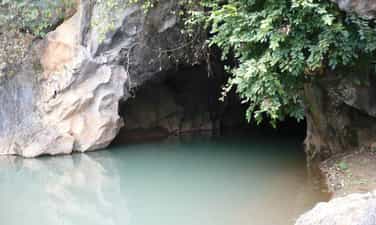
Tat Toong Cave, also known as Tham Tat Toong, meaning "copper waterfall cave", is located in Chieng An area, Son La province, about 2km from the city center. This is a unique natural cave, recognized as a national landscape. The cave includes a system of water caves and dry caves with unique landscapes. The water cave has clear blue water flowing all year round, the cave is 5-6m deep, and the cave dome is wide and high. Going deep inside, visitors can admire stalactites with rich shapes, shimmering in the light, creating a mysterious space like a fairy tale world. Not far from the water cave is a dry cave with three large compartments, highlighted by stalactites created by nature over time, evoking many vivid images such as lions, eagles or mothers holding children. With its pristine beauty and unique landscape value, Tat Toong Cave is an attractive destination, contributing to the tourism and scenic value of Son La. Source: Vietnamese historical and cultural relics information page
Son La
422 view
Rating : National monument
Vat Hong Pagoda
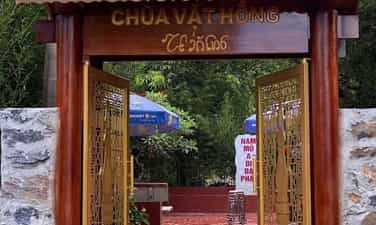
Historical and cultural relic of Vat Hong pagoda. Vat Hong Pagoda, also known as Chien Vien Pagoda, is located on a gentle hill in Vat village, Muong Sang commune, Son La province. The pagoda was built in the 13th century, during the period when Buddhism flourished in Vietnam. The building has traditional wooden architecture with three compartments and thatched roof; The temple once kept many Buddha statues made of bronze, tin and ivory. The pagoda is associated with the religious life of the local community through ceremonies to pray for rain, water, and ceremonies to wash and bathe statues held annually. In particular, in the pagoda grounds, there is still a stone stele engraved with Thai and Han Nom characters, marking the merits of the people of the Northwest region in renovating the pagoda. Over time, Vat Hong Pagoda now has only ruins, some artifacts are preserved at the Son La Provincial Museum. With unique historical, cultural and religious values, Vat Hong Pagoda was ranked as a provincial historical-cultural relic in 2012, becoming an important vestige in the cultural history of Moc Chau region. Source: Son La Geography
Son La
457 view
Rating : Provincial level relics
Temple of King Le Thai Tong (Gui Lam Linh Tu)
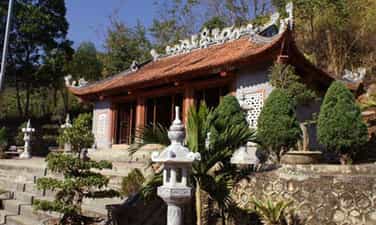
The temple of King Le Thai Tong (also known as Que Lam Linh Tu) is located in group 3, Chieng Le ward, Son La city. This is a solemn spiritual work inaugurated in 2003 to pay tribute to the talented young king of the Early Le Dynasty. In history, he twice personally led troops to quell rebellions, maintain peace and assert sovereignty over the Northwest border region. The temple is 800m² wide, built harmoniously according to the traditional feng shui "Tien Giang, Hau Cham": its back leans firmly against the majestic Chin Mountain, facing the peaceful Nam La stream. The architecture of the temple is imbued with the identity of ancient Vietnamese temples with three-entrance gates, green stone courtyards, left-right houses, gilded lacquered grand pavilion and a solemn harem with bronze statues of great men. Not only is it a beautiful architectural work, Que Lam Linh Tu today has become a "red address" educating patriotism for the young generation, as well as an indispensable spiritual cultural fulcrum of Son La ethnic people every Tet and spring. Source: Son La province electronic information portal
Son La
251 view
Rating : National monument
Souvenir relic of the 52nd Tay Tien Regiment
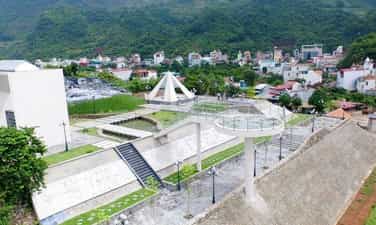
The souvenir historical site of the 52nd Tay Tien Regiment is located in Moc Chau town, Son La province, which marks the gathering point of Tay Tien soldiers before marching to defend the Fatherland and perform international duties in Laos. This is a relic associated with the heroic victories of the 52nd Tay Tien Regiment and the image of the immortal soldier in the poem "Tay Tien" by poet Quang Dung. The memorial area was solemnly built with memorial stele, square and many items of historical significance, recreating the brave fighting spirit of Tay Tien soldiers. The content engraved on the stele includes a letter from General Vo Nguyen Giap to the Tay Tien soldiers and an excerpt from the Tay Tien poem, contributing to evoking pride in revolutionary traditions. Today, the monument is not only a place to commemorate heroic martyrs but also a red address to educate patriotic traditions for the younger generation. With profound historical and cultural value, this place has been ranked as a National Historical Monument and has become a meaningful destination in the journey to discover Moc Chau. Source: Son La province electronic information portal
Son La
264 view
Rating : National monument
Historical site Hate stele
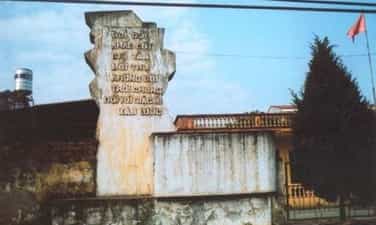
Historical site Hate stele. The historical relic of Hatred Stele is located in Moc Chau Farm town, Son La province. This is a cluster of relics marking the air raids of the US imperialists during the war to destroy the North, and is also a testament to denouncing war crimes and educating patriotic traditions for today's generations. On June 12, 1965, the US Air Force launched a raid on residential area Km 82 in Moc Chau. During the years 1965–1966, many air raids continued to take place, destroying homes, schools, offices, transportation routes and economic projects. Dozens of people were sacrificed and injured, and many properties, livestock and crops were severely damaged. In addition to the Hatred Stele in the central area of Moc Chau, two locations Km 64 and Km 70 were also erected memorial stele. These are all key areas that were heavily bombed by US aircraft to cut off traffic routes and destroy economic and defense establishments and residential areas. The steles not only remember the loss and sacrifice of local soldiers and people but also remind future generations of the value of peace and national independence. With great historical significance, the Hatred Stele at Moc Chau, Km 64 and Km 70 were all ranked as Provincial Historical Monuments on December 13, 2004. Source: Son La Geography
Son La
280 view
Rating : Provincial level relics
Deo Chen historical site
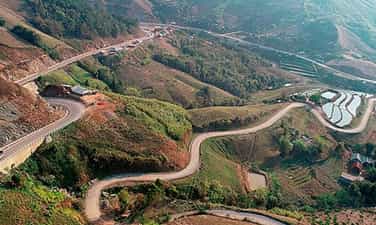
Deo Chen historical site. Chen Pass is located on National Highway 37, in Muong Khoa and Hua Nhan communes, Son La province. This is an important historical site associated with the 1954 Dien Bien Phu Campaign and has been ranked a National Historical Site in 2020 by the Ministry of Culture, Sports and Tourism. Chen Pass is about 11 km long, nearly 1,500 m above sea level. During the resistance war against the French colonialists, this place was on the vital route transporting food, weapons and forces from the rear to the Dien Bien Phu battlefield. That's why Chen Pass often becomes the target of fierce attacks by the French air force. To ensure the route was always clear, thousands of frontline workers, young volunteers and local people worked day and night to pave the road, widen the road surface, level bomb craters and repair bridges and roads immediately after each bombardment. Even though they faced many dangers, they still stubbornly stuck to the road, contributing to ensuring logistics and serving the victory of the Dien Bien Phu Campaign - a victory "resplendent in five continents, shaking the earth". Today, Chen Pass is not only an important transportation route connecting regions of Son La province but also a red address to educate patriotic traditions and gratitude to the generations who sacrificed for national independence. Source: Son La newspapers and radio and television
Son La
617 view
Rating : National monument
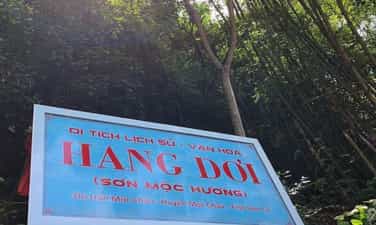
Moc Chau Bat Cave historical site
Moc Chau Bat Cave historical site Bat Cave, also known as Son Moc Huong Cave, is located near the center of Moc Chau town, Son La province. Not only famous for its magnificent natural beauty, Bat Cave is also a valuable historical and archaeological site, reflecting the residence of ancient residents in the Northwest region thousands of years ago. The cave is a natural limestone cave with an area of about 6,915 m², including three large chambers with a rich system of stalactites and stalagmites. Over millions of years of geological tectonics, nature has created stalactites with many unique shapes such as fairies, spinning girls, mothers holding babies, elephants, lions and many other images. Along with the magical beauty of natural light, Bat Cave is known as "Tay Thien's first cave", one of the most beautiful caves in the Northwest. The special value of Bat Cave lies not only in its landscape but also in its history and archeology. In 1952, researchers discovered many vestiges of ancient Vietnamese people in the area in front of the cave entrance. By 1992, Son La Museum coordinated with the Vietnam Institute of Archeology to conduct surveys and excavations, discovering a cultural layer about 0.5 m thick and many artifacts such as sharpened stone axes, scraping pieces, marbles, ceramic pieces and stone working tools. These findings show that Bat Cave was once the residence of people in the late Neolithic period, about 3,000–3,500 years ago, belonging to the Hoa Binh culture - a typical archaeological culture in Vietnamese history. Besides its archaeological value, Bat Cave also preserves many unique folk legends of local people. Typical is the legend of the Heavenly Palace and the love story between Prince Thuy Te and the earthly princess. These stories contribute to enriching cultural values, reflecting the spiritual life and rich imagination of highland residents. With outstanding geological, archaeological, historical and cultural values, in 1998 Moc Chau Bat Cave was ranked as a National Monument by the Ministry of Culture and Information (now the Ministry of Culture, Sports and Tourism). This is not only a recognition of natural beauty but also affirms the significance of Bat Cave in researching the history of residence of ancient Vietnamese people in the Northwest region. Today, Bat Cave is an attractive destination for tourists when coming to Moc Chau. Preserving and promoting the value of monuments not only contributes to preserving natural heritage and national history but also helps educate traditions and raise awareness of protecting cultural heritage for future generations. According to the electronic information portal of Son La province
Son La
851 view
Rating : National monument