Relic point Vietnam
Việt Nam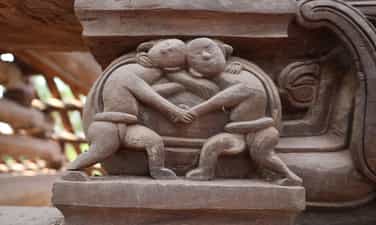
The Tien Luc complex of communal houses, temples, and pagodas.
Located in Tien Luc commune, Lang Giang district, Bac Giang province (now Bac Ninh), the Tien Luc complex of temples and pagodas is a unique cultural and religious space, comprising Phuc Quang Pagoda, Tien Luc Temple, Thuan Hoa communal house, Vien Son communal house, and a thousand-year-old wild cinnamon tree. The structures within the complex were built long ago and were restored and renovated during the Le Trung Hung period. To this day, many structures still retain relatively intact ancient architecture along with exquisite carvings such as dragons, animals, fairies riding dragons, and scenes of folk life. The highlight of the complex is the thousand-year-old wild cinnamon tree, closely associated with the beliefs and cultural life of the local people. Legend says that the tree was once bestowed the title "National Lord of the Great Wild Cinnamon Tree" by King Le Canh Hung, becoming a sacred symbol of the Tien Luc region. The complex also preserves many valuable Buddha statues, religious artifacts, and antiques, notably nearly 100 statues at Phuc Quang Pagoda and many artifacts dating from the Le and Nguyen dynasties. In particular, the Tien Luc festival, with its water procession, palanquin procession, word-arranging custom, and unique folk games, has been inscribed on the National List of Intangible Cultural Heritage. Source: Bac Ninh TV Newspaper
Bac Ninh
64 view
Rating : Special national monument
Safety zone II Hiep Hoa
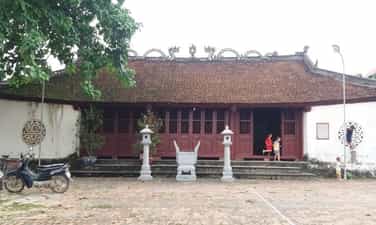
Safety zone II Hiep Hoa - A mark of revolutionary history Safety Zone II Hiep Hoa in Bac Ninh province, is a particularly important revolutionary relic complex, associated with the activities of the Party Central Committee and the Northern Party Committee in the years preparing for the August Revolution in 1945. The relic includes 8 typical places such as Mr. Ngo Van Thau's house, Mr. Ngo Van Che's house, Mr. Ngo Van Dong's house, Soi Den, Van Xuyen communal house, Cho Van communal house, Xuan Bieu communal house and Y Son pagoda. Since the early 1940s, this place was chosen as a safe area, a bridge between the Viet Bac base and the midlands and plains. Thanks to the people's protection, many revolutionary leaders have returned here to operate, organize meetings, provide political and military training and build forces. In particular, many military training classes took place at Soi Den; At Mr. Ngo Van Dong's house, from April 15 to 20, 1945, the Tonkin Revolutionary Military Conference was held under the chairmanship of comrade Truong Chinh, setting out important policies to prepare for the General Uprising. The communal houses of Xuan Bieu, Cho Van, and Van Xuyen also marked rallies, propaganda, uprisings, and the early seizure of power in 1945. With special historical values, ATK II Hiep Hoa was ranked a special national monument in 2020 by the Prime Minister. This place is a red address for educating patriotic traditions, reminding of a period of vibrant struggle of the nation. Source: Department of Cultural Heritage
Bac Ninh
409 view
Rating : Special national monument
Cao Lo Temple
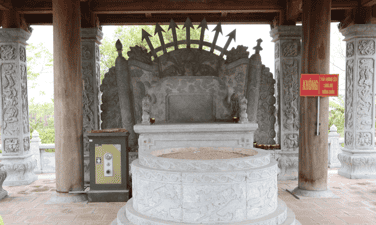
Cao Lo Temple - Historical relic associated with the talented general of An Duong Vuong's reign. Cao Lo Temple is located in Dai Trung village, Cao Duc commune, Bac Ninh province, and is a typical historical and cultural relic associated with the famous general Cao Lo Vuong, who was considered a talented general and outstanding military leader during the reign of An Duong Vuong. According to legend, he helped build Co Loa citadel, created magic crossbows to protect Au Lac country and was worshiped by many local people after his death. Legend has it that the temple was built during the reign of King An Duong and has undergone many restorations throughout the dynasties. Despite the influence of war and time, the monument still preserves many historical, architectural and artistic values. Inside the temple, there are also precious artifacts such as ordinations, stone stele, horizontal plates, parallel sentences and many wood carvings bearing the artistic style of the Le Trung Hung and Nguyen dynasties. Not only has historical value, Cao Lo temple is also the center of religious activities of the people of Dai Than region. Every year, on the 10th day of the third lunar month, people in the villages organize a traditional festival to commemorate the merits of Cao Lo Vuong, contributing to preserving cultural values, the spirit of community solidarity and the tradition of remembering the source when drinking water. Today, Cao Lo temple is a meaningful destination for tourists who want to learn about the history of the country's founding period and discover the unique cultural values of Kinh Bac land. Source: Bac Ninh Tourism Information Portal
Bac Ninh
805 view
Rating : National monument
Bac Ninh ancient citadel
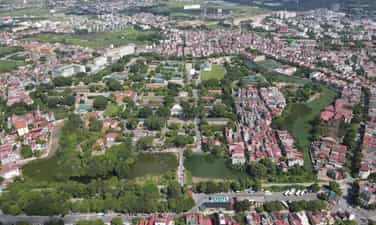
Bac Ninh Ancient Citadel - Historical relic marking Kinh Bac land Bac Ninh Ancient Citadel is one of the typical historical relics of the Kinh Bac region, associated with the formation and development of Bac Ninh province under the Nguyen Dynasty. Built in the early 19th century, this was once an important administrative and military center, playing the role of protecting the northern gateway of Thang Long capital. The special feature of Bac Ninh Citadel is that it was built according to Vauban architecture with a hexagonal plan - a type of modern military citadel at that time. The system of city walls, moats and corner fortresses are solidly arranged, reflecting the combination of Eastern and Western construction techniques under the Nguyen Dynasty. Not only has architectural value, Bac Ninh Ancient Citadel is also a witness to many important historical events. In the 19th century, many battles took place here between royal troops and rebel forces, especially the Battle of Bac Ninh in 1884 during the invasion of the French colonialists. Until the August Revolution of 1945, the citadel continued to be the place where Bac Ninh people rose up to seize power, contributing to the victory of the revolution throughout the country. After more than two centuries and the upheavals of history, many items of the citadel are no longer intact. However, the remaining traces still reflect the scale and position of a military project that once played a particularly important role in the defense system north of Thang Long citadel. According to: Dan Viet Electronic Newspaper
Bac Ninh
788 view
Rating : Provincial level relics
Memorial area of General Secretary Nguyen Van Cu
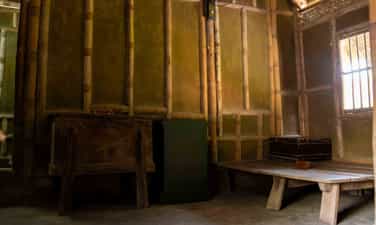
General Secretary Nguyen Van Cu Memorial Area - A national monument marking the loyal communist soldier General Secretary Nguyen Van Cu's memorial area is located in Phu Khe ward, Tu Son city, Bac Ninh province. This is where the imprints of the life and revolutionary career of comrade Nguyen Van Cu (1912–1941) are preserved - General Secretary of the Indochina Communist Party and an outstanding son of his hometown Kinh Bac. The memorial area was built on the land of the comrade's family, including many items such as a monument, a house displaying his life and revolutionary career, the original memorial house and auxiliary works. This place also preserves many artifacts, documents and memorabilia associated with the comrade's childhood, family and revolutionary activities, including the work "Self-criticism" - an important theoretical work of the Party. In 1938, at the age of 26, Nguyen Van Cu was elected General Secretary of the Indochina Communist Party. Although only 29 years old, more than 13 years of revolutionary activities and more than 2 years as General Secretary, he has made many important contributions to the Vietnamese revolutionary movement. In 1941, he was executed by the French colonialists at Hoc Mon (Gia Dinh) along with revolutionary soldiers Ha Huy Tap, Nguyen Thi Minh Khai, Vo Van Tan and Phan Dang Luu. With special value in history and education of revolutionary traditions, the Memorial Area of General Secretary Nguyen Van Cu was ranked as a National Historical Site in 1988. Today, this is a red address, contributing to educating patriotic traditions and national pride for generations. Source: Bac Ninh province electronic information portal
Bac Ninh
359 view
Rating : National monument
Thong Pagoda
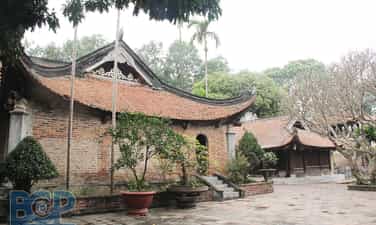
Thong Pagoda is located in the Yen The uprising relic cluster, about 2km northeast of the center of Phon Xuong station. The temple is located near Road 265, convenient for sightseeing and research. In the past, Thong Pagoda belonged to Nua village, Huu Trung commune, at one time it was An Lac commune, Huu Thuong district, Yen The district, now it belongs to Dong Lac commune, Yen The district, Bac Giang province. The temple was built a long time ago and has been renovated through many stages. Around the years 1901-1902, along with many other relics in the Yen The area, Thong Pagoda was renovated by De Tham to make it more spacious. In the book Yen The Uprising by author Khong Duc Thiem, Nguyen Xuan Can recorded: "The dilapidated pagodas, temples, and Catholic churches were repaired as many as the communal houses in Ha, Lan, Cao Thuong, and other provinces. Leo Pagoda, Thong Pagoda, Phon Xuong Pagoda, Catholic churches...". The Thong Pagoda relic area currently includes the following construction items: The temple garden, the Model House and the main temple area are all located on a hill with a total area of 3093 m2. The current pagoda has a nail-style architectural plan including a three-compartment front hall connected to a two-compartment upper palace. The connecting part of the front hall's roof resembles the traditional style of stacking gongs and gongs. The architectural components are not carved but still imbued with the color of ancient times. The upper palace has two compartments, the connected part has a striped gong-shaped roof, and the architectural components are not carved. The pagoda is decorated with a complete system of Buddha statues including 17 statues and a number of documents, artifacts, and valuable worship objects such as trays, incense bowls, ancient altars... with historical and value. scientific research. Thong Pagoda is the place marking many historical events associated with the Yen The uprising, the place where the Yen The insurgent army and the French colonialists met to sign the first peace agreement (1894-1897). In 1894, in order to have time to prepare and strengthen De Tham's forces, he organized to capture alive Set-nay, editor of the Future of Tonkin newspaper, and the staff following Logiu, and raid a train. then retreated to Phon Xuong. The arrest of Mr. Set-nay has dealt a strong blow to public opinion. The bourgeoisie and contractors are demanding to be saved. Faced with that situation, the French colonialists asked Bishop Velatco to act as a broker to negotiate with the insurgents. The conversation lasted for 15 days at Thong Pagoda. De Tham governed 4 cantons: Muc Son, Yen Le, Nha Nam, and Huu Thuong to collect taxes there for 3 years. During the negotiation, negotiation and signing of the treaty at Thong Pagoda, many documents call this the first peace between the Yen The insurgent army and the French colonialists. As a special relic, a place marking the historical events of the Yen The uprising, Thong Pagoda is one of 23 relics belonging to the Yen The Uprising Sites signed by the Prime Minister with Decision No. 548/QD- On May 10, 2012, TTg recognized it as a special national monument. SOURCE ELECTRONIC INFORMATION PORTAL DEPARTMENT OF CULTURE - SPORTS - TOURISM OF BAC GIANG PROVINCE
Bac Ninh
6772 view
Rating : Special national monument

Dinh Dinh Thep
Dinh Thep Communal House is about 31km northwest of Bac Giang city. From Bac Giang city, follow National Highway 1A (old) past Song Thuong bridge, turn right along provincial road 398 (Bac Giang-Cau Go route), to Cau Go town. From Cau Go, turn left along Provincial Road 265 about 4km to Tan Hiep commune and Dinh Thep communal house relic. Dinh Thep Communal House was built a long time ago and has been renovated and renovated through many stages. In the 9th year of Thanh Thai (1907), Hoang Hoa Tham repaired and renovated the communal house to preserve the ancient cultural value of the relic. The current relic has been renovated and renovated beautifully, consisting of three rooms and two wings, a vestibule connecting the two rooms of the harem, creating an architectural plan in the style of a nail. The roof rafters are simply connected in the form of cantilevered trusses, and the architectural components are not carved. In the communal house worshiping Cao Son, Quy Minh, Minh Giang Do Thong, worshiping Hoang Hoa Tham and Yen The insurgents who died in battle, these are all people who have made many contributions to the people and the country. The communal house also preserves a number of valuable worship objects and three stone steles of the Nguyen Dynasty with content recording the merits of repairing the communal house. The most outstanding value of the Dinh Thep communal house relic is the place where the Conference took place marking the time to consolidate the organization of the Yen The insurgent army: In 1888, Hoang Dinh Kinh (Cai Kinh) fell into the hands of the French invaders and was executed. death, the uprising of the Bai Say movement and a number of patriotic scholars were violently suppressed by the French colonialists. Yen The became the center of attraction for the remaining armies to join forces to fight the French. At this time, it is necessary to consolidate the movement after years of resistance against the French and re-plan the long-term plan for the Yen The uprising. In the meantime, an important conference took place at Dinh Thep communal house. Dinh Dinh Thep was also the place where the French invaders had to hand over 15,000 francs to De Tham in exchange for two prisoners: In 1894, De Tham ordered his troops to organize many ambushes to block French transport convoys to steal food and weapons. equipment for the insurgents. At Dinh Thep communal house, France had to pay 15,000 francs to De Tham. Many local witnesses recounted: "In October 1894, the French sent soldiers to bring the silver to De Tham at Dinh Thep village communal house on three pots filled with white silver. Mr. Tham also picked up a few copper coins per pot to bring. Come out and try to see if the silver is real or fake." After that, negotiations between De Tham and the French through the bishop of Bac Ninh, the two French prisoners were returned by De Tham. Dinh Thep Communal House is not only a center of cultural and religious activities, a place to organize traditional festivals of the people, but also a place where many historical and political events took place associated with the people's resistance war against the French. Locally, most notably at this relic, the Congress of generals took place to elect leaders in 1888. Dinh Thep communal house festival takes place on January 6 and March 16 of the solar calendar with many games. folk express essence God of martial arts, the desire for freedom of Yen The people such as bird flying contest, horseback archery contest, crossbow shooting contest, ethnic martial arts competition, wrestling... With great contributions marking the historical transformation of the peasant uprising led by De Tham, Dinh Thep communal house is one of 23 relics belonging to the Historical Relics System: Sites of Yen The Uprising Recognized as a special national relic site by the Prime Minister signed Decision No. 548/QD-TTG dated May 10, 2012. SOURCE ELECTRONIC INFORMATION PORTAL DEPARTMENT OF CULTURE - SPORTS - TOURISM OF BAC GIANG PROVINCE
Bac Ninh
6521 view
Rating : Special national monument
Leo Pagoda
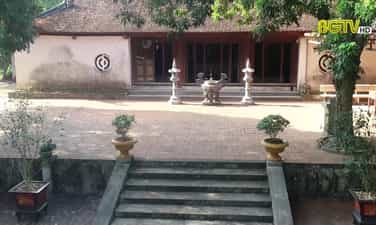
In the Yen The uprising relic system, Leo Pagoda is a quite special relic and still preserves almost intact ancient values related to the Yen The uprising. The pagoda is located next to an important traffic road (formerly a small trail in the forest since 1909 when the French colonialists opened the road from Nha Nam through Leo pagoda gate to Phon Xuong) connecting the Phon Xuong base area with Lang Thuong district, which is now Phon Xuong. Road 398, located at the gateway of the forward station of the Phon Xuong base area and the strongholds of the Yen The insurgent army. Leo Pagoda is called after the name of Leo village, Huu Xuong commune, Huu Thuong district, Yen The district, formerly Phon Xuong commune, Yen The district, Bac Giang province. The temple is located next to Road 398, about 25 km northwest of Bac Giang city. From Bac Giang city, follow provincial road 398 towards Bac Giang - Cau Go about 25km to reach the relic. The second way, from Bac Giang city, follow National Highway 1A (new), about 20km, to Kep town intersection (Lang Giang), turn left along road 292 about 15km to Cau Go town center, turn left again. Follow provincial road 398 about 2km further to reach Leo pagoda relics. Ancient Leo Pagoda was built in an ancient complex of relics including communal houses and pagodas following the "pre-god, post-Buddhist" way of connecting the temple before the pagoda, all located in the forest of Leo hill looking south. The temple was built in the 16th century and has been renovated through many stages. During the Yen The uprising in the years 1897-1909, Leo pagoda and many other cultural, religious and religious works in the area were very interested in De Tham's money to repair and renovate them as places for cultural, religious and religious activities of the people. Yen The insurgents and local people. Over time, this relic complex is no longer as intact as before, the three-entrance gate, the communal house in front of the pagoda no longer exists, now only the pagoda remains located in the old location on Leo hill, Phon Xuong commune, district. Yen The. The relic's campus is large and beautiful, made even more ancient by ancient trees such as frangipani trees, hyacinth trees... The current architectural plan of the pagoda is shaped like a gong, including the front hall with 5 compartments and 2 wings, the bridge house with 3 compartments and the upper palace with 1 compartment and two wings. The roof frame architecture is made of sturdy ironwood, the system of roof rafters is linked in the style of a stack of gongs and beams. The architectural structures are carved with simple floral themes but still imbued with the color of ancient times. The pagoda is decorated with a complete system of Buddha statues according to the Truc Lam lineage. Documents and artifacts at the pagoda such as stone stele, ancient incense bowls of the Nguyen Dynasty, a system of Buddha statues, ancient trees in the relics... are all there. cultural historical value. The Yen The uprising broke out in 1884, the forested hills were used by the Yen The insurgents as strongholds, and temples and pagodas were used as advance stations and as a base for the insurgents to travel back and forth. Leo Pagoda is located near Ho Chuoi station, about 1km to the East. During the battles with the Yen The insurgents at Ho Chuoi station (1890-1891), Leo pagoda was the French military base to act as a stepping stone to attack Ho Chuoi station. Leo Pagoda is a place that marks many historical events associated with the Yen The insurgent army. During the second period of peace between the Yen The insurgent army and the French colonialists (1897-1909), Leo Pagoda still served as a frontline position, observing the French colonialists' incursions into the Phon Xuong base area. It is a point of contact for regular correspondence and correspondence of the insurgent army. The pagoda is also a place to welcome guests and a gathering place for patriotic soldiers. Therefore, during this time, Leo Pagoda received a lot of attention from De Tham, who gave money to repair and embellish. Also at Leo Pagoda, an incident that went down in folk legend happened, demonstrating the high vigilance of Hoang Hoa Tham. During the French colonial period, they wanted to negotiate a peace treaty with the Yen The insurgents, but they still had many internal conflicts. To resolve a problem still tied to the insurgents, the head of the province made an appointment with De Tham to meet at a place near Phon Xuong. That location was determined to be Leo Pagoda. Both sides did not carry weapons. The entourage stayed behind. The day before the meeting, the French agent went to sleep at Leo pagoda, De Tham slept in that village... After the moon set around midnight, there were noises in the forest, you had to pay close attention to see them. Twelve soldiers quietly crawled through the dense forest toward the hut where De Tham was lying. The next morning, everyone gathered outside the temple. People looked at each other anxiously and waited. There were no signs that De Tham had been murdered, so people had to split up to look for him. On the grass next to the village, at the foot of the blockhouse, 12 soldiers' bodies were seen lying side by side. The soldier's body lay on the outside, a knife stuck in his chest along with the peace treaty. The other corpses had their hands clasped together holding a piece of wood with the word "betrayal" written on it. After this incident, De Tham posted everywhere the insurgent's denunciation about the betrayal of the French invaders... In the past, Leo Pagoda had monks. About Hoang Hoa Tham's death, there is also a legendary story related to the abbot of Leo Pagoda. By 1913, the Yen The insurgent army had gradually disintegrated, De Tham retreated to hide in the Yen The forests, waiting for an opportunity to launch and rebuild the movement. During this time, the French colonialists spread the news to public opinion that they had killed De Tham. They put three heads in Nha Nam and said that among them was De Tham's head so that everyone could come and identify them. But in fact, people believe that it is not De Tham's head but the head of a monk of Leo pagoda. I don't know the truth, but through that detail it is enough to see the close connection between Hoang Hoa Tham and the temple. And legend still holds that the monk of Leo Pagoda died instead of De Tham. SOURCE: ELECTRONIC INFORMATION PORTAL DEPARTMENT OF CULTURE - SPORTS - TOURISM OF BAC GIANG PROVINCE
Bac Ninh
6704 view
Rating : National monument

Ho Chuoi Fort
Build a brave and courageous fighting spirit, not afraid of sacrifice, determined to fight to the end to protect your homeland and country. This is the core, most important factor that determines the victory in the Battle of Banana Pit of the Insurgent Army. In particular, in the context of the early years of the Yen The uprising, the Insurgent Army with rudimentary weapons and equipment had to confront the French Expeditionary Force - a professional army equipped with weapons, equipment and supplies. modern means of warfare, so building political and spiritual factors and determination to fight for the Insurgent Army is of decisive significance. Realizing that, De Tham and the leaders of the Insurgent Army educated and fostered a spirit of patriotism and hatred for the enemy in the Insurgents. Accordingly, on the basis of a just war, De Tham taught about the suffering of people losing their country; clearly shows that the cause of suffering is due to the brutality of the invading French empire. Through practice, he showed everyone clearly the hypocritical and hypocritical face of the enemy army; that it was the French army who shot and killed civilians and burned down houses and fields. If you want to save the country and the family, you must rise up to fight the French and his Insurgents swear to kill the enemy to protect the people. That's why the Yen The uprising in general, and the Ho Chuoi battle in particular, the insurgents demonstrated a spirit of courage and strong determination that the enemy did not expect. That was when the enemy fiercely bombarded the station, but the insurgents did not flinch, waiting for the enemy to get very close before opening fire to destroy them, causing the enemy to panic and flee. Even in the third attack (December 22, 1890), the enemy urged European and African troops to use bayonets to attack our fortifications, but the insurgents remained calm, took control of the battle, and rose up to destroy the enemy. leaving them helpless, suffering heavy losses, forcing them to retreat. Not only did De Tham regularly foster patriotism and determination, but when dangerous situations occurred, De Tham also proactively and calmly encouraged the insurgents to fight. Typically, in the battle on January 9, 1891, when Ho Chuoi post was burned by enemy fire, De Tham used the loudspeaker to encourage: "Soldiers in the loyal army, in the indomitable army, in the The army will win. I am very pleased with you! Try to resist. Reinforcements are coming. You are invincible"1. That spiritual medicine promptly encouraged and encouraged the insurgents in the station to calmly, enthusiastically, and resolutely defend, while the forces in the forts, despite the hours-long shelling, still maintained their positions. fight; When the opportunity came (when the enemy infantry was approaching), we all rushed out of the fortifications and fought fiercely, destroying most of the enemy's forces and maintaining the battlefield. Later, researchers all believed that, at Ho Chuoi, the French army faced an opponent with surprisingly high fighting determination.2. Create a dangerous, continuous, solid posture, ensuring smooth defense and attack. Through many battles with the French army, the Insurgents have mastered the rules of operation, combat tactics, and the enemy's strengths and weaknesses. That is, fear of close combat, especially difficulty in maneuvering in difficult terrain; rely on artillery fire and when there are casualties, morale easily declines, etc. Firmly grasping that fatal weakness, the Insurgents Supreme Command advocates creating a solid defensive posture in the Yen The mountainous area. Accordingly, in a low-lying area of the Huu Thuong forest filled with wild bananas, the Insurgents built Ho Chuoi station as a semi-floating, semi-submerged fortification (to limit the enemy's firepower and artillery) as their headquarters. To support the main post, the Insurgents also set up two defensive fortresses (North and South) about 100m away from Ho Chuoi, creating a flexible position to protect and support each other. In addition, De Tham also sent people to set up a system of defense posts around Ho Chuoi, such as: Hom post, Skull Cave, Nua village, Vang village,... a logistics base in Vong Dong with a system of fighting villages (Duong Sat, The Loc, Luoc Ha, Cao Thuong) with many dangerous obstacles. Thanks to a solid posture, the Insurgents were able to detect and attack the enemy from near and far, consuming and destroying many enemy forces before they reached their main target. In particular, at Ho Chuoi, with its unique and dangerous position, the forest became an obstacle to the enemy's firepower and limited vision; If you get close to the base of the fort, you will be shot back from dangerous battlements, etc. The uniqueness of this posture is also shown by the system of submerged trenches (without banks) connecting points together and connecting to Go stream in the rear, creating a flexible maneuver position, while being able to attack the enemy. From the front, you can attack the flanks and rear of their formation. This explains why the enemy gathered large, elite troops, with many modern weapons, attacked from many directions, for many days, but all four attacks were unsuccessful. SOURCE: National Defense Magazine
Bac Ninh
6785 view
Rating : Special national monument

Phon Xuong Fort
Phon Xuong Fort is located in the center of Cau Go town. Here De Tham and the uprising command stayed the longest, directing the strategic and tactical direction of the Yen The insurgent army. Phon Xuong Fort is 30 km west of Bac Giang province; From Bac Giang city, follow National Highway 1A (old) through Thuong River bridge, turn right along Provincial Road 398, Bac Giang-Cau Go route. Phon Xuong Fort, also known as Don Go, Don Cu, is located on the south side of a nearly 20m high hill, nearly 800m south of Go stream. Now this hill is called Phon Xuong hill or Ba Ba hill in Cau Go town. This is a large-scale base with a different structure from Ho Chuoi post and other posts. The fort has an almost rectangular architectural plan running along the North-South direction, with an area of about more than an acre of Northern Vietnam including two citadels. The outer citadel starts from the eastern hillside and runs around the foothill to the northern hilltop, forming an arc that protects the inner citadel, 140m long, 0.80m thick and 4m high. The inner city walls are located on top of a roughly rectangular hill. The inner wall on the east side is 71m long, the north side is 85m long. The wall is made of rammed earth, 2m thick at the base, 3m high and 1m wide on the surface. Inside the wall, there are 3 different levels that can be shot standing or kneeling. There are battlements all around the wall. The outer wall slopes gently like a roof. Phon Xuong Fort has 3 gates: The main gate faces East and two side gates are in the South and North. The two side gates open to the surrounding forests. In particular, the northern gate connects to the forest of the remaining half of the hill. The two 1.50m wide side gates are no longer intact, the main gate is 15m from the north wall, 2m wide with 4 steps up and down. Inside the main gate, there is a guard station located on the northern side of the wall in a square shape of 2m on each side. Inside the main door there are two layers of protective earth walls and many battlements. The gates all have two doors, the outside gate and the inside gate, and are all made of ironwood. The outermost position of the station is the guard posts, followed by the auxiliary posts, the trench system and then the surrounding citadel. The distance between the two rings is 20m at its widest and 10m at its narrowest. Within the citadel is a large space including a system of houses, guest houses, warehouses... all are thatched houses with mud walls mixed with straw. Except for the square house that receives guests, it is built of bricks. From the north to the south of the citadel, respectively, are the houses of Hoang Hoa Tham and Ba Ba, the house has 5 rooms running west and east. The second house is square with four sides left empty and is used as a meeting place for Hoang Hoa Tham with generals and to receive guests. The next house consists of two rows located close to the West and East sides of the citadel, and is the residence of the insurgent army. Next, there are 8 kitchens and stables located close to the southern edge of the citadel running east-west, followed by a light pole and flag pole. The architecture of Phon Xuong Fort is a special architectural style. Not only does it meet the requirements of being a stronghold, it also flexibly handles combat mobility and meets the requirements of being a command post, a place for insurgent transactions. Over time, the rampart system and residential buildings in the citadel built with rammed earth are also easily eroded. Now the residential buildings in the citadel no longer exist, and the citadel walls are no longer intact as before. Particularly, the eastern part of the wall still retains many old architectural features. There are quite clear bullet holes in the citadel wall. In the citadel, a Ba Ba temple is currently built. Every year, on March 16 of the solar calendar, Yen The festival takes place on this relic complex. Around the late 80s of the twentieth century, Mr. Hoang Hoa Tham's daughter, Mrs. Hoang Thi The, came here and when she died, she was buried here, on the tombstone there was only the simple words: "Mrs. Hoang Thi The, born in 1901, died December 9, 1988". It can be said that Phon Xuong was the capital of the uprising, the starting place to expand the movement to localities. Here the insurgents fought bravely against a large-scale attack by the French colonialists led by Colonel Vat-tay on January 29, 1909. With those historical and cultural values, Phon Xuong Fort is one of 23 relics ranked as Special National Monuments in Decision No. 548/QD-TTg dated May 10, 2012 of the Prime Minister. . SOURCE: BAC GIANG PROVINCE ELECTRONIC INFORMATION PORTAL
Bac Ninh
6824 view
Rating : Special national monument