Relic point Vietnam
Việt Nam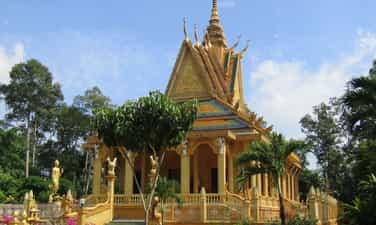
Bo Luy - Lo Gach Pagoda
Bo Luy - Lo Gach Pagoda: Unique vestiges of Oc Eo culture in Vinh Long. Bo Luy relic - Lo Gach pagoda is a special archaeological site, associated with traces of the Oc Eo culture in the Mekong Delta. The relic was discovered in the grounds of Kompong Thmo Pagoda, also known as Lo Gach Pagoda. Through excavations, archaeologists found traces of an ancient architectural complex and a large-scale earth rampart system, considered one of the notable citadels in the Southwest region. Many artifacts such as fired bricks, sandstone, bronze and gold leaf carvings of elephants and lotus flowers were discovered here, showing the unique historical, cultural and artistic value of the monument, dating back to the 8th - 9th centuries. With outstanding values, in 2017, Bo Luy - Lo Gach Pagoda was recognized as a National Monument. Today, this place is not only an archaeological research site but also contributes to introducing ancient cultural imprints of Tra Vinh land. Source: Ethnicity and Development Newspaper
Vinh Long
186 view
Rating : National monument

Luu Cu II Relics
Luu Cu II Relics - Vestiges of Oc Eo culture nearly 2,000 years old. Located in Luu Cu II hamlet, Luu Nghiep Anh commune, Vinh Long province, Luu Cu II Relic is a typical Brahmanical religious architectural ruin of the Oc Eo culture, dating back nearly 2,000 years. The site was discovered in 1985 and excavated during 1986–1987. Through research, archaeologists determined that the structure had two phases of existence, from the first century to the fifth century AD, associated with the development of the Funan Kingdom. Luu Cu II architecture has a large scale, the foundation is elaborately built with many angles and surrounding corridors. In particular, excavations have discovered many artifacts related to Hindu beliefs, including lingams, yoni and artifacts associated with the god Shiva. With special historical, archaeological and architectural value, in 1990, Luu Cu II was recognized as a national historical-cultural relic. This is one of the relatively intact Oc Eo vestiges, helping visitors better visualize an important historical period of the ancient Southern region. Source: Vinh Long province electronic information portal
Vinh Long
210 view
Rating : National monument
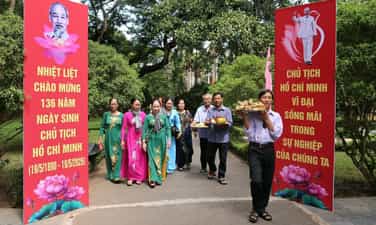
Temple of President Ho Chi Minh
The Temple of President Ho Chi Minh is located in Vinh Hoi cluster, Long Duc ward, Vinh Long province, is a national historical and cultural relic, and is also a symbol of the love for Uncle Ho and the resilient revolutionary spirit of the Southern people. The temple was started on March 10, 1970, in the midst of years of fierce war. The project was built on a high sand dune, with an initial area of more than 1,223m². To avoid enemy detection and shelling, people had to secretly carry out construction at night. After many difficult months, the temple was inaugurated on January 26, 1971. The oath "Determined to defeat the enemy as a gift to Uncle Ho" expressed the deep feelings and determination of the Southern army and people. During the war, the temple was repeatedly raided, burned and bombarded by the enemy. However, local people still persistently protect and gradually rebuild the temple more firmly. Even though bombs and bullets were devastating, the project was still preserved, becoming a symbol of the indomitable will and loyalty of the Southern people towards Uncle Ho. Today, the relic area has an area of about 5.4 hectares, built and renovated through many stages. The highlight is Uncle Ho's Stilt House, restored in 2012 according to the model of Uncle Ho's stilt house in Hanoi. The relic area also has green space, exhibition houses and many images and artifacts introducing the process of building and protecting the temple during the years of resistance. For more than half a century, Uncle Ho's Temple in Vinh Long is not only a place where people offer incense to commemorate President Ho Chi Minh, but also a "red address" to educate patriotic and revolutionary traditions for generations. The relic is a testament to the deep affection of the Southern people towards Uncle Ho, and at the same time contributes to reminding the spirit of solidarity and the will to fight for independence and freedom of the nation. Source: VTV Times
Vinh Long
205 view
Rating : National monument
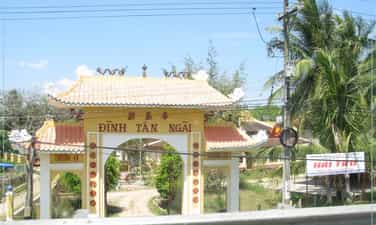
Tan Ngai Communal House
Tan Ngai communal house is located in Tan Ngai hamlet, Phuoc My Trung commune, Vinh Long province. The communal house was built in 1850, and was consecrated under the reign of King Tu Duc in 1852. After many wars and renovations, the communal house is still preserved by the people as a space for beliefs and community cultural activities. The communal house is a place to worship Bon Canh Thanh Hoang, the wise predecessors and later sages, praying for peace in the country and people, good weather and good harvests. In particular, this place also marks many important events in the two resistance wars against the French colonialists and the American imperialists. Since 1930, the communal house has been a place for organizing meetings and revolutionary propaganda. During the years of resistance, the communal house was the place to establish the government, organize conferences, open popular education classes, and mobilize people to contribute to the "Golden Week". In particular, from 1960 to 1975, the communal house became an important revolutionary base, a place to hide documents and weapons, receive wounded soldiers, gather military supplies and organize fighting forces. With typical values of folk beliefs and revolutionary history, Tan Ngai communal house is recognized as a historical-cultural relic. Source: Phuoc My Trung Commune People's Committee website
Vinh Long
310 view
Rating : National monument

Ba Si Pagoda
Ba Si Pagoda, also known as Pysey Varapram Pagoda, is located in Giong Chua hamlet, Phuong Thanh commune, Vinh Long province according to the new administrative boundary. The pagoda was built in the late 17th century, experienced by 11 generations of abbots and is one of the works that represents the cultural and religious life of the Khmer people in Tra Vinh. The pagoda has a campus of about 6 hectares, located under the canopy of ancient trees, including many buildings such as the gate, main hall, library, hallway and Pali school. The pagoda's architecture is characterized by Khmer culture, expressed through its layout and artistic decorative lines. Not only is it a living and practicing place for many monks, Buddhists and Khmer compatriots, during the years of resistance, Ba Si Pagoda was also a place to nurture and protect local revolutionary cadres. With outstanding historical and cultural values, Ba Si Pagoda was recognized by the Ministry of Culture, Sports and Tourism as a National Historical Site in 2012. Today, this place continues to be an important cultural and religious activity site, contributing to preserving the Khmer cultural identity of the South. Source: People's Police Newspaper
Vinh Long
302 view
Rating : National monument
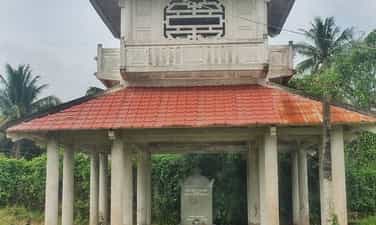
Truong Vinh Ky beer house
Truong Vinh Ky stele house is located in Vinh Thanh commune, Vinh Long province, a work built in his hometown, marking the birthplace of scientist Truong Vinh Ky (1837–1898). According to local documents, he was born on December 6, 1837 in Vinh Thanh village, also known as Cai Mon. The stele house is built in the style of four open sides, with 16 round columns and a tiled roof; In the center is a blue stone stele about 2.5 m high. The front of the stele is engraved in three languages: French, Chinese and National, creating a special feature for the monument commemorating a famous linguistic scholar. Not only has memorial value, Truong Vinh Ky Stele House is also a place to mark the homeland of a person who made many contributions to the Vietnamese language, education, academia and journalism. Today, the project continues to be preserved as a cultural site associated with Cai Mon land. Source: Vinh Long province electronic information portal
Vinh Long
284 view
Rating : National monument
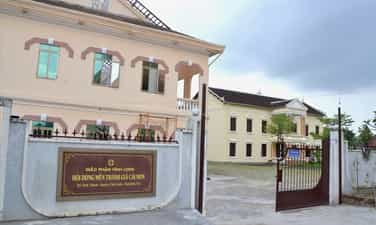
Cai Mon Church
Cai Mon Church is a religious building with a long history in Vinh Long, associated with the formation and development of the Cai Mon religion since 1702. The church is located on Highway 57, next to Cai Mon canal, standing out with its tall bell tower towering in the middle of the rich countryside. The special highlight of the church is the bell tower, which is over 54 meters high, weighs about 800 tons, and has 9 floors. The tower has a set of 6 bronze bells cast in France from the late 19th century, total weight about 4 tons. Among them, the largest bell weighs 1 ton. The bell not only signals the time of mass but also carries a spiritual meaning, reminding parishioners to aim for good things. The current church has Roman architectural style, with domes, thick walls, red tiled roofs and intricately carved wooden details, in harmony with the Southern river landscape. Not only is it a place for religious activities, Cai Mon church is also closely associated with community life and the famous local profession of growing fruit trees, ornamental flowers, and seedlings. With a history of more than 300 years, unique architecture and community cultural values, Cai Mon Church is a typical spiritual and cultural destination of Vinh Long. Source: Thanh Nien Newspaper
Vinh Long
316 view
Rating : National monument
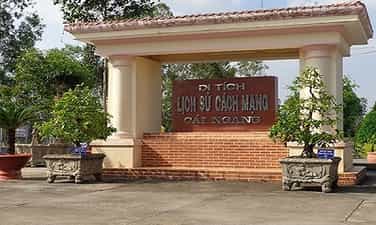
Cai Ngang revolutionary historical relic
Cai Ngang revolutionary historical relic is located in hamlet 4, Phu Loc, Tam Binh, Vinh Long province, about 25 km from Vinh Long city center. Built on the revolutionary base of the Vinh Long Provincial Party Committee in the period 1966 - 1975, this place is a "red address" rich in historical value, realistically recreating the life and fighting of the army and people of Vinh Long during the years of resistance against the US to save the country. During the war, Cai Ngang was where the headquarters of the Vinh Long Provincial Party Committee was located, from here leading the revolutionary movement in the province, contributing to the victory of the 1968 Mau Than General Offensive and Uprising and the historic Ho Chi Minh Campaign in the Spring of 1975, completely liberating the South and reunifying the country. Today's relic area vividly recreates the base system in the middle of the forest with items such as a hall, permanent house, information house, cafeteria, guard house and many fortifications, secret tunnels, underground tunnels, defensive tunnels and pier bridges typical of the Southern river region. Each project reflects the creativity and ingenuity of officers and soldiers in building secret bases, adapting to arduous fighting conditions but still ensuring command and protection of forces. Coming to Cai Ngang, visitors can also learn about many artifacts and living and labor models of revolutionary cadres, from multi-purpose tables and chairs, the simple Hoang Cam kitchen to stories about the deprived life but full of will and energy of the previous generation. Thereby, we further appreciate the sacrifice, courage and solidarity of the army and people of Vinh Long in the cause of fighting for national independence. In the relic grounds, there is also the Monument of Vietnamese Heroic Mother Nguyen Thi Ngot - a typical mother of Vinh Long province whose husband and six children heroically sacrificed their lives in two resistance wars. The project is a symbol of gratitude and appreciation for mothers who have made great contributions and sacrifices for the Fatherland. Not only has historical value, Cai Ngang Revolutionary Historical Site also impresses with its green ecological space with typical flora of the Mekong Delta. Rows of gourds, water taps, bamboo canes, vines, and natural ponds and canals create a peaceful scene, helping visitors learn about history while immersing themselves in the garden's nature. With special values in history, culture and traditional education, in 2016, Cai Ngang Revolutionary Historical Relic was ranked as a national historical relic by the Ministry of Culture, Sports and Tourism. Today, this place is a meaningful destination for tourists, students and young generations to visit, learn history, and foster patriotism and national pride. Follow Vinh Long tour
Vinh Long
659 view
Rating : National monument

Statue of Generals Le Can and Nguyen Giao
The Le Can - Nguyen Giao monument was built in 2004 at An Nhon intersection, Vung Liem town, with a height of 7.5m, made of bronze, and weighs 21.5 tons. The statue was built to commemorate two national heroes, General Le Can and Nguyen Giao, in the early history of the struggle against the French colonialists. On June 20, 1867, France invaded Vinh Long for the second time. Together with the people of the whole country, the people of Vinh Long rose up to organize many uprisings against foreign invaders. First, there was the Dang Cuu group (a group of court officials who united to raise troops), then Phan Thanh Gian's two children, Phan Ton and Phan Liem, raised the flag of resistance, but failed one after another...Faced with the repression of the invaders. , the hearts of patriotic people became even more angry and angry. Around 1872, the uprising in Vung Liem arose, the leaders of this anti-French movement were Le Can and Nguyen Giao. Le Can and Nguyen Giao were both farmers, but were more or less educated and had passionate patriotism, so when they stood up to call on the people to resist the French, they received a warm response from the farmers. people and scholars around the area. On one night of the year Nham Than (1872), implementing the strategy of Le Can - Nguyen Giao, Pho Mai led a militia group of about thirty people to raid the market of Vung Liem district, killing the district owner named Thuc and 6 soldiers. After this resounding victory, the French army carried out fierce repression and they sent governor Ton Tho Tuong to take over Vung Liem to replace the district owner who was killed by insurgents, in addition to the famous lawyer Alix Salicetti. sinister, but the resistance force did not flinch, temporarily withdrew, hid and waited for the opportunity to counterattack. To destroy Salicetti, Le Can came up with a plan to surrender and lure the enemy into an ambush by the insurgents at Cau Vong. On February 15, 1872, Salicetti led his entourage to Vung Liem to meet the insurgents. When arriving at Cau Vong, General Le Can, as soon as he saw Salicetti sitting on horseback near the end of the bridge, immediately jumped over with a ladder, hugged Salicetti and threw him to the ground. At that time, the war drums sounded loudly, Nguyen Giao led the insurgents to block the French soldiers' retreat and killed over 10 people. Meanwhile, Commander Le Can and Salicetti hugged each other and fell into the river and both died in the water. Nguyen Giao took Salicetti's head and together with the people and troops buried General Le Can on the edge of the forest. After that, the governor Tran Ba Loc brought troops to capture and kill all the people in the hamlet. Bodies filled "Vung Linh" (now the camp is read as Vung Liem), people's houses were also burned. Nguyen Giao continued to resist the French, but the great event was unsuccessful. He was shot down by the enemy in the Co Chien River and the young soldier's body was lost. Although the two heroes and martyrs sacrificed their lives, the names of General Le Can - Nguyen Giao still live forever in history books, remembered by today's generations. Source: Vinh Long Tourism
Vinh Long
7672 view
Rating : National monument
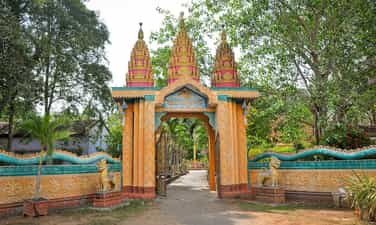
Relics of BODHICULÀMANI Pagoda (Ap Soc Pagoda)
Bodhicumàmani Pagoda relic, also known as Ap Soc Pagoda or At Pagoda, is located about 30km from Tra Vinh city, in Soc hamlet, Huyen Hoi commune, Cang Long district, Tra Vinh province. The temple was built in the year 2085 of the Buddhist calendar, or 1541 solar calendar, and has gone through over 400 years with 15 generations of monks, monks and abbots. From 1945 - 1949, during the resistance war against the French colonialists, Elder Thach Kim participated in the revolution and raised cadres at this temple. From then on, Bolhicumànani Pagoda became the base of the Party and revolution, protected by Buddhists and monks during the resistance. Through generations of pagoda leaders such as Elder Thach Kim, Elder Thach Yen, Elder Thach Nien... there have been many revolutionary cadres from the province to the grassroots who have been raised at the temple such as former comrade Nguyen Dang (Nam Trung). Secretary of the Cuu Long Provincial Party Committee; Comrade Ho Nam (Nam Dat), former Secretary of the Cuu Long Provincial Party Committee; Mr. Maha Son - Thong, former Chairman of the 7th National Assembly Ethnic Council; Comrade Pham Hong Phuoc (Chin Phuong); Comrade Pham Thanh Thuong (Tu Hong); Comrade Pham Van Xuyen, former Member of the Provincial Party Committee... With the spirit of "All for resistance, all for victory", the monks and Buddhists of Bolhicumànani Pagoda vowed to wholeheartedly follow the Party, in the same way. network. The pagoda is the place where many Khmer and Kinh intellectuals were trained. Many monks, after returning from secular life, joined the revolution and became steadfast revolutionary cadres. Some comrades heroically sacrificed their lives. for the cause of national liberation and national unification. In addition, dignitaries in the pagoda also actively mobilized Buddhists to contribute a lot of rice and money to support the resistance army. In addition, the senior monks together with Buddhists participated in many struggles for civil rights, democracy, freedom of religion, freedom of belief... The temple alone donated dozens of oil trees for burial. fallen soldiers and officers and many bronze tools for the construction site of making weapons to fight the enemy... With the above contributions, Ap Soc Pagoda was awarded a Certificate of Merit by the Vietnam Fatherland Front Committee of Tra Vinh province for its achievements through two periods of resistance and good social work. Particularly, Venerable Thach Yen was awarded the Resistance Medal, Class II, by the President. On March 3, 2009, Bodhiculanhani Pagoda (Ap Soc Pagoda) was honored to be recognized by the Ministry of Culture, Sports and Tourism as a National Historical Site. Source: Tra Vinh Tourism Information Center
Vinh Long
6456 view
Rating : National monument