Tourist destination

Flower Waterfall
Following the Quay Son stream from Ban Gioc waterfall toward Ly Van border gate (Ly Quoc commune, Ha Lang district) about 12km, Hoa waterfall is considered by tourists to be the "miniature Ban Gioc waterfall" of Cao Bang. With clear, cool water, surrounded by majestic mountains, Hoa Waterfall is a new tourist experience destination for tourists when coming to Cao Bang. Hoa Waterfall is known to locals as Thoong Lai Waterfall. Belonging to Ly Quoc commune, the waterfall is located on the gentle Quay Son river. The road to the waterfall is a series of small rocky rapids. Especially if you go this season, visitors will have the feeling of walking among the green space of trees, next to rolling mountains, gentle flowing waterfalls, and charming landscapes. Considered a miniature Ban Gioc waterfall of Cao Bang, Hoa waterfall is also divided into 2 parts: main waterfall and secondary waterfall. Seen from a distance, the waterfall pours down creating a white foam area, giving visitors a wild but no less magnificent feeling. Between the main waterfall and the secondary waterfall, a rocky mound rises, covered by an extremely impressive green grove. The landscape around the waterfall is as beautiful as a fairyland in Ly Quoc commune, Ha Lang district. Visitors can easily walk around the base of the waterfall, go to the top of the waterfall with small rapids with many beautiful beaches and rocky outcrops around, to create and produce artistic photos and videos. with natural mountains and forests. Although the altitude is not high, the water is very clear and has a large lawn, very suitable for tourists to camp and picnic. The waterfall is most beautiful during the rainy season, from May to July every year. Hoa Waterfall is now full of life, full of life and refreshing. Under the blue sky dotted with a few streaks of white clouds, the white silk strips of the Hoa waterfall are pure, sparkling under the golden sunlight... Due to the pressure of the water flowing from above, it creates clear blue puddles at the foot of the waterfall, weaving through large and small rock rapids arranged by nature like a wall that keeps water full all year round. For those who love adventure and like to conquer nature, the rainy season and the season when water falls at this waterfall is truly a wonderful experience. The area at the foot of the waterfall is also suitable for a number of water sports such as canoeing, kayaking, rafting, swimming... extremely interesting. In the dry season, the water flow on the river decreases, the waterfall becomes less fierce, more dreamy and gentler. Immerse yourself in poetic nature, inhale the fresh, clean air and be amazed by the charming waterfall, as beautiful as a muse. With fresh air and scenery like a paradise, Hoa Waterfall is truly a family tourist destination worth choosing.
Cao Bang
6947 view


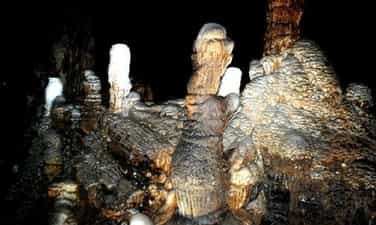
Bat Cave (Bat Cave)
Bat Cave in Dong Loan commune (Ha Lang) has long been known to many people as a scenic relic with spectacular and magical beauty and still imbued with original wildness, attracting many visitors and tourists. There are many expedition groups from different countries coming to admire and learn. Ha Lang is a mountainous district, border highland, about 74 km from Cao Bang city. There are traditional festivals imbued with national identity such as: Sung Phuc pagoda festival, Thang Na lovemaking festival, Po Na festival, Phja Dan festival, Bang Ca fair... Along with that, Ha Lang has many caves. caves with spectacular beauty, such as: Doi Cave, Nguom En, Dong Loan commune; Nguom Sap, Nguom Lom, Nguom Keng Khang, Nguom Keng Mu, Thang Loi commune; Nguom Khu, Minh Long commune, Nguom Riem, Thai Duc commune... Typically, Bat Cave, in Lung Xum hamlet, Dong Loan commune, has long been discovered and preserved by indigenous people. Bat Cave is located in the heart of a limestone mountain range about 700 meters from residential roads; The cave is relatively large, with a depth of nearly 1,000 m, an average height of about 40 m, and has a unique and majestic structure, with a system of colorful stalactites and stalactites stretching along the entire depth of the cave. The cave has 3 chambers and 2 floors, separated by cliffs and stone doorways. In the first compartment, visitors see images of the original wild life with many traces of underground water. In the rainy season, the clear water is 0.5m deep and more than 2m wide, flowing along the depth of the cave. . This chamber has the lowest ceiling, in some places it is only about 4 meters high. Large stone slabs stacked on top of each other are covered with shimmering multi-colored layers. Next are stalactites bearing the image of silver waterfalls, golden waterfalls, the cave floor has stalactites floating like cakes, in some places forming shimmering lakes. In the second compartment, visitors cannot help but be surprised to see stalactites in the cave with images of terraced fields with shiny golden rice flowers, called "fairy fields" by local people. Next to that is the image of hundreds of soft, hanging silver waterfalls that attract attention at first sight. This compartment is about 200 m long, with a long stretch of yellow sand at the bottom. The walls of the cave are decorated with stalactites of different shapes like a watercolor painting, above are stalactites stacked on top of each other like mountains. Below is a clear, calm blue water line with a mountain pattern, including small islands appearing next to the water, creating an extremely unique and charming natural picture. Going 300 meters further, you will reach the third chamber, which is considered the central chamber of the cave. This compartment is divided into two distinct floors. The first floor has an area of about 10,000 m2, 80 m high, with vivid, unique shaped stone blocks that intertwine and blend to create a magical space. To get to the second floor of the cave, you have to follow the cliff nearly 10 meters high. This floor curves like a semicircle, with an average height of about 60 m. In the central part, stretching stone terraces appear. The ceiling of the cave has stalactites hanging down in symmetry and harmony with the stalactites rising from the floor of the cave. Going deep into the bottom of the second floor is a combination of shiny yellow stone blocks that look like solid pillars supporting the roof. It can be said that the space of the second floor is vast and spacious, adding to the beauty of the overall architecture of Bat Cave. With the spectacular beauty of Bat Cave, on March 10, 2014, the Ministry of Culture, Sports and Tourism issued Decision No. 622 on classifying the Bat Cave scenic relic, Dong Loan commune as a tourist attraction. national monument. The shimmering, magical beauty of Bat Cave, the humanistic values imbued with national identity of Sung Phuc Pagoda, and To Thi Hoan temple of Ha Lang will open up a new prospect in linking tourism development, attracts domestic and foreign tourists to visit, contributing to promoting local socio-economic development.
Cao Bang
7380 view


Phieng Muong grassland
Phieng Muong grassland is known as one of the brand new super beautiful rattan hunting spots in Cao Bang that tourists should definitely not miss. Located in Quang Lam commune, Bao Lam district, Cao Bang province, about 160km from Cao Bang city center and 10km from town, Phieng Muong grassland is an extremely HOT picnic and virtual living spot for travel enthusiasts. Phieng Muong grassland is commented by many people to be quite similar to Dong Cao, but because it was only recently discovered, the landscape is still very wild, the space is spacious and has many overlapping sections, creating creates a special attraction. Besides, even though we have to go through a very long and arduous road to climb to the top of the hill, the green, endless landscape opens before our eyes, along with the blades of grass undulating in the distance. The wind is like ocean waves playing with each other running toward the horizon, making all the tiredness go away and we just want to throw everything away and lie down right on that "carpet" to deeply inhale the fresh scent. only the coolness of the grass. Moreover, standing on the Phieng Muong grass hill, visitors can not only admire the green of the grass, the undulating mountains and forests, blending into the blue of the sky, but can also watch the soft rivers winding like silk ribbons. , embracing the majestic mountains in the distance and white clouds drifting lazily above the mountain tops, so beautiful that no words can describe it. Faced with that poetic and charming scenery, not only backpackers but also many couples often choose this place as an ideal date spot, so local people also give this place a quite impressive name. is "Love Hill". According to previous experiences of Phieng Muong travel, the most beautiful time of this hill is early in the morning. Because at this time, the night dew still lingers on the leaves of grass, sparkling like heaven-sent pearls and covering the entire space, making this place seem like it's sinking into a dreamy paradise. In addition, this is also the moment when white, cotton-like clouds slowly stop on the top of the hill, although it is far away, it seems like just by stretching out your arms, you can hug those soft pieces in your heart. Therefore, if you want to know what it feels like to be immersed in a sea of clouds like in magical fairy tale movies, you must definitely visit Phieng Muong grassland at gentle dawn. Not only are there lush lawns, but what makes the attraction of Phieng Muong green hill is also the Thach Lam waterfall 5km away, because it is located right on a high mountain and has a waterfall, not everywhere. Furthermore, Thach Lam also impresses with the white water flowing straight down from above, roaring throughout the mountains and hills, while the lake surface at the foot of the waterfall is peaceful and quiet, as if there is an invisible door. That is separating them in two different worlds. In particular, the water in the waterfall is extremely clean and clear, the bottom is not too deep, so you can freely play around to dispel the sweltering heat of summer. This will definitely be an unforgettable memory on your trip. Visit Phieng Muong grassland.
Cao Bang
6652 view


Phja Da Mountain
Cao Bang, a land rich in revolutionary tradition and beautiful landscapes. In particular, the journey to conquer majestic and dangerous high mountains will make your trip even more surprising and interesting. Among them, it is impossible not to mention Phja Da mountain in Son Lap commune (Bao Lac), the mountain known as the highest "roof" of Cao Bang. Besides, the people here also have many good and mysterious stories about Phja Da mountain that are both real and fictional to tell tourists. That's why Phja Da Mountain increasingly attracts young backpackers and adventurous tourists to conquer, explore and experience. Phja Da Mountain is located in Bao Lac and Bao Lam districts (Cao Bang). The mountain is considered the roof of Cao Bang province, with an altitude of 1,976m above sea level. The temperature here all year round is often 7 - 8 degrees Celsius lower than other places in Cao Bang, sometimes 12 - 15 degrees Celsius lower. This place possesses wild and magnificent natural landscapes. From the top of the mountain a stream of water flows out, spreading into a soft waterfall mixed with floating clouds that look very beautiful. In addition, the natural scenery of the mountain also changes according to the four seasons all year round. In spring and winter, white clouds are like soft silk strips layer by layer covering the mountains. In the summer it rains a lot, the mountain tops are like giant waterfalls pouring down from the sky. In autumn there are few clouds, the sun shines brightly on Phja Da mountain like a giant fire tower soaring into the sky. At the foot of Phja Da mountain is the source of the Nang River, where the Mong and Dao people live, cultivating terraced fields on rocks, creating winding golden ribbons on the back of the mountain. However, to climb to the top of Phja Da, you need to be healthy and familiar with the road, so not all tourists can participate in the experience of climbing to the top of Phja Da, especially at harsh times with low temperatures. In addition, on the journey to conquer Phja Da mountain, tourists have the opportunity to come to Son Lap commune (Bao Lac district, Cao Bang), where mainly Mong people live interwoven with Dao, Tay, and Nung people. . In particular, this place still retains its indigenous culture, pristine natural landscape and simple, kind-hearted people, a place where visitors can experience many interesting things when traveling to Cao Bang.
Cao Bang
7054 view


Magic Eye Mountain
Magic Eye Mountain, also known as Thuong Cao Bang Mountain, is considered one of the tourist destinations that attracts tourists, especially young people today, and is given the unique name "Tuyet Tinh Coc" for its surprising beauty that nature has to offer. Than Mat Mountain is located in the valley area of Ban Danh village, Quoc Toan commune, Tra Linh district, Cao Bang province. This place is a landmark located in the Thang Hen tourist complex of Non Nuoc Geopark in Cao Bang province. Coming to God's Eye Mountain, you will see that this place is surrounded by wide, high valleys stretching with green grass, creating a majestic, vast scene between nature and sky. In addition, scientists have researched and completed the dossier for Nuoc Non Geopark in Cao Bang province, and this is also the origin of naming this mountain God's Eye Mountain. More specifically, local people here often call this mountain in the native Tay language "Phja Piót", also known as the mountain with a hole so that the winds often pass from one mountain face to the other, creating a fresh atmosphere for the village. Favored by the harmony of the blue of the sky and the green of the grass stretching around Danh village, Magic Eye Mountain or Thuong Cao Bang Mountain has created a stunningly beautiful scene like a natural masterpiece painted artistically. More specifically, you can admire the extremely unique and new beauty of the sunrise of Magic Eye Mountain when the rays of sunlight rise from the East and shine through the "eyes" of this mountain, creating a photo of a brilliant aura like a sun flower, making you surprised and delighted when witnessing this heavenly beauty here. Around Magic Eye Mountain or Thuong Cao Bang Mountain, there is also the appearance of Nam Tra Waterfall, which has a wild but extremely splendid beauty amidst the mountain and sky nature. Every time the rainy season comes, the streams flowing at Nam Tra Waterfall are as smooth as silk fabric stretching among the green grass hills along with the clear blue stream surface, creating a peaceful, poetic scene that makes people's hearts flutter. Besides the beauty inside Magic Eye Mountain or the clear blue color of Nam Tra Waterfall, the roads leading to these locations are no less poetic and magical. The road is long and surrounded by green grass fields protected by a large forest and mountains. Going on this road, you will be surprised as if you are lost in a natural wonderland mixed with the sunlight of an extremely magical sky, very suitable for you to keep beautiful photos on your journey of discovery. Magic Eye Mountain or Dung Mountain Cao Bang is a place of majestic and magnificent beauty that not only inherits the natural green power from heaven, earth, and mountains but also carries the beauty of a wonderful, poetic, wild but extremely unique and magical scene. If you are planning to travel to Cao Bang, set foot on Magic Eye Mountain to witness the beautiful scenery that you can save on your camera to capture memorable memories on your journey of discovery.
Cao Bang
6965 view


Phat Tich Truc Lam Ban Gioc Pagoda
Cao Bang is a famous land of the Northeast region of the country, this place is attractive with the majestic beauty of the mountains, poetic with waterfalls and lakes, mysterious with caves, unique with houses, unique with mouth-watering delicious cuisine. The spiritual spot here is also extremely pure, satisfying visitors from near and far with its sky-high beauty. When you come to Cao Bang, you must definitely go to Phat Tich Truc Lam Ban Gioc Pagoda to see the beauty of the spiritual spot on the Vietnamese border. Truc Lam Ban Gioc Phat Tich Pagoda is the pagoda with the most beautiful scenery in the borderland of Cao Bang, where you can see the majestic flow of Ban Gioc waterfall and admire the charming mountains of Chongqing. This place was built in 2014, is the first temple site at the border of Cao Bang land. Truc Lam Ban Gioc Phat Tich Pagoda, also known as Truc Lam Ban Gioc Zen Monastery, is a pagoda that practices according to the Truc Lam Tam To sect. Behind the pagoda there is also a temple to the holy mothers and typical heroes of the country. Visiting Truc Lam Ban Gioc Phat Tich Pagoda, visitors will see wonderful scenery in a peaceful space, and see the first cultural and religious traditions of Vietnam in the frontier land. Phat Tich Truc Lam Ban Gioc Pagoda was built on a grand scale, with architecture following the Northern pagoda design with a curved roof, tiled roof, combining wood and stone to create a cool interior space. The path to the pagoda is led by hundreds of steps, visitors will walk under rows of cool green pine trees. The first destination is the large three-entrance gate area, up about 50 more steps are the bell tower and drum tower. The space viewed from here is a fresh green color. Next step up is the majestic main hall, followed by many typical worship areas of saints and heroes who have contributed to the country. The pagoda was built halfway up the mountain, its back leaning against Phia Nhung mountain, the pagoda facing the Quay Son river and Ban Gioc waterfall, with a wide view of the lands of Co Mong, Lung Phiec, Lung Luong with incredibly beautiful mountainous landscapes. . A large private corner where Phat Tich Truc Lam Ban Gioc is located has a direct and panoramic view of Ban Gioc waterfall with three cascading waterfalls and the lake below. In the afternoon space of autumn, when going to the pagoda to admire the view of the waterfall, poetry becomes more poetic. You can visit Truc Lam Ban Gioc Phat Tich Pagoda at any time of the year. However, if you come here in winter, prepare warm clothes because the temperature can drop below 5 degrees Celsius. However, to make trips that combine sightseeing in Cao Bang, you should come here from August to September every year. At this time, the weather is cool, pleasant and it rarely rains. This is a convenient time for outdoor tourism activities and fully exploring scenic spots.
Cao Bang
6404 view


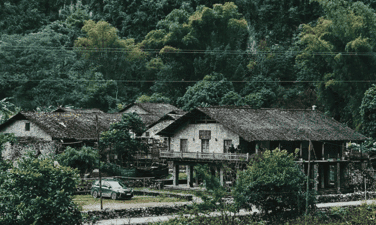
Khuoi Ky ancient stone village
Khuoi Ky stone village has the beauty of unique and strange architecture, along with a space surrounded by wild mountains and forests and closely associated with nature. When coming here, visitors will not only be able to immerse themselves in the fresh air and admire the peace of a village over 400 years old, but also have the opportunity to discover many interesting things different from the crowded city. . Besides, during the visit you will also learn about the lifestyle and culture of the people of Cao Bang area. Thereby, you can get a clearer view of the ethnic people as well as human life in the border areas. Located on the border of Vietnam and China, the ancient stone village is not only famous for its long history but also impresses with its unique and different architecture. Currently, the village is located in Dam Thuy commune, Trung Khanh district, Cao Bang and on provincial road 206. This is known as a sacred land that preserves the culture and spiritual values of the Tay ethnic people. The total area of Khuoi Ky stone village is currently about 10,000m2, with the advantage of a solid mountain back and facing the wide space of Khuoi Ky stream, which is fresh all year round. With a total of 14 houses built of unique stone, creating a peaceful and gentle beauty typical of the life of ethnic people in the border area. When coming here, tourists can not only admire the more than 400-year-old structure, but also have the opportunity to explore the beauty of Ban Gioc Waterfall and Nguom Ngao Cave. Contributing to creating an interesting trip and letting visitors know more about the life and people of this Cao Bang land. Not only houses, stones are found everywhere in Khuoi Ky village, from fences, stoves, mills to dams. Therefore, Khuoi Ky is often called the ancient stone village. In the village, there are only a few homestays for people to open on their own with extremely affordable accommodation prices. To have an enjoyable trip and keep many beautiful memories, choosing the time to visit also plays a very important role. This is no exception when coming to Khuoi Ky stone village, you should come to the village from September to October because this time the weather is very good, cool, pleasant, no rain. Therefore, it is very convenient to visit and see the scenery here.
Cao Bang
5808 view


Ma Phuc Pass
To complete your trip to Cao Bang, you cannot miss Ma Phuc Pass. Ma Phuc Pass is famous for being dangerous and difficult to travel but is also a favorite destination for backpackers. The feeling of conquering the road with zigzag turns will surely be extremely thrilling but full of fun. Not only will there be a sense of adventure, but when passing through the pass, visitors will admire the majestic natural picture of overlapping mountains mixed with terraced fields dyed in the poetic and touching sunset. People. Ma Phuc Pass is located in Quoc Toan commune, Tra Linh district, Cao Bang province. Ma Phuc Pass is also known as the 7-storey pass, because when conquering this pass, visitors will have to go through 7 levels of slopes, the winding slopes go up and down for about 4km and are about 700m above sea level. Ma Phuc Pass Road is quite beautiful but winding and sharp, one side is rocky mountains, the other side is a deep abyss or narrow ravine, so when you want to conquer this road, make sure you have a strong handle. Or you can find yourself a trustworthy companion. Running on the mountain pass, visitors will enjoy the majestic natural scenery of undulating hills and mountains, the pristine landscape of the Northeast mountains and forests, and equally poetic views of the green fields and grass of the villages. down the valley. More specifically, Ma Phuc Pass is also classified as a geological heritage of Non Nuoc Cao Bang Global Geopark recognized by UNESCO. Passing by Ma Phuc Pass, visitors will easily see on both sides of the road two limestone blocks standing up and touching each other like two horses lying on the ground, that's why the pass is called Ma Phuc. Phuc. There are many legends here about the name of Ma Phuc Pass, one of which is associated with the legend of national hero Nung Chi Cao. In the 11th century, Nung Chi Cao led the people against the Song Dynasty in the north, and captured part of the Song territory that is today called Guangdong and Guangxi. However, after claiming the title of King for about 3 years, Nung Chi Cao was destroyed. After being chased and injured, both people and horses collapsed at Ma Phuc Pass, the name of the pass that remains to this day. Cao Bang's climate is divided into two distinct seasons, the rainy season lasts from April to September and the dry season lasts from October to March of the following year. Saying that Ma Phuc Pass is beautiful regardless of time is not an exaggeration because each season and each time this place has a different beauty. According to experience in exploring Ma Phuc Pass, visitors can go in August to September. On this occasion, the weather here has little rain, mild sunshine, cool and convenient for moving to enjoy the beautiful scenery. During this season, the waterfall is filled with water and the landscape is extremely pleasing to the eyes of visitors. Added with the yellow color of ripe rice will make visitors captivated by the scenery here. November and December are the seasons when buckwheat flowers and wild sunflowers bloom, seemingly covering the mountains and forests of the Northeast, creating an incredibly beautiful picture. Or everyone can come at the end of spring and early summer, the weather is neither too cold nor hot, apricot flowers, plum flowers, pear flowers, and flowers with heavy branches are also extremely eye-catching.
Cao Bang
5621 view


Tran Hung Dao Forest Special National Relic Area
Tran Hung Dao Forest Special National Relic Area is located at the foot of Slam Cao Mountain in Tam Kim and Hoa Tham communes (Nguyen Binh district, Cao Bang province) and about 50km southwest of Cao Bang city. This is where a system of relics associated with a particularly important historical period of the Vietnamese revolution is preserved and has now become a red address on the journey to Cao Bang. Tran Hung Dao Forest Special National Relic Area is the place marking the establishment and activities of the Vietnam Liberation Army Propaganda Team, the predecessor of the Vietnam People's Army. At the same time, this is also the place associated with the life and revolutionary career of General Vo Nguyen Giap - an excellent student of President Ho Chi Minh. The relic area includes 5 important points: Tran Hung Dao forest relic cluster (including the location of the establishment of the Vietnam Liberation Army Propaganda Team, the rest shack and kitchen, the water mine for domestic water, and Slam Cao Peak); Tham Khau Cave (Tam Kim commune) - was once used as a communication station, serving meals to revolutionary comrades; Phai Khat Fort (Tam Kim commune) - where the first battle of the Vietnamese Liberation Propaganda Army team took place (December 25, 1944); Na Ngan Fort (Hoa Tham commune) - the place marking the second victorious battle of the Vietnam Liberation Army Propaganda Team (December 26, 1944); Va Pha relic (Tam Kim commune). With these historical values, in 2013, the Prime Minister decided to classify Tran Hung Dao Forest Historical Relic (Nguyen Binh district, Cao Bang province) as a special national monument. Since then, the work of preserving, restoring and promoting the value of relics has received special attention from the locality through upgrading the road from Cao Bac Pass and the route from Provincial Road 34 to the relic site, constructing and Reception houses and memorial houses are put into use. In particular, the Exhibition House at the relic, after being completed and put into use, has contributed to honoring and paying tribute to the previous generation, while preserving, embellishing and promoting the value of the relic. Artifacts here are displayed centrally, ensuring true scientific and historical value according to 3 themes: Cao Bang - Country, people and traditions; The process of formation, birth and operation of the VNTTGPQ Team; Glorious traditional heroic army. Coming to Tran Hung Dao Forest Special National Relic Area, visitors will not only learn about glorious historical traditions with many relics but also explore and admire the beauty of the primeval forest. With an area of over 201.7 hectares, Tran Hung Dao forest still retains its wild beauty with fresh air and is a destination for thousands of domestic and international tourists. Deep under the canopy of ancient trees is the stele house of 34 soldiers of the VNTTGPQ Team, the rest shack and the kitchen simulating the simple daily life of the soldiers. Following a small slope about 50m is a natural water mine, also a drinking water point for soldiers, which after many years still produces cool and clear water. Also in Tran Hung Dao forest, a 300-year-old ancient crocodile tree that was closely associated with the daily life of the VNTTGPQ Team was recognized as a Vietnamese Heritage Tree. Over the past 75 years, the vestiges from the early establishment of the VNTTGPQ Team have always been respected and preserved by ethnic minorities in Cao Bang province, contributing to educating the spirit of patriotism and revolutionary traditions for the following young generations. This. The vast primeval forest spreads out each canopy, covering the sacred relics of the arduous revolutionary activities of General Vo Nguyen Giap and the VNTTGPQ Team.
Cao Bang
6853 view


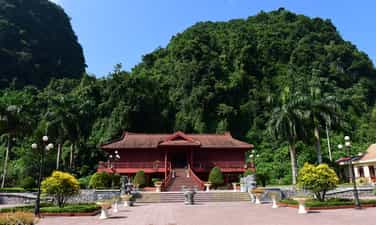
Relics of victory in the 1950 border campaign
When it comes to Cao Bang tourism, many tourists often think of the Pac Bo Special National Historical Relic Area, Ban Gioc Waterfall - Nguom Ngao Cave... but for those who love learning about culture and heroic history, of the nation associated with the revolutionary life of President Ho Chi Minh and of the Vietnam People's Army, you should spend more time in Cao Bang to visit and learn about the special National Relics and Battle Sites. Border victory in 1950. The 1950 Border Victory sites are about 40 km from Cao Bang city (in the direction of National Highway 4A from Cao Bang to Lang Son), there are 19 relics distributed into 4 relic clusters located in 3 communes and 3 communes. 1 town of Thach An district includes: Cluster of relics of President Ho Chi Minh with the Border victory in 1950 (Duc Long commune); Dong Khe stronghold relic cluster (Dong Khe town); Khau Luong relic cluster (Duc Xuan commune); Coc Xa relic cluster - high point 477 ( Trong Con commune). Among them, sites related to the 1950 Border Campaign are mainly distributed in the relic cluster of President Ho Chi Minh with the 1950 Border victory and the Dong Khe base relic cluster. The special national relic site of the 1950 Border Victory has a particularly important value associated with the revolutionary career of President Ho Chi Minh, General Vo Nguyen Giap and the growth and development of Vietnam People's Army. With the location, role, and important historical significance of the relic, and at the same time meeting the aspirations of the army and people of Cao Bang as well as the army and people of the whole country in preserving and effectively promoting the value of the relic, On December 25, 2017, the Prime Minister issued Decision No. 2082/QD-TTg classifying the 1950 Border Victory Site as a special national relic. After the Viet Bac Autumn-Winter victory in 1947, our army and people crushed the French colonialists' strategy of "Fight quickly, win quickly", causing the situation on the battlefield between us and the enemy to change to a "holding, struggling" position. , we have gradually moved into a counterattack position. In Indochina, the French army became increasingly bogged down in the war and fell into a passive defensive position. To save the situation, the French Government created the Rêve plan to blockade the border, use puppet troops for occupation, and concentrate European and African troops into a mobile force to carry out the policy of "using the Vietnamese to fight". Vietnamese people", "using war to feed war". In Cao Bang, France focused on strengthening the system of military bases and posts on Highway No. 4 from Cao Bang town to Dong Khe, That Khe, Na Sam, Lang Son; in which Dong Khe is an important sub-region, the shield of Cao Bang. On our side, along with strengthening military forces and expanding liberated areas, to enlist the support of people's democratic countries around the world, our Party and President Ho Chi Minh advocate promoting public works. Diplomatic cooperation with the motto "more friends, less enemies". Faced with many favorable changes in the world and domestic situation, in order to take the resistance war to a new step, in June 1950, the Party Central Committee Standing Committee decided to open the Border Campaign, named "The "Le Hong Phong II" epidemic aimed at destroying an important part of the enemy's forces and liberating part of the border; Opened borders with socialist countries, broke the French siege, and expanded and strengthened the Viet Bac base. The Central Standing Committee resolved to establish a Front Party Committee with 05 comrades: General Vo Nguyen Giap - Standing Member of the Party Central Committee, Minister of National Defense as Secretary of the Front Party Committee; Comrade Tran Dang Ninh - Member of the Party Central Committee as Chairman of the General Department of Supply; Comrade Hoang Van Thai as Chief of General Staff; Comrade Le Liem, Deputy Director of the General Department of Politics; Comrade Bui Quang Tao, Deputy Secretary of the Inter-regional Party Committee, Vice Chairman of the Viet Bac Inter-Regional Administrative Resistance Committee, is a member. Cao Bang was chosen as the main battlefield of the Border campaign, because Cao Bang has a common border with Guangxi province - China, a convenient international exchange route, and is the focal point of important strategic roads. Road No. 4 runs along the Northeast border to the Gulf of Tonkin coastal region. Road No. 3 connects Cao Bang - Bac Kan - Thai Nguyen. Furthermore, the people of Cao Bang were challenged and trained during the revolutionary period. By the end of 1949, localities around Highway 3 from Ngan Son to Bac Kan and most districts in Cao Bang province were liberated. Given the importance of the Campaign, from the end of August 1950, despite being busy with many important matters, President Ho Chi Minh - the supreme leader - went to the front with the Campaign Command to directly direct the Campaign. campaign, mobilizing soldiers and people to fight. The victory of the Border Campaign has profound national and era significance. The 1950 Border Campaign was the first major offensive campaign of the Vietnam People's Army in the resistance war against the French colonialists, a campaign of special importance under the direct direction of the Party Central Committee. President Ho Chi Minh and General Vo Nguyen Giap. The Border Campaign eliminated more than 8,300 enemies from combat, liberating the entire Vietnam-China border from Cao Bang to Dinh Lap with 350,000 people, with an area of 4,500 km2; breaching France's "East-West Corridor". The enemy's siege both inside and outside of the Viet Bac base was broken. The victory of the Border Campaign changed the war situation between us and France, creating a new change in attack and counter-attack strategies, contributing to bringing the resistance war to victory, culminating in the campaign. Dien Bien Phu in 1954. When looking back at France's failure in the Indochina war, former Governor General of Indochina Catoru bitterly confirmed: "The failure of the French army at the Vietnam-China border in October/ 1950 had a decisive influence on the fate of Indochina and Dien Bien Phu later suffered from that influence. The victory of the Border victory in 1950 proved the correctness of the "all-people, comprehensive, long-term, relying on one's own strength" war policy proposed by the Party and President Ho Chi Minh. The lessons of promoting internal strength, building resistance forces, and building the army to achieve victory in the 1950 Border Campaign still remain valuable in the current work of building and protecting the homeland.
Cao Bang
7805 view


