Tourist destination
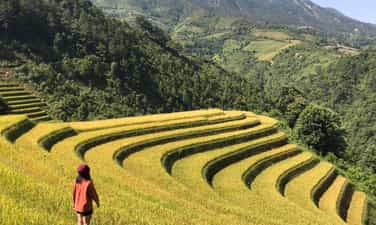
Lim Mong village
Lim Mong village is located in Mu Cang Chai district, Yen Bai, with a beauty that has captivated the hearts of many people. Lim Mong village is located at the end of Yen Bai, blessed by nature with breathtaking beauty and stretching rice fields, interspersed with roofs that appear hidden in the clouds, as beautiful as paradise. . It is no exaggeration to say that Ban Lim Mong is one of the extremely challenging attractions and discoveries for those who are passionate about backpacking. With an extremely dangerous road full of hardships and challenges, Ban Lim Mong responds to everyone's patience with a breathtakingly beautiful natural scenery, not inferior to Tu Le Town in Yen Bai. Between September and October is the best time for you to explore Ban Lim Mong. This is also the time when Mu Cang Chai terraced fields are at their most beautiful season. Coming here at this time, you will admire the natural scenery of Yen Bai dressed in shiny golden colors, as beautiful as a picture painted by the hands of Mother Nature. If you missed Yen Bai's golden season, you can also visit Ban Lim Mong around May to June. At this time, Yen Bai is in the flood season, so the natural scenery is extremely beautiful and poetic. At this time, Ban Lim Mong is also much more cheerful and bustling because people begin to invite each other to go to the fields to plow for a new, bountiful crop. Coming to Yen Bai and missing out on the beautiful natural scenery of Ban Lim Mong is an extremely big mistake. Located at the end of the land of clouds, the road to Ban Lim Mong is also extremely dangerous, making many backpackers restless, wanting to pick up their backpacks to come here to explore one of the most dangerous roads in Vietnam. To get to Ban Lim Mong, from Hanoi you move in the direction of Trung Ha bridge. Coming to Thanh Son (Phu Tho), continue moving straight through Highway 32 towards Yen Bai province. After arriving at the foot of Khau Pha pass, you have to pass through the Thai village at Nam stream to reach Lim Mong village located on the other side of the stream. Right from the time you are on the road to Lim Mong village, you can admire the impressive beauty of Khau Pha pass. With an altitude of up to 1200m above sea level, the spectacularly beautiful Khau Pha Pass brings a significant challenge for those who are planning to explore Ban Lim Mong. Standing from the top of the pass, you will easily admire the natural scenery of Ban Lim Mong. The beauty of Yen Bai's mountains and forests is captured in full view. Especially when Ban Lim Mong is in the ripe rice season, the rice fields stretch out in an extremely bright yellow color, adding to the enchantingly beautiful landscape. Young people often choose the top of this pass as a place to watch Ban Lim Mong, live virtual lives and especially catch the moment of sunset or sunrise. If you intend to explore Ban Lim Mong, one of the first things you need to do is to thoroughly check your vehicle and have it serviced if possible. The road to the village is extremely difficult and dangerous with many steep passes and bends, so if you are not careful, you can easily encounter mishaps in the middle of the road. Make sure you are in good health before leaving because the road to get here is not only long but also full of hardships and challenges. If you are not confident enough to drive, you should go with someone who has a strong handlebar, has experience driving long distances and is as familiar with the roads in Yen Bai as possible. You should check the weather forecast before leaving. If the weather is bad, you should consider changing your itinerary to other destinations before going to Ban Lim Mong. Especially, you should not go down a steep mountain pass at night because the road is very dark, deserted and extremely dangerous for those who are not familiar with the roads of Ban Lim Mong. Prioritize comfortable clothes and sports shoes for ease of movement because most people come to Ban Lim Mong with the desire to explore as much as possible. The terrain here is not suitable for wearing too elaborate dresses and skirts for virtual living.
Lao Cai
6122 view


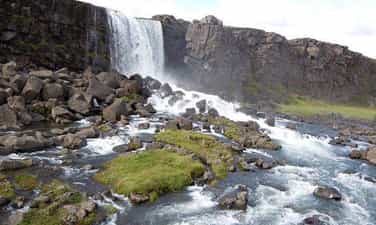
Pu Nhu Waterfall
Yen Bai province is known to many people thanks to the impressive beauty of its charming natural scenery, the most famous is probably Mu Cang Chai. But few people know that this is also the place where the endless echo of the majestic and beautiful Pu Nhu waterfall is heard. Pu Nhu Waterfall is located in Pu Nhu village, La Pan Tan commune, Mu Cang Chai with the waterfall creating melodious sounds like a proud story about the honest, simple people of the majestic high mountains of the West. North. The waterfall is located about 10km west of the center of Mu Cang Chai district, originating from streams in the upstream forests of Lao Cai and Son La. The extremely impressive high mountain terrain here has turned that stream into the majestic, impressive waterfall it is today. The most special thing to mention is that during the flood seasons, the water here is compensated with a layer of fertile silt to help the plants grow, bringing fresh flavors and full of vitality. Nature is very clever in delicately surrounding this beautiful waterfall, only "revealing" the majestic echo of the waterfall to those from afar. That's why Pu Nhu waterfall becomes more mysterious, making everyone curious to discover it just by hearing those sounds. Before you can see Pu Nhu waterfall, you will already be ecstatic about the poetic beauty of the path leading there. The road is quite easy, just passing through the stream and cornfield, you can enjoy the cool feeling of the cool water here. If you choose to travel along the main road, it will be difficult to admire this waterfall. Do you know why? Because nature has embraced this waterfall with tall forest trees, creating a delicate hiding place for the waterfall. With a height of about 200m, the waterfall is divided into many different levels. The most beautiful is on sunny days, the Pu Nhu waterfall flows down like a white silk cloth fluttering to the joyful melodies of the whispering wind and the singing of birds in the surrounding pristine forest. If you have the opportunity to explore Mu Cang Chai on days with such great weather, you will surely admire the pristine beauty, majestic sounds and the most memorable moment is the moment of immersing yourself in the fresh air. that heaven and earth bestowed on this place. Standing proudly between two high vertical cliffs, Pu Nhu waterfall appears like a watercolor painting. The image of the majestic high mountain is like a mighty man surrounding and protecting the beautiful young woman named Pu Nhu waterfall through many ups and downs of life. Around the waterfall, there are also large rocks covered with moss that are somewhat scary, but that is also a special highlight that makes you unable to take your eyes off the strangeness. If you are struggling to find a place to let go of all your worries and relax in the fresh nature, this is truly the ideal place for you. With what Pu Nhu waterfall possesses, you will surely have a memorable trip with wonderful and impressive scenery here. Beneath the continuously flowing water of the waterfall there is also a mysterious lake called Dragon Lake. According to the people here, this lake is extremely sacred because there is a dragon sleeping at the bottom of the lake, and it is said that the Pu Nhu waterfall is the beautiful result gushed out from that dragon. Although it is only a story that has been passed down orally to this day, it has made people not dare to immerse themselves in this water, because no one dares to wake up the dragon's sleep. However, this is just a legendary story. Nowadays, tourism services here have become much more developed, you can be completely guaranteed safety during your visit. Therefore, you can still enjoy the cool water here without having to worry too much.
Lao Cai
5903 view


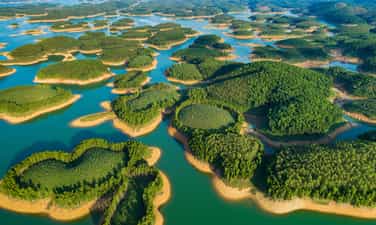
Thac Ba Lake
Located in the Northwest of the country, Thac Ba Lake of Yen Bai province, a place called "Ha Long on the mountain", is one of the three largest artificial lakes in Vietnam formed when the Thac Ba Hydroelectric Plant was built. The lake is located in two districts of Yen Binh and Luc Yen. The lake has nearly 20 thousand hectares of water surface, including more than 1,300 large and small green islands, along with a beautiful cave system hidden deep within the limestone mountains. Coming to Thac Ba Lake, visitors can enjoy watching the vast sea of water and the immense islands of trees reflecting on the blue lake surface. The people here are also very friendly and hospitable. Anyone who has once visited Thac Ba Lake will surely be surprised and will never forget the clear, poetic and majestic Thac Lake. Not only does it provide water to generate electricity from the national grid, Thac Ba Lake is also a place for fresh air conditioning and a stopping point for tours. Visiting Thac Ba Lake, when traveling by boat, visitors will enjoy the fresh air amidst the vast, shimmering water surface reflecting the seemingly endless overlapping islands, forgetting all the tiredness and worries. troubles of life. The first place visitors can visit is the Thac Ba Hydroelectric Plant area, where Thac Ba Temple is located, this is Vietnam's first hydroelectric project standing tall on the lake. Having the chance to visit the country's historical works with their own eyes and hear the story of the people who devoted their lives day and night to building the factory, each visitor will be moved and more proud of the glorious national tradition. , the sacrifice of his father's generation. At the end of the trip to visit Thac Ba Hydroelectric Plant, visitors can also visit Thac Ba Mau Temple - a spiritual tourist destination not far away. The temple is located on Hoang Thi mountain, with its back against the mountain, overlooking the Chay River in the East Northeast direction, far away is Cao Bien Mountain. For a long time, Thac Ba Mau Temple has been famous as a sacred place, recognized as a Provincial Cultural and Historical Relic in 2004. Tourists visiting Mau Temple light a stick of incense, letting go of the chaos of life. , praying for peace of mind at the door of compassionate Buddha to continue the journey that takes visitors to discover the magical beauty of stalactites, of strange natural stone statues that hide many human desires and ambitions in the world. Limestone cave complexes on the lake such as: Thuy Tien cave, Xuan Long cave, Bach Xa cave, Thac Ba, Thac Ong... Thuy Tien cave, located in the heart of the rocky mountain is about 100m long with sparkling, clear stalactites. It has a picture of nine fairies, each with a unique look associated with a thrilling and attractive love legend. Visit Xuan Long cave hidden in the rocky mountains, with natural stone statues and stalactites associated with colorful legends. Along with the cave system, visitors can go up Cao Bien Mountain, the largest and longest mountain range of Thac Ba Lake. Standing on the top of the mountain, you can see the lake engulfed in mist with its shimmering and magical beauty. , feel the majestic beauty of nature, to find the ancient mark of Ngoc market, the famous Thac Ba Ivory market, once a bustling market... Sitting on a canoe up the Chay River, not far away, visitors will Visit the land of Ngoc Luc Yen with famous landscapes such as Sao Pagoda cave, Dai Cai temple... and admire the magic of natural gemstone paintings under the talented hands of craftsmen. Charming scenery, rich in aquatic resources, the lakeside is also home to many ethnic groups such as: Kinh, Tay, Nung, Mong, Dao, Phu La, Cao Lan... People here still keep local cultural identity, in which many special festivals often take place such as the New Rice Festival of the Tay people, Tet dancing of the Dao people... Coming to Ngoi Tu Cultural Village - Vu Linh commune, Yen Binh district, where 5 ethnic groups gather (mainly White Dao people), visitors will experience a relaxing life under low stilt houses. Wander among the palm forests, learn about the traditional craft of weaving shrimp baskets, and watch red-cheeked Dao girls in brilliant national costumes. In particular, every time night falls, by the flickering campfire, visitors will hear captivating folk songs and enjoy the delicate flavors of dishes such as: bamboo-tube rice, banana flower salad. forests, chicken cooked with sour bamboo shoots or fish salad, shrimp salad... Most of the villages along Thac Lake still retain their wild features, along with the cultural identities of the Tay, Nung, Dao, and Cao ethnic groups. Lan... with many unique festivals. Currently, Ngoi Tu village has many fully invested households qualified to welcome foreign guests. Every year, the village welcomes hundreds of groups of visitors, mainly from Germany, France, Italy, Sweden, Australia and overseas Vietnamese. In addition, visitors can also attend the unique boat racing festival called "Echoes of Thac Ba Lake" or visit the famous Kha Linh grapefruit village. And on that journey of discovery, visitors can also spend a little more time to visit the adjacent land of Luc Yen, a famous gemstone area in the country, visit the historical relics of Dai Cai temple, Ma Mut cave, and Sao pagoda. , Black King Mountain... where archaeologists have discovered traces of ancient Vietnamese people. Compared to Ha Long Bay on the mountain - Thac Ba Lake promises to bring tourists wonderful, unforgettable experiences.
Lao Cai
7462 view


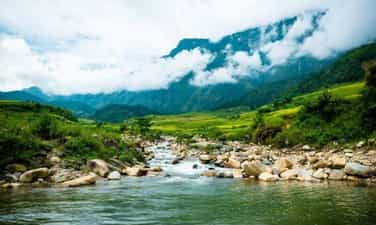
Suoi Giang
Yen Bai Giang Stream is located at an altitude of about 1,300 - 1,400 m above sea level, covered by layers of clouds all year round, plus the air is always extremely fresh and cool, making this place a hot spot. The spot is very popular with tourists, choosing it as a place to stop. Besides, this place also has a unique feature that MIA.vn believes that when you hear it, you will want to pack your things and go to Suoi Giang immediately, that is, you can feel all four seasons of the year in just one breath. in... a day in Suoi Giang. When mentioning Yen Bai, it is impossible not to mention Suoi Giang, and when mentioning Suoi Giang, it is impossible not to mention Shan tea. Stop here for a moment to let MIA.vn tell you a fairy tale about this type of tea associated with Suoi Giang. Legend has it that, once upon a time, a fairy sowed seeds in Suoi Giang and this divine seed germinated into a lush green tree. When the tree grows, it spreads its leaves and buds as white as snow. At this time, the Mong people living here were suffering from hunger and cold. They used this leaf to eat. After eating, their bodies felt healthier. It was that miracle that they believed that God had helped them, so they decided to establish a village here to live and call this place Suoi Giang. It must be said that the ancient tea trees in Suoi Giang are also very magical, they live at an altitude of 1,400 meters above sea level, the "young" trees are over a hundred years old, the older trees are over 300 years old. Yet young buds still grow green on rough, moldy white tea stems, firmly clinging to the roots on the craggy mountainside, creating a unique ancient tea garden landscape. In addition, those fat tea buds are covered with a translucent white layer, so they are called snow tea. Tea is picked and prepared with the experience and skillful hands of the Mong people. Shan Tuyet Suoi Giang tea is very unique. Although it lives in a pristine mountain area, the green tea contains all the top flavors of world-class teas in the bowl. When traveling here, there are many activities for you to enjoy this green, clean, and beautiful living space, such as closing your eyes and thinking about a bowl of fragrant tea, or carelessly drinking a cup of tea. Sleep soundly under the canopy of a huge tea tree, or immerse yourself in the lives of the people here through tea picking and tea making activities, and finally enjoy the tea that is a finished product that you have made with your own hands. It is truly an ideal destination for us to "detox" the fatigue and worries from life in the city, isn't it! Traveling to Suoi Giang, in addition to enjoying Shan tea, there are also many specialties of the Mong people waiting for you to enjoy such as: men men, Yen Bai kitchen buffalo meat, armpit pig, wild vegetables, cassava wine, corn wine,... and extremely unique dishes, blended with the flavor of ancient sweet soup such as meat rolled in grilled tea leaves, young sweet soup leaves eaten raw with herbs. The cuisine is simple and rustic but has an unforgettable flavor. Imagine sitting comfortably at the wooden dining table, in the cold weather of a quiet night, enjoying hot grilled meat skewers, accompanied by the strong aroma of wild vegetables, the heat of a bowl of wine and wine. Occasionally "coating" your mouth with the sweet taste of men men made from corn, it will definitely make you want to take a once-in-a-lifetime trip with your best friends.
Lao Cai
5665 view


La Pan Tan commune
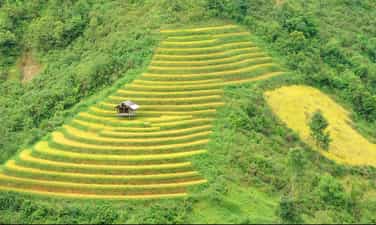
La Pan Tan is a highland commune in Mu Cang Chai district, Yen Bai province. With its location on the top of Khau Pha, nearly 2000 meters above sea level, La Pan Tan commune possesses an extremely beautiful natural picture with terraced fields, towering mountains and indigenous culture. H'mong people. From Mu Cang Chai town to La Pan Tan commune, about 15km, visitors can easily reach the destination by going in the Northeast direction. After the journey through the mountain passes, you will come to a beautiful land with up to 2,200 hectares of terraced fields arranged in layers. In the past, La Pan Tan commune used to be a poor commune, the "capital" of opium when up to 80% of the population was addicted. However, that "dark" period has gradually passed when the commune received adequate investment to develop tourism. The lives of local residents have gotten better. In 2007, La Pan Tan was recognized by the Ministry of Culture, Sports and Tourism as a National Scenic Monument. With a prime location in the high mountains, cool climate and average temperature of about 19 degrees Celsius, this place has become a favorite destination in Mu Cang Chai for many tourists. The journey to explore La Pan Tan commune brings you countless memorable experiences in both the beautiful scenery, culture and people here. If you discover La Pan Tan commune for the first time, you will probably be immediately overwhelmed by the beautiful scenery here. On the journey to visit this Northwest highland commune, visitors will enjoy the beautiful scenery of terraced fields surrounded on all sides. As one of the communes with the most terraced fields in Mu Cang Chai, everywhere you look you will see rice fields overlapping. It is truly admirable for the farmers here, with their human strength and rudimentary agricultural tools, they can turn the mountains and hills into beautiful fields, curving beneath the mountain slopes. Terraced fields lie gently along the hillsides, extending to the stream banks, weaving into the villages. Everywhere are rice fields. Exploring La Pan Tan commune, visitors can check in many beautiful places here. Among them, Mam Xoi hill is the hottest coordinates of each ripe rice season. This hill is supported by terraced fields below, and above has a round shape like a tray rising to the sky. Every golden rice season, Mam Xoi Hill attracts many tourists to check in and take photos. According to the experience of many tourists going to Mu Cang Chai, Mam Xoi Hill is most beautiful in the early morning at dawn when the golden sunlight has just gently crept onto the fields, surrounded by white mist covering it, painting a picture. beautiful like a fairyland. Near Mam Xoi hill, there is a small wooden shack owned by local people, where visitors can sit and admire the scenery and enjoy taking photos. Visiting La Pan Tan during the ripe rice season in September - October, visitors can both admire the beautiful terraced fields and have the opportunity to watch people harvest rice manually. The image of Hmong women with small sickles quickly harvesting each clump of rice in the field is so beautiful and simple. Coming to La Pan Tan, Mu Cang Chai district, in addition to terraced fields, visitors can also explore the beautiful waterfall here. That is Pu Nhu waterfall with a height of more than 20 meters, pouring loudly into Dragon Lake and creating a very majestic and mysterious scene. Around Pu Nhu waterfall are large and small rocks covered with moss, leading to a peaceful, poetic forest of ancient trees. Coming to Pu Nhu waterfall, you can spend time admiring the beautiful scenery, taking photos or camping around the lake shore. Indigenous people believe that Dragon Lake is a sacred place so no one goes to bathe. However, later when local tourism activities are promoted, visitors can experience bathing in the waterfall to feel the cool water here.
Lao Cai
6095 view


Mu Cang Chai
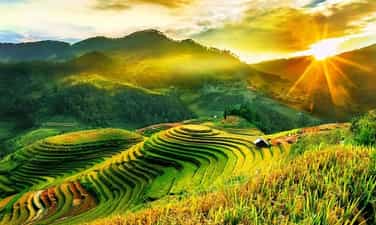
In recent years, every year, around the end of September and early October every year, tourists from all over the country flock to Mu Cang Chai to admire the wonderful scenery of this highland land. Coming here, visitors can not only enjoy the beauty of terraced fields and the sea of white clouds on top of Cao Pha pass but also immerse themselves in the unique cultural festivals of the Mong people. Mu Cang Chai is a western highland district of Yen Bai province, 180km from Yen Bai city center, more than 300km northwest of Hanoi capital. This land is located at the foot of the Hoang Lien Son mountain range, at an altitude of over 2,000m above sea level. Coming to Mu Cang Chai, visitors can take Highway 32 in two directions. If from Hanoi, you will go to Yen Bai, from Yen Bai to Muong Lo 70km, sleep here so that you can drive from Muong Lo early in the morning and arrive at Muong Chai in the afternoon. This section is nearly 100km long, but more than 80km is a steep mountain pass that continuously advances. Once it reaches an altitude of 1,750m, covered with mist and clouds, it will soon reach Mu Cang Chai town. In the middle of the pass, there is a flat land, stop here to enjoy the fragrant Tu Le sticky rice that is famous throughout the region. In the second direction, tourists go all the way to Noi Bai - Lao Cai highway, go to Sa Pa and pass O Quy Ho pass, then go through Tan Uyen and Than Uyen of Lai Chau to reach Mu Cang Chai. Coming to Mu Cang Chai even once, visitors will feel the richness of nature, the uniqueness of culture, and the warmth of human love. The road to Mu Cang Chai is far and difficult, but very interesting. The scenery changes constantly on the road. Tourists have not yet had time to see all the Thai stilt houses on the vast Muong Lo field with countless white daylilies before they have reached the winding roads, meandering on the steep hillsides. Geological movements have created high mountain peaks in Mu Cang Chai such as: Pung Luong (2,985m), Phu Ba (2,512m), Mo De (2,100m)... Through Khau Pha Pass (2,100m high), this is the highest mountain among the "four great passes" in the Northwest covered in a sea of floating clouds, with a cool climate all year round. The top of Cao Pha Pass is also the 4th most beautiful place in the world for pilots to paraglide, for those who love thrills and adventure games to conquer the sky and freely admire and explore the majestic natural beauty of heaven and earth from the air through paragliding games. From here, from pass to pass, mountain to mountain, visitors will clearly feel the change in altitude. On both sides of the road are beautiful terraced fields that make each of us feel overwhelmed. The beautiful small town of Mu Cang Chai is nestled between two mountain slopes with peaceful villages in the green valley or on Khau Pha pass. Accounting for 90% of the district's population, the Mong people in Mu Cang Chai have 4 groups: Mong Do (White Mong); Butt Swing (Black Butt); Mong Linh (Mong Hoa); Mong Si (Red Mong), they reside on mountain slopes from 800 to 1,700m high with rich traditional and unique cultural features that always attract many researchers. Coming here, visitors can visit Mong ethnic villages, explore the culture and customs of the Northwest highlands with many unique folk cultural and artistic values and famous products. Watch the Khen dance, go with Mong boys and girls to the Sai San festival, experience some traditional crafts such as blacksmithing, flax weaving, jewelry making and enjoy traditional dishes of the Mong people. In particular, tourists cannot miss and visit Thai village, just cross the bridge in the center of the district (towards Che Tao commune where there is a conservation area for ornamental species) then turn left about 1km to reach Thai village. A small peaceful village located in the middle of the valley, its back leaning against the mountain. Here, visitors will enjoy Thai specialties, take a herbal bath in the traditional Thai way, rest in a stilt house and organize exchanges, light a campfire, and dance. Coming to Mu Cang Chai, visitors can enjoy the beauty of the Mu Cang Chai Rice Terraces National Scenic Landscape complex with a total area of 330 hectares distributed mainly in 3 communes Che Cu Nha, La Pan Tan and De Su Phinh, which has been recognized as a National Landscape by the Ministry of Culture, Sports and Tourism since 2007. The terraced fields here are as beautiful as fingerprints of the sky, an artistic architectural work full of brilliance. Created by the skillful hands of the Mong people. Not just now but for a long time, the harsh land of Mu Cang Chai with the meaning of "dry tree village" in the Mong language has become a symbol of human diligence and persistent creativity. From a deserted, arid land, the Mong people who are good at climbing passes and crossing mountains have cleverly turned each bed of land and each hill into beautiful terraced fields, not only providing a source of food to feed the community but also adding highlights to nature, turning the wild mountains and hills into unique masterpieces imbued with the traditional cultural values and creative feats of the Mong people. The fields are level by level, each level hugs the mountain slopes. Throughout the 13 communes and towns of Mu Cang Chai, there are terraced fields. The terraced fields are most beautiful in May-June when the fields are in the flood season and September-October when the sticky rice is ripe and shiny golden spreading across the hillsides. Tourists come to Mu Cang Chai at these two times to witness firsthand the green and yellow raspberries appearing among the vast hills and mountains. Stopping at the three communes of La Pan Tan, Che Cu Nha and De Su Phinh, everywhere visitors can see terraced fields spread across the hills. Visitors will not be able to help but admire, admire, and appreciate the glorious brocade painting between heaven and earth woven by the "peasant artists" of the Northwest. This entire mountainous area is a beautiful picture of the Northwest highlands painted by blue sky, white clouds, high fields and a simple, simple life that is true to every look and smile.
Lao Cai
6409 view


Sapa stone church
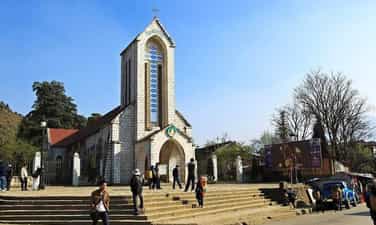
Sapa ancient stone church is located near the central square, very convenient for stopping to visit other places. When you come to Sapa Ancient Stone Church, you will feel the sacredness, dignity and respect of this place with its extremely ancient and unique architecture. Coming here, you will have the opportunity to witness the "triangle" of monuments. This triangle includes the stone church, Chu Cau villa (currently Hoang Lien hotel) and finally Bien Xua district (currently Lao Cai Tourism Information center). All of them have unique, French-style architecture. The church is located on quite spacious and flat land. It can be said that this is the place where many cultural activities, meetings and festivals of the village take place. Although the land here was greatly affected by the war, it is still quite flat and does not reduce the quality of the construction. The local government also regularly introduces policies to repair and renew the church, to serve the people here as well as open tourism to tourists. Sapa Stone Church, also known as Our Lady of the Rosary Church. It began construction in 1926 and was inaugurated in 1935, especially people consider this a typical symbol of the foggy town of Sapa. Up to now, Sapa ancient stone church has become one of the tourist attractions attracting a large number of visitors, with interesting religious activities of the people here. This work was built by French architects, who recorded the historical and war marks left on the stone slabs at the church. Sapa ancient stone church was chosen to be located facing the East, where the sun rises. This represents an extremely sacred meaning, which is the act of receiving the bright light and energy given by God. At the end of the church is the west direction, this is where General Kito was born and grew up. The entire house is built mainly of stone, including walls, floors, towers, bells... linked by lime, sand and molasses. With a total area of more than 6000 square meters, Sapa ancient stone church is fully equipped with rooms to accommodate different areas. Moving inside the church, you will be overwhelmed by the beautiful European-style architecture. The La Gothic architectural style is applied at the ancient stone church of Sapa, even in the smallest details. The appearance and architecture here is in the shape of a cross following the very ancient Gothic architecture of Rome. The roof of the church is covered with red tiles and tiled in a triangular shape, the two edges of the tiled roof are made in a simple, straight shape. The ceilings are made of straw, which is continually renewed over generations). However, the bell tower is a combination of a mixture of lime, straw and iron that has remained intact over time and has never been repaired. The white painted interior space enhances the poet's luxurious beauty, creating a more spacious and airy feeling. Both sides of the wall are covered with wood to make cleaning easier. In addition, the upper doorways are designed with a small semicircular size, using colored glass pieces to decorate, this style is characterized by a unique Western style. Most churches are made of carved stone held together by a mixture of sand, lime, and molasses. The wall to the right of the cross is sanded like stalactites slowly flowing down, making the church more unique. The total area of the campus is up to 6,000 square meters, divided into many different small areas: the church area, the monk's living area, the livestock area, the heavenly house, the front yard, the fence and the Holy Garden. The row of houses was built parallel to the church area with 5 different compartments The Angel House has a basement with three upper floors, this place specializes in treating people, welcoming travelers, restrooms, kitchens... The Holy Garden has 2 tombs with 5 long-lasting Khao Vang trees, including 4 trees growing on rocks. The 7-room church area has a large area of 500 square meters, with a bell tower about 20 meters high. Inside the tower is a bell with a height of 1.5 meters weighing 500kg, cast in 1932, its sound can be heard. echoes within a radius of 1km. The bell surface has recorded data related to it, the bell stand is made from Pomu wood and is still quite intact to the present time. In addition, you will be very interested in other areas such as the front yard - where cultural and religious activities take place and is also a place for cultural exchanges and souvenir trading. Every Saturday, exciting activities take place at the famous Love Market in Sapa.
Lao Cai
5643 view


Heaven's Gate
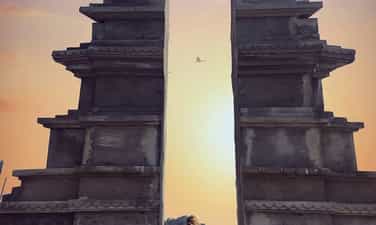
When entering the foggy land of Sapa, people are suddenly attracted by the wild beauty of the Northwest mountains and forests and the changing colors of nature. And in this area, there is a beautiful destination called Sapa Heaven Gate - or O Quy Ho Sapa Heaven Gate. It is a place where people and nature come together, creating a magical gate hidden between floating white clouds and the fresh air of the mountains and forests. Standing at Sapa Heaven Gate, you can admire the entire mountains and forests, the Sapa valley hidden in the mist, is also an ideal place to hunt clouds. For #teamKlook who love trekking, Sapa Heaven Gate is the highest road peak among the four great Northwest passes that you can conquer. Located at the top of O Quy Ho pass, Sapa Heaven Gate, also known as O Quy Ho Heaven Gate, Tram Ton Heaven Gate, is the most wonderful place to view the Northwest mountains and forests in Sapa with an altitude of nearly 2,035m. Sapa Heaven Gate was recommended by the travel blog Global Grasshopper as one of the ten must-visit tourist attractions when coming to Vietnam. In addition, Sapa Heaven Gate is also a place to test your courage because to get here, you have to overcome a winding and dangerous pass. However, all challenges will be rewarded when you arrive, you will immediately be immersed in the endless space of heaven and earth, feeling the wildness of nature in the most honest way. Not just stopping at sightseeing and checking in, the Sapa Heaven Gate area has more interesting activities than you think. Going to Sapa Heaven's Gate is also an opportunity for you to conquer O Quy Ho Pass, which is considered by the backpacking association to be the easiest of the four great Northwest passes. O Quy Ho Pass not only challenges crazy legs, but also captivates many art lovers and professional paparazzi. Because from here, the majestic and charming natural picture of the Northwest mountains and forests appears clearer and more vivid than ever. If you have reached Sapa Heaven Gate, don't hesitate to check-in right away! Most likely, you will have a huge photo archive capable of taking social networks by storm. It can be said that when you set foot at Sapa Heaven Gate, there will be beautiful photos from every corner. However, if you are lucky enough to come here at sunrise and sunset, Klook guarantees that those will be truly the most precious, impressive, and romantic moments you will ever encounter in your life. Along the way to Sapa Heaven Gate, there are many shops selling souvenirs as well as typical grilled dishes of Sapa such as grilled eggs, grilled corn, grilled potatoes, and grilled buffalo meat. Amidst the chilly air, enjoying fragrant grilled meat skewers, rice balls and sipping a cup of sweet tea will cheer up your spirit. Some experiences traveling to Sapa Heaven's Gate you need to know. For a place where heaven and earth harmonize like Sapa Heaven Gate, you can visit any season of the year, especially in September and December. September is the time when you can see Sapa filled with golden ripe rice. ; In December, this place is covered with snow and frost like in Europe. You should not come here in the spring because this season often rains, making the roads slippery and dangerous. In case you still want to go to Sapa Heaven Gate in the spring, choose to travel by cable car as instructed above. Noon and early afternoon are beautiful weather, there is not too much fog at Sapa Heaven Gate, convenient for sightseeing and taking photos. However, if you come here early in the morning or late afternoon, you can watch the sunrise and sunset.
Lao Cai
5802 view


Silver Falls
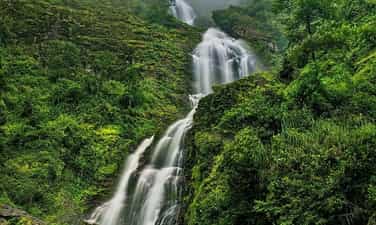
Silver Waterfall is a poetic name that describes the white waterfall pouring down the stream, looking like a silver strip suspended in the fresh, green mountains and forests of Sapa. With a height of 200m, Silver Waterfall possesses a wonderfully beautiful scenery that is "rare and hard to find", so it is always named in the list of the most beautiful waterfalls in Vietnam. To get to Thac Bac, you will go through roads with towering pine forests, green chayote gardens and most especially beautiful terraced fields, not to mention fields of brightly blooming flowers. makes so many travel addicts fall in love. The road to Silver Waterfall makes you feel like you are lost in a poetic fairy tale world. Romantic appearance with the image of water flowing down from a high ravine, white foam rising up like a strip of fog that suddenly appears and disappears. Each level of the waterfall is like musical notes that sometimes rise and fall in a magical and mysterious violin symphony. From afar, you can hear the mesmerizing sound of the waterfall, motivating your feet to run to find the source of that captivating sound. The atmosphere here can easily dispel the fatigue and sadness of a hustle and bustle life. Currently, stairs have been built on the road up to the waterfall to help you reach Silver Falls. Although quite temporary, it also makes your trip easier. In addition, you can rest at the rest stops to regain strength to continue climbing. No matter the time of year, your trip to explore Silver Falls can be an enjoyable experience. However, the summer from February to June is still the most suitable time frame, because at this time the flow of Thac Bac is quite strong, the forest and mountain scenery is also greener and more beautiful. In the winter, there is most likely no water, snow covers both Silver Waterfall and O Quy Ho Pass, making your experience of watching the waterfall not as expected, but in return is the image of waves of snowflakes fluttering in the winter sky. cold.
Lao Cai
5803 view


Muong Hoa Valley
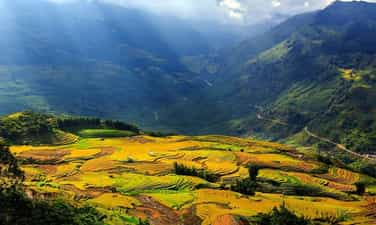
Crossing many misty high mountain ranges of the Northwest mountains and forests, arriving in Sapa, visitors will enter the Muong Hoa valley far away from the real world. Like a beautiful picture woven by the talented hands of nature - Muong Hoa creates melodious sounds of a peaceful place amidst the vastness. Located about 8km from Sapa town and in the Southeast, Muong Hoa valley belongs to Hau Thao commune, Muong Hoa. Every year, this place attracts many tourists because of its charming natural beauty. To reach this valley, visitors need to cross a pass located along a quite high mountain range with many steep roads that require steady steering. For many people who love this foggy town of Sapa, Muong Hoa valley is like a specialty with its brilliant highlights, like a highlight amidst the silvery mist of the mist and the whiteness of the clouds and sky here. . But to enjoy this unique specialty, it takes a lot of effort: you have to fly high, choose a fulcrum halfway up the mountain to fully enjoy the panorama of that magical green maze. In the past, tourists liked to climb halfway up the mountain to reward themselves with that breathtaking view. But not everyone has the strength to diligently hunt for beauty. Therefore, this rice season, when there is the Muong Hoa mountain climbing train, the opportunity to take in the view of an entire green slope from an altitude of 1,600 m becomes the reason why many domestic and foreign tourists come to the Northwest. . When talking about Muong Hoa valley, people often think of the two most distinctive and outstanding beauties: the rolling, winding terraced fields and the mysterious ancient stone beach. Sapa has many terraced fields, but the most beautiful and largest is Muong Hoa valley. Only once seeing the terraced fields here can you understand why people voted Sapa's terraced fields as one of the most beautiful terraced fields in the world. Terraced fields in Muong Hoa valley lie winding along the hillsides, forming a beautiful tilted pan shape. Even in the pouring water season, it still has a beauty that captivates visitors. In the summer when the rice is growing, the terraced fields here are full of vitality, gentle like a green silk strip winding in the middle of nature. In the fall, the whole valley seems to be wearing a shiny yellow coat of rice in full bloom, ripe and shiny as if it were plated with gold. A scene like the stairs to heaven, not found everywhere.
Lao Cai
5916 view


