Tourist destination

Nam Nghiep Village
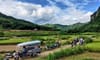
Nam Nghiep Village – the season of hawthorn blossoms amidst the vast forests of Northwest Vietnam. Located at an altitude of nearly 2,500m above sea level, Nam Nghiep village in Ngoc Chien commune, Son La province, is a Hmong village that still retains its pristine and rustic beauty. Small houses nestled among the mountains and forests, winding roads, and fresh air create a peaceful space, suitable for those who want to reconnect with nature and live at a slower pace. Especially, the hawthorn blossom season, around March and April, is when Nam Nghiep is at its most beautiful. Ancient hawthorn trees burst into bloom, covering the mountain slopes with white flowers, interspersed with the green of the forest and the Hmong houses, creating a dreamy scene like a painting in the vast forest. In Nam Nghiep, visitors can stroll around the village, experience the life and culture of the Hmong people, admire the mountain scenery, camp, chase clouds, or trek towards Ta Chi Nhu. After exploring the area, visitors can also stop by Luot village to experience the natural hot springs amidst the mountainous landscape of Ngoc Chien. Not too noisy or bustling, Nam Nghiep is attractive because of its pristine, simple beauty and the pure white flowers blooming in seasons. This is an ideal destination to experience the pure, majestic, and culturally rich Northwest region.
Son La
99 view


Ban Bon community tourism
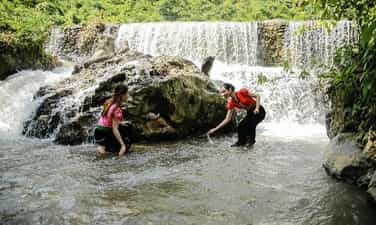
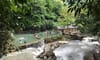
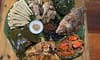
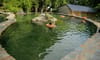
Ban Bon - a community tourist destination on the Da River lake bed. Located on the Da River lake bed, Bon village, Muong Chien commune, Son La province is an attractive community tourism destination with river landscape, hot mineral springs and unique cultural identity of the White Thai people. The highlight of the village is the natural hot mineral spring source of 40–45°C, combined with the Nam Chien stream, waterfalls, water fountains and bamboo bridges creating a relaxing space in the middle of the mountains and forests. Visitors can stay in traditional stilt houses, take mineral baths, and enjoy local cuisine such as pa pinh top, mo chicken, kitchen buffalo meat, and bamboo-tube rice. Coming to Bon village, visitors can also experience brocade weaving, knitting, cultural exchanges and Xoe dancing, and learn about the traditional customs of the White Thai people. With peaceful scenery, natural hot mineral sources and preserved cultural life, Bon village is becoming an interesting stop on the journey to explore the Da River lakebed, where visitors can immerse themselves in nature and experience local life.
Son La
346 view



Suoi Chieu Lake
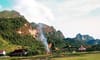
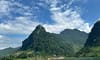
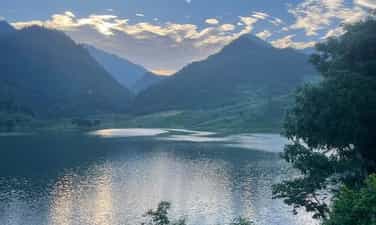
Located in Phu Yen commune, Son La province, Suoi Chieu lake is a destination of pure and peaceful beauty among the Northwest mountains and forests. The lake has a water surface area of about 51 hectares, surrounded by green hillsides and rolling mountains and forests. The lake surface is calm, the water is clear blue, reflecting the clouds and the forests along the lake, creating a poetic scene like a painting. Coming here, visitors can enjoy boating, picnic, check-in or simply sit by the lake to enjoy the cool, relaxing atmosphere. Suoi Chieu Lake is also a suitable place to explore the cultural life of the Muong people in nearby Ban Chieu, enjoy local cuisine and learn about traditional culture. If you want to find a place to temporarily get away from the hustle and bustle of life, Suoi Chieu Lake is a stop worth visiting - where green mountains, blue water and peace blend in the Northwest.
Son La
339 view







Quynh Nhai eco-tourism area
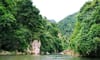
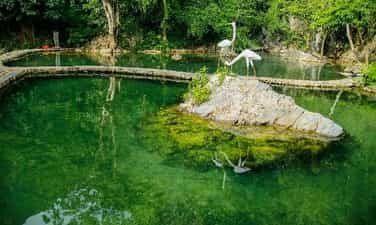
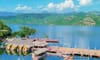
Quynh Nhai eco-tourism area - discover the colors of the Northwest Located on the bed of Son La hydroelectric lake, Quynh Nhai eco-tourism area is a destination that harmoniously combines river landscape, nature and the typical culture of the Thai ethnic group. Coming here, visitors can cruise on the lake, explore Heart Island, visit the brocade flower garden, orchard and experience activities such as boating, water cycling, fish feeding or sightseeing on the decks extending out to the lake. Not only nature, Quynh Nhai is also attracted by indigenous cultural experiences: listening to Then songs, watching traditional Thai dances, enjoying specialties such as Da river fish, Pa Pinh Top, kitchen buffalo meat, hill chicken, Ban pig... The itinerary can combine exploring Linh Son - Thuy Tu temple, Nang Han temple, Pac Ma banyan tree and relaxing at Bon village hot springs. With a combination of mountains, forests, lakes, culture and cuisine, Quynh Nhai brings a unique Northwest experience space, suitable for exploration and relaxation trips.
Son La
348 view





Hang Tau "Primitive" Village
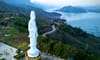
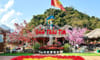
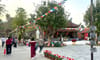
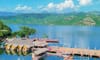
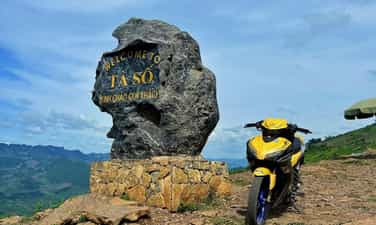
Hang Tau is a pristine valley located in the middle of Moc Chau mountains and forests, considered a "primitive village" because life is almost separate from the modern world. From Highway 6, visitors move to Ta So village and continue to cross steep, winding mountain roads to reach the vast valley with green grass slopes and surrounding rocky mountains. In the Mong language, Hang Tau means basin or flat area. This place is where about 20 households live and farm, mainly building shacks to raise livestock and grow crops. The lives of the people still maintain a self-sufficient character, with a peaceful space, no electricity, no internet, no phone signal, giving the feeling of returning to pristine life in the middle of the jungle. Coming to Hang Tau, visitors can immerse themselves in the life of the H'Mong people, experience farming, animal husbandry, digging bamboo shoots or learn about traditional brocade weaving and embroidery. Local people also serve dishes with mountain and forest flavors, giving visitors the opportunity to enjoy cuisine and learn more deeply about local culture. The scenery of Hang Tau changes with the seasons. In spring, the roads leading into the valley are dotted with white plum blossoms next to the corn fields; When summer comes, the green grass slopes spread out among the mountains and forests, creating a peaceful and spacious scene. With its pristine beauty, rustic life and space separate from modern life, Hang Tau is an ideal destination for those who love nature, love to explore and want to find a peaceful countryside amidst the mountains and forests of Moc Chau.
Son La
522 view
His Red Version
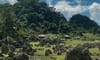
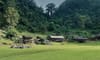
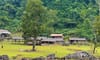
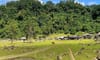
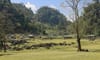
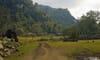
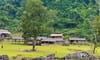
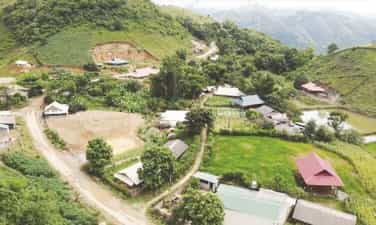
His Red Version Hong Ngai village is located in Bac Yen, Son La province, and is a community tourism destination imbued with the cultural identity of the Mong ethnic people. Located amidst the majestic Northwest mountains and forests, Hong Ngai impresses with its pristine beauty, fresh climate and natural landscape that changes with each season. This is an ideal destination for tourists who love to explore indigenous culture and experience highland life. The highlight of Hong Ngai village is the more than 70 traditional houses of the Mong people still preserved almost intact. The houses are built of rammed earth, have thick walls and tile or wooden roofs, which are both durable and adapted to mountainous climate conditions. Over the years, the houses still stand firmly in the middle of the mountains and forests, becoming a typical architectural feature and cultural symbol of the Mong people here. Coming to Hong Ngai, visitors will walk on small winding roads along the mountainside, admiring lush green corn fields, golden terraced fields in the ripe rice season and the scenery of a sea of floating clouds in the early morning or late afternoon. Each time of the year, the village has its own beauty, creating an attraction for nature lovers and photography enthusiasts. Not only does it have a beautiful landscape, Hong Ngai is also attractive because of its traditional cultural values preserved for many generations. Visitors can learn about the customs and traditions of the Mong people, participate in activities such as harvesting rice, farming, cooking, brocade embroidery, knitting and interacting with local people. The simple life and the sincerity and hospitality of the people give visitors close and memorable experiences. The cuisine of Hong Ngai village also has a strong flavor of the Northwest mountains and forests with rustic dishes such as bamboo-tube rice, corn cakes and dishes made from local products. Enjoying traditional dishes in the peaceful space of the village helps visitors better feel the cultural beauty and life of highland people. With its wild natural beauty, unique walled house architecture and unique cultural values of the Mong ethnic people, Hong Ngai village is becoming an attractive community tourism destination of Son La province. This is an ideal place for tourists to reconnect with nature, explore Northwest cultural identity and retain unforgettable experiences in their journey to explore Son La.
Son La
1323 view




Son La hydroelectric lake
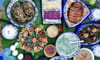
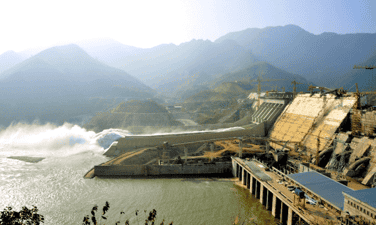
The Moc Chau journey to admire the wild and mysterious beauty of the Da River through the majestic Northwest is depicted extremely delicately with unique images and images that have made the Da River with its many rapids and many waterfalls become magically romantic. On that river, three large hydroelectric plants have now been built: Hoa Binh, Son La and Lai Chau. Built at the end of 2006, Son La Hydropower Plant has just put into operation unit 6, the last unit connected to the national power grid. Not only does it contribute more than 10 billion KW of electricity to the country each year, the landscape of Son La Hydroelectric Plant has become an interesting destination for all those who want to explore the magnificent natural landscape of the Northwest mountains and forests. Traveling from Son La city for more than an hour, passing through roads with vast mountains and forests on both sides, to It Ong commune, Muong La district, visitors will be overwhelmed by the endless green landscape of Son La Hydropower Lake. Floating clouds hover over the undulating, dark green mountains reflecting on the blue lake bed, making the landscape of Son La Hydropower Lake look like a charming landscape painting. Not as peaceful and quiet as Dai Lai Lake in Vinh Phuc or Ba Be Lake in Bac Kan, nor like Xuan Huong Lake in Da Lat, Son La Hydropower Lake stirs the soul of Travelers because the vast water flow between heaven and earth still contains so much wild beauty and the layers of rushing waves are like a steady, gentle music that resonates on the banks of a hundreds of meters high dam. In particular, visitors will be immersed in the vast space when traveling on a program boat in the lake to once again enjoy the pure beauty of the Northwest mountains and forests and the clear, cool air that nature has bestowed on this land. Visiting Son La Hydropower Lake, in addition to having the opportunity to admire the largest hydroelectric project in Southeast Asia and discover the mysteries of the legendary Da River, travelers can also enjoy culinary dishes with bold flavors of the Northwest mountains and forests such as: Can wine, bamboo-tube rice, grilled fish, wild bamboo shoots... Those flavors seem to spread by the red fire in the middle of the stilt house and seem to be sublimated around the red fire when visitors hold hands with the beautiful and graceful Thai mountain girls in dance. bustling dance stalls and the passionate lyrics "Inh la oh" with human love. Considered the Ha Long Bay of the Northwest, the Son La hydropower reservoir area has attracted many domestic and international tourists. Nature has bestowed this place with wonderful landscapes, attractive caves, and many large and small islands. Along with that are traditional customs and traditions preserved by indigenous peoples for many generations... With those potentials and advantages, Son La hydroelectric lake tourism is focusing on exploiting the main types of tourism: Sightseeing and experiential travel: Visit Pa Uon Bridge - the bridge that holds the Guinness record as the bridge with the highest bridge pillars in Vietnam. Experience water games (located under the bridge is the boat wharf, a complex of water entertainment services such as windsurfing, jet skiing, buoyancy...); Cruise on the lake to admire the immense beauty of the Da River lake bed. Along with that, visitors can visit Son La hydroelectric plant, the largest hydroelectric project in Southeast Asia. Son La Hydropower Plant was inaugurated on December 23, 2012, is a large hydroelectric project, demonstrating human talent in conquering and renovating nature to create a majestic hydroelectric plant in the Northwest region. Besides, hot mineral baths in It Ong town - Muong La, Luot village - Ngoc Chien - Muong La are also memorable experiences. Cultural and community tourism: Coming to the Son La hydropower reservoir area, visitors cannot miss the spiritual tourism journey of Nang Han and Linh Son Thuy Tu temples. These two temples are located on Pu Ngu hill in Muong Giang commune. From this location, visitors can admire the landscape of the hydroelectric lake and resettlement villages along the lake bed. In these places, tourists visit ethnic villages, stay in homestays, experience cultural life, traditional crafts such as brocade weaving, wickerwork, hat production, pipe lute production, leaf yeast wine making... and enjoy traditional dishes, ethnic specialties, especially dishes made from Da River fish. If you are planning to travel to Son La, don't forget to visit Son La hydroelectric lake - a great hydraulic project in the Northwest!
Son La
4010 view


Ang village - Thai people's village
Coming to Ang village, Dong Sang commune, Son La province, visitors can immerse themselves in the poetic nature of endless mountains and forests, and immerse themselves in the traditional cultural flavors of the Thai ethnic people. The most interesting thing about ecotourism in Ang village is the pine forest next to the romantic lake, creating the peaceful landscape of a highland village. People compare Ang Lake to a mirror of the four seasons' weather. Early in the morning, the lake's surface is covered with a thin layer of pure dew. At noon, the sun is filled with a yellow color like the weather of summer, but when the afternoon falls, the fog comes back, making it chilly at the beginning of winter. The most beautiful are moonlit nights, pine shadows shine on the lake surface, the sound of pine trees ringing, echoing somewhere the flute calling for mates of ethnic boys. The stilt houses of the Thai ethnic people are hidden among the lush green trees. In any street of Dong Sang, tourists will love the simple and soulful people of Ang village. Here, many traditional customs and practices are preserved associated with stilt houses, inviting Xoe melodies, ancient folk songs, festivals "Celebrating new rice" "Het Cha... When banyan flowers bloom in the Northwest mountains and forests, Thai ethnic people organize the Het Cha festival. The "Het Cha" festival is a festival that unites the village community before spring, a form of spiritual cultural activity, profound beliefs. Come to the village. Ang, visitors can experience the daily life of living in a traditional stilt house, lying on rice cotton cushions, and enjoying Thai specialties. From mountain and forest products, Thai people in Ang village can prepare 40-50 different types of dishes. In the drunken spirit of jars of wine, tourists hold hands together, beside the flickering fire in the middle of the romantic forest lake. Ang village also attracts tourists with the Pieu scarf created by weaving colored threads on the surface of the fabric. The colorful threads are mixed together very harmoniously, although Thai girls have not studied at any school in shaping and color matching, the Pieu scarves they embroider are all very harmoniously decorated. Ang village today is changing its skin, more and more tourists from all over come to Ang village. With what nature bestows, from pine forests and lakes to the talent of the Thai people, it is promised that in the future Ang village tourist area will become more attractive, attracting more tourists.
Son La
3420 view


Son La Prison and To Hieu Peach Tree
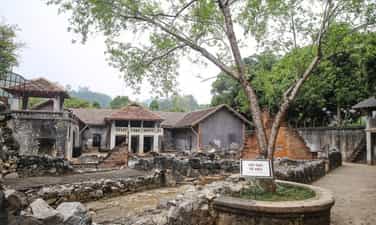
Son La Prison was built by the French colonialists in 1908. It was once a place to detain more than 1,000 Vietnamese Communists and patriots. It is famous for its historic To Hieu Peach Tree. This is a great place to teach the younger generations of Vietnam about their sacrifices for the cause of national liberation. Join us to learn about this famous landmark! The prison was established in 1908 in the center of Son La town and on top of Khau Ca hill. Son La's terrifying reputation continued to spread and soon it was considered one of the most brutal prisons in Southeast Asia. Initially a small place, the prison quickly expanded to become an important place, where many political prisoners were held. At that time, this place was famous as a cruel and terrifying prison, where the will to resist and patriotism in the minds of prisoners were reduced by the bloodiest methods. However, for the revolutionaries imprisoned in Son La Prison, this place is a "school" where endurance, solidarity and fighting spirit are trained. Notable prisoners detained here include General Secretary Le Duan, famous revolutionary To Hieu (who died of tuberculosis during his imprisonment), and commander Van Tien Dung. There have been many stories about the resilience and courage of revolutionaries who fought against colonialism and sacrificed their lives here like To Hieu. Taking advantage of the harsh climate and rugged terrain, the French colonialists built Son La Prison and turned it into a "hell on earth" to detain Vietnamese communists and end their revolutionary struggle. In the summer, due to the influence of the Foehn wind, all the cells in the prison resemble a furnace. Meanwhile, winter is cold because of the harsh climate of the border area. However, regardless of the harsh climate and cruel regime, Vietnamese communists overcame all difficulties and turned the prison into a revolutionary school, where key party members of the Vietnamese revolution were trained. Son La Prison is an important revolutionary relic, demonstrating the boundless patriotism and steadfast will of the Vietnamese people. In 2014, the prison was recognized as a special national monument because of its great historical significance. Son La Prison was built by the French colonialists on Khau Ca hill, next to Nam La stream, Son La province. From here you can see the entire city of Son La. Construction of the prison began in 1908 on an area of 500 square meters. 32 years later, it was expanded to 1,700 square meters. The prison is surrounded by solid walls made of brick and stone, 4 meters high and 0.5 meters wide. The surface of the prisoner's bed is covered with cement; Meanwhile, its outer edge is attached to a leg shackle system. During 15 years, from 1930 to 1945, a total of 1,013 communist prisoners and soldiers were detained at Son La Prison, where many loyal soldiers and party members were trained to prepare for the general uprising of the August Revolution in 1945: General Secretary Truong Chinh, General Secretary Le Duan, Army Commander Van Tien Dung, Le Duc Tho, Le Thanh Nghi, Xuan Thuy, To Hieu, ….and the patriotic symbol of hero To Hieu are worth mentioning a few. Son La Prison was destroyed with explosives in 1952 as the French sought to eradicate the brutality and inhumane conditions that occurred there. This bombardment, along with other rounds of destruction during the war against America, left Son La Prison a smoldering pile of rubble. In 1965, under fierce American bombing in North Vietnam, Son La Prison was almost completely destroyed. Later it was restored by the Vietnamese to recreate history. Visiting Son La Prison, visitors will have the opportunity to see with their own eyes hundreds of historical artifacts such as handcuffs, iron chains, cells, and the To Hieu peach tree. Named after a brave and loyal communist, the To Hieu peach tree symbolizes the indomitable spirit of typical Vietnamese revolutionary soldiers. An important relic is the peach tree planted by To Hieu. During the last years of his life, he carefully cared for the tree and ensured that it would last long after he was gone. Today, the banyan tree is considered a symbol of the indomitable spirit of hero To Hieu despite his serious illness and pain in a cold prison. To this day, the To Hieu peach tree is still evergreen and blooms beautifully every spring. The prison is a famous historical site that attracts many domestic and international tourists. In particular, on special occasions, every day Son La Prison welcomes over 2,000 visitors to visit and review memories of a fierce revolutionary period. Visitors can explore the ramshackle gates and crumbling walls of Son La Prison when visiting the prison museum. You'll find lifelike oil paintings depicting the harsh treatment of prisoners, and you'll also be able to walk through the remaining basement area, where solitary confinement cells and tiger cages have been restored. Son La Prison and To Hieu Peach Tree are considered one of the most famous places, with the equally infamous name "Hell on Earth" to describe the horrifying brutality of the French colonialists against Vietnamese prisoners here. Son La Prison is an endless source of inspiration that empowers today's generations in the work of protecting the independence of the Fatherland and building a prosperous country.
Son La
3311 view


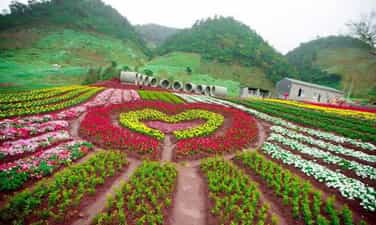
Moc Chau Tropical Flower Garden
Moc Chau Tropical Flower Garden was established in 2005 by Tropical Flower Joint Stock Company in Bua and Bun villages, Moc Chau district, Son La province. Initially, the company only planned to grow some main flower and fruit trees and vegetables on an area of 5 hectares to serve business activities and scientific and technological research on agriculture. Later, realizing the potential of the flower garden to attract a large number of young people to admire and check-in, the company opened additional sightseeing and photography services to satisfy everyone's wishes. Like many other projects, Moc Chau Tropical Flower Garden encountered countless difficulties and experienced many failures when forming the first bricks. However, overcoming those challenges, the company has gradually stabilized and expanded rapidly. If in 2011, the area was increased from 5 hectares to 12 hectares, then up to now, the total area of the flower garden has reached 21 hectares, becoming one of the largest flower gardens in the North. Moc Chau Tropical Flower Garden has thousands of different flower species blooming all year round. Depending on the time of year, you can enjoy different beautiful scenery, so you can visit Moc Chau Tropical Flower Garden at any time. any time you want. However, the most appropriate time to admire the beauty of this flower garden is still in the 11th lunar month, when the flowers are most carefully cared for to prepare for everyone to take home for Tet. From the end of February to the beginning of March is also an opportunity for you to visit the flower garden after the Lunar New Year, combine spring travel with experiences and of course don't forget to buy good fortune to take home. The uniqueness of Moc Chau Tropical Flower Garden compared to other flower gardens is the extremely modern greenhouse system with roofs covering the entire area. Imported flowers and precious flowers are meticulously cared for when the temperature is always regulated and maintained to ensure the best growing conditions. The irrigation system is completely professionally controlled automatically by machinery. If you need to buy flowers, the company will immediately advise on pre-planted flower pots or make them into bouquets as required as gifts when traveling. Another special feature is that the planters at Moc Chau Tropical Flower Garden are all indigenous ethnic minorities such as Dao, Tay, Nung, and Thai. No one understands and takes care of flowers in the Northwest region as well as the people born and raised on this land. Thanks to their skillful hands and dedication, the flowers in Moc Chau always confidently show off their beauty to heaven and earth, always carrying the freshest and most brilliant beauty. Besides modern, scientific planting methods and good climate and soil, beautiful flowers are indispensable for the dedicated care of skilled workers.
Son La
5718 view


