
 vn
vn en
en ja
ja ko
ko zh
zh





















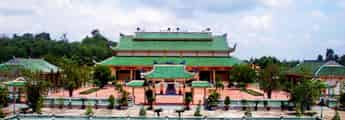






List of relic sites (1426)
Cuu Dinh Communal House
Cuu Dinh communal house located in group 1, An Phuoc ward, is a relic associated with the formation and development of the Vietnamese community in An Khe land. With an area of more than 1,460m², the communal house is the religious center of ancient Cuu Dinh village. The communal house worships ordained gods such as Thien Y A Na, Tutelary God, Tho Dia, along with the predecessors and successors who had meritorious deeds to destroy, establish villages and build the homeland. Every year, the communal house holds ceremonies to worship Quy Xuan and Thanh Minh on February 16 and Quy Thu on the 16th of the 8th lunar month. Among them, the Spring Festival is an important festival, attracting a large number of people to attend. Not only has religious value, Cuu Dinh communal house is also a testament to the process of migration, settlement, and reclamation to establish villages of Vietnamese people in An Khe since the early twentieth century, contributing to preserving the local historical and traditional cultural values. Source: Gia Lai newspapers and radio and television
Gia Lai
487 view
Rating : Provincial level relics
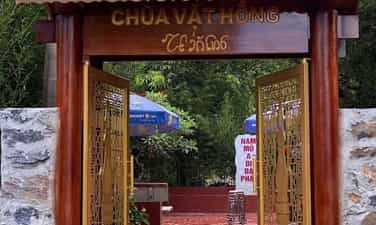
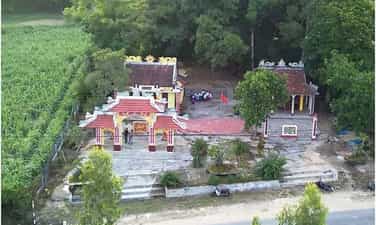
Vat Hong Pagoda
Historical and cultural relic of Vat Hong pagoda. Vat Hong Pagoda, also known as Chien Vien Pagoda, is located on a gentle hill in Vat village, Muong Sang commune, Son La province. The pagoda was built in the 13th century, during the period when Buddhism flourished in Vietnam. The building has traditional wooden architecture with three compartments and thatched roof; The temple once kept many Buddha statues made of bronze, tin and ivory. The pagoda is associated with the religious life of the local community through ceremonies to pray for rain, water, and ceremonies to wash and bathe statues held annually. In particular, in the pagoda grounds, there is still a stone stele engraved with Thai and Han Nom characters, marking the merits of the people of the Northwest region in renovating the pagoda. Over time, Vat Hong Pagoda now has only ruins, some artifacts are preserved at the Son La Provincial Museum. With unique historical, cultural and religious values, Vat Hong Pagoda was ranked as a provincial historical-cultural relic in 2012, becoming an important vestige in the cultural history of Moc Chau region. Source: Son La Geography
Son La
470 view
Rating : Provincial level relics
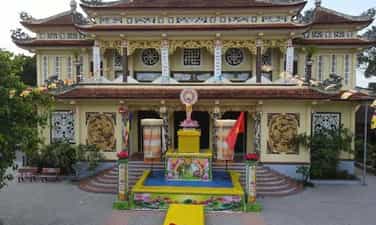
Uu Diem Pagoda
A long-standing cultural mark on the O Lau River Uu Diem Pagoda, also known as Uu Dam Pagoda or Ba Loi Pagoda, is located in Uu Diem village, Phong Hoa commune, Phong Dien district, Hue city. This is a temple with a long history, associated with the religious and cultural life of local people. According to O Chau Can Luc in 1555, the pagoda was mentioned with the name Am Uu Dam, showing that the monument has a history before the 16th century. Having gone through many upheavals, the pagoda was restored by the Nguyen Dynasty in 1821 and was built and repaired many times after the war. A special feature of the pagoda is the system of antiquities bearing the mark of Champa culture, notably the statue of goddess XiKa, reliefs of dancing girls and Linga stone pillars. These artifacts have historical, cultural and archaeological value, contributing to the uniqueness of Uu Diem Pagoda. Today, the pagoda is not only a place for religious activities but also a destination to learn about history, culture and traces of interference between cultures in Hue. Source: languudiem.com
Hue
467 view
Rating : Provincial level relics
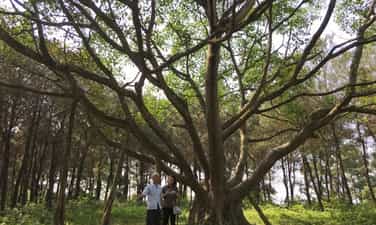
Uncle Ho's banyan tree planted in Tien Hoi
The location of Uncle Ho's banyan tree planted in Tien Hoi, now in Tien Hoi village, Dong Anh commune, Hanoi city, is the place that marks the event of President Ho Chi Minh's visit and participation in the local people's Tree Planting Festival. On January 31, 1965, at Dong Nhan mound, Tien Hoi village, Uncle Ho directly planted a souvenir banyan tree. He advised people when planting trees to take care of them so that they live well, and to actively plant more trees, contributing to creating shade and protecting the environment. After the event, the banyan tree was cared for and preserved by the local government and people. The place where Uncle Ho planted trees became a memorial for an event associated with the Tet tree planting movement initiated by him, while also carrying traditional educational meaning and remembering Uncle Ho's feelings and advice for the people of Dong Anh. Today, Uncle Ho's banyan tree planted in Tien Hoi is still preserved by the locality as a historical vestige, contributing to enriching the system of relics associated with President Ho Chi Minh in Hanoi. Source: Dong Anh 360 website
Hanoi
284 view
Rating : National monument

An Hoa communal house relic
An Hoa Communal House is located in An Hoa village, Yen Hoa ward, is a historical relic, typical architectural art, associated with the long-standing cultural and patriotic traditions of this land. The communal house worships Bach Hac Tam Giang and King Ly Than Tong, who are respected and worshiped by the people as Tutelary Gods. In particular, Ly Than Tong had a deep connection with the land of An Hoa, because he was the son of Sung Hien Marquis and was said to be born here. The communal house still preserves many valuable relics such as Chinese characters, 14 ordinations from the Canh Hung to Khai Dinh period, along with dragon palanquins, tribute bowl palanquins and carved dragon tablets. These artifacts not only have historical value but also demonstrate the sophisticated carving art of our ancestors. Every year, the communal house organizes a festival with a palanquin procession and many folk cultural activities, contributing to preserving the traditional beauty of An Hoa village. Source: Hanoi Landscapes and Monuments
Hanoi
405 view
Rating : National monument
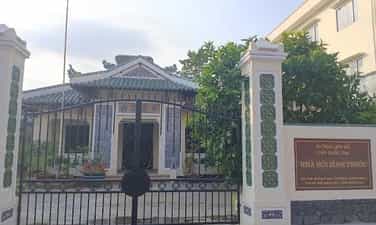
Binh Truoc Assembly Hall Relics
Binh Truoc Assembly Hall is a historical relic associated with important milestones of the Bien Hoa revolution in the early days of gaining power. The project was built around 1936, and was originally the place for the village's funeral function in Binh Truoc commune. The meeting house has a quite unique architecture, featuring decorative panels of Bien Hoa ceramics and delicate wood sculpture details, bearing bold Southern folk architectural art. In particular, on September 23, 1945, a conference of officials of Bien Hoa province took place here, deciding to establish the first Bien Hoa Provincial Party Committee after the August Revolution, with the participation of comrade Ha Huy Giap, representative of the Southern Party Committee. The conference proposed many important tasks such as consolidating the revolutionary government, stabilizing people's lives, building the armed forces and preparing for the resistance war against the French colonialists. With typical historical and architectural values, Binh Truoc Assembly Hall was classified as a historical relic by the State on December 30, 1991. This is a place that contributes to marking the formation and development of the Bien Hoa Party Committee in the early years of independence. Source: Dong Nai Electronic Newspaper
Dong Nai
438 view
Rating : National monument
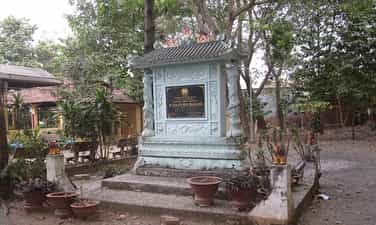
Binh An Temple
Binh An Temple is located in Dong Hoa Ward, Ho Chi Minh City, and is a valuable historical and cultural relic of the ancient land of Binh An. The communal house was built before 1852 and was granted royal status under the reign of King Tu Duc. This is the place to worship Thanh Hoang Bon Canh, expressing the tradition of folk beliefs and the ethics of local people when drinking water, remember its source. In 1945, the communal house was burned down by the French colonialists, and in 1950 it was rebuilt. After many restorations, the communal house still retains traditional cultural features and the tomb of Mr. Truong Cong Can, a talented general of the Nguyen Dynasty. In particular, during the years of resistance against the French colonialists, Binh An Temple was a place of refuge, meeting and gathering for local revolutionary soldiers. Therefore, the relic not only carries cultural and religious value but also marks the years of revolutionary struggle of the people here. On October 14, 2009, Binh An Temple was recognized as a provincial-level historical and cultural relic. Today, this place is a place that contributes to preserving traditional cultural values and educating the young generation about the history and traditions of the homeland. Source: Center for Trade, Tourism and Industrial Development Promotion of Binh Duong Province (Ho Chi Minh City)
Ho Chi Minh City
469 view
Rating : Provincial level relics
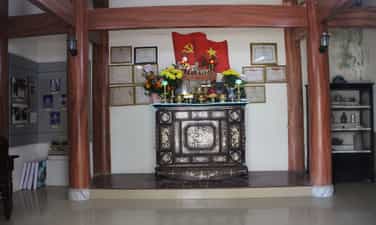
The site of Mother Nhu's house
Mother Nhu's house is located in a small alley on Tran Cao Van street, Thanh Khe Dong ward, Da Nang city. This is the place that marks the heroic sacrifice of Mother Nhu and the steadfast fight of 7 Second District special forces soldiers on December 26, 1968. Nhu's mother's real name is Le Thi Danh, born in 1912 into a poor fishing family. Since 1967, my mother's family dug two secret bunkers in the house to hide and protect revolutionary soldiers. Today, the relic has a memorial house, the grave of Mother Nhu and her husband, stele marking the event and artifacts related to the battle. With typical historical values, Mother Nhu's house was recognized as a National Historical Site in 2009. The monument is a place to commemorate the sacrifice of Mother Nhu and the soldiers, while also contributing to educating the patriotic tradition and resilient spirit of the army and people of Da Nang. Source: Da Nang electronic information portal
Da Nang
557 view
Rating : National monument
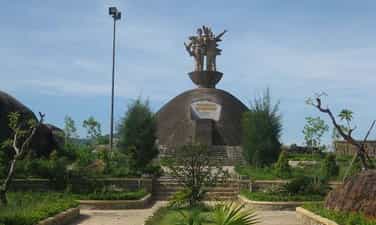
Victory over Ban Bats
The Cam Doi Victory relic site is located in Que Son district, Quang Nam province, now Da Nang, which marks an important victory in the resistance war against the US. Before 1972, Cam Doi was a fortified military base of the enemy, built with a system of underground bunkers, bunkers, command post and many surrounding defense points. With a large force and modern equipment, this base blocks the route from the west of Que Son to the plain, causing many difficulties for our troops and people. To break this defense line, Military Region V Command decided to open the Ban Bat campaign. After a period of preparation and careful study of the terrain, our army coordinated with the main force, local troops, artillery, infantry and special forces, simultaneously attacking from August 17, 1972. At dawn on August 18, important defensive posts were captured and the enemy's defense line was divided. Hundreds of artillery shells continuously fired at the base, destroying many gas depots, ammunition depots, motor vehicles and enemy artillery positions. After two days and nights of fierce fighting, at 3:00 p.m. on August 19, 1972, our army's victory flag flew over Cam Doi command post and Que Son district capital. The Cam Bat victory marked the maturity of our army and people in their ability to capture fortified defense bases, contributing to the failure of America's "Vietnamization of the war" strategy. Today, on the top of Cam Doi hill there is a victory monument, depicting the image of a liberation soldier and a female guerrilla raising a baby high together, symbolizing faith in peace and the country's future. Source: Da Nang electronic information portal
Da Nang
502 view
Rating : National monument

Tuc Dup historical relic site
Tuc Dup historical relic site in Tri Ton district, An Giang province, is an important base of An Giang's army and people during the resistance war against the US. Tuc Dup in Khmer means "night water", located at an altitude of about 300m, with a system of caves and rocky crevices like a giant "honeycomb". Since the 1940s, Tuc Dup has been a shelter for revolutionary soldiers. By 1960, this place became the base of the Tri Ton District Party Committee and An Giang Provincial Party Committee. Relying on the rugged terrain and the continuous cave system, our army and people stubbornly held on, fought and resisted many fierce raids and bombs by the enemy. Therefore, Tuc Dup is also known as "steel hill". Today, the caves that used to be the working places of the Military Command, Propaganda Department, Women's Union, Civil Medicine and hall C6 are still preserved. Visitors can explore the unique cave system, learn stories about the lives and battles of our people and soldiers during the war, and admire the wild beauty of That Son mountains and forests. Tuc Dup today is not only an attractive tourist destination but also a traditional "red address" for education, reminding of a period of resilient fighting and the great sacrifices of An Giang's army and people. Source: Vietnam National Tourism Administration
An Giang
502 view
Rating : National monument
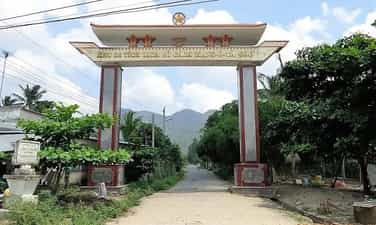
O Ta Soc Base
O Ta Soc base, Luong Phi commune, Tri Ton district, An Giang province, is a national revolutionary historical relic. O Ta Soc, in Khmer language means "Ong Soc Stream", located on Dai Mountain, outstanding with rugged rocky terrain, many caves, rock formations and year-round flowing streams. Since the end of 1962, O Ta Soc became an important base of the An Giang Provincial Party Committee and revolutionary agencies. Based on the rugged mountainous terrain, our army and people built defense systems, arranged anti-mines, shelters and organized many battles, resiliently resisting enemy raids. From here, the An Giang Provincial Party Committee directed the revolutionary movement, fought to destroy strategic hamlets, protected the people and organized fighting forces throughout the province. During the years 1965–1967, the enemy repeatedly launched large-scale operations to attack the base, but they all encountered fierce resistance from revolutionary forces. The soldiers took advantage of every rock hole, slope and dangerous terrain to fight the enemy and protect the safety of the Provincial Party Committee. By the end of 1967, the Provincial Party Committee moved its base to To - Tuc Dup mountain, but O Ta Soc continued to be the place of operation and combat coordination of revolutionary forces. Today, O Ta Soc base not only has the wild beauty of the mountains and forests but is also a red address for educating revolutionary traditions, helping today's generation better understand the resilient spirit, cunning and sacrifice of An Giang's soldiers and people in the resistance war against the US. Source: Management Board of Monuments and Attractions of An Giang province
An Giang
513 view
Rating : National monument
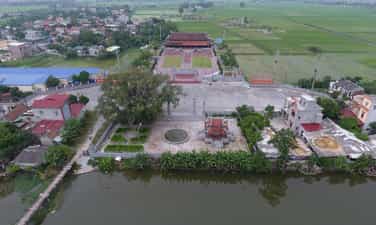
Cat Tuong memorial area
Cat Tuong Memorial Area - a place to preserve memories of Uncle Ho. Cat Tuong Memorial Area, Binh My commune, Ninh Binh province, was built on the exact spot where Uncle Ho visited and encouraged the people to fight drought on January 14, 1958. Here, Uncle Ho praised the people's working spirit and encouraged them to speed up the process of building dams and bringing water to save thousands of acres of rice that are suffering from drought. Following Uncle Ho's instructions, local people completed the Cat Tuong dam in less than 5 days. Today, the memorial area has a stele house, a temple to Uncle Ho and an area displaying many precious pictures and documents about his visit in 1958. In particular, the banyan tree planted by people where Uncle Ho once stood and talked is still green, becoming a sacred mark of the relic site. In 2018, Cat Tuong Memorial Area was recognized by the Ministry of Culture, Sports and Tourism as a national historical and cultural relic. This is not only a place to commemorate and remember Uncle Ho's feelings for the people, but also a "red address" for traditional education, attracting many union members and children to visit, offer incense and learn about the history of their homeland. Source: Nhan Dan Newspaper
Ninh Binh
545 view
Rating : National monument
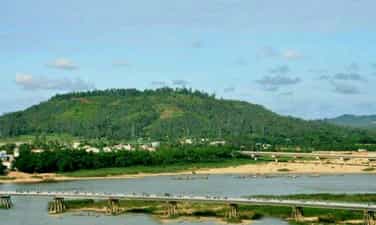
Thien An Mountain
Thien An Mountain, also known as Ho Mountain, is a historical-cultural relic and the leading sacred symbol of Quang Ngai province. Located on the left bank of the Tra Khuc River, this unique isosceles trapezoid-shaped mountain is like a precious seal of heaven stamped on the riverbed, creating the famous "Nien An Thien Ha" mountain position in poetry. Over the centuries, Thien An Mountain has been a silent witness to the opening of the Southern realm of our ancestors. This place once retained architectural traces of ancient towers and deep laterite wells of the Cham people. The takeover and construction of works by the Vietnamese people on the old ruins is a clear historical proof of the cultural fusion between the two peoples. The stature of the scenic spot was further affirmed in 1717, when Lord Nguyen Phuc Chu personally conferred a golden plaque, honoring the mountain as the "first scenic spot". Not only does it have ancient feudal values, Thien An is also a revolutionary red address. On the windy mountain top, this is the resting place of Mr. Huynh Thuc Khang - a great patriot and former Acting President of the country. The presence of Mr. Huynh's grave has blended the soul of the mountains and rivers with the steadfast spirit of a great man. Today, Thien An Mountain still stands there, as an eternal symbol of the history, culture and national pride of the people of Quang. According to: Thanh Nien Newspaper
Quang Ngai
533 view
Rating : National monument
Van Tuong Victory Relic
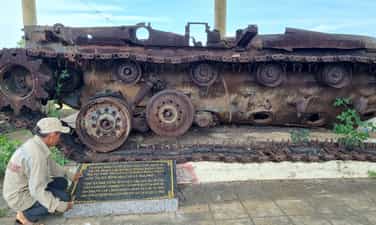
The Van Tuong Victory national relic complex is located in Binh Hai and Binh Hoa communes, Binh Son district, Quang Ngai province, and was ranked as a national historical and cultural relic in 1982. The complex includes 8 relic sites, including Loc Tu steel trench, Ngoc Huong hill, An Cuong beach, Phuoc Thien beach and the Liberation Army Regiment 1 headquarters. This place marks the battle of Van Tuong on August 18, 1965, when our army and people fought against the "Starlite" operation of the US army. With the coordination between the main force, local troops and guerrilla militia, the Liberation Army took advantage of the terrain, trenches and flexible fighting style to defeat the enemy's large-scale "search and destroy" operation. The Van Tuong victory has a particularly important meaning, proving that our army and people are capable of defeating the American army even though the opponent has superiority in numbers, firepower and war means. This is considered one of the typical battles, opening the "climax of destroying America" on the southern battlefield. Today, relics and the Van Tuong Victory Museum are places to store artifacts and images of historical battles, and are also places to educate about patriotic traditions and the resilient fighting spirit of Quang Ngai's army and people. Source: Quang Ngai Provincial Youth Union
Quang Ngai
483 view
Rating : National monument
Temple of King Le Thai Tong (Gui Lam Linh Tu)
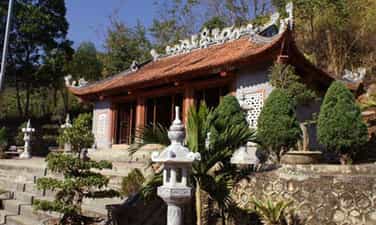
The temple of King Le Thai Tong (also known as Que Lam Linh Tu) is located in group 3, Chieng Le ward, Son La city. This is a solemn spiritual work inaugurated in 2003 to pay tribute to the talented young king of the Early Le Dynasty. In history, he twice personally led troops to quell rebellions, maintain peace and assert sovereignty over the Northwest border region. The temple is 800m² wide, built harmoniously according to the traditional feng shui "Tien Giang, Hau Cham": its back leans firmly against the majestic Chin Mountain, facing the peaceful Nam La stream. The architecture of the temple is imbued with the identity of ancient Vietnamese temples with three-entrance gates, green stone courtyards, left-right houses, gilded lacquered grand pavilion and a solemn harem with bronze statues of great men. Not only is it a beautiful architectural work, Que Lam Linh Tu today has become a "red address" educating patriotism for the young generation, as well as an indispensable spiritual cultural fulcrum of Son La ethnic people every Tet and spring. Source: Son La province electronic information portal
Son La
253 view
Rating : National monument
Mach Mang Stream
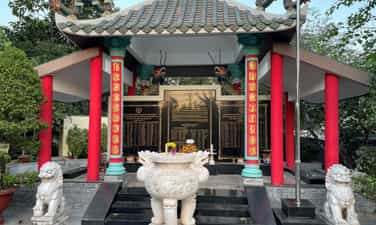
Mach Mang Stream (also known as Suoi So) in Tan Binh ward, Di An city, Binh Duong province, now Ho Chi Minh City, is a historical relic associated with the fierce anti-dumping battle on May 4, 1968 during the resistance war against the US. Here, the main force, militia and local guerrillas fought tenaciously against a large-scale attack by American and puppet troops with the support of aircraft, tanks and artillery. After more than a day and night of fighting, our army and people repelled many attacks, destroyed many enemy soldiers and burned 4 tanks. However, hundreds of officers, soldiers and people heroically sacrificed their lives. Since then, the stream has also been called Skull Stream by people to remember the great loss and pay tribute to those who died for national independence. Today, the Suoi Mach Mang memorial stele is a red address to educate patriotic traditions, reminding generations of the indomitable spirit and sacrifice of our ancestors. Source: Ho Chi Minh City Newspaper and Radio and Television
Ho Chi Minh City
510 view
Rating : Provincial level relics
Phoenix Trung Do
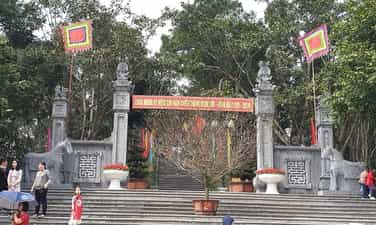
Phuong Hoang Trung Do is the capital chosen by King Quang Trung to build on Dung Quyet mountain, Vinh city, Nghe An province after the victory against the Qing army in 1789. The king wanted to move the capital from Phu Xuan to Nghe An because this was a land with a central location, convenient to manage both North and South, and at the same time a large land rich in military and economic potential. Quang Trung repeatedly assigned La Son Phu Nguyen Thiep to survey, select land and go directly to Nghe An to urge construction. However, while the project was still unfinished, King Quang Trung suddenly died in 1792. After that, the Tay Son dynasty weakened, so the plan to build a new capital was abandoned. Today, the Phuong Hoang Trung Do area and King Quang Trung Temple on Dung Quyet Mountain are typical historical and cultural destinations, associated with the national hero's desire to build a new capital and the strategic vision. Source: National Museum of History
Nghe An
565 view
Rating : National monument
Trung Do Ancient Citadel
Trung Do Ancient Citadel - Border Shield Where the River Flows upstream. Besides the sacred ancient temple, Bao Nhai valley, Bac Ha also holds a majestic historical witness. That is Trung Do Citadel - a military fortress, a "shield" protecting the northern border of the country in the 16th century. Built by Gia Quoc Cong Vu Van Mat during Lord Bau's reign, the citadel possesses a peak geographical position: in front of the river, behind the mountains. The west side of the citadel leans on the Chay River like a deep natural moat to prevent the enemy; The east is protected by rolling limestone mountains forming an impregnable wall. After more than 400 years of collapse, although the ancient wall of earth and pebbles has now merged with the corn fields and tea hills of the Tay people, archaeological traces such as large bricks and funny-nosed tiles still prove a solid and bustling "resistance capital" of the past. Trung Do Ancient Citadel today is not only a National Historical Site, but also a living lesson about the military strategy of our ancestors. Standing here, listening to the sound of the waves of the Chay River, we can still hear the thousand-year-old spirit of a time when we protected the land. Source: Vietnam National Tourism Administration
Lao Cai
549 view
Rating : National monument
Outstanding monuments
See all
Lang Le Bau Co relic site
Lang Le Bau Co relic site is located in Tan Nhut commune, Binh Chanh district, Ho Chi Minh City. Lang Le Bau Co is associated with the resistance war against the French invasion in 1948 with major battles that went down in history. Lang Le Bau Co relic was recognized as a city-level historical relic in 2003. The reason it is called Lang Le Bau Co relic area is because the name of Lang Le Bau Co relic area was given by local people. The hamlet was established next to the interlaced canals and rivers. Lang Le Bau Co is located inside a large field with many shrimp, crabs, and fish. Along with many species of birds such as mallards, storks, teal, nuthatches, gongs, partridges, herons, and red armpits come to feed here. Therefore, Tan Nhut people call it by the familiar and rustic name Lang Le Bau Co. Lang Le Bau Co relic is considered the gateway to move to the center of Vuon Thom base and attack the enemy headquarters in Saigon. Previously, Lang Le Bau Co relic area was originally a field of overgrown reeds. On April 15, 1948, the French colonialists sent 3 thousand soldiers and many modern weapons to simultaneously attack the Lang Le Bau Co area to destroy the Vuon Thom base. At that time, the revolutionary armed forces in Lang Le - Bau, because of their small force and rudimentary weapons, had the help of local people along with the advantage of terrain. After just over half a day of fighting, it turned to attack, causing the French army to suffer a large number of casualties. The victory at Lang Le Bau Co killed 300 enemies, captured 30 mercenaries, and destroyed many machines, military vehicles, and guns of all kinds of the enemy. However, on our side, there are many officers and soldiers who heroically sacrificed their lives at a very young age. On October 14, 1966, in Lang Le, the Republic of Vietnam Army Ranger Battalion was destroyed by tourist militia. Lang Le Bau Co relic site has great historical significance for the people of Saigon in particular and the whole country in general. Faced with hatred for the French colonialists, Lang Le Bau Co's army and people fought a war of great historical significance that opened the door for our side and the enemy. For our side, the battle opened the door to heroism in a strong resistance position. As for the enemy, they had to retreat into a strategic position and were destroyed. The French colonialists could no longer form a strategy to defeat the Viet Minh. Moreover, at Vuon Thom base, Lang Le Bau Co also took place a determined battle to protect our base and destroy all sabotage plans of the enemy. Lang Le Bau Co relic area, after the Dong Khoi movement in 1960, was also a logistics and springboard for the armed forces to liberate Long An - Saigon - Gia Dinh. To commemorate the sacrifices of our compatriots and soldiers, in 1988 Binh Chanh district built a historical building in Lang Le Bau Co land with an area of 1000m2. Source: Ho Chi Minh City Electronic Information Newspaper
Ho Chi Minh City
17964 view
Rating : City-level relics

Tan Hiep Prison Historical Relic
Tan Hiep Prison, also known as "Tan Hiep Correctional Center", is located in Quarter 6, Tan Tien Ward, Bien Hoa City. Tan Hiep Prison Relic was ranked as a national relic by the Ministry of Culture and Sports on January 15, 1994. Tan Hiep Prison is one of the six largest prisons in South Vietnam and the largest prison in the Southeast region, built in an important military position, northeast of Bien Hoa town. Ahead is National Highway 1; Behind is the North - South railway line. This is an isolated location, convenient for transportation, easy for protecting, guarding, receiving prisoners from other places and transferring prisoners to Con Dao, Phu Quoc... Tan Hiep Prison has an area of 46,520 square meters with 8 prisons, including 5 prisons for communist prisoners and patriots. The prison is surrounded by 4 layers of barbed wire with 9 bunkers, 3 watchtowers with a team of guards and a modern alarm system. It's called "Correctional Center" but inside is actually a gun warehouse, an interrogation and torture room with the most modern tools. Each prison only has an area of nearly 200 square meters but holds 300-400 people, sometimes up to a thousand people. In particular, there are "repentance" rooms and "tiger cages" that are very small and narrow and living conditions are extremely harsh, prisoners live like in a crematorium. The diet was extremely unhygienic. The prison guards bought rotten rice and rotten fish to fertilize the fields, and fried them in oil to feed the prisoners, leading to many people being poisoned. With the determination to escape the imperial prison, return to the Party and the people to continue fighting and liberating the nation, on December 2, 1956, with the agreement of the Eastern Inter-Provincial Party Committee, the soldiers Communists were "detained" in Tan Hiep prison under the direct direction of comrade Nguyen Trong Tam (Bat Tam) - in charge of the prison Party Committee and a number of other comrades who suddenly broke the shackles. was able to free nearly 500 comrades and patriots. This event caused a stir in the Pentagon. America - Diem hastily mobilized both main forces and security forces, civil guards defending the three provinces of Bien Hoa, Ba Ria, Thu Dau Mot and two special forces to encircle and capture the prisoners, but all were defeated. failure. Our comrades and compatriots who escaped from Tan Hiep prison received help and protection from local facilities and returned safely to base. Among the escaped prisoners were comrades: Bay Tam, Hai Thong, Ly Van Sam... who became the core nucleus of the Dong Khoi movement later. In 2001, to partly recreate the crimes of the US - Diem against our comrades and compatriots imprisoned at Tan Hiep prison and describe the entire Tan Hiep uprising on December 2, 1956. , Dong Nai Museum has collected images, documents, and artifacts displayed at the relic and made a model to serve the research and sightseeing needs of all classes of people. Every day, the monument is open to visitors. Source: Dong Nai Electronic Newspaper
Dong Nai
16461 view
Rating : National monument

Nguyen Huu Canh Temple
Nguyen Huu Canh temple, also known as Binh Kinh communal house, is located on the left bank of Dong Nai river, formerly belonging to Binh Kinh hamlet, Binh Hoanh village, Tran Bien canton, now Nhi Hoa hamlet, Hiep Hoa commune, Bien Hoa city. It was ranked as a national historical relic by the Ministry of Culture, Information, Sports and Tourism on March 25, 1991. Nguyen Huu Canh Temple was built around the end of the 18th century. Initially, the temple was small in scale, with walls made of boards and a yin-yang tile roof, about 400m south of the current temple. Documents say: the temple was first rebuilt in the fourth year of Tu Duc (1851); By 1923, the temple was rebuilt at its current location. Nguyen Huu Canh was born in 1650 in Gia Mieu, Tong Son district, Thanh Hoa province in a family with many famous generals in the dynasty. He was a man of both literature and martial arts, accomplished many great victories and was trusted, loved and respected by Lord Nguyen. In the spring of the year Mau Dan (1698), he obeyed Lord Nguyen's order to invade Dang Trong while it was still very desolate. Arriving in Dong Nai, he set up his headquarters at Cu Lao Pho (now Hiep Hoa commune); took Dong Nai land as Phuoc Long district, built Tran Bien palace, took Saigon land as Tan Binh district, built Phien Tran palace, the land expanded thousands of miles. He recruited immigrants to settle down, organized the administrative apparatus gradually and systematically, encouraged land reclamation, and promoted Cu Lao Pho to develop into one of the busiest and most dynamic port towns throughout the century. 18 and officially annexed the new land of the South into the Dai Viet map. After returning from the invasion of the South, the following year he again served Lord Nguyen Phuc Chu's command to lead an army to suppress King Chan Lap and maintain the southern border region. In April of the year Canh Thin (1700), after completing his mission, on the way back to Rach Gam (Tien Giang), he fell ill and passed away on the 16th day of the 5th lunar month, at the age of 51 years old. On the way to his hometown for burial, his coffin was stopped at the land where he once had his headquarters on Cu Lao Pho so that local people could have the opportunity to say goodbye to him one last time. At the mandarin's communal house, local people built a tomb to remember this event. When hearing the news of Nguyen Huu Canh's death, Lord Nguyen was extremely sorry and conferred on him the title of High-ranking official of the Town Chancellor with the title: Thanh Marquis Ceremony and had his tablet enshrined at the Thai temple. Source: Dong Nai Electronic Newspaper
Dong Nai
15033 view
Rating : National monument

La Nga victory relic
La Nga Victory Relic (at km 104-112 on Highway 20 to Da Lat, in Phu Ngoc commune, Dinh Quan district) was ranked a national historical relic by the Ministry of Culture on December 12, 1986. To cheer for the Viet Bac victory in the fall-winter of 1947 and also to deal a fatal blow to the enemy, the command board of squad 10 decided to organize a big battle, to show the enemy that the Vietnamese people were , Vietnamese people do not easily submit to any enemy; With a spirit of courage and ingenuity after nearly half a year of preparation, studying the terrain, and choosing a location: at 15:12 on March 1, 1948, the La Nga ambush battle began and ended at 15:12 on March 1, 1948. 15:57 on the same day, in just 45 minutes. The victory of La Nga delighted the people of Dinh Quan in particular and the people of Dong Nai in general. This is a victory that demonstrates the cunning and courage of our army and people, causing the enemy to be stunned and defeated. From this victory, our force grew stronger and stronger, contributing to defeating the enemy's plan to attack quickly and win quickly, forcing them into a passive position. The scenic complex of Chong Rock, Mai Waterfall, La Nga River and La Nga Victory Monument is an interesting tourist complex of Dinh Quan. The amazing beauty of Hon Ba Chong, Da Voi Mountain, Hon Dia, along with the natural pagoda at the foot of the rocky mountain are typical clusters that create a harmonious beauty for the Da Chong scenic area. Dinh Quan Da Chong Complex is also a place that retains traces of prehistoric life. Here, under the stone roofs, along the streams and on the slopes along the valley, many production and daily life tools of the ancients made of stone, bronze and terracotta were discovered. During the 30-year resistance war. Dinh Quan is an important part of War Zone D. Da Chong witnessed the formation, development, stationing, and combat deployment of revolutionary forces. Today, a part of the land of Da Chong Dinh Quan scenic area has been used and built into the Dinh Quan District Cultural and Sports Center. In the near future, Da Chong Dinh Quan scenic area will be invested in and renovated, contributing to making the natural landscape more beautiful and becoming an attractive eco-tourism destination. Source: Dinh Quan District People's Committee
Dong Nai
14866 view
Rating : National monument

Chot Mat ancient tower
Chot Mat Tower Historical-Cultural Relic, located in Xom Thap hamlet, Tan Phong commune, Tan Bien district, Tay Ninh province, was recognized by the Ministry of Culture and Information (now the Ministry of Culture, Sports and Tourism) as historical - cultural relic on July 23, 1993. Also one of the last three ancient towers remaining in the South of our country. Having undergone many restorations in 1938, 2003 and most recently in 2013. Despite undergoing restorations, the Chot Mat ancient tower relic site has given itself a new look but still remains retains the spirit of ancient architecture. The entire Tower is built of brick and slate with the top of the tower tapering upward, from the ground to the highest point of the tower is estimated to be 10m. In addition, this ancient tower is located on a high mound in the middle of the field, so from a distance it looks like a pen rising gradually. In 2003, the People's Committee of Tay Ninh province decided to approve the investment project to restore, embellish and preserve Chot Mat tower relics and carried out the restoration, restoration, display and opening of the excavation pit in 2003. into use. On November 27, 2019, the Provincial People's Committee issued a Decision regulating the decentralization of management, protection and promotion of the value of historical and cultural relics and scenic spots in Tay Ninh province. Decision to assign the People's Committee of Tan Bien district to directly manage 4 relics, including the National Historical-Cultural relic Thap Chot Mat. In particular, the Chot Mat Tower Historical-Cultural Relic in Tan Phong commune, Tan Bien district was chosen to be part of the tourism development link of Tay Ninh Province. This is a tourist destination worth exploring, contributing to tourism development in Tan Phong commune in particular and Tan Bien district in general. Source: Tay Ninh province electronic information portal
Tay Ninh
14730 view
Rating : National monument

Hoc Mon District Palace
Hoc Mon District Palace is located at No. 1, Ly Nam De Street, Hoc Mon Town, (next to the District People's Committee headquarters) and is the place where many outstanding fighting events have been recorded throughout the long history from 1885 to the Southern days. Complete liberation of the People of 18 Betel Garden Villages. After defeating Chi Hoa Fort, the French colonialists built a 3-storey wooden house here to use as a military post. When Tran Tu Ca took office as Governor of the Palace, he used the Station as the Palace of Binh Long district. Originally a cunning drunkard of the French colonialists, Tran Tu Ca was led by a group led by Mr. Phan Van Hon (Quan Hon) and Nguyen Van Qua (Chanh Lanh Binh) of nearly 1,000 insurgents who came to burn the District Palace, captured and head cut off in the middle of the market. That was February 8, 1885, At Dau Tet. Afterwards, Hoc Mon District Palace was rebuilt with a blue stone foundation, brick walls, and a defense system from the upper floors to the fence. The architecture is similar to the Military Fort, so the locals call it Hoc Mon Fort. Tran took over from Tran Tu Ca as Governor of Ngon district, moving to Tra District and then Tho District. This was a long period of time when the people of the Hoc Mon region suffered from many cruel and despicable scenes from the French colonialists and their oligarchic henchmen mentioned above. With the indomitable tradition of Hoc Mon people. On June 4, 1930, around 6 a.m. in front of the District Palace, hundreds of Hoc Mon people protested demanding "abolition of poll tax, reduction of license and market taxes, and granting land to poor farmers." Tra District invited the leaders into the Palace to negotiate, but they cunningly arrested them, including Mr. Le Van Uoi (Secretary of Tan Thoi Nhi Commune), who was the leader of the protest. People were undaunted and fiercely demanded that Tea District release those detained. The protest group became more and more crowded, the fighting spirit spread somewhat, causing Tra District to give in. On the one hand, they released the detained people, on the other hand, they called the officials in Saigon for help. 2 hours later, the struggle was led by two men, Blachole and Nobbot, who opened fire on the protest group, causing many casualties. But the most impressive historical event at Hoc Mon District Palace was the Southern Uprising on November 23, 1940. Hoc Mon Fort is very solid, built of green stone like a fortress, about 15 meters high, has a gun emplacement and a defense system with battlements guarded by a platoon of green soldiers. On November 22, 1940, France reinforced one more platoon to deal with the situation. On the afternoon of November 22, 1940, Mr. Do Van Coi's army broke into the town, disguised as civilians, ambushed behind the Station waiting for orders to rob the Station. Another army wing has the task of destroying bridges, cutting down trees blocking roads, and occupying offices and houses... The army wing from Phuoc Vinh An, Tan Thong, Tan An Hoi, Tan Phu Trung is led by Mr. Pham Van Sang and Dang Cong Binh commanded, started from Ben Do hamlet, attacked the house, killed 1 person, collected 4 guns, and took control of the situation here (Tan Phu Trung). Immediately this army was ordered to pull back to Hoc Mon. The Long Tuy Thuong army was commanded by Mr. Bui Van Hoat. The army of General Long Tuy Trung was commanded by Mr. Do Van Day and Le Binh Dang. At around 24:00 on the night of November 22, 1940, the sound of artillery fire had not yet been heard in Saigon. After consulting, the army commanders united to attack the enemy's post. Immediately the troops headed straight to Fort Hoc Mon, where District Chief Bui Ngoc Tho resided. Two insurgents named Nghe and Kinh volunteered to enter the front gate and sacrificed their lives. Insurgents from all directions rushed into the Fort like water bursting its banks. Faced with the power of the insurgents and the masses, the soldiers in the Station no longer had the spirit to resist and fled in disarray. The insurgents completely occupied the inside of the station, but upstairs, the enemy still stubbornly used guns to shoot sporadically, at the same time calling Saigon and Thu Dau Mot for emergency help. Because he was eager to capture the name of Tho District, comrade Do Van Day climbed up to the upper floor of the Station by clinging to the gutter. Halfway up, he was hit by bullets, the comrade fell and died later. The battle was at a standstill when enemy reinforcements arrived. Unable to hold out, the insurgents withdrew from the town, dispersed to the villages, the armed forces withdrew to Ben Do hamlet (Tan Phu Trung) and then moved to My Hanh hamlet (Duc Hoa). Although the attack on Hoc Mon Fort (later called Hoc Mon District Palace) failed, it left a deep impression in the hearts of all civilians admiring the courage of revolutionary soldiers in the fight against colonialism. steal the country. During the historic Ho Chi Minh campaign, at 7:00 a.m. on April 30, 1975, Hoc Mon town was completely liberated, the National flag fluttered above the District Palace, where District Chief Nguyen Nhu Sang and his gang sai has been running away since last night. Today, Hoc Mon District Palace is chosen as the District Museum, where many documents are displayed, illustrating the ups and downs of historical periods as well as the revolutionary fighting spirit of the army and people in Hoc Mon district over the past two years. resistance war against French colonialism and American imperialism. A monument placed in front of the Hoc Mon District Palace relic represents the indomitable sacrifice of the army and people of 18 Betel Garden Villages, recognized as a national historical and cultural relic. Source: Hoc Mon District People's Committee
Ho Chi Minh City
14065 view
Rating : National monument

US Embassy building
The US Embassy relics, also known as the "White House of the East", are the origin of sinister military and political plots aimed at long-term annexation of Vietnam. The relic site is a 5-storey building built Built in modern architecture, located at the corner of Mac Dinh Chi - Le Duan Street, Ben Nghe Ward, District 1, Ho Chi Minh City, on a plot of land nearly 5,000 square meters. Previously, the US embassy was located at 39 Ham Nghi Street. At around 10:00 a.m. on March 30, 1963, the US embassy on Ham Nghi Street was hit with explosives by the F21 Commando team, collapsing three floors: 1, 2, 3, so the US decided to rebuild it. Construction began on the building in 1965, most of the materials and construction machinery were transported from the US, under the control of American engineers. According to the design, the building is surrounded by 7,800 Taredo stones that can withstand mines and artillery shells. The main door is equipped with thick steel, the other doors are blocked by a special thick bulletproof layer. All doors use automatic systems, including iron doors blocking the way to the upper floors. Inside the building there are 140 rooms with 200 staff serving day and night. In addition, next to the building is also built an additional row of houses called the "Norodom" area exclusively for C.I.A. employees. When inaugurated, the building had only 3 floors. At the end of 1966, two more floors and a terrace were built to serve as a landing place for helicopters. Surrounding the building is a 3m high wall, at both ends of the wall close to Le Duan Street, 2 high blockhouses are built, guarded day and night. The Embassy was completed in September 1967 with a defense system such as a fortress with 60 guards, a bomb shelter, and a radar screen system to control the facade. Immediately after the building was completed, on September 24, 1967, thousands of students flocked to the gate of the US Embassy to fight for "America to stop bombing the North", "America to go home" and issued a notice denouncing the US for "trampling and seriously violating the right to self-determination of the Southern people". But the outstanding event that happened at the US Embassy was the battle of the City Rangers during the General Offensive and Uprising in the Spring of 1968. The target of attacking the US Embassy was added on January 24, 1968 by Ngo Thanh. Van is in charge of general affairs. Ranger Team 11 took on this important mission, including captain Ut Nho (military region reconnaissance captain) and soldiers: Bay Truyen, Tuoc, Thanh, Chuc, Tran The Ninh, Chinh, Tai, Van, Duc, Cao Hoai Vinh, Mang, Sau and 2 drivers: Tran Si Hung and Ngo Van Thuan. Another equally humiliating event for the US Embassy was the chaotic escape that occurred on April 29 and 30, 1975 by the US and its accomplices. Faced with the rapid attack of the Vietnamese army and people in the historic Ho Chi Minh campaign, over 1,000 Americans and more than 5,000 pro-American Vietnamese jostled, pushed, and kicked each other to compete for a place on the terrace of the building. building to be rescued by helicopter. This relic was granted a certificate of recognition by the Ministry of Culture on June 25, 1976. Currently, the US Embassy building has been demolished and a new consulate in Ho Chi Minh City has been built, but next to it is a memorial stele forever remembering the achievements of the special forces soldiers who died in the battle. . Source: Ho Chi Minh City Youth Union
Ho Chi Minh City
13965 view
Rating : National monument

Tomb of Mai Xuan Thuong
Mai Xuan Thuong was the leader of the Can Vuong movement against the French at the end of the 19th century in Binh Dinh. Mai Xuan Thuong was born in the year of Canh Than, 1860, died in the year of the Pig, 1887, from Phu Lac village, Phu Phong district, Tuy Vien district, Binh Dinh province (now Phu Lac village, Binh Thanh commune, Tay Son district, Binh Dinh province). His father, Mai Xuan Tin, was the chief father in Cao Bang. His mother, Huynh Thi Nguyet, was the daughter of a noble family in the village. Mai Xuan Thuong is inherently intelligent and eager to learn. At the age of 18 (1878), he passed the Baccalaureate at Binh Dinh Examination School. At the age of 25 (1885), he passed the bachelor's exam. Responding to King Ham Nghi's Can Vuong edict, Mai Xuan Thuong returned to his hometown of Phu Lac, recruited insurgents, set up a base on Sung island to raise the Can Vuong flag against the French, then Mai Xuan Thuong brought his forces to join the army. The insurgent army was led by Dao Doan Dich and was appointed by Dao Doan Dich to the position of Military Salary Officer (in charge of food for the insurgent army). From then until 1887, the Can Vuong movement in Binh Dinh developed strongly and spread to Quang Ngai, Phu Yen... attracting tens of thousands of people from all walks of life to participate. On September 20, 1885, Dao Doan Dich died and assigned all his forces to Mai Xuan Thuong. He chose the Loc Dong mountain area (now in Binh Tuong commune, Tay Son district) as his headquarters and organized a flag worshiping ceremony, calling on scholars, literati, and people to join the movement to fight against the French. During that ceremony, insurgents from many regions in Binh Dinh province agreed to honor him as the Marshal leading the uprising and raised the slogan: "First to kill the left, later to attack the West". In early 1887, the French army under the command of Lieutenant Colonel Cherrean and the royal army led by Tran Ba Loc along with Minister Trira launched a major attack on the headquarters of the Can Vuong movement in Binh Dinh, the battle The fighting between the insurgent forces and the French enemy was extremely fierce, the fight was unequal, and in the end the insurgent force was pushed back. In March 1887, after a fierce battle in Bau Sau (An Nhon town, Binh Dinh province), Mai Xuan Thuong was seriously injured, the insurgents withdrew to Linh Dong secret area. On April 21, 1887, Tran Ba Loc surrounded and captured the Linh Dong secret base and captured a number of insurgents, including Mai Nguyen Soai's mother. On the night of April 30, 1887, Mai Xuan Thuong sent a suicide squad to break into Tran Ba Loc barracks, relieve the captured people, and he and a group of 50 subordinates crossed the mountain into Phu Yen and continued to resist. battle, but when she reached Phu Quy Pass (boundary between Binh Dinh and Phu Yen), she was captured by Tran Ba Loc's ambush and taken to be beheaded at Go Cham (East of Binh Dinh Citadel). The mausoleum of patriot Mai Xuan Thuong is located on a high hill of the Ngang mountain range (in Hoa Son village, Binh Tuong commune, Tay Son district, Binh Dinh province) about 50km northwest of Quy Nhon city; The mausoleum was built on a land area of 1988m2, inaugurated on January 22, 1961. Overall, the mausoleum is designed in the style of an ancient mausoleum, surrounded by low walls. The Lang gate (three gates) is made up of 4 square pillars, the top is tied in the style of a gourd and a vase, bearing the architectural appearance of a communal house or temple gate of the late 19th century. In the middle of the Mausoleum is Mai Xuan Thuong's tomb, rectangular in shape in the East - West direction; At the head of the grave is a stone stele engraved with an inscription recording the biography and career of Mai Xuan Thuong: The relic was ranked at the National level by the Ministry of Culture and Information on April 20, 1995. Source: People's Committee of Tay Son District, Binh Dinh Province
Gia Lai
13644 view
Rating : National monument

Mac Dynasty Citadel in Cao Bang (Na Lu Citadel, Ban Phu Citadel, Phuc Hoa Citadel)
During the period when the Mac dynasty had its capital in Cao Bang, in order to prevent the Le dynasty from attacking, the Mac dynasty restored and repaired Na Lu citadel (now in Hoang Tung commune, Hoa An) and Ban Phu citadel (now in Hung Dao commune). ), Phuc Hoa citadel, in addition to building many other citadels in Cao Bang, making Cao Bang a political and military center in the far Northeast border region at that time. Na Lu citadel and Phuc Hoa citadel are two citadels built before. According to the records of Be Huu Cung in Cao Bang Thuc Luc, Na Lu citadel and Phuc Hoa citadel began in the reign of Tang Y Tong in the year Giap Than, the 5th Ham Thong era (874). Based on the presence of many ancient tombs with stone inscriptions containing the names, addresses, and hometowns of the citadel builders who died here during the Ham Thong Dynasty, it can be confirmed that these two citadels were built during the Tang Dynasty. Na Lu Citadel was built over many different dynasties. When the Mac dynasty came to Cao Bang, it was rebuilt with bricks. Na Lu citadel has a nearly rectangular shape, has a total area of about 37.5 hectares, a length of about 800 m, a width of about 600 m, the citadel has 4 gates. Ban Phu citadel in the capital of Nam Binh, Nam Cuong country of Thuc Phan in the past in Cao Binh (Cao Bang), the Mac dynasty renovated the royal palace in the inner circle of the old capital of Nam Binh and called it Ban Phu citadel or Royal Palace. In the ancient capital of Nam Binh of the Nam Cuong country and the Mac dynasty, Ban Phu citadel still has clear traces. The capital city of Nam Binh consists of two citadels, to protect the citadel, the outer ring has a circumference of about 5 km, including a low hillock area, around the foot of the hill is covered with vertical canvas like a wall, convenient for navigation. Build defense lines. The western wall of the citadel runs parallel to the bank of the Bang River to the beginning of Bo Ma village, connecting the southeast wall of the citadel, flowing in front of Ban Phu, following the foot of the hill to meet National Highway 4, the northeastern side running along the foot of the hill close to the outside of National Highway 4. , up to the top of the mound is the northwest side, continue running along the foot of the hill, out to the river bank and meet the west wall, forming a closed citadel. When the Mac Dynasty established the capital, it repaired and built a number of additional works, in which Ban Phu Citadel (inner citadel - the king's working place) was built higher on the old citadel walls from the Thuc Phan period. The citadel is located on a flat land. Along with rebuilding the capital, the Mac dynasty also built a system of posts and ramparts quite thick around the capital and a number of important border points, forming a system of protecting the capital and protecting the border. gender. Phuc Hoa citadel (Phuc Hoa district) was built in a square style, about 400 m in each direction, including two citadel rings, the distance between the two rings is 80 m. Currently, the southern wall has been completely destroyed. Phuc Hoa Citadel has 2 main gates: The North Gate is open to the national highway to Ta Lung Border Gate today, people often call it Pac Gate, this gate is built in a rectangular style, 8 m wide, 5 m high. , including two gates made of thick, very sturdy wood; The second gate is in the south, opening to the river bank. Both gates were flattened long ago, and now there are no traces left. Near the citadel, in the northwest suburbs along the riverbank, there are many traces of brick kilns. People said that during the process of labor and exploration, many intact brick kilns were found in this area. Through research and surveys, it has been shown that in Cao Bang, the Mac dynasty renovated, embellished and built many citadels and fortresses, including repairing, embellishing and rebuilding Ban Phu citadel, Na Lu citadel, and Phuc citadel. Hoa. These fortifications have formed a quite solid system of protecting the capital. Up to now, of the ancient citadels built by the Mac Dynasty during the capital period in Cao Bang, some of the citadels built of earth only have traces left, but the citadels built of stone are still very clear. Source: Cao Bang Electronic Newspaper
Cao Bang
13324 view
Rating : National monument

WARRIORS' MEMORIAL AREA AT THREE GIONG FORCES, NATIONAL HISTORICAL MONITOR
Nga Ba Giong relic is a revolutionary historical relic located in Hamlet 5, Xuan Thoi Thuong commune, Hoc Mon district. Surrounded by three roads: Phan Van Hon, Nguyen Van Bua and Provincial Road 19. Nga Ba Giong relic site is a memorial site for historical events in two wars against foreign invaders. Recognized as a national historical site in 2002. Giong Junction (also fully known as Giong Bang Lang Junction) is located in Xuan Thoi Tay village, part of 18 old betel garden villages formed from 1698 to 1731. For a long time, Giong Junction is a place with a folk name that has entered the history of the hometown of 18 betel garden villages of Hoc Mon - Ba Diem. Legend has it that in the past, this place was a relatively high land and a place where many linden trees grew, so this place got its name from there. After the Southern Uprising (November 23, 1940) failed, the French colonialists increased their repression and fierce terror against the revolutionary movement in the Hoc Mon - Ba Diem region. They set up three shooting ranges in Hoc Mon to kill Party leaders and patriotic comrades from their hometown of Hoc Mon and surrounding areas. Giong intersection is the third shooting range to record the heinous crimes of the French enemy and his henchmen against the people of Hoc Mon. Learning from the experience of 2 previous shooting ranges (1 at the old theater in the center of Hoc Mon District, 1 next to the well behind Hoc Mon Hospital today), they executed public shootings, forcing people to come and watch for the purpose of intimidation. revolutionary spirit of Hoc Mon people. But that firing squad backfired. The Hoc Mon people witnessed with their own eyes the cruelty of the French colonialists and the noble sacrifices of the communist soldiers, so their patriotic fire flared up even more fiercely. . For this third shooting range, they did not dare to build it near the center of the District anymore, but moved it to the Giong Junction area as a desolate, sparsely populated area to avoid people's resistance. Here, they built a shooting range with a solid mound of land 12m long, 2.2m high, in front of which were planted 6 shooting posts, each 1.7m high, the shooting direction facing the field (Ba Tram Lac). In 1941, here they secretly executed many times without letting the people see, hundreds of communist soldiers and patriots were killed by them. With the extremely sacred historical significance of Giong Junction, the place that marked the barbaric crimes of the French invaders, the place that demonstrated the indomitable fighting will and noble sacrifices of our comrades and compatriots later on. the Southern Uprising (November 23, 1940); After the complete liberation of the South (April 30, 1975), Hoc Mon district quickly restored and embellished the Nga Giong Junction revolutionary historical relic site to educate traditional generations of youth. This place has become a tourist attraction and a place to organize traditional festivals during major annual holidays of Hoc Mon district and the city, especially the anniversary of Southern Uprising Day (November 23). Currently, with the consent of the city, the district is renovating and building Giong Junction into "Giong Junction Martyrs' Memorial Area". Source: Hoc Mon electronic information portal
Ho Chi Minh City
13167 view
Rating : National monument