
 vn
vn en
en ja
ja ko
ko zh
zh












List of tourist attractions (61)

Lung Cot Cau tourist area
Lung Cot Cau tourist area is the ideal place for you who want to fully explore the cultural beauty of the Southwest region. This place is not only known as the famous Oc Eo cultural relic in Nhon Nghia commune, Phong Dien district, but also possesses a garden space with enough interesting experiential activities. Lung Cot Cau is a famous tourist area located on Highway 61C, Nhon Nghia commune, Phong Dien district, Can Tho city, about 5km from the center. Officially put into operation in 2015, this place is also known as Bung Da Noi - Lung Cot Cau, attracting tourists with a landscape imbued with the cultural colors of the Southwest river region. Which season is best to visit Lung Cot Cau tourist area is a question that receives a lot of attention. In fact, you can come here at any time. However, the ideal time is from April to May because at this time the fruit gardens enter the harvest period. In addition, if you want to experience floating season tourism, from September to November is the time you can arrange to visit Lung Cot Cau. Bung Da Noi - Lung Cot Cau is a place associated with the Can Tho tourist area Lung Cot Cau, with a name that dates back not long ago, just around 20 years. According to MIA.vn's research, when people dug ditches, planted beds, searched for crabs, and caught fish in natural mounds, ponds, and ditches in this area, they discovered a number of pieces of porcelain and teapots. , stone statues, gold pieces... belonging to the Oc Eo cultural era. In 1990, the Central Institute of Archeology sent a survey team to Nhon Nghia commune, Phong Dien district to explore, excavate and discover many large wooden piles in ponds and ponds around the area at a depth of 2.3m. under the plant alluvial layer. In addition, they also found many green, rectangular-shaped rocks that had been processed and "floated" in the pond of the relic site. Along with ceramic, bronze, gold relics and other large fossilized animal bones, experts have confirmed that under the ground of the current tourist area more than 1,500 years ago, ancient Funan residents lived. . From this discovery, the host family decided to turn this place into rustic, ecological tourism, while also giving guests the opportunity to learn more about culture and history. Ancient Oc Eo culture established and developed in Southern Vietnam during the period from the 1st to 7th centuries, associated with the existence of Funan - a powerful kingdom at that time in Southeast Asia. Lung Cot Cau tourist area is known as a cultural relic of the Funan kingdom, proving the existence of the famous Oc Eo culture. Therefore, when visiting here, you will have the opportunity to learn more about the traces or artifacts that have been found, estimated to have existed more than 1,500 years ago. Interesting folk games are an indispensable part of the Southwest ecotourism model, especially in Lung Cot Cau Can Tho tourist area. Here, you can rent spacious, comfortable Ba Ba clothes to participate in all kinds of interesting games such as walking on a rope bridge, rowing a canoe, slapping ditches to catch fish, walking on a bamboo bridge without handrails, tug of war... In particular, Among all the activities, duck catching and fish catching are typical of the Westerners. Therefore, it is loved and participated by many tourists. With the spoils after chasing ducks or wading in ditches to catch fish hidden in the mud, the restaurant will help prepare all kinds of attractive dishes to serve to players. If you love to explore If you are a gardener, Lung Cot Cau tourist area will surely satisfy you. Although this place has an area of more than 7 hectares, most of it is orchards stretching far and wide, most of which are durian and mangosteen. Next are other types such as bon bon, longan, mango, rambutan, pineapple, orange, tangerine... and typical vegetables. During the harvest season, the scene of fruits racing each other with heavy branches makes everyone who has the opportunity to visit and be fascinated, just wanting to immediately pick up their phone to check-in virtually. Right on the premises of Lung Cot tourist area. , you can find restaurants built in the bamboo house architecture, providing a cool space to rest and eat. These restaurants mainly serve rustic country dishes such as crab hotpot, roast pork, grilled snakehead fish, steamed fish with dwarf roots, fish sauce hotpot... In addition, if you come during the fruit harvest season or summer, Floating water, you will enjoy typical delicacies such as mangosteen salad, stir-fried durian flowers, wormwood salad, seaweed shrimp... Lung Cot Cau tourist area will be a place that you do not want to miss on your trip. process Explore Can Tho in particular and the Southwest region in general.
Can Tho
5086 view


9 Hong fruit garden
Not only famous for the bustling Cai Rang floating market and the nostalgic Ninh Kieu wharf, Can Tho also makes many tourists miss it because of its fruitful and fruitful fruit gardens. One of the famous fruit gardens exploited for tourism in Can Tho is 9 Hong fruit garden - a familiar meeting place for tourists from all over when coming to Tay Do city - Can Tho. 9 Hong fruit garden is located at 398 Nhon My hamlet, Phong Dien district, Can Tho city. The fruit garden is located near Truc Lam Phuong Nam Zen Monastery, about 10km from Can Tho center. This place is built in a rustic western style with a garden planted with many types of fruit trees such as Taiwanese mangoes, star apples, rambutans,... With a typical tropical climate, the trees The trees in the 9 Hong fruit garden are luxuriant and produce sweet fruits, which is why it is not only a place to grow delicious fruit varieties, but also a tourist destination that attracts Can Tho people and tourists from all over the world. 9 Hong Fruit Garden is a tourist destination that recreates part of the simple beauty of the hospitable land of the Mekong Delta. Anyone who has come here once will definitely remember the rich garden and river scenery here. 9 Hong Fruit Garden has an area of about 13,000 square meters, and is jokingly called a fruit forest by many tourists because the garden is lush and fruitful with diverse and colorful fruits such as tangerines, durian, star apples, and rambutans. steal,... Here you will be immersed in cool fresh air, with the faint sweet scent of delicious fruits. In addition to the privilege of taking photos as you please with the lush green garden scenery, you can also enjoy fresh fruit just picked from the tree, delicious and succulent. If you have visited the large fruit garden thousands of square meters, stop for a moment to experience the folk cake buffet with countless types of cakes from sweet to salty such as coconut-filled cauldron cake that is crispy on the outside and fatty on the inside, soft and fragrant beef cake, golden western khot cake that fills the belly, ... In addition, 9 Hong fruit garden also serves many other garden specialties such as: grilled chicken, grilled duck, duck cooked in congee, fried giant fish,... It's not just about strolling through the fruit garden. 9 Hong's trees and fruit gardens also have many activities for visitors to fully experience the life of people in the river region such as: Fish slapping in the ditch: Visitors will be dressed up as a genuine Western farmer. , then wade into the fish ditch to catch the big moving fish. If you have a passion for fragrant and fatty Western cakes but don't participate in this activity, it would be a shame. You will be guided by hand to make batches of colorful and delicious cakes. You will experience rowing a boat on the calm river surface, passing shaded coconut trees to control the boat to the other side, as well as participating in interesting folk games with teammates on the lake. 9 Hong Fruit Garden prepares many miniatures recreating familiar Western scenes such as boats, thatched roofs, and small ponds so that visitors can comfortably take photos. With seasonal characteristics, each season the 9 Hong fruit garden will have different types of fruit. To make sure the garden has your favorite fruit, please contact the garden before coming! 9 Hong Fruit Garden has a scene typical of the Southwestern countryside. If you want to have photos with a true garden feel, please prepare a Ba Ba outfit to take photos! Can Tho is often sunny, so when visiting the fruit garden, don't forget to prepare sunscreen, sunglasses, and a hat to avoid the sun!
Can Tho
5091 view


Ong De tourist area
As always, Ong De tourist area is always bustling with laughter and cheers that resound throughout the whole sky of Can Tho. With a new and unique system of folk games, a relaxing resort experience and charming natural scenery, Ong De tourist area has quickly become famous, creating a craze on social networks, attracting tourists. Guests come to check-in and experience. Located in group 26, My Ai hamlet, My Khanh commune, Phong Dien district, Can Tho city, Ong De tourist area is located right on the main extended Nguyen Van Cu road, about 10km from Can Tho city center. Nestled within an area of 3 hectares, Ong De eco-tourism area offers a complete integrated experience with a variety of services for tourists' vacations and entertainment. From entertainment, relaxing vacations to enjoying delicious country cuisine, everything is fully satisfied, bringing moments of true relaxation. This place is famous as one of the tourist villages with the most attractive games in the Mekong Delta, and is also an ideal destination for tourists to immerse themselves in the typical river scenery of the South. The place that attracts the most tourists and young people is the water games area with exciting and exciting activities. Here you have the opportunity to "have fun" with diverse games such as spring bridges, ringing the golden bell, cycling through ditches, riding seesaw bridges, overcoming obstacles, swinging rings, walking on ropes across ditches, rock-paper-scissors match,... Each game brings its own unique and interesting experiences, helping you relieve stress, relax your body and create memorable moments with your loved ones. Ong De tourist area has extremely beautiful virtual living corners, imbued with the culture of the Western region. Under the shady canopy, miniature landscapes are delicately and harmoniously arranged, creating a sparkling backdrop for "million-like" photos. Try checking in at the bamboo bridge across the small canal, drifting away to the sound of gurgling water and capturing moments of peace and relaxation. Or explore the colorful flower garden, where you can transform into a "muse" among countless blooming flowers. The swimming pool at Ong De tourist area has an impressive size, allowing you to freely swim and play without worrying about being cramped. The lake water is clear and blue, continuously treated to ensure hygiene and safety for visitors. Besides, the swimming pool is also surrounded by rows of green trees, creating a beautiful and relaxing scene. You can enjoy sunbathing, playing water polo or participating in other entertainment activities here. The swimming pool area is fully equipped with convenient services such as bathrooms, toilets, etc. to meet the needs of visitors. Lifeguards are always on duty to ensure the safety of you and your family. Have you ever imagined yourself wading through mud, sweating profusely, and busily catching fish like a real farmer? Ong De tourist area will let you try that "difficult" but also "life-affirming" experience. There will be no more ironed clothes, you will put on a simple brown shirt to transform into a true farmer, wading through the mud to catch fish. After all your efforts, you can certainly smile with satisfaction when looking at the basket full of fish. The joy of "hunting" the trophy yourself will make you feel extremely proud. You can dine right in the restaurant at the tourist area. Taking advantage of the strengths of the river area, the restaurant at Ong De tourist area offers visitors a diverse menu with dishes made from fresh, locally grown ingredients. From grilled snakehead fish, boiled snails, grilled snails with green pepper, shredded chicken, to fish hotpot, chicken hotpot, sour soup, braised fish, Ong De fish sauce hotpot, sour cork hotpot, crab hotpot,... All are prepared in a rustic style, rich in Western flavors. If you want to stay overnight, you can stay at a homestay right inside the resort. Built in a typical Western house style, the homestay area of Ong De tourist area will bring you a feeling of simplicity, simplicity and closeness to nature. Located in Can Tho city, Ong De eco-tourism area is one of the attractive destinations that you should not miss when exploring the land of "white rice, clear water". From fresh air amidst nature to rustic countryside dishes, Ong De village will bring you experiences typical of the countryside in the Western region.
Can Tho
5247 view


Can Tho artificial beach
If mentioning places to visit in Can Tho, most people will probably remember Cai Rang Floating Market, Ninh Kieu wharf or Binh Thuy Ancient House... but few people know that in Tay Do land there is also an extremely artificial beach. Attractive. Can Tho artificial beach or Can Tho beach is a beautiful 400m long sandy beach area located at the confluence of Hau river and Can Tho river. This artificial freshwater beach has had more than 1 million cubic meters of sand poured down to make it a clean, mud-free beach. Here we can relax, swim or admire the romantic Can Tho bridge. When you set foot on the beach, you will be overwhelmed by the vast river scenery and the cool and fresh air. Walking along the beach, you can listen to the sound of waves hitting the sand, feel the wind blowing in, see boats moving back and forth or fishermen working on the sea. As soon as you set foot on the artificial beach In Can Tho, you will be surprised by the vast space where we can breathe indescribably fresh air. Clear blue sky, bright breeze, cool weather and poetic space of the Western alluvial land. Visiting Can Tho artificial beach, you will immediately immerse yourself in the cool water in each wave. This experience is guaranteed to create many special memories during your vacation with your relatives and friends. In addition, coming to Can Tho Artificial Beach, we can also participate in many sports games on the water such as Banana floats, parachute canoes, kayaks... In particular, here you can also rent a speedboat to run along the beach, admiring the surrounding beauty. If you have the opportunity, you definitely have to try it once! Besides feeling the sunny and windy space and cool air, coming to Can Tho Artificial Beach you can also enjoy cool coconut water, eat seafood or watch bustling scene of Can Tho bridge. Everything is also completely different from the busy, noisy atmosphere in the city. Lovely cafes to serve people from far away to play on the beach are covered with large coconut trees and small tents. All help create a very close and airy space. From the first time you admire the beauty of Can Tho Artificial Beach, you will be delighted with the things this place has to offer. If you have ever set foot on Can Tho Artificial Beach, you will surely be extremely impressed. with the view of Can Tho bridge from afar. This bridge is a cable-stayed bridge with the longest main span in our country in general and Southeast Asia in particular. The feeling of watching the sea, enjoying alcoholic drinks, admiring the bridge from afar, and watching the sunset gradually fall is truly an unforgettable memory. Don't rush to return to the city after Sunset on Can Tho artificial beach. Because here in the evening there are also extremely special performances such as dancing, dancing, magic, water music... The shows will take place every day from 7:00 pm to 9:00 pm, remember to save them on your list right away. It depends on you. According to your own vacation needs, you can choose to go to Can Tho Artificial Beach at the most appropriate time. Specifically, from 6am to 10am is when we can watch the sunrise on the sand and swim in the sea. From 4:30 p.m. to 10 p.m. is the time to go for a walk, enjoy the fresh air and watch the sunset fall on the bridge. At night, everyone comes to enjoy entertainment shows such as magic, dancing, water music...
Can Tho
8633 view


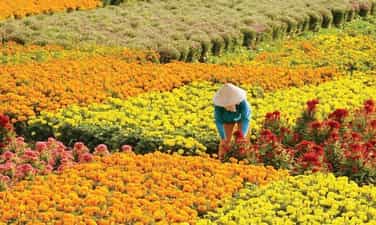
Ba Bo flower village
Ba Bo flower village is famous as a crowded tourist destination and is a priority for many people to visit when coming to Can Tho. This place always appears with the colorful beauty of flowers, giving visitors the experience of discovering strange and interesting flowers. When you come here, you can comfortably check in to the poetic, romantic scenery with colorful flowers blooming all year round. If you have the opportunity to come to the capital of the Mekong Delta, do not miss the opportunity to admire the beauty of flowers here. Only 3km from Can Tho city center, the flower village has now become the most famous tourist destination in the Western region. At the same time, this place is also a top tourist destination for many tourists when they have the opportunity to visit the river land. In addition to being called Ba Bo Flower Village, it is also known by other names as Thoi Nhut Flower Village. Currently, this has become one of the top five famous flowers in Can Tho and has nearly 100 years of establishment. Every year, this place attracts hundreds of visitors, especially young people who want to check in in the impressive colorful scenery of flowers. The flower village was originally created by Mr. Tam Hoai, originally from Dong Thap. Because of his special love for Sa Dec ornamental flowers, when he came to Can Tho to start a business, he brought the seeds and planted them. With the fresh and suitable weather, his ornamental plants are growing more and more, and are distributed to local people for cultivation. Over time, Ba Bo Flower Village was formed as it is today. Visitors do not need to buy entrance tickets, because this attraction is currently free. For tourists who love nature and the colors of flowers, this destination will definitely be a wonderful "paradise". . You can comfortably admire the colors and beauty of species blooming all year round. Some outstanding flower varieties can be easily seen in the garden such as: apricot, sunflower, carnation, etc. All create an impressive and unique scene that is not found everywhere. Therefore, you can comfortably check in "virtual life" and keep beautiful memories for your sightseeing trip. When coming to Can Tho Flower Village, which is nearly 100 years old and has more than 250 households, Visitors will clearly see the meticulousness and meticulousness of the people in the process of breeding and caring for the flowers. So during your visit you can be guided about the flower growing process by the garden owners and workers. They are people who understand the characteristics of each flower variety, so they will give you new knowledge. As soon as you enter the flower garden, you will be overwhelmed by the colorful and unique colors of the beautiful flower varieties. There are many flowers with high artistic value such as: yellow apricot, laurel, etc. Besides, there are many strange flower varieties with different colors and scents. This will give you the opportunity to explore many unique flower species grown under the dedicated hands of farmers. Ba Bo Flower Village deserves to be an ideal destination for travel fans.
Can Tho
6410 view


Tay Do night market
Tay Do Night Market is located in the Western Cultural Park (Can Tho International Exhibition Fair). Not only is it a major trading center of the Southern provinces, the market is also an attractive tourist destination for many people when returning to the West. The market is located on Hai Bai Trung street, Ninh Kieu wharf, Ninh Kieu district, Can Tho. The market is about 1 km west of the Hau River from the center of Can Tho city. The time of sunset is also the time when Tay Do Can Tho night market begins to operate. The market opens from 5:00 p.m. to 11:00 p.m. every day, selling everything you can find when coming to the West. Starting at 4:00 p.m., traders were preparing for the night market. Tay Do Night Market is a wholesale market, transporting many local products from fruits, handicrafts to clothes. Goods exchange activities with foreign countries take place bustlingly day and night. In recent years, the market has been considered a unique cultural tourist destination, attracting tourists to visit and experience. Tay Do night market - Can Tho night market was formed in 1915 and is called Can Tho night market. Luc Tinh market. The reason for this name is because in the past this was a busy trading and trading market of 6 provinces of Cochinchina during the French colonial period. The market was built at the same time as Binh Tay market in Saigon and Ben Thanh market. There was a period when the market was called Hang Duong. At this time, the market is mainly filled with small shops, with no domestic or foreign traders coming to do business. After 90 years of existence, in 2005 the city invested in upgrading and rebuilding the market. Since then, the market was renamed Can Tho market. From the time of its formation until now, the market has existed for a century, many people call the night Can Tho ancient market. Later, when sightseeing and tourism activities in Can Tho developed, Can Tho market opened all night. People know Can Tho as Tay Do land, so it is also called Tay Do night market. Since the last century, Tay Do night market has been a famous commercial market of 6 western provinces. The age of the market is equal to the famous Ben Thanh market in Saigon. Even though it has been upgraded and rebuilt, this place is still a witness of history and a symbol of modern Can Tho city. Visitors to Tay Do night market are very impressed with the Asian architecture of this market. The adjacent stalls, close together, are covered with multi-layered curved tile roofs, which have been used to build ancient houses of Vietnamese people since ancient times. At night, the entire tiled roof area is brightly lit by thousands of light bulbs. Tay Do night market then became even more sparkling and magical on the banks of the Hau river. Visitors can enjoy many Western specialties when coming to Tay Do night market such as grilled fish, fish cake noodle soup. , vermicelli fish sauce... Fresh and delicious food, attractive aroma guaranteed to satisfy the most demanding food lovers. Right outside the night market area, there are many stalls for souvenirs, clothes and handicrafts. From conical hats, lanterns to Ba Ba costumes, all are unique gifts with unique characteristics of the people of the river region. You can freely shop for souvenirs or gifts for relatives, family, and friends after a memorable river trip. Ninh Kieu wharf is only a few hundred meters from Tay Do night market. Therefore, visitors can admire the scenery of Ninh Kieu wharf at night, walk, and enjoy famous delicious dishes at the market. Tay Do night market is an attractive and interesting tourist destination that tourists can enjoy. Tourists should visit and experience when coming to Can Tho and the Mekong Delta.
Can Tho
4613 view


Bang Lang stork garden
Bang Lang stork garden is not only a stopover for natural storks but also one of the famous eco-tourism destinations in Can Tho. The green rice fields stretch, the bamboo groves rustle in the wind, and the birds flutter in the sky. All create a magical natural stork garden of the West. Can Tho stork garden is more than 16,500 square meters wide. Gathering more than 20 different stork species such as ghost stork, cotton stork, fish stork, fly stork, lotus stork, ibis, banded stork, fried stork, green stork. Moreover, there are also the participation of species such as gongs, tits, herons, cauldrons, pelicans, sesbanes, cygnets, hoes, etc. Bang Lang stork garden is like a common natural home of birds living together. . Bang Lang stork garden is located in Thuan An commune, Thot Not district, city. Can Tho. Only 60km from Can Tho center. From Can Tho center, tourists follow National Highway 91, pass O Mon district and will reach Thot Not district. After passing Bang Lang bridge, turn left. From the main road to the stork garden is only about 2km. The road to the stork garden has been restored and expanded. On both sides of the road are green bamboo groves. When coming here, visitors can walk or rent a bicycle to feel the peaceful and peaceful countryside atmosphere. In the spring, the entrance is flooded, so visitors to Bang Lang stork garden will continue their journey. by small boats. The feeling of floating on the water with two rows of purple bamboo on both sides creates an incredibly romantic feeling. This is truly an extremely interesting experience that not everyone can see. Each breeding season, Bang Lang stork garden receives more than 300,000 birds with more than 20 different species of storks. Therefore, in order not to miss this crowded landscape, visitors should come to the stork garden around August to January of the lunar calendar every year. Particularly from February to April of the lunar calendar, visitors can go to the 8m high observatory to admire the white ghost stork. When visiting the stork garden, you should not miss the super beautiful and unforgettable moments in this land. Good for this bird. Visitors should come here around 6-7am. Every early morning, storks will fly out to look for food. This is also the most beautiful scene of the day. Storks fly in flocks and flocks, simultaneously leaving the nest. The bustling and majestic scene makes visitors "wow" endlessly. If the sight of storks leaving their nests to search for food early in the morning makes you surprised, then the storks' wings returning in the fiery sunset will make you flutter. . Visitors should visit around 5:00 pm. In the red afternoon sun, flocks of storks flew back to their nests. The wings of birds stamping their kites in the wind fluttered toward "home". Coming to this famous stork garden in Can Tho, visitors should not miss the diverse cuisine of this place. Because it is adjacent to An Giang, the prominent feature is the palm tree. Through the hands of the people, a series of delicious local specialties make visitors remember them forever after eating once. The dishes of jaggery sweet soup, jaggery rice, and jaggery beef cake are praised by tourists as delicious. Bang Lang stork garden is an attractive Can Tho tourist destination for those who like to learn about nature and enjoy the scenery of a region. Peaceful countryside with rice fields, bamboo gardens, green bamboo gardens with fluttering stork wings.
Can Tho
4491 view


Ninh Kieu pedestrian bridge
Can Tho is a city in the Western region of the river, located right next to the banks of the romantic Hau River, thanks to which it possesses an extremely intricate river system. Visiting the largest city in the Mekong Delta, you will feel the unique cultural features only found in the Southern region as well as their distinct warm personality. Referring to the famous tourist destination of Can Tho, we definitely have to mention Ninh Kieu Wharf. The area has the city's first Ninh Kieu pedestrian bridge connecting Ninh Kieu wharf and Cai Khe islet. Ninh Kieu pedestrian bridge is also known by another name as Can Tho love bridge. Although this place was only built in 2016, it has soon attracted people to come stroll, enjoy the scenery and take souvenir photos. The bridge has a curved S shape, 200m long and 7.2m wide. Looking from the bridge, you can see the cable-stayed bridge with the longest spans in Southeast Asia. Ninh Kieu pedestrian bridge or Can Tho love bridge is the first pedestrian bridge in the Mekong Delta, whose raw materials are semi-permanent reinforced concrete. This place impresses all visitors with the highlight of two giant lotus flowers located in the middle of the bridge. When night falls, the lotus flower blooms, illuminating a corner of the sky, making many people stop and be fascinated. The place for people to rest has a roof and a lighting system with colored LED lights using solar energy. From the bridge, you can also admire both Can Tho bridge and the panoramic view of Ninh Kieu wharf. Around the two sides of the railing on Ninh Kieu Pedestrian Bridge, there are many four-season flowers being planted. They are also the highlight that creates the romantic beauty of the pagoda, attracting couples. The bridge is also known as the "love bridge" as it is a witness to many couples' dates. Many couples also attach love locks to the bridge as souvenirs. However, later because the load was not allowed, all locks were removed. Therefore, if you two come here, just take pictures and don't attach locks. The entire Ninh Kieu Pedestrian Bridge is invested with a unique LED lighting system, contributing to creating an extremely mysterious beauty. Virtual, with flexible changing colors, extremely beautiful and graceful. Every year, Ninh Kieu Pedestrian Bridge welcomes up to 5,000 visitors according to statistics. It can be said that this place has both spiritual value and landscape value for the whole city. If you have the opportunity to visit the West, you should not miss the opportunity to explore Ninh Kieu Walking Bridge. The project is a landscape highlight in the city, serving the walking needs of local people and attracting Can Tho tourists. If you travel to Can Tho in the West, remember to visit here to enjoy the unique architecture overlooking the vast river heavy with alluvium typical of the entire West.
Can Tho
5080 view


Ninh Kieu wharf
With its peaceful and poetic beauty in the modern city of Can Tho, Ninh Kieu wharf is considered a cultural symbol of Tay Do. This place has a strong Southern identity and is associated with the image of boats on the river bustling with buying and selling at the floating market. Surely when you come to this tourist destination, you will understand more about the culture and people of the West as well as have many memorable memories in your journey of discovery. This water wharf is located on the right bank of Hau river, in Tan An ward, Ninh Kieu district, Can Tho city. It is located between the confluence of Hau River and Can Tho River, so it was once considered a goods trading dock during the French colonial period. Until now, people have not found any official documents recording the history of this location. Just know that according to an anecdote, this place used to be a river wharf at the beginning of Can Tho market. When Nguyen Anh moved into the South and passed the Hau River, he heard the sound of poetry reciting and sweet chants in the flute, thereby naming that river Cam Thi Giang. In 1957, Phong Dinh province governor proposed changing the name of the wharf area to Ninh Kieu, associated with the heroic victory of the Lam Son insurgent army. In August 1958, the name Ninh Kieu wharf was officially recognized and imprinted in people's minds to this day. This wharf possesses a charming river scene with typical cultural features of the river region. It is considered a symbol of Can Tho city, associated with the local heroic development history. Up to now, the wharf has been invested into Ninh Kieu park with a total area of up to 7,000m2. This is a famous tourist destination in Can Tho, including a series of famous entertainment and sightseeing spots. The climate in Can Tho is extremely cool and pleasant so you can come here at any time of the year. However, for the most convenient trip, you should choose the dry season, from December to April of the following year. In addition, if you want to explore unique local festivals, you should go to Ninh Kieu wharf in April or December. Bustling festivals such as Thuong Dien and Ha Dien will certainly bring you many interesting experiences. If you come here at different times of the day, you can discover countless new experiences. The first destination on the list is Ninh Kieu night market, which has countless unique goods and is known as a "culinary paradise" with many attractive dishes. The market is open from 5:00 p.m. to 10:00 p.m. every day, so you can arrange to visit this place after going to other check-in points. If you want to find souvenirs, go to the indoor market. If you want to "recharge" after a long day of exploring, go to the outdoor area with street food stalls such as grilled rice paper, mixed rice paper, dumplings, fried fish balls, pickled fruits, etc. This restaurant on the cruise will help you fully see the beauty of the Hau River at night. The restaurant is open from 7:00 p.m. to 9:00 p.m. and will take you to explore Thuy Ta restaurants and floating markets on the Can Tho River. In addition, you can also enjoy local specialties and immerse yourself in the unique cultural and artistic space with musical performances such as amateur music, reformed opera, etc. This park has an area of about 7,000 square meters with many artistically trimmed trees and a road along the river with flat stone embankments. There are many stone benches on the campus for visitors to sit and rest, admiring the scenery and feeling the cool breeze. Every evening, locals and tourists often come here to stroll, eat, drink and sit and talk. In addition, the park also has a bronze statue of Ho Chi Minh, 7.2 m high and weighing 12 tons. The statue is a prominent construction of Can Tho city and is also a check-in point not to be missed when traveling to Ninh Kieu wharf. Can Tho Love Bridge, also known as Ninh Kieu pedestrian bridge, is a place that attracts many tourists. With a soft S-shaped curved architecture and two giant lotuses designed in the middle, the bridge is the pride of local people. In particular, above the bridge there is a resting place with a modern LED lighting system, using solar energy. Ong Pagoda is a symbol of the Chinese people in Can Tho with extremely sophisticated architecture. This sacred pagoda welcomes thousands of tourists every year to pray for peace and prosperity. In addition to sightseeing and worshiping, you can also take "million-view" check-in photos here. With charming river beauty and unique experiences, Ninh Kieu Wharf is a place not to be missed on your trip.
Can Tho
4587 view


Cai Rang floating market
Cai Rang floating market is a unique and typical type of market of the Mekong Delta that cannot be found anywhere else in Vietnam. And this is also the most typical, busiest, and famous market for Western river culture. Cai Rang Can Tho floating market will bring you unique experiences such as admiring the poetic scenery of the floating market at dawn, sitting on a boat immersing yourself in the bustling commercial atmosphere in the early morning and enjoying a bowl of vermicelli right on the boat... extremely wonderful. Cai Rang Can Tho floating market is located on Can Tho river, number 46 Hai Ba Trung street, Ninh Kieu district, Can Tho city. Cai Rang Can Tho floating market was recognized as a national intangible cultural heritage in 2016. Cai Rang Can Tho floating market was formed in the early 20th century, mainly trading agricultural products, fruits, and specialties of the Mekong Delta. In the past, the market became the largest rice purchasing place in the West for overseas Chinese. For those who love to explore and want to learn about the culture of the Southern river region, Cai Rang Can Tho floating market is the most ideal destination. Cai Rang floating market in Can Tho has the common characteristics of floating markets in the West as it is located right at the confluence of three rivers (Cai Rang and Hau river branches). This location has a water level that is neither deep nor shallow so boats can easily anchor and move. This place is also located near a market on the shore and a large fruit bowl. Previously, Cai Rang market sold mainly agricultural products and each boat only specialized in selling a certain type of product. However, now the market sells more diverse foods, household items and essential things for life on the river. Can Tho has two distinct rainy and sunny seasons. The rainy season starts from May to November, the dry season from December to April of the following year. You can go to the floating market in both seasons. If you like to eat fruit, you should go in the sunny season (summer) because this is the season when fruits in the West are super abundant. Completely different from the market on the mainland, Cai Rang Can Tho floating market and other floating markets of the Western provinces all open very early. From 4am - 5am is the appropriate time to go to Cai Rang Can Tho floating market. Because at this time, boats began racing to the market. Coming to the market at this time, you will not only be able to immerse yourself in the bustling atmosphere of buyers and sellers, but also have the opportunity to admire the beautiful picture of the floating market when dawn breaks. Arriving at the market center around 6am, at this time you can have breakfast right on the boat which is just beautiful. Cai Rang Can Tho floating market sells a variety of items. Each boat sells a different item, from baskets of delicious, fresh Western fruits to stalls of essential household items for daily life. Due to the large space of the floating market, the sound of waves crashing, and loud engine noise, it is not possible to use advertising sounds like on the mainland, so the items for sale will be hung by the boat owner on a pole - people here call it a "bee" tree so that buyers can easily recognize the items they need and come closer to buy. If you go to the floating market at 5 or 6 a.m., 7 a.m. is a great time for breakfast. Don't think there are only agricultural products like sweet potatoes, pumpkins, cassava, taro... or just fresh fruits. To serve local people as well as tourists, there are many small boats weaving around the river selling breakfast on the boat such as porridge, rib rice, noodles, vermicelli noodles, fried vermicelli... and drinks such as tea, coffee, pineapple coconut, Siamese coconut, soy milk... And don't be surprised when you see a pub right on the river! Among the countless delicious dishes sold here, noodles and braised coffee are two specialties you must try when coming to Cai Rang floating market in Can Tho. These are two unique delicious specialties born from the characteristics of river culture. Talking about the birth of shaken noodles, it is because every time boats selling noodles stop, customers buy a bowl of noodles to eat right there. There are no tables or chairs like on the shore, this noodle dish sits on a wobbly boat, shaking back and forth, people call it shaking noodle soup. With the specialty dish of shaken noodles, in the past, people used ceramic bowls and waited for the guests to finish eating before receiving the bowl back. Nowadays, to save time, many boats also make plastic bowls to take away. The next destination is Ba Cong fruit garden. There is a small note that I learned from my previous trip to Can Tho for 3 days and 2 nights: after visiting the floating market, you should visit the Que Toi coconut candy factory first and then return to the garden. Because when we come to the garden, we will definitely enjoy countless types of fresh fruits, but we just had breakfast before so it will reduce your "taste" quite a bit. Coconut candy is an indispensable snack in each of our childhoods. So do you know how to make coconut candy? Coming to Que Toi coconut candy factory, you will learn the full process of making a small, beautiful but extremely delicious coconut candy. There is no admission fee here. After visiting and "asking" the aunt and uncle to participate in some steps in the coconut candy making process such as stirring the boiling candy mixture on the stove, wrapping the candy... you can visit the souvenir shop and buy some souvenirs. And don't forget to buy some Can Tho coconut candy for people at home! Traditional noodle oven is an attractive tourist destination when coming to Can Tho. Coming here, you will be able to visit the traditional noodle making process, enjoy the unique "Noodle Pizza" dish, this traditional noodle soup has been around for a long time. Coming here, you will be able to visit the stages of making noodles from cooking rice paper from flour, drying, cutting into noodles and other stages. One of the most special things about Cai Rang Can Tho floating market is that every weekend (Saturday, Sunday) there will be an amateur music boat traveling along the river. While listening to Southern melodies, watching the "daily" scene of a floating market, sitting on a boat along the Hau River, you will feel the peace and excitement of this land. The sound of the boat starting its engine, the sound of water lapping the side of the boat. Explore the famous Cai Rang Floating Market and experience immersing yourself in the life of the people in the Mekong Delta will definitely leave you with many memorable memories during your trip to Can Tho.
Can Tho
4814 view


Bat Pagoda
Bat Pagoda, also known as Ma Toc Pagoda (or Mahatup Pagoda), is located on Van Ngoc Chinh Street (with signage) in Ward 3, Soc Trang city. The reason for this special name is because the pagoda is home to crowded colonies of bats. The pagoda is the only cultural space worshiping Shakyamuni Buddha of the Southern Khmer ethnic community in Soc Trang province. According to the remaining ancient bibliography, it is recorded: The pagoda was started construction in 1569, more than 440 years ago. Initially, the main hall of the pagoda was built only with bamboo leaves, then rebuilt with bricks and tiled roof. In 1960, the pagoda was majorly repaired in the main hall and until it had the beautiful and spacious appearance it has today, the pagoda went through many restorations and embellishments. In 2008, an unfortunate incident caused the temple to burn down in the main hall area. But there were continuous positive signs when in April 2009, the main hall of the pagoda was restored to its original state. In 2013, Bat Pagoda tourist area in Soc Trang province was put into operation. Although the budget is not abundant, the tourist area located opposite the temple gate has a spacious parking lot and other convenient services such as restaurants, trams... that are very popular with tourists. Since 1999, Bat Pagoda has been recognized as a national historical-cultural relic. Up to now, the Soc Trang government is still considering policies to preserve and restore this place to both educate religious beliefs and turn Bat Pagoda into a familiar tourist destination of the province. Bat Pagoda is an architectural complex including: Main hall, Sala, meeting house of monks and followers, living rooms of monks and abbots, towers for storing ashes of the dead, living room... All the works are located in a large campus with many ancient trees, an area of about 04 hectares. Although it is a space to worship Shakyamuni Buddha, the architecture of Bat Pagoda in Soc Trang is still strongly influenced by Khmer culture. The pagoda stands out in the green space of trees thanks to its characteristic Khmer orange-yellow color. The pagoda has a tiled roof, four curved ends of the roof are carved with Naga snakes, and on top of the roof is a pointed tower. Surrounding the main hall are rows of supporting columns, each column has a statue of the goddess Kemnar clasping her hands in front of her chest... Going deeper into the sanctuary, we will see a monolithic stone statue of Shakyamuni Buddha placed on a lotus flower about 2 meters high. Equally impressive nearby is a statue depicting Buddha riding on the sacred snake Muchalinda. Tourists have the opportunity to learn thoroughly about the life of the Buddha through paintings depicting the Buddha, from his birth to his enlightenment and entering Nirvana. Sutras written on palm tree leaves and rare artifacts with unique cultural and religious values of the Southern region are also kept in the solemn grounds of the pagoda. The tour guide will definitely explain about Soc Trang Bat Pagoda to help you understand many things better. Visiting Bat Pagoda, visitors can rest in rows of chairs under the cool shade of ancient trees. On the campus, there are also many stupas containing the remains of the temple's abbots, and the Sa La Assembly Hall with communal house-style architecture, serving as a place for monks to rest and study...
Can Tho
5763 view


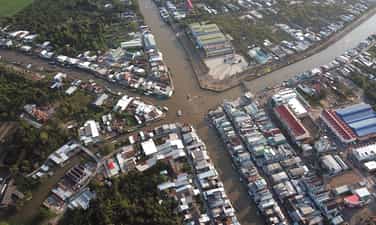
Nga Nam Floating Market
Anyone who comes to the Southwest and doesn't go to the floating market is truly missing out. This place is not only a place to trade but also an ideal destination for tourists to learn about the unique cultural features of the Western river region. In the Mekong Delta, there are many floating markets, but Nga Nam floating market still has a simple and idyllic character and is one of the oldest floating markets with a history of more than a hundred years, on a large scale in the region. Nga Nam floating market in Nga Nam town, about 60 km from Soc Trang city, is a place that attracts tourists to visit and experience Western river life. If you want to visit Nga Nam floating market, starting from the center of Soc Trang city, visitors can follow National Highway 1A to Phu Loc, then turn right onto Provincial Road 42 to arrive. The name Nga Nam appeared when the French dug the canal around Phung Hiep route. This canal and Xang canal cross Xeo Chinh canal to form five river branches flowing to 5 intersections: Ca Mau, Vinh Quoi, Long My, Thanh Tri, Phung Hiep. Nga Nam floating market usually opens quite early and lasts until 8 o'clock, then gradually dissipates. The busiest time is usually from 5am to 6am with the scene of hundreds of boats gathering, making a bustling noise all over the river wharf. This is the most ideal time to experience the floating market. Near the Lunar New Year, Nga Nam floating market is open almost from morning to night, making the atmosphere even busier. The variety of goods at Nga Nam floating market is very rich and diverse, from famous delicious rice from large rice granaries in the area to garden vegetables and fruits; from agricultural products and seafood to daily living and household items, etc. To help transmit information easily between sellers and buyers, Beo trees are an effective advertising medium. of the floating market type. This tool is usually made from old bamboo, bent straight, about 4-5 m long, with sharp corners for easy insertion and pliers when parked. The top is perforated to allow a rope to be skewered through to hang goods. Buyers just need to stand from afar, look at the Beo trees to observe and find the type of goods they want to buy. Currently, due to the increasingly improved road transportation system, some traders have switched to the form of onshore market groups. However, the floating market still operates quite bustlingly, still retaining the typical soul of the Western floating market, a tourist destination not to be missed in Soc Trang. Coming to Nga Nam market, visitors will see the panorama of the market like a vivid, colorful realistic painting. Colors from vegetables and fruits; the color of grandmother's dresses fluttering in the wind... In the middle of a vast river area, the sound of oars splashing water, invitations to buy goods on boats, canoes, five-leaf canoes, three-leaf canoes going up and down... create a joyful scene of buying and selling. Visiting the Floating Market, visitors can enjoy breakfast right on the boat with Soc Trang specialties such as noodle soup, vermicelli noodles, silkworm cakes and drinks including da coffee, sugar tea, fruit juice... Find and buy There's nothing better than visiting this place, eating some agricultural products, eating some breakfast on the river.
Can Tho
6199 view


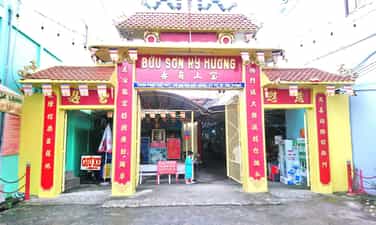
Clay Temple
If you have the opportunity to visit Buu Son Tu, visitors will have the opportunity to learn about the unique cultural, spiritual and religious life of the people of Soc Trang. Buu Son Tu, also known as Clay Pagoda, is located at 286, Ton Duc Thang Street, Group 1, Ward 5, Soc Trang City, Soc Trang Province. Clay Pagoda is not famous for its external architecture or large scale in area, but it is a unique pagoda in Vietnam because thousands of artifacts inside are shaped from clay and made from clay. There are pairs of candles and giant incense sticks. According to the elders, Buu Son pagoda was previously just a small hermitage built around the beginning of the 19th century, built by Mr. Ngo Kim Tay for the purpose of practicing at home. At first, the pagoda was made entirely of available natural materials such as bamboo, paintings, etc. It was not until the fourth abbot, Mr. Ngo Kim Tong (1909 - 1970), that the small temple was renovated and expanded. to have Buu Son throne like now. Buu Son pagoda has an area of about 400m2 with traditional architecture of wooden columns and corrugated iron roof, but this ancient pagoda contains many unique cultural and artistic values. There are nearly 2,000 large and small Buddha statues, along with sacred animals and worship objects, molded by artist Ngo Kim Tong in clay for 42 years (from 1929 to 1970). Traveling to Soc Trang, visiting Clay Pagoda, everyone admires and admires the genius who used his lifelong determination and love for Buddhism to create this miraculous work. Mr. Ngo Kim Tong is the son of Mr. Ngo Kim Dinh. When he was young, he was often sick. In 1929, when he was 20 years old, he fell seriously ill and thought he would not survive. The family had no choice but to take Mr. Tong to a mountain temple in An Giang province for treatment and to pray to God and Buddha. While taking medicine and practicing meditation and calming down, he gradually got better. Mr. Ngo Kim Tong became a monk and returned to the temple to become the fourth generation abbot, an artist who did not go to sculpting or painting classes, did not study with a formal teacher, but only through folk contemplation created amazing works. Clay sculptures have extremely rare religious historical value. The raw materials used for making statues are mainly clay, dug by Mr. Tong from fields a few kilometers away from the pagoda, brought back to dry, then put in a mortar and pounded with a pestle until smooth, filtering out all impurities and roots. trees, grass roots, take fine soil and mix it with sawdust to make incense (incense powder) and acacia acacia to create a fragrant mixture. At that time, he just started shaping the statues. The statues were smooth and not cracked. In addition, he also researched and applied support methods for sculpting statues to meet high aesthetic requirements. He used wire mesh and wooden trees to build the ribs, then used mosquito net fabric to cover it and covered it with mixed materials to make the statue. , the exterior is covered with a layer of metallic paint and varnish. Not only with his skillful and talented hands, but also with his extremely rich imagination, hundreds of large and small statues were formed without duplication. Each statue has a different look, clearly showing the spirit on each face. It is also the result of the mind of a Buddha-oriented person, the diligence, diligence, and quietness that brings sweetness to life. Mr. Ngo Kim Tong also created other works, the most prominent of which is the Da Bao tower built in 1939 when he was only 30 years old, about 4 meters high and very sophisticatedly designed. The tower has 13 floors, each floor has 16 doors, each door has a Buddha statue, in total Da Bao tower has 208 doors, 208 Buddhas and around the tower there are 156 winding dragons flying into the sky. tall, protecting the tower. Bao Toa is the second unique building built in 1940, about 2 meters high. Above there is a lotus flower with 1000 petals in an octagonal shape, below there are 16 fairies standing as attendants. The base of the tower is shaped like 4 animals of the four sacred animals (unicorn, dragon, tortoise, phoenix) and 12 unique, lively and impressive fish transformed into dragons. Looking at this tower and lotus flower as a whole, visitors will immediately think of a talented sculptor who took advantage of Buddhist teachings to create statues that speak the Buddha's meaning. In the worship space above the ceiling, there is hanging a chandelier called "Luc Long Dang" also made of clay, consisting of three peaks with 6 curved dragons symbolizing the six provinces of the Southwest region, their tails bunched together. each other, heads sticking out in all directions. The dragon's body is made entirely of clay with many delicate details, so the weight is quite heavy. At the bottom of the lamp is an upside-down lotus that radiates its petals to the altar. The lotus petals are quite thin, but according to the passage of time, Luc Long Dang has not fallen or chipped at all. This is a rare artistic masterpiece and the last work of his life. Around the pagoda, contributing to guarding the system of Buddha statues, there are many animal statues also made of clay. The most prominent and sharpest is the pair of Kim Lans holding their heads high in front of the altar in the middle of the hall, holding pearls in their mouths. The feet resting on the ball look so majestic, plus the statues of Thanh Su, Bach Ho, Long Ma,... some are gentle and some are very majestic. Clay Pagoda is not only famous for its thousands of statues made of clay, but is also known to tourists for its four rather special pairs of giant candles. In the last years of his life, he temporarily stopped making statues and cast candles to erect them in the main halls of the temple. He bought pure, unadulterated wax from Saigon many times with his trusted disciples, chopped the wax into pieces, melted it, and then "cast" the lamp. Because these lamps were too large, Mr. Ngo Kim Tong could not find a suitable mold, so he used roofing iron to make the mold. Pour wax into a large pan and cook continuously for many days until the tube was full until noon. 2 meters high. After a month, the new pairs of candles were completely dry. When the mold was removed, these pairs of lamps naturally took on the wavy shape of corrugated iron sheets. After several months of continuously doing this, he was able to cast six large candles (3 pairs). ), each weighs 200 kg, each pair is estimated to burn continuously for more than 70 years and two small candles each weigh 100 kg. The pair of candles was lit on the full moon day of July 1970 since the day Mr. Ngo Kim Tong The tree has been burning continuously for more than 40 years and nearly 1/5 of the tree remains. The works made from clay created by Mr. Ngo Kim Tong more than 60 years ago are still intact over time. However, what all tourists and scientists cannot explain is that all of the most famous and strange works in the world were created by a monk. I just finished 3rd grade at the village school and don't know anything about the art of painting.
Can Tho
5920 view


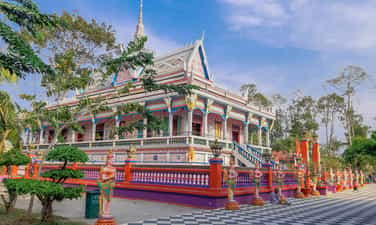
Chen Kieu Pagoda
Located in the Southern Khmer pagoda system in Soc Trang, Chen Kieu Pagoda is known as one of the pagodas with a "unique" architectural style that leaves a deep impression in the hearts of visitors. The outstanding feature of this temple is the walls. It is not evenly cemented, tiled or painted like other temples. The walls of this temple are covered with pieces of cups, plates, and ceramics that look very unique but extremely beautiful and aesthetically pleasing. Chen Kieu Pagoda, also known as Sa Lon Pagoda, is located in Dai Tam commune, My Xuyen district, Soc Trang province, located right on National Highway 1A, about 12 km from Soc Trang city, in the direction from Soc Trang city to Bac Lieu. The pagoda's Khmer name is Wath Sro Loun. For ease of pronunciation, the word Sro Loun is spelled Sa Lon. Sro Loun originates from the word Chro Luong - the name of a canal running along the village road that used to be near the pagoda, and that name is also used to name the pagoda. In 1815, Chen Kieu Pagoda began to be built with materials like leaves, wood, soil... like many other Khmer pagodas. During the war, under the devastation of bombs and bullets, the main hall of the pagoda was seriously damaged. In 1969, the pagoda was rebuilt according to today's architecture, including: Main hall, sala, stupa, place for prayer books, etc. During the construction process, due to lack of materials, the monks came up with an idea. The idea is to donate cups and plates from people in Phum and Soc to put on the wall. This idea not only saves construction costs but also creates impressive decorative motifs. Since then, the pagoda has also been known by the people by its second name: "Chen Kieu Pagoda". Khmer artisans cleverly took advantage of these cups and plates to decorate the walls and towers, creating a harmonious and impressive architectural work. New items are placed directly on the wall, or made into convenient fences surrounding hallways or stair handrails, while broken or chipped items are arranged and assembled into decorative patterns. fancy. The first impression when entering the temple is the three-entrance gate with three towers carved with vibrant patterns and colors in the traditional Cambodian Angkor style. Among the three towers, the middle tower stands out with a glass cage inside, enshrining a majestic sitting Buddha statue. Surrounding the pagoda is a fence decorated with the image of the dancing goddess Apsara, symbolizing peace and prosperity. On both sides of the entrance gate are two stone lion statues, facing the street as if protecting the temple. On the gate wall are the words Khmer and national language: "Sa Lon Pagoda (Chen Kieu)". Along the entrance to the pagoda are two rows of statues of the god Kayno (kerno), these are statues with the face of the fairy Apsara - symbolizing eternal beauty and the body of the god Garuda - symbolizing strength. The campus of Chen Kieu Pagoda is very large with many cool green trees, making visitors feel very comfortable. Like other Khmer pagodas, the roof of Chen Kieu Pagoda consists of 3 staggered roofs, the top roof being the smallest. At the edge of each roof layer there are decorative patterns, motifs, and traditional statues of Khmer culture, carrying the wish for peace and escape. The triangular roof is beautifully decorated like a colorful carpet exposed to the sky. The two ends of the knife on both sides are curved as if there is a spiritual communion with the savior of human souls, blessing and protecting sentient beings for peace and happiness. The most outstanding and impressive architecture on the facade of the main hall is the column heads decorated with the image of the winged goddess Kayno. These statues of the goddess Kayno are in a rising position to support the roof's fringe, creating a transition between the vertical direction of the columns and the horizontal direction of the roof. The main hall of the pagoda is spacious and airy, with 16 rows of large columns. Around the pillars are carved and embossed with images from Khmer cultural legends. On both sides of the wall are many paintings telling the story of Shakyamuni Buddha from birth until attainment of enlightenment. The walls and paintings are even more special when decorated and shaped with broken pieces of cups and plates. The worship space is a complex of 20 large and small Buddha statues, with many standing, lying, and sitting positions, arranged reasonably and artistically. The smoke of incense and the light of candles swaying with each gentle breeze make the already solemn temple even more solemn. In the middle of the courtyard of Chen Kieu Pagoda is a flagpole, with a vivid image of the Nagar snake spreading its 5 heads, referring to the legend of a snake spreading its head to protect the Buddha from the rain while he was meditating. The Nagar snake is an important decorative motif in Khmer Buddhist sculpture. The Khmer people of Soc Trang in particular and the South in general are influenced by Indian Buddhism, so Theravada Buddhism is the main religion that governs their spiritual life. That's why they only worship Shakyamuni Buddha, not other Bodhisattvas or Avalokiteshvara. Furthermore, Khmer people believe that their ancestors are snake mothers, so they worship snakes and snake images often appear in temples. Behind the pagoda is the Garden where Shakyamuni Buddha preached and entered Nirvana. This is an architectural complex consisting of many large and small Buddha statues, vividly simulating the process of birth, searching for truth, enlightenment until entering Nirvana of Buddha Shakyamuni. Chen Kieu Pagoda is a famous pagoda in Soc Trang, an indispensable spiritual pilgrimage site for the lives of people and the Khmer community. It is a sacred place for people to find peace and tranquility. Coming to Chen Kieu Pagoda, in addition to admiring the unique architecture of the pagoda, visitors also have the opportunity to learn about the culture of the Khmer people. For those who love to explore or check-in with ancient architectural works, this is an ideal place. Every corner of the temple can become an artistic background for thousands of likes, guaranteed to surprise many people when posted.
Can Tho
6118 view


My Phuoc Island
My Phuoc Islet with its fresh, cool climate, green trees, lush fruit in all four seasons, charming poetic scenery, generous, gentle, hospitable people... has become a green Soc Trang tourist destination. Attractive, attracting a large number of domestic and foreign tourists to visit, experience and relax. My Phuoc Islet, also known as Cong Dien Islet or Mud Dune, is located near the downstream end, down the Hau River, in the West - North, East - South direction, between the banks of the two provinces of Soc Trang and Tra Vinh, in the hamlet My Phuoc, Nhon My commune, Ke Sach district, Soc Trang province. The tip of the dune faces Hau Giang, Can Tho, the tail of the dune faces the East Sea, adjacent to Cu Lao Dung district, about 1km from the beginning of the island, about 40km from the East coast, about 25km from Soc Trang city center. If viewed from above, My Phuoc dune has an oval shape like the shape of a canoe or a cana fruit, the two ends are concave, the middle is bulging, the widest part is the section across the middle of the dune body. , diameter about 600m. My Phuoc Islet is about 5km long, with a natural area of more than 1,020 hectares, of which over 300 hectares of fruit trees are located, and currently has 540 households with more than 1,280 residents. According to the old people here, My Phuoc island was formed about 150 years ago. At first, the surface of the dune was very low, on the dune there were only mud flats, weeds, vines, some miscellaneous plants, mostly cork trees, and some wild animals and birds living. From the initial upland cultivation, people began to grow common fruit trees such as bananas, coconuts, citrus, grapefruit, sabo... and then developed other specialty orchards such as mangos, Longan, rambutan, durian, mangosteen... Perhaps because it is suitable for the soil and climate conditions, the fruits here grow very well, have a richer flavor, are more delicious and nutritious than other regions. other land. Traveling to Soc Trang to visit My Phuoc Island with its vast space and poetic rivers, you will definitely feel the cool breeze on the year-round roads lined with fruit trees. In addition, you can also participate in exciting entertainment activities such as visiting the garden, picking fruit yourself; cast nets, set nets to catch fish, pick vegetables; rowing canoes to collect cork, catching goby fish, diatoms, and catching chem carp; Fishing, bathing in the river... or making folk cakes, listening to Southern amateur music with rustic and lyrical "homegrown" folk songs, discovering rustic dishes with alcohol-based flavors such as snakehead fish boiled with wort, sour fish soup cooked with cork, snails boiled in coconut water dipped in rice... thereby understanding more about the lives of gardeners.
Can Tho
6016 view


Lung Ngoc Hoang Nature Reserve
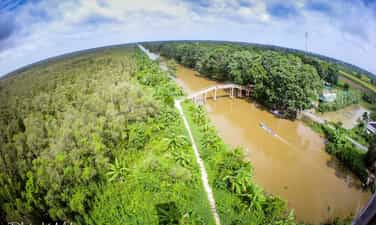
Lung Ngoc Hoang Nature Reserve is located in Phung Hiep district, Hau Giang province, about 40km from Vi Thanh city. With a total area of over 2,800 hectares stretching from the west of the Hau River to the U Minh region, not only is it known as the "green lung" of the Mekong Delta, Lung Ngoc Hoang is also the most unique biodiversity conservation place in the country today. In the local language, "lung" is a wild, swampy area of land. Lung Ngoc Hoang roughly explains it as "God's flooded lowland". According to folk legend, in the past, there were many herds of elephants (statues) moving and looking for food from one place to another. The herds of elephants caused land subsidence and landslides, forming valleys, puddles, ditches, ponds, and creeks. From time to time, the Jade Emperor descended to earth to visit here, so gradually this lung was named Lung Ngoc Hoang! Lung Ngoc Hoang is a wetland full of wildness and mystery, having existed for a long time. In the past, this place was known as the "dead land", flooded all year round, and weeds grew towering. If you get lost in this area, it is difficult to find the way out, due to the vast terrain and tangled vines, wild and deserted. According to the book "Can Tho Geography" (2003), about 120 years ago, someone came to exploit Lung Ngoc Hoang. Before 1945, there were many landowners who hired people with broken land to farm and exploit fish. Later, due to the war, Lung Ngoc Hoang was abandoned and became a revolutionary base during the two resistance wars against the French and Americans. Previously, this area was assigned to Phuong Ninh Forest Enterprise to invest in planting melaleuca trees, exploiting aquatic resources and protecting the environment. By 2002, Lung Ngoc Hoang Nature Reserve was officially established to become the most prominent destination of Hau Giang tourism. This place is known as a wetland and is home to hundreds of rare species of animals and plants, with hundreds of thousands of melaleuca trees growing nearly ten meters high one after another. Researchers said that the Lung Ngoc Hoang nature reserve has over 330 plant species with 224 genera and 92 families. Among these, there are 56 newly discovered species. Lung Ngoc Hoang is a diverse biological area with many flora of different wetland ecosystems. These are species of vines that grow under or on the stems of melaleuca, reeds, reeds, bongs... There are also quite a lot of terrestrial species such as cassava, hairy, mua, gua...etc. Lung Ngoc Hoang also gathers many rare animal species, including species listed in Vietnam and the world's red books such as hairy-nosed otters, turtles, cobras, etc. With a rich and pristine valley system combined with strictly protected melaleuca forests, Lung Ngoc Hoang is a suitable place for countless species of amphibians, fish, and shrimp to live. This place was once considered the fish's navel of the area west of the Hau River. To visit and explore the Melaleuca forest, you have to buy a ticket to rent bamboo sticks (also known as loin shells). Entering Lung Ngoc Hoang, visitors will feel like they are lost in a fairy-tale sky, peaceful and full of wilderness like Lung Sen, Lung Tran, Lung Chuoi Nuoc. Coming to Lung Ngoc Hoang, you will have the opportunity to take a canoe through the cool melaleuca forest, see firsthand the huge cajuput trees, spreading their roots like a unique dress... Visitors will encounter desolate fields as far as the horizon with flocks of teal and white storks fluttering their wings. The deeper you go, the wilder and more poetic the scenery becomes. More interestingly, you can go fishing and be guided in how to draw, cast, catch fish... just like a farmer. From the 21m high observation tower located in the center of Ngoc Hoang lung, visitors can see the panoramic view of the endless cajuput forest, winding canals... bringing a refreshing feeling when immersed in the cool, fresh green nature. You can go to the restaurant area with small leaf huts to enjoy delicious and attractive dishes such as: grilled snakehead fish, boiled eel, wild duck on the stove, boneless fish with bones, a famous specialty of Hau Giang. A meal with a strong Western flavor and very rustic in the poetic scenery of this forest will surely be an unforgettable experience for visitors.
Can Tho
6120 view


Long My cultural and historical area
From the center of Long My town, follow the inter-commune road through Thuan Hung and Xa Phien to Luong Tam commune, where Uncle Ho's temple remains. The monument was built on the northern land where the intersection of the Long My II and Nam Can canals intersect; 21 km from Long My town; located about 28km from Vi Thanh town, 78km southwest of Can Tho city. Long My was the revolutionary base of Hau Giang province and the Southwest region during the two resistance wars against the French and the Americans. Coming to Long My, visitors will visit Uncle Ho's temple in Luong Tam commune, established by Long My Party Committee and soldiers and civilians in 1969 when Uncle Ho passed away. The temple has now been restored more spaciously with many fences and the main temple, on a 1 hectare land area. Every year on May 19 and September 2, a large number of tourists from inside and outside the province come here to visit and commemorate. In addition, Long My also has a "victory relic of 75 puppet battalions" in Vinh Vien commune, this is a project that helps visitors find the glorious past of their ancestors. In the relic area, there are also many play and entertainment areas that are being increasingly improved to attract more tourists to come here. Coming to Long My, in addition to visiting relics, tourists can also see storks and other unique birds typical of the southern river region. This is the most unique stork garden in Hau Giang province with tens of thousands of storks of all kinds and dozens of bird species...a place that still retains its original pristine features. You will feel your soul at extraordinary peace when you close your eyes and listen to the symphony of wild birds... Here, visitors can also enjoy freshly picked fruit from the garden and watch the sunlight. The afternoon glimmers through the trees with flocks of birds spreading their wings to fly back to their nests... Truly a peaceful place away from the noise and bustle of a city full of worries and chaos.
Can Tho
6376 view


Nga Bay floating market
Floating markets are a typical cultural feature of the Mekong Delta. When talking about floating markets in the Mekong Delta, it is impossible not to mention Nga Bay - Phung Hiep floating market. Familiar images to tourists are boats filled with goods and tall trees to introduce the products being sold so that buyers can easily choose. Not only is it a unique cultural feature, the "soul of the river", Nga Bay floating market also retains the footsteps of its ancestors, demonstrating the cultural practices of its ancestors for nearly a century on the rich alluvial land. fat. Nga Bay floating market, also known as Phung Hiep floating market, was once famous for its history of more than a hundred years and the busiest trading atmosphere in the Mekong Delta. Nga Bay floating market was formed around 1915, after 10 years of digging canals here. The market is located right at the intersection of 7 rivers: Cai Con, Mang Ca, Bung Tau, Soc Trang, Xeo Mon, Lai Hieu, Xeo Vong. Many craft villages have been formed along the river such as boat building, weaving, farming... With the Nga Bay floating market, the gathering at 7 river branches has become a unique feature that is difficult to mix and will be an attractive mystery. Those who like to travel to the West should explore, because each branch of the river has a different unique craft village... This place has also entered poetry and music, making it even more captivating. In the South, there are many floating markets, but none is as "famous" as Nga Bay market in terms of scale, affluence as well as its reputation and status. In the past, the central area of Nga Bay market had over 1,000 large and small boats; During peak Tet holidays, there may be more than 3,000 units; There are also hundreds of boats across. At night, oil lamps and vase lanterns float in the water waves all night long like a lantern festival, it's so exciting.. Nga Bay floating market usually opens in the early morning every day. From 5 to 8 am is the peak time for buying and selling fresh agricultural products. From then until the afternoon and evening, the market continues to operate. Goods at the floating market are extremely diverse, especially fruits. According to each season, looking at the bustling boats and boats full of fruit, visitors will know which fruit is the main crop. One point that creates an unforgettable impression is when the sun rises, which is also the time when cargo boats spread out in many directions. Visitors will feel the rich flavors of rustic dishes, sold on small boats: hot porridge, vermicelli, noodles... or sip a cup of coffee and listen to the story of "Love". Mr. Selling Mat" is extremely interesting. From early morning, when the sky was still covered with a thin mist, hundreds of boats of people bustled here like a festival. We can encounter many different colors and sounds creating a bustling, cheerful atmosphere... The bright red color of rambutan, the bright yellow color of mangoes and the sweet aroma of durian... fresh fruits are picked during the day in time for the early market. Looking from above, the whole river looks like a colorful shimmering silk strip. All are delicious Southwestern fruit specialties at very affordable prices. In particular, here there is no need to advertise or sell, each boat has a long tree hanging the items it sells, like a "living sign", buyers do not have to waste time searching. In addition, the market also has small boats selling food that skillfully weave their way through large boats. In 2002, Nga Bay floating market (Nga Bay town, Hau Giang) was moved to a location on Ba Ngan canal in Dai Thanh commune, about 3 km from the old location because the market was too busy and many vehicles were anchored. traffic safety, pollution... Since being moved to Ba Ngan canal, the market is no longer bustling and is gradually sinking into oblivion because of the scarcity of boats and boats, not meeting the sightseeing needs of tourists. The bustling image of buying and selling "on the wharf under the boat" in the past now only remains in the memories of the people here. To save the Nga Bay floating market and develop Hau Giang river and river tourism, in 2015 Hau Giang province invested in a road system, tourist wharf, power supply, lighting, and water supply and drainage systems. It is expected that after completion, Nga Bay floating market will be relocated to its old location to become a tourist highlight, not only for Nga Bay, but also for Hau Giang province.
Can Tho
5999 view


 AI Travelviet