
 vn
vn en
en ja
ja ko
ko zh
zh











List of tourist attractions (80)

Bach Dinh
Bach Dinh is called by the French name Villa Blanche meaning white villa, located on the side of a large mountain in Vung Tau city at 4 Tran Phu Street, Ward 1, City. Vung Tau. The front facing the sea and the back leaning against the mountain give Bach Dinh a solid position. Bach Dinh is a 3-storey building, 19m high, 25m long, the entire house is whitewashed, with domed doors and tiled roof. When visiting the villa, visitors can see French architecture from shape to decoration with very artistic decorative edges. White Palace was built from 1898 to 1902, used as a resort for the Governor General of Indochina, Emperor Bao Dai and many Vietnamese Presidents. This is also where the French colonial government imprisoned King Thanh Thai from September 12, 1907 to 1916. There are 2 ways to get to Bach Dinh. If you go by car, there is a winding road running under the forest of bamboo trees leading up to the lobby. There is also a walking path through 146 ancient, discreet steps between two rows of aged porcelain. Bach Dinh has a strong French breath, coming here you can see the characteristics of French architecture. The basement of the villa is used for cooking, the ground floor is used as a place to receive guests. The ground floor is also decorated with ancient artifacts used for interior decoration such as: Twin vase with adoring birds, Royal sofa set dated Khai Dinh year 1921, pair of African elephant tusks 170cm long, set of 5-piece triptych Thai Phuc – Loc – Tho. Because of the bold French architecture, the upstairs has many windows, each window has a different view, looking out at the surrounding scenery is very interesting, standing from here the cool wind blows through the window. The airy floor is suitable for a place to rest. The raw materials to decorate Bach Dinh are mainly enameled porcelain. When walking around, visitors will see on each wall are the faces of beautiful European women, a pair of peacocks spreading their wings to show off sparkling silver dots, a pair of carp winding as if they want to turn into dragons... Every detail is sharp. enhances the beauty of Bach Dinh. In particular, visitors cannot help but be surprised by the 8 porcelain busts, in the style of ancient Greek art, surrounding 3 walls of the mansion. At dawn or dusk, the sunlight shines in, making the statue even more sparkling and magnificent. Bach Dinh not only attracts tourists by its architecture but also by its poetic scenery. When arriving here, visitors cannot help but be surprised as if they are lost in an ancient castle in the middle of a mysterious forest. In the rainy season, the forest surrounding Bach Dinh is endlessly green, each branch of the pine tree spreads out an umbrella to cover the path. During the falling leaves season, you can see plumeria flowers everywhere, the entire road to Bach Dinh is filled with red, white, and bright pink, both the road and the garden. With a prime location, from Bach Dinh, you can see the Front Beach, have a panoramic view of the sea, and visitors can feel the breath of Vung Tau city. Currently, Bach Dinh is used as a museum to display a collection of rare ceramics of the Kangxi period salvaged from ancient ships that crashed in the Hon Cau - Con Dao area, cannons and many other valuable artifacts.
Ho Chi Minh City
6366 view


Sakyamuni Buddha Dai
Shakyamuni Buddha Dai is located on a 28-hectare campus on the northern slope of Big Mountain, at 608 Tran Phu, Ward 5, Vung Tau. This is a famous religious tourist attraction in the coastal city of Vung Tau. The Sakyamuni Buddha Dai complex can be temporarily divided into the following areas: Pagodas and the Buddha Statue Garden. Thien Lam Pagoda is the main temple, located right at the main gate of the campus, facing Tran Phu Street. From Tran Phu Street up the mountainside, the campus is divided into 3 levels. The three gates and flower garden are at the lowest level, the second level includes a number of auxiliary works, the third level at the top includes the Thien Lam pagoda and the Buddha statue garden. Past the Tam Quan gate is a set of steps leading up to the level 2 ground on the hillside. After a small yard, continue to the quite steep set of stairs leading straight to the main temple of Thien Lam Pagoda - the lowest position of the level ground. 3. Thien Lam Pagoda is a fairly simple temple built around 1957, by a Vietnamese civil servant in the French colonial government to practice after retiring. In addition to Thien Lam Pagoda, in the Shakyamuni Buddha Temple campus, there are also a number of other pagodas, including Ho Phap Pagoda and Hoa Son Pagoda, both located in the area behind the Relics Worshiping Tower and the statue of Duc Phuc entering Nirvana. Ho Phap Pagoda was built in 1970, initially named Tinh That Thien Hue, and in 1972 it was changed to Ho Phap Meditation Hall. The new temple was completed in 2004 in a location next to the Dharma Protector Zen Hall. Located quite close to Ho Phap Pagoda is the lovely small Hoa Son Pagoda, but in a higher position on the mountainside, go from the area in front of the Buddha statue entering Nirvana, up a series of stairs of several dozen steps to reach it. Hoa Son pagoda gate Hoa Son Pagoda was opened in 1969 by the late Venerable Thich Hue Chon (1943 - 2019) - initially it was just a simple thatched hermitage - for practice, then gradually built up to its current form, basically still is a small, simple but elegant temple. A very important part of the Shakyamuni Buddha Dai complex is the garden of Buddha statues, recreating the main highlights in the life of Buddha Shakyamuni. From Thien Lam pagoda, go through a set of stairs to go up to the Buddha statue garden complex. The statue of Bodhisattva born is placed on the same level as the main temple of Thien Lam Pagoda, right next to the stairs leading to the clusters of statues above. The statue is shown as a boy pointing one hand to the sky. The cluster of statues representing the next stage of the Buddha's life is the cluster of Bodhisattvas who left home, arranged on a high slope to the left of the stairway leading from Thien Lam, to the right of this path, facing the cluster. The Bodhisattva statue of monkhood is a cluster of statues of Elephants and monkeys offering fruits. The cluster of Bodhisattva statues shows the image of the Buddha becoming a monk, in the image of Prince Siddhartha with his hair cut off, next to his servant and the white horse Kien Trac. The most important work of the entire complex: Shakyamuni Buddha Dai - used as the name for this entire architectural complex - represents the moment when Bodhisattva attained enlightenment. Going back in time to the 1940s of the last century, a Sri Lankan monk, Venerable Narada Maha Thera, during a lecture in Vung Tau, met and became acquainted with a Vietnamese civil servant (later is the person who built Thien Lam pagoda to practice). In 1960, he returned to Vung Tau and often stayed at Thien Lam Pagoda. He planted here a Bodhi tree, brought from the ancient capital of Anuradhapura of Sri Lanka (this tree was extracted from the original tree in Bodh Gaya - said to be the place where the Buddha attained enlightenment), and at the same time he raised the idea of The idea was to build a stupa here to worship the Buddha's relics. The idea of building a Relics Worship Tower proposed by Venerable Narada was immediately responded to by Buddhists. Besides, they also proposed to build more Shakyamuni Buddha Dai - also known as the Golden Buddha statue - and many Buddhas. He contributed financially to build this statue. The statue's pedestal has an octagonal surface and is 5.6 meters high. The Buddha statue sitting on a lotus throne is 6 meters high, completed in 1962 and in the body of the statue are placed 3 jewels of the Buddha's relics. The cluster of statues of the Buddha turning the Dharma wheel is placed in an octagonal house, decorated with the statue of the Buddha turning the Dharma wheel sitting on a lotus flower, and the five brothers Kieu-Tran-Nhu sit and listen to sermons in the Deer Park garden. Venerable Kieu-Tran-Nhu was the first disciple of the Buddha to attain Arahantship, the first member of the Sangha. He and his brothers - known as "the five brothers Kieu-Tran-Nhu" - were the first to preach to the Buddha during the turning of the Dharma wheel of Buddhism. Deer Park is one of the sacred places of Buddhism in the city of Sarnath, Uttar Prades state, India - where Buddha Shakyamuni is said to have preached the first sermon (Dharma Wheel Sutra) to his disciples. first son (brothers Venerable Kieu-Tran-Nhu). The cluster of Elephant and Monkey offering fruit statues is placed in the area between the Bodhisattva cluster and the Buddha turning the wheel of Dharma. This cluster of statues tells the story of a white elephant and a white monkey who were both lords of their flock. When he was old, he was no longer respected by the group, so he became depressed and went away to hide in the deep forest. He happened to meet the Buddha practicing meditation. He was inspired by him and happily volunteered to serve the Buddha. The statue of Buddha entering Nirvana is placed at the highest position in the Buddha statue garden. From the area of clusters of Buddha statues turning the Dharma wheel, elephants and monkeys offering fruit nearby, one must pass a number of stairs to reach the area where the Buddha statue enters Nirvana. From the front yard of this cluster of statues, there is a small path leading to Hoa Son Pagoda mentioned in the previous section. The Buddha statue lies facing west, more than 12 meters long, 2.4 meters high, around the pedestal there are statues of 9 Bhikkhus standing with their hands clasped. The last architectural cluster in the Buddhist garden is the tower worshiping the Buddha's relics, which was mentioned when Venerable Narada proposed the idea of building it in 1960. After a period of fundraising, on June 4 /1961 took place the ceremony of laying the first stone to build the tower; The official construction groundbreaking ceremony was conducted on July 20, 1961. Construction was completed on January 30, 1962, and the inauguration ceremony was held more than a year later, on March 10, 1963.
Ho Chi Minh City
6437 view


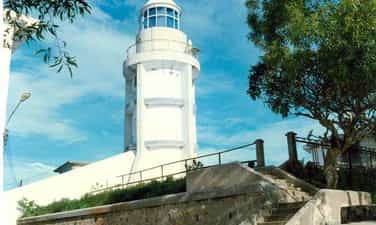
Hai Dang Vung Tau
Vung Tau lighthouse is located at the top of Tao Phung mountain (ward 2, Vung Tau city, Ba Ria - Vung Tau province), open from 7:30 a.m. - 5:00 p.m. every day (depending on time). This is a tourist destination that many people tell each other that they must visit when traveling to Vung Tau. Vietnam has 79 lighthouses spread across the country, but Vung Tau lighthouse is the oldest lighthouse. Vung Tau Lighthouse is an architectural work in Ba Ria - Vung Tau province, built by the French in 1883 with the purpose of meeting the shipping needs of foreign merchant ships and the French military. Vung Tau lighthouse has an area of more than 3400m2 including many areas such as the lighthouse, customs tower, bunker,... Vung Tau lighthouse column has white tones, designed in a cylindrical style with high height. about 18m, the road is about 3km. The lighthouse column is equipped with lights that turn on every night and can illuminate a distance of up to 63km. Currently, Vung Tau lighthouse is still operating to support ships and boats traveling at sea. To get to the top of Vung Tau lighthouse, you need to go through a solid tunnel, then conquer the spiral staircase with 55 steps. Inside the lighthouse, you will admire the beauty of a nostalgic, Western-style architecture. Standing on top of the lighthouse, you will enjoy the cool breeze coming from the sea. If you choose Vung Tau as a vacation destination after stressful working hours, remember to go to the top of the lighthouse, the winds here will definitely relax your spirit. Not only is it cool, this valuable location also gives you a panoramic view of the beautiful Vung Tau city. If you have a lot of time, take a tour around the Vung Tau lighthouse and you will discover a very large water tank providing domestic water for the people here and a garden of decades-old plumeria flowers blooming. The whole corner of Vung Tau lighthouse shines brightly. Vung Tau lighthouse is about 15km from Vung Tau city center (equivalent to a 30-minute drive). If you ride a motorbike, the following route to the lighthouse is the most popular route, you can refer to: From the center of Vung Tau city, go to Thirty Thang April street, then turn to Pham Hong Thai street. At the end of Pham Hong Thai street, turn left to enter Le Loi street. You continue to run to the intersection, then turn right to enter Hoang Dieu Street. Go to the end of Hoang Dieu street and turn left to see Bai Truoc park. From Bai Truoc Park, you head straight to Ha Long Street. You meet Vung Tau hydrofoil wharf, move a few dozen meters further to Duong Dong Cruise, then turn left Go another 240m, turn right and see Vung Tau Lighthouse Before reaching the lighthouse, you have to drive around Nui Nho to enter. The scenery here is highly praised by many tourists for being so beautiful. The road curves close to the edge of the mountain, surrounded by cool green trees that shade the entire corner of the road. You can drive slowly to enjoy the peaceful atmosphere of the scenery here or take a few photos to capture the beautiful scenery here.
Ho Chi Minh City
6237 view


Long Phuoc Tunnels
Long Phuoc tunnel relic is about 7 km from Ba Ria city center. This is a creative work, a heroic testimony of our army and people during the two resistance wars against the French colonialists and the American imperialists. Formed right in the area temporarily occupied by the enemy, Long Phuoc Tunnels originated from people digging tunnels to avoid enemy bombs and terrorist attacks. The movement of all people to dig secret tunnels was then launched by Long Phuoc commune officials. In early 1946, Long Phuoc had more than 300m of tunnels 3 - 5m deep underground. From the tunnel system, the guerrillas and people of Long Phuoc continuously broke up many raids, including a major raid in October 1949, ensuring the safety of the Xuyen Phuoc Co base area, the resistance base of the province, and is also the focal point of communication between the central government and the Southeast. During the anti-American period, Long Phuoc tunnels expanded to most hamlets in the commune. The soldiers and people of Long Phuoc used the tunnels as a springboard to attack the enemy. The US imperialists had to use planes to spread bombs, artillery shells to plow, tanks, bulldozers and thousands of infantry to attack the tunnels. After that, the tunnel system was expanded deeper and longer. The tunnels have secret vaults to store food and weapons; There is a place to treat wounded soldiers; There are continuous fighting fortifications in all 5 hamlets of Long Phuoc commune. The tunnel under the tunnel spreads in the shape of a spine 2-3m above the ground, the tunnel is more than 1.5m high and more than 0.7m wide, people inside can walk and move easily. After liberation, Long Phuoc Tunnels were restored and renovated to become a tourist attraction, a place for the young generation to learn about the fighting traditions of their ancestors on the land of Long Phuoc. The Long Phuoc Tunnels revolutionary historical relic was ranked as a national relic in 1990. This relic is the pride and epic of the people of Long Phuoc and the entire Ba Ria city. Therefore, the investment and embellishment project of Long Phuoc Tunnels was approved in 2017. Accordingly, above the ground, a 3-storey traditional house will be built in the style of a pagoda, a tiled roof, walls covered with unburnt bricks and decorative tiles. New construction of the relic management board's house with an area of 115 square meters. Construction of 4 new wartime houses in the Dinh-style house, each with an area of more than 100 square meters. Underground, more than 700m of tunnels were repaired using the method of reinforcing the walls of cement tunnels and covering them with clay. In addition, many other auxiliary items were also built. Currently, visitors can directly experience moving inside the tunnels to see the ingenuity as well as the hardships during wartime. In addition to attracting tourists, this monument is also very suitable for exploration trips to learn about history by experts, students and youth group tours of origin.
Ho Chi Minh City
6437 view


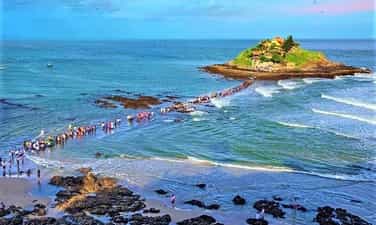
Hon Ba
Hon Ba in Vung Tau is a small oasis in the middle of the sea with an area of about 5000m2. It is located quite close to the mainland so it is visited by many tourists. This is a very attractive spiritual tourist destination, on the island there is the famous sacred Ba Temple. In addition, visitors coming here can also admire the beautiful sea path connecting Hon Ba and the coast. In terms of location, Hon Ba is located in the Back Beach area of Vung Tau city, only about 200m from Nghinh Phong Cape and the foot of Nho Mountain. If you want to see the whole panorama of Ba Island, you can try climbing on the shoulder of the Christ statue, from here you will have a panoramic view of the entire scenery of this island. To facilitate the exploration of religious culture at Hon Ba and travel to Vung Tau, you should go on worship occasions such as January, April, July, and October of the lunar calendar each year. For tourists who want to combine a visit to Vung Tau, the period from May to October will be the best, at this time there is little rain and mild sunshine, making it extremely ideal for sightseeing. In the period from November to April, Vung Tau will have quite hot weather. Ba Hon Ba Vung Tau Temple is definitely the first place that many tourists will want to visit. The name Mieu Ba was born in the late 18th century. The temple was built to worship the Water Dragon God to pray for good weather and wind so that fishermen can feel secure when going fishing. Ba in the word Mieu Ba means Thuy Long Than is a female deity. In order for Ba Temple to be as spacious as it is today, the people of Thang Tam village have donated money many times to restore the temple. Ba Temple is also associated with an extremely sacred event. In 1939, a French officer, Archinard, ordered 3 cannon shots to be fired at Ba Temple. Only one hit out of 3 shots. Just a few days later, this officer lost his life at the temple due to careless use of a gun. This made the French army feel that Ba Temple was very sacred and no longer dared to destroy it. In addition to spiritual tourism at Ba Vung Tau island, you will also have the opportunity to admire the natural scenery here. There is a source of fresh air here so the vegetation is very developed with the green colors of poplar trees, coconut trees, areca nuts and plumeria flowers. This place is also one of the few places untouched by human hands, the landscape still retains its natural wildness so it is very suitable for exploration. When visiting Hon Ba, you need to note the following. First, you need to move carefully, because there are many sharp rocks and broken barnacles along the way. Be careful because the rock surface is quite slippery, remember to wear shoes to better protect your feet. When traveling, there will certainly be many other tourists with you, so you should be careful of pushing and jostling. Because this is a spiritual place, remember to choose discreet clothing when visiting. The sea route to Ba Vung Tau island usually appears from 4:00 p.m. to 6:00 p.m., so remember to prepare drinking water and snacks. Finally, do not throw trash into the sea or at tourist attractions to join hands to protect the marine environment.
Ho Chi Minh City
5945 view


Con Dao
Con Dao - voted one of the most beautiful islands in Asia, one of the most beautiful empty beaches in the world - is currently becoming an attractive tourist destination for many domestic and international tourists. Pristine nature, mysterious spiritual stories, a heroic revolutionary history... inspire many visitors to come here. Con Dao is an archipelago off the coast of Ba Ria - Vung Tau province, far from City. Vung Tau 97 nautical miles. Because it is located in the middle of the sea, visitors to Con Dao will have the opportunity to explore beautiful beaches and bays. Some famous beaches and bays in Con Dao include: Dam Trau Beach, An Hai Beach, Lo Voi Beach, Dam Tre Bay, Con Son Bay,... Con Dao is associated with the resilient, heroic and tragic revolutionary history of our nation. Tourists who do not know what Con Dao has to offer can visit relics, landmarks and historical evidence such as: Dao Lord's Palace, Con Dao Museum, Historic Pier 914, Con Dao prison, etc. Con Dao seafood you should try to enjoy is Nang's breast snail, cone snail, giant ear snail, hand snail, red lobster, shrimp, red grouper, sun squid... and other types of sea fish. Takeaway specialties are widely sold at Con Dao market, including fresh and dried seafood and souvenirs. Tourists like almond seed jam and earthen ginseng wine the most. The taste of Con Dao ginseng is mildly sweet, pungent and fragrant, quite similar to Korean ginseng. Folks often use ground ginseng roots to soak in wine, stew chicken, and stew duck for nourishment...
Ho Chi Minh City
6040 view


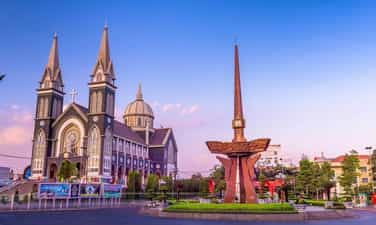
Phu Cuong Cathedral
Phu Cuong Cathedral is also known as Phu Cuong Diocese Cathedral. The church is located at Phu Cuong intersection so you can easily find it. In the middle of a bustling and crowded intersection, Phu Cuong church is like a quiet note in the city. Outstanding architecture and classic gray-green paint make the church even more attractive. Phu Cuong diocesan church was built in 1864, initially as a brick church and renovated in 2014 with its current appearance. This is a unique architectural work with a combination of classic and modern, with typical domes in the style of a Catholic church, with pointed roofs and arched windows, with many similarities to the Catholic Church. worship My Tho Cathedral. Phu Cuong Cathedral possesses unique architecture and a large cathedral area, which is what attracts tourists to visit. The church is located in the center of Thu Dau Mot, the campus has many green trees, bringing a peaceful, quiet and deeply religious space to the people of Binh Duong. The church was built with the typical architectural style of Catholic cathedrals popular in Western countries. The cathedral area is very impressively built, the dome is up to 41m high, surrounded by sparkling colored glass windows. The entire church architecture is covered in elegant gray and white tones, with classic and artistic gothic patterns. In the center of the church campus is a solemn and ancient statue of the Virgin Mary. Going deep into Phu Cuong Cathedral, you will enter a sacred Catholic cathedral. This room is where the main ceremonies of the church are performed, and can accommodate up to nearly 300 people. On the walls of the cathedral are many paintings of Jesus and the ideas that Catholics want to spread to their parishioners. In addition to the cathedral area, around the campus of Phu Cuong Cathedral, there is also space for rest rooms, a library, a community learning area, and a church office. From here, you can also easily move to other famous spiritual tourist attractions of Binh Duong such as Hoi Khanh Pagoda, Tibetan Temple, Ba Thien Hau Pagoda, etc. While visiting Phu Cuong Cathedral, you need to note a few things below: Because Phu Cuong Church is a place of religious activities and has sacred religious significance, during the visit you should choose polite and neat clothes, do not talk loudly, and do not joke loudly. The church is open to everyone to visit. However, you need to limit your access to private areas of the church and absolutely do not enter areas with prohibited signs. If you attend church services, you need to listen quietly, turn off your phone, and show respect and reverence. If you take photos, do not use flash mode to avoid affecting others. Do not litter the church grounds, do not smoke or take actions that affect the church landscape.
Ho Chi Minh City
6473 view


Phu An Bamboo Village
Phu An bamboo village, also known as Di An bamboo village, is a famous destination in Binh Duong. With fresh natural scenery and peaceful space, this place attracts a large number of tourists to visit. Phu An Bamboo Village is memorable for its lush green bamboo forests shady in the summer afternoon, its gentle winding streams and its space like a "fairyland". Coming to the bamboo village, visitors can participate in ecological activities such as walking, sightseeing, fishing or simply enjoy the quiet space when camping. With rich nature and diverse activities, Phu An bamboo village promises to be an ideal destination for those who want to escape urban life and immerse themselves in fresh nature and experience unique culture. of Binh Duong. Visitors can visit Phu An bamboo village at any time of the year. However, there are two periods that are considered the most ideal: March to May, September to November. Phu An Bamboo Village has a beautiful natural landscape, with green fields, forest ponds and abundant plants. Visitors can participate in activities such as walking, sightseeing, fishing and camping to enjoy the natural space. Visitors can enjoy unique dishes such as grilled snakehead fish, grilled honey chicken, grilled spring rolls... These dishes are made from fresh ingredients, guaranteed to leave you with an unforgettable impression. . Besides, at Phu An Bamboo Village, you can participate in folk games such as tug of war, rope jumping, archery or hammock burning. This is an opportunity to experience the culture and history of the area. In particular, visit craft villages because Binh Duong is famous for traditional craft villages, and Phu An bamboo village is no exception. Visitors can visit ceramic villages, conical hat villages and bronze casting villages to learn about production technology and shop for unique handmade products.
Ho Chi Minh City
6350 view


Chau Thoi Pagoda
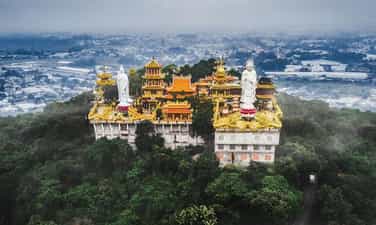
Chau Thoi Pagoda is located on top of Chau Thoi mountain, a mountain in Binh An commune, Di An district, Binh Duong province. Chau Thoi Pagoda is 20km west of Thu Dau Mot city, adjacent to Dong Nai river and located close to major roads to major cities such as Ho Chi Minh, Bien Hoa, Ba Ria - Vung Tau... Thanks to its location With a prime geographical location, Chau Thoi pagoda attracts many domestic and foreign tourists every year to visit and worship the pagoda. Based on research sources, Chau Thoi Pagoda was founded by Zen Master Khanh Long in 1612. At that time, Chau Thoi Pagoda was still a small hut and was called Hoi Son Tu. With more than 300 years of history, Chau Thoi Pagoda has gone through 13 generations of abbots. To have the present spacious appearance, the pagoda has undergone dozens of restorations. In 1930, the Ancestral Church and lecture hall were restored; In 1971, cement was used to build 220 climbing steps. These 220 steps are still used today to serve climbers; In 1993, the main hall was restored. In recent years, other items such as stupas, Buddha statues, dragons... have also been gradually built and completed. Chau Thoi Pagoda is about 30km northeast of Ho Chi Minh City center. In Ho Chi Minh City, you can choose car, motorbike or bus to get to Chau Thoi Pagoda. Car, motorbike: with a distance equivalent to 30km, if you travel by these two means, it will take about 60 minutes. First, run along Truong Chinh Street to Hanoi Highway at Tan Thoi Nhat -> go along Hanoi Highway and National Highway 1K about 25km to Chau Thoi, Binh An, Di An -> Continue to Chau Thoi You will arrive at Chau Thoi mountain in Binh Thang commune. At this point, you will have two choices: either climb 220 steps to get to Chau Thoi mountain, or run straight up a bit and there will be a path to Chau Thoi pagoda. Bus: from the Western bus station, you take bus 601 to go to Bien Hoa city, Dong Nai, the time will be about 60 minutes -> take bus number 5 going towards Bien Hoa Cho To, this bus will go straight to Chau Thoi mountain, travel time is about 10 minutes. If you choose to go by road, at the 170th step you will see a large rock right in the middle of the path, especially this rock is always used by temple visitors to burn incense. People often call that rock by the familiar name "Mr. Ta", the god who guards the temple door. In the 1900s, during the process of building 220 walking stairs, people worked together to dig out a lot of stones. However, only "Mr. Ta" can't get rid of him no matter what he tries. At that time, the abbot used paint and wrote on it some Chinese characters meaning "Ta Lao Trung Son" or Mr. Ta who guards the mountain. From then on, everyone, whether local people or visitors to the pagoda, wholeheartedly worshiped "Mr. Ta". At Chau Thoi pagoda, people rumored that couples in love should not go to the pagoda together because this place is an ancient temple that "kills love". However, this is still a baseless rumor because every day many couples come to the temple to pray for love. To this day, they are still happy and visit the temple on special occasions. Visitors to Chau Thoi Pagoda, at the height of the pagoda, can see the clear, quiet lake surface combined with shady green trees, creating a beautiful scene that is likened to a fairyland. Scenery of Binh Duong. Currently, Chau Thoi Pagoda is a unique, diverse and rich architectural complex including the main hall, the Ngu Hanh Nuong Nuong shrine, Linh Son Thanh Mau, Dieu Tri Kim Mau, Thien Thu Thien Nhan and Ngoc shrine. Emperor God. The most unique architecture of the pagoda is the roof, where the workers used each piece of porcelain to form 9 dragons. A special feature is that 9 dragons look out in 9 different directions with the purpose of guarding and sealing the pagoda. Coming to Chau Thoi Pagoda, visitors will have the opportunity to admire large Buddha statues and Avalokiteśvara Bodhisattva statues hand-cast by craftsmen in bronze or marble. In particular, the pagoda also preserves three ancient stone Buddha statues and a Guanyin statue made of jackfruit wood that is up to 100 years old.
Ho Chi Minh City
6583 view


Thuy Chau tourist area
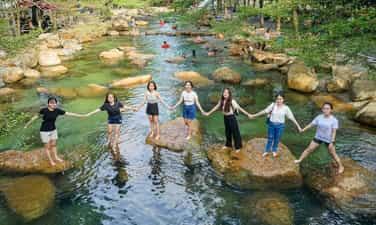
Thuy Chau eco-tourism area is considered a green land in the emerging land of Binh Duong. Currently, the total area of the tourist area has reached hundreds of thousands of square meters, all covered with green trees. Inside, there are a number of lakes and artificial waterfalls that contribute to bringing a cool, airy space like in Da Lat to visitors coming here. When traveling to Thuy Chau, you can freely check-in at different scenes. Whether you want a majestic or romantic style, this place has it all. In addition, you can participate in interesting entertainment activities to forget all the troubles of everyday life. Not simply a place for you to come and participate in the activities that the resort organizes, you can still comfortably prepare your own picnic activities. Overall, this is a tourist area highly appreciated by tourists for its thoughtfulness in organization to bring the most comfort to visitors. Although the landscapes at Thuy Chau tourist area are mainly artificial, when you come here and take pictures, you will be surprised with the naturalness of every line. You can rest assured because there are many projects and locations here that can help you own a great album from land to water. The first to mention is the artificial waterfall Thuy Chau, this is a waterfall with an area among the top "huge" artificial waterfalls in Vietnam, bringing a majestic scene no different from the waterfalls created by nature. In addition, another super artistic point is that the streams and rocky crevices are created lifelike, promising to bring you stunning photos. With the cool air and green color of the trees, it is really difficult to distinguish this as an artificial tourist area. But no matter what, if you only have a short time on the weekend and still have beautiful and luxurious photos, this place deserves ten points for "view" photography. Amidst the hustle and bustle of the city, a green paradise near the city center like Thuy Chau tourist area will be an ideal stopover for long, busy days. Relaxing and immersing yourself in the peaceful scenery, enjoying the fresh air, there's nothing better! When you come here, you can freely participate in interesting underwater activities. If you are a lover of something close to nature, you can immerse yourself in the cool stream at Thuy Chau waterfall. If you are the type of person who loves modernity, go right to the swimming pool, and remember to take some classy photos. When you come here, you can freely participate in interesting underwater activities. If you are a lover of something close to nature, you can immerse yourself in the cool stream at Thuy Chau waterfall. If you are the type of person who loves modernity, go right to the swimming pool, and remember to take some classy photos. Not only that, a place that can help you feel like you are going to a zoo combined with tourism is the freshwater crocodile lake. If you go to river resorts and you can sit on a fishing boat, then when you go to Thuy Chau you can also fish, but crocodile fishing. Sounds like quality, right? When traveling during the festival, you will enjoy other unique artistic performance activities in the bustling, crowded atmosphere of the holiday. Because of the thoughtfulness from construction to organizing fun activities, this young and dynamic Thuy Chau tourist area has attracted a large number of tourists. As for food, if you go on a picnic with your family, you can prepare food in advance and bring it along. If you're traveling for fun, don't worry, the restaurant inside the tourist area is ready to serve the region's best dishes at affordable prices.
Ho Chi Minh City
6424 view


Wind and Water Coffee
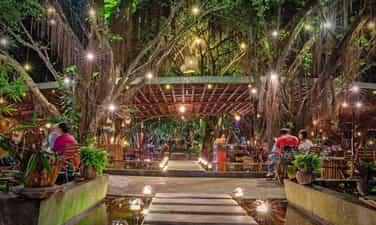
In 2016, Wind and Water Cafe (wNw Cafe) by architect Vo Trong Nghia and his colleagues made its first breakthrough in Binh Duong with a unique design that won second prize at the 2006 Vietnam Architecture Award and designed Architect Vo Trong Nghia became the first Vietnamese to win a gold medal at the 2007-2008 Asian Architects Association (Arcasia Awards) competition with the winning architecture project "Wind and Wind Coffee". Water" in Binh Duong. Continuously reaping success with awards: Second prize in the international architectural competition using bamboo materials organized by Bamboo Technologies Maui (USA) 2007; The architecture won the International Architecture Award (IAA) in the US in 2009. That appearance immediately attracted the attention of modern, stylish, nature-loving customers and affirmed its unique appeal to customers upon arrival. “Binh Duong is changing, needs are changing with the uniqueness of the project; We will attract all customers inside and outside the province as well as foreign tourists who love Vietnamese quintessence, Vietnamese culture and Vietnamese soul," the restaurant owner here shared. The architecture of the new wNw remains close to nature and people; expressed in the open space overlooking the street and through the use of natural materials, wood, and stone. wNw cafe's image is designed to convey traditional values of Vietnamese culture; That is the purity of the lotus flower. The green bamboo garden reflects the community connection between family members and friends, and is an ideal place to meet and socialize for guests who want to go to a cafe to relax after the pressures of work. and confinement at home. Not only is it a harmonious aesthetic combination of space through scientific interior arrangement. But most importantly, the project uses wind energy and the cooling ability of water to create a natural air conditioner. A notable change is that the bar right in the center of the restaurant has also been refined to serve groups of friends, families, and groups organizing birthday parties and small parties on birthdays and memorable days. mine. In the new plan, wNw will have entertainment programs, lucky draws, music, and exchanges with singers from Ho Chi Minh City and Binh Duong. Prices for drinks and snacks are also suitable for domestic and foreign customers.
Ho Chi Minh City
6875 view


Hoi Khanh Pagoda
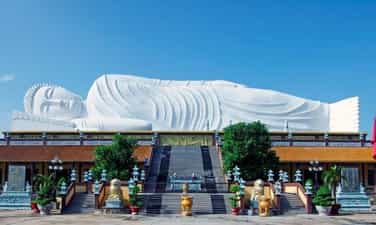
Hoi Khanh Pagoda is an ancient Buddhist temple founded by Zen Master Dai Ngan (of the Lam Te lineage) in the 2nd Canh Hung year, Le Hien Tong's reign, or the year of the Rooster (1741) in Thu Dau Mot city, Binh province. Positive. At first the pagoda was built on a high hill, but in 1861 it was destroyed during the war. The pagoda was rebuilt by Master Thich Chanh Dac at the foot of the hill about 100 meters from the old location. The current address of the pagoda is 29 Chua Hoi Khanh Street, Phu Cuong Ward, Thu Dau Mot City, 30 km north of Ho Chi Minh City. The pagoda is located 150 meters from the main road. Behind the Tam Quan gate, there are dragon and phoenix carvings. The pagoda is located on a quiet land with many trees, especially four oil trees that were planted for more than a century not long after the pagoda was rebuilt. The chanting place and the east side of the pagoda were rebuilt in 1917 and the west side was rebuilt in 1984. The main hall was rebuilt in 1990 and 1991. On February 29, 1992, the Buddhist Council of Song Be province consecrated the temple. Restore historical statues in the temple. The area of the main front plus the chanting area and the space on the east and west sides is 700 m². The Buddha statues here were all created by workers in the Thu Dau Mot area in the 19th century. In particular, Hoi Khanh Pagoda in Binh Duong is also associated with the activities of Deputy Nguyen Sinh Sac (father of President Ho Chi Minh). In 1923 - 1926, Mr. Nguyen Sinh Sac together with Mr. Tu Cuc (Phan Dinh Vien) and Venerable Tu Van founded the Honor Society here. In May 2013, the Asian Records Organization officially established the Reclining Buddha statue at the pagoda as "The longest Buddha statue entering Nirvana on the roof of a pagoda in Asia". Although restored and expanded many times, this is basically a rare temple that still retains most of its original architecture. The highlight of this ancient pagoda is its rich value in terms of cultural history, architectural art, especially the majority of relics and antiques that have been preserved for hundreds of years until now. Hoi Khanh is also considered a temple that represents the common characteristics of ancient temples in Binh Duong. The main hall and lecture hall are arranged in a "face-down" style, connected together in a "snail-shaped" manner, a common architectural form for communal houses and pagodas in Dang Trong at that time. In the temple grounds, there are 4 structures named after 4 holy relics associated with the Buddha, including Lumbini garden (where the Buddha was born); Bodh Gaya (where the Buddha attained enlightenment), Deer Park (where the Buddha preached the Dharma Wheel Sutra) and Kushinagar (where the Buddha entered nirvana). Around the temple yard are 9 towers of 9 deceased abbots, elaborately built. On the left side of the pagoda there is also a 7-storey tower, recently restored. The lower floor of the tower is where the pagoda's cultural products are displayed, such as tapes and discs, commemorative Buddha statues, bells... The architectural interior, paintings, statues, and worship objects in Hoi Khanh Pagoda are all very sophisticatedly sculpted and engraved, with themes such as four sacred animals, nine dragons, grape vines, leaves, and flowers. In addition, a 22m high Buddha pedestal was built in the land in front of the Pagoda. The ground floor is a row of houses 64m long, 23m wide used as a Buddhist school, library... The upper floor is decorated with a statue of Master Shakyamuni entering Nirvana, 12m high, 52m long. In particular, there are two reliefs carved with images of 18 Arhats and Bodhisattvas, creating a beautiful sculpture with high artistic value typical of the ancient Binh Duong wood carving style. As for the tureen, poetry is still preserved in abundance, with value that is hard to match in any temple. Many people refer to the couplet of the deputy director Nguyen Sinh Sac still kept at Hoi Khanh Pagoda, with the concise meaning of Zen: "The great path is open to the senses, the body and the moon. Cultivating the Zen subject, taking refuge in the wind-headed lizard's hair" (Temporary translation: Expanding the path is as big as a rabbit's horn, like finding the moon at the bottom of water. Nurturing the temple roof is like turtle fur like a wind pillar at the top of a tree). As for interior decoration art, worship statues are sculpted and carved very elaborately and sharply... especially the set of "eighteen Arhats" (created in 1921), the talisman. The "four times" sculpture covers the two columns in front of the main hall; The elaborately carved altars were completed in the year of At Suu (1925). The pagoda still retains a set of woodblocks printed on sutras from over 120 years ago. The pagoda's great bell was cast in the year of the Goat (1883) and was donated by Buddhist monk Duong Van Lua. This shows that Buddhism developed quite early and was quite strong in this locality.
Ho Chi Minh City
6465 view


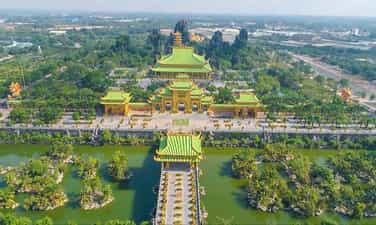
Dai Nam tourist area
Dai Nam Tourist Area is also known as Dai Nam Van Hien Lost Landscape Tourist Area or Dai Nam Wonderland Tourist Area. The tourist area was built in Thu Dau Mot town, Binh Duong city, only 40km from Ho Chi Minh City. To get from Saigon to here, it only takes about 30 minutes to drive. Not only has the location and convenient transportation, the staycation location near Saigon also has many interesting things. Dai Nam Temple, also known as Kim Dien, was once recognized as the largest temple in Vietnam (in 2007). This is also where special festival programs often take place during the Buddha's Birthday season. Inside the main hall are many large statues such as: the statue of Buddha Shakyamuni, the statue of Dieu Ngu Giac Hoang Tran Nhan Tong, the statue of Patriarch Hung Vuong... The highlight in the Golden Palace is the statues and decorative reliefs. 24K gold plated decoration. Dai Nam amusement and entertainment area was built on an area of about 50 hectares with countless different entertainment games. Coming to Dai Nam tourist area, you will have the opportunity to experience popular games; Thrilling games to exploration games such as: Deep Train, Spaceship War, Wind Surfing Dinosaur, Sky Exploration, Cyclone Ship, Five Dragon Palace, Orc Cave, Skiing... Bao Son mountain range is a highlight in the architectural complex of Dai Nam tourist area. Bao Son mountain range is considered the highest artificial mountain range in Vietnam. This project includes 5 mountains with a height of up to 65.8m. Inside this mountain range are majestic statues such as Bodhisattva statue, Maitreya statue,... Dai Nam Zoo is the largest open zoo in the country. There are many rare animals here, some species are also listed in the red book such as: white peacocks, rhinos, South African white tigers, fire leopards... The most special thing, most of the animals here are raised. released naturally, not kept in cages to ensure they have the most ideal living environment. Not only owning the largest artificial mountain range, Dai Nam tourist area also owns the largest artificial beach in Vietnam. This is a place that always attracts a large number of tourists with its cool, clear blue water; Artificial waves feel as exciting as swimming in a natural sea. With a scale of more than 22 hectares, Dai Nam beach is divided into 2 areas: freshwater sea and saltwater sea.
Ho Chi Minh City
7145 view


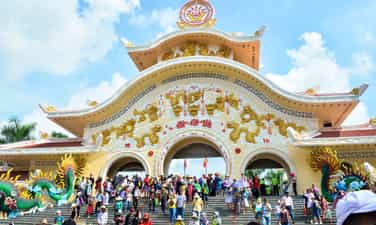
Suoi Tien cultural tourist area
Suoi Tien tourist area is also known as Suoi Tien Cultural Park, this is a magical land located at No. 120, Hanoi Highway, Thu Duc City, Ho Chi Minh City, City center 20km south. Suoi Tien tourist area in Ho Chi Minh City is open to serve tourists from 7:30 a.m. - 5:00 p.m. from Monday to Sunday every week. Particularly for holidays, the park will be open all day from 7:00 a.m. until all customers are gone. Coming to the fairy stream, we will begin to explore the Ngoc Nu Fairy Pool. This is considered the most famous and attractive place of Suoi Tien tourist area, Tien Dong Ngoc Nu beach is considered the first artificial beach in Vietnam. Therefore, this has become a place that attracts many tourists to come and experience. The special feature here is that the swimming pool's seawater is taken from Nha Trang Bay and cleaned using modern Canadian technology with many closed processes. This is also the area that attracts the most tourists to check in because not only is there a beach, but around it there are also Au Co mountains, statues of Lac Long Quan, Bong Lai, Hoang Khuong, Ngu Chau and many other places. many caves. Therefore, this scene is very popular with many young people. Next, the crocodile kingdom, this is always an attractive destination for everyone, here you will see more than 15,000 crocodiles "performing". Watching crocodiles lying motionless hunting, sunbathing or soaking in the water from a safe height protected by iron cages will be a wonderful experience for you. Furthermore, you can also feed them or fish for crocodiles with the provided baits attached to sturdy fishing rods. Next to that is the souvenir area, here you can see handicrafts made with the common theme of crocodiles, which you can choose as decorations or gifts for relatives and friends. Suoi Tien tourist area has contributed to protecting, researching and combating the trafficking and hunting of wild animals such as crocodiles. And indispensable lively adventure games. For those who love thrills, Suoi Tien Cultural Park will be a destination not to be missed with more than 90 games and activities for both adults and children. Here you may have to pay a surcharge from 15,000 VND to 60,000 VND for each trip. In addition, at Suoi Tien there are special festivals. With such a large and attractive space for tourists, Suoi Tien tourist area also organizes many attractive festivals to attract more people to come and participate. And each festival has a large and luxurious scale, the most prominent of which are the spring festival and summer festival. Spring Festival is held in the first months of the year to welcome visitors to Suoi Tien. The entire tourist area will be filled with fragrant flowers and many attractive games and activities related to Vietnam's traditional Tet holiday. The summer festival is held in June, this is the occasion when Suoi Tien tourist area promotes fruits for the Southern region. These are attractive fruits of the Mekong Delta region. Coming here, you will not only be able to eat delicious dishes but also admire attractive fruit creations by artisans.
Ho Chi Minh City
6143 view


Dam Sen Water Park
Dam Sen Park has a total area of nearly 50 hectares, of which 60% is natural greenery, 20% is water surface with a vast lake and Dam Sen and the remaining 20% is for entertainment games. The park is divided into two areas: Dam Sen Cultural Park (Dry Sen Kho) and Dam Sen Water Park (Dam Sen Nuoc). Established in 1976, Dam Sen Park is a delicate blend of Asian and European cultures, creating a unique space. With nearly four decades of operation, this place has always been one of the top destinations in Saigon. Coming here, visitors will be immersed in diverse and interesting entertainment games, serving all interests and ages. MIA.vn believes that this place will bring you wonderful experiences. Dam Sen Nuoc gathers many diverse water games, giving you a cool and refreshing feeling, from thrilling games to gentle relaxing games. During the hot days of summer, going to Dam Sen Water Park to soak in the cool blue water and participate in water games really couldn't be better. The activities here will bring you a feeling of relaxation, help relieve fatigue as well as provide positive energy for the body after stressful working days. The highlight is the unique Water Jet Massage or Massage Pool service with a system of 12 water jets hidden in the lake, with diverse intensities that will skillfully impact your body, like hands massaging each muscle. In addition, experience the uniqueness of Fish Massage at Dam Sen. Step into the tank containing small fish, they will help remove dead cells on the skin, while improving blood circulation and bringing perfect relaxation. Entering the fountain square at Dam Sen Nuoc, you will enjoy powerful water jets spraying from below, not only cooling the body, but also bringing relaxation to the soul. The carefree river will help you float on the river on a float through wonderful roads and landscapes. If you are passionate about thrilling experiences, you cannot miss this area. Some outstanding games include zip-lining over waterfalls, extreme double twists, tornadoes, roller coasters... bringing extreme stimulation while also challenging your kidneys' hardness. Surely this place will make the journey to explore Dam Sen Water Park more interesting and memorable. Inflatable games are especially loved by groups of young people and couples. The combination of exciting adventure and gentle moments of relaxation will definitely help you dispel the heat of summer days. With the Triple Inflatable Slide game up to 12m high and 25m wide, you will enjoy exciting moments when gliding down at a thrilling speed. The winding roads and unexpected twists and turns will bring extreme excitement to the three brothers on the float. Black Thunder slide will take you down from a height of 11m, through two exciting twists and turns, combined with unique sounds and lights, promising to bring unforgettable experiences. The swimming pool area is very popular with families with small children, because the water is always cool, fresh and maintained clean. Visitors can lead children to participate in fun activities at the wave pool with different wave levels, from gentle to strong, creating a diverse and interesting experience. The children's pool area has a giant mushroom-shaped fountain, creating a fun and attractive space. Children can explore, play and participate in activities, helping to develop dynamism, discovery, creativity and intelligence. Dam Sen Park allows guests to bring food from outside into the area. However, to ensure general hygiene, you should only bring simple dry foods such as fruit, cakes and water. In addition, if you want to enjoy a more comfortable meal and not have to bother bringing food, there are many restaurants inside Dam Sen for you to choose from. One of them is Thuy Ta restaurant, which focuses on fusion dishes between Chinese and Vietnamese. The food here is considered delicious and diverse, made by experienced chefs. You can also go to restaurant 79, designed in a natural style, surrounded by garden trees. This provides a cool space, helping you enjoy lunch with typical Western flavors. In addition, Men cricket shop is also an option, located opposite the children's play area. This is a place that serves meals to a variety of people, especially dishes suitable for children.
Ho Chi Minh City
6992 view


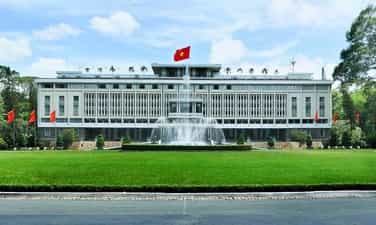
Independence Palace
Independence Palace is one of the most unique and famous architectural works in Ho Chi Minh City, having existed for more than 150 years. The construction stone was laid by Mr. La Grandière, the French Governor in South Vietnam, in 1868 and completed in 1871. In 1867, after the French occupied Cochinchina Luc Province, they immediately designed and built a new Palace on Norodom Avenue (now Nam Ky Khoi Nghia Street) for Cochinchina Governor La Grandière in Saigon, replacing the old Palace built of wood at the end of Catinat Street (now Dong Khoi Street) in 1863. In February 1868, Governor La Grandière held the ceremony of laying the first stone, starting construction of the Governor's Palace of Cochinchina according to the sketch plan of architect Achille Antoine Hermite. The project was completed in 1871 and was named Norodom Palace, after the name of the King of Cambodia who ruled during that time. In March 1945, Japan overthrew France, monopolized Indochina, and Norodom Palace became the workplace of the Japanese government in Vietnam. In September of the same year, Japan lost in World War II, Norodom Palace returned to the French government. In May 1954, France signed the Geneva Accords and withdrew from Vietnam, and the country was divided into two separate territories. Norodom Palace was handed over by the representative of the French government to the representative of the Saigon government, Prime Minister Ngo Dinh Diem. In October 1955, Prime Minister Ngo Dinh Diem deposed Chief of State Bao Dai, established the Republic of Vietnam government and then became President, and officially changed the Palace's name to Independence Palace. In February 1962, after the coup of the Republic of Vietnam army pilot, the Independence Palace was bombed and the entire main left wing was destroyed, unable to be restored. In July of the same year, President Ngo Dinh Diem decided to raze everything and build a new mansion right on the old ground according to the design project of Architect Ngo Viet Thu. In November 1963, the project was unfinished when President Ngo Dinh Diem was assassinated. In October 1966, the new Independence Palace was inaugurated, and the person who presided over and took over this building was Chairman of the National Leadership Committee Nguyen Van Thieu. From October 1967 to April 1975, the Independence Palace became the residence and working place of Second President of the Republic of Vietnam Nguyen Van Thieu. After the historical event in April 1975, the country was completely unified, the Independence Palace became a historical and cultural relic, a tourist destination not to be missed when coming to Ho Chi Minh City.
Ho Chi Minh City
6392 view


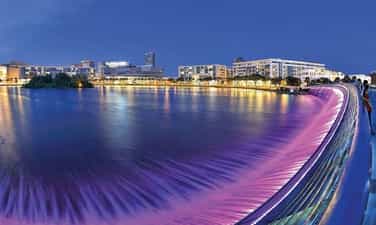
Starlight Bridge
Starlight Bridge is one of the impressive attractions in District 7, Ho Chi Minh City. This destination is located in one of the most luxurious neighborhoods in Saigon. Therefore, this place inherits the modern and luxurious beauty of the surrounding landscape. Although not a new name among attractions in Ho Chi Minh City, Starlight Bridge still retains the same heat as when it first debuted. Currently, next to Nguyen Hue Walking Street, Anh Sao Bridge is currently one of the hottest entertainment and entertainment venues in Ho Chi Minh City. Anh Sao Bridge was officially built in 2009 with a length of 170 meters. Together with Crescent Lake, Starlight Bridge creates a luxurious and modern landscape complex. The canal and square at Starlight Bridge simulate the shape of the moon. Meanwhile, the Crescent Lake area simulates the shape of the sun. Starlight Bridge has two sides equipped with a luxurious lighting system, creating the feeling of sparkling stars casting shadows onto the water. From a distance, the Starlight Bridge will stand out like a starry sky with sparkling lights of all colors. That image evokes a poetic, pure and extremely romantic feeling. Therefore, this place also attracts many couples to come here to stroll and visit. The highlight of Starlight Bridge is the uniquely designed lighting on both sides of the bridge. This lighting system combines with the water surface to create unique visual effects. In the sparkling space of Phu My Hung area, the light of Starlight Bridge creates a shimmering, magical and poetic scene. This is an ideal location for couples who like to stroll in a gentle, romantic space. The LED lighting system on both sides of the Starlight Bridge will evoke a sparkling feeling thanks to the scientifically calculated color range. At first glance, you will think of the brilliant rainbow colors creating a poetic space. In addition, the water spray effect on the side of the bridge makes it look like it is dyed in radiant colors, creating an impressive scene of harmony. This is also an impressive point that attracts tourists to Anh Sao Bridge. In addition to admiring the beauty of the light effects on Starlight Bridge, you can come here to stroll and enjoy the cool breeze in the afternoon. Anh Sao Bridge is located on a quite open and large area. Therefore, this place is often windy and quite cool in the afternoon. Walking on Starlight Bridge in that cool air will bring you a pleasant, relaxing and extremely gentle feeling. In addition to walking, you can take advantage of the large, airy space of Starlight Bridge for sports activities such as jogging to improve your health. In addition to being a comfortable place to stroll and play, Starlight Bridge is also a place of very special beauty. You can go on a date with your close friends to create great check-in photos here. With the scenery of a green lake and cool green trees, you will have plenty of space to check-in and create attractive photos. Some check-in points that many young people choose when visiting Starlight Bridge are the lawn at the bridge park, the bridge's square or the gentle space at Crescent Lake. In addition, if you are willing to walk a little, you can check-in at the luxurious space of Crescent Mall. Located in a luxury residential area, Cau Anh Sao Park is therefore designed to be quite luxurious and attractive. In the park, there are many trees and lakes that evoke a feeling of peace and serenity. In addition, this park also possesses lush, soft green grass. This is also a check-in point sought after by young people when visiting Anh Sao Bridge. In the beautiful space of this park, you can enjoy the breeze, check-in or enjoy interesting snacks. However, you also need to pay attention to preserving common space and throwing trash in the right place after use.
Ho Chi Minh City
6508 view


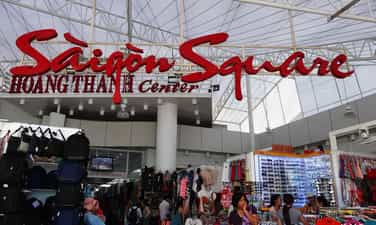
Saigon Square
Saigon Square launched its first branch in 2000, then opened two more branches in Ho Chi Minh City. However, later, due to business difficulties and the Covid-19 pandemic, currently only the branch on Nam Ky Khoi Nghia Street is still operating. Saigon Square shopping mall is located in the central area of District 1, so it has the opportunity to reach a diverse range of customers, both domestic and international. The plus point is that there is no situation of cutting corners on foreign customers, and prices are relatively transparent. Thanks to that, it is a shopping destination that is highly appreciated by tourists. The design of the stalls inside Saigon Square is like a high-end market, the shopping atmosphere is very close and bustling. The kiosks have traditional market colors but are spacious, airy, and display goods with eye-catching designs and colors. There is air conditioning that operates 24/7 and a spacious fitting room, which will bring you a truly satisfying experience. Entering Saigon Square shopping center, you will be overwhelmed by the space of fashion paradise with an countless number of stalls. If it's your first time coming here, just walk around and if you see an item you like, just ask the price. Here, there is no need to stop by a stall and buy anything. Saigon Square shopping complex brings together items from popular to branded goods, from new to second-hand items. There are also local brands that are loved by many young people. Therefore, if you come to Saigon Square, you will definitely find products that suit your taste and style. Another plus point of Saigon Square is that it always updates trends that are loved by young people. Any item that is hot will be brought home and sold by merchants immediately. Unlike other traditional markets, the clothing designs at Saigon Square are trendy and youthful. Saigon Square's items are also very stylish. You can find stalls that specialize in selling unique and personalized designs. Therefore, if you like to mix and match outfits and accessories, coming to this shopping area will definitely be a paradise to freely choose suitable products. When you go shopping at Saigon Square Shopping Mall, don't hesitate to bargain with the stall owners. Here, the challenge is not too much, some stalls even have prices listed. However, feel free to bargain to get the most reasonable price. If you buy more, you will get a bigger discount. When purchasing, you should try on items because many stores here do not accept returns. If you buy something to give as a gift, you should clearly tell the stall owner and ask them if the recipient is not satisfied or the wear does not fit, can they return and exchange for another product.
Ho Chi Minh City
6726 view


 AI Travelviet