Relic point Vietnam
Việt Nam
Ly Thai To beer house
Ly Thai To beer house is located in Gia My commune, Gia Vien district, Ninh Binh province. King Ly Thai To's full name is Ly Cong Uan, born in the year Giap Tuat (974), from Co Phap continent (now Tu Son district, Bac Ninh province). When he was young, the king was very intelligent and unusually handsome. The king went to study at Luc To Pagoda (Tien Son, Bac Ninh) and was praised by monk Van Hanh as a smart person. When he grew up, he would be able to solve problems and become a wise man in the world. As an adult, the king is a man of character. Le Long Dinh ascended the throne and promoted him to the position of Commander-in-Chief of the Left Guard Palace. King Le Long Dinh died, Ly Cong Uan was crowned Emperor by his court in the year of the Rooster (1009). In the 10th century, in the context of newly established national unity, King Dinh Tien Hoang and King Le Dai Hanh established their capital in the rugged mountains of Hoa Lu for defense. After ascending the throne, Ly Thai To realized that stationing the capital in Hoa Lu capital as a defensive citadel was only suitable for the country's situation in the task of building and protecting the Fatherland. But by the Ly dynasty, the requirement to preserve the country was not an exclusive requirement, but the problem was to lay a solid and comprehensive foundation for the prosperity of an independent feudal nation, with the requirements of development. about everything. Therefore, unable to continue building the capital in the rugged mountainous area, Ly Thai To made a particularly important and historic decision to move the capital from Hoa Lu to Dai La citadel. The King issued the work "Edict to Move the Capital". The King affirmed ".... Dai La citadel, in the middle of heaven and earth, has the position of the Dragon sweeping the Tiger to sit, in the middle of North, South, East, and West, with a convenient shape of mountains and rivers, behind and before, the land is wide and flat, and the place is high. It's bright, the people don't suffer from flooding, everything is very prosperous and prosperous, it is considered the best place in all of Vietnam. Truly it is the meeting place of the four directions, the capital of eternal scholars...". Recording about this, the book Dai Viet Complete History also said, "In the fall of July, the king moved the capital from Hoa Lu citadel to the large capital in Dai La of the capital." In 1997, while leveling the festival grounds, many terracotta tiles were found, decorated with lotus and phoenix motifs; cross "Dai Viet Quoc Thanh Chuyen", "Giang Tay Quan". These bricks were determined to be of the same age as bricks discovered during excavations in the southern area of King Le's temple. Researchers believe that Ben Den in front of King Dinh temple and King Le temple is the river wharf where King Ly Thai To moved the capital from Hoa Lu to Dai La citadel. To record an important historical mark, a historical journey of the country from restoring independence and autonomy to a period of renaissance and strong development. In 2000, on the occasion of the 990th anniversary of Hoa Lu - Thang Long - Hanoi, the Party Committee and people of Ninh Binh province built a stele house to commemorate King Ly Thai To. The epitaph was composed by Professor and labor hero Vu Khieu. This is a good poem in the form of parallelism. The epitaph consists of 4 stanzas. Content of stanza 1: Our ancient ancestors - Write about the life and career of King Ly Thai To. Content of stanza 2: Hoa Lu's career at that time - Praises the career of building and defending the country of the Dinh - Early Le dynasties and the cause of the imperial capital of King Ly Thai To. Content of stanzas 3 and 4: The immortal Hoa Lu tradition - Today's country - Inheriting and promoting the immortal Hoa Lu tradition, over the past 10 centuries, generations of descendants of this land of spiritual masterpieces Hoa Lu - Ninh Binh was united, brave, and steadfast with the army and people of the whole country to establish glorious victories, bringing glory to the homeland and the country, making the Hoa Lu tradition everlasting along with the history of the people. clan. Source: Ninh Binh Department of Culture and Sports
Ninh Binh
4846 view
Rating : National monument

Temple of King Le Dai Hanh
King Le Dai Hanh's mausoleum is located at the foot of Ma Yen mountain to the south, on both sides there are two mountains that people call "Long chau, Ho phu", which are the arms of the throne, so the mountain is also called Hoan Y Son. In the outer citadel area of Hoa Lu Citadel today, it belongs to Yen Thuong Village, Truong Yen Commune, Hoa Lu District, Ninh Binh Province. King Le's mausoleum also has another name according to local people: Ma Quan. This name may come from folk beliefs about the role and position (servant) of Le Hoan during the reign of King Dinh Tien Hoang, however this name is ancient and not very popular. King Le's mausoleum is a type of burial relic, according to the nation's traditional traditions. According to ancient beliefs, the tombs of King Dinh and King Le were all placed in a place called "De Vuong's grave". King Le Dai Hanh, also known as Le Hoan, was formerly talented in martial arts, liberal, and had great ambition. Le Hoan joined the Hoa Lu insurgent army, followed Nam Viet King Dinh Lien to participate in battles, defeated the rebel warlords, and achieved many victories. He was respected by King Dinh Tien Hoang as a wise and brave man and became a Thap Dao general during the Dinh dynasty. Le Hoan led the army to expel the Tong invaders, defeated Champa, and consolidated the independent and unified feudal state apparatus. The government also took care to implement a number of positive measures for economic development. Le Hoan ascended the throne and changed his reign name to Thien Phuc. It can be said that under the reign of King Le Dai Hanh, Hoa Lu Capital and Dai Co Viet country had prosperity and stability. Politics, military, culture, and diplomacy tend to develop, marking important milestones. He deserves to be the person who quelled internal and external enemies, created the country's strength and showed authority to the northern Song Dynasty. In the year At Ty 1005, in March, King Le Dai Hanh passed away at Truong Xuan Palace. When King Le died, his officials buried him and built a mausoleum in the southwest of the foot of Ma Yen mountain. The size of the mausoleum is smaller than that of King Dinh Tien Hoang but still proves the majesty of the emperor. Behind is a stone stele, the main face of the stele has the words: "Le Dai Hanh Emperor's mausoleum" and the date of the stele: Minh Menh's 21st year (1840). According to folk tradition, in the land of Truong Yen, when building the Hoa Lu Capital, King Dinh and King Le both took Ma Yen Son as their criminal record, and took the Dai Van range as the rear of the capital. Ma Yen Mountain is also where the King often resides during every naval review. King Le Dai Hanh's mausoleum was restored in 2020 and is majestic and worthy of the Emperor's stature. The position of King Dinh's mausoleum and King Le's tomb is located in the Hoa Lu ancient capital relic area, attached to central relics such as: Temple of King Dinh - King Le and other nearby relics. In addition to its great historical and cultural value, a place that marks the nation's glory, this is also a place blessed with charming landscapes by nature, attracting tourists from near and far to visit and worship. , paying tribute to great men who have made great contributions to the country. Source: Management Board of Trang An Scenic Landscape Complex
Ninh Binh
9533 view
Rating : National monument

Temple of King Dinh Tien Hoang
The temple worshiping King Dinh Tien Hoang, also known as Dinh Bo Linh temple, Van Bong temple or Dai Huu temple (named after the place where the temple is located), currently belongs to Van Bong village, Gia Phuong commune, Gia Vien district, Ninh province. Jar. Legend has it that this is the place associated with the birth of Dinh Bo Linh, a national hero who was instrumental in suppressing the rebellion of 12 warlords, unifying the country, establishing the state of Dai Co Viet in 968. Here, also There are tablets worshiping loyal mandarins who are the four pillars of the Dinh dynasty including Dinh Dien, Nguyen Bac, Trinh Tu, and Luu Co. Legend has it that King Dinh Tien Hoang and his son Dinh Lien were murdered by Do Thich in the year 979. According to court rituals, the royal family conferred the title, beautiful letters, and established a temple to worship in their hometown. Thus, the temple was established long ago. Currently, the rest of the monument has the architectural style of the Nguyen Dynasty. There are many sources of information about King Dinh Tien Hoang, recorded in history and folk legends, and the general tone is to praise his talent and great contributions to the cause of unifying the country and opening up the economy. our country's orthodoxy after thousands of years of slavery. In his homeland today, there are still many legends and places related to the childhood of Dinh Tien Hoang as well as Nguyen Bac, Dinh Dien, famous generals from the same hometown as Dai Huu with King Dinh. Ky Lan Mountain is located at the beginning of Gia Phuong commune, nearly 3km from the temple, with King Dinh's mausoleum, Dai Huu cave, Nguyen Bac's mausoleum. To the southwest of the mountain there is a winding space that looks like a throne, halfway up there is a large, relatively flat area. Legend has it that Mr. Dinh Cong Tru, Dinh Tien Hoang's father, saw the beautiful scene and brought the king's grandfather's grave to this throne, building a mausoleum, called Lang Phat Tich, which has now been renovated. Next to Lang Phat Tich is Dai Huu cave halfway up the mountain. In the cave there are many beautiful shapes formed by stalactites, in some places there are shapes like Ky Lan, so it is also called Ky Lan cave. Previously, according to tradition, the cave had a temple to Son Than, which was the refuge of Mrs. Dam Thi and Dinh Bo Linh when Mr. Dinh Cong Tru passed away, as many books have written. To the southeast of King Dinh's mausoleum, there is also Nguyen Bac's mausoleum. The mausoleum is located next to the foot of the mountain. Right in front of the temple, about 200m away, is Bo De Mound, a tall, square, ancient land area of nearly 200m2 at the beginning of Van Bong hamlet. Legend has it that this is the old house foundation of Dinh Bo Linh. In the middle of the fields of Van Bong village, near the temple of King Dinh Tien Hoang, there is a relatively high area of land, thousands of square meters wide, with the ancient name Dao Ao (also known as Dao Ao land). Legend has it that this place was where Dinh Bo Linh's army gathered for military exercises. In general, the area around the relic today still retains many places and legends related to King Dinh Tien Hoang. These are valuable historical sources to clarify his background and career. Especially from his hometown in Gia Phuong commune today, up to Gia Hung (Gia Vien), to Truong Yen (Hoa Lu), the entire length and width of dozens of kilometers, every land has its own famous places and traditions. theory related to King Dinh Tien Hoang. The temple has been extensively renovated in recent years, but still preserves the ancient Nguyen Dynasty architecture. Facing west, there are three buildings, the architecture is in the style of "first, last". In front of the temple is a semicircular lake. Inside the lake, in the middle of the yard, two bronze pillars were built to form the exit and entrance to the relic. The temple area consists of 3 buildings: Tien Pagoda, Middle Hall and Chinh Tam. The front hall consists of 5 rooms, the architecture is in the style of stacking ironwood beams, and the gable walls are closed. All of the trap heads are carved with leaf patterns, especially the middle part of the trap head is carved with a dragon. The rafters in the truss system are all carved with leaf patterns. The roof of Tien Bai is shaped like two dragons flanking the moon. The middle street is adjacent to Tien Bai, consisting of 3 compartments, architectural style (the entire diaphragm system is located on the rafters), in front there is a door system, all the traps are carved with leaf patterns. In particular, the rafters on both sides of the porch door have quite sophisticated carvings of four sacred animals. The main building consists of 2 main rooms and 1 back room. The architecture is in the style of upper and lower floors. The relic still retains a number of precious artifacts such as worship statues, thrones, altars, and ordinations of dynasties... Every year, on the occasion of the festival of the ancient capital of Hoa Lu, people of Van Bong village and Gia Phuong commune also open Temple festival and participating in the fire palanquin procession from the king's homeland to the ancient capital of Hoa Lu. With outstanding historical and cultural values, the temple of King Dinh Tien Hoang was ranked by the Ministry of Culture and Information as a national historical and cultural relic in 1993. Source: Department of Culture and Sports of Ninh Binh province
Ninh Binh
9653 view
Rating : National monument
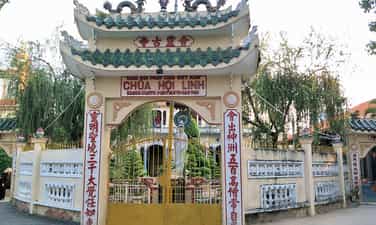
Ancient Spirit Association
Hoi Linh Pagoda, also known as Hoi Linh Co Tu, belongs to the Northern sect - located on an area of 6,500m2 at 314/36 Cach Mang Thang Tam Street (about 200 meters from the road), Bui Huu Nghia Ward, Binh Thuy district, Can Tho city. Hoi Linh Pagoda was founded on the full moon day of the second month of the year Dinh Mui 1907, following the Lam Te Zen sect. Initially, the pagoda was built simply with tree pillars, walls and thatched roof. The pagoda's door faced the Hau River, named "Hoi Long Tu". Because the pagoda is located at the top of a small canal, it is also called Xeo Can pagoda. Architecturally: the pagoda has a complete three-entrance gate, main hall, back hall, lecture hall. The main gate extending forward has two layers of roof, the tiled roofs of the main gate and the two side gates are all curved roofs covered with beautiful blue yin and yang tiles. The main gate's tiled roof is decorated with two dragons and pearl paintings, a type of decoration very common in Southern temples and communal houses. The main hall is divided into three compartments and has one floor. The floor is divided into three rooms to worship Buddha Shakyamuni, Guanyin, and Ksitigarbha. The cement roof is molded into the shape of fish scales. On the top are lotus buds, wine gourds, dragon-shaped blades, and curved flowers and leaves. The back hall is 144 m² wide, in the middle is the Fatherland altar with a photo of President Ho Chi Minh. This place is also used as a reception area. Next to that is the lecture hall, where sutras and sermons are preached... In addition to its cultural and artistic features, the pagoda also records a historical mark associated with the two resistance wars against the French colonialists and the American Empire invaders of Can Tho people in particular. Since 1941, Hoi Linh Pagoda has become a secret base of the revolution. The monks, monks, nuns and Buddhists in the area protected, supported and nurtured many revolutionary leaders. In 1946, to protect the revolutionary base here, Venerable Thich Phap Than decided to burn part of the main hall. The pagoda's sacrifice demonstrates the spirit of patriotism, protection of officials, protection of the revolutionary base, of the monks, monks and nuns. After the Geneva Accords, Hoi Linh Pagoda continued to be a solid revolutionary base and protected the safety of many revolutionary cadres who remained active. The pagoda was a secret place where many meetings were held to deploy the policies of the revolution and the content of public struggles with the enemy. The enemy suspected that Hoi Linh Pagoda was a "undercover Viet Cong" base, and once sent a platoon of soldiers to surround the pagoda. Unable to find any evidence, the enemy arrested Venerable Thich Phap Than along with 6 monks and 6 Buddhists and detained them for investigation in Phu Loi prison for 3 years. The puppet government used all tricks to seduce, bribe, and brutally torture, but Venerable Phap Than and the monks and Buddhists all maintained their integrity and loyalty to the revolution. The revolutionary base at Hoi Linh Pagoda was still safe and continued to house and protect revolutionary cadres until April 30, 1975, liberating the South and reunifying the country. On June 21, 1993, the Ministry of Culture and Information recognized Hoi Linh Pagoda as a National Historical and Cultural Monument, a revolutionary base from 1941-1975. In particular, the State awarded the First Class Resistance Medal to Hoi Linh Pagoda and recognized martyr Duong Van De (aka Venerable Thich Phap Than) who sacrificed in the cause of fighting against the US to save the country. Source: Can Tho Tourism
Can Tho
5334 view
Rating : National monument
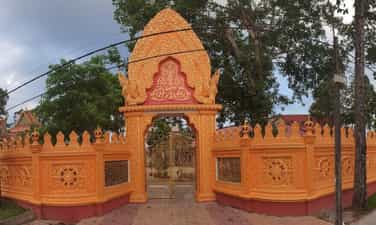
Pothisomron Temple
Pothi Somron Pagoda is an ancient Khmer pagoda located on the O Mon river, in Chau Van Liem ward, O Mon district, Can Tho city. The pagoda was recognized as a city-level historical and cultural relic in 2006. In the pagoda's grounds there are many trees, including a tree called Somron, so the pagoda was named Somron. Initially, in 1735, Pothi Somron Pagoda was only built with simple materials such as leaves and bamboo. By 1856, the pagoda was built with precious woods such as spokes, ca ca, Thao lao and covered with fish-scale tiles. 100 years later, the pagoda was degraded, Venerable Thach Khieng - Abbot of the pagoda from 1950 to 1988 went to Phnom Penh to request a new design from famous architects of Cambodia, on the basis of preserving traditional architecture. system. Construction on the new pagoda began in June 1950 and was completed in 1952. This architecture is kept until now. The pagoda has one side facing the gate of the Khmer Theravada Buddhist Academy, the other gate is close to the gently flowing O Mon River with a cool water wharf. The main hall is a prominent building in the architectural complex of Pothi Somron Pagoda, built in the East direction. Khmer people believe that although Buddha is in the Western world, he always looks towards the East to save sentient beings. The steps leading up to the main hall have a sophisticated Buddha statue meditating. On the wall are drawings depicting the life of Buddha presented very vividly. The images of the nymphs Kennâr and the god bird Krud are carved so high as to support the tile roof. The main hall's roof has three overlapping levels, with a dragon image running along the edge of the roof with its tail reaching straight up into the sky. The columns, fences, door frames, roof tops, and walls are all meticulously carved with geometric and water hyacinth patterns. Khmer pagodas all have core towers, but perhaps there are few pagodas that can preserve a more than 200-year-old tower like Pothi Somron Pagoda. The bone tower is right in front of the main hall, built of umbrellas, laterite, and bricks dating back to the 18th century. Inside this tower are the remains of many Buddhists and have been preserved for many generations. According to Venerable Dao Nhu, abbot of the pagoda since 1988, said: some Buddhists asked to rebuild and renew the outside of the tower, but the pagoda did not agree, because this is evidence of the pagoda's history and culture. nation's culture. The pagoda currently preserves many antiques. These are wooden swallow wings made in 1856 carved with images simulating stories about Shakyamuni Buddha, more than 100 sets of Satra sutras (leaf books), 17 wooden statues nearly 200 years old. The Buddha statue in the Center of the Main Hall was carved in 1885. During the two resistance wars against the French and the Americans, Pothi Somron Pagoda supported and sheltered many young people who escaped the military draft of the old regime. Many monks and monks of the pagoda, after returning from secular life, became party members and union members. Typical examples include Mr. Dao Sang, Chief of Police and Mr. Dao Ca, Chairman of the Dinh Mon Commune Resistance Committee in the years 1945 - 1948. For nearly three centuries of existence, the ancient temple is still dignified and pure, many monks have studied here, there are monks with high virtue and great merit, such as: Venerable Dao Nhu, practicing at Pothi Som Rom was 12 years old and became the abbot of the temple. Up to now, Venerable Dao Nhu is making great contributions to the sect and church as the new leader of the Khmer Theravada Buddhist Academy. Today, Pothi Somron Pagoda is the origin of many social and cultural activities launched by the Vietnam Fatherland Front Committee of Can Tho City, the Buddhist Association of Can Tho City and the Department of Culture, Sports and Tourism. Source: Western Travel
Can Tho
8996 view
Rating : City-level relics

Thoi An Temple
Thoi An communal house is located in Thoi Trinh A area, O Mon district, Can Tho city. Thoi An communal house was built in the early 19th century, built on a small scale by the people of Thoi Thuan hamlet, Thoi An village, using bamboo materials to worship the god. In 1852, King Tu Duc approved and conferred the title of Thoi An village communal house as "Thanh Hoang's original scene". Since the ordination, the villagers have chosen a location and joined forces to build a spacious new communal house 1km away from the old communal house. That is today's Thoi An Temple. The communal house was built in a rectangular shape, facing east, with a unique artistic architecture, imbued with the traditional architecture of the nation. Like some village communal houses in the Mekong Delta, Thoi An communal house worships "Thanh Hoang Bon Canh" who worships ancestors who openly reclaimed wasteland, established villages, and expanded the village's business. rich and prosperous; worshiping officials and soldiers who sacrificed for the country, worshiping the ancestors who taught vocational skills to the villagers. After the country was unified, the Thoi An Temple Sacrifice Committee set up an incense table to worship President Ho Chi Minh. grand. During the nine-year resistance war against French colonial invaders, Thoi An communal house was also the headquarters of the Provisional Administrative Resistance Committee of O Mon district. Every year, Thoi An people solemnly organize two festivals: Thuong Dien and Ha Dien, praying for good weather and good weather, prosperity and happiness. This is also an opportunity for people to remember heroic martyrs and those who have contributed to their homeland. Having gone through many historical events, Thoi An communal house still stands proudly. This is one of the few remaining beautiful and ancient communal houses in Can Tho City, as well as in the Mekong Delta region. With those values, on November 15, 2004, Can Tho City People's Committee ranked Thoi An communal house as a city-level historical and cultural relic. Source: Can Tho Tourism
Can Tho
5724 view
Rating : City-level relics
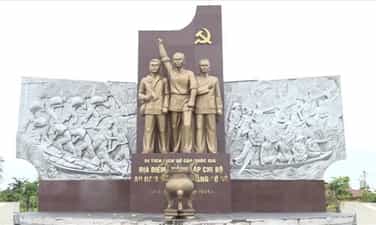
An Nam Communist Party Red Flag relic site
On the night of November 10, 1929, in a hut across the rice paddies of Co Do plantation (in Thoi Dong village, Thoi Bao canton, O Mon district, Can Tho province), comrade Ha Huy Giap - Member of the Executive Committee of the Special Committee for Security The Southern Communist Party of Hau Giang was assigned by the Special Committee to O Mon in coordination with comrade Nguyen Van Nhung and comrade Bay Nui to establish the An Nam Communist Party Cell, with comrade Ha Huy Giap as Secretary. The Annam Communist Party Cell of the Red Flag Party propagated and campaigned to raise revolutionary enlightenment for a large number of working farmers, guided the fight for their rights, and actively selected the masses to join party organizations. The Party cell quickly promoted the building and development of grassroots party organizations throughout the province to lead the revolutionary movement. The birth of this cell not only promoted the revolutionary movement in Can Tho but also had a strong impact on many localities in the region such as Dong Thap, An Giang... From the first Party cell, many other Party cells were established in the province... Mass organizations of the Party such as the Red Trade Union, the Red Agricultural Association, Youth, and Anti-Imperial Women were also organized in many places. , under the leadership of the party cells, gathered a large number of people and promoted the revolutionary struggle movement. To preserve and promote historical values, the city has invested in building a project to preserve, restore and promote the value of historical relics. Location of the establishment of the An Nam Communist Party Cell of the Red Flag Party with an area of nearly 40,000 square meters. The project was completed and put into use in 2019 right on the old plantation land, which is also the center of Co Do district today. The relic area is built in the style of an open park, with airy space, including items: monuments, reliefs, stele houses, squares, and lotus ponds. On October 31, 2013, the Ministry of Culture, Sports and Tourism decided to classify the location where the An Nam Communist Party Cell of the Red Flag was established as a national historical relic. Currently, the relic site is a place for sightseeing, studying, traditional activities, cultural and artistic activities, and sports for people of all walks of life and tourists from near and far. Source: Can Tho City People's Committee
Can Tho
8960 view
Rating : National monument
Highway Arc
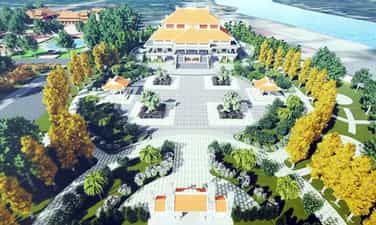
The historical site of the troop transfer location, the forward military medical station and the weapons cache on the Can Tho arc road is located in My Khanh commune, Phong Dien district, Can Tho city. Vong Cung Highway is nearly 30 km long, connecting National Highway 1A from Cai Rang bridge to Phong Dien district, mostly through communes: My Khanh, Nhon Ai, Tan Thoi, Giai Xuan and ending at Ba Se highway (Phuoc Thoi ward). , O Mon district). Right from the French colonial period, colonial henchmen suppressed and arrested people to work as road builders with a plot to build the road into a defensive belt to protect their headquarters in the inner city of Can Tho. Under the Saigon government regime, the Arc Highway continued to be built as a defensive fence to protect the tactical region IV nerve center, Tra Noc airport and US representative agencies in Can Tho. Tho is both a place to test all the most brutal tricks to wipe out revolutionary bases on the Arc Road, and at the same time serve as a springboard to attack our revolutionary forces at U Minh Base. For us, Vong Cung Highway is both a convenient gateway for roads and waterways, as well as a place to transport and supply food, weapons, necessities, and to house leaders. network for army units, creating a solid connection between the forces of the district, province and the Gathering Area to bring forces into the Arc, attacking the enemy's headquarters in Can city. Poem. During the resistance war against American imperialism, Lo Vong Cung was the place to transfer troops (My Nhon hamlet); Forward Military Medical Station (My Long hamlet); weapons hiding place (My Thuan hamlet) of revolutionary forces. Here, we organized the transportation of food, weapons, necessities to accommodate revolutionary cadres, army units and was a gathering place for revolutionary forces. Therefore, the US imperialists conducted many rounds of artillery strikes, bombarding and destroying the people's homes, fields and gardens, and spraying defoliants to destroy life, with the determination to knock the revolutionary force out of the Ring. Supply and cut communication lines between the revolutionary forces and the people here. Many battles between us and the enemy took place extremely fiercely, with countless blood and bones of soldiers and compatriots who fell on the land of the Arc. But with the tradition of patriotism and absolute belief in the revolution, the people here are not afraid of sacrifices and hardships, but are still determined to stand by, support, feed, and protect the officers and soldiers standing in the fight. fight until the day of national unification, contributing to beautifying the glorious pages of history about the revolutionary struggle tradition of the Party, army and people of Can Tho. Therefore, Can Tho Arc Road is not only a landmark but also has historical significance in Can Tho's resistance war against foreign invaders. In addition to the troop transfer location, the Forward Military Medical Station, and the place where the revolutionary forces' weapons were hidden, this place also left a deep mark of military and civil solidarity associated with the pain, loss, and sacrifice of the soldiers. compatriots and soldiers who have fallen for the Fatherland. On February 7, 2013, the Ministry of Culture, Sports and Tourism ranked the troop transfer location, the Forward Military Medical Station and the weapons hiding place on Can Tho Arc Road during the resistance war against the US as a Historical Relic. National level history. Source: Can Tho historical and cultural relics information page
Can Tho
5811 view
Rating : National monument

Can Tho Grand Examination
The Can Tho Grand Prison historical relic is currently located at No. 8, Ngo Gia Tu Street, Tan An Ward, Ninh Kieu District, Can Tho City. To serve the ruling apparatus in Can Tho, from 1876 to 1886, the French colonialists promoted the construction of many agencies and offices... including a prison named "Prison Provinciale". The prison was built on an area of 3,762 square meters, adjacent to the Governor's Palace, opposite the Administrative Building and separate from the residential area, people often call it Can Tho Grand Prison. When the Geneva Agreement was signed in 1954, the Saigon government changed the name of Can Tho province to Phong Dinh province, and the Can Tho Grand Prison was renamed the Correctional Center. But no matter what name it is called, Can Tho Grand Prison is essentially a hell on earth - a place where imperialist colonialists imprison and exile our revolutionary soldiers and patriotic compatriots. The Big Examination Gate has an arch shape, on the left of the gate is the office of the on-duty supervisor, on the right is the office and residence of the chief supervisor. The large prison is surrounded by a wall from 3.6m to 5m high, covered with pieces of bottles and barbed wire. At each corner of the wall is a 6m high watchtower with guards and floodlights at night to control prisoners. Inside the large prison, there are 21 collective cells and many solitary confinement cells. Between the prison rows is a large yard for prisoners to sunbathe. In this yard, the colonialists and imperialists also built pagodas and churches to show respect for the prisoners' beliefs and religion. Around 1963, two rows of buildings were built on the yard behind the temple, the ground floor had no walls - for a time it was used as a vocational guidance house for prisoners... The prescribed capacity in each collective cell is only about 30 to 40 people, but sometimes the number of prisoners reaches 70 to 80 people. Especially after the Southern Uprising, the enemy crazy used all tricks to terrorize and take revenge on our people. Many leaders, party members and the masses were imprisoned by the French colonialists at the Can Tho Grand Prison. In addition, the enemy also brought hundreds of people participating in the uprising and leading comrades in the provinces of Soc Trang, Bac Lieu, Ca Mau... here to detain and brutally torture them. Especially during the period when US imperialism used the "Law promulgated by the Republic of Vietnam regime on May 6, 1959 to terrorize and restrain our people, arresting all those suspected of being "Viet Cong", At this time, the number of prisoners in each room sometimes reached more than 100 people. Many prisoners could not endure the regime of imprisonment, torture, and harsh food and had to slowly die in this dark prison. The remaining people were infected with all kinds of diseases: scabies, malaria, typhoid, tuberculosis... For special political prisoners, the enemy was locked up in solitary confinement cells, tortured to the point of paralysis but still alive. loyalty to the Party and the people, keeping integrity until the last breath. Despite extreme torture, the Party comrades in prison still had Party Cells, Party Committees, study activities, and organized struggles with the enemy every hour and every minute, resolutely preserving revolutionary qualities. It is the indomitable fighting spirit and patriotism of political prisoners that has inspired and enlightened the revolution by many prison guards and guards, and they volunteered to be our internal base. Inform political prisoners of our situation and the enemy outside to take precautions or have strategies to fight the enemy in prison. The South was completely liberated, and Can Tho Grand Prison became a deeply engraved evidence of the indelible crimes of colonialism and imperialism. It is here that so many outstanding people from their hometown of Can Tho and neighboring provinces have fallen to contribute to writing the glorious and heroic history of the nation. On June 28, 1996, the Ministry of Culture and Information ranked Can Tho Grand Prison as a national historical relic. Source: Can Tho tourism information portal
Can Tho
9043 view
Rating : National monument
Bui Huu Nghia Valedictorian Memorial Area
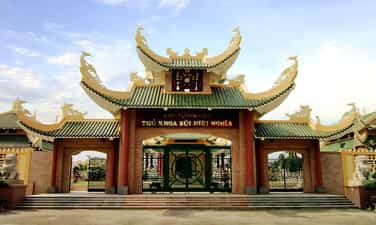
Bui Huu Nghia Valedictorian Memorial Area is located at Huynh Man Dat Street, Bui Huu Nghia Ward, Binh Thuy District, Can Tho City. This is the resting place of Valedictorian Bui Huu Nghia - a patriotic poet, a pioneer author of Vietnamese opera theater, who was known as the four great heroes or one of the four Golden Dragons of the South. Bui Huu Nghia, nickname Nghi Chi, was born in Binh Thuy village, Vinh Dinh canton, Dinh Vien district, Vinh Tran palace (now Binh Thuy district, Can Tho city) into a poor fisherman family. In the year of the Goat (1835), he passed the Nguyen Prize (valedictorian) in the Huong Truong Gia Dinh exam, so people often called him Nghia Valedictorian. He was appointed by the Nguyen court as Tri Phuoc Chanh district, Phuoc Long district, Bien Hoa province (now Dong Nai province); then Tri district, Tra Vang district (now in Tra Vinh province). In 1848, because he defended the poor in the "Rach Lang The" case, he was falsely accused by mandarins and tycoons and sentenced to death by the court. His wife, Mrs. Nguyen Thi Ton, went to the capital Hue to appeal for her husband's injustice. Bui Huu Nghia was spared death but was exiled to guard the border of Vinh Thong (Chau Doc). In 1862, he returned from the mandarin to Long Tuyen - Can Tho to open a school to teach and treat diseases for poor people, then participated in the patriotic movement against the French colonialists. He died on January 21, 1872, at the age of 65. Valedictorian Bui Huu Nghia is a shining example of fairness, integrity, and devotion to the people and country. His famous opera Kim Thach Ky Duyen is considered the oldest in Vietnam, and has been performed all over the country. country and is also the first Vietnamese opera to be translated into French. He is one of the cultural celebrities of Can Tho who is trusted, loved and respected by the people. His name shines in the spirit of fighting against invasion, oppression, and injustice; His kindness and great contributions to the country's literature are the pride of not only the people of Can Tho but the entire Southern region. Admiring his talent and dignity, the people of Binh Thuy village took his image to worship in Binh Thuy communal house; Students set up a tablet to worship him at Nam Nha Pagoda. The Valedictorian's grave, built of laterite, has always been cared for by generations of Can Tho people and is regularly repaired and embellished. The memorial area has a campus of about 10,000 square meters with a total construction cost of more than 50 billion VND. The project was inaugurated on March 1, 2013 - the 141st anniversary of his death. The main architecture of the Relic Area is an antique style with columns about 1 meter in diameter painted reddish brown; Wooden partitions and altars are elaborately carved; Cool green tiled roof. The top of the roof is emphasized by the symbol of a pair of fish turning into a dragon, and the four corners of the roof are adorned with flying phoenix wings. Inside the memorial area there is a large, airy garden full of trees. The memorial area has four main works, including three large buildings, in which the middle is the church, the left is the exhibition house, the right is the guest house and a stele right at the entrance to summarize his talents and merits and a memorial. A number of other auxiliary works to serve tourists from near and far to visit and pay their respects. Source: Can Tho Tourism
Can Tho
6158 view
Rating : National monument