Relic point Vietnam
Việt Nam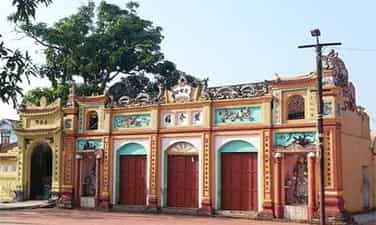
Bong Dien Temple
Bong Dien Temple - Place to worship female general Que Hoa. Bong Dien Temple is located in Tan De commune, Vu Thu district, Thai Binh province, now Hung Yen province. This is the place to worship female general Do Thi Que Hoa, a talented general who participated in the Hai Ba Trung uprising against the Eastern Han army in the early years of the Common Era. According to local genealogy, Ms. Que Hoa was a person of martial arts and literature, recruited insurgents, and generals like Bat Nan and Le Chan to fight to protect the country. She heroically sacrificed her life in the resistance war in 1943, and the people built a temple to commemorate her merits. Bong Dien Temple belongs to the Bong Dien communal house - temple - pagoda complex, built in 1848 under the reign of King Tu Duc and ranked as a National Historical-Cultural Monument in 1989. Every year, the temple festival takes place in the third lunar month with palanquin procession rituals and many traditional cultural activities, attracting a large number of people and tourists from all over. Source: People's Army Newspaper
Hung Yen
599 view
Rating : National monument
Dam Temple
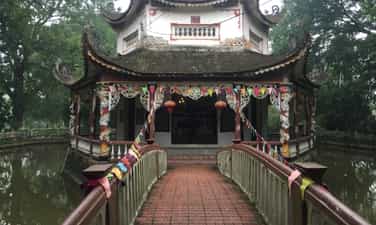
Dam Temple - Sacred Mother Goddess temple in Hanoi. Dam Temple (or Xam Duong Temple) is located in Xam Duong village, Ninh So commune, former Thuong Tin district, Hanoi city. This is one of the typical temples worshiping Mau Thoai (Holy Mother Aquarium) in Vietnamese people's belief in Mother Goddess worship. According to legend, Mau Thoai is the daughter of the Dragon King, who appeared to help King Tran Nhan Tong defeat the Yuan-Mongol army. After the victory, the king built a temple to commemorate her achievements. Over many dynasties, the temple was bestowed with many ordinations and became a famous spiritual relic of the Thuong Tin region. Dam Temple has an ancient space with a lake, many ancient trees and items such as the Mother Goddess main hall, Tran Trieu palace, Son Trang cave, Co pavilion and Cau pavilion. Every year, the temple festival takes place in the second lunar month with incense offering ceremonies, water processions and many unique folk cultural activities, attracting a large number of tourists and people from all over. Source: Focus Asia Travel
Hanoi
641 view
Rating : National monument
Dai Lo Temple
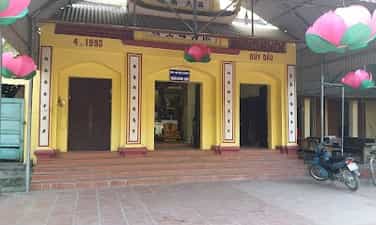
Dai Lo Temple (also known as Mother Dai Lo Temple, Lo Temple) is located in Ninh So commune, Thuong Tin district, Hanoi city. The monument was built around the 17th century, initially worshiping the Four Holy Mothers of the Song Dynasty, but through the process of formation and development, it has become one of the typical Mother Goddess temples of the Northern Delta region. The temple has a fairly complete architectural scale with items such as the ritual gate, the temple to worship Saint Tran, the front altar, the communal house, the central palace, the harem, the bell tower, the left - right corridor, the Co floor and the Cau floor. Among them, the two-story, eight-roofed communal house is the most prominent item with its sophisticated carving art, imbued with the architectural style of the Nguyen Dynasty. The relic also preserves many valuable artifacts such as ordinations, great letters, parallel sentences, dragon thrones, tablets and a system of worship statues. The temple's worship space fully reflects the traditional beliefs of worshiping the Mother Goddesses of the Three Palaces and Four Palaces of the Vietnamese people. In addition to the Four Holy Mothers, the temple also worships Saint Tran and many saints in the folk belief system, and is the place where special rituals and religious activities of the community take place. Source: Department of Cultural Heritage
Hanoi
657 view
Rating : National monument
Cinnamon Tree Temple
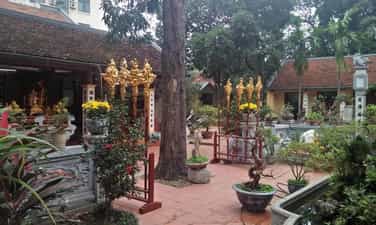
Cay Que Temple is located in My Tan commune, Ninh Binh province (formerly in My Tan commune, My Loc district, Nam Dinh province), on the banks of the Dao River, near the confluence of the Red and Dao rivers. This is an ancient temple worshiping the Holy Spirit Lang Dai Vuong - the deity who helped the Ly dynasty fight the enemy and protect the country, and is also worshiped by the people as the water god protecting the lives of river residents. According to legend, Linh Lang Dai Vuong is Prince Hoang Lang, son of King Ly Thai Tong. From a young age, he had unusual qualities. When the country was invaded by foreign invaders, Hoang Lang asked the king for an elephant and a flag to go into battle and achieve many glorious victories. After quelling the enemy, he returned to the aquarium and was ordained by the royal court as Linh Lang Dai Vuong, Supreme Phuc Than, allowing many localities to set up temples to worship. Cay Que Temple was built in the style of Tam, including front hall, middle hall and forbidden palace. Even though it has been restored many times, the monument still preserves many architectural and artistic values and a system of precious artifacts such as great characters, parallel sentences, stone stele, bronze bells and carvings in the artistic style of the Nguyen Dynasty. In addition to worshiping Linh Lang Dai Vuong, the temple also worships Bo Cai Dai Vuong Phung Hung and a number of water and mountain gods. Every year, the Cay Que Temple festival is held on the 22nd day of the eighth lunar month with many traditional rituals, notably the ritual of carrying water from the confluence of the Red River - Dao River to the temple to offer offerings, praying for peace and prosperity in the country, good weather and good harvests. Source: Vietnam Law Electronic Newspaper
Ninh Binh
604 view
Rating : National monument
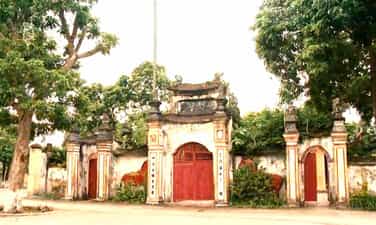
Ngoc Que Temple
Ngoc Que Temple is located in Ngoc Que village, Quynh Hoa commune, Hung Yen province (formerly in Quynh Hoa commune, Quynh Phu district, Thai Binh province), close to the foot of the Luoc river dike and about 500m from the river. With a convenient location by both road and waterway, the temple has long become an important religious place for local people. The relic is a place to worship Saint Do Huyen - a general who helped the 18th Hung King fight foreign invaders, protect the territory and reclaim Ngoc Que land, establish villages, and develop production. People remember his merits and worship him as the village's tutelary god. In addition, the temple also worships King Tran Thai Tong and National Cong Tiet Tran Hung Dao, associated with the event of recruiting troops and preparing food and provisions for three times of resistance against the Yuan and Mongols. Ngoc Que Temple has the architectural style of the Nguyen Dynasty with items such as the temple gate, altar, shrine and harem. The relic also preserves many artifacts of historical and artistic value such as horizontal lacquered boards, parallel sentences, gilded lacquered grand letters, wooden altar swords, bronze bells, worship statues and many sacrificial objects dating from the Le and Mac dynasties. Every year, on the 8th day of the 8th lunar month, the Ngoc Que Temple festival is held with traditional sacrificial rituals and many folk cultural activities, attracting a large number of people and tourists from all over to offer incense, commemorate and pray for peace. Source: Vietnamese historical and cultural relics
Hung Yen
579 view
Rating : National monument
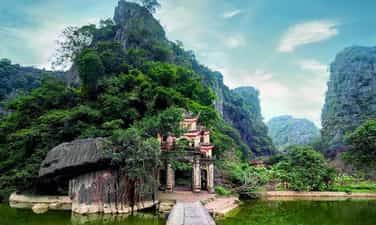
Thai Vi Temple
Thai Vi Temple is located in Van Lam village, Ninh Hai commune, Ninh Binh province. The relic is located in the Tam Coc - Bich Dong scenic area, amidst limestone mountains with many caves, rivers and unique natural landscapes. This place still preserves many historical marks associated with the Tran Dynasty and the Vu Lam base area in the 13th century. Thai Vi Temple is a place to worship Tran Dynasty kings including Tran Thai Tong, Tran Thanh Tong, Queen Mother Hien Tu and co-worshipping kings Tran Nhan Tong and Tran Anh Tong. According to historical records, the Vu Lam region was once an important base for Dai Viet's army and people in the resistance war against the Yuan-Mongol army. After the country was at peace, the Tran kings encouraged people to reclaim wasteland, expand fields, establish villages, and contribute to the development of this land. Thai Vi Temple was built to commemorate the great contributions of the Tran Dynasty kings to the country in general and the Vu Lam region in particular. Thai Vi Temple is an architectural work in the style of the Nguyen Dynasty. The main building consists of a three-arched building with 28 stone columns about 3.2 meters high, including 22 square stone columns. The round stone pillars in the third palace are carved with images of four sacred animals and rolling water dragons with delicate and skillful lines. The system of beams, rafters, and rafters are all made of ironwood. In the relic grounds, there is also a bell tower built during the reign of King Duy Tan, with a two-story, eight-roofed structure with 32 ironwood columns. The system of columns, beams, traps and roof support structures are all made of ironwood. The relic still preserves many valuable historical, cultural and artistic artifacts. Thai Vi Temple was not only the resistance base of Dai Viet's army and people during the resistance war against the Yuan - Mongol army in the 13th century but also a base for serving the revolution during the resistance war against the French colonialists. Today, the relic is a place for spiritual and cultural activities of local people, as well as a place for annual traditional festivals, contributing to preserving and promoting national cultural identity. Source: Website of Department of Tourism of Ninh Binh province
Ninh Binh
667 view
Rating : National monument
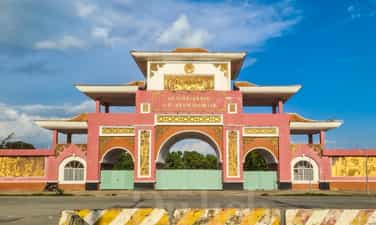
Ho Lang Base historical site
Ho Lang Base historical site. Ho Lang Base historical site is located in Tan Dong Hiep ward, Ho Chi Minh City. This was an important revolutionary base in the two resistance wars against the French colonialists and the American imperialists, associated with the heroic fighting tradition of the army and people of Di An region. Ho Lang has hilly terrain, surrounded by streams and dense forests, creating a strategic location favorable for building revolutionary bases. From here you can observe a large area, especially the Bien Hoa military airport area and important traffic routes. Thanks to that advantage, Ho Lang became the place to stand, command and organize many activities of revolutionary forces during the resistance period. During the resistance war against the US, Ho Lang was the place where many typical battles of local guerrilla forces took place. In 1966, Tan Hiep's army and people repeatedly repelled raids by American troops, destroying many enemy forces and confiscating many weapons. By 1971, the Di An District Party Committee continued to base itself in Ho Lang to lead the revolutionary movement. The protection and support of local people and the secret signal system have contributed to the safety of cadres and revolutionary forces operating. Currently, the relic still retains some vestiges such as bunkers, fighting pits and the natural terrain of the base. This is a vivid testament to the art of people's war, the spirit of solidarity and the resilient will of the army and local people in the struggle for national liberation. Source: Binh Duong Trade, Tourism and Industrial Development Center.
Ho Chi Minh City
447 view
Rating : Provincial level relics
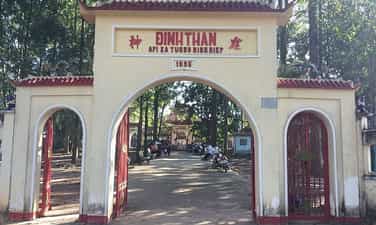
Temple of Tuong Binh Hiep
Temple of Tuong Binh Hiep. Tuong Binh Hiep communal house is located in Tuong Binh Hiep ward, Ho Chi Minh City. This is a valuable historical and cultural relic, as well as a special communal house in the South dedicated to Phan Thanh Gian - the first doctor of Cochinchina and a typical cultural celebrity, poet, and historian of Vietnam. Phan Thanh Gian was born in 1796 and worked as a mandarin under three dynasties of Kings Minh Mang, Thieu Tri and Tu Duc. He held many important positions in the royal court and was sent many times as ambassador to China, Indonesia, Singapore, France and Spain. He was also a participant in diplomatic activities to protect the country's sovereignty and interests in the turbulent historical context of the 19th century. After three provinces in the Western region of Cochinchina fell into the hands of the French colonialists in 1867, Phan Thanh Gian chose to commit suicide to express his loyalty, patriotism and sense of responsibility before the country's destiny. In 1924, King Khai Dinh granted him the title of deity and allowed local people to worship at Tuong Binh Hiep communal house. Today, Tuong Binh Hiep communal house is not only a place for people's religious activities but also a place to preserve and commemorate the merits of Phan Thanh Gian. Source: Binh Duong Trade, Tourism and Industrial Development Center.
Ho Chi Minh City
401 view
Rating : Provincial level relics
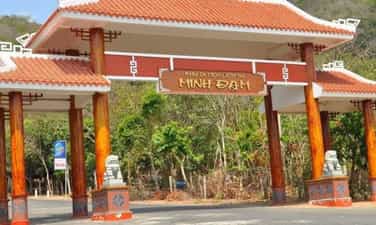
Minh Dam Mountain historical relic site
Minh Dam Mountain historical relic site. Minh Dam Mountain historical relic site is located in Long Hai, Phuoc Hai, Tam Phuoc and Long My communes, Ho Chi Minh City. The mountain range is about 8 km long, 355 m high, with rugged terrain, many caves and natural forests. Not only does it have beautiful scenery, this place is also an important revolutionary base in the two resistance wars against the French colonialists and the American imperialists. Thanks to its dangerous terrain with more than 300 large and small caves, Minh Dam Mountain was chosen by the revolutionary forces as an operating base. Many agencies and units used to be located here such as the District Party Committee, Military Medicine, Military Ordnance, District Army, along with the areas of Da Che, Da Chong, Chua Vien and Gieng Gach Pagoda. The stone caves, Hoang Cam kitchen, bunkers and traces of officers and soldiers' activities are still preserved, becoming evidence of a period of arduous but heroic fighting. The name Minh Dam is derived from the names of two revolutionary soldiers Bui Cong Minh and Mac Thanh Dam, who heroically sacrificed their lives on November 17, 1948. Naming the mountain after two martyrs shows gratitude and remembrance for those who devoted themselves to national independence. Today, the relic site also has the Martyrs' Memorial Temple, where more than 2,600 martyrs who fought and died for the Fatherland are registered. This is a red address with special significance in educating patriotic traditions, national pride and revolutionary spirit for today's generations. Source: Ha Tien Tourism
Ho Chi Minh City
444 view
Rating : National monument
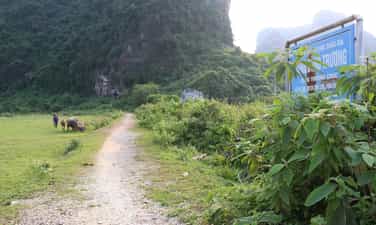
Archaeological relic of Dong Truong Cave
Archaeological relic of Dong Truong Cave. Dong Truong Cave is located in Anh Son commune, Nghe An province, in the Kim Nhan limestone mountain range, near Highway 7. This is one of Vietnam's typical archaeological sites and is considered by scientists to be a rare multicultural relic in Vietnam and Southeast Asia, preserving traces of residents from prehistoric to early historical times. The relic was discovered in 2003 and excavation began in 2004. Through many rounds of research, archaeologists discovered 12 burial tombs dating back about 10,000–12,000 years, along with more than 3,000 precious artifacts. Artifacts include carved stone tools, glass jewelry, spinning plumbs, semi-fossil animal bones and many relics of the Hoa Binh, Pre-Dong Son and Dong Son Cultures. The discoveries at Dong Truong Cave show that this place was once an ideal residence for prehistoric people thanks to its wide cave terrain, flat cave floor, close to water sources and convenient for living. The relic provides many valuable documents about the life, burial practices and development process of ancient residents in the North Central region through many historical periods. Today, the relic is not only important for historical and archaeological research but is also a destination that contributes to introducing the long-standing cultural values of Nghe An. Source: Dan Tri Newspaper
Nghe An
268 view
Rating : National monument