Relic point Vietnam
Việt Nam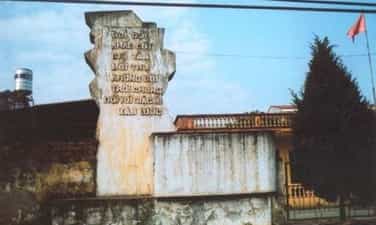
Historical site Hate stele
Historical site Hate stele. The historical relic of Hatred Stele is located in Moc Chau Farm town, Son La province. This is a cluster of relics marking the air raids of the US imperialists during the war to destroy the North, and is also a testament to denouncing war crimes and educating patriotic traditions for today's generations. On June 12, 1965, the US Air Force launched a raid on residential area Km 82 in Moc Chau. During the years 1965–1966, many air raids continued to take place, destroying homes, schools, offices, transportation routes and economic projects. Dozens of people were sacrificed and injured, and many properties, livestock and crops were severely damaged. In addition to the Hatred Stele in the central area of Moc Chau, two locations Km 64 and Km 70 were also erected memorial stele. These are all key areas that were heavily bombed by US aircraft to cut off traffic routes and destroy economic and defense establishments and residential areas. The steles not only remember the loss and sacrifice of local soldiers and people but also remind future generations of the value of peace and national independence. With great historical significance, the Hatred Stele at Moc Chau, Km 64 and Km 70 were all ranked as Provincial Historical Monuments on December 13, 2004. Source: Son La Geography
Son La
295 view
Rating : Provincial level relics
Deo Chen historical site
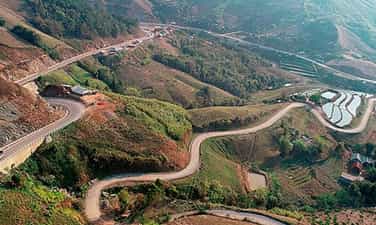
Deo Chen historical site. Chen Pass is located on National Highway 37, in Muong Khoa and Hua Nhan communes, Son La province. This is an important historical site associated with the 1954 Dien Bien Phu Campaign and has been ranked a National Historical Site in 2020 by the Ministry of Culture, Sports and Tourism. Chen Pass is about 11 km long, nearly 1,500 m above sea level. During the resistance war against the French colonialists, this place was on the vital route transporting food, weapons and forces from the rear to the Dien Bien Phu battlefield. That's why Chen Pass often becomes the target of fierce attacks by the French air force. To ensure the route was always clear, thousands of frontline workers, young volunteers and local people worked day and night to pave the road, widen the road surface, level bomb craters and repair bridges and roads immediately after each bombardment. Even though they faced many dangers, they still stubbornly stuck to the road, contributing to ensuring logistics and serving the victory of the Dien Bien Phu Campaign - a victory "resplendent in five continents, shaking the earth". Today, Chen Pass is not only an important transportation route connecting regions of Son La province but also a red address to educate patriotic traditions and gratitude to the generations who sacrificed for national independence. Source: Son La newspapers and radio and television
Son La
660 view
Rating : National monument
Phoi Phoi - Bai Coi archaeological site
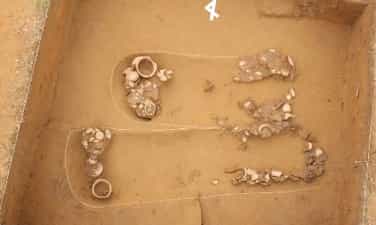
Phoi Phoi - Bai Coi archaeological site (Ha Tinh). The archaeological relic of Phoi Phoi - Bai Coi is located in Nghi Xuan commune, Ha Tinh province. This is one of Vietnam's typical archaeological sites, with special significance in studying the Early Historical period and the relationship between the two major cultures Dong Son and Sa Huynh. The relic was discovered in 2008 and underwent three major excavations in 2008, 2009 and 2012. Research results show that Bai Coi was the residence and burial place of ancient residents, with traces stretching from the Neolithic period to the monarchy period. In particular, this place is located at the intersection between the cultural space of Dong Son in the North and Sa Huynh in the South, becoming an important testament to cultural exchange and acculturation in history. Through excavations, archaeologists discovered 44 tombs, including earthen tombs, jar tombs, pot tombs and vase-pot tombs. Along with that are more than 200 precious artifacts made of stone, bronze, iron, glass and ceramic, reflecting the material life, beliefs and manufacturing skills of ancient residents more than 2,000 years ago. The outstanding value of Bai Coi is the simultaneous presence of Dong Son and Sa Huynh cultural elements and the influence of Chinese iron culture. This confirms that Bai Coi was once an important cultural exchange point for ancient residents in the North Central region. Source: National Museum of History
Ha Tinh
483 view
Rating : National monument
Communal house - Mai Phuc Pagoda
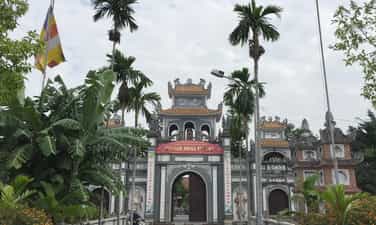
Communal house - Mai Phuc Pagoda (Long Bien, Hanoi) Communal House - Mai Phuc Pagoda is located in Long Bien ward, Hanoi city, built in the 17th century during the Le Dynasty. This is a valuable historical, architectural and artistic relic, worshiping the two blessed gods Xuan Vinh Dai Vuong and Princess Luan Nuong and famous generals who were instrumental in suppressing the rebellion of 12 warlords. According to fairy tales, Xuan Vinh and his younger sister Luan Nuong were two brothers who were talented in literature and martial arts, recruited insurgents, and contributed to Dinh Tien Hoang's unification of the country. After achieving many victories, Xuan Vinh was granted the title Xuan Vinh Dai Vuong, and Luan Nuong was granted the title Luan Nuong Princess. When the two brothers passed away, people built a temple to commemorate their contributions and honored them as local tutelary gods. Mai Phuc communal house still preserves many precious artifacts, notably 28 ordinations from feudal dynasties, of which the earliest ordination is dated 1674. In particular, the communal house also preserves a pair of Mac dynasty candlesticks with the name Dien Thanh 7 (1583) donated by Bat Trang people. These artifacts show that the communal house was built around the 16th century. Through many historical events and wars, the communal house was damaged but has been restored many times. Currently, the communal house faces south and is still a place for religious activities, preserving traditional cultural values of local people. Source: Hanoi Landscapes and Monuments
Hanoi
454 view
Rating : National monument

Tham Khuyen Cave – Tham Hai
Tham Khuyen Cave – Tham Hai (Lang Son). Tham Khuyen - Tham Hai Cave is located in Tan Van commune, Binh Gia district, Lang Son province, in the Bac Son limestone massif and is one of Vietnam's typical archaeological sites. This is a place of special value in the study of human evolutionary history and is considered one of the cradles of prehistoric humans in Southeast Asia. Through archaeological excavations, scientists determined that about 500,000 years ago, the cave was inhabited by prehistoric people. Many precious fossils were discovered here, including teeth of Homo erectus, along with bones and teeth of many ancient animals such as Stegodon elephants, rhinoceroses, wild boars, dwarf orangutans and especially the giant ape Gigantopithecus. The highlight of the site is the discovery of remains of Homo erectus and Gigantopithecus coexisting in the same site. This is very rare scientific evidence, contributing to clarifying the evolution and migration of prehistoric humans and affirming the important role of the Lang Son area in the history of human development. Today, Tham Khuyen - Tham Hai Cave is not only an archaeological relic of national value but also a research, study and sightseeing site, helping visitors better understand human life hundreds of thousands of years ago and the traces still preserved in the heart of Bac Son limestone mountain. Source: Lang Son Province Investment, Trade and Tourism Promotion Center
Lang Son
620 view
Rating : National monument
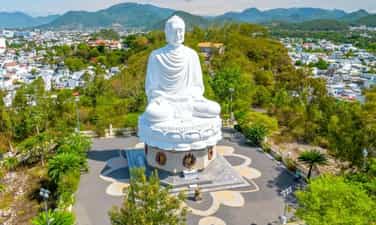
Long Son Pagoda
Long Son Pagoda - Famous Buddhist symbol of Nha Trang. Located at the foot of Trai Thuy mountain, in Tay Nha Trang ward, Khanh Hoa province, Long Son Pagoda is one of the oldest and most famous pagodas in the Central region. Built in 1886, the temple is not only an important Buddhist center but also a spiritual destination that attracts many tourists thanks to its traditional architecture and giant white Buddha statue that stands out against the sky. Long Son Pagoda has a spacious campus with a main hall decorated with many sophisticated ceramic mosaic motifs, a system of bronze Buddha statues and a pair of Vietnamese record candles. From the pagoda yard, visitors can follow 193 stone steps to reach the top of Trai Thuy hill, where the 24 m high Golden Buddha statue is located - one of the largest and most famous outdoor Buddha statues in Vietnam. From here, the entire view of Nha Trang city appears wide open, creating a scene that is both peaceful and impressive. Not only has architectural and artistic value, Long Son Pagoda is also a sacred pilgrimage site for local people and tourists from all over. Every day, many people come here to offer incense, pray for peace and enjoy the quiet space in the heart of the coastal city. With ancient beauty, pure space and long-standing cultural and historical value, Long Son Pagoda is always a destination not to be missed when visiting the coastal city of Nha Trang. According to: Nha Trang Tourism
Khanh Hoa
781 view
Rating : National monument
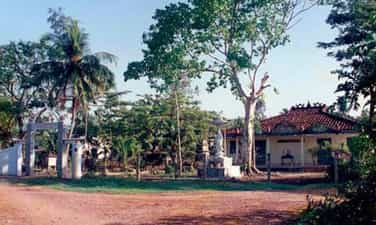
Binh Ta archaeological relic site
Binh Ta archaeological relic site - Oc Eo cultural vestiges in Tay Ninh. Located in Duc Hoa commune, Tay Ninh province, Binh Ta archaeological relic site is one of the typical archaeological relic complexes of Oc Eo culture in the South. With an ancient architectural system, precious relics and many historical traces dating back more than 1,500 years, this place is an attractive destination for tourists who love learning about history and archeology. The relic area includes many ancient architectural works such as Go Don, Go Xoai and Go Nam Tuoc. Through excavations, archaeologists have discovered many valuable artifacts such as statues of gods, lingams, yoni, pottery, gold jewelry, Sanskrit inscriptions and traces of religious works of both Hinduism and Buddhism. These findings show that Binh Ta was once an important political, religious and cultural center of ancient Oc Eo residents. Not only has archaeological value, Binh Ta also contributes to reflecting the cultural exchange process between the Southern region and ancient civilizations in Southeast Asia. Coming here, visitors have the opportunity to explore the remaining traces and learn about a period of brilliant development of Oc Eo culture. Today, Binh Ta Archaeological Relics is a destination rich in historical and cultural values of Tay Ninh province, contributing to enriching the journey to discover the heritage of the Southeast region. According to: National History Museum
Tay Ninh
605 view
Rating : National monument
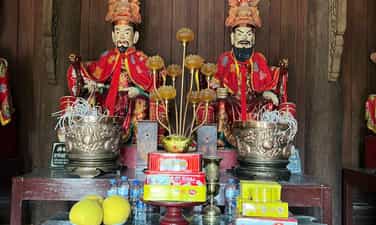
Phu Trinh National Historical Site
Phu Trinh National Historical Site - The mark of the Le - Trinh Dynasty in Thanh Hoa. Located in Vinh Hung commune, Thanh Hoa province, Phu Trinh National Historical Site is a destination rich in historical value, associated with the Le - Trinh dynasty and the period when the Trinh lords played an important role in running the country. This is not only a place to worship the Trinh lords but also a work imbued with cultural, architectural and historical imprints of the land of "kings and lords' palaces". Trinh Palace was built on the hometown of the Trinh family, used to be the headquarters and place to worship the ancestors of the Trinh lords during the period of "supporting Le and destroying Mac". Experiencing many historical events, the relic has been preserved, restored and embellished with many architectural items in the traditional royal style, contributing to recreating the majestic space of the ancient lord's palace. Visiting Trinh Palace, visitors will not only admire works of artistic and architectural value but also have the opportunity to learn about the nearly 250-year historical period of the Trinh lords. Every year, the death anniversary of Minh Khang Thai Vuong Trinh Kiem takes place on the 18th day of the second lunar month, attracting a large number of people and tourists to offer incense and commemoration. Today, Phu Trinh is one of the typical historical destinations of Thanh Hoa. When combined with a visit to the Ho Dynasty Citadel, Ho Cong Cave and neighboring landscapes, this place contributes to a journey to discover the unique culture and history of the Thanh Hoa region. According to: Thanh Hoa Tourism Newspaper
Thanh Hoa
564 view
Rating : National monument
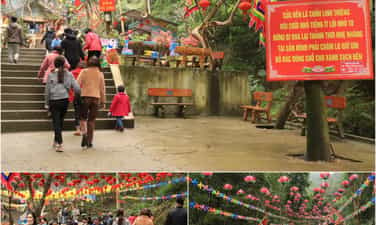
Phu Na historical relics and landscapes
Phu Na historical relics and landscapes - A spiritual destination among the mountains and forests of Thanh Hoa. Located at the foot of Nua Mountain, in Xuan Du commune, Thanh Hoa province, Phu Na (Na Son Dong Phu) is one of the famous spiritual tourist destinations of Thanh Hoa. The relic is associated with the belief in Mother Goddess worship and preserves the unique interference between Vietnamese and Muong beliefs, attracting a large number of tourists and Buddhists to worship and sightsee all year round. Built during the Nguyen Dynasty, Phu Na includes many architectural items such as Co Ba temple, Mother Goddess main temple, Ba Chua Thuong temple, Co Chin temple, Quan Hoang temple and Co and Cau floors. The most prominent is Mau Nghi Thien Temple with traditional architecture, solemnly decorated altars and exquisite carvings, creating a sacred space in the middle of the mountains and forests. Not only has historical and religious value, Phu Na is also attractive because of its pure natural landscape with lush green forests, rolling mountains and clear underground water flowing year-round from the heart of the mountain. The charming mountain scenery and peaceful atmosphere give visitors a feeling of relaxation when visiting and pilgrimage. Today, after being restored and embellished, Phu Na is increasingly spacious and has become a typical cultural and spiritual destination of Thanh Hoa. This is an ideal place for visitors to learn about historical values, folk beliefs, and enjoy the harmonious beauty between traditional architecture and majestic nature. According to: Thanh Hoa Tourism
Thanh Hoa
309 view
Rating : National monument
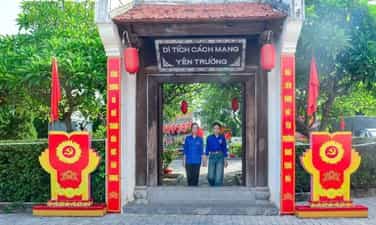
Yen Truong revolutionary historical relic site
Yen Truong revolutionary historical relic site - Red address of Thanh country. Yen Truong revolutionary historical relic site is located in Tho Lap commune, Thanh Hoa province. This is one of the local representative revolutionary historical relics, associated with important milestones in the formation and development of the revolutionary movement in Thanh Hoa. This place marks the establishment of the first Party Cell of the old Tho Xuan district on July 22, 1930 and the Conference to establish the Party Committee of Thanh Hoa province on July 29, 1930. After nearly a century, the relic site still preserves many valuable artifacts, documents and historical spaces, contributing to recreating the difficult but heroic years of struggle of previous generations. In recent years, the relic has been invested in restoring and embellishing with many items such as traditional houses, relic houses, campuses and infrastructure systems, both preserving historical value and meeting the needs of sightseeing, studying and researching. Today, Yen Truong Revolutionary Historical Relic Area is a familiar destination for delegations of officials, party members, pupils, students and tourists on their journeys back to their origins. This place regularly takes place incense offering activities, political activities, and traditional education, contributing to fostering patriotism and national pride for generations. Not only does it have profound historical significance, Yen Truong Revolutionary Historical Relic Area is also a destination to help visitors better understand the glorious revolutionary tradition of Thanh Hoa. Each work, artifact and story at the monument contributes to preserving historical memories, becoming a meaningful "red address" in the journey to learn about the culture and history of the Thanh Hoa region. According to: Thanh Hoa Newspaper
Thanh Hoa
421 view
Rating : Provincial level relics