Relic point Vietnam
Việt Nam
Cat King's Palace
King Meo's Mansion, also known as Vuong's Mansion, is located in Sa Phin valley (Xa Phin), Lung Phin commune, Dong Van district, Ha Giang province, about 125km from the city center and about 125km from the city center. The famous Dong Van stone plateau is only 15km away. This ancient house is associated with the life and career of two Mong people, the Meo King Vuong Chinh Duc and Vuong Chi Sinh (or Vuong Chi Thanh). Mr. Vuong Chinh Duc (1886 - 1962) was the head of the feudal land government in the mountainous areas of the Mong people, so he was also known by the powerful name of King Meo. His son, who followed the revolutionary path, thanks to his contributions to the country, was elected as a National Assembly deputy for the first two terms. Construction began in 1898 and was officially completed in 1907, costing a huge sum of 150,000 Indochina white silver coins, equivalent to 150 billion VND today. The mansion was designed and built by Chinese Yunnan workers in combination with Mong ethnic people, creating a project larger than 1200m2 on an area of about 3000m2. Thanks to its long history and indisputable cultural value, King Cat Palace was ranked a national monument by the Ministry of Culture, Sports and Tourism in 1993, after nearly a century of existence. In addition, this mansion also took up to 5 years to start construction, all were built with human power and did not use any mechanical means. King Cat's mansion is located at the foot of a valley surrounded above by a high land. With this type of terrain, the entire structure is protected by mountain arcs called turtle shell positions, providing very good defense support during times of fierce war. After more than a hundred years of existence, everything in the mansion is still as intact as the first day. The architecture inside the mansion is extremely unique, the crystallization of three different cultures including the Mong, French and Chinese. The project includes 4 horizontal houses, 6 vertical houses divided into 3 areas: front palace (for guards and slaves), middle palace and rear palace (place to live and work) with 64 small rooms divided into 2 floors. . To meet the criteria of solidity, the builders used green stone to help the mansion stand firm against enemies and time. The roofs, walls and pillars are made of wood to add majesty and flexibility to the rooms. Another material used is terracotta for building tile roofs to make shaping easier but no less sturdy. To this day, the Cat King Palace is one of the few buildings that meets all the requirements for a place to live, work and become a defense base whenever a war occurs. Despite the combination of three cultures in architecture, many people commented that the Vuong family mansion is extremely harmonious, flexible and rhythmic as if forming a unified block without being restrictive or forced. In addition, although it is a project built on a land area of up to 3,000 square meters, the mansion is not as large or massive as many people imagine because it is composed of small subdivisions, with a simple, rusticity of folk architectural culture. The design with the principle of low inside and high outside makes the overall Villa even closer to the surrounding landscape. In general, most of the furniture and items associated with King Cat when he was alive have been kept and well preserved until today. Only a few chairs and wooden furniture were made of stone pine, which was later replaced by our government with ironwood and crushed wood to prevent it from gradually disappearing over time. The wooden structures have a rich local cultural identity by carving native flower patterns such as peaches, poppies... The pillars are crafted to resemble the fruit of the opium poppy, a plant that King Cat does business to make money to build a mansion. Some Western-influenced items in this project include a stone goat milk bathtub, glass shutters next to the fireplace, and the entrance is made of marble connected by a frame. Iron flowers are bold in French architecture. Source: Ha Giang Tourism Newspaper
Tuyen Quang
6554 view
Rating : National monument
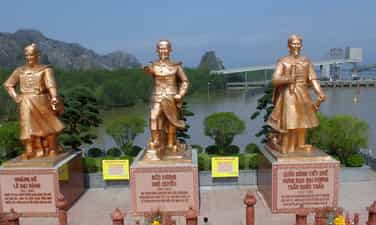
Trang Kenh Monuments and Scenic Landscape Complex
Trang Kenh historical and scenic area in Minh Duc town, Thuy Nguyen district, Hai Phong city has a rich cultural history, and is also a scenic spot with beautiful natural landscapes due to its system of natural beauty. Limestone mountains and rivers are created. Trang Kenh, an ancient land known for its famous archaeological sites, is still preserved underground. According to researchers, Trang Kenh is an archaeological site, the largest stone jewelry factory in the Northeast region of the country, dating back nearly 4,000 years ago, in the early Golden Age. gas. From the time of opening mountains, breaking rocks, and creating life, Trang Kenh people with skillful hands have crafted sophisticated stone jewelry, with diverse and rich bracelets, earrings, and beads. colorful. Through excavations and research, archaeologists have concluded that: Trang Kenh nearly 4,000 years ago was actually a large-scale stone workshop, its products were not only exchange inland, but also across the sea to Northeast Asian and Southeast Asian countries. In the history of the struggle to build and defend the country, this land was considered a barrier against foreign invaders. The historical mark left until now shows that Trang Kenh was a land battle in the Bach Dang naval battle in 1288, commanded by the moderate Duke Tran Hung Dao, defeating the Yuan-Mongol invasion army in the 13th century. With places that have entered national history books such as U Bo mountain, Hoang Ton, Phuong Hoang or Bach Dang gate, the confluence of three rivers, along with traces of stake battles or places like Ang Ho and Ang Lac said that this land marked a battlefield where the Tran Dynasty's troops and people fought against the enemy. Today, at the foot of Hoang Ton mountain in the mountain and hill system in Trang Kenh, there is a temple worshiping a general of the Tran dynasty. That is Tran Quoc Bao temple. He belonged to the Tran dynasty's royal family and had meritorious service in the Bach Dang battle in 1288. When he died, local people built a temple. According to the content of the stele erected in the 8th year of Vinh To (1626) under the reign of King Le Than Tong, the temple was built in a place with first-class beautiful landscapes in Hai Duong. Trang Kenh - Bach Dang, a historical place has long entered the subconscious of the people of Hai Phong city as an unforgettable memory of a great victory against foreign invaders of our nation a long time ago. 7 centuries. Along with many heritage sites with valuable historical and cultural content, Trang Kenh - the land of Minh Duc town, Thuy Nguyen district, Hai Phong city has been ranked by the state as a historical and cultural relic. scenic spot in 1962. Source: Hai Phong City Electronic Information Portal
Hai Phong
5005 view
Rating : National monument
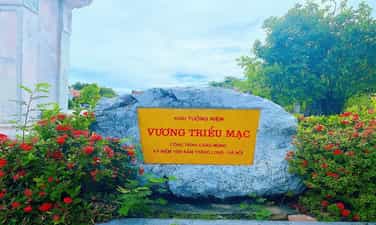
Mac Dynasty Memorial Area
The Mac Dynasty Memorial Area is a complex of historical and archaeological relics alongside newly built architectural works, located in Ngu Doan commune, Kien Thuy district, Hai Phong city. This place is considered the first capital of the coastal people built by the Mac Dynasty. According to historical records, Mac Dang Dung (1483 - 1541), from Co Trai village, Nghi Duong district, Hai Duong town (now Co Trai village, Ngu Doan commune, Kien Thuy district, Hai Phong) was a man of great intelligence and courage. More than others, he was an athlete with a background - Vo Trang Nguyen, and was drafted into the Tuc Guard army. During the period when the Le Dynasty was weak, the generals divided into factions, outside farmers rose up in rebellion, Mac Dang Dung was assigned defending Hai Duong. King Le Chieu Thong in Thang Long capital was rebelled by Nguyen Kinh's rebel army. Mac Dang Dung brought troops back to the capital to save the people, single-handedly quelled the rebellion, and was promoted to the position of Binh Chuong Quan Quoc Duc Nhan Quoc Cong. In June 1527, he was ceded the throne by Le Cung Hoang, founding the Mac Dynasty with the reign name Minh Duc. In 1529, he ceded the throne to his eldest son, Mac Dang Doanh - also known as Mac Thai Tong, retired as Thai Emperor, built the Mac dynasty in Hai Phong today, and ended when King Mac Mau Hop (d. 5th king) was defeated by the Le - Trinh army at the end of 1592. However, the descendants of the Mac dynasty still had a stronghold in the Cao Bang area to fight against the Later Le dynasty until 1677 before completely losing it. The Mac dynasty existed for 65 years and experienced 5 kings: Mac Dang Dung (1527 - 1529), Mac Dang Doanh (1530 - 1540), Mac Phuc Hai (1541 - 1546), Mac Phuc Nguyen (1547 - 1561) and Mac Mau Hop (1562 - 1592). Under the Mac dynasty, Vietnam's economy, culture, and society had many achievements recorded in history. That was the prosperous time of markets, bustling ports, and flourishing folk culture. Security and order, strict discipline. Regarding the economy, the Mac dynasty did not follow the policy of "respecting agriculture and inhibiting trade" like the early Le period, but had a very open policy with domestic and foreign trade, developing commodity production, and trading the domestic market with other countries. foreign. Blue and white ceramic products of the Mac Dynasty in Bat Trang and Nam Sach are unique and sophisticated, exported to many countries in the region. Regarding culture, the Mac dynasty always focused on examination policy, training talented people for the country (including for women), opening an Association exam every 3 years. To remember the gratitude of the Mac family as well as preserve the cultural and historical values of the Mac dynasty, in 2009, the Mac Dynasty Memorial Area was started to be built in Co Trai village. Accordingly, correctly assessing the position of the Mac and Duong Kinh dynasties, the Ministry of Culture and Sports decided to rank the monument, recognizing "The Mac family street in Co Trai, Kien Thuy district, Hai Phong as a historical relic". History, National Culture” in 2004. The Mac Dynasty Memorial Area has a quite typical and unique artistic style for a Vietnamese feudal dynasty. The common point that is easy to see in the architecture of the relic site is the wooden architecture, including the main Dien house, the Ta Vu and Huu Vu houses, the large gate, the images of Nghe, Lan, and Dragon decorated quite sophisticatedly, using stone materials. Monolithic. Although most of the statues no longer have as much wooden architecture as before, the core inside has not changed. The altar statue is made of jackfruit wood, painted in gold, simple with soft but very strong features creating solemnity. The art of stone stele is also extremely unique like the stele at Tra Phuong Pagoda. The large dragon statue of the Main Palace is made of monolithic green stone, with an evenly curved body. The dragon statue has the soft appearance of a Ly Dynasty dragon. The main hall of Tu Duong includes the front hall (7 compartments), incense burner (bloom tube), and the harem (5 compartments). Next is the bridge across the semicircular lake to Ngu Tien Mon, considered the "door" of the Mac dynasty. The five front gates include the outer gate and the inner gate with a structure of 4 pillars, 3 compartments, 2 floors, and 4 roofs, creating a sacred and solemn space. The two memorial buildings are located parallel to each other, this is where tourists from all over stop to rest and prepare to pay their respects before going to offer incense in the main hall. According to Eastern concept, the dance house is also a place to shelter people from rain and sun, referring to the protection of the Mac family for generations of descendants and tourists. Decorated on the statue's robes, on the statue's pedestals are countless variations of Dragon, Snake, Crocodile, Turtle and other themes such as images of the sun, wine gourd, moon face... Those images are decorated on bricks and stones, into steps, but most often on stele and worship statues. In the main hall there are many worship objects and antiques. From the vase with the image of a one-pillar pagoda and the familiar crane in folk songs to the giant bell weighing 1,527kg, the bronze gong with the image of two dragons engraved in relief. All are solemnly placed in the main hall. Especially the Dinh Nam Dao, the sword that once accompanied King Mac Dang Dung into battle and "won hundreds of battles". Up to now, the age of this treasure is 500 years old. On January 15, 2020, Dinh Nam Dao bar was recognized by the Prime Minister as a national treasure and brought to the Mac Dynasty relic site. Besides the historical values and unique architecture here, the Mac Dynasty Memorial Area has great humanistic value to educate the younger generation about national pride. Every year, at the beginning of the new year, the Spring Opening Festival is solemnly held here. Attending the Festival were the Vietnam Mac Clan Council, the Hai Phong Mac Clan Council, the Mac Family Liaison Committee of Hanoi City, the Co Trai Family Council and descendants of the Mac family branches, of Mac origin in the city and thousands of people. Thousands of domestic and international tourists and thousands of excellent students from the city's schools, to commemorate and pay tribute to the Emperors of the Mac Dynasty, and at the same time educate the young generation about love of learning. Thereby fostering historical knowledge, awareness of preserving and promoting thousands of years of historical culture and educating patriotic traditions for today's children and grandchildren. Source: Multilingual Foreign Affairs Information Portal of Hai Phong City
Hai Phong
9872 view
Rating : National monument
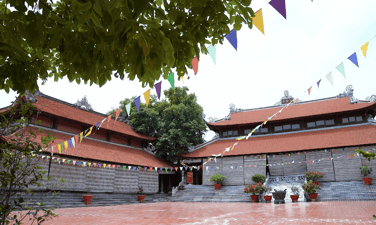
An Lu Temple
An Lu Temple, located in An Lu commune, Thuy Nguyen district, Hai Phong city, worships famous physician Tue Tinh. The temple is located on the alluvial strip of the Cam River system, flowing through the ancient land of Thuy Nguyen, where land exploration and the creation of villages of people engaged in wet rice agriculture and fishing very early on. Old historical data collected in the locality shows that: during the reign of Tran Due Tong (1370-1377), the great-grandfather of the Pham family named Viet Trinh, who was a merchant, led 5 people from the last names: Bui, Nguyen, Vu, Hoang. Through the eastern land of Thuy Duong district (the old name of today's Thuy Nguyen), we found that the land here is spacious but the population is still very sparse. They immediately discussed and agreed to establish a new area to live in. After that, from their old hometown in Cam Giang, many people continued to come and explore the land, establish hamlets, and the village became more and more crowded. The genealogies of these migrating families have been passed down by generations of descendants, honoring the great-grandfather Pham Viet Trinh as the person who made the first contributions in exploring and organizing land exploration to establish the An Lu village today. After 7 years of moving the population to the land along the Cam River, many villagers continuously suffered from epidemics, were constantly sick, were confused, and intended to return to the old place to do business and live. When you calm down and remember your hometown, there is a medicine made from herbs that are ground yellow, ground, then boiled and drunk. The good medicine was passed down by the great physician Tue Tinh. Everyone told each other to follow the instructions. Indeed, the epidemic was repelled and the population was at peace. That year, in the Dong Sim area, the villagers built a small temple to worship the famous doctor, and named the village An Lu, meaning peaceful village, and the common name was Xua. Rebuild the Xua market, build a 7-span bridge made of ironwood for people to travel across the stream flowing to the Cam River to remind the image of the old homeland. In the past, in An Lu land, there were many other relics such as Tiger Temple, But wharf, and Chung communal house where villagers many times held ceremonies related to propagandizing and disseminating healing methods using plants. , herbs, passed down the good remedies of the great physician Tue Tinh. Over time, war, and harsh nature have completely destroyed the original relics of the village worshiping the famous physician Tue Tinh. In early 1948, An Lu villagers welcomed the famous tutelary physician Tue Tinh to worship at An Bach temple, where villagers worshiped national hero Tran Quoc Tuan and his sons at the current relic site. now. The statue of the great physician Tue Tinh was created by folk artists with skillful hands, rich in traditional Vietnamese art. The statue is made to resemble a real person in the style of a round, solemn statue in official uniform of the late 19th century. The annual An Lu village festival takes place from the 11th day of the 11th lunar month. Depending on conditions, the festival can last from 3 to 5 days. What is special for both Thuy Nguyen district and An Lu village in particular is that in addition to the festival commemorating the great physician taking place at his temple, cultural traditions imbued with local identity are also preserved such as: holding the Xua market in the morning. On the first day of the Lunar New Year, there are many local products and many other rich countryside. Here, people meet each other in the new spring, wish each other good things, and hope for a new year with lots of luck and prosperity throughout the year. An Lu Temple was ranked as a historical and cultural relic by the State in 1990. Source: Department of Culture and Sports of Hai Phong City
Hai Phong
5564 view
Rating : National monument

CAM SON MOUNTAIN - MODEL TEMPLE
Cam Son Mountain is located on Ba Trieu street, Cam Son town, Nguyen Trai ward, Ha Giang province. Unlike other mountains that are often located in wild, remote places, Cam Son Mountain in Ha Giang is different. This mountain is located right in the heart of the noisy, bustling city of Ha Giang, standing majestically as if it is covering and protecting the local people living here. The mountain is also known as Cam Mountain, appearing with a very distinct and unique image, creating a quiet, mysterious look and an irresistible attraction for long-distance travelers coming to the plateau for the first time. stone. According to geological structure, the mountain is divided into two separate regions. From the top of the mountain, running along the Ma Tim slope, there are mainly cat-ear limestone mountains with dangerous terrain, deep caves and steep cliffs, like a Lion with a majestic appearance. From the top of the mountain stretching towards the Lo River is a mountain forest and steep cliffs stretching all the way from May 19th Street to March 26th Square. At the foot of "Cam Son" mountain are crowded streets with people working. busy dining. But it is certain that few people in Ha Giang can understand and see all the natural beauty, but also full of mystery, of "Forbidden Mountain", because it is a dangerous rocky mountain so there are very few roads up the mountain, only one The only way to climb to the top of the mountain. At the top of the mountain, there is a deep, vertical cave like a "sky well". Because of this unique and dangerous terrain, when the French colonialists invaded, they chose this place as the main guard post to protect the town. According to folk legends, the "black flag" army of Luu Vinh Phuc, around the years 1870 - 1875, Ha Giang district had a "yellow flag" army of Hoang Sung Anh come to plunder. was fiercely fought back, surrounded and pursued by the army of ethnic minorities called the "White Flags". In 1875, Hoang Sung Anh's "Yellow Flags" army was clustered, his army went to Cam Mountain to try defending, food was running out, the surrounding Cam Mountain was tightly surrounded, knowing they could not escape, both the general and the "Yellow Flag" troops jumped into a deep cave on the mountain and committed suicide. With tolerance and kindness, local people have set up a small temple to pray for the souls of unjust souls to be saved. The mountain has become a sacred place that few people dare to climb, "Forbidden Mountain" has become even more mysterious. Through the ups and downs of the time when the temple no longer existed, local people brought it to worship at "Cam Son Linh Tu", now the Mother Temple at the foot of Cam Mountain. Mau Temple was built in 1889 to worship the Holy Mother Thien Tien (also known as Princess Lieu Hanh) and the Holy Mother Tran Hung Dao Great King Tran Quoc Tuan. With more than 100 years old, Mother Temple has become an important place of spiritual and cultural activities in local beliefs. This is also the place to store many precious art and architectural artifacts such as horizontal paintings, parallel sentences, bronze bells, worship statues,... Source: Ha Giang Electronic Newspaper
Tuyen Quang
5284 view
Rating : Provincial level relics

Long Thu pagoda stele relic (An Long pagoda)
The relic stele of Long Thu pagoda or An Long pagoda (Binh Hien ward, Hai Chau district) is a unique original artifact, with a unique form compared to all other types of stele at the same time in the Quang Nam-Da Nang region. is an extremely important document that contributes to the study of many historical and cultural issues of Da Nang. Long Thu Pagoda's stele is kept at Long Thu Pagoda (now An Long Pagoda - this name was changed after 1920), formerly in Nai Hien village, Tan Phuc district, Dien Ban district. The stele was made of gray sandstone in the 5th year of Thinh Duc, during the reign of King Le Than Tong (1657), compiled by Mr. Le Gia Phuoc, dharma name Phap Giam (from Hai Chau village, Dien Ban district). The size of the beer is gradually reduced from the bottom up, creating a round top that looks like an upside-down bell from afar. The height of the beer from the top to the bottom is 1.25m, 1.20m wide, 0.21m thick. The forehead of the stele has a title consisting of 6 large horizontal letters "Establishing the Stone Epitaph at Thu Long Pagoda", which according to the common translation is understood as "Establishing the stele on the stone at Thu Long Pagoda". The entire stele has 368 words (including 6 title words), including 360 small words in the middle of the stele, carved in 18 vertical rows from right to left. At both ends of the stele are 2 small "swastika" words. than. Both sides of the stele are decorated with garlands of flowers and leaves, and the top has a shape of the sun placed in a ring of fire. Currently, the stele has many faded letters that have to be reattached with cement mortar. Fortunately, the French Far East School made stamped copies and the Vietnam Han Nom Research Institute kept 3 stamped copies. This is the earliest dated stele, as well as the formation of Long Thu pagoda built by the Vietnamese community in Da Nang, this shows that the settlement was quite stable in the villages of Nai Hien and Hai Chau. very early. Regarding the construction of Long Thu Pagoda, the stele at the pagoda said: "All villagers agreed to build a new pagoda." Not only building the pagoda, the painting of statues and casting of bells were also carried out by the people at the same time. The epitaph clearly states: "The Hoi master, along with virtuous and religiously enthusiastic women and men, offered what they could. to decorate the main hall and create Buddha statues, at the same time cast a bell, build a bell tower...". The content of the epitaph shows that since ancient times, in the land of Nai Hien village, Tan Phuc district, Dien Ban district, Buddha often appeared to save many people. This place is a sacred land, believers come to pray for divine fulfillment. , see the image of a dragon's head (dragon head). Considering it to be a sacred gathering place, Nai Hien villagers and many local dignitaries, from Cai and his wife belonging to Association President Nguyen Van Chau, Cai and his wife joined Ty Tuong Than Lai Tran Huu Le, Lai Ty Tuong Than. Lai Tran Huu Ky, Commune Chief Pham Van Ngao and all the villagers agreed to build a new pagoda, on the land donated by Mr. Tran Huu Le. The association's owner, along with virtuous, religiously enthusiastic girls and boys, took care of arranging worship statues, casting bells, building a bell tower to hang bells and drums, and building a bell tower with a drum tower to serve as a place to worship Buddha. In addition to the above, many believers have spent money to buy more than three acres of fields in Cua Dinh and Gieng Vung areas to make offerings to the temple. The stele also lists a list of people who donated money and fields to the pagoda, headed by a Governor named Tran Van Huyen and his wife Nguyen Thi Van... The epitaph is an extremely important document that contributes to the study of many historical and cultural issues of Da Nang; Provides a lot of information to learn and confirm some issues about titles, place names, and local land situation. Besides, the layout, theme and decorative motifs on the stele are also criteria for accurate dating to be able to compare and research the art of the second half of the 17th century in Dang Trong. From those heritage values, in 1992, the Ministry of Culture and Information ranked the stele as a national monument. Recently, in November 2014, the People's Committee of Da Nang City submitted a document to the Ministry of Culture, Sports and Tourism requesting recognition as a national treasure for "Long Thu Pagoda Stele" along with 3 other Da Nang artifacts. Nang is the Heart of Fire, Nghia Trung stele is Phuoc Ninh and Pho Da Son stele is the Buddha. Source: Da Nang Electronic Newspaper
Da Nang
10140 view
Rating : National monument

Trung Hoa Cemetery (Khue Trung Cemetery)
Nghia Trung Hoa Vang relic site (also known as Khue Trung Cemetery), is currently located on an area of 4,000 square meters in Khue Trung ward, Cam Le district. It is the resting place of more than 1,000 martyrs and patriots who fell in the early days of resistance against the French (1858 - 1860). At dawn on September 1, 1858, the French-Spanish coalition attacked the Da Nang estuary, beginning the invasion of Vietnam. With the spirit of solidarity for the country, our army and people fought back fiercely. During nearly 19 months of fierce fighting, thousands of soldiers sacrificed their lives heroically, making an important contribution to the failure of the French colonialists' attempt to quickly occupy Da Nang. Under war conditions, the gathering and burial of martyrs at that time was only temporary. When Da Nang was liberated, the people set up graves and gathered remains, building graves for soldiers who died here. Nghia Trung Hoa Vang was formed in 1866 in Nghi An village, Phuoc Tuong canton, Hoa Vang district. When the French colonialists built Da Nang airport (1925 - 1926), people had to move Nghia Trung to Ba garden in Khue Trung village. In 1962, Da Nang airport continued to expand, Nghia Trung was moved to its current location. Despite many relocations, Nghia Trung still retains the ancient stele engraved with the four words "Hoa Vang Nghia Trung" established in the 19th year of Tu Duc (1866) and two stone pillars inscribed with two parallel sentences: “The An Triem dry bones are inherited from ancient times The remnants of the soul reunited with gold." Roughly translated: “The king gave me bones to pass on old signs Keeping the remnants of my soul, I can see it now." Nghia Trung Hoa Vang is a place that preserves the sacred souls of rivers and mountains, and is a monument honoring the heroic spirit of fallen national heroes. At the same time, it is the place that marked the defeat in the first battle of the French army when attacking Da Nang. Next to Nghia Trung with more than a thousand tombs is a complex of cultural and historical relics, including: Hoa Que Tower Ruins, Ba Temple, a square Cham ancient well built of sandstone, tower ruins. Cham and the Ancient Church of Hoa Que village. In particular, the village's Ancestor Church and Ba Temple are valuable historical and cultural works, where local revolutionary cadres used them as secret locations for revolutionary activities. To commemorate the ancestors who contributed to building the village and the soldiers who sacrificed their lives in the early days of the resistance war against the French-Spanish coalition, every year in the third lunar month, the People's Committee of Khue Trung ward, Cam Le district solemnly organized the Martyr Sacrifice Ceremony with Khue Trung Village Association at Nghia Trung Relic Area. Nghia Trung Hoa Vang relic site was recognized by the Ministry of Culture, Sports and Tourism as a National Historical Site in 1999. Source: Da Nang Electronic Newspaper
Da Nang
10364 view
Rating : National monument

Bo Ban village communal house
Bo Ban communal house is currently located in Bo Ban village, Hoa Phong commune, Hoa Vang district, Da Nang city. In the late 15th century (around 1470), following King Le Thanh Tong's call to move south with the motto: "North, earth and ocean create national history/Southern sky, karma, karma, mingling name", the ancestors of The four clans Tran, Ho, Truong, and Nguyen went to clear land, settle down, form a brotherly relationship, and join hands to build a new land, a new life. Bo Ban village was formed from there. During the reign of King Le Hien Tong (1740-1786), the families Tan, Dinh, Nguyen, and Pham joined and joined hands to build the homeland of Bo Ban. Bo Ban Communal House was built in the year Canh Than, the reign of Canh Thinh (1800) with thatch and bamboo at the Tam Vi Temple mound located to the East. In the year of Nham Ty, the 5th reign of King Tu Duc (1852), the communal house was completely and spaciously rebuilt with durable materials at a new location, about 200m west of the old location, with cool terrain behind. There is high Temple Mound, on the right there is Go Chua, on the left there is Go Oi, called "dragon and tiger festival", in front of the communal house is a large field, adjacent to Cam Toai village and Yen River. On March 25, the year Binh Ngo, Thanh Thai's 18th year (1906), the communal house was restored for the first time. Through ups and downs of time, natural disasters, storms and floods, especially after storm No. 2 on April 19, 1989, the communal house was partially damaged. Therefore, on May 12, 1990, people repaired the communal house, including re-roofing the entire tiled roof and some wooden structures inside. In 2007, Bo Ban communal house was restored on a large scale from the State budget. By 2011, the construction of peripheral works such as city walls, three-entrance gate, and garden continued, so the communal house became even more spacious. Architecturally, Bo Ban communal house has the shape of the word "Nhat" in the style of three rooms and two wings, facing south. The communal house has a total of 36 columns made of jackfruit wood and kien kien, including eight main columns (first column) 4.5m high, eight second row columns 3.5m high, eight third row columns 2.3m high, four punched columns, four pillars and four pillars at the side door. On the bars and trusses are carved and decorated with themes such as dragon heads, four times, four quarters, chess, poetry, etc. with soft, sophisticated lines creating unique works of art. The communal house's roof is covered with yin and yang tiles. The roof has "two dragons and moons" attached to the roof; The middle part of the front roof has a high ridge decorated with images: phoenix, turtle... The two ends of the roof are decorated with images: bats, birds, and locs. All are shaped through masonry and ceramic grafting techniques. Outside the large yard, there is a large screen, the inside is decorated with a turtle image, the front is decorated with a dragon and horse image. Bo Ban Communal House is not only a cultural institution, a typical architectural work - traditional belief, but also the place where many important historical events of the local revolution in the liberation movement took place. nation. During the August Revolution of 1945, the protest group of An Phuoc general, Hoa Vang district started from Cam Toai village communal house to gather at Bo Ban communal house yard and then went to fight for power. This is also where the Bo Ban Commune Resistance Administrative Committee was established - where regular meetings between people and officials of the early revolutionary government took place. At the same time, it was the place where the first National Assembly election polling station of the Democratic Republic of Vietnam was successfully established, and where the first local popular education class was born. During the resistance war against the US to save the country, here in 1960, a trial was opened for those who followed the US - Diem against the revolution, from the Hamlet Chief, the Deputy Hamlet to the Lien Patriarch. On the day the country was completely liberated, the communal house was a place to receive puppet troops and puppet authorities to surrender and surrender their weapons, and a place for people in the village to learn the policies of the Party and state. Currently, Bo Ban communal house still retains a stone stele created in the 5th year of Tu Duc (1852). Bo Ban communal house was recognized as a national monument on January 4, 1999. Source: Da Nang Electronic Newspaper
Da Nang
6672 view
Rating : National monument
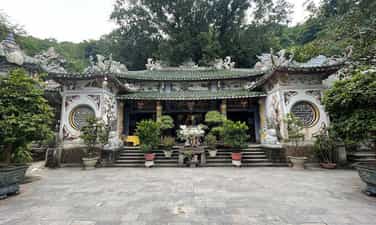
Linh Ung Pagoda Ngu Hanh Son
Linh Ung Pagoda is located in Hoa Hai ward, Ngu Hanh Son district, Da Nang city. The pagoda is about 8 km southeast of the city center. The pagoda belongs to the Northern sect. Ngu Hanh Son is one of the most famous landscapes in the Central region. A legend that is still passed down among the people today is: When heaven and earth were still chaotic, the Dragon King's wife crossed the East Sea to lay eggs on the sand, thanks to the protection of the Kim Quy god. After many years of absorbing yin and yang energy, one day, the sky thundered, the earth rumbled, and the dragon egg cracked its shell. A Dragon Girl was born and flew straight to the sky. The pieces of eggshell turned into five mountains... King Minh Mang named these mountains Ngu Hanh Son: Kim Son, Moc Son, Thuy Son, Hoa Son, Tho Son. Thuy Son, also known as Chua Mountain or Tam Thai Mountain, is the largest mountain, 106m high, about 15 hectares wide, with three peaks. The highest peak in the Northwest is Thuong Thai, with Tam Thai, Tam Ton, Tu Tam pagodas, Hoa Nghiem, Huyen Khong, Linh Nham, Vong Giang Dai caves and Thien Phuoc Dia cave (the king's resting place). Minh Mang). Trung Thai in the lower south has Van Nguyet cave, Van Thong and Thien Long caves, two stone gates of Thien Phuoc Dia and Van Can Nguyet Quat caves. Ha Thai in the East, has Linh Ung pagoda, Tang Chan cave, 5 small caves: Tam Thanh, Champa (Hoi cave), Ban Co, Ray cave, Gio cave, Vong Hai Dai, Ngu Coc cave (Long cave). Lamp) and Am Phu cave. In the East, there are 123 stone steps leading to Linh Ung Pagoda, commonly known as Ngoai Pagoda. Before 1891, the pagoda was called Ung Chan. The book Non Nuoc - Marble Mountains (Nguyen Trong Hoang, Da Nang, 2000) said that during the reign of King Le Hien Tong, Canh Hung era (1740 - 1786), there was Venerable Quang Chanh, nicknamed Bao Dai, who came to practice at the cave. Tang Chan. He built Duong Chan hermitage, later repaired it and called it Duong Chan hall. During Gia Long's reign, Duong Chan Duong was changed to Ung Chan Pagoda. After King Minh Mang first visited the pagoda in 1825, the bamboo-thatched pagodas here were replaced with bricks and tiles. The king gave the pagoda a plaque with the inscription Ngu Tu Ung Chan Tu, Minh Mang six years old. During Thanh Thai's reign, due to the taboo of the name of a Nguyen king, the pagoda was renamed Linh Ung. The pagoda still has a sign saying Cai Tu Linh Ung Tu, Thanh Thai Thirteen Years Old. In 1901, the pagoda was severely damaged by storm Tan Suu. The temple was renovated several times. In 1993, Venerable Thich Thien Nguyen organized the restoration of the main hall. The main hall is built in the style of the letter "Nhat", on the right is the ancestral house, lecture hall, guest house, meditation house and chef house. The Buddha hall is solemnly decorated. The middle hall worships Shakyamuni Buddha, the two sides worship Guan Yin Bodhisattva and Ksitigarbha Bodhisattva, outside there are statues of Dharma Protector and Tieu Dien. In front of the pagoda, the Venerable built a 10m high statue of Shakyamuni Buddha, built a Guan Yin station, and created a bonsai garden. In 1997, the Venerable built the Xa Loi tower on the left side of the pagoda, 30m high, 11m in diameter on the lower floor, and placed nearly 200 statues of Buddha, Bodhisattva, and Arhat. The 7th floor worships the Buddha's relics and 7 Buddhas (Bhikkhu Buddha, Shi Qi Buddha, Bhikkhu Buddha, Cau Luu Ton Buddha, Cau Na Ham Mau Ni Buddha, Kasyapa Buddha and Shakyamuni Buddha) . The 4th, 5th, 6th floors worship the statue of Guanyin with Thien Thu Thien Nhan and 84 Da La Ni statues. The 3rd floor worships the 33 Patriarchs who transmitted the Indian and Flower lanterns (from Patriarch Kasyapa to Patriarch Huineng). The second floor worships the statue of Amitabha Tam Ton, also known as the Western Three Saints (Amitabha Buddha, Bodhisattva Avalokiteśvara and Bodhisattva Mahasthamaprapta). The first floor worships statues of Buddha Shakyamuni, Kasyapa, Ananda and many Bodhisattvas, Arhats... In addition to his duties as abbot of the most famous temple in the city, Venerable Thich Thien Nguyen also holds the position of Deputy Head of the City's Buddhist Administration Committee. Da Nang, Chief Representative of Buddhism in Ngu Hanh Son district. The Venerable continued to build a Linh Ung pagoda in Ba Na tourist area, Hoa Ninh commune, Hoa Vang district, about 40 km west of Da Nang city. Located in the Ngu Hanh Son scenic area, Linh Ung and Tam Thai pagodas have welcomed a large number of tourists and Buddhists to visit and worship every day. At the foot of the mountain there is a famous traditional stone carving village. The pagoda has been recognized by the Ministry of Culture and Information as a national historical and cultural relic. Source: Danang electronic information tourism newspaper
Da Nang
7951 view
Rating : National monument
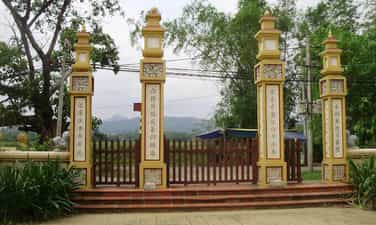
Tuy Loan village communal house
Tuy Loan (also known as Thuy Loan) is an ancient village in Da Nang, explored during the reign of King Le Thanh Ton, Hong Duc era (1470 - 1497). Legend has it that along with the process of exploring and establishing the village, the people also built traditional cultural and religious institutions, including the village. Tuy Loan village communal house was first built around 1470 in another place. In 1787, the communal house was restored for the first time. In 1888, the communal house unfortunately burned down and was rebuilt on land next to the Tuy Loan river. Having undergone many changes in location and style, the current Tuy Loan village communal house was built under the reign of King Thanh Thai in the year of Canh Ty (1900) on the basis of simulating the scale and style of the old communal house, built from Dong Khanh period was destroyed by storms. Since then, Tuy Loan village communal house (in Hoa Phong commune, Hoa Vang district, Da Nang city) has been regularly renovated, but the original architectural value has not changed. Tuy Loan village communal house has a spacious space, beautiful location, in front is a meandering Tuy Loan river with all year round green mudflats with fruit trees. Tuy Loan Communal House is a work of typical architectural value, including a front hall, main hall and rear palace that are continuously connected from front to back. The front street has a mixed structure, with both beam and rafter connections. The middle part of the rafters, that is, the connection between the two main columns (the first column), is the connection of the beams in the style of overlapping the beams; From the two main columns radiating to the front and back are rafters connected to the military columns, creating an upper and lower rafter structure. On the gable end, from the main column radiate punched trusses, determined to form two wings like buildings with traditional trusses. In Da Nang communal house architecture, this type of structure is absolutely not found in any other communal house. Stepping through the three-entrance gate leads to standing pillars and a screen placed in front. This is considered an internal three-door gate of the communal house. There are parallel sentences on the body of the pillar. The screen is built in the style of a scroll, the inside is shaped like a tiger, the outside is an embossed dragon and horse shape. The communal house's roof is covered with yin and yang tiles, the walls are built of bricks. The inscription on the stele placed in the communal house of Tam Giap Nguyen Khue records the establishment of the communal house with the passage: "The communal house consists of a main building and a front hall, all made of precious wood and tiled. In front of the yard are built pillars and vases. The room looks very bright. In addition, a temple was built on the left side of the road to worship the ancestors." The roof is decorated with two dragons flanking the moon, and the two ends of the roof are covered with curving dragon shapes and are made of porcelain. Entering the inner hall and the back of the temple is a place of worship, including the main altar, the left side, and the right side. Both sides also have left and right boards. The middle space has a council altar that is higher than the other altars, on the table there are a pair of cranes standing, on both sides there are two rows of holes. In the communal house, there is also an epitaph in Tuy Loan communal house dating back to Thanh Thai's first year (1889) and many horizontal panels and tablets that are more or less 100 years old. On the east wing of the communal house is the Chu Phai Toc church, which worships the ancestors. This is the temple worshiping 5 ancestors of the Dang, Lam, Nguyen, Tran, and Le clans. In particular, Tuy Loan village communal house still has 25 conferments bestowed by the Nguyen Dynasty kings. Not only does it have unique architecture, Tuy Loan communal house also makes its mark on the golden pages of history against foreign invaders. In 1945, the villagers of Tuy Loan used the village communal house and church as a headquarters to oppose the anti-imperial movement, and together with General An Phuoc, they marched to Hoa Vang district to seize the French and Japanese government. In 1946 - 1947, Tuy Loan communal house was the headquarters of the 17th and 19th battalions commanded by Mr. Dam Quang Trung. Every year, on the 9th and 10th of the first lunar month, the people of Hoa Phong commune organize the Tuy Loan village communal house festival. The festival takes place with traditional rituals and recreated folk games. reappeared within the framework of the festival program. From the afternoon of the 9th, the people of the village organized a solemn procession from the Dang sect clan church, paraded through 4 Tuy Loan villages and returned to Tuy Loan communal house for traditional ceremonies. On the morning of the 10th, the main ceremony took place in a solemn atmosphere. The ceremony includes the Ordination Ceremony, music offering incense to the Temple, releasing dragon flowers in the river to help children and grandchildren remember the five wise predecessors Dang, Lam, Nguyen, Tran, Le following the decree of King Le Thanh Ton to expand the banks. After returning to the South (in the year 1470 of Hong Duc), he stopped and chose this place to start a business and named the village Tuy Loan. Next is the Festival with many fun folk games such as stick pushing, arm wrestling, tug of war taking place right in front of the communal house yard... The profession of making rice paper has long contributed to making Tuy Loan village famous, so in the festival there is no indispensable rice paper baking contest. Villages often nominate their most skillful girls to participate in this contest. The winner of the contest not only brings glory to their village but also contributes to honoring a long-standing traditional craft of the village. . In addition, the villagers' festival also held competitions for wrapping banh tet, smashing pots, etc. After hundreds of years of existence, the village communal house is still almost intact, solemn and quiet under the shadow of ancient banyan trees and among the village's bamboo groves. The communal house's courtyard has built pillars, screens, painted parallel sentences... very majestic and respectful. When you come to Da Nang, stop by Tuy Loan, take a walk around the village, enjoy the taste of Quang noodles and rice paper, admire the village communal house and the ancient village space. If you have the opportunity to attend the village festival, you will be very impressed. interesting and unforgettable impression of an ancient village, a village communal house with rustic natural scenery, kind and warm people, rich in Vietnamese village cultural identity that is very proud and respectful. Source: Da Nang Party Committee website
Da Nang
6571 view
Rating : National monument