Relic point Vietnam
Việt Nam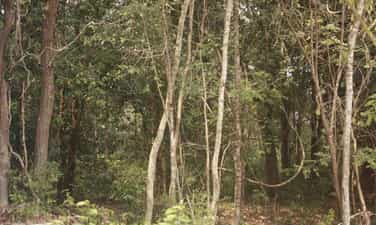
Kien An Forest revolutionary base
Kien An Forest - Revolutionary red address Kien An historical forest is located in An Lap commune, Dau Tieng district, former Binh Duong province, now Ho Chi Minh City, with an area of about 245 hectares. With its green natural landscape and rich revolutionary tradition, this place is one of the typical resistance bases of the Southeast region, as well as a meaningful tourist destination. During the two resistance wars against the French colonialists and the American imperialists, Kien An forest served as a strategic base for many revolutionary units. Thanks to the rugged jungle terrain, located between the Saigon River and Thi Tinh River, this place became a place to garrison troops, protect headquarters, train forces and be a springboard for many important battles towards Saigon. Kien An Forest was also the base of the security forces of Thu Dau Mot province, contributing to protecting the liberated area and effectively supporting the revolutionary movement. Today, the monument has been invested in building many items such as a welcome gate, a traditional exhibition house, a battle tunnel recreation area and a green tree system for sightseeing and studying. In 2004, Kien An forest revolutionary base was recognized as a provincial historical relic, becoming a red address to educate patriotic traditions and national pride for generations. Source: Binh Duong Province Electronic Information Portal (Ho Chi Minh City)
Ho Chi Minh City
303 view
Rating : Updating
Relics of house number 8
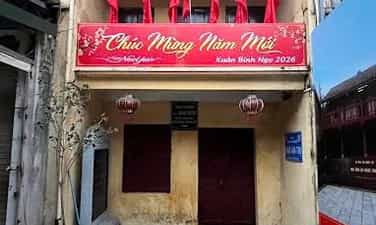
Relics of House No. 8 Chinh Cai Street, Ky Lua Street, Hoang Van Thu Ward, Lang Son City is where Comrade Hoang Van Thu stayed to study and participate in revolutionary activities from 1923 - 1927. Comrade Hoang Van Thu is a Tay ethnic person, born on November 4, 1909 in Phac Lan village, Nhan Ly district, Van Uyen district (now Nhan Hoa village, Hoang Van Thu commune, Van Lang district, Lang Son province). Comrade was born into a family with a tradition of patriotism, hard work and studiousness. As a patriotic young man with ambition, he participated in revolutionary activities from a very early age and devoted his entire life to the revolution. He is also a shining example of patriotism and the will to overcome all circumstances to realize the noble goals of the Party and the nation. To remember the merits of comrade Hoang Van Thu, all levels and sectors in the province have paid attention and focused on the construction and repair of revolutionary relics and cultural works related to him, including the relic of House No. 8 Chinh Cai Street, Hoang Van Thu Ward, Lang Son City. This is where comrade Hoang Van Thu stayed during his time studying at the French-Vietnamese school (from 1923 to 1927). Here, in addition to studying, he drafted a number of leaflets and slogans with the content of mobilizing the masses to fight for food, clothing, freedom and democracy and fight against colonial and feudal oppression. The original 2-storey boarding house has been restored, including the main house and yard area with an area of nearly 200 m2. After many renovations and embellishments, the house still retains many artifacts associated with the daily life of comrade Hoang Van Thu and remains intact in terms of architecture and layout. Currently, this place has become a "small museum" displaying the period of comrade Hoang Van Thu's revolutionary activities with more than 50 images, documents and artifacts, typically: a bed, copper pot, copper pot, bicycle frame, indigo clothes used by Comrade Hoang Van Thu during his revolutionary activities... According to: Lang Son Provincial Youth Union
Lang Son
826 view
Rating : National monument
Dinh Hoanh Son
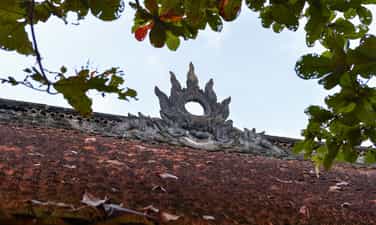
Hoanh Son Communal House - Masterpiece of wooden architecture on the Lam Giang river. Located in Nam Dan commune, Nghe An province (formerly in Khanh Son commune, Nam Dan district), Hoanh Son communal house is one of the typical ancient communal houses of Nghe An, famous for its unique architectural art and wood sculpture. The communal house was built in 1763 under the reign of King Le Hien Tong and completed in 1764. This is the place to worship Uy Minh Vuong Ly Nhat Quang - the eighth son of King Ly Thai To, a famous man with many contributions to the development of Nghe An region. Hoanh Son Communal House was built on a campus of about 2,500 m², on the right bank of the Lam River. The building consists of 7 compartments, 8 floors, with 32 large ironwood columns, structured in the traditional matchmaking style, and the roof is covered with yin and yang tiles. After more than 260 years, the communal house still retains its majestic appearance and durable wooden frame system, demonstrating the talented construction techniques of ancient artisans. The most outstanding feature of Hoanh Son communal house is the art of wood carving that has reached a sophisticated level. Hundreds of carved panels on rafters, columns, beams and dong boards vividly depict the themes of four sacred animals, four precious animals, two dragons flanking the moon, bamboo birds, apricot birds, and many life scenes such as plowing, fishing, boating, festivals and folk tales. The carved panels are represented by techniques of soft carving and filigree, which both have artistic value and reflect the cultural life of the residents of the Lam River area in the 18th century. With outstanding value in history, architecture and sculpture, Hoanh Son communal house is ranked as a special national monument. According to: Nghe An Newspaper and Radio and Television
Nghe An
812 view
Rating : Special national monument
Historical and artistic relic Tho Lao Pagoda
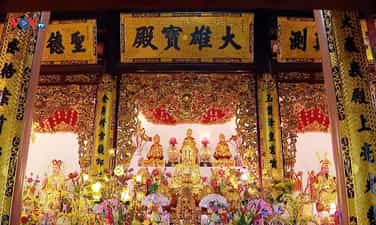
Historical and artistic relic Tho Lao Pagoda. Tho Lao Pagoda has the literal name "Thanh Nhan Tu", located at 20 Tho Lao Street, Dong Nhan Ward, Hai Ba Trung District, now Hai Ba Trung Ward, Hanoi City. The pagoda also has the Nom name Bun Pagoda, the reason for its name is because Tho Lao village in the past had the profession of making vermicelli. Tho Lao Pagoda was built in the 18th century. During the resistance war against the French colonialists, the pagoda was destroyed by artillery shells and burned to the ground, leaving only 3 rooms of the Mother Church. After the liberation of the capital in 1954, the government, the abbot and all the people restored the pagoda to its old location. After many restorations in the year of Canh Ngo (1990), the year of Mau Dan (1998) and the most recent restoration took place in the year of the Dragon (2012), the architectural scale has been kept intact until now. Currently, the main pagoda has a "second" architectural layout with a scale of 2 floors and 8 majestic roofs, including: Trai hall, Dai Hung Bao hall, Ksitigarbha altar, Patriarch church, Mother church, Tu Grace house and Sutra room... In the pagoda, there are still preserved the statues of the Three Worlds, the Eternal Dharmakaya, the statues of the World-Honored Buddha, Amitabha, Avalokiteśvara and Mahasthamaprapta Bodhisattva, the thousand-armed Guan Yin, the Nine-Dragon throne and the statue of the newborn Shakyamuni... Two altars to worship the Monsignor and the Holy Monk are arranged in the two gables of the Tam Bao house. Most of these statues were created during the Nguyen Dynasty in the 19th century. The relics are crafted from wooden materials such as horizontal boards, couplets, incense burners... with the main theme being the four sacred animals and the four precious animals - mascots of the universe that symbolize the transformation of creation, and at the same time express human aspirations for natural life. The most unique is the Tay Son bronze bell dated Canh Thinh 6 (1798), indicating the early birth of the monument. In addition, during the period 1936 - 1944, Tho Lao Pagoda was the place of operation of patriotic organizations in Dong Nhan village such as: Elderly Association, Women's Association, Youth Association... During the years of national resistance, especially during "Hanoi - 60 days and nights of smoke and fire", the pagoda was a place to hide Viet Minh cadres and a place to station, gather, and transfer wounded soldiers of the Capital Protection Regiment - Inter-Region I. According to: 360° historical - cultural relics of Hai Ba Trung ward, Hanoi city
Hanoi
336 view
Rating : Provincial level relics
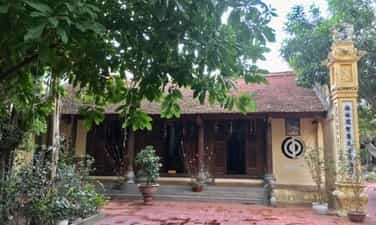
Huong Tuyet Pagoda historical site
Huong Tuyet Pagoda historical site. Huong Tuyet Pagoda is located at lane 205, Bach Mai street, Hai Ba Trung ward, Hanoi. On the post-Buddhist stele built in the year of Nham Ty, the 6th year of Duy Tan (1912), the history of the construction of this pagoda is clearly recorded as follows: "Mr. Nguyen Huu Quang on Hang Dao street, Dong Lac ward, and his wife Truong Thi Dieu, decided to buy a private garden in Bach Mai ward, Hoan Long district to build a pagoda to worship Buddha, paint statues, and cast pagoda bells. In the year of Tan Hoi (1911), October, on an auspicious day, the pagoda was completed and placed. named "Huong Tuyet Tu" (Perfume Tuyet Pagoda)". Pagoda buildings include: Gate, main pagoda, Patriarch's house, Mother's house and guest house. The main pagoda includes: Front hall; Middle Hall and Upper Palace. The most interesting thing about the pagoda is the system of Buddha statues arranged higher and higher in the upper house. The entire system of over 50 round statues was created in the first half of the twentieth century. In addition, the pagoda also preserves many precious relics such as: 3 bronze bells; 3 stone steles of the Nguyen Dynasty record the construction of the pagoda and meritorious people; and wooden relics include: Royal concubine, couplet, y door, hammock, scroll, incense burner, dragon throne, altar... carved with themes of four sacred animals, four precious animals, adoring dragons, tigers... all painted with gold and gilded, dating from the 19th - 20th centuries. Besides, the pagoda is also a historical site of the Revolution, making a great contribution to the resistance war against the French. At the pagoda gate, there is a stone stele carved in 1938 stating: "The Huong Tuyet Pagoda area was the contact place of the Vietnam Revolutionary Youth Comrades Association in 1929 and was the headquarters of the Steering Committee of the first strike of Avia Hanoi factory workers (from May 28 to June 10, 1929)". The relics of Huong Tuyet Pagoda and the struggle of Avia Hanoi workers were the direct driving force promoting the wave of revolutionary struggle of our people, leading to the birth of the Indochina Communist Party organization (June 17, 1929) - the main nucleus of the Communist Party of Vietnam, established on February 3, 1930. According to: 360° historical - cultural relics of Hai Ba Trung ward, Hanoi city
Hanoi
339 view
Rating : National monument
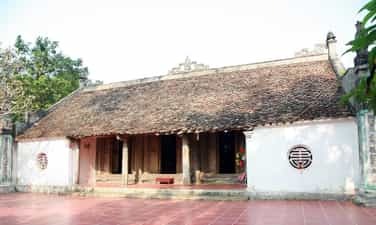
Ngoc Doi Pagoda
Ngoc Doi Pagoda - An ancient pagoda that preserves the history and art of Thanh Hoa Ngoc Doi Pagoda is located in Dong Thanh commune, Thanh Hoa province, and is one of the typical ancient pagodas of the Thanh Hoa region. Built in the 13th century under the Tran dynasty, the pagoda is associated with the legend that King Tran Nhan Tong gave a jade belt to build the pagoda after inspecting the defense line against the Mongol army. Since then, the pagoda named Ngoc Dai Tu (now called Ngoc Doi Pagoda), has become an important religious place for local people. The pagoda was built in the traditional architectural style "before the temple, behind the palace", with a Dinh-shaped main hall consisting of a five-compartment front hall and three-compartment main hall. The building is made of ironwood, has a tiled roof, and stands out among the green space with a semicircular lake and hundreds of years old pine trees, creating a pure, ancient beauty. Not only has architectural value, Ngoc Doi Pagoda also preserves many precious artistic heritages such as 32 ancient statues, including one bronze statue and 31 exquisitely carved wooden statues. Besides, there is a system of horizontal panels, parallel sentences, stone stele, bronze bells, Long Dinh palanquin, Hoa Banh palanquin and many valuable worship artifacts, reflecting the unique traditional sculpture art of Vietnam. Throughout history, Ngoc Doi Pagoda has also been associated with patriotic movements. At the end of the 19th century, this place was the base of the Ba Dinh insurgent army during the Can Vuong movement. In the years before the August Revolution, the pagoda was a base for raising revolutionary cadres and actively participating in resistance activities, contributing to the fight for national independence. Reference source: Thanh Hoa Newspaper and Radio and Television
Thanh Hoa
872 view
Rating : National monument
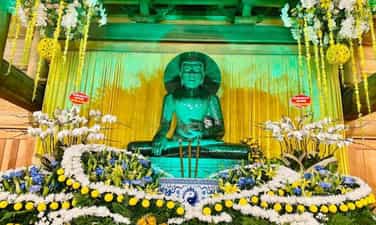
Quynh Lam Pagoda
Quynh Lam Pagoda - Ancient pagoda associated with Truc Lam Zen sect Located in Trang An ward, Quang Ninh province (formerly in Dong Trieu town), Quynh Lam pagoda is one of the famous ancient pagodas of the Northeast region of Vietnam. Founded in the Ly Dynasty and flourished under the Tran Dynasty, the pagoda was once a major Buddhist center of the Truc Lam Zen sect, associated with many unique historical and cultural marks. Having undergone many restorations under the Tran, Le and Nguyen dynasties, the pagoda still retains many precious values. The stone stele "Restoring and recreating the first Tien Du Son Quynh Lam pagoda" in front of the three-entrance gate is a testament to the pagoda's thousands of years of history and is considered one of the remaining large stone stele from the Ly dynasty in Quang Ninh. After the upheavals of war and time, the pagoda became ruins in the mid-twentieth century before being restored on the old foundation. Today, Quynh Lam Pagoda is one of the largest wooden pagodas in the North with majestic architecture, notably three palaces: Shakyamuni Buddha Palace, Maitreya Buddha Palace and Luu Ly Buddha Palace. In particular, the Luu Ly Buddha Hall enshrines the jade Buddha Shakyamuni statue weighing about 3.5 tons, creating a highlight for the entire complex. Not only possessing impressive architecture, Quynh Lam Pagoda also preserves many valuable relics such as the bell of the Nguyen Dynasty, the footstones and stone steps of the Ly, Tran, and Le Dynasties and the ancient tower garden. This is also the place associated with Zen Master Phap Loa - the second Patriarch of the Truc Lam Zen sect, who once built a tower to enshrine the relics of Buddha Emperor Tran Nhan Tong. Tue Dang Tower of Zen Master Chan Nguyen is also a typical relic that still exists in the temple grounds. Today, with its pure space, majestic architecture and unique historical and cultural values, Quynh Lam Pagoda is not only an important spiritual destination of Quang Ninh but also a place to help tourists learn about the history of Vietnamese Buddhism and the Truc Lam Yen Tu Zen sect, contributing to preserving national cultural identity. Reference source: Quang Ninh Electronic Newspaper.
Quang Ninh
880 view
Rating : National monument
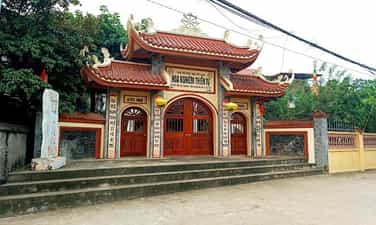
Hoa Nghiem Pagoda
Hoa Nghiem Pagoda - An ancient pagoda that preserves the artistic imprint of the Mac Dynasty. Located in Phuong Ban village, Phung Chau commune, Chuong My district, now Phu Yen village, Phu Nghia, Hanoi, Hoa Nghiem pagoda (Hoa Nghiem pagoda) is an ancient pagoda with a long history, closely associated with the cultural and religious life of local people. Located in the land of Doai rich in historical tradition, the pagoda is not only a sacred place to worship Buddha but also a relic that preserves many unique cultural and artistic values. The pagoda was built in the traditional architectural style of the Northern Delta with wooden structures, ancient tiled roofs and a peaceful space under ancient trees. In particular, the pagoda is located adjacent to Phuong Ban communal house, forming a relic complex that clearly reflects the religious life of ancient agricultural residents. The outstanding value of Hoa Nghiem Pagoda is its system of rare antiques dating back to the Mac Dynasty (16th century). Among them, the highlight are ancient Buddha statues with sophisticated sculpture style, demonstrating the soft, intimate beauty of Vietnamese Buddhist art. The pagoda also preserves a stone stele of the Mac Dynasty with records of the process of building and restoring the pagoda and those who contributed to it, which is a valuable source of material for studying history, culture and Han Nom. Having gone through many historical events, Hoa Nghiem Pagoda is still preserved and embellished, becoming an attractive spiritual and cultural destination of Chuong My district. With unique historical, architectural and artistic values, the ancient temple contributes to preserving the cultural heritage of the Doai region and is a meaningful address for tourists, Buddhists as well as researchers. Reference source: Institute of Sino-Nom Studies
Hanoi
864 view
Rating : Provincial level relics
Tan Vien Pagoda
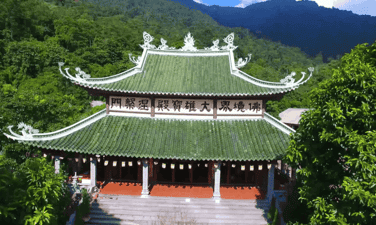
Tan Vien Pagoda - Sacred ancient temple in the middle of Ba Vi mountains and forests. Located on the slopes of Ba Vi mountain, in Minh Quang commune, Hanoi, Tan Vien pagoda (Tan Vien Son Quoc Tu) is an ancient pagoda associated with the sacred land of Tan mountain. According to the pagoda's documents, the pagoda has a history dating back to the reign of An Duong Vuong. Experiencing many historical events, the temple was damaged and became ruins before being restored by local people in 1993. In 2008, Venerable Thich Dao Thinh was appointed abbot and together with monks, nuns, and Buddhists gradually built and developed the pagoda into a center for learning and propagating Dharma in the Ba Vi area. After nearly two decades, the pagoda has been built spaciously with many items such as Tam Bao, Patriarch's house, Quan Am Thien Thu Thien Nhan palace, Dharma conference house, Dai Thong Tri Thang statue, Quan Am cave - well and many spiritual works in harmony with mountain and forest nature. Not only is it a place of worship, Tan Vien Pagoda also regularly organizes retreats for Buddhists, teenagers and students, contributing to spreading the values of compassion, wisdom and morality of Buddhism. With its pure landscape, unique architecture and sacred space between Ba Vi Mountain, Tan Vien Pagoda today is an attractive spiritual and cultural destination for tourists and Buddhists from all over. Source: People's Representative Newspaper.
Hanoi
822 view
Rating : National monument
Vinh Quang Pagoda
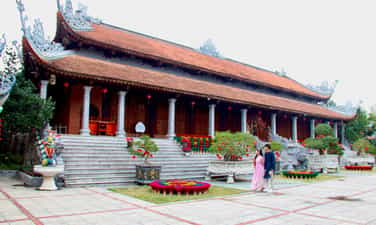
Vinh Quang Pagoda - An ancient pagoda that holds the unique title of Supreme Elder Elder. Vinh Quang Pagoda is located in Phu Noi area, Thanh Mien commune, Hai Phong city (formerly in Thanh Mien town, Thanh Mien district, Hai Duong province). The temple has a history of more than 350 years, and is one of the oldest cultural and religious centers of the locality. Having undergone many restorations, especially after being restored on the old foundation in 2004, the pagoda still serves as an important spiritual activity spot for the people. The outstanding value of Vinh Quang Pagoda lies in preserving 13 ancient ordinations, including 5 ordinations from the Le dynasty and 8 ordinations from the Nguyen dynasty, dating from the 17th century to the early 20th century. In particular, the Taoist decree conferred in 1657 under the reign Thinh Duc is a rare document when conferring the Supreme Elder Lao Quan (Ly Lao Dam) - the god of Taoism. This is a rare case in the ordination system in Vietnam, reflecting the interference between Taoism and Vietnamese folk beliefs over the centuries. Besides historical value, the pagoda also preserves traditional architecture with items such as the three treasures, the ancestral house and the model house. During the resistance period, the pagoda was used as a classroom and clinic to serve the people, contributing to affirming the relic's close role in community life. Today, Vinh Quang Pagoda is not only a place to worship Buddha and practice traditional beliefs, but also a place with humanistic significance when caring for and nurturing children with special circumstances. With historical, cultural, religious and social values, Vinh Quang Pagoda is a typical relic, contributing to preserving and promoting the cultural heritage of the Northern Delta region. According to: Vietnam Securities Economics Electronic Magazine
Hai Phong
912 view
Rating : Provincial level relics