Relic point Vietnam
Việt Nam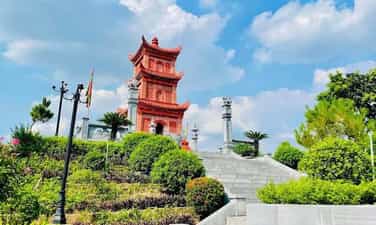
Temple of Female Doctor Nguyen Thi Due
Temple of Female Doctor Nguyen Thi Due - A place to honor the first female doctor in the history of Vietnamese academics. The Temple of Female Doctor Nguyen Thi Due is located at the foot of Phuong Hoang Mountain, Chu Van An ward, Hai Phong city. This is a historical-cultural relic associated with the life of Nguyen Thi Due (1574–1654), who is considered the first female doctorate in the history of Vietnamese academics. Born in Kiet Dac village, she was famous for being intelligent and eager to learn from a young age. Because women in feudal times were not allowed to take the exam, she disguised herself as a man to participate in the exam in 1594 and passed the PhD. With her talent and virtue, she was highly utilized by both the Mac dynasty and the Le - Trinh dynasty, making many contributions to training talented people, encouraging learning and developing education. The temple and mausoleum are a place to commemorate and honor an outstanding woman who overcame the prejudices of her time to affirm her intelligence and bravery. Every year, on the 8th day of the 11th lunar month, the locality holds an incense offering ceremony to pay tribute to her contributions and promote the tradition of studiousness and respect for teachers. Source: According to the Center for Culture, Sports and Communications of Chu Van An ward
Hai Phong
673 view
Rating : National monument
Monument Park - Temple of Heroic Martyr Vo Thi Sau
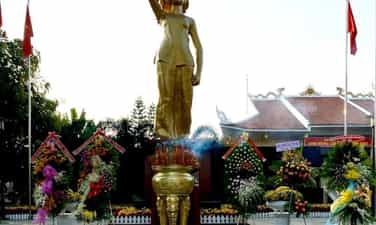
The historical relic site of Monument Park and Temple of Heroic Martyr Vo Thi Sau is located in Dat Do district, Ba Ria - Vung Tau province, now Ho Chi Minh City, formerly known as Dat Do Police Subdivision during the war. Ms. Vo Thi Sau was born in 1933 in Phuoc Tho commune. At the age of 14, she joined the Dat Do Assault Police team, bravely performed reconnaissance missions and participated in many dangerous battles, notably throwing grenades to disperse the enemy's attack at Dat Do market in 1948. In early 1950, due to a grenade falling apart in another attack, she fell into the hands of the enemy. Even though she endured many brutal tortures in prisons, she still maintained her revolutionary spirit. In April 1951, the French colonialists sentenced her to death when she was underage and secretly took her to Con Dao. At dawn on January 23, 1952, she was taken to the shooting range. She resolutely refused to be blindfolded, sang the song Tien Quan Ca and bravely sacrificed herself at the age of 19. To remember the gratitude, in the period 1980–1986, the locality built Monument Park with a 6m high bronze statue made by sculptor Tran Thanh Thanh. By 2001–2003, the 960 m² Temple continued to be completed right behind the monument to store documents and welcome visitors. Ms. Vo Thi Sau was posthumously awarded the title Hero of the People's Armed Forces in 1993. According to: Information portal of Ho Chi Minh City Department of Tourism
Ho Chi Minh City
307 view
Rating : National monument
Thach Han River Memorial Temple - Lantern release station
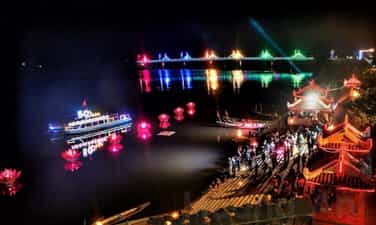
Thach Han River - The legendary river of the fiery red summer Thach Han River is the largest river in Quang Tri province, originating from the Truong Son range and flowing through the center of Quang Tri town before flowing into Cua Viet sea. Not only does it carry the gentle beauty of the Central region, the river is also a sacred historical symbol, associated with the fight to protect Quang Tri Citadel during the 81 days and nights of the red summer of 1972. During that historic campaign, Thach Han River was the lifeline that brought soldiers, weapons and food through the storm of bombs and bullets to defend the Citadel. Thousands of soldiers fought heroically and remained forever in the riverbed, making Thach Han a river of memories, gratitude and desire for peace. Up to now, the flower floating wharf by the river is where many gratitude activities take place, especially on the occasion of the War Invalids and Martyrs' Day commemoration of July 27, when thousands of flower lanterns are floated down the water to commemorate those who sacrificed for national independence. Today, coming to Thach Han River, visitors not only can admire the peaceful scenery of a historic river but also have the opportunity to connect the journey to visit Quang Tri Citadel, Thach Han River Memorial Temple - Flower Lantern Dropping Station, Truong Son National Martyrs Cemetery and many other famous "red addresses". This is a destination rich in historical value, contributing to spreading the message of peace, patriotism and gratitude to the generations of ancestors who sacrificed for the Fatherland. Source: According to Phong Nha Discovery
Quang Tri
312 view
Rating : Special national monument
Temple of Sat Hai Dai Vuong Hoang Ta Thon
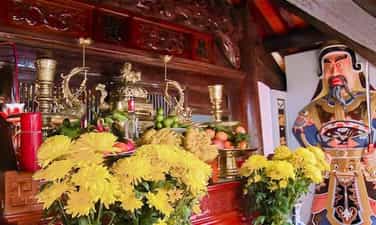
The temple of Sat Hai Dai Vuong Hoang Ta Thon is located in Van Trang hamlet, Hop Minh commune, Nghe An province. This is a typical historical and cultural relic, worshiping Sat Hai Dai Vuong Hoang Ta Thon (1254 - 1339), a famous general of the Tran Dynasty who had many achievements in the resistance war against the Yuan - Mongol army, especially the Bach Dang victory in 1288. After the great victory, he was assigned to command the navy, guard the seaports, protect the coastal area and contribute to maintaining the shores of Dai Viet. The temple was built on land associated with his life and career. Over many centuries, the relic still retains traditional architecture with items such as temple gates, worship halls, upper palaces and many valuable artifacts, worship objects and wood carving systems, reflecting the unique architectural art and beliefs of the land of Nghe An. This is not only a place for people's religious activities but also an educational address for patriotic traditions and the moral "When you drink water, remember its source". Every year, from the 11th to the 16th of the 6th lunar month, the Hoang Ta Thon Temple Festival takes place at the temple with traditional rituals such as opening ceremonies, announcements, palanquin processions, incense offerings and offerings, along with many cultural, artistic and folk sports activities. The festival is an opportunity to commemorate the merits of the famous general, while contributing to preserving and promoting traditional cultural values and attracting a large number of people and tourists from all over to attend. Source: According to Hop Minh Commune Electronic Information Portal, Nghe An
Nghe An
314 view
Rating : National monument
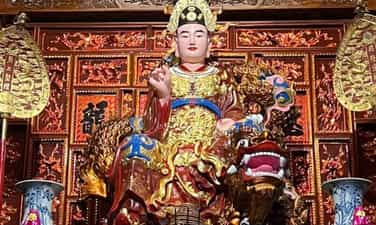
Hung Long Temple – National Intangible Cultural Heritage Festival
Hung Long Temple - Spiritual destination associated with the National Intangible Cultural Heritage festival. Hung Long Temple (Hung Long Linh Tu) located in Dong Tien Hai commune, Hung Yen province, is a historical - cultural and religious relic associated with the custom of worshiping Quan Hoang Bo - a saint in the Four Palaces belief revered by people in coastal and river areas. According to legend, Quan Hoang Bo once appeared to help people fight natural disasters, protect dykes and bring about a peaceful life, so people built a temple to commemorate and worship him. Over the centuries, the temple has become an important religious place for local residents. The temple was built according to the traditional architecture of the Northern Delta with items such as pre-sacrificing, middle-class, main temple and forbidden palace. Not only has architectural and historical value, the temple also preserves many artifacts, worship objects and unique cultural values, contributing to reflecting the spiritual life of residents of the estuary area. Associated with the relic is the Hung Long Temple Festival, held annually from the 10th to 15th of the 6th lunar month. The festival stands out with the water procession ceremony (water supply ceremony to pray for fish), traditional sacrificial rituals and many folk cultural activities such as lion dance, dragon dance, tug of war, wrestling and tom whore's nest, expressing the desire for favorable weather, a peaceful country and a prosperous life of river residents. In July 2025, Hung Long Temple Festival was registered by the Ministry of Culture, Sports and Tourism on the National Intangible Cultural Heritage List, contributing to affirming the typical cultural value of the monument. According to: Dong Tien Hai commune's electronic information portal
Hung Yen
317 view
Rating : National monument
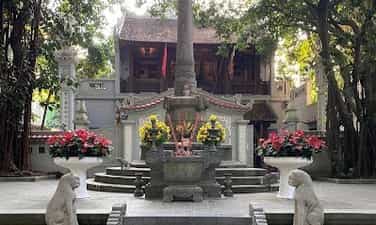
Statue of King Le Thai To next to Sword Lake
Statue of King Le Thai To next to Sword Lake The statue of King Le Thai To is located in the temple worshiping King Le Thai To located at 16 Le Thai To Street, Hang Trong Ward, Hoan Kiem District, Hanoi, in the green space on the banks of Hoan Kiem Lake. This is a historical relic associated with national hero Le Loi and the legend of returning the magic sword, a typical symbol of Thang Long - Hanoi. According to history books and legends, after leading the Lam Son uprising to defeat the Ming army, establishing the Later Le Dynasty, King Le Thai To returned the Thuan Thien sword to the Golden Turtle at Hoan Kiem Lake. From then on, the lake was named Hoan Kiem Lake (or Sword Lake), becoming a symbol of the desire for peace and national independence. The bronze statue of King Le Thai To was built in 1896, about 1.2 meters high, showing the king in a majestic posture, his right hand holding a sword, his left hand on his hip. The entire relic includes gate, garden, Phuong communal house and monument, in harmony with the landscape of Hoan Kiem Lake. In 2000, the project was restored and renovated on the occasion of the 990th anniversary of Thang Long - Hanoi. According to: Hanoi Landscapes and Monuments
Hanoi
441 view
Rating : National monument
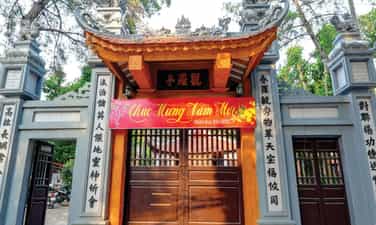
Quan La Communal House
Quan La Communal House - Historical relic associated with a mysterious ancient underground tunnel. Quan La communal house is located in Tay Ho ward, Hanoi, is an ancient communal house with a long history of the West Lake region. According to Tay Ho 360 website, the communal house is also called Quan Gia La, Quan Khai Nguyen or Quan Chua Hang, worshiping the village's tutelary god with many ordinations from the Le and Nguyen dynasties, of which the earliest ordination is dated 1653. Along with Khai Nguyen pagoda, Quan La communal house was ranked a national historical and architectural and artistic relic in 1992. The communal house stands out with traditional architecture, ancient space and many hundreds of years old trees. This is also the place where President Ho Chi Minh visited twice in 1958 and 1964, and was also the place where the Capital's defense force was stationed during the resistance war against the US. A special feature of Quan La communal house is that below the harem there still exists Thong Thien Cave - an ancient underground tunnel built of brick arches. According to Tay Ho 360, this work is said to date back to the Ly dynasty. Some theories say that this was once a Taoist alchemy place, while archaeologists believe it could be a Han Dynasty burial tomb. To date, the origin and function of the underground bunker have not been determined, creating a mysterious and unique appeal for the monument. With historical value, architecture and unique archaeological vestiges, Quan La communal house is not only a place for religious activities of the community but also a destination to help visitors learn about history, culture and mysteries still preserved in the heart of the Capital. Source: According to Tay Ho 360 website.
Hanoi
821 view
Rating : National monument
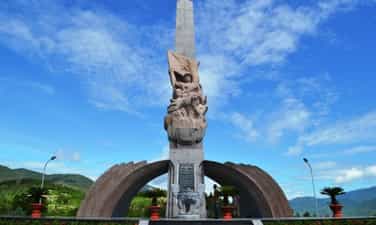
Thuong Duc Victory Memorial Area
Thuong Duc Victory Memorial Area - A red address in the middle of a heroic land. Thuong Duc Victory Memorial Area is located in Dai Lanh commune, Da Nang city, which marks the resounding Thuong Duc victory on August 7, 1974 - one of the battles of strategic significance in the resistance war against the US to save the country. In 1974, Thuong Duc was a fortified military base of the Saigon government, known as the "steel door" protecting the west of Da Nang. After 10 days of fierce fighting, our army and people took control of the base on August 7, 1974, opening up an important defense line of the enemy. The victory not only created a turning point on the Quang Nam battlefield but also made an important contribution to the Politburo and the Central Military Commission planning strategies, moving towards the 1975 Spring General Offensive and Uprising, completely liberating the South and reunifying the country. To commemorate the heroic martyrs who sacrificed their lives, the Thuong Duc Victory Memorial Area was invested and built on a spacious scale on the basis of the old Thuong Duc district capital. The project includes a granite victory monument, a ceremonial yard, a green campus, and a system of trenches and bunkers preserved, recreating part of the old battlefield. The monument is over 18 meters high, facing Ai Nghia - Da Nang, expressing the nation's offensive spirit and desire for peace. Source: Da Nang Newspaper and Radio and Television.
Da Nang
364 view
Rating : National monument
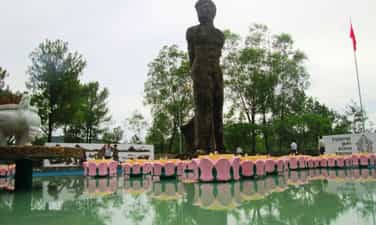
Vinh Trinh massacre relic site
Vinh Trinh massacre relic site - Historical evidence of war crimes. The Vinh Trinh massacre relic site is located in Thu Bon commune, Da Nang city, which marks one of the most painful massacres in Quang Nam in the early period after the 1954 Geneva Agreement. On the night of January 21, 1955 (ie the night of the 29th and the 30th day of the At Goat Lunar New Year), the US - Diem government brutally murdered 38 officers, soldiers and patriots at Vinh Trinh Dam to suppress the revolutionary movement. The victims were tortured, tied with stones and then drowned in the lake to destroy their evidence. This crime shocked domestic and international public opinion, becoming a symbol of the brutality of the US-Diem regime as well as the indomitable spirit of patriots. After the country's reunification, Vinh Trinh Memorial was built right near the place where the massacre occurred. The work stands out with a statue of a proud soldier, a lake with 38 lotus flowers symbolizing 38 victims, in which an unopened lotus bud commemorates the pregnant woman who died. The solemn space between the pine hill and the lake is both a place to pay tribute to fallen heroes and contribute to educating patriotic traditions for today's generations. With special historical values, the Vinh Trinh Massacre Site has been ranked a National Historical Monument by the Ministry of Culture, Sports and Tourism according to Decision No. 309/QD-BVHTTDL dated January 26, 2011. Today, this place is a "red address" that attracts many groups of visitors, students and tourists to offer incense, learn about history and commemorate those who sacrificed for the nation's independence and freedom. Source: Thu Bon commune electronic information page
Da Nang
630 view
Rating : National monument
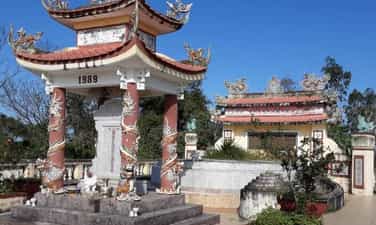
Tomb of Pham Phu Thu
Tomb of Pham Phu Thu - A relic marking a typical reformer of the 19th century. Pham Phu Thu's tomb is located in Go Noi commune, Da Nang city (according to the new administrative boundaries), which is the resting place of the famous Pham Phu Thu (1821–1882) - a mandarin of the Nguyen Dynasty, diplomat, cultural figure and one of the pioneers who proposed the idea of national reform in the 19th century. Born in the ancient land of Quang Nam, Pham Phu Thu was famous for his intelligence, wide learning, high grades and held many important positions under the reigns of King Thieu Tri and Tu Duc. He and Nguyen Truong To are considered typical reform thinkers with many proposals on economic development, science and technology, education, diplomacy and trade to help the country develop and strengthen its internal strength against the threat of French colonial invasion. Throughout his life as an official, Pham Phu Thu was always known as an honest, upright, and dedicated mandarin for the people. He participated in the mission to France and Spain in 1863, from which he recorded many precious documents in the Western Diary, and left behind many valuable works on history, culture and reform ideology, making an important contribution to the treasure of Vietnam's academic heritage. After his death in 1882, he was posthumously awarded the rank of First Class by the court and recognized for his great contributions to the country. Pham Phu Thu's grave today is not only a place to commemorate a cultural celebrity but also an educational address for patriotic traditions, the spirit of innovation and the aspiration for national development. Source: Department of Cultural Heritage
Da Nang
792 view
Rating : National monument