Tourist destination

Hanoi Cathedral
As one of the earliest Christian architectural works built in Hanoi, the Cathedral has experienced many ups and downs in the country's history, imbued with the lives and souls of many Hanoi people. The land on which the church was built was originally where Bao Thien Pagoda was located, existing since the Ly Dynasty. By the end of the 18th century, Bao Thien Pagoda was destroyed and became a small market before the first church was built. From 1884 - 1888, the Catholic Church built a brick church on the original wooden temporary church foundation. This is the largest church built in Hanoi, honored as the "Cathedral of Saint Joseph". The church was inaugurated at Christmas 1887. In 1890, Nha Chung Street was expanded and the Cathedral became a central place bustling with passersby. From Hoan Kiem Lake, following Nha Chung Street, visitors can easily find their way to the church. Standing out in the neighborhood with a large square with a statue of the Virgin Mary holding the baby Jesus. Visitors will have to enter the church through the side gate. Known as the oldest church and with the most beautiful architecture in Hanoi, the Cathedral has been meticulously designed by the hands of talented artisans. With European and Gothic design style, the Cathedral was built according to the motif of Notre Dame Cathedral in Paris. The church has a length of about 65m, a width of 21m and two bell towers of nearly 32m high, fixed by large stone pillars. The exquisitely designed stone cross attracts everyone's eyes from the moment they enter. The entire floor is made from terracotta tiles, and the four sides of the wall are plastered with sandpaper, creating an ancient and extremely beautiful space. Because it is hundreds of years old, the church wall is covered with moss, creating a wild and mysterious scene. The main doorways and doors all have pointed arches, typical of the Gothic style. The large dome curves upward, creating a lofty space. The highlight in the middle is the sophisticated, round flower-shaped window. With deep colors, mainly European style, mixed with many motifs bearing Vietnamese images, making the two sides of the church's walkway attractive, attracting tourists to look and admire the unique beauty. The church is divided into 3 spaces: the reception hall - a place for the choir and musicians, the ceremony area and the sanctuary for ceremonies. Right in the cathedral are hidden three tombs of Cardinal Trinh Nhu Khue, Cardinal Pham Dinh Tung and Cardinal Trinh Van Can. In the middle is a statue of the Virgin Mary, covering the entire church scene, creating an unusually warm feeling, like a mother is opening her arms to embrace her young children. The church usually has 2 masses on weekdays and 7 masses on Sunday. On March 19 every year, the procession of the Patron Saint of the Archdiocese of Hanoi will be held here. During ceremonies, people often hear music playing along with prayers in the Cathedral. This is also where absolution sessions for the congregation take place. Like other churches, Christmas and Easter are the two biggest ceremonies at the church, often holding lavish ceremonies, crowded with Catholics to celebrate the ceremony. Not only is it a famous religious site of the capital, Hanoi Cathedral is also a destination that attracts many young people and tourists to visit and take photos. Especially at Christmas time, the Cathedral is most splendidly decorated with elaborately decorated pine trees and colorful sparkling lights. However, you will need to come early because at dusk this place is already crowded with people. When talking about the Cathedral, of course we can't help but mention the "specialty" "smooth lemon tea" here. Cups of tea scented with jasmine flowers, sprinkled with a few slices of fresh lemon with a sour, sweet, and astringent taste have become a familiar drink to many Hanoians. Just a plastic chair on the sidewalk, sipping tea, chatting with friends or watching the traffic go by. Perhaps from such simple things, Church lemon tea always retains its unique charm for Hanoi people. In addition, it would be a mistake to come to Hanoi Cathedral and not enjoy all the dishes here. From Asian and European dishes to Hanoi snacks such as grilled spring rolls, pillow cakes, fried porridge... all will be found within just a few steps around the Cathedral.
Hanoi
10560 view


Temple of Literature Quoc Tu Giam
Temple of Literature is located in Dong Da district, Hanoi, right in the middle of 4 main streets including Nguyen Thai Hoc, Ton Duc Thang, Temple of Literature and Quoc Tu Giam. Traveling to Hanoi with thousands of years of culture, this is definitely a place you should visit. If starting from Hoan Kiem Lake, you follow Le Thai To street, turn right onto Trang Thi street, go towards Cua Nam street, Nguyen Khuyen street and then turn left onto Van Mieu street to arrive. Because Hanoi has many one-way streets, especially around the Temple of Literature area, remember to pay attention to avoid breaking traffic laws. The Temple of Literature was built in 1070 under the reign of King Ly Thanh Tong, as a place to worship Confucius, Cong Chu and Tu Phoi. In 1076, King Ly Nhan Tong established Quoc Tu Giam next to it, a university exclusively for the king's children and noble families. During the reign of King Tran Thai Tong, Quoc Tu Giam was renamed Quoc Tu Giam and accepted children of commoners with excellent academic ability. In the post-Le period, King Le Thanh Tong began to erect steles of those who passed the doctoral exam. During the Nguyen dynasty, Quoc Tu Giam established Hue. The Thang Long Temple of Literature was renovated and became only the Temple of Literature of Bac Thanh town, later changed to the Temple of Literature of Hanoi. The current Temple of Literature - Quoc Tu Giam relic complex is located on an area of 54,331 m2, including many different small architectural works. Surrounding the campus are brick walls. Having undergone many renovations, this relic complex includes Ho Van, Temple of Literature, Dai Trung Mon, Khue Van Cac, Thien Quang well, doctoral stele, Dai Thanh Mon, and Thai Hoc house. The teaching house on the east and west sides has 14 rooms. The students' classrooms in the three halls have three rows, each row has 25 rooms, and each room has 2 people. The entire current architecture of the Temple of Literature is from the early Nguyen Dynasty. The architectural complex of the Temple of Literature - Quoc Tu Giam is arranged symmetrically in each area, each layer along the North-South axis, simulating the overall planning of the Temple of Literature dedicated to Confucius in China. However, the scale here is simpler and follows the traditional method of national art. In front of the Temple of Literature there is a large lake called Van Chuong lake, its old name was Thai Ho. In the middle of the lake there is Kim Chau mound, which used to have a pavilion for sightseeing. Outside the main gate there are four pillars, on both left and right sides there is a stele "Ha Ma", around the area is built a high wall. The gate of the Temple of Literature was built in the style of Tam Quan, with three words "Temple of Literature" on it in ancient Chinese characters. The Temple of Literature is divided into 5 distinct areas, each area has a separating wall and a gate connecting with each other. The main gate of the Temple of Literature is built in the style of Tam Quan, with three words "Temple of Literature" on it in ancient Chinese characters. The Temple of Literature has a surrounding wall built of bricks. Inside there are also walls divided into 5 areas, each area has a dividing wall and a gate to each other. First area. Starting with the main gate of Van Mieu Mon, go to Dai Trung Mon gate, on both sides there are small gates, Thanh Duc Mon and Dat Tai Mon. Second area. From Dai Trung Mon to Khue Van Cac. Khue Van Cac is an architectural work that, although not massive, has harmonious and beautiful proportions. The architecture consists of 4 square brick pillars (85cm x 85cm) below supporting the upper floor, with very beautiful wooden structures. The upper floor has 4 circular doors, a convenient railing and a simple, rustic wooden roof support. The two-layer overlapping tile roof creates a structure with 8 roofs, ridges and a flat roof surface. The attic is a square floor with eight roofs, on all four sides of the attic are round windows shaped like the sun radiating rays of light. On the right and left sides of Khue Van Cac are Bi Van Mon and Suc Van Mon, leading to the two Doctor's stele houses. Khue Van Cac at the Temple of Literature - Quoc Tu Giam has been recognized as a symbol of Hanoi city. Third zone. Consists of Thien Quang Tinh lake (meaning well of sunlight), square in shape. On both sides of the lake are the doctor's stele houses. Each stele is made of stone, engraved with the names of those who passed the Poinsettia, Longan, Tham Hoa, Hoang Giap, and Doctoral exams. The stele is placed on the back of a stone turtle. There are still 82 steles of examinations from 1442 to 1779. These are the most precious relics of the relic. Fourth zone. Is the central area and main architecture of the Temple of Literature, consisting of two large works arranged parallel and consecutive to each other. The outer building is the Bai Duong, the inner building is the Upper Palace. This is the area worshiping Confucius and Tu Phoi (Nhan Tu, Tang Tu, Tu Tu, Mencius). Fifth zone. This is Thai Hoc's house. During the Nguyen Dynasty, the Quoc Tu Giam school in Hanoi was abolished, the Thai school was changed to the Khai Thanh house, worshiping Confucius's father and mother. However, this house was destroyed during the resistance war against the French. The new Thai Hoc building was rebuilt by Hanoi city in 1999. In this fifth area, there is also the Tien Duong - Hau Duong house, which is the place to worship kings Ly Thanh Tong, Ly Nhan Tong, Le Thanh Tong and Quoc Tu Giam Chu Van An. Things to note when visiting the Temple of Literature. First, respect the monument and comply with the regulations of the monument management unit. Do not harm artifacts or relics. Do not pat the turtle's head, write, draw, stand, or sit on the Doctor's stele... Second, clothes when going to the Temple of Literature should be clean and neat. Do not wear skirts or pants that are too short, revealing clothing, or indoor clothing. Do not smoke, wear hats or hats in the Temple area, exhibition hall... Finally, Implement a civilized lifestyle in places of worship: Do not have uncultured behavior, profanity, or cause disorder and security; Have the right attitude when performing the ceremony, each person only lights one incense stick; Offer offerings and burn incense in the right place.
Hanoi
10623 view


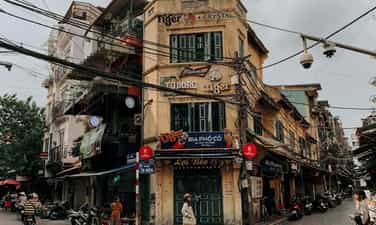
Hanoi Old Quarter
Referring to the history of Hanoi's 36 streets or Hanoi's Old Quarter, we probably have to go back to the period from the Ly - Tran dynasties, when this residential and commercial area began to form, residents from all the villages around the Northern Delta gathered and became the busiest area in the capital at that time. Not only that, this urban area also focuses on many handicraft and trade activities, from which the name "Hang" is formed, a call that refers to typical craft streets, imbued with tradition. Experiencing many ups and downs of the capital, that neighborhood still goes through the years, lasting until now, preserved and preserved to become Hanoi's old town in the hearts of many Vietnamese people. In terms of area, according to regulations of the Ministry of Construction, the official scope of Hanoi's Old Quarter is determined as follows: to the north is Hang Dau street; To the west is Phung Hung street; In the south are Hang Bong, Hang Gai, Cau Go and Hang Thung streets; and on the east side Tran Quang Khai street and Tran Nhat Duat street. Hanoi has 36 streets, the name has entered the subconscious of many people with the most simple and rustic features from names such as Hang Mam, Hang Non, Hang Duong, Hang Muoi... representing the main goods traded by small traders here. The old town has a very unique urban character, a prosperous and crowded place, always crowded with people but still retains the traditional cultural values from thousands of years ago of the capital. Each street gathers workers from famous craft villages around the ancient capital of Thang Long, turning each street here into a miniature craft village in the heart of Hanoi. Architecture is another unique feature that makes up the unique character of the old town, with the structure of tube houses, tilted tile roofs and storefronts specializing in business, built mainly in the 18th and 19th centuries. At first glance, the houses look small and shabby, but they are arranged very skillfully and reasonably by people, still fully serving the life needs of the people here. Hanoi's Old Quarter is beautiful with small roadside shops. Even though they are not luxury restaurants, the rich flavor attracts travelers, once they go they will never forget them. A session sitting by Hoan Kiem Lake, enjoying the wind, eating Thuy Ta ice cream, watching the flow of people passing by, or going to the street without enjoying Trang Tien ice cream is truly a mistake. Old Hanoi with its bustling street vendors weaving through each street with simple yet rustic dishes such as donuts, balut, or simply green rice, a heartwarming hometown gift for Trang An people can captivate any picky diner. Old town cuisine is associated with traditional dishes such as bun cha, pho, fish vermicelli, tofu vermicelli with shrimp paste, snail vermicelli, vermicelli thang,... from small roadside shops, or in ancient houses that are decades old. "Hanoi's 36 streets" is not only famous as the most entertaining place in Hanoi, but also preserves many historical and cultural values of more than a thousand years of civilization. You definitely should not miss this destination when visiting Hanoi.
Hanoi
10648 view


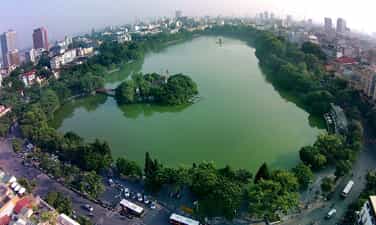
Sword Lake
Hoan Kiem Lake is located in the center of the capital, surrounded by 3 streets: Hang Khay - Le Thai To - Dinh Tien Hoang. Previously, the lake also had a number of other names such as Luc Thuy Lake (green lake) or Thuy Quan Lake (because the lake used to be a place to train naval soldiers to fight). In the 15th century, the lake was renamed Hoan Kiem Lake (returning the sword), associated with the story of returning the precious sword to the golden turtle of King Le Thai To. Hoan Kiem Lake is a gathering place, an ideal meeting point for four seasons: Brilliant in peach colors and traditional festivals in spring; The wind blows away the sultry heat of summer; Fall in love with the weeping willow branches in the magical mist of autumn; Gorgeous in the rain of yellow leaves and drizzling raindrops of winter. Not only is it a beautiful landscape that tourists cannot miss in the list of Hanoi tourist destinations, but it is also a place associated with the capital's historical and spiritual traditions. Hoan Kiem Lake has two floating islands: Ngoc Island is located in the north of the lake, with a curved The Huc bridge connecting to the island. In the middle of the lake is a smaller Turtle Island, above which is a hundred-year-old ancient Turtle tower, sitting quietly amid sparkling water waves. On 3 weekends, the streets around Hoan Kiem Lake will become walking streets with many attractive activities such as street music, folk games... attracts a lot of tourists. Located on Ngoc Island, Ngoc Son Temple is not only a historical relic and famous scenic spot of Hanoi but also a place to worship the god Van Xuong, the leading star of literature and examinations, and Saint Tran Hung Dao. Around the temple is a complex of architectural relics with many historical values and humane significance, including The Huc bridge, But tower, Nghien tower, Tran Ba communal house. The combination of the Ngoc Son temple complex and Hoan Kiem Lake has created an ancient architectural ensemble of harmony and balance between humans and nature. Next to Hoan Kiem Lake are old streets such as Hang Ngang, Hang Dao, Hang Duong,... where visitors can visit and explore the life, culture and people as well as the unique cuisine of Hanoi. Ly Thai To monument is located at Chi Linh flower garden on Dinh Tien Hoang street. This is a typical cultural architectural work at Hoan Kiem Lake to honor the king who publicly founded the capital city of Thang Long. Located on the shore of the lake, Hoa Phong tower is an ancient relic left over from Bao An pagoda after it was destroyed by the French to make way for a post office. Around the lake, there are countless items that you can buy as gifts for friends and relatives such as handicrafts, cute small gifts, clothes, shoes, Hanoi specialties such as green rice cake, apricot fruit... Hang Ngang, Hang Dao, Hang Bac, Hang Duong, Dong Xuan market... are some reputable and quality addresses for you to enjoy shopping. According to many people's experience, you should go shopping in the afternoon because the stores here are very strict about customers coming in the morning to ask for things but not buy anything.
Hanoi
10326 view


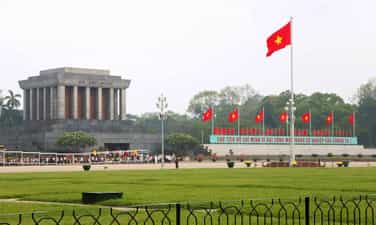
Ba Dinh Square - Uncle Ho's Mausoleum
Ba Dinh Square is located right in the center of Hanoi capital at 2 Hung Vuong, Dien Ban, Ba Dinh district. Ba Dinh Square is where President Ho Chi Minh read the Declaration of Independence. The square is open for visitors to visit from 5:00 a.m. to 10:00 p.m. every day. The overall square is about 320 meters long and about 100 meters wide with 210 grass plots. In the center of the square there is a flagpole with a height of 25 meters. Around Ba Dinh Square, there are many important works such as: Uncle Ho's Mausoleum, Ho Chi Minh Museum, Presidential Palace, one-pillar pagoda, stilt houses and Uncle Ho's fish pond. The ideal time to visit Ba Dinh Square, Hanoi is from September to March every year. During these months, the weather in Hanoi is quite cool and not too hot. This makes visiting and exploring Ba Dinh Square as well as other locations in the capital more convenient. Besides, in the last months of the year, the scenery in Hanoi is extremely poetic. When traveling to Ba Dinh Square, you will see more typical flowers. The transition from autumn to winter to spring brings a very unique beauty to the capital. When you arrive at Ba Dinh Square, don't forget to take photos as souvenirs. No matter what time it is, the vast scenery here will bring beautiful frames. If you go in the morning or afternoon, you will get natural light. If you come to Ba Dinh Square at night, you can take advantage of the light from the light poles to make the photo more beautiful. Ho Chi Minh Mausoleum is one of the photo-taking views that many tourists love when coming here. In addition, you can also easily find other beautiful shooting angles. You should use devices with wide-angle lenses to capture the panoramic beauty of the square. Located right behind Ba Dinh Square, Ho Chi Minh Mausoleum is a place you should visit. The mausoleum is open every day of the week except Monday and Friday. Opening times of the day will vary between different times of the year. There will be no fee for Vietnamese citizens to enter the mausoleum, but for foreign tourists it will be 25,000 VND per visit. The overall architecture of Ho Chi Minh Mausoleum is built in a square shape with 3 layers, 21.6 meters high and 41.2 meters wide. With a solid structure, President Ho's mausoleum is able to withstand bombs, floods and earthquakes. Outside the mausoleum, there are stone-covered columns and the words "PRESIDENT HO - CHI - MINH" in prominent red. The Presidential Palace is where Uncle Ho lived, worked and many important events in history took place. Built in French neoclassical architecture in 1902, the presidential palace has a total of 30 rooms with symmetrical design. Besides the unique motifs and decorations, the yellow paint color is also a factor to help make the presidential palace more prominent. In the campus of Hanoi's presidential palace, there are many green spaces. Walking under the trees, visitors can feel peaceful in the heart of the vibrant capital. The interior of the presidential palace has been preserved almost intact from the time Uncle Ho used it until now. Mainly simple wooden items. Similar to Uncle Ho's mausoleum, the Presidential Palace also does not accept visitors on Mondays and Fridays. Ho Chi Minh Museum was built in 1990, this will be a very interesting attraction on your Ba Dinh Square travel itinerary. Coming to the museum, you will learn about the life and career of President Ho Chi Minh. This is the place where documents, images of statues and historical items related to Uncle Ho's life are kept. Exploring the Ho Chi Minh Museum, visitors will not only learn about a great historical figure of the country, but also visit and explore a special architectural work with creative and lively exhibition areas.
Hanoi
12535 view


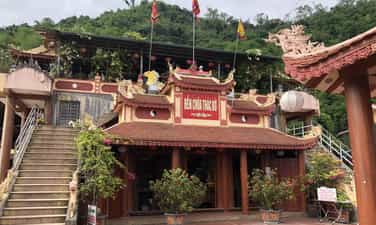
Ba Chua Thac Bo Temple
Ba Chua Thac Bo Temple is located in Vay Nua commune, Da Bac district, Hoa Binh province. This ancient temple is located on the shore of a large, calm turquoise lake all year round. Behind the temple is a mountain system with beautiful stalactite caves that delight visitors. In 2009, Thac Bo Cave in the relic cluster was recognized by the Ministry of Culture, Information and Tourism as a National Scenic Monument. Legend has it that Ba Chua Thac Bo Temple worships two female generals, Mrs. Dinh Thi Van from the Muong ethnic group and a lady (name unknown) from the Dao ethnic group. The two women were instrumental in Le Loi's reign, helping people and soldiers transport food and boats through Thac Bo to Muong Le to quell the rebellion. After the two women passed away, they often had epiphanies to help people safely cross the famous dangerous and harsh waterfall when the Da River had not yet blocked its flow that day. Grateful people built a temple to worship the two women to show their respect and hope that they would bless and protect them from danger when passing through the water. You should come to the temple from January 7 to the end of March (lunar calendar) because this is the time with the most bustling festivals. Thac Bo Ba Chua Temple owns a system of 38 statues, including 2 bronze statues worshiping two ladies. The temple has a large statue located in a cave that is dry and cool all year round. Surrounding the cave are shimmering and magical stalactite columns in the dim electric light, creating the sacred and attractive appearance of the worship cave. Tourists who want to offer incense first go to Trinh Temple and then to the Lord Temple. However, these two temples are located on two different "islands" so visitors are forced to take a boat for about 20 minutes to get there. Setting foot on the temple is a challenge of more than 100 steps to reach the place of worship. The special feature at Ba Chua Thac Bo Temple is that the back leans against the mountain and the face faces the vast, immense lake of jade green color. This beautiful scene has attracted many tourists to the temple to offer incense and admire the scenery. After offering incense, you can move to nearby locations in Thung Nai to enjoy delicious dishes of Hoa Binh. All foods are guaranteed to be "home-grown" so they are extremely fresh and delicious and carry a distinct specialty. Some dishes not to be missed include Da River fish, Muong pork, pickled vegetables, leaf yeast wine,...
Phu Tho
6222 view


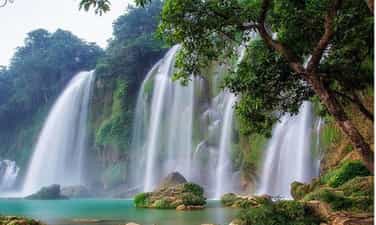
Thang Thien waterfall tourist area
Possessing a spacious area of up to 350 hectares, Thang Thien Waterfall is part of the Vien Nam range, about 60km from the center of Hanoi. The road to Thang Thien Waterfall is quite easy, the route is short and the natural scenery is charming, so it is not surprising that this place quickly became a favorite sightseeing and picnic spot for many people. If you intend to go to Thang Thien Waterfall, you can go by bus or motorbike. If traveling by motorbike, don't forget to save the route MIA.vn revealed right below: Thang Long Avenue - Hoa Lac Hoa Binh Expressway - DT446 - Road 6 (AH13) - National Highway 6. From here, go A short distance further and you will reach the Ascension Waterfall. Many of you who have been here have shared that the most ideal time for you to start your journey to enjoy and explore Thang Thien Waterfall is between May and July. This is summer, the sky is clear, no rain. Suitable for you to participate in outdoor activities and picnics. Away from the bustling city, the journey back to Thang Thien Waterfall will soothe and comfort your soul. The scene at Thang Thien Waterfall is very beautiful with water rushing from above, creating white foam. Amidst the mist, the space at the waterfall seems more romantic. Thang Thien Waterfall is divided into many interesting levels, with each level covered by water creating a mysterious feeling. The higher you go, the road becomes quite slippery, so if you intend to reach the top, you should move slowly to ensure safety. Right below the foot of the waterfall is a lake full of cool water all year round. The water in the lake is clear and not too deep, so it is suitable for swimming. Surrounding the lake are rocks of all shapes and sizes, very suitable for those who want to have check-in photos during their Hoa Binh travel itinerary. Nestled deep in the heart of the jungle, the cuisine at Thang Thien Waterfall is mainly products of the highlands. After the journey to cool off and enjoy the scenery, you can recharge with a series of outstanding dishes, such as wild vegetables, bamboo-tube rice, buffalo meat cooked in bamboo leaves, spring rolls with grapefruit leaves, and grilled pork. , grilled fish, deep fried stream fish, etc.
Phu Tho
6099 view


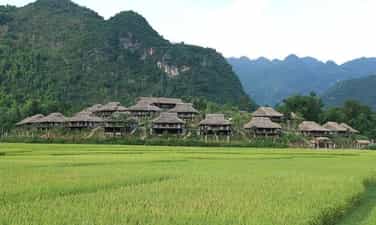
Mai Chau – A poetic land
Far from the hustle and bustle of the city, Mai Chau is famous for its pristine and peaceful natural scenery. Located in the heart of the Northwest mountains, this place is a beautiful picture of natural colors and unique cultural features of the nation. Mai Chau has winding trails through green forests, yellow terraced fields, or traditional wooden houses looming in the majestic space. Not only is it a beautiful natural land, Mai Chau is also a rich cultural museum of the Thai people. Here, traditional cultural features are still preserved and carefully cared for, from soft hand-painted fabric paintings to exquisitely carved wooden items. The oral art of the Thai people has been and is becoming the pride of the entire country of Vietnam. Mai Chau is a district in Hoa Binh province, about 150km northwest of Hanoi capital. With the wild natural beauty and unique culture of the indigenous people, this is an attractive destination for tourists who love to explore and experience the national cultural identity, as well as enjoy the atmosphere. The peaceful, quiet atmosphere of Vietnam's mountains. From October to February is one of the best times to travel to Mai Chau. This is the time when the air becomes chilly and peach and plum blossoms bloom. The magical scenery of white flower petals makes the land become poetic. Surely you will be attracted to the peaceful natural beauty of Mai Chau this season. Furthermore, if you are a lover of romantic spaces, or always want to immerse yourself in the chilly atmosphere, winter is a great time to come to Mai Chau and enjoy memorable moments. From March to April is also a good season to go to Mai Chau. At this time, ban flowers bloom throughout Mai Chau. Besides, the weather during this period is often cool and pleasant, very convenient for participating in outdoor activities such as trekking or enjoying the beautiful landscape of the Northwest region. If you want to experience the freshness and radiance of spring, along with the soothing scent of blooming banyan flowers, March and April are the ideal times to visit Mai Chau and enjoy the unique landscapes. of this season.
Phu Tho
6081 view


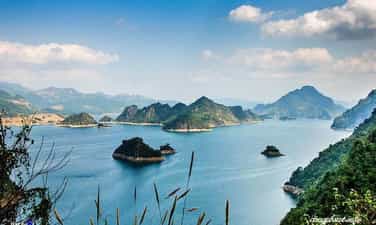
Thung Nai – Ha Long on land
Thung Nai in recent years has been a familiar destination every weekend for those who love peace, avoiding noise and dust. As a commune in Cao Phong district, Hoa Binh province, Thung Nai is located in the bed of Da river lake, 25 km from the city center and about 110 km from Hanoi. With the perfect combination of mountains, islands and clear blue lakes, Thung Nai brings poetic beauty and relaxing moments. Thung Nai in recent years has been a familiar destination every weekend for those who love peace, avoiding noise and dust. As a commune in Cao Phong district, Hoa Binh province, Thung Nai is located in the bed of Da river lake, 25 km from the city center and about 110 km from Hanoi. The name Thung Nai makes many people think of a valley with deer roaming around. According to local people, this place was once home to many species of wild deer. The poetic image of golden deer bewildered in the afternoon sunlight on the slopes, reflecting on the Da River, was used by people to name this land. Nowadays, coming to Thung Nai, although there are no longer wild deer, the poetic and romantic beauty of the mountains and rivers here seems to still be intact. To explore this "golden deer valley", you can only use a boat or walk. Leave the car on the shore, the motorboat will take tourists for a tour on the hydroelectric lake. In the strong wind blowing from the lake, the picturesque scene of Thung Nai appears before your eyes. A large lake surrounded by rolling mountains. In the lake, hundreds of large and small "islands" undulate like magnificent natural masterpieces. Floating on the water, the motorboat weaves through the rocky outcroppings, creating the feeling of enjoying "Ha Long on land". A perfect combination of rivers, lakes and mountain rocks, Thac Bo cave is a destination not to be missed when coming to Thung Nai. The cave is located deep inside the mountain and is quite wild, but the scenery inside is beautiful. The whole forest of stalactites grows up and down, with strange shapes. After the high water season, visitors entering the cave can enjoy schools of fish swimming freely in the shallow, clear water. Right near the cave is Ba Chua Thac Bo temple. Although the temple is quite small and located on a steep mountain slope, this place attracts many tourists from all over to worship. For many people, stopping at the temple is an opportunity to enjoy the beauty of Thung Nai from a high perspective with floating white clouds and glimpses of ethnic villages. An interesting thing here is that when the Da River water dries up, visitors to the temple have to climb up steep stone steps, sometimes stumbling. But during the high water season, the steps flood, visitors to the temple just need to step down from the boat. If you go on Sunday, don't forget to visit Thac Bo floating market. Not too noisy and crowded, but a very typical cultural feature of the Muong people in Thung Nai. Thung Nai in recent years has been a familiar destination every weekend for those who love peace, avoiding noise and dust. As a commune in Cao Phong district, Hoa Binh province, Thung Nai is located in the bed of Da river lake, 25 km from the city center and about 110 km from Hanoi. The name Thung Nai makes many people think of a valley with deer roaming around. According to local people, this place was once home to many species of wild deer. The poetic image of golden deer bewildered in the afternoon sunlight on the slopes, reflecting on the Da River, was used by people to name this land. Nowadays, coming to Thung Nai, although there are no longer wild deer, the poetic and romantic beauty of the mountains and rivers here seems to still be intact. To explore this "golden deer valley", you can only use a boat or walk. Leave the car on the shore, the motorboat will take tourists for a tour on the hydroelectric lake. In the strong wind blowing from the lake, the picturesque scene of Thung Nai appears before your eyes. A large lake surrounded by rolling mountains. In the lake, hundreds of large and small "islands" undulate like magnificent natural masterpieces. Floating on the water, the motorboat weaves through the rocky outcroppings, creating the feeling of enjoying "Ha Long on land". A perfect combination of rivers, lakes and mountain rocks, Thac Bo cave is a destination not to be missed when coming to Thung Nai. The cave is located deep inside the mountain and is quite wild, but the scenery inside is beautiful. The whole forest of stalactites grows up and down, with strange shapes. After the high water season, visitors entering the cave can enjoy schools of fish swimming freely in the shallow, clear water. Right near the cave is Ba Chua Thac Bo temple. Although the temple is quite small and located on a steep mountain slope, this place attracts many tourists from all over to worship. For many people, stopping at the temple is an opportunity to enjoy the beauty of Thung Nai from a high perspective with floating white clouds and glimpses of ethnic villages. An interesting thing here is that when the Da River water dries up, visitors to the temple have to climb up steep stone steps, sometimes stumbling. But during the high water season, the steps flood, visitors to the temple just need to step down from the boat. If you go on Sunday, don't forget to visit Thac Bo floating market. Not too noisy and crowded, but a very typical cultural feature of the Muong people in Thung Nai. As the boat slowly moves through the water, the windmill stands tall on the small island, attracting the attention of anyone passing by. This is like the invitation of a vacation home in the middle of the lake. Therefore, whether they come back during the day or stay overnight, most tourists coming to Thung Nai want to stop by this small island to see with their own eyes the seemingly unique windmill. in the Netherlands, or in the famous novel "Don Kihote - the talented nobleman of Manta". Not only is it unique, the windmill here also has a beautiful viewing spot. From here, you can zoom out into the distance, taking in the entire ink painting of Thung Nai in your sight. If you go up the "mill" early in the morning, you will see Thung Nai engulfed in mist, while when the sun rises, the clear blue lake surface sparkles yellow. In addition to the pristine natural landscape, the specialty parties of the Muong people have become a highlight in Thung Nai. It was a meal with stream fish, hill chicken and exotic wild vegetables.
Phu Tho
5550 view


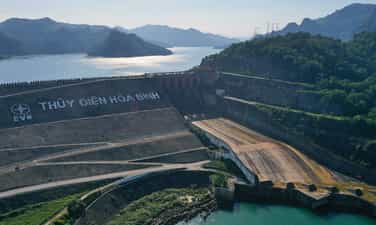
Hoa Binh hydroelectric plant
Hoa Binh Hydropower Plant was built at Hoa Binh Lake, Hoa Binh province, on the Da River in Northern Vietnam. Before Son La hydroelectric plant was inaugurated, this was the largest hydroelectric plant in Vietnam and Southeast Asia. Hoa Binh Hydropower Plant - a century project built with help from the Soviet Union in 1979 in Hoa Binh City. Where Soviet experts and tens of thousands of engineers and workers, many of whom were teachers and students from the Faculty of Civil Engineering - Water Resources University, had unforgettable years, with determination and thirst. A burning desire to create miracles in conquering the Da River. On the largest scale construction site in Southeast Asia at that time, at peak there were up to 40,000 workers working. Although there are still many difficulties, lack of electricity, lack of water, hard and dangerous work, the enthusiasm of working youth has urged the hands and minds of engineers and workers to turn the river into a source of doll. Everyone did not care about difficulties and hardships, enthusiastically working up to 3 shifts, 4 shifts, all night long "for the tomorrow's electricity of the Fatherland". Labor slogans have now become legendary such as "High altitude". 81 or die" has shown the spirit of working urgently, enthusiastically, and overcoming difficulties of the young generation on the construction site. People's efforts and efforts to overcome all time and all dangerous terrain have been rewarded. On December 31, 1988, the first generating unit of Hoa Binh Hydropower Plant generated electricity to the system, signaling a historic moment for the country and the Vietnamese Electricity industry. On April 4, 1994, the eighth and last power unit of the plant was officially completed, with a total installed capacity of 1,920 MW. On December 24, 1994, our country excitedly celebrated the important event of the inauguration of the Hoa Binh Hydropower Plant on the Da River, marking the result of 15 years of selfless labor for the electricity of tomorrow for the Fatherland. Tens of thousands of officials, employees and experts on the construction site were constructing for the first time a great project of the twentieth century. After more than 30 years of operation, by 2021, the plant has provided the country with a total output of over 250 billion kWh, annually contributing more than 1,000 billion VND to the province's State budget. In addition, TDHB actively and effectively participates in flood control, ensuring safety for the Northern Delta and Hanoi Capital. With a large reservoir capacity of up to 10 billion cubic meters of water, the flood prevention capacity Flood estimated at 5.6 billion cubic meters, Hoa Binh hydropower plant has made a great contribution to flood prevention, ensuring safety for the entire Northern Delta region, especially Hanoi capital. Since the Hoa Binh Hydropower Plant was put into operation until now, the Northern Delta region has no longer had flooding. TDHB has controlled dozens of major floods of over 10,000 m3/sec; Typically, the historic flood in August 1996 had a flow of more than 22,650 m3/sec; The late flood that appeared in October 2017 (when the reservoir was full) had a flow of nearly 16,000 m3/sec with very complicated and unpredictable developments. At the same time, maintain the safety of the project and the downstream area of the Northern Delta.
Phu Tho
6707 view


