Tourist destination
Ma Lu Thang border gate.
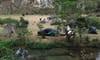
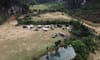
Ma Lu Thang border gate economic zone has a total area of 43 hectares, 50 km from Lai Chau city on National Highway 4D and National Highway 12, adjacent to Kim Thuy Ha border gate, Na Pha commune, Kim Binh district, Yunnan province, China. For every tourist who sets foot in Ma Lu Thang and admires milestone 66, there is a sacred feeling about national border sovereignty. That feeling is even more intense when they can hug the milestone with their arms and place the tip of their foot on the horizontal demarcation line on the surface of the Friendship Bridge. Ma Lu Thang border gate is the starting point of Highway 12, in Phong Tho commune, Lai Chau province, about 50 km from Lai Chau city. Ma Lu Thang is considered a spearhead to promote the district's economy. Ma Lu Thang is quite far from domestic economic centers, so goods can only be transported by road. When stepping through the arch of the gate covered with red brick, under the 7 yellow words "Vietnam's Ma Lu Thang Border Gate", everyone can feel the sacred meaning of national sovereignty. That feeling grew even more intense when I was able to stretch my arms around the landmark and place my toes on the horizontal boundary lines on the surface of the Friendship Bridge. Standing next to the bridge, reflecting on the Nam Na river, watching people from both sides go back and forth to buy, sell, and exchange goods, although not as bustling and vibrant as Lao Cai border gate or Tan Thanh border gate, one can still imagine the economic life of the people of a border area. In the Ma Lu Thang border gate area, next to the wide road at the foot of the mountain, there is a large poster erected. Next to the images of the national flags of Vietnam and China and portraits of President Ho Chi Minh and Chairman Mao Zedong, there is a bilingual slogan about the direction and principles in the Vietnam-China relationship: "Friendly neighbors, comprehensive cooperation, long-term stability, looking to the future". Implementing 3 documents on Vietnam - China border relations, Ma Lu Thang border gate border station together with Kim Thuy Ha border gate border station in Na Pha commune, Kim Binh district, Yunnan province of the other country organized bilateral patrols on the 13.5 km long border section from mark 65 (2) to mark 67 (2) to maintain security and order and protect the territorial sovereignty of each country. When traveling to Ma Lu Thang Border Gate, you should buy regional specialties such as grilled pork, guava seeds, Sung Phai corn wine, dried bamboo shoots, Son Mat Hong Sam tea, and brocade products. These are meaningful souvenirs and gifts, imbued with the typical flavor of Lai Chau. If you are looking to explore Lai Chau tourism, don't forget to visit Ma Lu Thang Border Gate to set foot on this border milestone!
Lai Chau
2600 view
Tam Duong terraced fields
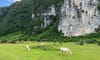
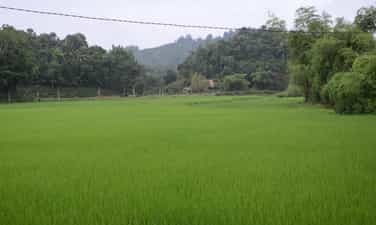
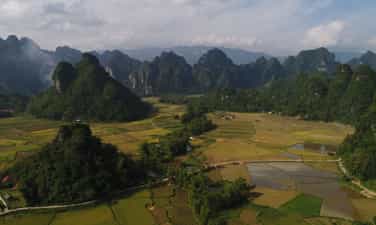
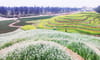
Terraced fields in the Northwest mountains have long become a symbol of creativity in highland agriculture. Especially in Lai Chau, this is an ideal destination for tourists passionate about wild and idyllic beauty. With existing potential and strengths, along with increasingly promoted tourism promotion activities, Lai Chau is making efforts to promote the image of terraced fields to domestic and international tourists. The process of creating and caring for rice fields requires diligence and experience. People start planting rice in May when water pours into the fields, then take care of it until the rice is ripe in September and October. When visiting Than Uyen commune - Lai Chau, visitors cannot miss the terraced rice fields in Ta Mung commune, with a total area of nearly 200 hectares, which is known as the vivid natural picture of Lai Chau. Terraced fields in Than Uyen were built based on the ingenuity of ethnic minorities, to take advantage of the steep mountain terrain to cultivate wet rice. Rice fields in Than Uyen commune, Lai Chau are also very famous with more than 2,000 hectares of rice area, which is considered one of the four largest rice granaries in the Northwest region, bringing majestic beauty and richness during the ripe rice season. In Muong Te district, visitors will have the opportunity to admire the terraced fields lying on the mountainside on the journey to the border commune of Thu Lum. In addition, Tam Duong also owns a beautiful terraced rice field in Ta Leng commune, spanning over 400 hectares, an ideal destination for those who want to immerse themselves in the peaceful space of nature. Besides, visitors coming here can immerse themselves in the lifestyle of the people, participate in agricultural activities and enjoy typical dishes of the Northwest mountains, making an important contribution to promoting the sustainable development of the local tourism industry. Not only that, Lai Chau is also blessed with majestic landscapes (6/10 highest mountain peaks in Vietnam), fresh and cool climate with mountain passes, hydroelectric reservoirs and many famous landscapes. When visiting terraced fields, visitors can learn and discover many other unique features. For example, coming to Ta Mung (Than Uyen district), visitors not only get to admire the beautiful scenery from the fields but also have the opportunity to experience the unique features of the Nam Pat market - a market imbued with the cultural identity of the Mong people. On the way back to Than Uyen town, visitors can combine sightseeing and rest, enjoy cuisine on a cruise at the hydroelectric lake or participate in the Zipline game on the Huoi Quang hydroelectric lake. Coming to districts: Tam Duong, Phong Tho, Muong Te, tourists have the opportunity to visit famous community tourism villages such as Tham village (Ban Hon commune), Vang Pheo village (Muong So commune), Sin Suoi Ho village (Sin Suoi Ho commune). In addition, visitors also have the opportunity to bathe in Vang Po hot spring (Phong Tho town), visit Ma Lu Thang border gate economic zone... Tam Duong Lai Chau terraced fields is one of the unique destinations of Than Uyen, with breathtakingly beautiful scenery and a market imbued with highland culture, promising to bring beautiful memories in visitors' journeys throughout the Northwest. If you have the opportunity to go to Lai Chau, remember to visit Tam Duong terraced fields to admire the simple and wild beauty of the pouring water season and the ripening rice season of the terraced fields here!
Lai Chau
2512 view
Na Dang Waterfall eco-tourism area
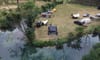
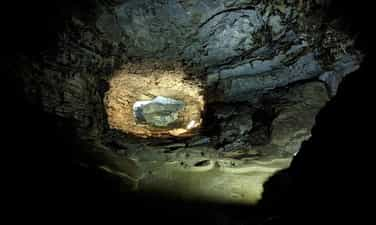
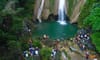
Explore Na Dang Waterfall - one of the wild and majestic destinations in Thai Nguyen. With pristine natural beauty, powerful waterfalls and quiet forest and mountain spaces, this is an ideal location for those who love to travel and explore. Self-sufficient - one of the wild and majestic destinations in Thai Nguyen. Na Dang Thai Nguyen Waterfall, nestled among majestic mountains and forests, is an ideal destination for those who love nature tourism and exploring the highlands. Na Dang Waterfall not only stands out with its wild beauty, but also contains wonderful secrets that nature bestows. In particular, this waterfall is located at the foot of the wind pass, one of the most beautiful roads in the Northern mountains. With a space covered by primeval forests, diverse flora and fauna and a rich ecosystem, Na Dang Waterfall is like a precious gem among Thai Nguyen nature. Water flows from three large streams and a small stream, combining to create a powerful waterfall, rolling over large rocks. The sound of rushing water makes the space more mysterious and refreshing. The majestic beauty of Na Dang Waterfall not only attracts tourists but is also an inspiration for those who love taking photos and exploring nature. At Na Dang Thai Nguyen Waterfall, visitors will participate in special experiences that bring a sense of adventure and a deep connection with nature. Here are some activities not to be missed: Trekking and Hiking: One of the activities not to be missed when coming to Na Dang Waterfall in Thai Nguyen on your own is trekking. The trekking routes here are designed to suit all levels of travelers, from easy trails to rugged paths, suitable for those who love challenges. Walking along the streams, you will have the opportunity to admire the wild and majestic beauty of the mountains and forests, the vast primeval forests, and the clear Son My Lake in the middle of the green forest. Cave exploration: Na Dang Waterfall is also attractive with interesting caves. Son My Cave is one of the interesting places, with a beautiful cave system and natural underground streams. Exploring these caves will take you to mysterious worlds, where the wild beauty of limestone rocks, stalagmites and cool water always create new and interesting things for the trip. Buckwheat flower carpet: In the fall, Na Dang Waterfall is covered with a brilliant purple buckwheat flower carpet. This is the most beautiful season for visitors to immerse themselves in nature and admire the romantic purple flower hills. The delicate flower petals and quiet space of the area will make you feel relaxed and gentle. Camping and picnic: There is nothing better than camping on the banks of a stream, enjoying the fresh air of the mountains and forests and the sound of running water. The camping areas at Na Dang Waterfall are arranged reasonably, ensuring full basic amenities for visitors. This is a great opportunity for you to immerse yourself in nature and organize an interesting picnic with family and friends. Na Dang Waterfall is located in the mountains, so the weather is quite cold in winter and cool in summer. The ideal time to visit Na Dang Waterfall is in the summer, when the climate is pleasant and tourist activities such as trekking, waterfall bathing, and photography can be done easily. However, visitors need to pay attention to moving safely on steep mountain passes when coming here. When coming to Thai Nguyen, in addition to the wonderful natural scenery, the cuisine here is also an attractive attraction for tourists. Below are 3 typical dishes that you cannot miss on your self-sufficient journey to explore Thai Nguyen cuisine: Com Lam; Pork guarding the kitchen; Coroc Mo cake... Na Dang Waterfall in Thai Nguyen is an ideal place for those who want to experience nature tourism and explore the wild beauty of the northern mountainous highlands. With majestic waterfalls, lush primeval forests, mysterious caves, and diverse tourism activities, Na Dang Waterfall will definitely bring you unforgettable experiences.
Thai Nguyen
2705 view
The tombs and temples of the Tran Kings
The tombs and temples of the Tran kings are located in Tam Duong village, Hung Long commune, Hung Yen province. This is the land where the Tran dynasty was founded and built and includes temples, tombs, and archaeological relics related to the Tran dynasty, also known collectively as Tran Temple. Tran Hung Yen Temple is a relic visited by many believers who are passionate about exploring history. This place possesses many historical values associated with the development of a golden dynasty. Tran Hung Yen Temple is a complex of relics including temples and tombs of kings and mandarins of the Tran Dynasty. This land is considered the place where the Tran dynasty was founded and established. There are many historical marks associated with the Tran Dynasty kings here. This work is currently ranked as a particularly important National Monument. Tran Hung Yen Temple is also known as Thai Duong Lang. This is a large architectural complex that attracts many historical explorers. Currently, at Tran Temple, archaeological sites of the Tran kings' tombs as well as the royal tombs and temples are preserved. The history of the Tran dynasty is associated with many wise kings such as Tran Thai Tong, Tran Thanh Tong, Tran Nhan Tong and famous generals and talented mandarins such as Tran Thu Do, Tran Hung Dao, Tran Nhat Duat, Tran Quang Khai, Tran Khanh Du... Tran Temple was built on a large land (about 5175 m2). Tran Hung Yen Temple was elaborately built and shows majesty and grandeur located in the center of Tien Duc commune. The items at Tran Temple that have been completed are the harem court, worship hall, left vu, right vu, ritual gate, golden pedestal, three tombs of Tran kings and a number of related works. Currently, the general architecture of Tran Hung Yen Temple consists of 3 main structures: The King's Temple worships Thai To Tran Thua and the Tran kings. Holy Temple worships Hung Dao Vuong Tran Quoc Tuan. Mother Temple worships Linh Tu Quoc Mother Tran Thi Dung, queen and princess of the Tran Dynasty. The layout of temples is often divided along the main axis, divided into spaces such as ceremony areas, temple interiors, and gardens. Tran Temple inherits the most unique features of village communal house architecture, promoting rich national traditions. In addition, the project was built with the talent of famous builders and sophisticated, vividly carved stones. All create an architectural complex that enhances the majestic beauty of the temple. Tran Temple Festival in Thai Binh is held from the 13th to 18th of the first lunar month every year to honor the nation-building contributions of the Tran Dynasty in the country's history. Tran Temple Festival in Thai Binh organizes many interesting procession and entertainment activities. The 3 tombs at Tran Thai Binh Temple will surprise tourists by their vast extent. In the mausoleum area are three mounds standing majestically in the middle of vast rice fields in Tam Duong village. This is one of the largest ancient burial mounds in Vietnam, known to many tourists. Those 3 burial mounds have the same scale as 3 small hills. This is an overwhelming man-made structure created during the Tran Dynasty. All three of these tombs were renovated in 2004. The diameter of the tomb is up to 65m and 1.2m high above the altar yard. The tomb in the middle is more special with a diameter of 55m and a height from the sacrificial yard to the top of the tomb of 7m. In the middle is the word Tran in Chinese characters in a rectangular iron frame. The tombs and temples of Kings Tran Hung Yen are a work worth exploring for those who are passionate about tourism and learning about history. If you are a believer who wants to explore Vietnamese history through dynasties, don't miss the Tombs and Temples of the Tran Kings in Hung Yen!
Hung Yen
2709 view
Hang Pagoda
Thai Nguyen Cave Pagoda is a spiritual destination with a long history dating back to the Ly Dynasty, a major Buddhist center of the province and famous for its sacredness, attracting many tourists. Thai Nguyen Hang Pagoda is a spiritual work located in the center of Hang Pagoda ward, Thai Nguyen city. To get to the pagoda, from the city center, you go north about 3km along the route across Gia Bay bridge to reach it. Hang Pagoda is also known as Kim Son Tu or Tien Lu Phat Dong. On February 26, 1999, this pagoda was recognized by Thai Nguyen province as a National Historical-Cultural Monument and Scenic Landscape. Today, this pagoda has become a sacred Buddhist place and a famous spiritual destination of the province. This temple is one of the largest temples in the province, thousands of years old and located in a prime location. The pagoda is located in the middle of three large mountains, on a flat land, with a romantic river flowing in front of it. The combination of natural beauty and beautiful natural architecture makes Hang Pagoda become a spiritual destination in Thai Nguyen that attracts many tourists. According to historical tradition, Thai Nguyen Cave Pagoda was built in the 11th century, at the time of Ly in our country. This was the period when Vietnamese Buddhism flourished. In the Year of the Dog, one morning when King Ly Thanh Tong woke up, he told his wife that he dreamed of a golden Buddha leading him to Dong Hy - Thai Nguyen. After that, Mrs. Nguyen Phi Ỷ Lan, the king's wife, came here to survey and discovered that this land had charming mountains and beautiful natural scenery just like her dream. Realizing that this was a good omen and a spiritual land, Ms. Nguyen Phi Ỷ Lan built a temple to worship Buddha. The pagoda was named Kim Son Tu, meaning Golden Mountain Pagoda. After thousands of years, Thai Nguyen Cave Pagoda has undergone many restorations, repairs, and new constructions. However, to this day, this pagoda still has the beauty of antiquity, blending into the beautiful lyrical natural picture of Thai Nguyen province. If you have the opportunity to travel to Thai Nguyen, you should once visit this famous temple. Thai Nguyen Hang Pagoda will be built and restored and divided into 5 zones with a total area of 2.7 hectares. The entire project will include rocky mountains and caves. The pagoda area alone will have 8 items: Tam Bao main hall, ancestral church, Dharma preaching hall, stupa, bell tower, drum tower, three internal gates, and three external gates. Visiting Hang Pagoda, visitors can immerse themselves in a peaceful spiritual cultural space and admire an architectural complex surrounded by charming mountains and water. Right behind the pagoda there are rolling green mountains, right in front of the pagoda is the quietly flowing Cau River. All create a quiet space for people to feel more peaceful. Visiting the cave system in the pagoda, visitors will encounter many nooks and crannies designed as "the way to heaven, the way to the underworld", both heavenly and terrifying. In particular, when exploring the cave system here, you will admire the beautiful stalactites in the cave. On the cliff, there are still poetic records written in Chinese characters from the Early Le - Late Nguyen dynasties. To meet the needs of tourists and Buddhists everywhere to visit the temple, the temple is restoring and building additional works to complete. In the future, the pagoda will become complete and majestic, worthy of being known as a beautiful spiritual tourist destination of Thai Nguyen province. Hang Pagoda is a destination in Thai Nguyen that attracts tourists, especially in the first lunar month. From January 19 to 21, the pagoda will organize the Hang Pagoda Festival to pray for favorable weather, lush trees, and good harvests with many ceremonial and festival activities held on a large scale and solemnly. Participating in the Hang Pagoda festival, visitors can admire the rituals of offering incense, carrying palanquins, giving thanks to the stream gods, river gods, etc. In addition, the festival with many games such as shuttlecock toss, archery, bridge tossing, stick pushing, cockfighting, duck neck tossing, cultural and artistic performances, etc. are vibrant and exciting, helping visitors have many memorable travel experiences. Thai Nguyen Cave Pagoda is a destination with a long history and famous sacredness. This place has charming scenery and large space, giving visitors peace and comfort when coming here to visit. If you have the opportunity to travel to Thai Nguyen, you should visit this temple once to fully feel the beauty and pure space here.
Thai Nguyen
2865 view
Pho Hien (Pho Hien special national relic area)
Pho Hien - Hung Yen was once the busiest international trading port in Dang Ngoai in the 16th and 17th centuries, a "little Trang An", "a place of urban prosperity", and also a place of convergence and interference of many cultures. While Thang Long capital had 36 streets, Pho Hien had more than 20 wards and towns, famous for the song "First Kinh Ky, Second Pho Hien". If you have the opportunity to come to Hung Yen, you will be satisfied to experience the Pho Hien Special National Relic Area, to feel the rich and unique historical, cultural, architectural and artistic values, marking the era of "Little Trang An". Furthermore, the beauty of the buildings in the Pho Hien relic complex is also the crystallization and interference between pure Vietnamese architectural style, Chinese architecture and Western-style architecture. The Pho Hien relic complex was recognized as a special national relic in 2014. The Pho Hien special national relic area includes 16 typical relics, which are: Xich Dang Temple of Literature, Bell Pagoda, Mother Temple, Tran Temple, Hien Pagoda, Pho Pagoda, Ne Chau Pagoda, Thien Hau Temple, Vo Mieu, Dong Do Quang Hoi, May Temple, Cuu Thien Huyen Nu Temple, Ba Chua Kho Temple, An Vu Temple, Kim Temple Dang, Nam Hoa temple. The first place you should explore is Mau Temple, right next to Crescent Lake, Bai Say Street, Quang Trung Ward, a historical and cultural relic, an ancient and majestic architectural work, and a sacred destination that tourists often come to. The temple worships Lady Quy Phi of the Duong family, who was hailed as "Mother Nghi Thien Ha" during the Song Dynasty (China), who sacrificed her life to remain faithful to the king and loyal to the country. Here, visitors will be able to freely admire the ancient beauty of the temple and the three-legged tripod position of the three ancient trees Da, Xanh, and Si with more than 700 years of age, making the temple space even more mysterious and sacred. The temple worships Hung Dao Dai Vuong Tran Quoc Tuan - a national hero and a talented politician. He had great contributions in expelling the Mongol army the 2nd and 3rd times. The next discovery point is Xich Dang Temple of Literature in Lam Son Ward, built during the Le dynasty. Xich Dang Temple of Literature is a symbol honoring the studious tradition of Hung Yen people, a place where elites and wisdom gather, expressing the spirit of respect for teachers and virtues of Hung Yen people past and present. Currently, the Temple of Literature still preserves a number of precious artifacts, of which the most valuable are 9 stone steles registering 161 graduates of the ancient Son Nam town. These are complete works of art carved with rich patterns of dragons, unicorns, and two dragons flanking the moon, quite sophisticated, flexible, and meticulous in every detail. Not far away are May Temple and Kim Dang Temple, also in Lam Son ward, which are relics of unique value. Cloud Temple was built during the Dinh - Early Le period and restored during the Nguyen dynasty. The temple worships Pham Bach Ho - a talented general and national hero who fought the enemy to save the country. This place is also famous for its sacred story, a living testament to the eternal belief in the patronage of the god of the Cloud Temple. Kim Dang Temple is a place to worship General Dinh Dien and his wife Phan Thi Moi Nuong. Kim Dang Temple has great historical value because of its systems of dragon swords, eight treasures, and imperial emblems made of lacquered wood with gilding in the artistic style of the Nguyen Dynasty. Your journey of discovery will be incomplete without Bell Pagoda. Because coming here is coming to the world of Buddha's mind. Chuong Pagoda is known as "The number one scenic spot of Hien Street", not only famous for its beautiful landscape but also for its rich and unique system of Buddha statues such as: Three Jewels Court, Eight Sets of Diamonds, Eighteen Arhats, Ten Kings of Hell... The uniqueness of these statues is not only due to the skillful and elaborate sculpture art but also the lively and flexible nuances through facial expressions and gestures. Therefore, at this pagoda, there still exists a quite unique folk fortune-telling method by calculating the year to choose a statue... Leaving Chuong Pagoda, you will admire the beauty of An Vu communal house on earth in the shape of a Phoenix bird. The communal house worships tutelary god Cao Son Dai Vuong - a famous general during the reign of King Hung Due Vuong, who helped King Hung fight against the invasion of the Shu army. Next is Nam Hoa Temple, facing southwest with Nhat-style structure, built in the Nguyen Dynasty, the construction items and architectural components of the monument are decorated in harmony, creating a soft, elegant beauty. If you want to "Pray for good luck and fortune", come to Ba Chua Kho Temple - Hung Yen. The temple is located in Dien Bien III quarter, Quang Trung ward. The temple worships Mrs. Le Bach Nuong, a loyal and patriotic beauty of the Le Dynasty. Not far away, visit Cuu Thien Huyen Nu Temple, located in Dien Bien II Quarter, Le Loi Ward. The temple is a place to worship Lord Cuu Thien Huyen Nu Chan Quan, who helps people in times of trouble and danger, so she is revered as a saint. Down south is Ancient Hien Street with a cluster of communal house and Hien pagoda relics, which is very attractive to tourists. In front of the yard of Hien Pagoda, there are two stone stele erected in 1625 and 1709, recording the settlement process of the ancient Pho Hien trading port. The pagoda is also famous for having a longan tree that is more than 300 years old. This is a longan tree with rock sugar, silk fat, thick pulp, large fruit, unique delicious flavor, and was used to present to the King. Right next to Hien pagoda is Hien communal house, worshiping the tutelary god of Mau Duong village - the eunuch of the Du family of the Song Dynasty. The communal house was built in the 17th century and has a grand architectural scale imbued with the post-Le art style. At the Special National Relic Area, there is currently a relic that is the crystallization of the interference of Vietnamese culture and architecture with China and the West. Around Pho Hien with a radius of about 5km, you just need to rent a bicycle, motorbike or cyclo... for your exploration. The service is not expensive, the air is clean, the streets are not dusty, there is no noise from traffic, the people are honest and hospitable, the cuisine is rich and attractive with attractive dishes from the Red River, from alluvial soil... You will enjoy the cool taste of longan, lotus sweet soup with the sweet taste of lotus, a bowl of nutritious eel vermicelli noodles for breakfast, rustic dishes from river fish, river shrimp or field crab... those are the reasons you should save. Come to Pho Hien to explore and experience the lives of the people here.
Hung Yen
3009 view
Nghia Lo Fort and Cang Relics
Nghia Lo Cang and Fort historical relic is a popular tourist destination for many tourists when coming to Lao Cai. Let's explore the special things of this relic! Nghia Lo Cang and Fort historical relics were recognized as national historical relics on September 27, 1996. When you come to the western town of Nghia Lo, you will visit the historical relics of Nghia Lo Cang and Fort, Uncle Ho's stilt house and learn about the unique culture of the Thai ethnic people. The historical relic of Nghia Lo Cang and Fort is where the glorious battles and victory to liberate Nghia Lo town took place in 1952. The highlight of this Lao Cai tourist destination is that it is located on the main road of Dien Bien in the basin of Muong Lo field. This relic was very famous during the resistance war against the French colonialists, as a place to detain patriots. In 1947, the French colonialists conquered Van Chan and established a governing apparatus in Nghia Lo. From 1947 - 1952, France occupied Van Chan, tortured and killed a series of patriotic soldiers and oppressed the people. Under that oppression, the peoples in Van Chan rose up to fight and won a resounding victory in the fall of 1952 at the Nghia Lo solution. To commemorate that glorious battle on July 25, 1992, Van Chan district built the Nghia Lo Cang memorial area to recognize the heroic comrades who sacrificed their lives in 1945. Currently, the Nghia Lo Cang and Fort historical relic area includes: ! Nghia Lo Victory Monument has images of soldiers and people in the battle to liberate Nghia Lo in 1952, a stele with the names of martyrs and a Nghia Lo Cang memorial. At the Nghia Lo Cang and Fort historical relic site every year on anniversaries (October 18, December 22...), holidays (April 30), Tet... Nghia Lo town residents and tourists come to burn incense to pay their respects and together review the heroic atmosphere of the historical war. Visiting Nghia Lo Cang and Fort historical sites, you can also visit Uncle Ho's memorial site, Muong Lo fields, Muong Lo market or beautiful places in Van Chan such as: Lung Lo Pass, Khe Pass, Suoi Giang, Hang De Cho Waterfall... The historical site Nghia Lo Cang and Fort is a base built by the French colonialists and where soldiers of our army and people heroically sacrificed their lives. Therefore, if you have the opportunity to travel to Lao Cai, you should not miss this famous tourist destination.
Lao Cai
2775 view
Temple of Mr. Hoang Bay Bao Ha
Ong Hoang Bay Temple is not only sacred but also associated with the legend of the Nguyen general who was instrumental in repelling foreign invaders and defending the border. Therefore, this famous temple has special value both culturally and historically. Ong Hoang Bay Temple (or Bao Ha Temple) is a famous spiritual tourist destination located on the road to Sapa town, Lao Cai province. The temple is where people worship and show respect to the guardian deity Hoang Bay - who commanded soldiers and people to defend the Northwest region, expel foreign invaders and keep peace for their homeland. According to records left behind, at the end of the Le Dynasty (1740 - 1786), everywhere in Quy Hoa, especially Chau Thuy Vi and Chau Van Ban, were often harassed by bandits in the Yunnan region. They kill people without hesitation, leaving the population devastated and miserable. Faced with this situation, the Le court sent the 7th general named Nguyen Hoang Bay to quell the rebellion and defend. His army not only chased the enemy out of Chau Van Ban but also built an extremely strong Bao Ha base. In an unequal battle with the enemy, the hero Hoang Bay heroically sacrificed his life. His body was thrown into the river by the enemy general, so it floated down the Red River and then washed ashore at Bao Ha. People in the area later buried his body and built a memorial temple. Initially, Ong Hoang Bay Temple was just a small temple worshiping the hero who had the merit of guarding the border and protecting the integrity of the territory. Later, the image of the national defender Hoang Bay spread to the entire community, turning the place of worship for him into a spacious temple with landscapes on the wharf and under the boat, with majesty and solidity lasting over time. Ong Hoang Bay Temple has great values both culturally and historically. Therefore, in 1997, this place was recognized as a national historical relic by the Ministry of Culture, Sports & Tourism. Devotees across the country often come to Ong Hoang Bay Temple on the following occasions: Thuong Nguyen Festival (Full moon day of the first lunar month); Quan Tuan Tranh Banquet (May 25 of the lunar calendar); Bao Ha Temple Festival (From 15th to 17th of the 7th lunar month); General Nguyen Hoang Bay's Death Anniversary (July 27 of the lunar calendar); Year-end ceremony (End of year). On these days, many exciting activities will take place at the temple such as releasing lanterns, worshiping gods, holding peace ceremonies, etc. In addition, during the main festival of the temple there are also interesting art programs. Ong Hoang Bay Temple was designed and built according to the traditional architecture of Vietnamese temples and pagodas. The structure here includes the three-entrance gate, temple yard, guest house, Son Trang lord's palace, great worship hall, forbidden palace, second palace and community palace. Each building not only has its own function but also has a story associated with the character being worshiped. Going deep inside the altar, you will have the opportunity to see majestic statues symbolizing Ong Hoang Bay, Duc Thanh Tran, The King Father, Quan Tuan Tranh, etc. Embracing the ancient architecture of the temple, next to the tree-lined campus, there is also a miniature scene "on the wharf, under the boat" that is extremely majestic and beautiful. The scenery around Ong Hoang Bay Temple makes people feel temporarily separated from the hustle and bustle outside, leaving behind a fresh, peaceful and relaxing atmosphere. "Pray for Mr. Bay's fortune, pray for Mr. Muoi's mandarin" is a saying passed down by word of mouth by people about the sacredness of temples in praying for fame and fortune. Every year, local people and tourists often come to Ong Hoang Bay Temple to pray for favorable business and success. People who do business and real estate often offer offerings to Mr. Hoang Bay to pray for good luck and convenience at work. Every year from the 15th to 17th of the 7th lunar month, Ong Hoang Bay Temple Festival is held right at this spiritual spot, attracting a large number of local people and tourists to offer incense. This is a festival held on the death anniversary of General Hoang Bay. Ong Hoang Bay Temple is where people show their respect for the hero who sacrificed for his homeland. This is also a spiritual tourist destination that gives you a comprehensive view of the culture and history of the mountainous province of Lao Cai. Immediately add this destination to your personal travel guide so you don't forget to visit it when you have the chance!
Lao Cai
2775 view
Nghe Temple
Hai Phong Nghe Temple is a tourist destination with unique architecture and a sacred, private space. This is an ideal place for those who like spiritual worship and learn about the unique Hai Phong Nghe Temple festival. Hai Phong is not only famous for landmarks such as Trang Kenh Relic Area, Hon Dau Tourist Area, Cat Ba Island... but it is also known for many famous spiritual tourist destinations. Hai Phong Nghe Temple is one of them. This is a spiritual tourist destination that you should not miss in your travel guide. Hai Phong Nghe Temple is located in a central location and is a long-standing historical and cultural relic. Hai Phong Nghe Temple is also known as Ngan Temple or An Bien Ancient Temple. The temple is located inside Me Linh sub-area and adjacent to both sides of Le Chan street and Me Linh street. Coming here, you will admire architectural works bearing the mark of the Nguyen Dynasty in the early twentieth century. Hai Phong Nghe Temple is a place to worship female general Le Chan. Her hometown is An Bien village, but when she grew up, she went to the land at the confluence of the Tam Bac River to develop mulberry growing and silkworm farming. She was a talented female general who excelled in the uprising against the invading Eastern Han army. She fought heroically, achieved many resounding victories and was appointed by Trung Vuong himself as an internal equal rights manager to protect the Hai Tan region. Hai Phong Nghe Temple was built to remember the gratitude of Mrs. Le Chan. People built a small thatched temple to worship her. Only later was this temple rebuilt, covered with bricks and tiled. In 1974, our government classified Hai Phong Nghe Temple as a national historical and cultural relic. In 2008, Hai Phong carried out restoration to make this temple more spacious. The structure of Nghe Temple in Hai Phong is considered extremely complex, including many parts such as three entrances, incense burning, worship hall, dance hall, harem, stele house and places to place stone horse and stone elephant statues. The hall is divided into 5 different compartments, built with 16 ironwood columns, placed on 16 extremely meticulously and meticulously chiseled stones. The harem of Nghe Temple in Hai Phong is divided into 3 compartments and is higher than the worshiping area. This place is designed in a cool 2-storey style and creates majesty and grandeur for the entire temple. Coming to Hai Phong Nghe Temple, you will admire the exquisitely embossed and sunken images of dragons, phoenixes, pine needles, chrysanthemums and apricot trees. The roof of the temple and the head of the temple are embossed with images of dragons and phoenixes, scenes of Hai Ba Trung commanding troops, mountain scenes... In particular, many historical stone steles, soft-embossed stone slabs, and sculptures of birds, animals, flowers, and leaves are preserved here. Annually, Hai Phong Temple Festival will take place on February 8, August 18 and December 25 of the lunar calendar every year. The ceremony is an oration to commemorate merits, pray for good weather and better people's lives. The festival includes many traditional fun activities such as tug of war, wrestling, boat racing... In addition, when traveling to Hai Phong, you can also visit many other places such as Hai Phong's unnumbered pier, Hai Phong Opera House, and Bach Long Vi island. Hopefully the information about Hai Phong Nghe Temple that I have just provided will help you in your upcoming trip to explore Hai Phong. If you have the opportunity, come here to admire the unique architecture, immerse yourself in the festival atmosphere of Nghe Temple and fully enjoy the cuisine of the land of red poinciana flowers.
Hai Phong
2863 view
Hai Phong Opera House
Besides the Opera House in Hanoi or Ho Chi Minh City, Hai Phong Opera House is also one of the typical architectural works of Vietnam. Located on Hoang Van Thu street, Hong Bang ward, downtown Hai Phong, the Opera House or City Theater is a destination not to be missed by tourists on their travel itineraries to the "city of red phoenix flowers". In 1904 at the beginning of the 20th century, when the number of expatriates and the French army reached thousands of people in Hai Phong, the French government chose the spacious, high market ground of An Bien ancient village, at the intersection of the Vietnamese, European and Chinese areas to build a theater to serve the spirit of the people. After 8 years of construction, in 1912, this project was completed and was named "Western Theater" and became an important cultural and political place for the French and wealthy natives. Through its great cultural, historical and architectural values, in December 2015, the Ministry of Culture, Sports and Tourism recognized this work as a National Monument. Hai Phong Opera House was built under the direction of a French architect and materials were also transferred directly from France to Vietnam, so its architecture is similar to the prototype of the Paris theater. Accordingly, this work has Baroque style - a type of artistic architecture that first appeared in Italy, then because it was so unique, it became a prominent and popular trend throughout Europe in the late 16th to mid to 18th centuries. The first impression of visitors when coming to the City Theater in Hai Phong is the massive 2-storey architecture with a total of 100 doors and windows, and is painted in a striking yellow color against the vast blue sky. Along with that are 4 white pillars designed in the soft Corridan style, pressed against the wall to increase the wall's stability, as well as create a highlight for the building. In particular, the facade is designed with a strictly symmetrical structure in the horizontal direction, from the distance between columns, doorways to decorative motifs, creating a flawless, flawless beauty. However, the most valuable point in the exterior architecture of Hai Phong Opera House is the image of the lyre - a noble symbol of music, sculpted on the door, making anyone who visits it impossible not to stop and admire. In addition, in front of the theater is a large square with a colorful flower garden embracing an artistic fountain as white as mist and a majestic national flagpole, creating a space that is both nationalistic, modern, and luxurious with an international look. If the outside of the opera house in Hai Phong stands out with strong, straight lines, the inside captivates visitors by taking advantage of curves and domes to create rhythm and lively, eye-catching spaces. The space inside is quite large with the first floor being the lobby - a place dedicated to receiving distinguished guests, with luxurious European-style furniture and sophisticated, lavishly decorated motifs like a royal room. The 2nd floor is the main auditorium, specialized for holding important events, with 400 seats covered in luxurious - genuine - smooth red velvet and the doors are designed in an impressive Gothic dome shape. In addition, on the stage is placed a statue of the god of music - the protector of artists. The two wings on either side are the actors' rest rooms and makeup rooms, and the windows use soundproof glass, very comfortable and modern. However, the most prominent feature in the auditorium of Hai Phong Opera House is probably the ceiling, designed in a dome shape to both enhance the height of the theater and create resonance for the sound, helping people at the end to still be able to hear clearly. In particular, it is adorned with beautiful flower baskets bearing the names of famous musicians and actors in Europe such as: Betthoven, Mozard or Moliere... making viewers unable to take their eyes off. Although to this day, Hai Phong's Opera House has undergone many renovations, but only changed small details, damaged items due to age, and repainted with new colors, so the unique architectural features from when it was first built are still intact. Furthermore, at night the building is lit up like a giant night pearl, lighting up the entire night sky. Furthermore, the fountain also projects artistic water strips of all colors, extremely impressive. The City Theater is considered the center for organizing major cultural and political activities of Hai Phong such as: meetings, welcoming ceremonies or anniversaries... as well as important national holidays and Tet. At this time, people coming here can not only enjoy attractive musical performances but also participate in many extremely interesting entertainment games. Sometimes, the theater even organizes meetings with foreigners to exchange culture as well as promote Vietnamese beauty internationally. However, not only when big events take place but because it is located in the city center, even on normal days in the evening, there are many young people, the elderly and children gathering in the area in front of the door, flower bed or fountain to enjoy the cool air and confide together, creating a strangely peaceful scene. And if you come to Hai Phong during the day, and don't have the opportunity to stay in the evening to enjoy that scene, you should also stop by to take some luxurious virtual photos like the European sky, and watch the national flag flying in front of the great portrait of Uncle Ho hanging in large format at the main door, you will definitely feel the excitement of patriotism. Coming to the city of red poinciana flowers without visiting Hai Phong Opera House - an architectural symbol, you will definitely regret it.
Hai Phong
2872 view